
Estimated read time: 7 min read
One Sentence Summary
In "My Swordhand is Singing," a young boy named Peter discovers the dark truth about vampires in a remote Eastern European village and must confront the terrifying legacy of his family to save his loved ones.
Table of Contents
Introduction
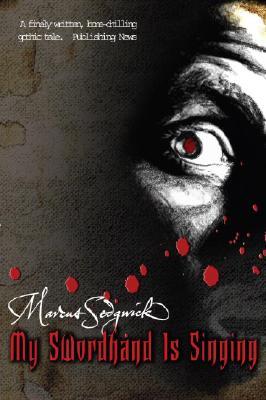
My Swordhand is Singing by Marcus Sedgwick is a hauntingly atmospheric novel that blends Gothic horror with folklore and historical fiction. Published in 2007, this chilling tale plunges readers into a world where vampires are not the suave, romantic figures of popular culture but terrifying creatures born from ancient superstitions. Sedgwick’s narrative is a masterful exploration of fear, family, and folklore, set against the backdrop of Eastern European villages in the 1930s. This book is significant not only for its gripping storytelling but also for its rich integration of cultural myths that challenge the modern vampire archetype.
Historical Context
The Setting of the 1930s Eastern Europe
The story unfolds in the 1930s, a period marked by political turmoil and social unrest across Europe, especially in the rural regions of Eastern Europe. This era was a time of tradition clashing with modernity, a theme that resonates deeply within the narrative. Villages clung to old beliefs and superstitions, which often dictated daily life. Vampires, in this context, are not just myth but a real threat rooted in the folklore of the region.
Folklore and Real-Life Inspirations
Sedgwick draws heavily on Slavic and Eastern European vampire legends, which differ significantly from the Western vampire mythos popularized by Bram Stoker’s Dracula. These vampires are often undead peasants, revenants risen from the grave to prey on their own communities. Historical accounts of vampire hysteria during this period influenced the novel’s chilling atmosphere.
Brief Synopsis
Plot Overview
At its heart, My Swordhand is Singing follows two brothers, Peter and Thomas, who arrive in a remote village to assist a mysterious vampire hunter named Janek. The village is plagued by a series of gruesome deaths, and the local people live in fear of nocturnal attacks. As the brothers unravel the mystery, they confront not only the supernatural menace but also the darkness within themselves and their fractured family history.
Setting
The novel is set in a bleak, isolated village surrounded by dense forests and shadowy landscapes. The atmosphere is thick with dread, enhanced by the cold, oppressive environment of pre-World War II Eastern Europe. The sense of isolation amplifies the horror, making the village a character in its own right.
Main Characters
| Name | Role | Key Traits | Importance to Plot |
|---|---|---|---|
| Peter | Protagonist, Brother | Sensitive, brave, curious | Central character who drives the narrative |
| Thomas | Peter’s older brother | Protective, skeptical | Provides a foil to Peter, adds depth to family dynamics |
| Janek | Vampire Hunter | Mysterious, skilled, determined | Catalyst for the brothers’ involvement |
| Milenka | Village resident | Innocent, fearful, resilient | Represents the villagers’ plight |
| The Vampire | Antagonist | Malevolent, undead, predatory | Source of terror and supernatural conflict |
Plot Summary
Arrival in the Village
Peter and Thomas arrive in the village following their father’s death, only to discover a community gripped by fear. They meet Janek, whose expertise in vampire hunting is both revered and feared. The brothers quickly become embroiled in the village’s dark secrets.
Uncovering the Vampire Threat
As mysterious deaths continue, the brothers learn about the vampire’s origins and the rituals required to keep it at bay. Peter, in particular, is drawn to the folklore, understanding its importance beyond mere superstition.
Confronting the Past
The narrative delves into family secrets, revealing connections between the brothers’ father and the vampire threat. This personal dimension adds emotional intensity and complexity to the unfolding horror.
The Climactic Battle
In a tense and suspenseful finale, Peter and Thomas, alongside Janek, confront the vampire. The battle is not just physical but symbolic of light against darkness, tradition against change.
Themes and Motifs
Fear of the Unknown
Fear permeates the novel, reflecting both the villagers’ terror of the vampire and the brothers’ confrontation with their own fears. Sedgwick explores how fear shapes human behavior and community dynamics.
Family and Loss
The complex relationship between Peter and Thomas highlights themes of brotherhood, grief, and reconciliation. Their shared loss propels their journey and emotional growth.
Folklore vs. Modernity
The novel contrasts ancient beliefs with emerging modern skepticism. The persistence of folklore underscores the power of stories to shape reality and identity.
The Nature of Evil
Sedgwick presents evil not as a simplistic force but as layered and ambiguous, embodied in the vampire but also reflected in human actions and choices.
Literary Techniques and Style
Narrative Structure
The story is told through Peter’s perspective, creating an intimate and immersive experience. The linear narrative is interspersed with flashbacks that enrich character backgrounds and thematic depth.
Symbolism
The vampire serves as a potent symbol of death, decay, and the inescapable past. The forest surrounding the village symbolizes the unknown and the subconscious fears lurking within.
Atmosphere and Tone
Sedgwick’s prose is evocative and lyrical, skillfully building a mood of suspense and dread. His use of descriptive language immerses readers in the bleak, cold environment, heightening emotional impact.
Realism and Myth
The blend of historical realism with supernatural elements grounds the story, making the horror more plausible and relatable. This fusion challenges readers to consider the blurred lines between myth and reality.
Author's Background
Marcus Sedgwick is a British author known for his dark, atmospheric novels that often explore themes of history, folklore, and psychological depth. His background in illustration and interest in historical narratives enrich his storytelling. Sedgwick’s work has received critical acclaim for its originality and emotional resonance, influencing young adult and adult readers alike. My Swordhand is Singing is among his standout works, showcasing his talent for blending horror with literary sophistication.
Key Takeaways
- Folklore can be a powerful lens to explore human fears and societal issues.
- Family dynamics and personal history deeply influence characters’ responses to trauma.
- Fear is both a destructive force and a catalyst for courage and growth.
- Historical context enriches supernatural narratives by grounding them in real-world anxieties.
- Complex villains, like Sedgwick’s vampire, offer richer thematic exploration than one-dimensional monsters.
Reader's Takeaway
Readers will find My Swordhand is Singing an intellectually stimulating and emotionally gripping experience. The novel invites reflection on the nature of fear and evil, the power of stories, and the bonds of family. Its vivid atmosphere and compelling characters make it accessible and engaging, while its deeper themes offer rich material for academic discussion and personal contemplation.
Conclusion
Marcus Sedgwick’s My Swordhand is Singing is a masterful blend of horror, history, and folklore that captivates readers with its vivid storytelling and profound themes. It challenges conventional vampire myths and explores the complexities of fear, family, and tradition. This novel is a must-read for students and lecturers interested in Gothic literature, folklore studies, and historical fiction. Delving into its pages promises an unforgettable journey into the shadows where myths live and fears sing.
My Swordhand is Singing FAQ
What is the main genre of 'My Swordhand is Singing'?
'My Swordhand is Singing' is primarily a historical fantasy novel with elements of horror and folklore.
Who is the author of 'My Swordhand is Singing'?
The book was written by Marcus Sedgwick.
What is the setting of the story?
The story is set in Eastern Europe during the 17th century, a time and place rich with superstition and myth.
Who is the protagonist of the book?
The protagonist is a young man named Peter, who is thrust into a terrifying world of vampires.
What is the central theme of the novel?
The novel explores themes of fear, folklore, courage, and the battle between good and evil.
Is 'My Swordhand is Singing' suitable for young readers?
While the book is often categorized as young adult fiction, it contains dark and chilling scenes that may be intense for younger readers.
Does the book include traditional vampire myths?
Yes, the story draws heavily on traditional Eastern European vampire folklore and legends.
Has 'My Swordhand is Singing' won any awards?
The book has been well-received critically and was shortlisted for several awards, including the Branford Boase Award.
Are there illustrations in the book?
'My Swordhand is Singing' features some atmospheric illustrations that complement the story, enhancing the eerie mood.
Is the book part of a series?
No, 'My Swordhand is Singing' is a standalone novel.