
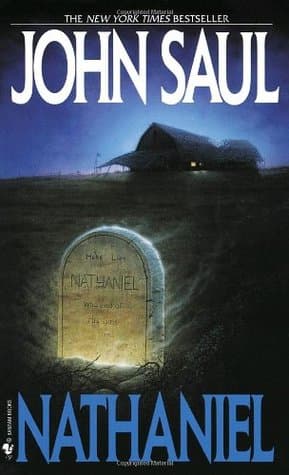
Synopsis
Covers the whole plot, including the ending.
- Difficulty
- Easy
- Pacing
- Moderate
- Mood
- Creepy, Suspenseful, Dark, Ominous
- Read it if
- You enjoy supernatural thrillers with a focus on children in peril, small-town secrets, and a strong sense of impending dread.
- Skip it if
- You dislike horror that features children as victims or perpetrators, or prefer less explicit supernatural elements.
Nathaniel Plot Summary
Covers the whole plot, including the ending.
Arrival in Prairie Bend
Elizabeth Hall and her eleven-year-old son, Michael, arrive in the remote town of Prairie Bend, Nebraska, seeking a fresh start after Elizabeth's divorce. They move into the old farmhouse that belonged to Elizabeth's ancestors, the Banning family. The townspeople, especially women like Mrs. Henderson and Mrs. Davies, are immediately wary, seeing Elizabeth as an outsider and her son with a strange mix of curiosity and fear. Michael, feeling isolated and bored, explores the prairie, drawn to the crumbling barn on their property. He soon hears a voice calling his name from within.
The Voice of Nathaniel
Despite his mother's warnings, Michael is drawn to the old barn. He finds a hidden chamber, where he meets a spectral presence that calls itself Nathaniel. Nathaniel begins to speak to Michael, at first through whispers, then more directly, telling stories of the town's past and forming a strong bond with the boy. Michael, lonely and wanting connection, becomes absorbed in Nathaniel's stories, feeling a kinship with the entity. This new relationship starts to separate him from his mother and the few tentative connections he tries to make in town.
Unsettling Occurrences
As Michael spends more time with Nathaniel, his personality changes. He becomes withdrawn, secretive, and shows bursts of anger towards his mother. At the same time, disturbing events trouble Prairie Bend. Livestock are found mutilated, strange lights are seen at night, and an eerie chill settles over the town. The townspeople, already suspicious of the Halls, begin to blame Michael and his mother for the misfortunes, whispering about the 'Banning curse' and Nathaniel's return. Elizabeth, alarmed by Michael's change, tries to understand what is happening.
Elizabeth's Investigation
Concerned for Michael and disturbed by the town's hostility, Elizabeth investigates the history of Prairie Bend and her Banning family line. She visits the local library and speaks with Mrs. Henderson, the town's unofficial historian, who reluctantly shares parts of the town's dark past. Elizabeth learns of a century-old legend about Nathaniel, a young boy supposedly murdered by the townspeople, whose spirit is said to haunt the area, seeking vengeance. She uncovers old newspaper clippings and journals that hint at a forbidden love affair and a tragic incident involving her ancestors.
The Legend Unveiled
Through her research, Elizabeth uncovers the truth about Nathaniel. He was not just a legend but a real boy, Nathaniel Banning, who lived a hundred years ago. He was the child of an incestuous relationship between her great-great-grandfather, William Banning, and his sister, Sarah. When Sarah became pregnant, the town elders, fearing scandal, conspired to murder Nathaniel shortly after his birth and bury him secretly in the barn. Sarah was institutionalized, and William was forced to marry another woman. The town has been living under a century of guilt and fear, suppressing the truth.
Nathaniel's Influence Grows
As Elizabeth learns more about the past, Nathaniel's influence over Michael becomes complete. Michael's eyes take on an unsettling intensity, and his voice sometimes shifts, echoing Nathaniel's. Nathaniel, using Michael as his vessel, begins to get his revenge on the descendants of those who wronged him and his mother. He manipulates Michael into performing malicious acts, targeting various townspeople who are descendants of the original conspirators. These acts start as pranks but quickly become serious harm, including property destruction and physical assaults, spreading terror throughout Prairie Bend.
Confrontation with the Town
The growing violence and fear drive the townspeople to a breaking point. Led by the descendants of the original perpetrators, a mob confronts Elizabeth at her farmhouse, convinced that Michael is either a demon or possessed by Nathaniel. They demand that she leave town or turn Michael over for some form of exorcism or punishment. Elizabeth, now aware of the historical injustice and Nathaniel's vengeful spirit, tries to explain the truth, but the townspeople are too consumed by fear and guilt to listen. They are determined to remove what they see as the source of their misery.
The Ritual of Vengeance
Nathaniel, through Michael, reveals his plan: to recreate the circumstances of his death and inflict a similar fate upon the descendants of his murderers. He guides Michael to gather items and prepare the barn for a final ritual. The barn, site of Nathaniel's original burial, becomes the center for his vengeance. Michael, under Nathaniel's control, shows no remorse, his actions driven by Nathaniel's rage and desire for justice. Elizabeth races to stop Nathaniel before he can complete his plan, fearing for Michael's soul and the lives of innocent people.
The Climax in the Barn
The climax happens in the old barn. Elizabeth, with knowledge of the past and a mother's desperate love, confronts Nathaniel, who is fully manifesting through Michael. The townspeople, having followed Elizabeth, also arrive, adding to the chaotic scene. Nathaniel, using Michael's body, unleashes his power, causing objects to fly and threatening everyone. Elizabeth realizes that to save Michael, she must not only break Nathaniel's hold but also acknowledge his suffering and the injustice done to him. She appeals to the humanity Nathaniel once had, trying to offer him peace rather than more violence.
Resolution and Aftermath
In a struggle, Elizabeth reaches Michael, breaking Nathaniel's complete control by acknowledging Nathaniel's pain and the truth of his past, rather than fighting him with force. She offers a form of redemption and understanding to the tormented spirit. Nathaniel, his century-long thirst for vengeance finally satisfied by this act of recognition and the exposure of the town's secret, finds peace and disappears. Michael is freed from the possession, traumatized but alive. The townspeople are left to deal with the revelations and their guilt. Elizabeth and Michael, changed by their experience, begin the slow process of healing, with Prairie Bend forever altered by Nathaniel's return and departure.
Nathaniel Characters
Michael Hall
Protagonist
A lonely eleven-year-old boy who becomes possessed by the spirit of Nathaniel.
Michael is an intelligent but introverted eleven-year-old boy, struggling with his parents' divorce and the move to a new, isolated town. He craves connection and understanding, which makes him vulnerable to Nathaniel's influence. Initially a sensitive and curious child, he gradually transforms into a vessel for Nathaniel's vengeful spirit, exhibiting disturbing changes in personality and behavior. His innocence is slowly eroded as Nathaniel's control strengthens, turning him into a pawn in a century-old vendetta.
Relationships: Elizabeth Hall (Son; initially loving, then strained and controlled); Nathaniel (Vessel and target of possession; a complex, forced bond)
Elizabeth Hall
Protagonist
Michael's mother, who uncovers the truth about Nathaniel and her family's past.
Elizabeth is a determined and loving mother, recently divorced, who moves to Prairie Bend seeking a fresh start for herself and Michael. She is practical and initially skeptical but possesses an unyielding resolve to protect her son. As Michael's behavior grows more disturbing and the town becomes hostile, she embarks on a relentless investigation into her family's history and the town's dark secrets. Her intelligence and maternal instincts drive her to confront both the supernatural threat and the town's deeply buried guilt.
Relationships: Michael Hall (Mother; fiercely protective and loving); Nathaniel (Opponent; seeks to understand and appease him)
Nathaniel Banning
Antagonist
The vengeful spirit of a boy murdered a century ago, seeking justice.
Nathaniel is the tormented and powerful spirit of a boy who was murdered shortly after his birth a hundred years prior due to the town's fear and prejudice. He is the product of an incestuous relationship and was deemed an abomination by the town elders. His spirit, fueled by a century of unaddressed pain, betrayal, and a desire for vengeance, manifests to possess Michael Hall. He is manipulative and cunning, using Michael as a tool to exact retribution on the descendants of those who wronged him and his mother, Sarah. His motivation is rooted in profound injustice.
Relationships: Michael Hall (Possessor; uses Michael as a vessel); Elizabeth Hall (Target of his vengeance (initially, as a Banning descendant); later, the one who brings him peace); Sarah Banning (His mother; his love for her fuels his vengeance)
Mrs. Henderson
Supporting
The town's unofficial historian, who reluctantly helps Elizabeth.
Mrs. Henderson is an elderly, reclusive woman who possesses a vast, albeit fragmented, knowledge of Prairie Bend's history. She is initially wary of Elizabeth, sharing the town's general suspicion of outsiders, but eventually, her conscience compels her to provide crucial pieces of information about Nathaniel and the Banning family's past. She represents the town's collective memory and the internal conflict between suppressing the past and revealing the truth.
Relationships: Elizabeth Hall (Informant; initially wary, then helpful)
Sarah Banning
Mentioned
Nathaniel's mother and Elizabeth's ancestor, whose tragic story is central to the plot.
Sarah Banning was William Banning's sister and Nathaniel's mother. Her story is revealed through Elizabeth's research, detailing her forbidden love, her pregnancy with Nathaniel, and her subsequent forced institutionalization after her son's murder. She represents the innocent victim of the town's prejudice and fear, and her suffering is a primary catalyst for Nathaniel's century-long quest for vengeance. Though never appearing as a living character, her tragedy profoundly impacts the present-day events.
Relationships: Nathaniel (Mother; her memory fuels his vengeance); William Banning (Brother and lover)
William Banning
Mentioned
Elizabeth's ancestor and Nathaniel's father, complicit in the cover-up.
William Banning was Elizabeth's great-great-grandfather, Nathaniel's father, and Sarah's brother. He was a prominent figure in Prairie Bend a century ago. Though he fathered Nathaniel with his sister, he was coerced by the town elders into participating in Nathaniel's murder and the subsequent cover-up, marrying another woman to maintain appearances. His actions, driven by fear and societal pressure, set in motion the chain of events leading to Nathaniel's vengeful return. He embodies the complicity and cowardice of the town's past.
Relationships: Sarah Banning (Brother and lover); Nathaniel (Father; complicit in his murder)
Nathaniel Themes
The Burden of the Past / Sins of the Fathers
This theme explores how unaddressed historical injustices and secrets can haunt future generations. Prairie Bend has suppressed the truth of Nathaniel's murder for a century, creating a collective guilt that shows as fear and hostility towards outsiders. Nathaniel's vengeful spirit is a direct result of this buried past, and his return forces the descendants of the original perpetrators to confront their ancestors' sins. Elizabeth's discovery of her own family's involvement highlights how intertwined personal and historical guilt can become, showing that the past, however unwelcome, always resurfaces.
“For a hundred years, the people of Prairie Bend have whispered Nathaniel's name in wonder and fear.”
Vengeance vs. Justice
The novel looks at the line between vengeance and justice. Nathaniel's actions, while horrific, come from a deep injustice: his innocent murder due to the town's prejudice and fear of scandal. His desire for retribution drives the plot, as he seeks to make the descendants of his murderers pay for their ancestors' crimes. However, the story also questions whether endless vengeance truly brings peace or simply continues a cycle of suffering. Elizabeth's strategy to save Michael involves not fighting Nathaniel with force, but acknowledging his pain and the injustice, suggesting that true resolution comes from understanding and truth, not just retribution.
“He is a terrifying spirit returned to avenge the past.”
Isolation and Belonging
Michael and Elizabeth's struggle to find belonging in the town of Prairie Bend is a central theme. As newcomers, they are immediately met with suspicion and hostility, highlighting the town's xenophobia and fear of outsiders. Michael's loneliness, made worse by his parents' divorce and the town's unwelcoming nature, makes him vulnerable to Nathaniel's manipulative companionship. Nathaniel offers him a sense of belonging, though a twisted one, that he cannot find elsewhere. The town's isolation, both geographically and culturally, has allowed its dark secrets to fester, creating an environment where fear and superstition thrive.
“He was an outsider, and they didn't like outsiders in Prairie Bend.”
Maternal Love and Sacrifice
Elizabeth Hall's unwavering maternal love for Michael is the story's emotional core and driving force. Despite the terrifying possession and the town's hostility, Elizabeth never gives up on her son. Her love compels her to risk her safety, confront a vengeful spirit, and look into a horrific family history. She is willing to sacrifice everything to save Michael, embodying a mother's powerful, protective instinct. Her determination to understand and save Michael, even from a powerful supernatural entity, shows the strong and lasting nature of a mother's bond.
“She would fight for him, against anything, against anyone. She was his mother.”
Plot Devices & Literary Techniques
The Haunted Barn
A physical location that acts as the focal point for the supernatural activity.
The dilapidated barn on the Banning property serves as the primary gateway for Nathaniel's spirit and the central location for many of the novel's supernatural events. It is where Nathaniel was originally buried and where Michael first encounters his spirit. Its crumbling structure and hidden subterranean chamber amplify the sense of dread and mystery. The barn is not just a setting but a character in itself, embodying the town's buried secrets and Nathaniel's lingering presence. It acts as a constant reminder of the past's inescapable grip on the present.
Ancestral Curse
A supernatural consequence stemming from past wrongdoings affecting future generations.
The ancestral curse refers to the pervasive sense of dread and misfortune that plagues Prairie Bend, directly linked to Nathaniel's murder a century ago. It's not just a superstition but a tangible force, manifesting through Nathaniel's vengeful spirit. The townspeople's fear and their descendants' suffering are a direct consequence of the original sin committed by their ancestors. This device establishes the stakes, explaining why the town is so insular and fearful, and why Nathaniel's return is so devastating, as it's the culmination of a long-dormant, yet potent, supernatural retribution.
Possession
A malevolent spirit taking control of a living person's body and mind.
The possession of Michael Hall by Nathaniel's spirit is the central horror element and a key plot device. It allows Nathaniel to interact with the physical world and enact his revenge. The gradual transformation of Michael's personality, voice, and actions serves to heighten the suspense and Elizabeth's desperation. This device explores themes of identity, free will, and the vulnerability of the innocent, as Michael becomes a puppet for a century-old grudge. The horror lies not just in the supernatural entity, but in the slow, agonizing loss of Michael's self.
Hidden History/Buried Secret
A critical truth from the past that has been deliberately concealed.
The hidden history of Nathaniel's true parentage and his murder, deliberately suppressed by the town elders for a century, is the core mystery that Elizabeth must uncover. This device creates suspense and drives Elizabeth's investigation, as she pieces together fragments of information from reluctant townspeople and old documents. The gradual revelation of this dark secret not only explains Nathaniel's motivations but also exposes the deep-seated hypocrisy and fear that permeate Prairie Bend, making the town itself a complicit antagonist.
Nathaniel Quotes
“The wind howled a mournful dirge around the old house, a sound that seemed to carry the whispers of the past.”
“Sometimes, the things you can't see are the most dangerous of all.”
“He felt a coldness that had nothing to do with the weather, a chill that seemed to seep directly into his soul.”
“The past wasn't dead; it was merely waiting, breathing softly in the shadows.”
“There are some secrets that should never be unearthed, some truths better left buried.”
“The eyes of the portrait seemed to follow him, filled with an ancient, malevolent intelligence.”
“Fear was a tangible thing in that house, a presence as real as the dust motes dancing in the sunbeams.”
“He knew then that some battles weren't fought with fists or weapons, but with will and the strength of one's own spirit.”
“The innocence of childhood was a fragile thing, easily shattered by the shadows of the adult world.”
“Every creak of the floorboards, every whisper of the wind, seemed to hold a sinister meaning.”
“The line between sanity and madness blurred when confronted with the truly inexplicable.”
“Some things, once awakened, could never truly be put back to sleep.”
“The truth, when it finally emerged, was far more monstrous than any nightmare.”
“He heard a child's laughter, sweet and innocent, yet laced with an undertone of chilling malice.”
Quiz
10 questions on the plot and the characters. Each answer comes with a short explanation.
Question 1
What is the primary legend surrounding Nathaniel in Prairie Bend?
- He is a benevolent protector of the town.
- He is a folktale created to frighten children or a terrifying spirit returned to avenge the past.
- He is a lost pioneer seeking his way home.
- He is a ghost who grants wishes to the pure of heart.
Show answer
B. He is a folktale created to frighten children or a terrifying spirit returned to avenge the past. The excerpt states that some say Nathaniel is a folktale to frighten children, while others swear he is a terrifying spirit returned to avenge the past.
Question 2
Which specific location is Michael Hall drawn to by Nathaniel's voice?
- The old town church
- The local cemetery
- The shadowy depths of the old, crumbling, forbidden barn
- The abandoned mine shaft
Show answer
C. The shadowy depths of the old, crumbling, forbidden barn The excerpt explicitly mentions that Nathaniel's voice draws Michael into 'the shadowy depths of the old, crumbling, forbidden barn'.
Question 3
What is the overall tone suggested by the description of Nathaniel and his influence?
- Hopeful and inspiring
- Whimsical and lighthearted
- Dark, terrifying, and suspenseful
- Nostalgic and sentimental
Show answer
C. Dark, terrifying, and suspenseful Words like 'wonder and fear,' 'terrifying spirit,' 'darkly, horrifyingly real,' and 'beyond the edge of terror' all contribute to a dark, terrifying, and suspenseful tone.
Question 4
How long have the whispers about Nathaniel persisted in Prairie Bend?
- For a few years
- For a hundred years
- Since the town's founding
- Only recently
Show answer
B. For a hundred years The first sentence of the excerpt states, 'For a hundred years, the people of Prairie Bend have whispered Nathaniel's name in wonder and fear.'
Question 5
What type of voice does Nathaniel use to call to Michael Hall?
- A soft, gentle whisper
- A loud, booming command
- A chanting, compelling voice
- A mournful, sorrowful cry
Show answer
C. A chanting, compelling voice The excerpt describes Nathaniel's influence on Michael as 'that chanting, compelling voice he will follow faithfully beyond the edge of terror.'
Question 6
What does the phrase 'beyond the edge of terror' suggest about Michael's eventual experience?
- He will overcome his fears and become brave.
- He will experience something far more frightening than he can imagine.
- He will find a peaceful resolution to his anxieties.
- He will simply get lost in the dark.
Show answer
B. He will experience something far more frightening than he can imagine. The phrase 'beyond the edge of terror' implies an experience that surpasses normal fear, pushing into a realm of extreme horror or psychological distress.
Question 7
What is the central conflict hinted at by the excerpt?
- The conflict between the townspeople and external invaders.
- The internal struggle of Michael Hall to resist the voice.
- The debate among town elders about Nathaniel's existence.
- The economic hardships faced by Prairie Bend.
Show answer
B. The internal struggle of Michael Hall to resist the voice. The excerpt focuses on Michael being 'drawn' and 'follow[ing] faithfully' Nathaniel's voice, suggesting an internal struggle against a powerful, external compulsion.
Question 8
What does the line 'But soon... very soon... some will learn that Nathaniel lives still--that he is darkly, horrifyingly real' foreshadow?
- A joyful reunion with a long-lost friend named Nathaniel.
- The pleasant discovery that Nathaniel is a benevolent guardian.
- A terrifying confrontation with a living, malevolent entity.
- The revelation that Nathaniel was merely a misunderstood recluse.
Show answer
C. A terrifying confrontation with a living, malevolent entity. The words 'darkly, horrifyingly real' strongly foreshadow a terrifying, tangible encounter with Nathaniel, confirming his malevolent existence.
Question 9
Considering the provided genres (Thriller, Fantasy, Mystery), which element from the excerpt most strongly aligns with the 'Fantasy' aspect?
- The setting of Prairie Bend.
- The idea of Nathaniel being a 'terrifying spirit' or a 'folktale' that is 'horrifyingly real'.
- Michael Hall being a young boy.
- The crumbling, forbidden barn.
Show answer
B. The idea of Nathaniel being a 'terrifying spirit' or a 'folktale' that is 'horrifyingly real'. The existence of a 'terrifying spirit' or a 'folktale' that is 'horrifyingly real' points to supernatural or fantastical elements beyond normal reality, fitting the fantasy genre.
Question 10
What can be inferred about the nature of Nathaniel's influence over Michael?
- It is a purely intellectual curiosity.
- It is a subtle suggestion that Michael can easily ignore.
- It is a powerful, almost hypnotic compulsion.
- It is a friendly invitation to play.
Show answer
C. It is a powerful, almost hypnotic compulsion. The description 'the voice that calls... the voice that draws the boy... that chanting, compelling voice he will follow faithfully' indicates a very strong, almost irresistible, and hypnotic influence.
Nathaniel FAQ
What is the central premise of 'Nathaniel'?
The novel centers on the mysterious, supernatural entity known as Nathaniel, who has been a frightening legend in Prairie Bend for a century. Young Michael Hall becomes drawn to Nathaniel's voice, leading him to the forbidden barn and into a terrifying connection with the entity, which proves to be horrifyingly real and actively influencing the town.
Who is Michael Hall and what is his role in the story?
Michael Hall is a young boy in Prairie Bend who begins hearing Nathaniel's voice calling to him across the prairie. He is initially curious, then compelled, to follow the voice to the old barn, becoming the primary human link and focus for Nathaniel's malevolent influence and schemes within the modern-day narrative.
What is the significance of the old, crumbling barn?
The old, crumbling barn serves as the physical nexus for Nathaniel's power and presence in Prairie Bend. It is the place where Michael Hall is drawn, where Nathaniel's spirit resides, and where many of the past and present horrors connected to the entity originate or are manifested, making it a forbidden and terrifying landmark.
How does the legend of Nathaniel impact the town of Prairie Bend?
The legend of Nathaniel has deeply ingrained itself into the collective consciousness of Prairie Bend, causing a mixture of fear, superstition, and denial. It influences social dynamics, with some residents dismissing it as folklore while others secretly believe, and its re-emergence triggers widespread terror and forces the town to confront its dark, hidden history.
What kind of supernatural abilities does Nathaniel possess?
Nathaniel exhibits a range of terrifying supernatural abilities, including telepathic communication to lure victims, the power to possess or influence individuals, and the ability to manifest physical phenomena. He can manipulate the environment, induce nightmares, and exert a compelling mental control over those he targets, particularly Michael, to achieve his vengeful goals.
Are there other supernatural entities or forces at play besides Nathaniel?
While Nathaniel is the primary malevolent entity, the novel hints at a pervasive, ancient evil or a corrupted spiritual energy that allowed Nathaniel's power to endure for a century. The focus remains on Nathaniel, but the deep-rooted nature of his influence suggests a broader, perhaps even older, dark current running through the land itself, empowering him.
What is Nathaniel's ultimate goal or motivation for his actions?
Nathaniel's primary motivation is vengeance for a past wrong or betrayal that led to his original demise or imprisonment. He seeks to exact retribution on the descendants of those who wronged him, using Michael as a pawn to manipulate and terrorize the town, ensuring that his suffering is repaid by the suffering of others in Prairie Bend.
How does the past history of Prairie Bend connect to Nathaniel's present-day resurgence?
The past history of Prairie Bend is inextricably linked to Nathaniel's present resurgence, as he is a spirit returned to avenge historical injustices. The novel reveals century-old secrets, betrayals, and a violent event involving Nathaniel, and these unresolved historical grievances fuel his modern-day terror, targeting the descendants of those involved.
How does Michael's innocence and youth make him particularly vulnerable to Nathaniel?
Michael's innocence and youth make him uniquely vulnerable to Nathaniel because he lacks the skepticism and emotional defenses of an adult. His impressionability allows Nathaniel's voice to resonate deeply, and his desire for connection or understanding, coupled with a child's natural curiosity, makes him an easy target for manipulation and coercion by the entity.
What psychological impact does Nathaniel's presence have on the adult residents of Prairie Bend?
Nathaniel's presence deeply traumatizes the adult residents of Prairie Bend, triggering a spectrum of psychological responses from denial and paranoia to outright hysteria. Old grudges resurface, trust erodes, and fear warps their judgment, leading to irrational decisions and a breakdown of community cohesion as they struggle to comprehend and combat the supernatural threat.
How do characters cope with the reality of a supernatural threat that defies logical explanation?
Characters cope with the supernatural threat by initially resorting to denial, rationalization, or seeking scientific explanations, which inevitably fail. As Nathaniel's influence becomes undeniable, some descend into madness, others cling to superstition or faith, and a few brave individuals confront the horror, often at great personal psychological cost, forcing them to redefine reality.
What role does collective memory and generational trauma play in the town's struggle against Nathaniel?
Collective memory and generational trauma play a crucial role, as the town's history with Nathaniel has been passed down through whispers and fears, creating a shared, unspoken dread. The resurfacing of Nathaniel forces the descendants to confront the sins of their ancestors, revealing how unresolved past traumas continue to haunt and influence the present generation's reactions and vulnerabilities.
Is Nathaniel purely evil, or is there a tragic element to his character?
While Nathaniel's actions are undeniably malevolent, there is a strong tragic element to his character, as he is driven by a profound sense of past injustice and suffering. His vengeful fury stems from a deep-seated grievance, suggesting that he was once a wronged individual, now twisted into a terrifying spirit, rather than an inherently evil, primordial force.
Does the novel suggest that some evils are inherently tied to specific places or lands?
The novel strongly suggests that some evils can become inherently tied to specific places, as Nathaniel's power is deeply rooted in Prairie Bend and particularly the old barn. The land itself seems to remember and perhaps even amplify the past trauma, allowing Nathaniel's spirit to persist and draw strength from the very soil where his story unfolded.
What message, if any, does 'Nathaniel' convey about the consequences of unresolved historical wrongs?
'Nathaniel' powerfully conveys that unresolved historical wrongs have lasting and terrifying consequences, haunting future generations until they are confronted. The novel illustrates that ignoring or burying past injustices does not make them disappear; instead, they fester and can re-emerge with devastating force, demanding reckoning and perpetuating cycles of fear and violence.
Could Nathaniel be interpreted as a metaphor for a different kind of societal horror or psychological torment?
Nathaniel could be interpreted as a metaphor for the collective guilt or suppressed anxieties within a community, representing the dark secrets that society tries to bury but inevitably resurface. He embodies the psychological torment of unresolved conflict and the destructive power of fear and suspicion when allowed to fester unchecked within a small town.
How does the ending of 'Nathaniel' resolve the conflict, or does it leave room for future threats?
The ending of 'Nathaniel' typically provides a resolution to the immediate threat, often through a climactic confrontation that seemingly banishes or destroys the entity. However, like many horror novels, it often leaves a lingering sense of unease or a subtle hint that evil can never be fully eradicated, suggesting that the potential for Nathaniel's return, or the emergence of a similar darkness, remains.
What is the significance of the 'chanting, compelling voice' that Michael hears?
The 'chanting, compelling voice' is Nathaniel's primary tool for psychological manipulation and control. It represents his seductive power, drawing Michael in with an almost hypnotic allure, gradually eroding his free will and making him an unwitting accomplice. The voice is both a lure and a symbol of Nathaniel's inescapable influence.
About the author

John Saul is an American author known for his contributions to the horror and suspense genres. His notable works include "The God Project," which explores themes of morality and science, "Nathaniel," a tale of supernatural intrigue, and "The Unwanted," which delves into psychological horror. Saul's fiction often combines elements of the uncanny with deep character exploration.
Similar books
- Pet Sematary
Stephen King
4.0 (425k) average on GoodreadsThrillerFeatures a child protagonist influenced by a malevolent supernatural force and explores themes of grief and ancient evil in a small town.
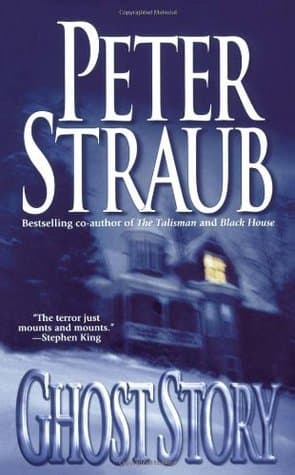
- Ghost Story
Peter Straub
4.3 (83k) average on GoodreadsFantasyInvolves a small town haunted by a vengeful spirit and a group of people trying to uncover its secrets.
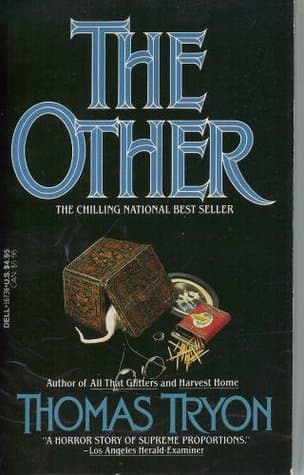
- The Other
Thomas Tryon
4.0 (20k) average on GoodreadsThrillerFocuses on a disturbed child and dark secrets within a family, with a pervasive sense of psychological dread.
- The Haunting of Hill House
Shirley Jackson
3.8 (162k) average on GoodreadsThrillerJackson's novel is more focused on psychological horror and internal dread, where the house's malevolence is intertwined with the characters' psyches. Nathaniel offers a more externalized and defined supernatural threat, prioritizing plot over deep psychological exploration. Jackson's horror is often more ambiguous and existential, whereas Saul's is more direct and entity-driven.
- Angels & Demons
Dan Brown
3.9 (2.7M) average on GoodreadsThrillerA Harvard symbologist races through Rome's ancient sites, deciphering cryptic clues to unmask the Illuminati and stop a vengeful plot to destroy the Vatican with a stolen antimatter weapon.
- Gone Girl
Gillian Flynn
4.1 (2.3M) average on GoodreadsThrillerA wife's sudden disappearance on her fifth anniversary reveals a web of lies and psychological warfare, exposing the secrets within a seemingly perfect marriage.




Enjoyed the summary?
A summary gives you the shape of the book. The book itself has the detail, the examples and the voice.
Find Nathaniel on AmazonAs an Amazon Associate, BookBrief earns from qualifying purchases. How we're funded