
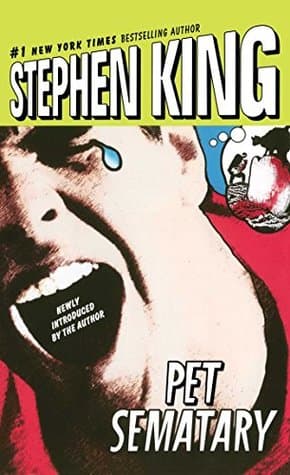
Synopsis
Covers the whole plot, including the ending.
- Difficulty
- Medium
- Pacing
- Moderate
- Mood
- Dark, Disturbing, Despairing, Suspenseful
- Read it if
- You enjoy psychological horror that explores profound grief, the dark side of human nature, and the irreversible consequences of defying death.
- Skip it if
- You are sensitive to graphic violence, child death, or deeply unsettling, hopeless narratives.
Pet Sematary Plot Summary
Covers the whole plot, including the ending.
The Creed Family's New Beginning and a Dark Discovery
Dr. Louis Creed moves his family—wife Rachel, daughter Ellie, and infant son Gage—from Chicago to Ludlow, Maine, for a new job at the University of Maine at Orono. Their new house is pleasant, but it sits on a busy highway with frequent, fast traffic. Soon after arriving, their elderly neighbor, Jud Crandall, befriends the family. He shows them a path into the woods behind their property. This path leads to a clearing that is a 'Pet Sematary,' a burial ground for local children's deceased pets, marked with crude, misspelled headstones. Louis is unsettled by this discovery, especially when Rachel shows her deep fear of death, which comes from the traumatic early death of her sister, Zelda. Louis struggles to understand this fear.
Victor Pascow's Warning and Louis's Recurring Dream
During his first week at the university infirmary, Louis tries to save a student named Victor Pascow, who has severe injuries from a traffic accident. Pascow dies in Louis's care, but before he dies, he speaks directly to Louis, despite being in shock, warning him about the 'barrier' and the 'Pet Sematary.' Later that night, Pascow appears to Louis in a vivid, realistic dream. He leads Louis to the pet cemetery and repeats his warning not to go 'beyond' it. Louis wakes up to find mud on his feet, just like in the dream, which deeply disturbs him. He dismisses it as a hallucination but is very shaken by the experience.
Church's Death and the Micmac Burial Ground
While Rachel and the children visit Rachel's parents, Ellie's cat, Church, dies after being hit by a truck on the highway. Louis knows how devastated Ellie will be and does not know what to do. Jud, understanding Louis's problem, takes him beyond the pet cemetery to a much older, deeper burial ground, an ancient Micmac Indian burial ground. Jud explains that this ground can bring things back to life, but warns that what comes back is 'different.' Louis, desperate to spare Ellie pain, buries Church there. Church returns the next day, but he is no longer the same—he smells bad, moves stiffly, and hunts viciously, showing no affection.
The Horrifying Return of Church
Church's return is a chilling success, but a terrifying failure. He is physically present, but his personality is gone; he is a grotesque imitation of his former self. He smells of grave dirt and decay, his purr is a rasp, and he brings dead animals into the house. Louis is disgusted and terrified by the cat, regretting what he did but unable to undo it. He hides the truth from Rachel and Ellie, who are simply relieved to have Church back, though Ellie notices his changed behavior. Louis increasingly senses a dark, evil presence from Church and the burial ground.
Gage's Tragic Death
During a family picnic, Louis is distracted, and his two-year-old son, Gage, wanders onto the busy highway. Louis sees him just as a speeding truck approaches. Despite Louis's desperate run, Gage is hit and dies instantly. This tragedy shatters the Creed family. Rachel is inconsolable, and Ellie is devastated, struggling to understand death. Louis is consumed by grief and guilt, feeling responsible for not protecting his son. Gage's death pushes Louis to the edge of despair, and his thoughts turn to the Micmac burial ground, despite Jud's earlier warnings.
Louis's Desperate Plan and Jud's Intervention
Consumed by grief and the temptation of the Micmac burial ground, Louis starts to plan Gage's resurrection. He takes Gage's body from the coffin, replacing it with a weighted dummy. Jud, sensing Louis's despair and recognizing the signs, tries to warn him away from the burial ground. He tells Louis the story of Timmy Baterman, a local boy killed in WWII. Timmy's father, Bill, buried him in the Micmac ground, and Timmy returned as an evil, demonic entity, terrorizing the town with his unnatural presence and knowledge of their darkest secrets. Jud reveals that the horrors of Timmy's return led Bill to kill his resurrected son and then himself, saying that 'sometimes dead is better.'
Gage's Horrific Return
Despite Jud's chilling story, Louis is too deep in his grief and obsession. He drugs Jud to prevent interference and takes Gage's body to the Micmac burial ground, burying him deep in the ancient, cursed soil. The next day, Gage returns. But it is not his son; it is an evil, demonic entity in Gage's body. The resurrected Gage is a twisted mockery of the innocent child, speaking with an adult's voice, full of cruel taunts and unnatural knowledge, embodying the evil of the burial ground. He smells of the grave and carries a scalpel, a terrifying distortion of Louis's profession.
The Rampage of Gage and Rachel's Return
The resurrected Gage, now a vessel for the evil of the burial ground, first targets Jud Crandall. He breaks into Jud's house and brutally murders him with a scalpel, leaving a gruesome scene. Meanwhile, Rachel, troubled by premonitions and a terrible sense of dread, rushes back to Ludlow after speaking with Ellie, who is terrified by a phone call with Louis. She arrives home to find the house in disarray and encounters the resurrected Gage. Believing it to be her son, she approaches him, only to be savagely attacked and killed by the demonic entity, becoming its second victim.
Louis Confronts Gage and the Burial Ground's Power
Louis discovers the horrific murders of Jud and Rachel. He confronts the monstrous Gage, who taunts him with the scalpel and reveals his role in the deaths. In a desperate, horrifying struggle, Louis manages to inject Gage with a lethal dose of morphine, ending the terror of his resurrected son. Overcome with grief, guilt, and the influence of the burial ground, Louis's mind breaks. Despite all the evidence of the burial ground's evil, he holds onto the irrational hope that if he buries Rachel there 'faster,' she will return as her true self, not a demon. He is completely lost to the madness of the Micmac ground.
The Final, Terrifying Return of Rachel
After Gage's second death, Louis takes Rachel's body to the Micmac burial ground, convinced that this time it will be different. He buries her, and then sits in the house, waiting. The novel ends with Louis playing solitaire, listening to the ominous sounds of the house. Rachel, resurrected and now a horrifying, evil entity, appears behind him, her voice raspy and dead, her touch cold and clammy. She drops a kiss on his lips, and a chilling, final line from Louis implies that he has fully given in to the evil of the burial ground, trapped with the demonic version of his wife, forever haunted by his choices.
Pet Sematary Characters
Louis Creed
Protagonist
A doctor whose grief drives him to tamper with the forbidden.
Louis Creed is a young, rational doctor who moves his family to Ludlow, Maine. Initially a skeptic, his pragmatism slowly erodes under the weight of unimaginable grief. He prides himself on his medical knowledge and scientific worldview, which makes his eventual descent into supernatural belief all the more tragic. His love for his children, particularly Gage, is profound, but it becomes a catalyst for his darkest decisions. He struggles with his wife Rachel's deep-seated fear of death, seeing it as irrational, ironic given his later actions.
Relationships: Rachel Creed (Wife, often at odds over death); Ellie Creed (Daughter, whose cat's death first tempts him); Gage Creed (Infant son, whose death breaks him); Jud Crandall (Elderly neighbor, friend, and accidental enabler)
Rachel Creed
Supporting
Louis's wife, haunted by a traumatic past and a deep fear of death.
Rachel is Louis's wife and mother to Ellie and Gage. She is deeply affected by the traumatic death of her older sister, Zelda, during childhood, which instilled in her a profound, almost pathological fear of death and decay. This fear often creates tension between her and Louis, who views it as an unhealthy obsession. She is loving but also prone to anxiety and premonitions. Her inability to cope with death makes her particularly vulnerable to the horrors that unfold, ultimately leading to her tragic end.
Relationships: Louis Creed (Husband, with whom she has a complex relationship regarding death); Ellie Creed (Daughter, whom she tries to shield from the harsh realities of death); Gage Creed (Infant son, whose death devastates her); Zelda Goldman (Deceased sister, the source of her profound fear of death)
Jud Crandall
Supporting
The elderly neighbor who introduces Louis to the Micmac burial ground.
Jud Crandall is the Creeds' friendly, elderly neighbor who quickly befriends the family. He is a lifelong resident of Ludlow and possesses a deep knowledge of the local history and folklore, including the secrets of the Micmac burial ground. Despite his good intentions, his decision to show Louis the burial ground after Church's death sets in motion the tragic events of the story. He understands the dangers of the ground, having witnessed its evil firsthand with Timmy Baterman, and repeatedly tries to warn Louis, but his warnings are ultimately ignored.
Relationships: Louis Creed (Close neighbor and friend, whom he tries to guide and warn); Norma Crandall (Deceased wife, whose memory he cherishes); Ellie Creed (Fond of her, giving her a special connection to Church)
Ellie Creed
Supporting
The young daughter whose attachment to her cat sets the initial tragedy in motion.
Ellie is Louis and Rachel's spirited young daughter. She is deeply attached to her cat, Church, and her innocent questions about death after finding the pet cemetery begin to chip away at Louis's rational defenses. Her experiences with death—first Church's, then Gage's, then her mother's—are profoundly traumatic for a child. She possesses a certain sensitivity and intuition, sensing the 'wrongness' of the resurrected Church and having disturbing dreams and premonitions, hinting at a connection to the supernatural events unfolding around her.
Relationships: Louis Creed (Father, whom she loves and questions); Rachel Creed (Mother, with whom she shares a bond of fear and anxiety); Gage Creed (Younger brother, whose death devastates her); Church (Beloved pet cat)
Gage Creed
Supporting/Antagonist
Louis's infant son, whose accidental death precipitates the novel's central horror.
Gage is Louis and Rachel's adorable toddler son. His accidental death by a truck on the highway is the central tragedy of the novel, shattering the Creed family and pushing Louis to make his catastrophic decision. After his resurrection in the Micmac burial ground, Gage becomes the primary antagonist, a terrifying, malevolent entity inhabiting his child's body. He is no longer the innocent child but a vessel for the ancient evil, speaking with an adult's cruel voice and committing horrific acts of violence, demonstrating the true horror of the burial ground's power.
Relationships: Louis Creed (Father, whose love and grief he exploits in his resurrected form); Rachel Creed (Mother, whom he murders in his resurrected form); Ellie Creed (Sister)
Church (Winston Churchill)
Supporting
Ellie's cat, the first creature resurrected from the Micmac burial ground.
Church is Ellie's beloved grey cat. His death by a truck is the first major incident that leads Louis to Jud and the Micmac burial ground. His resurrection serves as the initial, chilling proof of the burial ground's power, and also a dire warning of its corrupting influence. Though physically returned, Church is 'different'—smelly, stiff, malevolent, and no longer affectionate. He becomes an unsettling, constant reminder of the unnatural forces at play and foreshadows the far greater horror that will follow with Gage's return.
Relationships: Ellie Creed (Beloved pet); Louis Creed (His resurrection is Louis's first step into the forbidden)
Victor Pascow
Mentioned
A university student whose death provides Louis with a supernatural warning.
Victor Pascow is a university student who is fatally injured in a traffic accident and dies in Louis Creed's infirmary. Before his death, and later in a vivid dream, Pascow acts as a spectral messenger, warning Louis about the dangers of the Micmac burial ground and urging him not to go 'beyond' the pet cemetery. His appearance serves as the first supernatural element in Louis's life, a direct, undeniable warning from the other side that Louis ultimately ignores, to his peril.
Relationships: Louis Creed (Patient and recipient of his ghostly warning)
Zelda Goldman
Mentioned
Rachel's deceased, deformed sister, the source of Rachel's profound fear of death.
Zelda is Rachel Creed's older sister who died from spinal meningitis when they were children. She was severely deformed and suffered greatly, and Rachel, as a young girl, harbored complex feelings of fear, guilt, and even resentment towards her. Zelda's death, particularly the memory of her twisted body and the shame Rachel felt, profoundly traumatized Rachel and instilled in her an extreme, lifelong fear of death and decay. Her memory manifests in Rachel's nightmares and psychological distress, influencing Rachel's reactions to death throughout the story.
Relationships: Rachel Creed (Sister, the source of deep-seated trauma)
Timmy Baterman
Mentioned
A local boy whose resurrection from the Micmac ground serves as a dire cautionary tale.
Timmy Baterman was a local boy from Ludlow who died in World War II. His father, Bill Baterman, distraught with grief, buried him in the Micmac burial ground. Timmy returned, but as a malevolent, demonic entity, physically grotesque and possessing chilling knowledge of the townspeople's secrets. His presence terrorized the community, and his father eventually had to kill him again, then commit suicide. Jud Crandall recounts Timmy's story to Louis as a desperate warning, highlighting the true, horrific nature of what returns from the ancient ground.
Relationships: Bill Baterman (Father, who buried him and later killed him again)
Pet Sematary Themes
Grief and the Denial of Death
A main theme of 'Pet Sematary' is the destructive power of grief and humanity's difficulty accepting death as a natural part of life. Louis Creed, a doctor who sees death often, cannot cope with the loss of his son, Gage. His refusal to accept this finality, driven by love and sorrow, leads him to defy the natural order. Rachel's lifelong, intense fear of death, from her sister Zelda's traumatic passing, also shows this theme. It illustrates how an unhealthy relationship with mortality can lead to psychological torment and tragedy.
“The soil of a man's heart is stonier, Louis. A man grows what he can, and tends it. 'Cause what you buy, is what you own. And what you own... always comes home to you.”
The Corrupting Power of the Supernatural
The Micmac burial ground is not just a place of resurrection; it is a source of ancient, malevolent evil that corrupts everything it touches. What returns from its soil is a grotesque, demonic imitation of the deceased, filled with cruelty and a desire for destruction. Church, Gage, and finally Rachel, all return 'different,' without their former souls and filled with an insidious evil. This theme shows that some forces are best left alone, and that trying to control or use supernatural power inevitably leads to deep corruption and horror, both in the resurrected and in those who use the power.
“The place was bad. It was old. The things that came back from there were bad. They were old. They were hungry. They were not your loved ones.”
The Irreversibility of Death and Loss
Despite Louis's desperate attempts to reverse death, the novel strongly states that death is final and irreversible. Any attempt to bypass this natural law results in a monstrous distortion rather than a true return. The resurrected Church, Gage, and Rachel are not the loved ones Louis lost; they are empty vessels animated by an ancient, evil force. This theme highlights the futility and horror of trying to cheat death, stressing that true healing comes from acceptance and grieving, not from denial and unnatural interference. The 'solution' Louis seeks only deepens his suffering and causes greater devastation.
“Sometimes dead is better.”
Guilt and Responsibility
Guilt is a constant theme, driving many of the characters' actions. Louis feels immense guilt over Gage's death, blaming himself for his son wandering into the road. This guilt becomes a main reason for his decision to use the burial ground. Rachel feels deep guilt over her feelings toward her sister Zelda during her illness, which fuels her intense fear of death. Jud also feels some guilt for showing Louis the burial ground in the first place, knowing its dark history. This theme explores how unchecked guilt can lead to irrational decisions and a descent into further tragedy, showing how it can be as destructive as any external force.
“He had a sense of being on some sort of invisible, horrible treadmill; he was walking, but the scenery remained the same, it only got darker.”
Plot Devices & Literary Techniques
The Micmac Burial Ground
The supernatural catalyst for resurrection and malevolence.
The Micmac Burial Ground is the central plot device, an ancient, cursed land beyond the Pet Sematary that possesses the power to bring the dead back to life. It serves as the primary source of conflict and horror, driving the entire narrative. Its power is not benevolent; it resurrects bodies but fills them with a malevolent, demonic spirit, twisting love into horror. It acts as a character in itself, an insidious force that corrupts the living and the dead, tempting Louis with false hope while ensuring unimaginable suffering. Its very existence provides the 'what if' scenario that propels the plot.
Victor Pascow's Ghost/Dream
A supernatural harbinger and ignored warning.
Victor Pascow's appearance, first as a dying patient and then as a ghostly figure in Louis's dream, serves as a crucial supernatural warning. He attempts to dissuade Louis from using the burial ground, explicitly telling him not to go 'beyond' the pet cemetery. This device establishes the supernatural element early in the story and highlights Louis's initial skepticism and ultimate hubris. Pascow's warning, though ignored, provides an external, otherworldly validation of the burial ground's danger, reinforcing the tragic inevitability of Louis's downfall.
The Highway
A constant, mundane threat that delivers the primary tragedies.
The busy highway running past the Creed house acts as a mundane yet deadly plot device. It is the instrument of death for both Church and Gage, serving as a stark contrast to the supernatural horrors that follow. The highway represents the randomness and inevitability of everyday tragedy, which then becomes the catalyst for Louis's desperate, unnatural acts. Its constant roar and the frequent deaths it causes underscore the theme of death's omnipresence and the fragile nature of life, setting the stage for Louis's misguided attempts to defy it.
Zelda's Memory/Flashbacks
A psychological device revealing Rachel's deep-seated trauma.
Flashbacks and vivid memories of Rachel's deformed and suffering sister, Zelda, serve as a psychological plot device. These fragmented, horrifying recollections explain Rachel's profound and often irrational fear of death and decay. They provide insight into her character, her anxieties, and the deep-seated trauma that influences her reactions throughout the story. This device helps the reader understand the depth of Rachel's psychological distress and foreshadows the grotesque nature of the resurrected dead, connecting her past trauma with the present horrors.
Pet Sematary Quotes
“The soil of a man's heart is stonier, Louis.”
“Sometimes dead is better.”
“No, there's nothing to be afraid of. It's just a place. A place that was here long before us and will be here long after us.”
“The world had teeth and it could bite you with them anytime it wanted.”
“The only thing that matters is that he's alive. And he's here. And we're a family again.”
“The ground is sour.”
“Gage, no! Don't look! Don't look at it!”
“He just wanted to be with his family again. That's all he wanted. What's wrong with that?”
“It was the only thing that could have brought him back.”
“The dead don't walk. They don't talk. They don't do anything.”
“The barrier between life and death is thin. Sometimes it's so thin you can almost see through it.”
“The fear of death is the most basic fear of all.”
“Darling, I miss you.”
Quiz
10 questions on the plot and the characters. Each answer comes with a short explanation.
Question 1
What is the name of the friendly neighbor who first warns Louis Creed about the dangers of the road and the Micmac burial ground?
- Jud Crandall
- Victor Pascow
- Zelda Goldman
- Gage Creed
Show answer
A. Jud Crandall Jud Crandall is the elderly neighbor who befriends Louis and introduces him to the pet sematary and later, the ancient burial ground beyond it, setting the tragic events in motion.
Question 2
What tragic event first prompts Louis to use the Micmac burial ground?
- His daughter Ellie's cat, Church, is hit by a truck.
- His son Gage falls ill with a mysterious sickness.
- His wife Rachel suffers a severe accident.
- His neighbor Jud Crandall dies unexpectedly.
Show answer
A. His daughter Ellie's cat, Church, is hit by a truck. The death of Ellie's cat, Church (Churchill), is the first instance where Louis is led by Jud to bury a loved one in the ancient Micmac burial ground, witnessing its horrifying power firsthand.
Question 3
Who appears to Louis in a dream after his first day at the university health service, warning him about the burial ground?
- Timmy Baterman
- Victor Pascow
- Zelda Goldman
- Ellie Creed
Show answer
B. Victor Pascow Victor Pascow, a student who dies in Louis's care, later appears to him in a dream, trying to prevent him from venturing beyond the 'pet sematary' to the true burial ground.
Question 4
What is Rachel Creed's greatest fear, stemming from her childhood?
- Heights
- Snakes
- Her sister Zelda's death and her own complicity in it.
- Being alone in the dark
Show answer
C. Her sister Zelda's death and her own complicity in it. Rachel is haunted by the death of her older sister, Zelda, who suffered from spinal meningitis. Rachel felt guilty about her mixed feelings towards Zelda and her relief when she died, leading to a deep-seated fear of death and the grotesque.
Question 5
What does Louis Creed observe about Church after he returns from the Micmac burial ground?
- He is more affectionate than before.
- He becomes aggressive, smells terrible, and his hunting instincts are gone.
- He is completely normal, as if nothing happened.
- He develops the ability to speak human words.
Show answer
B. He becomes aggressive, smells terrible, and his hunting instincts are gone. Upon Church's return, Louis notes a foul smell emanating from him, a vacant look in his eyes, and a disturbing change in his personality – he's no longer the same loving cat, becoming aggressive and listless.
Question 6
How does Gage Creed die?
- He drowns in the nearby lake.
- He is hit by a speeding truck on the road near their house.
- He falls from a tree in the woods.
- He succumbs to a sudden illness.
Show answer
B. He is hit by a speeding truck on the road near their house. Gage is tragically killed by a speeding tanker truck on the highway directly in front of their house, a chilling fulfillment of Jud's initial warnings about the dangerous road.
Question 7
What is the primary theme explored through Louis's actions regarding the Micmac burial ground?
- The power of community and friendship.
- The futility of trying to cheat death and the dangers of tampering with natural order.
- The importance of facing one's fears.
- The corrupting influence of wealth.
Show answer
B. The futility of trying to cheat death and the dangers of tampering with natural order. The novel's central theme revolves around the idea that 'sometimes dead is better.' Louis's repeated attempts to bring loved ones back from the dead through the burial ground only lead to monstrous, corrupted versions and escalating horror, demonstrating the catastrophic consequences of defying the natural cycle of life and death.
Question 8
What does Louis use to incapacitate Jud Crandall before taking Gage's body to the burial ground?
- A sleeping pill crushed into a glass of orange juice.
- A strong sedative injection.
- A blow to the head with a heavy object.
- He doesn't; Jud is already asleep.
Show answer
A. A sleeping pill crushed into a glass of orange juice. Louis crushes a sleeping pill into Jud's orange juice, knowing Jud would try to stop him from taking Gage to the burial ground, highlighting Louis's desperate and deluded state.
Question 9
Who is the last character Louis Creed buries in the Micmac burial ground?
- Jud Crandall
- Gage Creed
- Rachel Creed
- Church
Show answer
C. Rachel Creed After Rachel is killed by the reanimated Gage, Louis, completely consumed by grief and madness, takes her body to the Micmac burial ground, hoping against all evidence that this time it will be different.
Question 10
What is the significance of the phrase 'The ground is sour' as used by Jud Crandall?
- It refers to the soil being infertile for planting crops.
- It means the Micmac burial ground has a malevolent, corrupting influence that twists anything buried there.
- It indicates that the land is polluted with industrial waste.
- It's a local saying for bad luck.
Show answer
B. It means the Micmac burial ground has a malevolent, corrupting influence that twists anything buried there. Jud's phrase 'The ground is sour' refers to the ancient Micmac burial ground's inherent evil and its power to bring back the dead as malevolent, corrupted beings, devoid of their former soul or goodness. It's a warning that Louis tragically ignores.
Pet Sematary FAQ
What is Pet Sematary about?
Pet Sematary tells the story of the Creed family – Louis, Rachel, Ellie, and Gage – who move to Ludlow, Maine, and discover a mysterious burial ground behind their new home. This 'pet sematary' has the power to bring the dead back to life, but with a horrifying, malevolent twist, leading Louis to make increasingly desperate and tragic choices after personal loss.
Why should I read Pet Sematary?
You should read Pet Sematary for its chilling exploration of grief, the terrifying consequences of defying death, and its deeply unsettling psychological horror. It's a masterclass in building dread, forcing readers to confront their own fears about loss and the lengths one might go to escape it, making it one of King's most disturbing and poignant works.
What is the background/setting of Pet Sematary?
The story is set in rural Ludlow, Maine, a seemingly idyllic town that harbors ancient, malevolent secrets. The Creed's house borders a busy highway that frequently claims the lives of pets, leading to the nearby 'pet sematary' – a burial ground with a corrupted Native American burial ground further beyond it, possessing unnatural resurrection powers.
What are the most memorable quotes?
Some memorable quotes include "Sometimes dead is better," which encapsulates the novel's central theme, and Jud Crandall's ominous warning, "The ground is sour." These lines not only stick with the reader but also foreshadow the terrible price of tampering with death.
What writing style does the author use?
Stephen King employs a direct, often conversational, yet deeply unsettling writing style, rich with internal monologues and vivid descriptions of both mundane life and encroaching horror. He masterfully builds suspense through foreshadowing, character perspective, and a gradual descent into madness, making the reader feel complicit in Louis's tragic choices.
What minor details add significant meaning?
The constant presence of the dangerous highway, which claims numerous animals and eventually Gage, serves as a relentless symbol of the randomness of death and fate. Also, the recurring imagery of Victor Pascow's decaying form and his warnings to Louis underscore the supernatural forces at play and Louis's doomed path.
What are some subtle foreshadowing moments?
Jud Crandall's 'dream' about Louis burying Gage's body, which Louis dismisses as a bad beer dream, is a chillingly accurate premonition of future events. Furthermore, the recurring mention of Rachel's childhood trauma involving her sister Zelda's death subtly foreshadows the family's inability to cope with death healthily.
What unexpected character connections exist?
The most significant unexpected connection is between Jud Crandall and the ancient, malevolent force of the Micmac burial ground. Jud, despite his good intentions, is deeply enmeshed in the lore and power of the place, having witnessed and participated in its use, making him both a guide and an unwitting enabler of Louis's tragedy.
What are unspoken character motivations?
Louis Creed's unspoken motivation is a profound inability to accept the finality of death, particularly when it comes to his children. This stems from a deep-seated fear of loss and a desire for control, pushing him past the bounds of reason and morality. Rachel's motivations often revolve around her unresolved trauma from Zelda's death, which makes her resistant to discussing death and inadvertently pushes Louis away when he needs support.
What psychological complexities do characters exhibit?
Louis exhibits a complex mix of rational scientific thought as a doctor and a desperate, almost childlike refusal to accept death, leading to severe cognitive dissonance and eventual breakdown. Rachel struggles with survivor's guilt and a phobia of death, making her emotionally unavailable in times of crisis and leading to marital strain.
What are the major emotional turning points?
Ellie's cat Church being hit by a truck is the first major turning point, introducing Louis to the burial ground's power. Gage's death is the ultimate emotional catalyst, driving Louis to use the burial ground for human resurrection. Rachel's discovery of the resurrected Gage and her subsequent death mark the complete unraveling of the family and Louis's sanity.
How do relationship dynamics evolve?
Initially, the Creed family is loving and close. However, the move to Ludlow and the subsequent deaths introduce immense strain. Louis and Rachel's relationship deteriorates as Louis keeps secrets and Rachel struggles with her fears. Louis's relationship with Jud, initially a fatherly bond, becomes a tragic partnership in tempting fate, ultimately leading to Jud's demise.
Which parts remain ambiguous or open-ended?
The exact nature and origin of the malevolent entity residing in the Micmac burial ground remain largely ambiguous, hinted at as an ancient 'Wendigo' but never fully explained. Its motivations beyond simply corrupting and tormenting those who use the ground are left open to interpretation, adding to the pervasive dread.
What are controversial scenes or decisions?
The most controversial decision is Louis's choice to bury Gage in the Micmac burial ground, despite witnessing the horrific return of Church and receiving dire warnings. The scene where the resurrected Gage, now a malevolent entity, murders Jud Crandall and later Rachel is also highly controversial due to its graphic and heartbreaking nature, depicting a child as an instrument of pure evil.
Pet Sematary ending explained: how it ends & what it means
The novel ends with Louis burying Rachel in the Micmac burial ground after she is murdered by the resurrected Gage. He then sits alone, playing solitaire, waiting for her return, convinced that 'this time it will be different.' The final line, 'Darling,' spoken by a cold, decaying voice, signifies Rachel's horrifying, corrupted return, leaving Louis trapped in an eternal nightmare of his own making. It means Louis has succumbed entirely to the burial ground's evil, ensuring his perpetual torment and the destruction of everything he loved.
About the author

Stephen Edwin King is an American author of horror, supernatural fiction, suspense, crime, science-fiction, and fantasy novels. Described as the "King of Horror", his books have sold more than 350 million copies as of 2006, and many have been adapted into films, television series, miniseries, and comic books. King has published over 65 novels/novellas, including seven under the pen name Richard Bachman, and five non-fiction books. He has also written approximately 200 short stories, most of which have been published in book collections.
Similar books
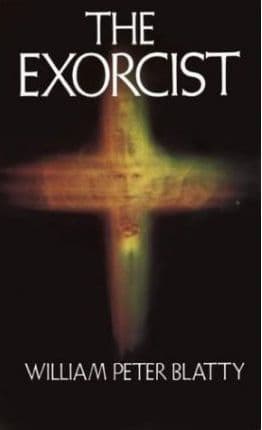
- The Exorcist
William Peter Blatty
4.2 (181k) average on GoodreadsThrillerExplores themes of supernatural evil and the corruption of innocence through a parent's desperation.
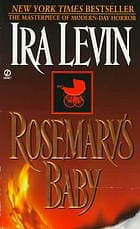
- Rosemary's Baby
Ira Levin
4.0 (112k) average on GoodreadsThrillerFeatures a slow-burn psychological horror with an escalating sense of dread and a helpless protagonist facing an unthinkable horror.
- The Haunting of Hill House
Shirley Jackson
3.8 (162k) average on GoodreadsThrillerFocuses on psychological terror and the insidious influence of a malevolent place on its inhabitants.
- Frankenstein: The 1818 Text
Mary Shelley
3.8 (1.2M) average on GoodreadsFantasyBoth novels explore the hubris of humanity attempting to defy death and natural order, resulting in monstrous consequences. Shelley's Frankenstein is a more philosophical treatise on creation, responsibility, and the nature of humanity, with the 'monster' being a complex, articulate being. King's Pet Sematary, while sharing thematic parallels in reanimation, is less concerned with the philosophical implications of the 'reborn' and more with the visceral, primal horror of a loved one returning as a corrupted, malevolent shell, focusing on the psychological toll on those who brought them back rather than the creature's existential plight.
- Angels & Demons
Dan Brown
3.9 (2.7M) average on GoodreadsThrillerA Harvard symbologist races through Rome's ancient sites, deciphering cryptic clues to unmask the Illuminati and stop a vengeful plot to destroy the Vatican with a stolen antimatter weapon.
- Gone Girl
Gillian Flynn
4.1 (2.3M) average on GoodreadsThrillerA wife's sudden disappearance on her fifth anniversary reveals a web of lies and psychological warfare, exposing the secrets within a seemingly perfect marriage.




Enjoyed the summary?
A summary gives you the shape of the book. The book itself has the detail, the examples and the voice.
Find Pet Sematary on AmazonAs an Amazon Associate, BookBrief earns from qualifying purchases. How we're funded