

Synopsis
Covers the whole plot, including the ending.
- Difficulty
- Medium
- Pacing
- Fast
- Mood
- Suspenseful, Dark, Intense, Mysterious
- Read it if
- You enjoy thrillers with a unique supernatural twist, intense action, and a blend of modern conspiracy with ancient evil.
- Skip it if
- You prefer pure fantasy or hard sci-fi, or dislike graphic violence and morally ambiguous characters.
Nest Plot Summary
Covers the whole plot, including the ending.
The Awakening
Kate Bishop, an ordinary woman in Chicago, finds her life changed after a murder investigation. While helping the police, she discovers she can identify a killer by looking into their eyes. This ability appears as a distinct, unsettling darkness within the killer's gaze. This first encounter leaves Kate disturbed and questioning her sanity, as her world shatters. She struggles to understand this power, fearing what it means for her future and how she can cope with such a gift.
A Mysterious Introduction
Still reeling from her discovery, Kate is approached by Jack Raines, a mysterious author. Jack reveals that he shares her ability and has been tracking her. He explains that her 'gift' makes her a target for a group of dangerous individuals, 'super-predators,' who seek to eliminate anyone with such a power. Jack insists he is her only hope for survival, offering to teach her to understand and control her ability, and how to defend herself. His sudden appearance and cryptic knowledge leave Kate wary and desperate for answers.
The Hunters Emerge
Jack's warnings prove accurate when Kate and Jack are attacked by super-predators. These individuals are not just ordinary killers; they have enhanced strength, speed, and a lack of empathy, making them formidable. The encounter is brutal, forcing Kate to confront the deadly reality of her situation. Jack shows his combat skills and knowledge of their enemy, reinforcing his role as her protector. This confrontation solidifies for Kate the extreme danger she is in and the threat posed by the Nest, leaving her no choice but to trust Jack, despite lingering suspicions.
Unraveling the Truth
As they flee, Jack gives Kate more details about the 'nest' and their shared ability. He explains that their power is a genetic anomaly, a latent human trait that allows them to perceive the true nature of evil in others. The super-predators, he reveals, are not just killers but individuals who have embraced their inner darkness, becoming apex predators who feed on fear. Jack details the history of this hidden war, a secret society of these predators who have infiltrated society, controlling power and preying on the weak. Kate struggles to comprehend this vast, hidden world of terror.
A Glimpse into the Darknet
To show the scope of their enemy's influence, Jack exposes Kate to the darknet, a hidden part of the internet where the super-predators communicate, organize, and conduct their activities. He shows her encrypted forums, disturbing videos, and coded messages that reveal the predators' vast network and their disregard for human life. This exposure is a terrifying realization for Kate, showing how deeply embedded these individuals are in society and how sophisticated their operations are. It reinforces the idea that this is not just a few rogue killers, but an entrenched, organized evil.
Training and Trust
Jack trains Kate in self-defense and in understanding her abilities. He teaches her to interpret the visual cues of the 'nest' and anticipate the predators' movements. During this intense period, Kate struggles with her distrust of Jack. His secretive nature, his past, and his ruthlessness leave her questioning his true motives. She constantly evaluates whether he is genuinely her savior or just another predator. This internal conflict adds psychological tension to their dangerous journey.
Escalating Confrontations
As Kate's understanding and skills develop, the super-predators intensify their pursuit. They use more resources and cunning tactics, forcing Kate and Jack into escalating confrontations. These encounters are physically demanding and psychologically draining, as the predators try to exploit Kate's fears. The chases take them through urban and rural landscapes, showing the relentless nature of their enemies. Each escape is narrow, pushing Kate to her limits and further solidifying her reliance, however reluctant, on Jack's expertise.
The Nature of Evil
During a brief respite, Jack discusses the philosophical and biological implications of their shared ability and the super-predators' existence. He posits that the 'nest' is a primal aspect of humanity, a dormant potential for extreme evil that some individuals embrace. He explains that their ability allows them to perceive this 'true self' in others, unmasked by societal conventions. He discusses the predators' complete lack of conscience and their view of humanity as prey. This intellectual exploration gives Kate a broader context for the horror she faces, making the threat more profound.
A Deeper Conspiracy
Their investigations lead Kate and Jack to uncover evidence of a larger conspiracy. They discover that the super-predators have infiltrated not just the darknet but also positions of power and influence within legitimate society, government, corporations, and law enforcement. This revelation is chilling, as it means their enemies are not just street-level killers but powerful figures who can manipulate events on a grand scale. The scope of this conspiracy makes their fight more desperate, as they realize they are up against an almost invisible enemy embedded in the world.
The Trap is Set
Through clues and intercepted communications, Kate and Jack deduce that their pursuers are manipulating them towards a specific location, a trap. The predators, using their resources and intelligence, have orchestrated a scenario to corner and eliminate them. This forces Kate and Jack to re-evaluate their strategies and anticipate their enemies' moves. The tension mounts as they know they are walking into a deadly ambush, but they must face it to uncover the full truth and fight back effectively.
The Showdown
The ambush culminates in a brutal showdown between Kate, Jack, and a powerful faction of the super-predators. The battle is fierce, testing all of Kate's newfound skills and Jack's experience. They face multiple dangerous adversaries, each showing enhanced abilities and ruthless nature. The setting is strategic and dangerous, adding to the peril. Kate is forced to make split-second decisions and push her abilities to their limit, fighting for her life and for the potential to expose the predators' existence to the world. The confrontation is a desperate struggle for survival against overwhelming odds.
Unmasking the Architect
During or immediately after the battle, Kate and Jack uncover critical information that leads them to the true mastermind behind the super-predators' organization. This individual is a powerful and influential figure, operating from the shadows, orchestrating the hunt and manipulating events for their sinister agenda. The revelation is shocking, adding another layer of complexity to the conspiracy and highlighting the deep-seated evil they are fighting. This discovery provides a new, focused target for their ongoing struggle.
A Precarious Victory
Kate and Jack achieve a precarious victory against the immediate threat, thwarting a major operation or eliminating a key figure among the super-predators. However, it is clear that this is merely a battle won, not the war. The larger organization of the Nest remains intact, their influence still pervasive, and their true numbers unknown. The ending leaves Kate with an understanding of her place in this secret war and the ongoing responsibility that comes with her ability. She and Jack are now committed to continuing the fight, knowing that the world remains largely unaware of the silent horror that preys upon it.
Principal Figures
Kate Bishop
Protagonist
An ordinary woman who discovers a terrifying ability to identify killers.
Kate Bishop is initially presented as an unassuming, ordinary woman living a normal life in Chicago. Intelligent and empathetic, she is thrown into a world of terror when she discovers her unique ability to see the 'nest' of evil in a killer's eyes. This power makes her both a target and a reluctant warrior. She is driven by a strong moral compass and a desire to understand and, eventually, fight the evil she now perceives. Her initial fear gradually transforms into determination, though she constantly grapples with the psychological burden of her gift.
Relationships: Jack Raines (mentor, protector, reluctant ally, potential romantic interest); Super-predators (The Nest) (mortal enemies, hunters)
Jack Raines
Supporting Protagonist/Mentor
A mysterious author who shares Kate's ability and becomes her protector and guide.
Jack Raines is a enigmatic and highly capable individual, a seasoned veteran in the secret war against the super-predators. He is intelligent, resourceful, and possesses a cynical wit, hardened by years of fighting. While he acts as Kate's mentor and protector, his motives are sometimes ambiguous, making Kate question his true nature. He is driven by a deep-seated commitment to fighting the Nest and protecting others with their shared ability, even if it means employing ruthless tactics. His past is shrouded in mystery, hinting at personal tragedies and difficult choices.
Relationships: Kate Bishop (mentee, protected, ally, potential romantic interest); Super-predators (The Nest) (long-standing adversaries)
The Super-Predators (The Nest)
Antagonists
A covert organization of enhanced, ruthless killers who hunt those with Kate's ability.
The Super-Predators, also known as 'The Nest,' are the primary antagonists of the story. They are not merely criminals but individuals who have embraced and cultivated the primal evil within themselves, gaining enhanced physical and mental capabilities. They operate as a sophisticated, widespread organization, infiltrating various levels of society. Driven by an insatiable hunger for power, control, and the thrill of the hunt, they view ordinary humans as prey and seek to eliminate anyone who can perceive their true nature, like Kate and Jack. They are utterly devoid of conscience and operate with chilling efficiency.
Relationships: Kate Bishop (target, hated enemy); Jack Raines (long-standing enemy, target)
The Architect/Mastermind
Antagonist (Primary)
The shadowy leader orchestrating the super-predators' operations.
The Architect is the unseen, ultimate leader and strategist behind the super-predators' vast organization. This individual is revealed to be highly intelligent, manipulative, and incredibly powerful, operating from the highest echelons of society. Their motives are rooted in a desire for ultimate control and the expansion of the Nest's influence. They orchestrate the hunt for Kate and Jack, employing cunning traps and vast resources. The Architect represents the pinnacle of the evil that Kate and Jack are fighting, embodying a cold, calculating malevolence that seeks to reshape the world.
Relationships: Kate Bishop (ultimate target); Jack Raines (long-standing adversary); Super-predators (The Nest) (subordinates, pawns)
Chicago Police Detectives
Mentioned/Supporting
Law enforcement officers who initially investigate the murder and encounter Kate's ability.
These detectives represent the conventional world of law enforcement, initially baffled by the brutal murder that triggers Kate's awakening. They are dedicated but limited by their inability to perceive the supernatural elements at play. Their interactions with Kate are brief but significant, as they unknowingly witness the first manifestation of her power. They serve as a contrast to the hidden reality Kate and Jack inhabit, highlighting the vast difference between ordinary crime and the insidious evil of the Nest.
Relationships: Kate Bishop (witness, person of interest); Jack Raines (unaware of his existence)
Themes & Insights
The Nature of Evil
The novel explores evil, not as an external force, but as an inherent potential within humanity. The 'nest' in the eyes of killers symbolizes this latent darkness, suggesting that some individuals choose to embrace it, transforming into super-predators. The book posits that this evil is not merely psychological but almost biological, a fundamental aspect of existence that can be perceived by those with the ability. This theme is central to Jack's philosophical discussions and Kate's struggle to reconcile the horror she sees with her understanding of humanity.
“Evil isn’t a choice. It’s a nature. A nature that some embrace, and others are born with, waiting to bloom.”
Perception vs. Reality
A core theme is the contrast between the perceived reality of the ordinary world and the hidden, terrifying truth that Kate discovers. Her ability allows her to see beyond the facade of normalcy, revealing a secret society of super-predators embedded within everyday life. This theme highlights how much human evil goes unnoticed or misunderstood. Kate's journey is one of continually tearing down her preconceived notions of reality, forcing her to confront a world far more dangerous and complex than she ever imagined, where appearances are deceiving and true monsters walk among us.
“You see what others can’t. And what they can’t see, they can’t believe, until it’s too late.”
The Burden of Knowledge
Kate's unique ability, while a powerful tool, is also a curse. The knowledge of who the killers are, the constant awareness of evil lurking beneath society's surface, and the responsibility to act upon this knowledge weigh heavily on her. This theme explores the psychological toll of being privy to such a terrifying truth, the isolation it brings, and the moral dilemmas it presents. Kate struggles with the desire to ignore what she sees versus the imperative to fight it, transforming her from an ordinary woman into a reluctant hero burdened by extraordinary sight.
“Some truths are too heavy to carry, but you can’t put them down once you’ve seen them.”
Survival and Trust
The desperate struggle for survival against an overwhelming, hidden enemy forms the backbone of the plot. Kate and Jack are constantly on the run, fighting for their lives against the relentless super-predators. Intertwined with this is the theme of trust. Kate must learn to trust Jack, despite his mysterious past and sometimes ruthless methods, because her survival depends on it. Their journey forces them to forge a bond built on shared danger and a common enemy, navigating the fine line between ally and potential threat in a world where betrayal can mean death.
“In this world, trust is a weapon, and a shield. Choose wisely who you give it to.”
Plot Devices & Literary Techniques
The 'Nest' Ability
Kate's unique visual perception of evil within a killer's eyes.
The 'Nest' ability is the central plot device, driving Kate's transformation and the entire conflict. It serves as both a literal and metaphorical manifestation of evil. Visually, it's a distinct mark in the eyes of killers, allowing Kate to instantly identify them. Metaphorically, it represents the inherent darkness within certain individuals. This ability not only propels Kate into the story but also makes her a prime target, setting up the chase narrative. It's the catalyst for her meeting Jack and understanding the hidden world of super-predators, and it dictates the terms of engagement with her enemies.
The Darknet
A hidden online network used by the super-predators for communication and coordination.
The darknet functions as a crucial plot device to illustrate the vast, organized nature of the super-predators' network. It provides a modern, chilling backdrop for their activities, showing how they leverage technology to operate covertly. Jack uses it to gather intelligence, track enemies, and expose Kate to the true scope of the threat. This device grounds the fantastical elements of the 'Nest' ability in a contemporary, relatable fear of online anonymity and the dark corners of the internet, making the conspiracy feel more immediate and plausible.
The Mentor Figure (Jack Raines)
An experienced individual who guides the protagonist through a new, dangerous world.
Jack Raines serves as the classic mentor figure, providing Kate with essential knowledge, training, and protection in a world she never knew existed. His role is to explain the rules of this hidden war, teach her to harness her abilities, and offer strategic guidance. However, his character also subverts the typical mentor trope by maintaining an air of mystery and moral ambiguity, making Kate (and the reader) question his true intentions. This creates narrative tension and forces Kate to develop her own judgment rather than simply following orders blindly.
The Conspiracy
A secret, widespread network of antagonists operating within legitimate society.
The conspiracy of the super-predators, or The Nest, is a fundamental plot device that elevates the threat beyond individual killers. It establishes that the antagonists are not just random criminals but a highly organized, influential force deeply embedded in societal power structures. This device creates a sense of overwhelming odds and paranoia, as Kate and Jack realize their enemies could be anyone, anywhere. It fuels the mystery element of the plot, as they must uncover the extent of this conspiracy and identify its key players, adding layers of intrigue and danger to their mission.
Nest Quotes
“The price of freedom is eternal vigilance.”
“Sometimes the only way to save a life is to take one.”
“Truth is not a matter of consensus, but of reality.”
“Fear is the mind-killer. It is the little-death that brings total obliteration.”
“The greatest evil is that which parades as good.”
“A lie, no matter how small, always requires another to cover it.”
“The only real power you have is over yourself.”
“Hope is a powerful weapon, but despair is an even more potent one.”
“The world is not black and white, but shades of gray, and sometimes, those shades are indistinguishable.”
“To surrender your mind is to surrender your life.”
“There are no easy answers, only hard choices.”
“Even in the darkest night, a single spark of defiance can ignite a revolution.”
“Logic is a tool, not a master.”
“The past is a lesson, not a life sentence.”
Quiz
10 questions on the plot and the characters. Each answer comes with a short explanation.
Question 1
What shocking ability does Kate Bishop discover she possesses when she finds herself in the middle of a police investigation?
- She can read minds.
- She can identify killers just by looking into their eyes.
- She can foresee future events.
- She can make objects move with her mind.
Show answer
B. She can identify killers just by looking into their eyes. The synopsis explicitly states that Kate makes a shocking discovery: she has the ability to identify killers just by looking into their eyes.
Question 2
Who is Jack Raines, and what is his initial connection to Kate Bishop?
- He is the lead detective on the murder case Kate is involved in.
- He is a mysterious author with shadowy connections to others who share Kate's ability.
- He is one of the super-predators hunting Kate.
- He is Kate's long-lost brother.
Show answer
B. He is a mysterious author with shadowy connections to others who share Kate's ability. Jack Raines is described as a mysterious author with shadowy connections to those who share her ability, who tracks Kate down.
Question 3
According to Jack Raines, what makes Kate's unique vision also make her a target?
- Her ability makes her a valuable asset to law enforcement.
- Her ability makes her a target for super-predators.
- Her ability causes her to go insane.
- Her ability attracts unwanted media attention.
Show answer
B. Her ability makes her a target for super-predators. The synopsis states that Jack tells Kate her unique vision also makes her a target, and later mentions 'a force of super-predators, vicious and bloodthirsty killers who will stop at nothing until Kate is dead.'
Question 4
What is the primary conflict Kate faces, beyond just understanding her new ability?
- She must solve the initial murder mystery on her own.
- She is being hunted by a force of super-predators who want her dead.
- She struggles with her job in Chicago.
- She has to convince the police of her supernatural abilities.
Show answer
B. She is being hunted by a force of super-predators who want her dead. The core conflict presented is that she is 'hot on Jack and Kate’s heels are a force of super-predators, vicious and bloodthirsty killers who will stop at nothing until Kate is dead.'
Question 5
What is Kate's main uncertainty regarding Jack Raines?
- If he is truly an author.
- If he can actually help her develop her powers.
- If he is really her salvation, or another killer coming to slaughter her.
- If he is secretly working for the police.
Show answer
C. If he is really her salvation, or another killer coming to slaughter her. The synopsis highlights Kate's internal conflict: 'But even as she fights for her life, Kate still isn’t sure if Jack is really her salvation, or another killer coming to slaughter her.'
Question 6
The novel 'Nest' is described as a 'complete reinvention' of what genre?
- Fantasy
- Mystery
- Science Fiction
- The contemporary thriller
Show answer
D. The contemporary thriller The synopsis concludes by stating 'Nest is a landmark new novel from worldwide bestselling author Terry Goodkind, and a complete reinvention of the contemporary thriller.'
Question 7
What specific dark corners does the book promise to explore, according to the synopsis?
- The deepest parts of outer space and alien civilizations.
- The back alleys of the darknet, the darkest corners of our minds, and the very origins of what it is to be human.
- Ancient ruins and forgotten magical realms.
- Political conspiracies and corporate espionage.
Show answer
B. The back alleys of the darknet, the darkest corners of our minds, and the very origins of what it is to be human. The synopsis explicitly states, 'Travel with Goodkind on a dangerous journey to the back alleys of the darknet, to the darkest corners of our minds, and to the very origins of what it is to be human.'
Question 8
Before discovering her ability, how did Kate Bishop perceive herself?
- As a highly skilled detective.
- As an ordinary woman living and working in Chicago.
- As a reclusive and mysterious figure.
- As a person with latent psychic powers.
Show answer
B. As an ordinary woman living and working in Chicago. The synopsis begins by stating, 'Kate Bishop thought she was an ordinary woman living and working in Chicago.'
Question 9
The 'super-predators' are described with what specific characteristics?
- Highly intelligent and elusive.
- Vicious and bloodthirsty killers who will stop at nothing until Kate is dead.
- Shape-shifters with supernatural powers.
- Organized criminals with vast resources.
Show answer
B. Vicious and bloodthirsty killers who will stop at nothing until Kate is dead. The synopsis refers to them as 'a force of super-predators, vicious and bloodthirsty killers who will stop at nothing until Kate is dead.'
Question 10
What is the broader thematic question 'Nest' aims to explore, as suggested by the phrase 'the very origins of what it is to be human'?
- The development of technology and its impact on society.
- The fundamental nature of humanity, particularly concerning good and evil.
- The evolution of species and biological diversity.
- The history of ancient civilizations and their myths.
Show answer
B. The fundamental nature of humanity, particularly concerning good and evil. The phrase 'the very origins of what it is to be human' strongly implies an exploration of fundamental human nature, especially in the context of a thriller about identifying killers and a 'walk among evil.'
Nest FAQ
What is Kate Bishop's unique ability and how does she discover it?
Kate Bishop discovers her unique ability to identify killers by looking into their eyes when she is unexpectedly caught in a police investigation of a brutal murder in Chicago. This revelation is a shocking and pivotal moment that propels her into a world she never knew existed, making her a target for those who share or hunt such abilities.
Who is Jack Raines and what role does he play in Kate's journey?
Jack Raines is a mysterious author with shadowy connections to others who possess abilities similar to Kate's. He tracks Kate down, informing her that her unique vision makes her a target and asserting that only he can help her navigate this dangerous new reality. His true intentions, however, remain ambiguous, leaving Kate to question if he is her savior or another threat.
Who are the 'super-predators' and what is their objective?
The 'super-predators' are a force of vicious and bloodthirsty killers who actively hunt Kate and Jack. Their primary objective is to eliminate Kate, presumably because of her ability to identify them or others like them, making her a significant threat to their existence or operations. They will stop at nothing to achieve her death.
What is the central mystery or conflict driving the plot?
The central mystery revolves around understanding the origin and nature of Kate's ability, the identity and motives of the 'super-predators,' and whether Jack Raines is truly an ally or a deceptive killer. Kate's struggle for survival is intertwined with her quest to uncover the truth about her own identity and the hidden world she's stumbled into.
How does the novel explore themes of good versus evil?
The novel explores good versus evil through Kate's ability to discern killers, literally seeing the evil within individuals. This tangible manifestation of evil forces her to confront the darkest aspects of humanity, both externally in the 'super-predators' and internally as she questions her own role and Jack's ambiguous morality.
What is the significance of the 'darknet' in the story?
The darknet serves as a crucial setting and plot device, representing the hidden, illicit underbelly of the internet where anonymity allows for extreme evil to flourish. It's likely where the 'super-predators' organize, communicate, and perhaps even originate, symbolizing the pervasive and often unseen nature of the threats Kate faces.
Are there other characters besides Kate and Jack who share similar abilities?
The description mentions Jack Raines having 'shadowy connections to those who share her ability,' strongly implying that Kate is not unique in her power. This suggests a network or community of individuals with similar 'vision,' some potentially allies, others perhaps enemies, adding layers to the world-building and conflict.
How does the book connect to the 'origins of what it is to be human'?
The phrase 'origins of what it is to be human' suggests that the novel delves into fundamental questions about human nature, particularly the roots of violence and the capacity for evil. Kate's ability to see killers might be a metaphor for understanding the primal instincts that drive such actions, hinting at a deeper, possibly evolutionary, explanation for the 'super-predators.'
What is the implied connection between Jack Raines's 'author' profession and his shadowy connections?
Jack Raines's profession as an author might be a cover, or his writings could subtly hint at the hidden world he navigates. His 'shadowy connections' suggest he has deep knowledge of the 'super-predators' and others with abilities, possibly gained through research for his books or through direct involvement in this secret society.
How does Kate's sudden discovery of her ability impact her sense of self and reality?
Kate's discovery shatters her perception of herself as an 'ordinary woman,' plunging her into an existential crisis. Her reality is irrevocably altered as she grapples with a power that reveals a terrifying truth about the world, forcing her to question everything she thought she knew about human nature and her place within it.
What psychological toll does seeing killers in everyone's eyes take on Kate?
Seeing killers in people's eyes would undoubtedly inflict immense psychological trauma on Kate, leading to paranoia, distrust, and a potential inability to form normal human connections. This constant awareness of latent evil could isolate her, making her question the very fabric of society and her own sanity.
How does the novel explore themes of trust and paranoia through Kate's perspective?
The novel deeply explores themes of trust and paranoia as Kate must constantly evaluate everyone, especially Jack Raines, through the lens of her ability. Her power makes her inherently distrustful, as anyone could be a killer. This internal conflict is heightened by Jack's ambiguous nature, forcing her to navigate a world where betrayal is a constant threat.
What psychological motivations might drive the 'super-predators' beyond simple bloodlust?
Beyond simple bloodlust, the 'super-predators' might be driven by a desire for power, a twisted sense of superiority, or even a need to suppress those who can expose them, like Kate. Their actions could stem from a complex ideology or an ancient, inherent instinct that defines their existence outside conventional morality.
Is Jack Raines a reliable narrator or an unreliable one, and why is this significant?
Jack Raines's reliability is intentionally ambiguous, which is highly significant as it keeps both Kate and the reader on edge. His shadowy connections and the constant threat make it unclear if his guidance is genuine help or a manipulative ploy. This uncertainty fuels the thriller aspect, forcing deeper interpretation of his motives.
Could Kate's ability be interpreted as a metaphor for something else?
Kate's ability could be interpreted as a metaphor for intuition, empathy, or even a heightened awareness of societal ills and hidden evils. It might symbolize the burden of knowing uncomfortable truths about humanity, or the struggle to confront and expose the darkness that often goes unnoticed in the everyday world.
How does Goodkind's reinvention of the thriller genre manifest in 'Nest'?
Goodkind reinvents the thriller by infusing it with supernatural or sci-fi elements (Kate's ability), psychological depth, and philosophical inquiries into human nature. By moving beyond conventional crime and into the 'origins of what it is to be human,' he elevates the stakes and introduces a unique blend of fantasy and mystery into the contemporary thriller format.
What is the 'Nest' referred to in the title?
The title 'Nest' likely refers to a hidden stronghold or origin point of the 'super-predators,' or perhaps a more abstract concept like the breeding ground of evil within humanity or the darknet itself. It could symbolize a central hub of danger that Kate and Jack must ultimately confront to understand and survive the threat.
Does the book suggest that evil is inherent or learned?
The book heavily implies that evil is inherent, given Kate's ability to 'identify killers just by looking into their eyes,' suggesting an intrinsic quality rather than a learned behavior. The existence of 'super-predators' further supports this, hinting at a fundamental, possibly genetic or primal, capacity for malevolence within some individuals.
About the author

Terry Goodkind is an American author known for his work in the fantasy genre. He is best recognized for his "Sword of Truth" series, which includes notable titles such as "Wizard's First Rule," "Stone of Tears," and "Debt of Bones." His book "Nest" also contributes to his body of fiction.
Similar books
- Mr. Mercedes
Stephen King
4.0 (241k) average on GoodreadsThrillerFeatures a detective hunting a serial killer with a touch of the psychological thriller.
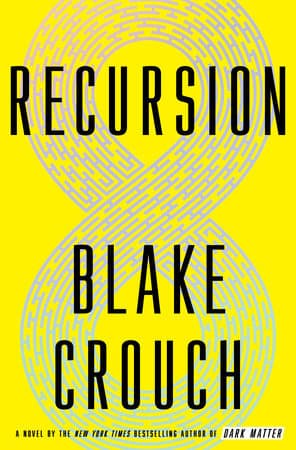
- Recursion
Blake Crouch
4.2 (109k) average on GoodreadsThrillerHigh-concept thriller blending sci-fi elements with intense action and mystery.
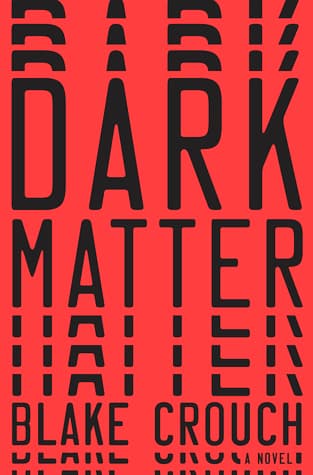
- Dark Matter
Blake Crouch
4.0 (11k) average on GoodreadsFantasyCrouch's Dark Matter offers a more tightly plotted and fast-paced speculative thriller. It excels in blending scientific mystery with personal stakes and relentless tension, creating a more immediate and compelling reading experience than 'Nest's' often exposition-heavy narrative. Crouch's prose is leaner and more focused, allowing for greater immersion.
- The Andromeda Strain
Michael Crichton
3.9 (223k) average on GoodreadsThrillerCrichton's novel provides a masterclass in scientific thrillers involving biological threats. Its strength lies in meticulous research and plausible scientific grounding, lending credibility to its speculative elements. 'Nest', in contrast, often relies on more fantastical elements without sufficient scientific or narrative justification, making it feel less grounded and less convincing in its portrayal of a global threat.
- Angels & Demons
Dan Brown
3.9 (2.7M) average on GoodreadsThrillerA Harvard symbologist races through Rome's ancient sites, deciphering cryptic clues to unmask the Illuminati and stop a vengeful plot to destroy the Vatican with a stolen antimatter weapon.
- Gone Girl
Gillian Flynn
4.1 (2.3M) average on GoodreadsThrillerA wife's sudden disappearance on her fifth anniversary reveals a web of lies and psychological warfare, exposing the secrets within a seemingly perfect marriage.




Enjoyed the summary?
A summary gives you the shape of the book. The book itself has the detail, the examples and the voice.
Find Nest on AmazonAs an Amazon Associate, BookBrief earns from qualifying purchases. How we're funded