
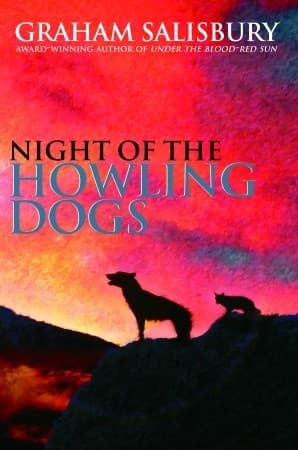
Synopsis
Covers the whole plot, including the ending.
- Difficulty
- Easy
- Pacing
- Variable
- Mood
- Suspenseful, Adventurous, Hopeful, Tense
- Read it if
- You enjoy survival stories, historical fiction set in unique locations, or books about overcoming conflict and unexpected heroism.
- Skip it if
- You prefer fantasy or sci-fi, or are sensitive to stories involving natural disasters and peril.
Night of the Howling Dogs Plot Summary
Covers the whole plot, including the ending.
The Halape Camping Trip
Dylan and his Boy Scout troop, led by Mr. Gold, arrive at Halape, a secluded beach on the Big Island of Hawaii. The setting is beautiful, with palm trees, a lava tube, and a calm ocean. However, Louie, an older, more experienced scout, quickly disrupts the peace. He bullies Dylan and other younger boys, creating unease and conflict within the group. Dylan feels intimidated and resentful. Mr. Gold tries to keep order, but Louie's challenging nature makes it difficult, setting a tense tone for their adventure.
Louie's Antics and Growing Tensions
Throughout the first day, Louie's disruptive behavior grows. He makes fun of Dylan's singing, belittles the younger scouts' campcraft, and acts defiantly. During a hike, Louie takes a shortcut through rough terrain, ignoring Mr. Gold's instructions and risking danger. Dylan, despite his fear, grows more irritated by Louie's need to prove himself. The tension between the two boys is clear. Mr. Gold tries to mediate and enforce rules, but Louie's strong personality and disregard for authority make it a constant struggle.
A Night of Unease
As evening comes, the scouts gather for dinner and a campfire. Despite the earlier conflicts, a brief calm settles as everyone enjoys the meal and the remote beach. However, Dylan notices an unusual stillness in the air, an eerie quiet. Later, in his tent, he hears the distant, unsettling sound of dogs howling, which feels unnatural and foreboding. He dismisses it, but the sound lingers, adding to a subtle unease that fills the camp. This hints at the natural forces about to be unleashed.
The Earthquake Strikes
In the middle of the night, the ground beneath Halape moves violently. A powerful earthquake strikes, shaking the camp with terrifying force. Tents collapse, gear flies, and the boys are thrown from their sleeping bags. Dylan, disoriented and terrified, struggles to understand what is happening. The roar of the earth, the snapping of trees, and the screams of his fellow scouts fill the air. Mr. Gold immediately tries to take charge, but the quake's power makes it difficult to keep order. The familiar ground becomes treacherous, causing immediate panic and confusion.
The First Tsunami Wave
As the earthquake subsides, an even more terrifying event unfolds. A monstrous roar comes from the ocean. Before anyone can understand the danger, a colossal tsunami wave, glowing eerily in the moonlight, surges inland. It engulfs the entire camp, sweeping away tents, supplies, and the scouts. Dylan is caught in the powerful current, tossed and battered by debris-filled water. He struggles to breathe and hold onto anything stable. The once-peaceful beach becomes a chaotic scene of destruction, as the boys are violently separated and carried away, fighting for their lives.
Survival and Reunion
Dylan, battered and disoriented, clings to a floating piece of wood and washes up on a rocky outcropping, a lava island. To his surprise, Louie also washes up nearby, equally injured and shaken. Despite their past animosity, the shared trauma forces them to acknowledge each other. They are both injured, cold, and alone, with the sounds of receding water and distant cries filling the night. This unexpected reunion, born from the disaster, marks a turning point; their survival now depends on working together.
The Search for Survivors
As dawn breaks, showing the devastation, Louie, despite his own injuries, takes charge. He suggests they search for Mr. Gold and the other scouts, using his knowledge of the terrain and scout training. Dylan, still fearful but recognizing Louie's resolve, agrees. They navigate the treacherous, debris-strewn landscape, calling out for their friends. The search is dangerous, with aftershocks continuing and unstable ground. Louie's calm actions contrast with his earlier bullying, slowly earning Dylan's respect and showing true leadership.
Rescue in the Lava Tube
During their search, Dylan and Louie hear a faint cry for help from the lava tube they explored the day before. They find Mr. Gold and several other injured scouts trapped inside, having sought shelter. Mr. Gold is badly injured, and some younger boys are terrified and hurt. The lava tube, while offering protection, is now partially collapsed and precarious. Dylan and Louie realize they must work quickly to assist the injured and find a way to get them out, facing the challenge of extricating their scoutmaster and friends from the dangerous space.
A Desperate Journey for Help
With Mr. Gold severely injured and other scouts needing urgent medical attention, Louie decides that he and Dylan must hike out of Halape to get help. The journey is hard and dangerous. The trail is gone in many places, replaced by unstable rockslides and debris. They face exhaustion, hunger, thirst, and the fear of aftershocks. Along the way, their bond grows as they rely on each other for support and navigation through the altered landscape. Dylan, despite his fear, pushes past his limits, inspired by Louie's determination, proving his own resilience.
The Rescue and Aftermath
After what seems like an eternity, Dylan and Louie, battered and exhausted, reach a point where they can signal for help. They encounter a rescue team, who are surprised to find them alive. The rescue operation immediately begins, and the remaining scouts, including Mr. Gold, are airlifted out of Halape. In the aftermath, Dylan and Louie are heroes. Their shared ordeal has forged a strong bond between them, changing their animosity into mutual respect and understanding. Dylan reflects on courage and leadership, realizing that even unlikely individuals can rise to the occasion.
Principal Figures
Dylan
Protagonist
A cautious and somewhat timid Boy Scout who grows into a courageous leader.
Dylan is a young Boy Scout, initially characterized by his shyness, cautious nature, and a tendency to be intimidated by older, more assertive boys like Louie. He is observant and reflective, often internalizing his fears and frustrations. Despite his initial timidity, Dylan possesses an underlying sense of duty and a capacity for empathy. The traumatic events of the tsunami force him to confront his fears and push beyond his perceived limitations, revealing a deep well of resilience and courage he didn't know he possessed.
Relationships: Louie (Initially antagonistic, evolving into a bond of mutual respect and friendship forged through shared trauma.); Mr. Gold (His scoutmaster, a figure of authority and guidance, whose survival becomes a key motivation for Dylan.)
Louie
Antagonist/Supporting (dynamic)
A tough, older Boy Scout whose bullying exterior hides a capable and courageous leader.
Louie is initially presented as the antagonist, an older, more experienced scout who is arrogant, defiant of authority, and enjoys bullying younger boys, particularly Dylan. He is physically imposing and possesses a strong, almost reckless, self-confidence. However, under the extreme pressure of the earthquake and tsunami, Louie's true character as a resourceful, decisive, and courageous leader emerges. He demonstrates practical skills, quick thinking, and an unwavering determination to help others, ultimately becoming a heroic figure.
Relationships: Dylan (Initially antagonistic, evolving into a bond of mutual respect and friendship forged through shared trauma.); Mr. Gold (Initially defiant of his authority, later working collaboratively for survival.)
Mr. Gold
Supporting
The Boy Scout leader, a responsible and caring adult who becomes a victim of the disaster.
Mr. Gold is the adult leader of the Boy Scout troop. He is responsible, calm, and dedicated to the safety and well-being of his scouts. He tries to instill discipline and foster a sense of camaraderie, even while struggling to manage Louie's rebellious nature. During the disaster, he is severely injured but maintains a semblance of leadership and hope from within the lava tube, serving as a beacon for the boys who are searching for him. His injury forces Dylan and Louie to step up and assume leadership roles.
Relationships: Dylan (Mentor and authority figure.); Louie (Authority figure, whose rules Louie initially defies but later respects through shared adversity.)
Other Scouts
Supporting/Mentioned
The other members of the troop who experience the disaster.
The other scouts in the troop are mostly younger boys who are less developed as characters but serve to populate the camp and show the collective impact of the disaster. They are initially present as background figures, some being targets of Louie's bullying, others simply enjoying the trip. After the tsunami, they represent the injured and traumatized, needing rescue. Their fear and vulnerability highlight the courage of Dylan and Louie.
Relationships: Dylan (Fellow scouts, some of whom Dylan feels a sense of responsibility for.); Louie (Fellow scouts, some of whom Louie initially bullies.)
Themes & Insights
Transformation and Growth Through Adversity
Extreme circumstances force individuals to change and grow. Dylan, initially timid, finds courage and resilience when faced with danger. Louie, who starts as a bully, shows his capacity for leadership and selflessness during the crisis, guiding search and rescue efforts. The shared trauma creates an unlikely bond, showing how adversity can reveal hidden strengths and foster personal development.
“The mountain had swallowed them, chewed them up, and spit them out into the sea. But they were still alive. And they were going to find Mr. Gold.”
The Nature of Leadership
The novel explores different kinds of leadership, contrasting formal authority with leadership that emerges in a crisis. Mr. Gold represents established leadership, but his injury means others must step up. Louie, initially defiant, shows true leadership through his decisive actions, practical skills, and determination to save others. Dylan also shows leadership as he overcomes his fears to assist Louie. The story suggests that true leadership is about responsibility, courage, and the ability to guide others in dire circumstances.
“Louie was the one who knew what to do. He was the one who was telling them what to do. And Dylan, surprisingly, was listening.”
Overcoming Conflict and Forging Bonds
A main theme is the resolution of conflict and the formation of unexpected bonds under pressure. The initial tension between Dylan and Louie, fueled by Louie's bullying and Dylan's resentment, drives much of the plot. However, the life-threatening experience of the earthquake and tsunami forces them to set aside their animosity. They become reliant on each other for survival, their strengths complementing one another. Their journey to find help solidifies their partnership, changing their relationship from conflict to mutual respect and friendship.
“They were two boys who had hated each other just hours ago. Now, they were all each other had.”
The Power and Unpredictability of Nature
The Hawaiian setting, initially idyllic, quickly becomes a terrifying force. The earthquake and tsunami are depicted as overwhelming, showing humanity's vulnerability to natural disasters. The story emphasizes that nature, while beautiful, can be unpredictable and devastating. The destruction of the camp and the altered landscape serve as constant reminders of this power. The boys' struggle for survival against these forces highlights how quickly familiar environments can turn hostile and how individuals must adapt to survive nature's raw power.
“The earth shuddered, groaned, and then roared, as if some giant beast had woken up beneath them.”
Plot Devices & Literary Techniques
Foreshadowing (Howling Dogs)
The unsettling sound of distant howling dogs hints at impending danger.
Before the earthquake and tsunami strike, Dylan hears the unusual and unsettling sound of dogs howling in the distance. This auditory detail serves as a subtle yet effective piece of foreshadowing, creating an atmosphere of unease and hinting at the impending natural disaster. In many cultures, animal behavior is seen as a precursor to natural events, making the howling dogs a classic literary device to build suspense and prepare the reader for the catastrophe that is about to unfold, adding a layer of primal dread to the narrative.
Man vs. Nature Conflict
The central conflict pits the human characters against the destructive forces of an earthquake and tsunami.
The primary conflict in the story is not just between Dylan and Louie, but ultimately between the Boy Scouts and the overwhelming power of nature. The earthquake and tsunami are external, impersonal forces that test the characters' physical and mental limits. This conflict drives the entire survival narrative, forcing the boys to adapt, cooperate, and overcome seemingly insurmountable odds. It highlights human vulnerability and resilience, making the natural disaster the ultimate antagonist against which all human efforts are measured and defined.
The Mentor Figure (Mr. Gold)
The scoutmaster serves as an initial guide whose incapacitation forces the protagonists to lead.
Mr. Gold functions as the initial mentor figure, providing guidance and a sense of order to the scout troop. However, his severe injury during the disaster effectively removes him from active leadership. This incapacitation is a crucial plot device, as it forces Dylan and Louie, who are still boys, to step into leadership roles they might not have otherwise assumed. It compels their growth and transformation, making their journey for help more urgent and perilous, and highlighting their emergent maturity and resourcefulness without an adult to direct them.
The Remote Setting (Halape)
The isolated beach location amplifies the stakes and difficulty of rescue.
The choice of Halape, a remote and secluded beach on the Big Island of Hawaii, is a critical plot device. Its isolation, accessible only by a long hike or boat, significantly amplifies the stakes of the disaster. When the earthquake and tsunami strike, the characters are cut off from immediate help, intensifying their struggle for survival and making the journey to find assistance incredibly arduous. This setting underscores the theme of man vs. nature, as the wilderness becomes both a beautiful backdrop and a formidable barrier to safety and rescue, creating a heightened sense of danger and urgency.
Night of the Howling Dogs Quotes
“The earth was a hungry animal, and it had just growled.”
“It was like the whole world had decided to take a big breath and then let it out all at once.”
“Fear is a funny thing. Sometimes it makes you run. Sometimes it makes you stand still.”
“The ocean was a giant hand, and it was reaching for us.”
“When you’re a kid, you think you know everything. When something like this happens, you realize how little you actually know.”
“The howling of the dogs was a sound I’ll never forget. It was like they knew before we did.”
“In a disaster, you find out who people really are.”
“The world had turned upside down, and we were just trying to hold on.”
“Sometimes, the smallest things can make the biggest difference.”
“We were all just boys, but for a while, we were men.”
“The silence after the roar was almost worse than the roar itself.”
“You don't just survive a thing like this. You carry it with you.”
“Home wasn't just a place anymore. It was a feeling, a memory, and a hope.”
“It was a night that changed everything, a night that showed us what we were made of.”
Quiz
10 questions on the plot and the characters. Each answer comes with a short explanation.
Question 1
What is the name of the remote camping spot in Hawaii where Dylan's scout troop goes?
- Kona
- Halape
- Hilo
- Waipio
Show answer
B. Halape The scout troop goes camping in Halape, a remote spot below the volcano on the Big Island of Hawaii.
Question 2
Who is the 'tough older boy' with whom Dylan frequently clashes before the disaster?
- Billy
- Sam
- Louie
- Kai
Show answer
C. Louie Louie is described as a tough older boy with whom Dylan just can't get along.
Question 3
What natural disaster immediately precedes the rushing wave that sweeps through the camp?
- A volcanic eruption
- A hurricane
- An earthquake
- A flash flood
Show answer
C. An earthquake The text states, 'That night an earthquake rocks the camp, and then a wave rushes in.'
Question 4
What is the primary theme that Dylan and Louie's post-disaster actions highlight?
- The importance of individual strength
- The power of nature's destruction
- Survival and the true meaning of leadership
- The challenges of remote camping
Show answer
C. Survival and the true meaning of leadership The story culminates in 'an amazing story of survival and the true meaning of leadership,' specifically through Dylan and Louie teaming up.
Question 5
What is the initial relationship between Dylan and Louie before the earthquake?
- They are best friends.
- They are indifferent to each other.
- They have a strained and antagonistic relationship.
- They are distant relatives.
Show answer
C. They have a strained and antagonistic relationship. The text explicitly states, 'Louie and Dylan just can't get along,' indicating a strained and antagonistic relationship.
Question 6
Where is Halape located in relation to the Big Island's volcanic activity?
- On the summit of the volcano
- Far from any volcanic activity
- Below the volcano
- On the opposite side of the island from the volcano
Show answer
C. Below the volcano Halape is described as 'a remote spot below the volcano on the Big Island of Hawaii.'
Question 7
What specific action do Dylan and Louie undertake together after the wave hits?
- They rebuild their campsite.
- They search for lost supplies.
- They embark on a dangerous rescue mission.
- They try to contact emergency services.
Show answer
C. They embark on a dangerous rescue mission. The description states, 'Dylan and Louie must team up on a dangerous rescue mission.'
Question 8
Given the description, what natural phenomenon is the 'wave' most likely to be?
- A rogue wave from a storm
- A tidal wave caused by the full moon
- A tsunami triggered by the earthquake
- A large surf swell
Show answer
C. A tsunami triggered by the earthquake An earthquake immediately followed by a large, destructive wave is characteristic of a tsunami, which is a common occurrence in Hawaii's seismic zone.
Question 9
How does the setting of Halape contribute to the dramatic tension of the story?
- Its beauty makes the disaster more shocking.
- Its remote location complicates rescue and emphasizes self-reliance.
- Its proximity to a city means help is readily available.
- Its volcanic soil makes it unstable and prone to landslides.
Show answer
B. Its remote location complicates rescue and emphasizes self-reliance. The description highlights Halape as a 'remote spot,' which would naturally make rescue efforts more challenging and force the characters to rely on themselves, increasing the dramatic tension.
Question 10
What is the primary catalyst that forces Dylan and Louie to overcome their personal animosity?
- A scout leader's direct order.
- The shared need for survival and rescue during a disaster.
- A sudden realization of their past mistakes.
- The desire to impress other campers.
Show answer
B. The shared need for survival and rescue during a disaster. The text states, 'Dylan and Louie must team up on a dangerous rescue mission,' implying the life-threatening situation of the disaster forces them to put aside their differences for survival and the safety of others.
Night of the Howling Dogs FAQ
What is the primary setting and time period of 'Night of the Howling Dogs'?
'Night of the Howling Dogs' is set in Halape, a remote beach on the Big Island of Hawaii, below the Kilauea volcano. The story takes place in 1975, specifically during a fateful weekend camping trip for Dylan's Boy Scout troop.
Who are the main protagonists, and what is their initial relationship?
The main protagonists are Dylan, a younger Boy Scout, and Louie, an older, tougher boy in the same troop. Initially, their relationship is fraught with tension and animosity; they constantly clash and struggle to get along, making the camping trip difficult even before the disaster.
What natural disaster forms the central conflict of the story?
The central conflict is triggered by a powerful earthquake that violently shakes the camp, immediately followed by a devastating tsunami. This sequence of natural disasters sweeps away the camp and threatens the lives of everyone present, forcing the boys into a desperate struggle for survival.
How does the disaster change the dynamic between Dylan and Louie?
The immediate aftermath of the earthquake and tsunami forces Dylan and Louie to set aside their personal differences. They are thrust into a dangerous rescue mission, where their survival and the safety of others depend entirely on their ability to cooperate and work together effectively.
What does the title 'Night of the Howling Dogs' refer to?
The title refers to the unsettling and eerie phenomenon observed by the characters just before the earthquake. The local dogs begin to howl incessantly and unnaturally, acting as an animalistic premonition of the impending natural disaster, adding to the tension and foreshadowing the tragedy.
Are there any specific cultural elements of Hawaii incorporated into the story beyond the setting?
Yes, the story subtly weaves in Hawaiian cultural elements, particularly through the reverence for the land and the ocean, and the community's resilience. The descriptions of Halape, a place of natural beauty, emphasize its significance, and the local knowledge of the environment plays a role in the characters' understanding of the disaster.
What is the significance of the Kilauea volcano's presence, even if it doesn't erupt?
The Kilauea volcano's presence is significant as it grounds the story in Hawaii's powerful and often volatile natural landscape. While it doesn't erupt, its looming presence below which Halape sits, reinforces the theme of nature's immense power and unpredictability, setting a tone of potential danger even before the earthquake strikes.
How does Dylan's perception of Louie evolve throughout the crisis?
Dylan's initial perception of Louie as merely a bully or antagonist gradually transforms into respect and even admiration. Witnessing Louie's courage, resourcefulness, and willingness to put himself at risk for others during the rescue mission reveals a deeper, more heroic side that Dylan hadn't seen before.
What psychological impact does experiencing such a catastrophic event have on the young characters?
The catastrophic event has a profound psychological impact, forcing the young characters to confront mortality, extreme fear, and their own limits. They experience trauma, but also discover inner strengths, resilience, and the capacity for selflessness, leading to accelerated emotional maturity and a changed worldview.
How does the concept of 'leadership' develop and change throughout the narrative?
Initially, leadership might be associated with traditional scout roles, but the narrative redefines it through action. Both Dylan and Louie demonstrate emergent leadership qualities, not through authority, but through initiative, bravery, quick thinking, and the ability to inspire others in a crisis, highlighting that true leadership comes from character.
What role does fear play in the characters' actions, and how do they overcome it?
Fear is a constant, palpable presence, driving initial panic and despair among the characters. They overcome it not by eliminating it, but by acknowledging it and choosing to act despite it, often fueled by the need to help others. Their courage is defined by their ability to function and make critical decisions while terrified.
What is the primary message or theme the author conveys through Dylan and Louie's journey?
The primary message is about the transformative power of shared adversity and the true meaning of heroism and leadership. It emphasizes that even those we initially dislike can possess admirable qualities, and that in times of crisis, our common humanity and need for cooperation transcend personal differences.
How does the book explore the idea of 'survival' beyond just physical endurance?
The book explores survival not only as physical endurance against the elements but also as mental and emotional resilience. It delves into the survival of hope, the preservation of human connection, and the ability to maintain moral integrity and compassion even when facing extreme danger and loss.
Could the initial conflict between Dylan and Louie be seen as a microcosm of larger societal divisions?
Yes, the initial conflict between Dylan and Louie can be interpreted as a microcosm of larger societal divisions, representing how petty grievances and preconceived notions can create barriers between people. The disaster then acts as a catalyst, demonstrating how shared humanity and common goals can break down these walls, fostering unity and cooperation.
What makes this story resonate with a Young Adult audience despite its historical setting?
The story resonates with a Young Adult audience due to its universal themes of overcoming adversity, finding inner strength, and navigating complex relationships. The focus on young protagonists facing a life-altering challenge, learning about themselves and others, and discovering what it means to be a leader are timeless and relatable experiences for teens, regardless of the historical setting.
How does the author use sensory details to immerse the reader in the disaster?
The author masterfully uses vivid sensory details to immerse the reader in the terrifying experience. Descriptions of the ground shaking violently, the roaring sound of the tsunami, the cold rush of the water, the smell of salt and debris, and the feeling of being disoriented in the dark all contribute to a visceral and immediate sense of being present in the chaos.
Is there any foreshadowing of the disaster before the earthquake and tsunami hit?
Beyond the howling dogs, there are subtle hints of nature's impending fury. The remote and untamed beauty of Halape itself, situated below a volcano and by the vast ocean, implicitly suggests the power of these natural forces. The boys' initial struggles with the environment, even before the disaster, also subtly prepare the reader for larger challenges.
About the author

Graham Salisbury is an author known for his fiction, particularly aimed at young readers. His notable work, "Night of the Howling Dogs," explores themes of adventure and resilience. Salisbury's writing often reflects his experiences and the natural world, drawing on his background in Hawaii.
Similar books
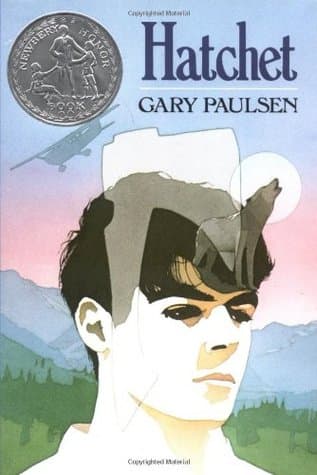
- Hatchet
Gary Paulsen
3.7 (309k) average on GoodreadsChildren'sFeatures a young protagonist's survival in the wilderness after a disaster.
- Island of the Blue Dolphins
Scott O'Dell
3.8 (292k) average on GoodreadsChildren'sA classic survival story with a strong sense of place and resilience.
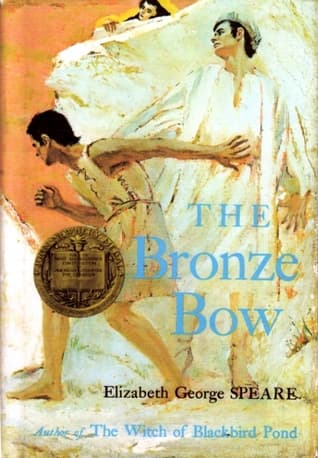
- The Bronze Bow
Elizabeth George Speare
4.0 (20k) average on GoodreadsChildren'sThough set in a different historical context (ancient Galilee) and not a disaster narrative, Speare's The Bronze Bow shares a similar focus on a young protagonist's coming-of-age amidst significant external conflict and personal challenges. Speare's work often delves into profound moral and internal struggles with greater psychological complexity, whereas Salisbury's strength lies more in the immediate, visceral experience of a physical disaster and the practical aspects of survival and communal effort, with character development emerging largely from these external pressures.
- Harry Potter and the Sorcerer's Stone
J.K. Rowling
4.5 (7M) average on GoodreadsFantasyRescued from a miserable life under the stairs, an orphaned boy discovers he's a wizard destined for a magical school, where he uncovers a dangerous secret tied to the dark wizard who murdered his parents.
- The Hobbit, or There and Back Again
J.R.R. Tolkien
4.3 (2.9M) average on GoodreadsFantasyA comfort-loving hobbit named Bilbo Baggins is whisked away by a mischievous wizard and a band of dwarves on an unexpected journey to reclaim stolen treasure from a fearsome dragon, discovering courage and a magical ring along the way.
- Harry Potter and the Goblet of Fire
J.K. Rowling
4.6 (2.6M) average on GoodreadsFantasyA bewildered Harry Potter, underage and thrust into a deadly Triwizard Tournament, must brave dragons, mermaids, and a resurgent dark magic to survive a year that will forever alter the wizarding world.




Enjoyed the summary?
A summary gives you the shape of the book. The book itself has the detail, the examples and the voice.
Find Night of the Howling Dogs on AmazonAs an Amazon Associate, BookBrief earns from qualifying purchases. How we're funded