
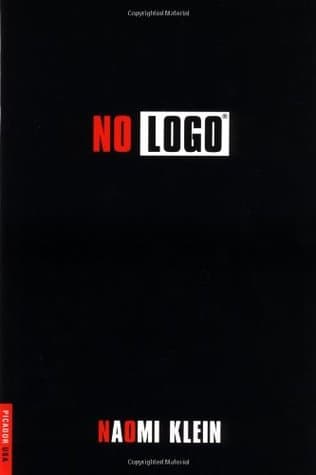
Core Idea
- Difficulty
- Medium
- Read it if
- You are interested in understanding the historical and socio-economic impact of corporate branding, globalization, and consumer culture, and want to explore the origins of anti-corporate activism and culture jamming.
- Skip it if
- You are looking for a light read on marketing strategies, or prefer books that offer prescriptive business solutions rather than critical analysis of capitalism and corporate power.
Key Takeaways from No Logo
The Brand vs. The Product
Corporations shifted focus from manufacturing goods to crafting aspirational identities.
Klein argues that in the late 20th century, corporate strategy changed: the brand became more important than the product. Companies like Nike or Starbucks stopped seeing themselves as primarily shoe manufacturers or coffee sellers. Instead, they became sellers of lifestyle, values, and experiences. This meant heavy investment in marketing, advertising, and cultural sponsorships, making products mere containers for a larger, less tangible brand message. The goal was to create an emotional connection and a sense of belonging, making consumers active participants in the brand's story, not just buyers. This allowed manufacturing to be outsourced, as the company's 'soul' was in its brand, not its factories.
“The products were an after-the-fact extension of the brand's core message.”
In the book: Nike, for example, famously outsourced almost all its manufacturing, focusing its resources on marketing, design, and sponsorship deals with athletes, effectively selling an idea of 'athletic excellence' rather than just footwear.
Try this: As a consumer, critically evaluate whether you are buying a product for its utility and quality, or for the aspirational lifestyle and identity it promises. Recognize the psychological hooks brands employ to create emotional loyalty beyond the physical good.
Related ideas: brand-identity, consumerism, corporate-strategy
The Brand as Cultural Imperialist
Brands colonize public spaces and cultural institutions, eroding non-commercial spheres.
Klein shows how brands, once content with billboards, began to aggressively enter every part of public life. Schools, museums, sporting events, and even entire cities became places for corporate sponsorship and branding. This 'invasion' was not just about advertising; it was about shaping culture itself, subtly influencing values, aspirations, and even education through branded content and partnerships. The constant growth of brand presence leads to a more uniform culture and fewer truly public, non-commercial spaces. This makes it harder to escape commercial influence and encourages a consumerist mindset from a young age.
“The brand, having shed the burden of manufacturing, was now free to become a pure cultural entity.”
In the book: The proliferation of corporate-sponsored school programs, branded content in educational materials, and the renaming of public stadiums and arenas after corporations (e.g., 'Pepsi Center').
Try this: Actively seek out and support non-commercial cultural spaces and initiatives. Advocate for policies that protect public spaces from excessive corporate branding and commercialization. Be aware of how brands are shaping narratives in unexpected places.
Related ideas: cultural-homogenization, public-space, corporate-sponsorship
The Rise of the Brand Police
Corporations aggressively protect their intangible brand assets, often at the expense of free speech.
As brands became more valuable than products, protecting them became crucial. Klein exposes how corporations use aggressive legal tactics, surveillance, and lobbying to protect their intellectual property and brand image. This often means suppressing criticism, parody, and unauthorized use of logos, even in artistic or activist settings. The focus shifts from protecting physical goods from theft to protecting intangible ideas and associations from 'dilution' or negative meanings. This raises serious questions about the balance between corporate rights and public freedom of expression, especially for those challenging corporate power.
“The battle against brand-jamming was a battle for the very soul of the corporation.”
In the book: Klein details instances of corporations suing small businesses for using similar names or imagery, or sending cease-and-desist letters to activists who parody their logos in protest materials.
Try this: Understand your rights regarding fair use and parody when engaging with corporate brands. Support organizations that defend free speech against corporate overreach. Be critical of intellectual property laws that seem to disproportionately favor corporate interests over public discourse.
Related ideas: intellectual-property, free-speech, corporate-law
Sweatshops: The Cost of Intangibility
The focus on brand over product enabled the exploitation of labor in the Global South.
Klein argues that the same strategy that allowed brands to become powerful cultural entities—outsourcing manufacturing—also created conditions for widespread labor exploitation. By separating themselves from the actual production process, corporations could distance themselves from the poor working conditions, low wages, and human rights abuses in their offshore factories. The 'brand' was clean and aspirational, while the dirty work was hidden. This allowed companies to avoid direct responsibility and accountability for the human cost of their products. It created a clear moral disconnect between the shiny brand image and the harsh reality of its supply chain.
“The brand's liberation from the factory floor was a liberation from accountability.”
In the book: The detailed accounts of Nike and Gap's reliance on sweatshop labor in Asia, where workers endured long hours, unsafe conditions, and meager pay, despite these brands projecting images of empowerment and style.
Try this: Investigate the supply chains of products you buy. Support ethical brands and fair trade initiatives. Participate in campaigns advocating for stronger labor rights and corporate accountability in global supply chains. Recognize that cheap prices often come at a human cost.
Related ideas: sweatshop-labor, global-supply-chain, corporate-accountability
The 'No Logo' Movement: Culture Jamming
Activists fight back against corporate dominance by subverting brand messages.
Klein documents the rise of an active, often youth-led, anti-corporate movement that directly challenges brand power. 'Culture jamming' is a key tactic. It involves subverting, parodying, and distorting corporate advertising and symbols to expose their hidden messages and hypocrisies. By taking over brand imagery and slogans, activists aim to disrupt the commercial narrative, encourage critical thought, and reclaim public space from corporate influence. This resistance shows how vulnerable brands become when their carefully built images are exposed to public scrutiny and reinterpretation.
“Culture jamming is, in essence, a semiotic struggle.”
In the book: The 'Adbusters' magazine and their 'Buy Nothing Day' campaigns, as well as specific acts of 'subvertising' like altering billboard messages or creating spoof ads such as 'Joe Chemo' for 'Joe Camel'.
Try this: Engage critically with advertising and brand messages. Consider participating in or supporting culture jamming efforts that expose corporate unethical practices. Use creative means to challenge dominant narratives and promote alternative perspectives.
Related ideas: culture-jamming, anti-corporate-activism, subvertising
Youth as the Anti-Brand Vanguard
The very demographic targeted by brands became their most vocal critics.
Ironically, young people, heavily targeted and commodified by global brands, often became the most effective force in the anti-corporate movement. Having grown up surrounded by brand culture, they understood its workings and weaknesses. Their digital skills and global connections allowed them to quickly share information, organize protests, and spread 'culture jams.' This generation, often disappointed by consumerism's emptiness and aware of its ethical problems, used the very tools and platforms designed to sell to them to instead challenge the system.
“The youth market, once the target, became the engine of resistance.”
In the book: The role of students and young people in organizing and participating in protests against the World Trade Organization (WTO) in Seattle, and the widespread use of early internet forums and zines to coordinate actions.
Try this: Encourage critical thinking about consumerism among younger generations. Support youth-led activism and provide platforms for their voices. Recognize the power of collective action and digital organizing in challenging established power structures.
Related ideas: youth-activism, digital-activism, generation-z
The Global Reach of Resistance
The anti-corporate movement transcends borders, mirroring the globalized nature of brands.
Klein emphasizes that the anti-corporate movement is not limited to one nation; it is a global phenomenon, directly responding to the global nature of corporate power. Just as brands operate across borders, so does the resistance. This international solidarity is important, as it allows activists to share strategies, expose abuses wherever they happen, and pressure corporations on many fronts. The interconnectedness created by globalization, ironically, also provides the structure for a powerful, decentralized network of activists to challenge its most exploitative aspects.
“The anti-corporate movement was not a local phenomenon; it was a global uprising against a global system.”
In the book: The coordinated international protests against institutions like the WTO, IMF, and World Bank, and the cross-border sharing of information about sweatshop conditions and environmental abuses.
Try this: Support international solidarity efforts and human rights organizations. Understand the global implications of local consumer choices. Advocate for international labor standards and corporate regulations that hold global corporations accountable across all their operations.
Related ideas: globalization, international-activism, anti-globalization
Reclaiming the Commons
The struggle for cultural and public space is a fight against corporate enclosure.
At its core, Klein's analysis suggests that the anti-corporate movement is a struggle to reclaim what she calls the 'cultural commons'—the shared spaces, ideas, and stories that belong to everyone, not just corporations. This includes physical public spaces, but also the symbolic and intellectual 'space' of culture, art, and public discussion. When brands colonize these areas, they privatize public meaning and limit our collective ability to create and share culture outside of commercial demands. The movement seeks to re-establish boundaries between commerce and culture, ensuring that not everything is for sale or branded.
“The battle against brands is ultimately a battle to reclaim our cultural commons.”
In the book: The fight against corporate naming rights for public parks or schools, and the efforts of artists and activists to create non-commercial art and media.
Try this: Support local arts and community initiatives. Advocate for policies that protect public spaces and institutions from commercial exploitation. Participate in creating and sharing culture that is not driven by profit or brand promotion.
Related ideas: cultural-commons, public-domain, anti-commercialism
The Illusion of Choice and the 'Cool' Imperative
Brands sell an illusion of freedom and individuality through carefully curated 'cool'.
Klein examines how brands became skilled at taking over counter-culture and rebellion, packaging 'cool' and individuality into consumer products. They study trends, adopt symbols of dissent, and market them back to consumers, creating an illusion of choice and self-expression through buying. This strategy often disarms potential critics by making them feel that their desire for uniqueness can be met by buying the 'right' brand. The book argues that true rebellion lies not in choosing a different brand, but in rejecting the idea that identity and value can be bought, and in seeking authenticity outside the commercial sphere.
“The message was: if you want to be cool, you need to buy us. But the rebellion was in not buying them.”
In the book: How brands like Tommy Hilfiger appropriated hip-hop culture, or how alternative music scenes were quickly commodified and sold back to their original audiences through branded merchandise and sponsored events.
Try this: Question the sources and intentions behind trends and 'cool' aesthetics. Seek to define your individuality and values independently of consumer choices. Support artists and creators who operate outside of corporate branding and commercial pressures.
Related ideas: consumer-culture, authenticity, identity-marketing
Beyond the Boycott: Systemic Change
While boycotts are useful, true change requires systemic shifts in corporate and political power.
Klein acknowledges the power of consumer boycotts in pressuring corporations, but ultimately argues that they are only one part of a larger struggle. True, lasting change requires addressing the systemic issues that allow corporate exploitation and cultural colonization. This means advocating for stronger labor laws, environmental regulations, intellectual property reforms, and democratic control over trade policies. The 'No Logo' movement is not just about individual consumer choices, but about fundamentally reshaping the power dynamics between corporations, governments, and citizens to create a more fair and sustainable global system.
“The goal was not merely to stop buying, but to stop the system that made the buying so destructive.”
In the book: The book's focus on international trade agreements (like NAFTA and the WTO) and the role of supranational bodies in facilitating corporate power, indicating that legal and political frameworks are as important as consumer action.
Try this: Engage in political advocacy for corporate accountability and ethical governance. Support organizations working on systemic change in labor, environmental, and trade policy. Recognize that individual consumer choices are most impactful when combined with collective political action.
Related ideas: corporate-governance, political-advocacy, economic-justice
No Logo Quotes
“The public sphere is shrinking, and the corporate sphere is expanding, with corporations increasingly taking on roles once performed by public institutions.”
“The brand, once a mere identifying mark, has become the main meaning-maker of our increasingly visual and image-saturated culture.”
“What does a brand do when people stop buying into its 'ideas' and start questioning its practices?”
“The new frontier of corporate expansion is not about conquering new territories, but about colonizing the cultural space of our lives.”
“The more companies rely on their brands as their primary asset, the more vulnerable they become to attacks on their image.”
“The goal of the brand is to turn itself into an experience, a lifestyle, a philosophy – anything but a product.”
“Behind every logo, there is a story of production, often involving exploitative labor practices in distant factories.”
“Brands are not just selling products, they are selling ideas, values, and a sense of belonging.”
“The ultimate goal of the multinational corporation is to create a seamless, branded environment where every aspect of life is mediated by corporate messages.”
“The act of 'culture jamming' is an attempt to de-brand the branded world, to expose the hidden messages and challenge corporate power.”
“When companies outsource their manufacturing, they also outsource their responsibility.”
“The most effective resistance to corporate power is not simply to boycott products, but to reclaim public space and culture.”
“The very act of shopping, once a utilitarian task, has been transformed into a spiritual quest for identity and meaning.”
“The branding project has become so pervasive that it's often difficult to imagine a world without it, or to even see it as a political project at all.”
Quiz
10 questions on the main ideas. Each answer comes with a short explanation.
Question 1
According to Naomi Klein in 'No Logo', what is the primary shift in corporate strategy that led to the rise of 'brand-name synergy'?
- A focus on reducing manufacturing costs through outsourcing.
- A move from producing products to marketing brand identity and lifestyle.
- An emphasis on diversifying product lines to capture more market share.
- The consolidation of smaller companies into larger multinational corporations.
Show answer
B. A move from producing products to marketing brand identity and lifestyle. Klein argues that corporations shifted their focus from manufacturing tangible products to creating and marketing an 'idea' or 'lifestyle' associated with their brand, leading to pervasive brand presence in all aspects of life.
Question 2
What specific event is mentioned as having occurred after the initial publication of 'No Logo', but before the 2002 Afterword, highlighting the growing anti-corporate movement?
- The collapse of the dot-com bubble.
- The World Trade Organization protests in Seattle.
- The establishment of the North American Free Trade Agreement (NAFTA).
- The rise of the anti-globalization movement in Davos.
Show answer
B. The World Trade Organization protests in Seattle. The description explicitly states, 'First published before the World Trade Organization protests in Seattle, this is an infuriating, inspiring, and altogether pioneering work.' The Afterword would reflect on such significant developments.
Question 3
Which of the following examples does Klein use to illustrate the negative transformation of a brand symbol?
- The McDonald's golden arches becoming a symbol of corporate expansion.
- The Nike swoosh transforming from an athletic status-symbol to a metaphor for sweatshop labor.
- The Apple logo evolving from a symbol of rebellion to mainstream success.
- The Coca-Cola script losing its association with American culture.
Show answer
B. The Nike swoosh transforming from an athletic status-symbol to a metaphor for sweatshop labor. The text directly mentions, 'we learn how the Nike swoosh has changed from an athletic status-symbol to a metaphor for sweatshop labor.'
Question 4
Klein's introduction clarifies that 'No Logo' is NOT primarily an account of corporate power. What does she state is the book's main objective?
- To provide a historical overview of global capitalism.
- To offer a detailed economic analysis of brand valuation.
- To analyze and document the forces opposing corporate rule and the conditions that led to their emergence.
- To propose government regulations to curb corporate influence.
Show answer
C. To analyze and document the forces opposing corporate rule and the conditions that led to their emergence. Klein explicitly states in the introduction: 'Rather, it is an attempt to analyze and document the forces opposing corporate rule, and to lay out the particular set of cultural and economic conditions that made the emergence of that opposition inevitable.'
Question 5
How do 'culture jammers' described in 'No Logo' typically operate to challenge corporate messaging?
- By boycotting products and organizing traditional labor strikes.
- By lobbying governments for stricter advertising regulations.
- By utilizing spray paint, computer-hacking acumen, and anti-propagandist wordplay to undercut billboard ads.
- By establishing alternative, non-profit brands to compete with corporations.
Show answer
C. By utilizing spray paint, computer-hacking acumen, and anti-propagandist wordplay to undercut billboard ads. The text details how 'culture jammers' utilize spray paint, computer-hacking acumen, and anti-propagandist wordplay to undercut the slogans and meanings of billboard ads (as in 'Joe Chemo' for 'Joe Camel').
Question 6
What is the significance of the 'new generation' mentioned in the book's description regarding their battle against consumerism?
- They are the first generation to reject consumer culture entirely.
- They battle consumerism using the corporations' 'own best weapons,' such as appropriating brand imagery.
- They primarily focus on ethical consumption and supporting local businesses.
- They are largely unaware of the insidious practices of corporate marketing.
Show answer
B. They battle consumerism using the corporations' 'own best weapons,' such as appropriating brand imagery. The description states, 'a new generation has begun to battle consumerism with its own best weapons,' implying a sophisticated and often subversive use of corporate tools and imagery against them.
Question 7
The book discusses how consumers 'willingly advertise' corporate brands. What specific examples are given to illustrate this pervasive brand presence?
- Company logos on public transportation and government buildings.
- Brand names on schoolbooks, superstores, and sporting arenas.
- Product placements in movies and television shows.
- Celebrity endorsements and sponsorship deals.
Show answer
B. Brand names on schoolbooks, superstores, and sporting arenas. The text explicitly states: 'witness today's schoolbooks, superstores, sporting arenas, and brand-name synergy'.
Question 8
Klein describes 'No Logo' as an 'infuriating, inspiring, and altogether pioneering work of cultural criticism.' What makes it 'pioneering' in the context of its initial publication?
- It was the first book to analyze the economic impact of global trade agreements.
- It predated major public anti-corporate protests, anticipating and documenting the underlying cultural and economic conditions for their emergence.
- It introduced the concept of 'brand identity' to academic discourse.
- It was the first book written by a journalist to critically examine corporate power.
Show answer
B. It predated major public anti-corporate protests, anticipating and documenting the underlying cultural and economic conditions for their emergence. The text notes it was 'First published before the World Trade Organization protests in Seattle,' implying it laid the groundwork and analyzed the conditions for a movement that was still nascent, making it pioneering in its foresight.
Question 9
The book details specific instances of workers' resistance. What example is given regarding McDonald's employees?
- McDonald's workers forming a global union for fair wages.
- Teenaged McDonald's workers risking their jobs to join the Teamsters.
- McDonald's employees organizing boycotts of other fast-food chains.
- McDonald's workers successfully negotiating for better benefits through collective bargaining.
Show answer
B. Teenaged McDonald's workers risking their jobs to join the Teamsters. The text specifically states, 'how teenaged McDonald's workers are risking their jobs to join the Teamsters,' highlighting a direct, risky act of labor organizing.
Question 10
Considering the diverse fields of study mentioned (sociology, economics, popular culture, international affairs, marketing), what overarching philosophical argument does 'No Logo' implicitly make about the nature of contemporary global society?
- That technological advancement is the primary driver of societal change.
- That corporate branding and marketing have become a dominant, pervasive force shaping culture, economics, and political resistance across various societal spheres.
- That political systems are inherently corrupt and incapable of regulating corporate power effectively.
- That individual consumer choices are the most effective means of challenging corporate dominance.
Show answer
B. That corporate branding and marketing have become a dominant, pervasive force shaping culture, economics, and political resistance across various societal spheres. By appealing to such diverse fields and detailing the pervasive reach of brands into every aspect of life, Klein argues that corporate marketing isn't just about selling products, but about shaping the very fabric of global society, culture, and even the nature of political opposition.
No Logo FAQ
What is the main argument of 'No Logo'?
'No Logo' argues that global corporations have increasingly shifted their focus from producing goods to building brands and marketing, leading to the exploitation of labor and the commodification of public spaces. It also documents the rise of an anti-corporate movement challenging these practices.
Does the anti-corporate movement described in 'No Logo' still exist today?
While the specific manifestations may have evolved, the anti-corporate sentiment and activism documented in 'No Logo' continue in various forms, including protests against globalization, ethical consumerism movements, and digital activism targeting corporate power and practices.
What is 'branding' according to 'No Logo'?
In 'No Logo,' branding is presented not just as advertising a product, but as an attempt by corporations to attach deeper cultural meanings, lifestyles, and identities to their brands, often detaching them from the actual production process and the labor involved.
How is 'No Logo' different from other critiques of capitalism?
'No Logo' distinguishes itself by focusing specifically on the cultural and economic implications of brand dominance and the rise of the anti-corporate movement, rather than a broad critique of capitalism. It highlights the shift from product-centric to brand-centric corporate strategies.
What are 'culture jammers' and what do they do?
Culture jammers are activists who use creative tactics like spray paint, computer-hacking, and anti-propagandist wordplay to subvert or mock corporate advertisements and slogans. Their goal is to expose the underlying messages and challenge consumerism.
How did the Nike swoosh become a metaphor for sweatshop labor?
'No Logo' details how public awareness campaigns and investigative journalism transformed the Nike swoosh from a symbol of athletic achievement into a widely recognized metaphor for exploitative labor practices in its manufacturing facilities.
Does 'No Logo' offer solutions to corporate dominance?
While primarily a critical analysis and documentation of the anti-corporate movement, 'No Logo' implicitly suggests solutions through the actions of activists and consumer resistance. It empowers readers by showing how collective action can challenge corporate power and influence.
Who is the target audience for 'No Logo'?
'No Logo' is intended for students and readers interested in sociology, economics, popular culture, international affairs, and marketing. It appeals to anyone seeking to understand the dynamics of globalization, corporate power, and social activism.
What impact did the World Trade Organization protests in Seattle have on the book's reception?
Published before the Seattle WTO protests, the book's arguments gained significant relevance and resonance after the events, as the protests became a prominent example of the anti-corporate movement 'No Logo' had detailed, validating its timely insights.
About the author

Naomi Klein is a Canadian author and social activist known for her critical analysis of corporate globalization and its impact on society. Her notable work, "No Logo," explores the effects of branding and consumer culture. Klein's writing often addresses issues related to capitalism, climate change, and social justice.
Similar books
- Fast Food Nation: The Dark Side of the All-American Meal
Eric Schlosser
3.8 (198k) average on GoodreadsBusinessInvestigates the dark side of a specific industry and its impact on labor and culture, mirroring 'No Logo's' critical lens.
- Steve Jobs
Walter Isaacson
4.1 (957k) average on GoodreadsBusinessSteve Jobs was a visionary who fused creativity and technology to revolutionize six industries and shape our digital world.
- Freakonomics: A Rogue Economist Explores the Hidden Side of Everything
Steven D. Levitt
4.0 (709k) average on GoodreadsBusinessThis book uses economic principles to reveal the surprising incentives behind everything from drug dealing and real estate to cheating teachers and the decline of crime.
- The Tipping Point: How Little Things Can Make a Big Difference
Malcolm Gladwell
4.0 (690k) average on GoodreadsBusinessMalcolm Gladwell explains how small, targeted actions can start widespread changes in trends, behaviors, and ideas.
- Outliers: The Story of Success
Malcolm Gladwell
4.2 (556k) average on GoodreadsBusinessMalcolm Gladwell argues that true success is not just about individual talent, but about the hidden advantages of culture, opportunity, and unique experiences that shape extraordinary lives.
- The Subtle Art of Not Giving a F*ck: A Counterintuitive Approach to Living a Good Life
Mark Manson
3.9 (530k) average on GoodreadsBusinessEmbrace your flaws and stomach life's lemons, because true happiness isn't about relentless positivity, but about choosing what truly matters to give a f*ck about.





Enjoyed the summary?
A summary gives you the shape of the book. The book itself has the detail, the examples and the voice.
Find No Logo on AmazonAs an Amazon Associate, BookBrief earns from qualifying purchases. How we're funded