

Synopsis
Covers the whole plot, including the ending.
- Difficulty
- Medium
- Pacing
- Fast
- Mood
- Dark, Suspenseful, Gritty, Morally Gray
- Read it if
- You enjoy dark, morally ambiguous protagonists, supernatural thrillers with a focus on body horror, and stories where the lines between good and evil are constantly blurred.
- Skip it if
- You prefer lighthearted fantasy, are sensitive to gore and violence, or dislike stories with morally complex characters who make difficult, often ruthless, choices.
Not Even Bones Plot Summary
Covers the whole plot, including the ending.
A Life of Dissection and Moral Lines
Nita is an 'unnatural' who works for her mother, dissecting the bodies of various supernatural creatures—called 'unnaturals'—that her mother gets from the black market. They move often to avoid being found by groups like the International Unnatural Police (IUP) and other black market dealers. Nita is good at her work, preparing the parts for sale online. Her only friend is her online contact, 'Fennel,' who helps sell the parts. Nita has a rule: she will dissect the dead, but she will not harm the living. This rule is tested when her mother brings home a live, sentient unnatural, a zombified man named Fabricio, wanting Nita to prepare him while he is conscious. Nita is horrified at the thought of hurting a living being.
Betrayal and Enslavement
Nita cannot bring herself to harm Fabricio, so she tries to free him. While doing so, she accidentally touches him, and Fabricio’s zombified state seems to lessen, his skin looking more human. This shows Nita's own hidden unnatural ability: she can transfer pain and heal others, though it hurts her. Her mother catches her. Angry about Nita's actions and the possible loss of a valuable 'product,' Nita's mother drugs her. Nita wakes up tied and gagged, realizing her mother betrayed her and sold her to the black market she once supplied. She is now a captive, meant to be dissected and sold for her own unique parts.
The White Market and Kovit's Cruelty
Nita is taken to a 'white market' facility in a hidden location. Unlike the black market which sells dead unnaturals, the white market sells live ones, often torturing them for valuable fluids or for entertainment. She is held in a cell with other unnaturals, including a girl named Mirella. Here, she meets Kovit, a young, calm boy who works as a torturer for the market. Kovit is an 'unnatural' himself, able to absorb and redirect pain, which makes him effective at his job. He is assigned to Nita, tasked with 'processing' her and testing her ability to transfer pain and heal. Nita quickly learns the brutal rules of her new prison and the market operators' ruthlessness.
A Twisted Alliance
Nita undergoes Kovit's 'interrogations,' where he hurts her, forcing her to use her ability to transfer pain and heal. She finds she can transfer pain not only to herself but also to other living beings, including Kovit. This shared experience of pain creates a strange, dependent connection between them. Kovit sees Nita's ability as a tool for his own survival and advancement in the market, while Nita sees Kovit as her only possible ally in a dangerous place. They begin to talk and subtly manipulate each other, both seeking an advantage in their desperate situations. Nita learns that Kovit is also a prisoner in his own way, forced to do his gruesome duties.
The Escape Plan Begins
As Nita endures more torture, she gathers information about the facility, its layout, and its routines. She uses her talks with Kovit to learn details about the market's operations, security, and the types of unnaturals held there. She realizes her unique ability, though painful, could be key to her freedom, especially if she can use it as a weapon. Nita also learns about the market's owner, a mysterious and powerful person known as 'the Doctor.' Her resolve to escape grows, driven by a desire for revenge against her mother and a strong will to never be a victim again. She starts to see Kovit not just as her tormentor, but as a dangerous asset.
The Doctor's Experiments and Kovit's Past
Nita is introduced to the Doctor, the cruel owner of the white market. The Doctor is interested in Nita's ability and performs various experiments on her, trying to understand and copy her pain transfer. Nita also learns more about Kovit's past. He was captured as a child and forced into his role as a torturer, becoming numb to suffering. He reveals that the Doctor does horrifying experiments on unnaturals, creating hybrids and taking valuable parts. Nita realizes how bad the market is and the danger she is in. She understands that just escaping is not enough; she needs to make sure she is never caught again, which means becoming more ruthless than her captors.
A Risky Alliance and a Faked Injury
Nita and Kovit's complex relationship deepens as they realize they need each other to survive and escape. Nita convinces Kovit to help her, promising him a better life outside the market, or at least a chance at one. They plan to fake a severe injury to Kovit, making it seem like Nita's ability went wrong, causing him permanent harm. This is a big risk, as failure would mean severe punishment, likely death, for both. They carry out the plan, with Nita using her ability to transfer a large amount of pain into Kovit, making his injuries look very bad. The trick works, buying them time and creating a distraction in the market.
The Uprising and Mirella's Betrayal
Using the confusion from Kovit's 'injury' and the Doctor's distraction, Nita begins to encourage an uprising among the other captive unnaturals. She uses her healing ability to gain their trust and rally them, promising freedom. The unnaturals, desperate and abused, agree to fight. The escape plan starts, leading to a violent fight with the market's guards. However, during the escape, Mirella, one of the unnaturals Nita had befriended, betrays them. Mirella reveals she is an IUP agent, working undercover to get into the market. Her betrayal puts Nita and Kovit in even more danger, as they are now chased by both the market's forces and the authorities.
Escape and the Hunter's Path
Despite Mirella's betrayal and the difficult odds, Nita and Kovit manage to fight their way out of the white market, leaving destruction behind. They are now fugitives, with no safe place. Nita, changed by her experiences, realizes her mother's betrayal and her time in the white market have changed her deeply. She cannot return to her old life. Instead, she uses the darker parts of her abilities and her new ruthlessness. She decides to become a hunter herself, seeking out those who profit from the suffering of unnaturals, starting with her own mother. Kovit, with no other choice, stays with her, their bond strengthened by shared trauma and understanding of their new, dangerous life.
Revenge and a New Beginning
Nita and Kovit find Nita's mother, who is still involved in the black market. The confrontation is brutal and emotional. Nita, no longer the naive girl who dissected dead bodies, uses her abilities and cleverness to defeat her mother. She gets her revenge, not by killing her, but by leaving her in a position where she will suffer the results of her actions, perhaps even becoming a victim of the market she supplied. With this act, Nita fully changes. She is no longer a victim or a passive participant; she is a predator, determined to control her own future and ensure no one ever captures her again. She and Kovit, now a strong and scary pair, start a new, dangerous life as they navigate the world of unnaturals and the black market, hunting those who hunt others.
Not Even Bones Characters
Nita
Protagonist
A skilled dissector of unnaturals, betrayed and transformed into a ruthless survivor.
Nita is an 'unnatural' with the unique ability to transfer pain and heal. Initially, she is a morally conflicted young woman who works for her mother, dissecting dead supernatural beings. She adheres to a strict moral code, refusing to harm living creatures. However, after being betrayed by her mother and sold into the white market, she is forced to confront the darkest aspects of humanity and her own nature. Her experiences as a captive, subjected to torture by Kovit, harden her. She becomes resourceful, manipulative, and ultimately ruthless, shedding her former innocence to become a formidable predator determined to control her own fate.
Relationships: Nita's Mother (Exploitative and ultimately betraying mother-daughter relationship); Kovit (Complex, co-dependent, and eventually allied relationship built on shared trauma and manipulation); Fabricio (Initial victim Nita tries to save, sparking her change); Mirella (Fellow captive who later betrays Nita)
Kovit
Supporting/Anti-Hero
A torturer for the white market, an unnatural with the ability to absorb and redirect pain.
Kovit is a young, unsettlingly calm unnatural with the ability to absorb and redirect pain, making him an ideal torturer for the white market. He was captured as a child and forced into his role, leading to a deeply traumatized and desensitized psyche. He is intelligent, observant, and pragmatic, understanding the power dynamics of his environment. Despite his cruel profession, he is also a victim of the system. His interactions with Nita, particularly their shared experience of pain, forge a twisted bond between them. He is motivated by survival and a desperate desire for freedom, eventually allying with Nita.
Relationships: Nita (Complex, co-dependent, and eventually allied relationship built on shared trauma and manipulation); The Doctor (Master-servant relationship, with Kovit as an unwilling subordinate)
Nita's Mother (unnamed)
Antagonist
A ruthless black market dealer who exploits her daughter's skills and ultimately betrays her.
Nita's mother is a cold, calculating, and highly pragmatic woman who runs a black market operation selling supernatural body parts. She has no moral qualms about her business, viewing unnaturals purely as commodities. She exploits Nita's dissection skills and keeps her isolated, controlling her life. Her ultimate betrayal of Nita—selling her to the white market—serves as the catalyst for Nita's transformation. She represents the predatory nature of the black and white markets, prioritizing profit over any familial bond or ethical consideration.
Relationships: Nita (Exploitative and ultimately betraying mother-daughter relationship)
The Doctor
Antagonist
The enigmatic and cruel owner of the white market, obsessed with experimenting on unnaturals.
The Doctor is the shadowy and powerful figure who runs the white market, a facility where live unnaturals are tortured, experimented upon, and their valuable secretions harvested. He is driven by scientific curiosity and a complete disregard for the suffering of others. He is highly intelligent, cunning, and utterly ruthless, seeing unnaturals as mere test subjects or resources. His experiments are horrific, aiming to understand and manipulate unnatural abilities. He represents the ultimate evil of the market system, embodying the commodification and dehumanization of sentient beings.
Relationships: Kovit (Master-servant relationship); Nita (Experimenter-subject relationship)
Fabricio
Supporting/Catalyst
A zombified unnatural whose capture and Nita's attempt to save him sparks the plot.
Fabricio is a zombified unnatural, brought home alive by Nita's mother to be dissected. His living state challenges Nita's moral boundaries, as she cannot bring herself to harm a sentient being. Her attempt to free him inadvertently reveals her own unnatural ability and leads directly to her capture and sale. Fabricio serves as the initial catalyst for the entire plot, igniting Nita's transformation from a passive dissector to an active participant in the brutal world of unnaturals.
Relationships: Nita (Victim Nita tries to save)
Mirella
Supporting/Antagonist
A fellow captive in the white market who later reveals herself as an undercover agent.
Mirella is one of the unnaturals held captive in the white market, sharing a cell with Nita. She initially appears to be a potential ally, sharing information and enduring the same suffering as Nita. She is part of Nita's initial escape plan and seems to be fighting for her freedom. However, she later reveals herself to be an undercover agent for the International Unnatural Police (IUP), infiltrating the market. Her betrayal highlights the complex and often deceptive nature of the world Nita inhabits, where trust is a dangerous commodity.
Relationships: Nita (Initially perceived as an ally; later revealed as a betrayer/IUP agent)
Fennel
Mentioned/Supporting
Nita's online contact for selling unnatural parts, a voice of normalcy in her isolated life.
Fennel is Nita's anonymous online contact and 'friend' who helps facilitate the sale of supernatural body parts on the black market. He is Nita's only real connection to the outside world, providing a semblance of normalcy and occasional advice. While he doesn't appear in person, his presence through online communication highlights Nita's isolation and her yearning for connection. He is a pragmatic character, focused on the business aspect, but shows a degree of concern for Nita's well-being.
Relationships: Nita (Online business contact and distant friend)
The Watcher
Mentioned/Antagonist
A mysterious and dangerous figure in the black market, a rival of Nita's mother.
The Watcher is a mysterious and dangerous figure mentioned by Nita's mother as a rival and a threat in the black market. This character represents the constant danger and competition within the illegal trade of unnaturals. While not directly encountered by Nita, the Watcher's existence underscores the precariousness of their life and the ruthlessness required to survive in that world. The Watcher serves as a reminder that there are many powerful and dangerous players Nita must navigate.
Relationships: Nita's Mother (Rival in the black market)
Not Even Bones Themes
Identity and Self-Discovery
The novel shows Nita's self-discovery, especially her identity as an 'unnatural' and her changing moral views. At first, Nita defines herself by her job as a dissector and her rule against harming the living. Her betrayal and capture force her to face her hidden abilities and the darker parts of her nature. She leaves her innocent self behind, embracing a more ruthless identity needed for survival in a brutal world. This theme is central as Nita redefines who she is, not just as an unnatural, but as a survivor and a hunter.
“She didn’t want to be good anymore. Good had gotten her here.”
Morality and Ethics in a Grey World
The book explores the complex and often unclear lines of morality. Nita starts with a clear ethical boundary, refusing to harm the living, but this line is tested and broken. The world of unnaturals and the black/white markets works outside common ethics, forcing characters like Nita and Kovit to make difficult choices to survive. The story questions what 'good' and 'bad' mean when survival is most important, and when the 'good guys' (like the IUP) can also be deceptive and violent. It explores the cost of staying human in inhumane conditions.
“There were no good guys here, just shades of grey and blood.”
Betrayal and Trust
Betrayal is a main part, driving much of the plot and Nita's character growth. Nita's mother betrays her by selling her to the white market, breaking their family bond. Later, Mirella's betrayal as an undercover IUP agent further makes it hard for Nita to trust. These betrayals force Nita to rely on herself and be cautious, making it difficult for her to form real connections. On the other hand, the reluctant alliance between Nita and Kovit shows how trust can be built even in the most unlikely and dangerous situations, coming from mutual need and understanding rather than natural goodness.
“Her own mother. The thought was a bitter, poisoned pill.”
Survival and Adaptation
The main theme is survival, both physical and mental. Nita and Kovit are constantly fighting for their lives in a world where unnaturals are products. They must adapt to extreme situations, learning new skills and letting go of old beliefs to endure. Nita adapts by using her abilities and becoming more ruthless, while Kovit has adapted by becoming a torturer to survive. This theme shows how far people will go to protect themselves, even if it means changing who they are or doing morally questionable things.
“Survival wasn’t pretty. It was sharp teeth and bloody claws.”
The Commodification of Life
The novel clearly shows how living beings are treated as objects. Both the black market (selling dead unnaturals) and especially the white market (selling live ones) treat unnaturals as products to be bought, sold, dissected, and used for their parts or fluids. Nita's first job, her mother's business, and her own experience of being sold all show this theme. It criticizes a society where sentient life can be reduced to mere resources, asking questions about value, exploitation, and putting profit over people.
“You’re a product, Nita. A very valuable one.”
Plot Devices & Literary Techniques
Nita's Unnatural Ability
The power to transfer pain and heal, acting as both a curse and a weapon.
Nita's unique ability to transfer pain and heal is the central plot device. Initially, it is a hidden power that, when revealed, leads to her capture. Once enslaved, it becomes the focus of the Doctor's experiments and Kovit's tortures. However, Nita eventually learns to control and weaponize this ability, using it to manipulate Kovit, orchestrate her escape, and later, to exact her revenge. It's a double-edged sword that defines her identity and drives much of the action, evolving from a passive function to an active, dangerous skill.
The Black Market vs. White Market
Two contrasting yet interconnected illegal systems for exploiting unnaturals.
The distinction between the black market (dead unnaturals) and the white market (live unnaturals) serves as a key plot device to escalate the stakes and highlight the varying degrees of cruelty. Nita's initial involvement in the 'lesser evil' black market establishes her background, while her forced entry into the 'greater evil' white market thrusts her into extreme danger and catalyzes her transformation. This contrast underscores the pervasive nature of exploitation and provides different settings for Nita to navigate and ultimately rebel against.
Kovit's Pain Absorption
An unnatural ability that facilitates torture and creates a unique bond with Nita.
Kovit's unnatural ability to absorb and redirect pain is crucial for his role as a torturer in the white market. This device not only makes him highly effective at his job but also creates the twisted dynamic between him and Nita. Since he can absorb her pain, it allows for prolonged torture sessions and a shared, intimate experience of suffering that ultimately forges their strange alliance. His ability also makes him vulnerable to Nita's pain transfer, turning his strength into a potential weakness she can exploit.
The International Unnatural Police (IUP)
An ambiguous authority figure that adds complexity to the moral landscape.
The IUP acts as a background threat and a force that adds moral ambiguity to the narrative. Initially presented as the 'good guys' who hunt illegal unnatural dealers, their methods and the revelation of Mirella as an undercover agent demonstrate that even the authorities are not entirely benevolent. They are another powerful faction in a world where trust is scarce, complicating Nita's escape and future. The IUP represents the larger societal structure that regulates (or fails to regulate) the existence of unnaturals.
The Protagonist's Transformation Arc
Nita's journey from innocent dissector to ruthless survivor.
Nita's radical character transformation is a fundamental plot device that drives the entire narrative. Her initial moral code and passive role are systematically stripped away through betrayal and torture. This arc allows for a profound exploration of identity, morality, and survival. Each traumatic event pushes Nita further along this path, justifying her increasingly ruthless decisions and demonstrating the psychological toll of her environment. Her final embracing of a predatory identity signifies the completion of this intense, dark journey.
Not Even Bones Quotes
“I wasn't a monster. I just did monstrous things to survive.”
“The worst monsters weren’t the ones with fangs and claws. They were the ones who looked just like you.”
“There was a line, and I’d crossed it so many times I couldn’t even see it anymore.”
“Pain was a language everyone understood, even if they didn't want to.”
“You don't get to choose who you are, but you do get to choose what you do.”
“Freedom isn't free. Someone always pays the price.”
“The world was full of monsters, and sometimes, you had to become one to fight them.”
“Fear was a powerful motivator, but so was desperation.”
“Sometimes the only way to save yourself was to let go of everything you thought you were.”
“There’s always a price. Always. Even for doing the right thing.”
“You can't escape your past, but you can choose what you do with it.”
“The hardest part wasn't doing the deed, it was living with it afterward.”
“Everyone had a breaking point. The trick was finding it before they found yours.”
“Monsters were made, not born. And I was learning how to make them.”
“In this world, the only thing more dangerous than a monster was a person who thought they weren't one.”
Quiz
10 questions on the plot and the characters. Each answer comes with a short explanation.
Question 1
What is Nita's primary role in her mother's black market business at the beginning of the book?
- Acquiring supernatural beings for dissection.
- Selling the processed body parts online.
- Dissecting the supernatural bodies.
- Negotiating prices with buyers.
Show answer
C. Dissecting the supernatural bodies. Nita's mother is the one who 'acquires' the supernatural beings, while Nita's job is to dissect them after they've been brought home.
Question 2
What event prompts Nita to attempt to leave her mother's business?
- Her mother bringing home a human for dissection.
- Her mother bringing home a live supernatural specimen.
- The police investigating their activities.
- A rival seller threatening their operation.
Show answer
B. Her mother bringing home a live supernatural specimen. Nita draws the line when her mother brings home a live supernatural being, as dissecting living people (or living supernaturals) is a step too far for her.
Question 3
Why is Nita ultimately sold on the black market in place of her mother's victim?
- Her mother betrayed her for more money.
- She was mistaken for the original specimen.
- She herself is revealed to be a supernatural being.
- She attempted to steal from her mother.
Show answer
C. She herself is revealed to be a supernatural being. In trying to save her mother's victim, Nita's own supernatural nature is discovered, making her a valuable commodity on the black market.
Question 4
What kind of supernatural ability does Nita possess?
- Telekinesis
- Enhanced strength
- Healing and regeneration
- Mind control
Show answer
C. Healing and regeneration Nita's supernatural ability is a powerful form of healing and regeneration, which is why her body parts are so valuable.
Question 5
Who is Kovit, and what is his initial relationship with Nita?
- He is a fellow prisoner who helps her escape.
- He is Nita's handler and torturer, who also has a strange fascination with her.
- He is a black market buyer interested in her unique abilities.
- He is the supernatural being Nita initially tried to save.
Show answer
B. He is Nita's handler and torturer, who also has a strange fascination with her. Kovit is Nita's handler and tormentor in the black market facility. He's a complex character with a twisted sense of curiosity and affection for Nita's abilities.
Question 6
What is the primary motivation for Nita's actions once she is captured?
- To find her mother and reconcile.
- To dismantle the entire supernatural black market.
- To escape and ensure she can never be captured again.
- To seek revenge on the person who sold her.
Show answer
C. To escape and ensure she can never be captured again. Nita's core motivation is survival and regaining her freedom, with an added drive to prevent future capture, even if it means doing 'bad deeds.'
Question 7
How does Nita use her knowledge of anatomy and dissection to survive her captivity?
- She uses it to identify weaknesses in her captors' defenses.
- She applies it to herself to endure painful procedures and manipulate her own body's healing.
- She teaches her captors new dissection techniques in exchange for favors.
- She uses it to create new, more valuable body parts from herself.
Show answer
B. She applies it to herself to endure painful procedures and manipulate her own body's healing. Nita's unique knowledge of anatomy, combined with her healing abilities, allows her to understand and even manipulate her own body's response to injury and dissection, giving her a crucial edge in enduring and escaping her situation.
Question 8
What is the significance of the title 'Not Even Bones' in the context of the story?
- It refers to how thoroughly the supernatural bodies are processed, leaving nothing behind.
- It symbolizes Nita's desire to become so powerful that she is untouchable.
- It is a literal description of how Nita feels after enduring so much pain.
- It's a metaphor for the complete loss of her former identity.
Show answer
A. It refers to how thoroughly the supernatural bodies are processed, leaving nothing behind. The title refers to the ruthless efficiency of the black market, where supernatural beings are harvested for their parts until 'not even bones' are left. It highlights the dehumanizing and exploitative nature of the trade Nita is caught in.
Question 9
How does Nita's moral compass evolve throughout her ordeal?
- She becomes more empathetic and focused on helping others.
- She maintains her initial moral boundaries despite her circumstances.
- She becomes increasingly ruthless and willing to cross any line for survival and freedom.
- She develops a strict code of ethics based on her experiences.
Show answer
C. She becomes increasingly ruthless and willing to cross any line for survival and freedom. Nita explicitly states that 'there is no line she won't cross to escape and make sure no one can ever capture her again.' Her initial 'good deed' cost her everything, leading her to embrace a more pragmatic and often darker moral code focused on self-preservation.
Question 10
What fundamental question about humanity and monstrosity does the book explore through Nita's journey?
- Can supernatural beings coexist peacefully with humans?
- Is it possible to retain one's humanity when forced to commit inhumane acts?
- Are all supernatural abilities inherently dangerous?
- How does society define 'normal' versus 'abnormal'?
Show answer
B. Is it possible to retain one's humanity when forced to commit inhumane acts? The book delves into Nita's struggle to survive in a brutal world, forcing her to commit acts she once found abhorrent. It questions where the line between victim and perpetrator lies and if one can remain 'human' when doing 'bad deeds' for survival.
Not Even Bones FAQ
What is Not Even Bones about?
Not Even Bones follows Nita, a girl who dissects supernatural creatures for her mother's black market business. Her life takes a dark turn when her mother brings home a live 'unnatural' for dissection, and Nita's attempt to save him leads to her own capture and sale on the black market. She discovers she is an unnatural herself, an 'expel the illness' type, and must use her unique abilities to escape and survive.
Why should I read Not Even Bones?
You should read Not Even Bones for its unique premise, dark moral complexities, and fast-paced thriller elements. It offers a fresh take on supernatural fantasy by exploring the black market trade of magical body parts and features a protagonist who evolves from morally grey to morally black, forcing readers to question what they would do to survive.
What is the background/setting of Not Even Bones?
The story is set in a world where 'unnaturals' – beings with supernatural abilities – exist and are highly sought after on the black market for their unique body parts. The setting primarily shifts from Nita's isolated home where she practices dissection, to the brutal and dangerous black market facilities where she is imprisoned and forced to fight for her life.
What are the most memorable quotes?
One memorable quote is, 'I didn’t want to be a monster. But I was. And I was good at it.' This encapsulates Nita's internal struggle and acceptance of her dark capabilities. Another is 'There is no line I won't cross to escape,' which becomes her guiding principle throughout her ordeal.
What writing style does Rebecca Schaeffer use?
Rebecca Schaeffer employs a direct, visceral, and often clinical writing style, reflecting Nita's background in dissection. The prose is unflinching in its portrayal of violence and gore, yet it also delves deeply into Nita's internal monologue, revealing her evolving psychological state and moral compromises. It's often described as dark, gritty, and fast-paced.
What minor details add significant meaning?
Nita's meticulous notes on anatomy and physiology, initially used for her mother's business, become crucial for her survival and understanding of her own abilities. Also, the casual way unnaturals are discussed and traded highlights the dehumanization prevalent in this world, making Nita's eventual transformation more impactful.
What are some subtle foreshadowing moments?
Early descriptions of Nita's unusual resilience and lack of empathy when dissecting, combined with her mother's strange protectiveness, subtly hint at Nita's own unnatural nature. The recurring theme of 'expelling illness' or 'removing impurities' also foreshadows her unique ability as an unnatural.
What unexpected character connections exist?
The most unexpected connection is between Nita and Kovit, the torturer/interrogator. Despite his horrifying profession, Kovit develops a strange, almost symbiotic relationship with Nita, recognizing a kindred spirit in her capacity for calculated cruelty and survival, leading to an unlikely alliance.
What are unspoken character motivations?
Nita's mother's unspoken motivation for involving Nita in the black market, beyond financial gain, seems to be a twisted attempt to prepare Nita for a dangerous world, perhaps knowing Nita's own unnatural status. Kovit's motivation for helping Nita, while partly strategic, also hints at a deeper loneliness and a desire for someone who understands his own dark nature.
What psychological complexities do characters exhibit?
Nita exhibits a complex struggle with her identity, moving from a detached observer to a ruthless survivor who embraces her inner 'monster.' Kovit, despite his horrific job, shows moments of unexpected insight and a twisted form of empathy, particularly towards Nita, suggesting a deeper, perhaps traumatized, psyche beneath his cruelty.
What are the major emotional turning points?
A major emotional turning point is when Nita tries to save the live unnatural her mother brings home, leading to her own capture and the shattering of her previous detached existence. Another is her first kill in self-defense, which forces her to confront her capacity for violence and begins her transformation into a hardened survivor.
How do relationship dynamics evolve?
Nita's relationship with her mother deteriorates from a strange, co-dependent partnership to one of betrayal and vengeance. Her dynamic with Kovit evolves from captor-prisoner to a reluctant, pragmatic alliance based on mutual understanding and shared darkness, blurring the lines of traditional morality.
Which parts remain ambiguous or open-ended?
The full extent of the black market network and the true power dynamics among its leaders remain somewhat ambiguous. Also, the ultimate fate of Nita's mother after Nita's escape is left largely open-ended, hinting at future confrontations. Nita's long-term moral compass, or lack thereof, is also a continuous question.
What are controversial scenes or decisions?
Nita's decision to embrace her capacity for extreme violence and manipulation, including torturing others for information or self-preservation, is highly controversial. Her alliance with Kovit, a known torturer, and their subsequent actions together, challenge traditional notions of heroism and morality, forcing readers to question how far is too far.
Not Even Bones ending explained: how it ends & what it means
The first book ends with Nita successfully escaping the black market facility with Kovit's help, having fully embraced her identity as an 'expel the illness' unnatural. She has shed her former moral constraints and is ready to pursue vengeance against those who wronged her, particularly her mother. The ending signifies her complete transformation into a ruthless survivor, setting the stage for her quest for revenge and self-preservation in a world that tried to consume her.
About the author
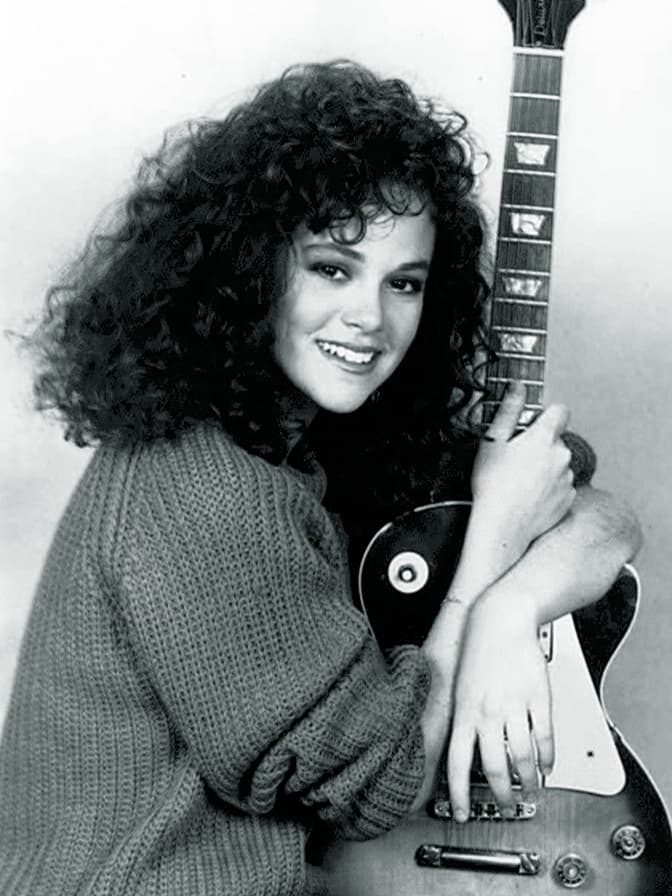
Rebecca Schaeffer is an author known for her work in fiction, particularly in the young adult genre. Her notable book, "Not Even Bones," explores themes of identity and morality in a world filled with supernatural elements. Schaeffer's writing often blends fantasy with contemporary issues, appealing to a diverse readership.
Similar books
- The Cruel Prince
Holly Black
4.1 (216k) average on GoodreadsFantasyWhile both feature morally grey characters in a fantastical setting, 'Not Even Bones' offers a more direct and less romanticized view of power and exploitation, focusing on physical dismemberment and survival rather than political intrigue and courtly machinations. Black's fae world, though dangerous, retains a certain allure, whereas Schaeffer's world is starkly brutal.
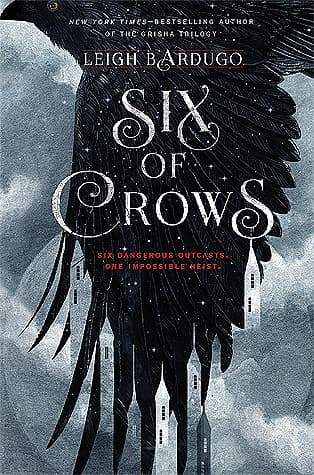
- Six of Crows
Leigh Bardugo
4.4 (316k) average on GoodreadsFantasyBoth novels present protagonists involved in illicit activities, but 'Not Even Bones' delves into a darker, more solitary form of survival. Bardugo's characters are driven by ambition and loyalty within a heist crew, whereas Schaeffer's Nita operates from a place of necessity and personal isolation, with her actions being far more gruesome and ethically challenging on an individual level.
- Angels & Demons
Dan Brown
3.9 (2.7M) average on GoodreadsThrillerA Harvard symbologist races through Rome's ancient sites, deciphering cryptic clues to unmask the Illuminati and stop a vengeful plot to destroy the Vatican with a stolen antimatter weapon.
- Gone Girl
Gillian Flynn
4.1 (2.3M) average on GoodreadsThrillerA wife's sudden disappearance on her fifth anniversary reveals a web of lies and psychological warfare, exposing the secrets within a seemingly perfect marriage.
- The Girl on the Train
Paula Hawkins
3.9 (2.1M) average on GoodreadsThrillerA woman’s fascination with a seemingly perfect couple she watches from her daily train commute leads her into a dark investigation when she witnesses something that shatters their idyllic image.
- The Da Vinci Code
Dan Brown
3.9 (1.9M) average on GoodreadsThrillerA symbologist and a cryptologist race through European landmarks, deciphering ancient codes and uncovering a conspiracy that could rewrite the foundations of Christianity.





Enjoyed the summary?
A summary gives you the shape of the book. The book itself has the detail, the examples and the voice.
Find Not Even Bones on AmazonAs an Amazon Associate, BookBrief earns from qualifying purchases. How we're funded