

Synopsis
Covers the whole plot, including the ending.
- Difficulty
- Hard
- Pacing
- Variable
- Mood
- Introspective, Dark, Challenging, Unsettling, Intellectually Stimulating
- Read it if
- You are a fan of experimental literary fiction, enjoy challenging narratives, and appreciate deep psychological exploration without easy answers.
- Skip it if
- You prefer straightforward plots, lighthearted stories, or traditional genre fiction, or are looking for a clear fantasy, young adult, or romance narrative.
Oblivion Plot Summary
Covers the whole plot, including the ending.
Mr. Squishy
A focus group, including a former Olympic athlete and an anxious man, meets to evaluate 'Mr. Squishy,' a new snack. The product is designed to be very delicious and addictive, raising ethical questions among the participants about its effect on children. A detached facilitator leads the session, recording their reactions and discussions. As the group talks, the conversation moves to philosophy, looking at free will, consumer manipulation, and desire. One member, Mindy, becomes distressed by the product's implications, while a cynical academic tries to intellectualize their moral problem. Tension grows as they try to balance their enjoyment of the snack with their ethical concerns.
The Soul is Not a Smithy
This story focuses on Terry, an adult with severe physical disabilities, as he remembers his traumatic childhood in a hospital. He clearly recalls the oppressive atmosphere, the condescending nurses, and the confusing medical procedures. Terry's narrative is fragmented, mirroring his broken memories and childhood disorientation. He describes trying to understand his situation, often using imagination and internal thoughts. A key memory is a nurse whose interactions with him ranged from indifferent to subtly cruel. The story explores vulnerability, loss of control, and the lasting psychological scars of childhood trauma, all seen through Terry's adult perspective as he deals with his past suffering.
Incarnations of Burned Children
This story shows a domestic tragedy. A young child, left alone for a moment, suffers severe burns from boiling water. The story puts the reader into the immediate aftermath, focusing on the frantic efforts of the child's parents to help and get medical aid. The writing is visceral, detailing the child's screams, the parents' panic, and the physical effects of the burns. The story avoids sentimentality, instead giving a raw account of their desperate actions, from cooling the burns to the agonizing drive to the hospital. It explores the overwhelming helplessness of parents facing sudden, severe injury to their child, and the immediate trauma that shatters their normal lives.
Another Pioneer
Jerome Miller, a struggling and self-aware writer, tries to create a meaningful story in a world full of information and irony. He feels stuck by the amount of data and the perceived impossibility of creating anything original or impactful. Jerome's internal thoughts are a flood of worries, philosophical ideas, and self-deprecating humor. He obsesses over the small details of his daily life, seeing deep meaning in trivial events, yet struggles to connect with real human emotion. The story looks at his creative process, or lack of it, as he constantly doubts his intentions and the truthfulness of his voice. He talks with a few other characters, including a dismissive literary agent, which increases his existential dread about his place in the literary world and culture.
The Suffering Channel
Angela Mathers has a unique and unsettling ability: she can telekinetically create feces. This strange talent brings her both fame and deep personal distress. The story describes her early life, her discovery of this ability, and her attempts to understand and control it. As an adult, she becomes a subject of scientific study and media fascination, leading to her exploitation. Angela struggles with the grotesque nature of her power and the public's morbid curiosity, which takes away her dignity and turns her into a spectacle. The narrative explores body image, the commercialization of the unusual, and the search for identity when faced with an extraordinary and unwelcome gift. Her relationships are strained by her secret, and she longs for a sense of normalcy that seems out of reach.
Mister Squishy (reprise)
The focus group from the earlier story meets again, and the discussion about 'Mr. Squishy' grows more intense. The participants, having thought more about the product and their initial reactions, return with deeper insights and stronger emotional responses. The facilitator, still detached, pushes them to further explain their feelings about the snack's addictive qualities and ethical implications. Personal stories and worries about consumerism and societal manipulation surface, changing the discussion from a product evaluation to a broader critique of modern life. Mindy, still troubled, expresses her moral outrage more forcefully, while the academic continues his intellectual dissection, though with growing unease. The session becomes a small example of societal worries about control, pleasure, and responsibility, leaving the group, and the reader, with no easy answers.
The View from Mrs. Thompson's
This story is a poignant portrayal of a son's relationship with his mentally ill mother, Mrs. Thompson. The narrator, an adult looking back, describes his mother's erratic behavior, her delusions, and the deep impact her condition had on his childhood. He recounts specific events, some darkly humorous, others disturbing, that show the challenges of living with a parent who lives in a broken reality. The narrative explores the complex emotions of love, frustration, and helplessness the son feels towards his mother. He tries to understand her perspective, even as he struggles to maintain his own sanity. The story looks at familial duty, the nature of mental illness, and the lasting effect of a difficult upbringing, all shown with empathy and detached observation.
Another Pioneer (reprise)
Jerome Miller's internal struggle with writing and the overwhelming nature of modern life intensifies. He continues to deal with the perceived impossibility of true expression in a postmodern world. This section shows Jerome pushing his self-awareness to an extreme, analyzing his every thought, intention, and fear about his craft. He becomes even more focused on his analysis of irony, sincerity, and the commercial pressures of publishing. His interactions with others, particularly a new, successful but seemingly empty author, only worsen his worries about his own artistic integrity. The narrative becomes a deeply introspective look at the creative process, the burden of self-consciousness, and the search for meaning in a world that often feels meaningless. Jerome's journey is one of deep existential questioning, without a clear resolution.
Principal Figures
Mindy
Supporting
A focus group participant deeply troubled by ethical implications.
Mindy is a participant in the 'Mr. Squishy' focus groups. She is characterized by her strong moral compass and her visceral discomfort with the manipulative aspects of the snack food. Unlike some of the other participants, she struggles to reconcile her personal enjoyment of the product with her ethical objections, often expressing her distress and outrage directly. She represents the voice of conscience and the struggle against consumerist manipulation.
Relationships: Focus Group Facilitator (Participant-facilitator, often in mild opposition); Other Focus Group Members (Fellow participants, some sharing her concerns, others more detached)
Terry
Protagonist
An adult reflecting on his traumatic childhood hospitalization.
Terry is the central figure in 'The Soul is Not a Smithy.' Now an adult with severe physical disabilities, he recounts his childhood experiences in a hospital. His narrative is marked by a raw vulnerability and a desperate attempt to make sense of his past suffering. He is characterized by his vivid memories, his internal monologues, and his struggle to reclaim agency and understanding from a traumatic period. He represents the enduring impact of childhood trauma and the search for meaning in suffering.
Relationships: Hospital Nurses (Caregivers, often perceived as indifferent or cruel); Other Patients (Fellow sufferers, often observed from a distance)
Jerome Miller
Protagonist
An aspiring writer paralyzed by self-awareness and postmodern anxieties.
Jerome Miller is the protagonist of 'Another Pioneer.' He is an aspiring writer plagued by profound self-consciousness, intellectual anxieties, and a pervasive sense of the overwhelming complexity of modern life. He struggles to create authentic work in a world he perceives as saturated with irony, information, and commercialism. Jerome is highly introspective, prone to philosophical digressions, and deeply insecure about his artistic integrity. He embodies the challenges of creative expression in the contemporary age.
Relationships: Literary Agent (Professional contact, often dismissive); Other Authors (Rivals or inspirations, often exacerbating his insecurities)
Angela Mathers
Protagonist
A woman with the telekinetic ability to create feces.
Angela Mathers is the central character of 'The Suffering Channel.' She possesses a unique and profoundly unsettling telekinetic ability to create feces, which brings her both notoriety and immense personal distress. Angela is characterized by her struggle to understand and control her power, her longing for normalcy, and her alienation from a society that views her as a grotesque spectacle. She embodies themes of body horror, exploitation, and the search for identity in the face of an unwanted, extraordinary gift.
Relationships: Scientists/Media (Exploitative observers of her talent); Romantic Interests (Strained by her secret and public image)
The Focus Group Facilitator
Supporting
A detached professional guiding the 'Mr. Squishy' discussions.
This unnamed facilitator is a key figure in the 'Mr. Squishy' stories. They are characterized by their professional detachment, meticulous note-taking, and their skill in guiding the discussion without revealing personal opinions. Their role is to extract detailed reactions from the participants, often pushing them to articulate their deepest thoughts and feelings about the product. The facilitator represents the corporate, data-driven approach to consumer behavior, often contrasting sharply with the participants' ethical concerns.
Relationships: Focus Group Members (Professional-participant, maintaining a careful distance)
Mrs. Thompson
Supporting
A mentally ill mother seen through her son's eyes.
Mrs. Thompson is the mentally ill mother in 'The View from Mrs. Thompson's.' She is depicted through the adult narrator's memories, characterized by her erratic behavior, delusions, and the profound impact her condition has on her son. She is a figure of both love and profound frustration, embodying the challenges and complexities of living with severe mental illness. Her character highlights themes of familial burden, the nature of reality, and the enduring psychological effects on those around her.
Relationships: Her Son (Narrator) (Mother-son, deeply complex and often strained)
The Burned Child's Parents
Supporting
A couple grappling with their child's horrific accident.
These unnamed parents are the central figures in 'Incarnations of Burned Children.' They are depicted in a state of extreme panic and desperation after their child suffers severe burns. Their actions are driven by instinct, love, and overwhelming helplessness. They represent the universal fear of parental failure and the immediate, shattering trauma of a child's injury. Their raw emotional state and frantic efforts to save their child are the focus of the story, highlighting the fragility of life and the intensity of parental love.
Relationships: Their Child (Parent-child, central to their shared trauma)
The Cynical Academic
Supporting
A focus group member who intellectualizes ethical dilemmas.
A recurring character in the 'Mr. Squishy' focus groups, this unnamed academic approaches the product and its implications from a highly intellectualized, often cynical, perspective. He attempts to dissect the ethical problems through philosophical frameworks, sometimes distancing himself from the immediate emotional impact. He represents intellectualism as both a tool for understanding and a potential barrier to genuine emotional engagement, struggling to reconcile his theoretical knowledge with the visceral reality of consumer manipulation.
Relationships: Focus Group Members (Fellow participants, often debating with or observing others)
Themes & Insights
The Burden of Consciousness and Self-Awareness
Many characters in 'Oblivion' are weighed down by intense self-awareness. Jerome Miller in 'Another Pioneer' constantly analyzes his own motives, his writing, and his place in a postmodern world, leading to creative paralysis. This theme also appears in the focus group members in 'Mr. Squishy,' who know the product is manipulative, even as they enjoy it. The stories suggest that while consciousness can lead to insight, it can also trap individuals in a cycle of anxiety and inaction, making genuine connection or authentic creation difficult. It highlights the isolating effect of too much introspection.
“The truth will set you free, but first it will make you miserable.”
The Grotesque and the Mundane
Wallace often puts the grotesque or unsettling next to the mundane parts of daily life, showing the surreal nature of existence. Angela Mathers's ability to telekinetically create feces in 'The Suffering Channel' is a perfect example, forcing her to live a normal life with an extraordinary, repulsive gift. Similarly, the horrific accident in 'Incarnations of Burned Children' happens in a domestic setting, shattering the ordinary. This theme explores how the bizarre can enter everyday life, challenging ideas of reality and forcing characters (and readers) to face uncomfortable truths about the human body, suffering, and societal reactions to the abnormal.
“It was a fact, a grotesque and undeniable fact, that her power manifested in the most ignoble way imaginable.”
The Search for Authenticity in a Postmodern World
Characters in 'Oblivion' often struggle to find real meaning and express true emotions in a world full of irony, commercialism, and mediated experiences. Jerome Miller's struggle to write something 'real' in 'Another Pioneer' is a main example. The focus group's debate over 'Mr. Squishy' also touches on this, as participants question the truthfulness of their desires when faced with a product designed for addiction. This theme explores the tension between surface appearances and deeper truths, and the desire for unmediated experience in an increasingly artificial world.
“The problem with irony is that it's a cage. It lets you mock, but it never lets you feel.”
Trauma and Memory
Several stories look at the lasting effects of trauma and how memory shapes identity. Terry in 'The Soul is Not a Smithy' recounts his childhood hospitalization, his fragmented memories revealing the lasting psychological scars of his early experiences. The parents in 'Incarnations of Burned Children' are immediately thrown into a traumatic event that will haunt their memories. This theme explores how past suffering continues to influence the present, often twisting perceptions and forcing characters to constantly re-evaluate their understanding of themselves and their personal histories. It highlights the lasting mark that deep suffering leaves on the human mind.
“The past isn't dead. It's not even past.”
Consumerism and Ethical Responsibility
The 'Mr. Squishy' stories directly address the ethical problems of modern consumerism. The focus group participants debate the morality of creating an addictive snack, especially given its effect on children. This theme explores the tension between corporate profit and societal well-being, and the individual's responsibility to resist manipulation. It questions the nature of desire itself, and whether true free will can exist in a commodified world where products are designed to exploit human weaknesses. The stories prompt a critical look at advertising methods and the ethics of pleasure.
“Is pleasure, when manufactured and irresistible, truly pleasure, or merely a sophisticated form of control?”
Plot Devices & Literary Techniques
Stream of Consciousness Narration
Unfiltered portrayal of a character's thoughts and feelings.
Wallace frequently employs stream of consciousness, particularly in 'Another Pioneer' and 'The Soul is Not a Smithy.' This device allows the reader direct access to the character's internal monologue, often presenting thoughts, anxieties, and observations in a fragmented, non-linear fashion. It creates a sense of immediacy and intimacy, immersing the reader in the character's subjective experience. This technique is crucial for conveying the intense self-awareness and intellectual anxieties that plague many of Wallace's protagonists, mirroring the chaotic and overwhelming nature of their inner lives.
Hyperrealism / Extreme Detail
Meticulous and often uncomfortable descriptions of mundane or grotesque elements.
Wallace's prose is characterized by its hyperrealism, providing an almost overwhelming level of detail, whether describing the mechanics of a focus group in 'Mr. Squishy' or the horrific physical effects of burns in 'Incarnations of Burned Children.' This device serves to ground the often abstract or philosophical concerns in a visceral, undeniable reality. It can make the reader uncomfortable, forcing them to confront the raw, unvarnished aspects of existence, and highlights the grotesque beauty or horror found in the minutiae of life. It also contributes to the sense of an overstimulated, information-saturated world.
Metafiction / Self-Referentiality
Story commenting on its own construction or the act of storytelling.
In stories like 'Another Pioneer,' Wallace utilizes metafiction, where the narrative explicitly comments on the act of writing, the nature of fiction, and the challenges of being an author. Jerome Miller's struggles are often reflections on the very craft of storytelling in a postmodern age. This device blurs the line between author and character, text and reality, inviting the reader to consider the artificiality and constructedness of narratives. It also serves to critique literary conventions and explore the difficulties of achieving authenticity in an era of pervasive irony and self-awareness.
Repetition and Variation
Recurring scenes or themes with subtle or significant changes.
The presence of 'Mr. Squishy' and 'Another Pioneer' as distinct, yet related, stories ('Mr. Squishy' and 'Mister Squishy (reprise)', 'Another Pioneer' and 'Another Pioneer (reprise)') exemplifies this device. Wallace revisits characters, scenarios, or themes, but with subtle shifts in perspective, added detail, or heightened intensity. This technique allows for deeper exploration of complex issues, demonstrating how time and reflection can alter perception. It also underscores the idea that certain problems or anxieties are cyclical or enduring, not easily resolved in a single narrative instance, creating a sense of ongoing struggle and introspection.
Oblivion Quotes
“The world is a pretty crappy place, and it's full of people who are just trying to hurt you.”
“Love isn't about finding someone perfect. It's about finding someone who's perfect for you, even if they're a little broken.”
“Sometimes the only way to move forward is to let go of the past, even if it hurts.”
“Magic isn't some grand, flashy thing. It's in the small moments, the quiet whispers, the way the light hits just right.”
“Fear is a liar. It tells you you're not strong enough, not brave enough, not worthy enough. Don't believe it.”
“There's a difference between being alone and being lonely. One is a choice, the other is a feeling.”
“The most dangerous monsters aren't always the ones with fangs and claws. Sometimes they're the ones who look just like us.”
“Hope is a fragile thing, but it's also the strongest. It's what keeps us going when everything else is falling apart.”
“Every story has a beginning, a middle, and an end. But sometimes the end is just another beginning.”
“What you seek is seeking you. You just have to be open enough to see it.”
“The greatest battles are often fought within ourselves, in the quiet corners of our minds.”
“Sometimes the right thing to do is also the hardest thing to do.”
“To forget is to truly lose. To remember, even the pain, is to keep a part of them alive.”
Quiz
10 questions on the plot and the characters. Each answer comes with a short explanation.
Question 1
Which of the following best describes the general tone and subject matter of the stories in 'Oblivion'?
- Lighthearted adventures with clear moral lessons.
- Romantic tales of self-discovery and triumph.
- Explorations of characters' anxieties and hallucinations, delving into the psyche.
- Straightforward realistic narratives of everyday life.
Show answer
C. Explorations of characters' anxieties and hallucinations, delving into the psyche. The provided description emphasizes that Wallace 'gioca felicemente fra le macerie della realtà,' and describes 'Personaggi descritti nelle loro angosce e allucinazioni, scavati fino a zone inesplorate della psiche e della carne.'
Question 2
How many short stories are contained within 'Oblivion'?
- Six
- Seven
- Eight
- Ten
Show answer
C. Eight The description explicitly states, 'Otto romanzi brevi,' which translates to 'Eight short novels' or 'eight short stories' in this context.
Question 3
What kind of protagonist is mentioned as being 'condannato a smascherarsi o ad annientarsi'?
- A multi-murderer in a college setting.
- A young successful person aware of being an impostor.
- A character seeking romance and adventure.
- An individual exploring fantasy realms.
Show answer
B. A young successful person aware of being an impostor. The text states, 'Dal giovane di successo consapevole di essere un impostore, condannato a smascherarsi o ad annientarsi,' directly describing this character type.
Question 4
What specific criticism does the description imply Wallace avoids in his character portrayals?
- Lack of emotional depth.
- Superficial plot development.
- Concessions to psychologisms or conventional realism ('verismo di maniera').
- Overly simplistic language.
Show answer
C. Concessions to psychologisms or conventional realism ('verismo di maniera'). The description states, 'senza mai la benché minima concessione a psicologismi o verismo di maniera,' indicating an intentional avoidance of these stylistic approaches.
Question 5
According to the description, what is one of the broader implications of 'Oblivion' beyond its individual stories?
- That literature should primarily offer escapism.
- That literature can reveal the 'rotten heart of society' and our 'tortured, yet normal, daily life.'
- That fantasy is the only true genre for exploring the human condition.
- That authors should always adhere to traditional narrative structures.
Show answer
B. That literature can reveal the 'rotten heart of society' and our 'tortured, yet normal, daily life.' The text concludes with, 'Oltre le singole storie, questo libro mostra che la letteratura può arrivare al cuore marcio della società e spalancarci il corpo martoriato, eppure così normale, della nostra vita quotidiana.'
Question 6
What characteristic is highlighted about Wallace's approach to reality in 'Oblivion'?
- He strictly adheres to realistic portrayals of reality.
- He completely rejects reality in favor of pure fantasy.
- He 'happily plays among the ruins of reality,' opening new paths.
- He analyzes reality through a scientific, objective lens.
Show answer
C. He 'happily plays among the ruins of reality,' opening new paths. The description states, 'Wallace gioca felicemente fra le macerie della realtà, aprendo nuove vie,' meaning he 'happily plays among the ruins of reality, opening new paths.'
Question 7
Which of the following is NOT listed as a genre for 'Oblivion' in the provided information?
- Fantasy
- Young Adult
- Science Fiction
- Romance
Show answer
C. Science Fiction The provided genres are 'Fantasy, Young Adult, Romance.' Science Fiction is not mentioned.
Question 8
The description mentions a 'pluriomicida che di fronte alla cecità degli altri si scatenerà in un college.' What specific theme does this character's action most strongly suggest regarding society?
- The triumph of good over evil.
- The consequences of societal blindness or indifference.
- The importance of strict law enforcement.
- The inevitability of random violence.
Show answer
B. The consequences of societal blindness or indifference. The phrase 'di fronte alla cecità degli altri si scatenerà' (in front of the blindness of others, he will unleash himself) directly links the character's violent outburst to the 'blindness' or lack of perception/response from others, suggesting societal indifference as a catalyst.
Question 9
How does Wallace's choice of 'tema' and 'forma' in 'Oblivion' differentiate his approach?
- He adheres to traditional themes and forms for wider appeal.
- He focuses solely on historical themes in a documentary style.
- He opens new paths with original and surprising choices in both theme and form.
- He prioritizes form over theme, often sacrificing clarity.
Show answer
C. He opens new paths with original and surprising choices in both theme and form. The text states, 'aprendo nuove vie, nella scelta sia del tema come della forma più originale e sorprendente,' highlighting his innovative approach to both theme and form.
Question 10
Considering the description's emphasis on 'angosce e allucinazioni' and 'zone inesplorate della psiche e della carne,' which literary movement or style does 'Oblivion' seem to challenge or depart from, based on the provided text?
- Surrealism, by being too grounded in reality.
- Existentialism, by offering clear answers to life's meaning.
- Conventional psychologisms and 'verismo di maniera' (realism of manner).
- Postmodernism, by strictly adhering to linear narratives.
Show answer
C. Conventional psychologisms and 'verismo di maniera' (realism of manner). The description explicitly states that characters are 'scavati fino a zone inesplorate della psiche e della carne, senza mai la benché minima concessione a psicologismi o verismo di maniera,' indicating a deliberate move away from conventional psychological analysis and a specific type of realism.
Oblivion FAQ
What is the overarching theme connecting the diverse short stories in 'Oblivion'?
The stories in 'Oblivion' are linked by their exploration of profound human anxieties, existential dread, and the struggle to find meaning or authenticity in a fragmented, often absurd reality. Wallace delves into characters' internal landscapes, revealing their psychological turmoil and the often-unseen complexities beneath societal veneers.
How does Wallace challenge traditional narrative forms in 'Oblivion'?
Wallace subverts conventional storytelling by employing experimental structures, shifting perspectives, and non-linear timelines, often blurring the lines between reality and hallucination. He prioritizes an intimate, often unsettling, portrayal of characters' internal states over straightforward plot progression, pushing the boundaries of what constitutes a 'story'.
Can you describe the typical protagonist found in these novellas?
Protagonists in 'Oblivion' are often intellectually acute yet deeply troubled individuals, grappling with feelings of impostor syndrome, profound alienation, or the weight of unbearable self-awareness. They are frequently trapped in cycles of introspection, paranoia, or delusion, unable to connect authentically with the world around them.
How does 'Oblivion' explore the 'heart marcio della società' (rotten heart of society)?
'Oblivion' exposes the underlying anxieties and moral decay within modern society by dissecting the individual psychological breakdowns of its characters. It suggests that the superficial normalcy of daily life often masks deep-seated corruption, hypocrisy, and a pervasive sense of meaninglessness that afflicts even successful individuals.
What role do 'allucinazioni' (hallucinations) play in the narratives?
Hallucinations serve as a crucial device to blur the line between objective reality and subjective perception, often reflecting the characters' internal turmoil and fractured mental states. They are not merely flights of fancy but often reveal deeper truths about the characters' fears, desires, and the distorted nature of their world, contributing to the unsettling atmosphere.
Is there a recurring motif or symbol that connects multiple stories, even if subtly?
A recurring, albeit subtle, motif is the idea of performance and the struggle for authenticity. Characters often feel like they are performing roles, whether as the 'successful young man' or the 'normal' person, leading to internal conflict and a desperate desire to either unmask themselves or maintain the facade, highlighting a shared existential dilemma.
How does Wallace's background as a writer inform the academic or intellectual settings in some stories?
Wallace's own academic background and intellectual rigor are evident in the detailed, often labyrinthine thought processes of his characters, particularly those in academic or professional settings. This allows him to dissect the pressures, intellectual anxieties, and unique forms of alienation that can arise in environments valuing intellect and achievement.
Are there any intertextual references or allusions to other works of literature or philosophy embedded within the stories?
While not explicitly stated, Wallace's work often engages in a dialogue with postmodern thought, existential philosophy, and literary theory, implicitly referencing ideas from writers like Pynchon or philosophers like Kierkegaard. His intricate prose and meta-narrative elements subtly nod to the complexities of modern and postmodern literary traditions.
How does the author avoid 'psicologismi o verismo di maniera' (psychologizing or facile realism) while still delving deep into the psyche?
Wallace avoids overly simplistic psychological explanations by presenting characters' inner lives through their raw, unfiltered thoughts, obsessions, and sensory experiences rather than through neat diagnostic labels or conventional character arcs. He focuses on the 'texture' of their mental states and emotional anguish, allowing readers to experience their turmoil directly without reductive analysis.
What psychological impact does the 'imposter' archetype have on the character who is 'un giovane di successo consapevole di essere un impostore'?
The imposter archetype creates immense psychological pressure, forcing the character into a constant state of hyper-vigilance and self-monitoring, fearing exposure. This leads to profound self-alienation, as their public persona diverges sharply from their private self-perception, culminating in a choice between self-annihilation (metaphorical or literal) or the terrifying act of revealing their perceived fraudulence.
How does the 'cecità degli altri' (blindness of others) contribute to the multi-homicidal character's actions in the college setting?
The perceived 'blindness of others' acts as a profound psychological trigger for the multi-homicidal character, fueling their rage and sense of isolation. Their violence becomes a desperate, distorted attempt to force recognition or elicit a genuine reaction from a world they perceive as indifferent, superficial, or unable to see their true suffering or existence.
How does 'Oblivion' challenge traditional notions of mental illness or sanity?
The book blurs the lines between sanity and insanity by immersing the reader in the subjective, often distorted, realities of its characters, making their 'abnormal' thoughts feel internally consistent. It suggests that what society labels as mental illness might sometimes be an extreme, albeit dysfunctional, response to a deeply flawed or alienating world, questioning the very definition of normalcy.
Is there a definitive 'message' or moral lesson Wallace intends for readers to take away from 'Oblivion'?
Wallace generally resists offering definitive moral lessons, instead aiming to provoke thought and an uncomfortable recognition of shared human anxieties. If there's a 'message,' it's perhaps an invitation to confront the often-unseen complexities, absurdities, and suffering inherent in the human condition, challenging readers to look beyond superficial realities.
How does the title 'Oblivion' relate to the themes explored in the novellas?
The title 'Oblivion' suggests themes of forgetting, being forgotten, or the desire for non-existence, resonating with the characters' struggles against meaninglessness, their profound alienation, and the fear of being consumed by their own internal worlds. It also hints at the societal tendency to ignore or remain oblivious to deeper truths and suffering.
How do the 'nuove vie, nella scelta sia del tema come della forma più originale e sorprendente' (new paths, in the choice of both theme and the most original and surprising form) contribute to the book's lasting impact?
These innovative choices ensure the book's lasting impact by offering a fresh, often unsettling, reading experience that pushes literary boundaries. By challenging conventional themes and forms, Wallace forces readers to engage more actively with the text, fostering deeper introspection and a unique appreciation for his artistic daring, making the work memorable and thought-provoking.
To what extent can the book be considered a critique of contemporary society and its values?
'Oblivion' functions as a profound critique of contemporary society by exposing the emotional and psychological toll exacted by its pressures, expectations, and superficiality. It suggests that beneath the veneer of progress and success, there lies a profound emptiness and a pervasive sense of alienation that society often fails to acknowledge or address, leading to individual breakdowns.
Despite its dark themes, is there any glimmer of hope or redemption in 'Oblivion'?
Hope or redemption in 'Oblivion' is rarely explicit or easily found; instead, it often lies in the very act of confronting these difficult realities and the raw honesty of Wallace's portrayal. While characters often remain trapped, the book's unflinching exploration of their inner lives can offer a form of catharsis or a deeper understanding for the reader, even if not for the characters themselves.
About the author

David Foster Wallace was an American novelist, short story writer, essayist, and university professor of English and creative writing. Wallace is widely known for his 1996 novel Infinite Jest, which Time magazine cited as one of the 100 best English-language novels from 1923 to 2005. His posthumous novel, The Pale King (2011), was a finalist for the Pulitzer Prize for Fiction in 2012. The Los Angeles Times's David Ulin called Wallace "one of the most influential and innovative writers of the last twenty years".
Similar books
- Infinite Jest
David Foster Wallace
4.3 (74k) average on GoodreadsLiterary FictionShares Wallace's distinctive prose, thematic concerns, and intellectual depth.
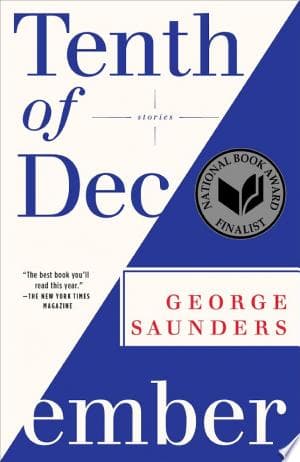
- Tenth of December
George Saunders
4.0 (62k) average on GoodreadsLiterary FictionA collection of short stories with dark humor, social commentary, and unique narrative voices.
- Pastoralia
George Saunders
4.1 (18k) average on GoodreadsLiterary FictionExplores the absurdities and anxieties of modern life through a collection of satirical stories.
- Harry Potter and the Sorcerer's Stone
J.K. Rowling
4.5 (7M) average on GoodreadsFantasyRescued from a miserable life under the stairs, an orphaned boy discovers he's a wizard destined for a magical school, where he uncovers a dangerous secret tied to the dark wizard who murdered his parents.
- The Hunger Games
Suzanne Collins
4.3 (6.4M) average on GoodreadsFantasyIn a future where children fight to the death on live television, Katniss Everdeen volunteers for the arena, turning a death sentence into a fight for survival and a spark of rebellion.
- 1984
George Orwell
4.2 (3.1M) average on GoodreadsPoliticsIn a future where surveillance and thought control are absolute, a man's search for truth clashes with the Party, showing that hope can be a form of rebellion.





Enjoyed the summary?
A summary gives you the shape of the book. The book itself has the detail, the examples and the voice.
Find Oblivion on AmazonAs an Amazon Associate, BookBrief earns from qualifying purchases. How we're funded