
Synopsis
Covers the whole plot, including the ending.
- Difficulty
- Medium
- Pacing
- Moderate
- Mood
- Thought-provoking, somber, empathetic, reflective, poignant
Omnibus Plot Summary
Covers the whole plot, including the ending.
The Chrysanthemums: A Woman's World
Elisa Allen, a strong woman on a ranch with her husband, Henry, finds peace in her chrysanthemum garden. She has a raw energy stifled by her domestic life. When a tinker arrives seeking work, Elisa is drawn to his wandering life and his apparent understanding of her love for flowers. She offers him chrysanthemums to mend, sharing her inner world. After a brief, intense talk where she almost reveals her deeper desires, the tinker leaves. Later, driving with Henry, Elisa sees her discarded chrysanthemums on the road. She realizes the tinker's superficiality and their connection's briefness. This brings a deep feeling of loneliness and unfulfilled desire.
The Red Pony: The Gift
Ten-year-old Jody Tiflin, living on his family's ranch in the Salinas Valley, receives a red pony named Gabilan from his father, Carl. Jody is thrilled and cares for the pony, learning about responsibility. Billy Buck, the ranch hand, promises Jody the pony will not get sick. But Gabilan falls ill with strangles. Despite Billy's efforts and Jody's desperate prayers, the pony worsens. Jody sees the harshness of nature and the limits of human help. The pony dies, leaving Jody heartbroken and disappointed, his first major experience with loss and a broken promise.
The Red Pony: The Great Mountains
Gitano, an old, quiet paisano who once lived on the ranch, returns to die in the mountains where he was born. Carl Tiflin, Jody's father, first wants to send him away, but Gitano's quiet resolve to return to his homeland is firm. Jody is curious about Gitano and the mysterious 'great mountains' in the distance. He senses a link between Gitano and the wild mountains, a world beyond his father's practical view. Gitano eventually takes an old horse, Easter, and vanishes into the mountains. This leaves Jody with a lasting sense of wonder and a deeper understanding of life's cycle and the pull of one's origins.
The Red Pony: The Promise
Jody is promised a new colt if his mare, Nellie, can deliver it safely. Billy Buck, feeling responsible for Gabilan's death, wants Nellie to foal successfully. But the birth becomes difficult, and Billy decides to save the colt by sacrificing Nellie. Jody sees this brutal act, witnessing the raw process of birth and death together. He is horrified and fascinated by the blood and struggle, and the stark reality of ranch life. The colt's birth, though through a violent sacrifice, shows life continuing, but it also confirms Jody's understanding of life's harshness and inevitable loss.
The Red Pony: The Leader of the People
Jody's maternal grandfather, a former wagon master who led people across the plains, visits. Grandfather often tells stories of leading people west, a journey that defined his life. Carl Tiflin, Jody's father, grows tired of these repeated tales, seeing them as old and irrelevant. Jody, however, listens carefully, sensing the importance of his grandfather's past. He begins to understand the generational difference and America's changing landscape, where the era of great adventures is fading. Grandfather's stories, though tedious to Carl, link to a past era and a different kind of heroism.
Flight: Pepé's Downfall
Pepé, a naive young man, lives with his mother and siblings in a remote California valley. His mother gives him a new saddle, a sign of his coming of age. Impulsively, Pepé goes to a nearby town, drinks too much, and kills a man in a drunken fight. He flees into the wilderness, pursued. His journey is a desperate flight for survival, marked by hunger, thirst, and constant pressure from his pursuers. He loses his horse, then his rifle, and eventually his dog, shedding the symbols of his former life and becoming more vulnerable. He is eventually cornered and killed, a tragic result of his youthful impulsiveness and the wild's unforgiving nature.
The Long Valley: The Snake
Dr. Phillips, a scientist, visits a ranch to buy a snake for his research. He is methodical and objective, focused only on his scientific work. But Mrs. Blanca, the rancher's wife, reacts to the snake with an intense, almost primitive fear. Her reaction is emotional, a strong contrast to Dr. Phillips's scientific view. The scene highlights the basic difference between intellectual understanding and instinctual response, and how fear can be deeply ingrained and irrational. The snake, a symbol of both scientific curiosity and ancient dread, shows the gap between their two worlds.
The Long Valley: The Harness
Peter Randall, a hardworking and outwardly respectable farmer, secretly desires prostitutes. He maintains an ordered life, working hard and caring for his wife, Emma. But when Emma becomes ill, Peter cannot keep up his facade. He confesses his secret life to a friend, revealing his internal struggle between his public image and his private desires. The 'harness' represents the limits of society and the burden of keeping a false identity. His confession, though painful, offers a look into human nature's complexities and the hidden lives people lead.
The Long Valley: Johnny Bear
Johnny Bear, a man with a mental disability and a talent for mimicking sounds, is used by a tavern owner for the entertainment of his customers. The owner has Johnny Bear imitate the private talks of the townspeople, making a show of their secrets. The story explores exploitation, the vulnerability of the mentally disabled, and human curiosity. Johnny Bear, seemingly unaware of his actions' implications, becomes a tool for others' amusement, showing the moral ambiguities and darker aspects of community life.
The Long Valley: The Raid
Two young labor organizers, traveling through a rural area, try to get migrant workers to strike. They face hostility and suspicion from the local community, which resists their message of unionization. The organizers receive threats and violence, ending in a brutal attack. The story shows the realities faced by labor activists in the 1930s, the deep fear of social change, and the power imbalance between landowners and workers. It highlights the courage and idealism of those fighting for social justice, even against great opposition and personal danger.
The Long Valley: Saint Katy the Virgin
Katy, a known prostitute, changes completely after a chance meeting with a pig. She becomes a religious woman, eventually becoming a saint. The story is a satirical look at religious conversion, sainthood, and the human tendency to worship figures, regardless of their past. It questions the nature of holiness and the often-unconventional paths to spiritual understanding. Katy's journey from sinner to saint, though humorous, also explores redemption and the power of belief, however strange the cause.
The Long Valley: The White Quail
Mary Teller is obsessed with keeping her garden perfect, especially a rare white quail she believes embodies this perfection. Her husband, Harry, finds her meticulousness suffocating and her attachment to the quail unsettling. Mary's need for control extends to all parts of her life, making her rigid and emotionally distant. The white quail becomes a symbol of her ideal and her inability to accept life's messy realities. When the quail dies by accident, Mary's carefully built world shatters, showing her emotional fragility and the destructive nature of her obsessive pursuit of perfection.
Omnibus Characters
Elisa Allen
Protagonist
A passionate woman stifled by domesticity.
Elisa is a strong, capable woman in her late thirties, living on a ranch. She possesses a vibrant, almost masculine energy, channeled into her chrysanthemum garden. She is intelligent and observant, but feels unfulfilled and isolated in her marriage and daily life. She yearns for deeper connection and recognition of her inner world, which she briefly believes she finds in the tinker.
Relationships: Henry Allen (husband); The Tinker (brief, symbolic connection)
Jody Tiflin
Protagonist
A young boy's journey through childhood and loss.
Jody is a ten-year-old boy growing up on a ranch in the Salinas Valley. He is initially naive and enthusiastic, eager to learn and take on responsibility. Throughout the stories, he experiences significant milestones: the joy of ownership, the pain of loss, the harsh realities of nature, and the complexities of human relationships. He is sensitive and observant, constantly learning about life and death.
Relationships: Carl Tiflin (father); Ruth Tiflin (mother); Billy Buck (mentor/ranch hand); Grandfather (maternal grandfather)
Billy Buck
Supporting
The reliable, yet fallible, ranch hand.
Billy Buck is the experienced and knowledgeable ranch hand on the Tiflin ranch. He is a skilled horseman and animal caretaker, often serving as a mentor figure to Jody. He is generally dependable and good-natured, but his pride and good intentions sometimes lead to unfortunate outcomes, particularly with Gabilan. He embodies the practical, hard-working spirit of ranch life.
Relationships: Jody Tiflin (mentor/friend); Carl Tiflin (employer)
Carl Tiflin
Supporting
Jody's pragmatic and sometimes stern father.
Carl Tiflin is Jody's father and the owner of the ranch. He is a practical, hardworking man, somewhat stern and often impatient with sentimentality. He believes in teaching Jody responsibility and the harsh realities of ranch life. While he loves his son, he struggles to express affection and often appears distant, embodying the stoic nature of many men of his time and place.
Relationships: Jody Tiflin (son); Ruth Tiflin (wife); Grandfather (father-in-law)
Pepé
Protagonist
A young man whose impulsiveness leads to tragedy.
Pepé is a young, somewhat naive and impulsive man living with his mother and siblings in a remote valley. He is proud of his heritage and his physical prowess, but lacks foresight and judgment. His youth and inexperience make him vulnerable to the consequences of his actions, leading to a desperate flight for survival after a fatal mistake. He represents the tragic figure caught between youthful recklessness and the unforgiving world.
Relationships: His Mother (mother)
Peter Randall
Protagonist
A farmer concealing a secret life.
Peter Randall is an outwardly respectable and diligent farmer, known for his hard work and meticulous care of his farm and his wife, Emma. Beneath this facade of normalcy, however, he harbors a secret life fueled by a strong, hidden desire for prostitutes. He is a man torn between societal expectations and his personal urges, leading to a life of quiet hypocrisy and internal conflict.
Relationships: Emma Randall (wife)
Mary Teller
Protagonist
A woman consumed by the pursuit of perfection.
Mary Teller is a woman whose life is dominated by an obsessive need for order, beauty, and perfection, particularly in her garden. She is meticulous and emotionally rigid, finding solace in control and the pristine. Her attachment to a white quail symbolizes her idealized world, which is fragile and easily shattered by the unpredictable realities of life. She struggles with emotional detachment and the inability to cope with imperfection.
Relationships: Harry Teller (husband)
Grandfather (Jody's)
Supporting
A relic of a bygone era of American expansion.
Jody's maternal grandfather is an elderly man who once led wagon trains across the plains during the westward expansion. He is proud of his past achievements and frequently recounts his stories, which are often dismissed as tedious by Carl Tiflin. He represents a fading generation and a different kind of American heroism, one rooted in exploration and communal leadership, providing Jody with a connection to history and a sense of wonder.
Relationships: Jody Tiflin (grandson); Carl Tiflin (son-in-law)
Omnibus Themes
The Cycle of Life and Death
This theme is clear, especially in 'The Red Pony' stories. Steinbeck shows life and death not as opposites, but as parts of a continuous cycle in nature. Jody sees a colt born and his beloved mare die, and his pony die. This theme emphasizes the natural order, where growth and decay are inseparable, and highlights the certainty of loss and life's resilience.
“The high part of the mountain was dark against the sky. Gitano disappeared into the mountains. Jody knew that Gitano was going to die in the mountains.”
Loneliness and Isolation
Many characters deal with loneliness, often from unfulfilled desires or a lack of real connection. Elisa Allen's inner world is largely private, leading to isolation despite her marriage. Peter Randall lives a double life, separating him from true intimacy. This theme explores the human condition of being alone, even with others, and the struggle to communicate one's inner self.
“She stood up and walked toward the house, thinking about the tinker, and about the chrysanthemums she had given him. She was crying now, and she didn't know why.”
The Conflict Between Nature and Civilization
Steinbeck often contrasts nature's raw power with human attempts to control or understand it. The wilderness is often both beautiful and harsh. Pepé's flight into the mountains ('Flight') shows nature's indifference, while the Tiflin ranch highlights the constant struggle to manage the natural world. This theme also touches on instinct versus intellect, as seen in 'The Snake'.
“The wind was rising, and the air was cold. There was no sound but the movement of the brush, and the occasional whir of a bird. Pepé was alone.”
The Loss of Innocence and Disillusionment
This theme is strongest in 'The Red Pony,' as Jody experiences ranch life's harshness. His initial innocence and trust are broken by Gabilan's death and Nellie's sacrifice. He learns that promises can be broken, and life is often cruel. This theme explores the painful but necessary process of growing up, where one faces the world's imperfections and gains a more realistic understanding of existence.
“Jody looked at the colt. It was a beautiful colt, but it had cost too much. He didn't want it.”
The Burden of Secrets and Hidden Lives
Several stories look at the internal conflicts and social pressures that make characters hide parts of themselves. Peter Randall's secret desires ('The Harness') and the townspeople's private affairs revealed by Johnny Bear ('Johnny Bear') are examples. The theme explores the psychological cost of keeping up a facade, the hypocrisy that can exist in people and communities, and the often-darker parts of human nature that remain hidden.
“He lived a good life, a clean, honest life, but he had this one thing that was not good, not clean, not honest, and it was a part of him.”
Plot Devices & Literary Techniques
Symbolism
Objects representing deeper meanings.
Steinbeck frequently uses objects to represent complex ideas or emotions. The chrysanthemums in 'The Chrysanthemums' symbolize Elisa's repressed passion and creativity. The red pony, Gabilan, in 'The Red Pony' represents Jody's innocence, joy, and ultimately, his first encounter with loss. The new saddle in 'Flight' symbolizes Pepé's coming of age and responsibility. These symbols enrich the narratives, providing layers of meaning beyond the literal plot.
Foreshadowing
Hints of future events.
Steinbeck subtly incorporates hints and clues that suggest future developments, building tension and a sense of inevitability. Billy Buck's confident promise that Gabilan won't get sick foreshadows the pony's illness and death. The description of Pepé's impulsiveness and lack of judgment hints at his tragic downfall. This device creates dramatic irony and prepares the reader for the story's outcomes, making the events feel predestined rather than random.
Regionalism and Local Color
The distinct flavor of the Salinas Valley.
Steinbeck's writing is deeply rooted in the specific setting of the Salinas Valley, California. He meticulously describes the landscape, the climate, the dialect, and the customs of the people who live there. This device not only creates a strong sense of place but also makes the characters and their struggles feel authentic and deeply connected to their environment. The struggles of farmers, ranch hands, and migrant workers are inextricably linked to this particular region.
Quiz
10 questions on the plot and the characters. Each answer comes with a short explanation.
Question 1
What is the primary setting for the majority of John Steinbeck's 'Omnibus' stories?
- New York City
- The Salinas Valley in California
- A small town in the Dust Bowl
- The fishing villages of Monterey
Show answer
B. The Salinas Valley in California Many of Steinbeck's most famous works, including those often collected in omnibus editions, are set in the Salinas Valley of California, where he grew up.
Question 2
Which of these recurring themes is most prominent in Steinbeck's 'Omnibus'?
- The struggles of the urban working class
- The exploration of outer space
- The lives and struggles of migrant workers and the rural poor
- The complexities of political intrigue
Show answer
C. The lives and struggles of migrant workers and the rural poor Steinbeck frequently wrote about the hardships faced by migrant workers, farmers, and the economically disadvantaged, particularly during the Great Depression.
Question 3
What is the typical tone of the stories found in 'Omnibus'?
- Lighthearted and comedic
- Satirical and cynical
- Melancholy and empathetic
- Action-packed and suspenseful
Show answer
C. Melancholy and empathetic While Steinbeck's work can have moments of hope, the overall tone often reflects the hardships and sorrows of his characters, fostering empathy.
Question 4
The character of George Milton and Lennie Small are famously associated with which Steinbeck novel, often included in omnibus collections?
- The Grapes of Wrath
- Of Mice and Men
- Cannery Row
- East of Eden
Show answer
B. Of Mice and Men George and Lennie are the central characters of 'Of Mice and Men', a novella that is frequently part of Steinbeck's omnibus editions.
Question 5
In 'The Grapes of Wrath', the Joad family is forced to leave their home due to what environmental catastrophe?
- A massive flood
- A volcanic eruption
- The Dust Bowl droughts and ecological devastation
- A widespread plague
Show answer
C. The Dust Bowl droughts and ecological devastation The Joad family's migration is a direct result of the Dust Bowl, which made farming impossible in their Oklahoma homeland.
Question 6
What is the name of the philosophical and often eccentric character who runs the Western Biological Laboratory in 'Cannery Row'?
- George Milton
- Tom Joad
- Doc
- Casy
Show answer
C. Doc The character of 'Doc' Retsil is the central figure around whom much of the action in 'Cannery Row' revolves.
Question 7
Steinbeck's novella 'The Pearl' is set in which coastal region?
- The coast of Maine
- The coast of Mexico
- The coast of Florida
- The coast of California
Show answer
B. The coast of Mexico 'The Pearl' is set in a small fishing village on the coast of Mexico, drawing on local folklore.
Question 8
In 'East of Eden', the Trask and Hamilton families' intertwined destinies are often seen as a modern retelling of which biblical story?
- Noah's Ark
- The story of Cain and Abel
- The Tower of Babel
- The Fall of Adam
Show answer
B. The story of Cain and Abel The novel explicitly draws parallels between the Trask family's conflicts, particularly between brothers, and the biblical story of Cain and Abel.
Question 9
What literary device does Steinbeck frequently employ to give voice to the collective consciousness and experiences of groups of people, particularly in works like 'The Grapes of Wrath'?
- Stream of consciousness
- Epistolary narrative
- Intercalary chapters (or 'intercalations')
- Magical realism
Show answer
C. Intercalary chapters (or 'intercalations') Steinbeck uses intercalary chapters in 'The Grapes of Wrath' to provide broader social, historical, and philosophical context, often speaking for the migrant experience as a whole.
Question 10
Which of Steinbeck's works is often considered his most ambitious and sprawling family saga, exploring themes of good and evil across generations?
- Tortilla Flat
- The Moon Is Down
- East of Eden
- Travels with Charley
Show answer
C. East of Eden 'East of Eden' is Steinbeck's magnum opus, a sweeping novel that delves deep into the complex relationships and moral struggles of two families over many generations.
Omnibus FAQ
What is John Steinbeck's Omnibus about?
Omnibus is a collection of John Steinbeck's most beloved novels, including 'The Grapes of Wrath,' 'Of Mice and Men,' and 'East of Eden.' It offers readers a comprehensive journey through Steinbeck's masterful storytelling and his exploration of the American experience.
Is 'Omnibus' a single story or a collection?
'Omnibus' is not a single narrative but rather a curated collection of John Steinbeck's most significant and celebrated works. It brings together several of his iconic novels into one volume.
What themes are explored in Steinbeck's Omnibus?
The collection delves into profound themes such as the struggles of the working class, the pursuit of the American Dream, family relationships, social injustice, and the resilience of the human spirit. Steinbeck often focuses on the lives of ordinary people in extraordinary circumstances.
Which novels are typically included in 'Omnibus'?
While editions can vary, 'Omnibus' commonly features major works like 'The Grapes of Wrath,' 'Of Mice and Men,' 'Cannery Row,' 'The Pearl,' and 'East of Eden.' It aims to showcase the breadth of Steinbeck's literary achievements.
Is 'Omnibus' suitable for new readers of John Steinbeck?
Yes, 'Omnibus' is an excellent starting point for anyone new to John Steinbeck's writing. It provides access to some of his most influential and accessible works, allowing readers to discover his distinctive voice and powerful narratives.
How does 'Omnibus' compare to reading Steinbeck's novels individually?
Reading 'Omnibus' offers a convenient way to access multiple classic Steinbeck novels at once, often at a reduced cost compared to purchasing them separately. It's ideal for readers who want to immerse themselves in Steinbeck's world.
What is the historical context of the novels in 'Omnibus'?
Many of the novels within 'Omnibus' are set during significant periods of American history, particularly the Great Depression and World War II. Steinbeck's work often reflects the social, economic, and political conditions of these eras.
Can I find specific editions or annotated versions of 'Omnibus'?
Yes, 'Omnibus' editions can range from standard paperback collections to more deluxe hardcover versions, sometimes including introductions or critical essays. Specific annotated versions might be available depending on the publisher and edition.
What kind of reading experience can I expect from 'Omnibus'?
You can expect a deeply moving and thought-provoking reading experience. Steinbeck's prose is known for its realism, emotional depth, and vivid portrayals of characters and landscapes, often exploring universal human struggles.
Is 'Omnibus' a good gift for a literature lover?
'Omnibus' makes an exceptional gift for any literature enthusiast, especially those who appreciate classic American fiction. It's a substantial and valuable collection of timeless stories.
About the author
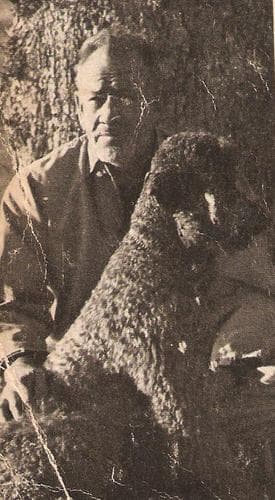
John Ernst Steinbeck was an American writer. He won the 1962 Nobel Prize in Literature "for his realistic and imaginative writings, combining as they do sympathetic humor and keen social perception". He has been called "a giant of American letters."
Similar books
- Nineteen Eighty-Four
George Orwell
4.2 (5.5M) average on GoodreadsFictionWinston Smith dreams of truth and rebellion in a world where Big Brother watches all, but he confronts the terrifying power of a regime that controls not just actions, but thoughts.
- The Frozen River
Ariel Lawhon
4.4 (600k) average on GoodreadsFictionIn 1789 Maine, a heroic midwife's diary helps her expose a murder and get justice in a town that wants to silence her.
- A Man Called Ove
Fredrik Backman
4.4 (569k) average on GoodreadsFictionA stubborn widower, who lives by strict rules, finds his quiet world changed by a lively new family next door, making him face his past and find happiness in human connection.
- The Art of Racing in the Rain
Garth Stein
4.2 (452k) average on GoodreadsFictionThrough the eyes of Enzo, a wise and observant dog, a race car driver's family navigates a journey of love, loss, and resilience, learning that life's most important lessons often come in the curves, not just on the straightaways.
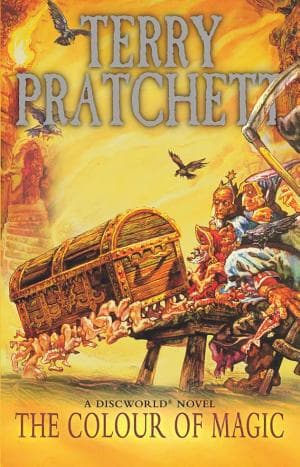
- The Colour of Magic
Terry Pratchett
4.0 (425k) average on GoodreadsFictionOn a discworld hurtling through space on the back of a giant turtle, an inept wizard and his naive, walking-luggage-toting tourist embark on a chaotic, belief-fueled journey to the very edge of their flat planet, encountering dragons that only exist if you believe in them.
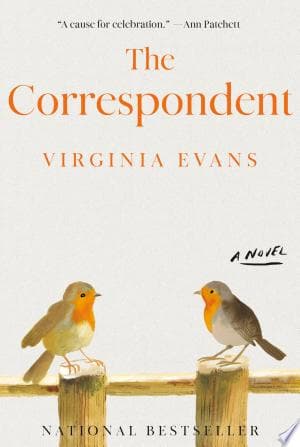
- The Correspondent
Virginia Evans
4.5 (391k) average on GoodreadsFictionA distinguished lawyer's life of carefully written letters, both sent and unsent, reveals a past heartbreak, making her confront forgiveness and the power of written words.




Enjoyed the summary?
A summary gives you the shape of the book. The book itself has the detail, the examples and the voice.
Find Omnibus on AmazonAs an Amazon Associate, BookBrief earns from qualifying purchases. How we're funded