

Synopsis
Covers the whole plot, including the ending.
- Difficulty
- Easy
- Pacing
- Moderate
- Mood
- Heartwarming, Emotional, Hopeful, Realistic
- Read it if
- You enjoy heartwarming stories about found family, resilience, and the struggles of children in foster care. Perfect for readers who appreciate emotional depth and character-driven narratives.
- Skip it if
- You prefer fast-paced adventure stories or complex fantasy worlds, or if you are not in the mood for an emotionally intense, realistic portrayal of a child's journey through trauma and healing.
One for the Murphys Plot Summary
Covers the whole plot, including the ending.
A New Beginning, Reluctantly
Twelve-year-old Carley Connors is removed from her mother's care in Las Vegas after her mother's boyfriend, Dennis, physically abuses her. She is placed into the foster care system and driven to a new home in Connecticut. Her social worker, Mrs. MacAvoy, takes her to the Murphys, a family consisting of Julie Murphy, her husband, and their three sons: Daniel (thirteen), Michael Eric (six), and Adam (three). Carley, hardened by her past and distrustful of adults, immediately feels out of place in their warm, loving environment. She struggles to accept their kindness, particularly Mrs. Murphy's efforts to connect with her, and maintains an emotional distance, convinced that her stay with them is only temporary.
First Impressions and Lingering Doubts
Upon arrival, Carley is given her own room, which she finds overwhelming in its 'girliness.' She immediately clashes with Daniel, who resents her presence and makes it clear he doesn't want her there. Carley, defensive and quick to anger, responds similarly. She observes the Murphys' family rituals, like their nightly 'High-Low' game where they share the best and worst parts of their day, and finds them foreign. Despite Mrs. Murphy's patient attempts to draw her out, Carley remains guarded, constantly comparing their stable life to her chaotic past with her mother. She finds solace in reading and tries to avoid interacting with the family as much as possible, especially Daniel.
School, Scrutiny, and Small Victories
Carley starts at a new school, where she immediately faces scrutiny from her classmates, particularly from a girl named Toni, who questions her about her foster status. Carley, embarrassed, deflects and maintains her tough exterior. She struggles academically at first, having missed a significant amount of school. However, Mrs. Murphy helps her catch up, offering support and tutoring. Slowly, Carley begins to form a tentative bond with the younger boys, Michael Eric and Adam, who are openly affectionate and less judgmental than Daniel. She finds herself protecting Michael Eric from a neighborhood bully, displaying a protective instinct she didn't realize she possessed, which surprises both her and Daniel.
Breaking Down Barriers
The relationship between Carley and Daniel gradually begins to shift. After Carley stands up for Michael Eric against a bully, Daniel sees a different side of her. He later asks her to teach him basketball, an activity she is good at. During their time on the court, they start to communicate more openly, and Carley discovers Daniel's passion for art. She also sees him struggle with his own insecurities, making him more relatable. These shared moments, along with Mrs. Murphy's kindness and the affection from Michael Eric and Adam, slowly break down Carley's defenses. She starts to participate in family activities and even finds herself enjoying them, experiencing a sense of belonging she'd never known.
A Glimmer of Hope and a Mother's Visit
As the weeks pass, Carley finds herself increasingly integrated into the Murphy family. She helps with chores, enjoys their outings, and even starts to refer to their house as 'home.' She feels a growing love for the younger boys and a deep respect for Mrs. Murphy. She begins to think that she might actually stay with them permanently, a thought that both excites and terrifies her. However, the arrival of her mother for a supervised visit brings a wave of conflicting emotions. Her mother, while seemingly trying, still exhibits signs of her old ways, and Carley feels torn between her loyalty to her biological mother and her growing love for the Murphys.
Loyalty and Heartbreak
During a second visit, Carley's mother confides in her that she is getting her life together, has a new apartment, and plans to take Carley back to live with her in Las Vegas. This news shatters Carley's fragile sense of security. While part of her yearns for her mother, the thought of leaving the Murphys, especially Michael Eric and Adam, fills her with dread. She struggles to reconcile her loyalty to her mother with the happiness and stability she has found with the Murphys. The impending decision weighs heavily on her, and she begins to withdraw again, fearing the pain of separation from the family she has come to love.
The Basketball Game and an Unspoken Farewell
A basketball game arrives, and Carley, a talented player, is a key part of the team. Both the Murphys and Carley's mother attend, creating a tense atmosphere. Carley plays well, showing her skill and focus. During the game, she feels the support of the Murphys, particularly Daniel's cheers. However, the knowledge that her mother plans to take her back hangs over her. After the game, her mother confirms her intention to move Carley back to Las Vegas. The Murphys, though heartbroken, understand the legalities and try to offer Carley strength and love during this difficult transition, knowing their time together is drawing to a close.
A Tearful Goodbye
The day of Carley's departure arrives. It is an emotional farewell, particularly with Michael Eric and Adam, who are too young to fully understand but feel the sadness. Carley exchanges goodbyes with Daniel, acknowledging their journey from animosity to friendship. Her goodbye with Mrs. Murphy is especially poignant, filled with unspoken gratitude and love. Carley leaves behind a letter for the Murphys, expressing her deepest feelings and acknowledging the impact they've had on her life. As she drives away with her mother, Carley carries the memories and the love of the Murphy family, changed by her time with them, but also facing an uncertain future.
Principal Figures
Carley Connors
Protagonist
A tough, guarded twelve-year-old learning to trust and love in foster care.
Carley is a resilient, street-smart twelve-year-old from Las Vegas. Due to a traumatic past involving an abusive stepfather and an often-absent mother, she has developed a tough exterior and a deep distrust of adults and emotional vulnerability. She is quick-witted, sarcastic, and initially resistant to the Murphys' kindness, viewing it with suspicion. Throughout the book, she gradually opens up, revealing a hidden capacity for love, protectiveness, and loyalty. She is a talented basketball player and finds solace in reading. Her journey is about learning to accept love and recognizing her own worth beyond her past experiences.
Relationships: Mrs. Murphy (Foster mother, mentor, and source of unconditional love); Daniel Murphy (Initially antagonistic foster brother, later friend and confidant); Michael Eric Murphy (Affectionate younger foster brother, whom Carley protects); Adam Murphy (Youngest foster brother, who adores Carley); Carley's Mother (Biological mother with whom Carley has a complicated, loyal, but often disappointing relationship)
Julie Murphy (Mrs. Murphy)
Supporting
Carley's compassionate and patient foster mother.
Mrs. Murphy is the warm, understanding, and infinitely patient foster mother who takes Carley into her home. She is the emotional anchor of the Murphy family, embodying unconditional love and a deep commitment to helping children. She consistently offers Carley kindness, understanding, and a stable environment, never giving up on her despite Carley's initial resistance. She uses gentle encouragement and thoughtful gestures to help Carley feel safe and valued. Her 'High-Low' game is a key tool in fostering communication and emotional openness within her family, and she is the first adult to truly 'see' Carley.
Relationships: Carley Connors (Foster mother who provides a safe and loving home); Mr. Murphy (Husband and co-parent); Daniel Murphy (Son); Michael Eric Murphy (Son); Adam Murphy (Son)
Daniel Murphy
Supporting
Carley's initially resentful, but ultimately supportive, foster brother.
Daniel is the thirteen-year-old middle child of the Murphys, just a year older than Carley. Initially, he is resentful and unwelcoming towards Carley, viewing her as an intrusion on his family and personal space. He is moody and artistic, often drawing in his sketchbook. Over time, as he witnesses Carley's protectiveness towards his younger brothers and her basketball skills, his animosity transforms into respect and then friendship. He learns to see beyond her tough exterior and appreciate her true self, eventually becoming a supportive figure for her, particularly during her basketball game.
Relationships: Carley Connors (Initially antagonistic foster brother, later friend); Mrs. Murphy (Mother); Mr. Murphy (Father); Michael Eric Murphy (Younger brother); Adam Murphy (Youngest brother)
Michael Eric Murphy
Supporting
Carley's six-year-old affectionate foster brother.
Michael Eric is the six-year-old middle child of the Murphys, a sweet and openly affectionate boy. He quickly warms to Carley, despite her initial aloofness, and his innocent love and need for protection help to melt Carley's tough exterior. He is often the catalyst for Carley's protective instincts, such as when she defends him from a bully. His uncomplicated adoration is a significant factor in Carley's ability to open her heart and feel a sense of belonging with the Murphys. He represents the pure, unreserved love of childhood.
Relationships: Carley Connors (Foster sister whom he adores); Mrs. Murphy (Mother); Mr. Murphy (Father); Daniel Murphy (Older brother); Adam Murphy (Younger brother)
Adam Murphy
Supporting
The youngest and most innocent of Carley's foster brothers.
Adam is the three-year-old youngest child of the Murphy family. He is characterized by his toddler innocence, boundless energy, and immediate, unquestioning affection for Carley. His simple needs and loving nature further contribute to Carley's emotional thawing. He often climbs into her lap and seeks her attention, making her feel needed and loved in a way she hasn't experienced before. His presence highlights Carley's growing capacity for tenderness and maternal feelings, even though she is still a child herself.
Relationships: Carley Connors (Foster sister whom he adores); Mrs. Murphy (Mother); Mr. Murphy (Father); Daniel Murphy (Older brother); Michael Eric Murphy (Older brother)
Carley's Mother
Supporting
Carley's biological mother, struggling with her own issues.
Carley's biological mother is a complex character who, despite loving Carley, struggles with instability, poor judgment, and an inability to provide a safe and consistent home. She is often depicted as well-meaning but ultimately unreliable, having exposed Carley to dangerous situations and neglect. While she makes efforts to reconnect with Carley and promises a better future, her past actions and present inconsistencies create deep conflict for Carley, who feels a strong loyalty to her but also recognizes the security and love she finds with the Murphys. Her decisions ultimately lead to Carley's departure from the Murphys.
Relationships: Carley Connors (Biological daughter)
Mr. Murphy
Supporting
Carley's kind and steady foster father.
Mr. Murphy is the quiet, supportive, and kind patriarch of the Murphy family. While Mrs. Murphy often takes the lead in emotional matters, Mr. Murphy provides a steady, reassuring presence. He is loving towards his sons and welcoming to Carley, offering a strong, stable male role model. He is patient and understanding, allowing Carley the space she needs while also making her feel like a part of the family. His consistent presence contributes to the overall sense of security and normalcy that Carley experiences in the Murphy home.
Relationships: Mrs. Murphy (Wife and co-parent); Daniel Murphy (Son); Michael Eric Murphy (Son); Adam Murphy (Son); Carley Connors (Foster daughter)
Mrs. MacAvoy
Supporting
Carley's social worker.
Mrs. MacAvoy is Carley's social worker, responsible for her placement and well-being in the foster care system. She is professional, compassionate, and dedicated to finding the best possible environment for Carley. She acts as a bridge between Carley's past and present, providing necessary information and guidance. While her role is primarily administrative, she shows genuine care for Carley's emotional state and development, observing her progress with the Murphys and ensuring her safety and needs are met.
Relationships: Carley Connors (Social worker responsible for her case)
Themes & Insights
Family and Belonging
The central theme explores what makes a family beyond biological ties. Carley, initially believing her biological mother is her only family, slowly learns to accept the love and stability offered by the Murphys. The book contrasts Carley's chaotic biological family life with the Murphys' warm, functional dynamics, showing how genuine care, routine, and unconditional love create a true sense of belonging. Carley's internal struggle between loyalty to her mother and her growing attachment to the Murphys highlights the complexities of finding where one truly belongs.
“And I thought, this is what a family does. They don't just love you when it's easy. They love you when you're a mess, when you're not speaking, when you're mad. They love you anyway.”
Identity and Self-Worth
Carley's journey is deeply tied to discovering her own identity and self-worth. Having grown up feeling unloved and invisible, she initially defines herself by her tough exterior and her past trauma. The Murphys, particularly Mrs. Murphy, help Carley to see herself as capable, intelligent, and worthy of love. Through their consistent affirmation and by encouraging her talents (like basketball), Carley begins to shed her defensive layers and understand that her past does not define her future. She learns to value her own feelings and needs, moving towards a healthier sense of self.
“Before the Murphys, I thought 'home' was just a place you lived. After, I knew it was a feeling, a place where you were loved no matter what.”
Trust and Vulnerability
Having been betrayed and neglected, Carley finds it difficult to trust others, especially adults. Her initial interactions with the Murphys are marked by suspicion and emotional walls. The theme explores the hard process of learning to be vulnerable and open oneself up to love and potential hurt. Mrs. Murphy's patience and the innocent affection of Michael Eric and Adam slowly break down Carley's defenses, allowing her to take the risk of trusting and forming deep attachments. This vulnerability ultimately leads to both joy and pain for Carley.
“It was hard to let people in, because once they were in, they could leave. Or hurt you. And I was tired of hurting.”
The Power of Empathy and Kindness
The Murphys, especially Mrs. Murphy, show the power of empathy and consistent kindness. Despite Carley's initial hostility and guardedness, the family treats her with respect, understanding, and unwavering love. Their ability to 'see' Carley beyond her tough facade and offer her a safe space without judgment is important to her healing. This theme shows how genuine compassion can break down emotional barriers and help growth, proving that even a small act of kindness can have a big impact on someone's life.
“Mrs. Murphy didn't just hear what I said. She heard what I didn't say. She always did.”
Plot Devices & Literary Techniques
The 'High-Low' Game
A family ritual for sharing daily experiences and fostering communication.
The 'High-Low' game is a daily ritual the Murphy family uses where each member shares the 'high' (best part) and 'low' (worst part) of their day. For Carley, this device initially represents the foreign and uncomfortable openness of the Murphy family, highlighting her guarded nature. As the story progresses, her participation, however reluctant, signifies her gradual integration and the breaking down of her emotional walls. It serves as a symbol of the Murphys' healthy communication and emotional transparency, contrasting sharply with Carley's past where such sharing was impossible.
Basketball
A metaphor for control, skill, and a bridge for relationships.
Basketball serves as a significant plot device and metaphor for Carley. It's an area where she possesses undeniable skill and confidence, providing her with a sense of control and self-worth that is often lacking in other areas of her life. Initially, it's her escape, but it later becomes a bridge for connection, particularly with Daniel. Teaching Daniel basketball allows them to bond outside of the emotional intensity of the house, fostering mutual respect. The final basketball game becomes a public stage where both her past and present families converge, symbolizing her divided loyalties and her performance under pressure.
Carley's Notebook/Drawing
A private outlet for Carley's thoughts and emotions.
While not explicitly a notebook for drawing, Carley's internal monologues and her observations of Daniel's drawing habit highlight the importance of private expression. Carley often retreats into her own mind, observing and analyzing, much like an artist sketches. The act of Daniel drawing and Carley recognizing his talent serves as a point of connection between them, suggesting that creative outlets can be a way to process difficult emotions and communicate when words fail. It symbolizes their shared, albeit initially hidden, sensitive sides.
The 'Girlie' Bedroom
A symbol of Carley's discomfort with feminine identity and unfamiliar comfort.
The bedroom Mrs. Murphy prepares for Carley, filled with 'girlie' decorations, initially makes Carley deeply uncomfortable. It represents an unfamiliar world of softness, innocence, and femininity that she feels she doesn't belong in. Her preference for dark, plain clothes and her rejection of the room's decor highlight her tough exterior and her resistance to embracing a more conventional, vulnerable identity. As she slowly adjusts to the Murphys, the room subtly becomes less threatening, symbolizing her gradual acceptance of comfort and her own blossoming identity.
One for the Murphys Quotes
“Sometimes you have to be a little bit brave to be a little bit kind.”
“Families are like puzzles. They fit together in weird ways, but when they do, it's perfect.”
“You can't change the past, but you can let it change you.”
“Home isn't a place. It's a feeling.”
“Sometimes the people who are supposed to love you the most are the ones who hurt you the worst.”
“It's okay to be scared. It means you're about to do something really brave.”
“You don't have to be blood to be family.”
“The hardest part about loving someone is letting them go.”
“Sometimes the quietest people have the loudest hearts.”
“You can't help where you come from, but you can help where you're going.”
“Real strength isn't about not crying. It's about crying and then getting back up.”
“The world doesn't end when you make a mistake. It just gives you a chance to try again.”
“Sometimes the people who save us are the ones we least expect.”
Quiz
10 questions on the plot and the characters. Each answer comes with a short explanation.
Question 1
What event causes Carley Connors to enter foster care at the beginning of the book?
- Her mother's sudden illness
- A betrayal by her mother
- Her running away from home
- A car accident that injures her mother
Show answer
B. A betrayal by her mother The book opens with Carley being placed in foster care after a betrayal by her mother, though the specific details of this betrayal unfold gradually in the story. This event sets the entire plot in motion.
Question 2
How many boys are in the Murphy family that Carley is placed with?
- Two
- Three
- Four
- One
Show answer
B. Three The Murphy family has three boys: Daniel (who is almost Carley's age) and two younger brothers. This is explicitly mentioned in the book description.
Question 3
What activity does Carley teach Daniel Murphy that helps improve their relationship?
- How to cook
- How to play basketball
- How to ride a bike
- How to do homework
Show answer
B. How to play basketball Carley teaches Daniel how to play basketball, which becomes a bonding activity between them and helps break down his initial resentment toward her presence in the family.
Question 4
Why is Daniel Murphy initially resentful of Carley's presence in his family?
- He thinks she will take his bedroom
- He is jealous of the attention she receives from his parents
- He believes she is a troublemaker
- He doesn't like sharing his toys with her
Show answer
B. He is jealous of the attention she receives from his parents Daniel feels threatened by Carley's arrival because he worries she will disrupt the family dynamics and take attention away from him, especially since they are close in age. This resentment gradually diminishes as they bond.
Question 5
What protective action does Carley take toward the younger Murphy boys that demonstrates her growing attachment to the family?
- She helps them with their chores
- She protects them from a neighborhood bully
- She tutors them in school subjects
- She buys them gifts with her allowance
Show answer
B. She protects them from a neighborhood bully Carley stands up to a neighborhood bully who is threatening the younger Murphy boys, showing her protective instincts and how she is beginning to see herself as part of their family unit.
Question 6
Which character makes Carley feel 'heard and seen for the first time' according to the book description?
- Daniel Murphy
- Mr. Murphy
- Mrs. Murphy
- Carley's mother
Show answer
C. Mrs. Murphy Mrs. Murphy provides Carley with emotional support and validation that she hasn't experienced before, helping Carley begin to trust and open up in the foster home environment.
Question 7
What major theme of the book is highlighted by Carley's question 'Do happy families really exist?'
- The importance of education
- The search for belonging and family
- The challenges of urban life
- The value of financial stability
Show answer
B. The search for belonging and family Carley's journey centers on discovering what family means and whether she can find a place where she truly belongs, making 'belonging and family' a central theme of the novel.
Question 8
What shakes Carley's world just as she's beginning to feel like she could be 'one of the Murphys'?
- News from her mother
- A fight with Daniel
- The Murphys deciding to move away
- Her school expelling her
Show answer
A. News from her mother The book description specifically mentions that news from Carley's mother disrupts her growing sense of belonging with the Murphys, creating a major conflict in the story's climax.
Question 9
How does Carley's upbringing in Las Vegas with her 'fun-loving mother' influence her initial behavior with the Murphys?
- It makes her overly trusting and naive
- It causes her to keep her distance and be suspicious
- It leads her to immediately embrace the Murphy family
- It makes her resent all authority figures
Show answer
B. It causes her to keep her distance and be suspicious Carley's past experiences have taught her to be tough and self-reliant, causing her to initially maintain emotional distance from the Murphys and view their happy family life with skepticism.
Question 10
What does Carley's protection of the Murphy boys from the neighborhood bully symbolize in her character development?
- Her desire to return to her old life
- Her growing attachment and willingness to defend her new family
- Her need to prove her physical strength
- Her attempt to impress Mrs. Murphy
Show answer
B. Her growing attachment and willingness to defend her new family This action represents a turning point where Carley moves from being a detached observer to actively engaging with and protecting the Murphy family, showing her emotional investment in her new relationships.
One for the Murphys FAQ
What is 'One for the Murphys' about?
The novel follows twelve-year-old Carley Connors, who is placed in foster care with the Murphy family after a betrayal by her mother. Initially resistant, Carley gradually bonds with Mrs. Murphy and the three boys, learning about trust and family while grappling with her past.
Why should I read 'One for the Murphys'?
It's a heartfelt exploration of resilience, found family, and emotional healing, with relatable characters and themes of belonging. The story balances hope and hardship, making it impactful for readers interested in personal growth and family dynamics.
What is the background/setting of 'One for the Murphys'?
Carley grows up in Las Vegas with her mother before being placed in foster care in Connecticut with the Murphy family. The setting contrasts her chaotic past with the structured, suburban environment of the Murphys, highlighting her adjustment.
What are the most memorable quotes?
Key quotes include Carley's reflection, 'Sometimes you have to lose your way to find yourself,' and Mrs. Murphy's advice, 'Family isn't always blood. It's the people who love you when you're not so lovable.' These capture the book's themes of self-discovery and unconditional love.
What writing style does the author use?
Lynda Mullaly Hunt employs a first-person narrative from Carley's perspective, using conversational and emotionally raw prose. The style blends humor and poignancy, effectively conveying Carley's inner turmoil and growth.
What minor details add significant meaning?
Small details like Carley initially refusing to unpack her suitcase symbolize her fear of attachment, while her eventual participation in family routines, such as dinners, marks her gradual acceptance into the Murphy household.
What are some subtle foreshadowing moments?
Early scenes where Carley feels 'blindsided' by happiness hint at impending disruption, and her mother's sporadic contact foreshadows the later news that threatens Carley's stability with the Murphys.
What unexpected character connections exist?
Carley and Daniel start as resentful rivals but bond over basketball, revealing shared vulnerabilities. Similarly, Carley's protection of the younger boys from a bully mirrors her own need for safety, creating unexpected alliances.
What are unspoken character motivations?
Carley's toughness masks a deep fear of abandonment, driving her initial distance from the Murphys. Daniel's resentment stems from insecurity about his place in the family, not genuine dislike for Carley.
What psychological complexities do characters exhibit?
Carley exhibits complex trauma responses, vacillating between defiance and vulnerability. Mrs. Murphy shows patience and empathy, balancing her role as a foster parent with the challenges of integrating Carley into a pre-existing family dynamic.
What are the major emotional turning points?
Key moments include Carley defending the Murphy boys from a bully, teaching Daniel basketball, and receiving devastating news from her mother. Each event deepens her connections or forces her to confront her past.
How do relationship dynamics evolve?
Carley's relationship with Mrs. Murphy grows from suspicion to mutual trust, while her bond with Daniel shifts from hostility to camaraderie. Her interactions with the younger boys evolve from indifference to protective affection.
Which parts remain ambiguous or open-ended?
The novel leaves Carley's long-term future with the Murphys uncertain, emphasizing her ongoing journey rather than a fixed resolution. Her mother's ultimate role in her life is also left open to interpretation.
What are controversial scenes or decisions?
Carley's mother's betrayal and subsequent attempts to re-enter her life spark debate about forgiveness and parental responsibility. Some readers may question Carley's initial resistance to the Murphys' kindness.
'One for the Murphys' ending explained: how it ends & what it means
The ending sees Carley facing a choice between her mother and the Murphys after shocking news. It underscores themes of belonging and self-worth, suggesting that family is defined by love and support, not just biology.
About the author

Lynda Mullaly Hunt is an author known for her works of fiction aimed at young readers. Her notable books include "One for the Murphys," which explores themes of family and resilience, and "Shouting at the Rain," a story about friendship and personal growth. Hunt's writing often addresses important social issues faced by children and adolescents.
Similar books
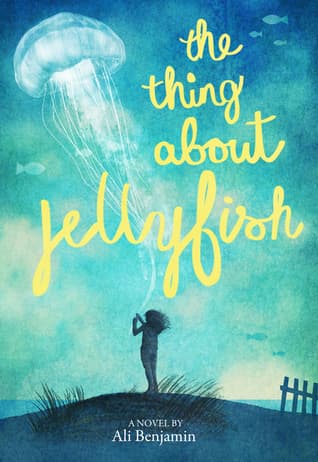
- The Thing About Jellyfish
Ali Benjamin
4.1 (27k) average on GoodreadsChildren'sFeatures a young protagonist dealing with grief and finding her place in the world, with a focus on emotional depth.
- The Remarkable Journey of Coyote Sunrise
Dan Gemeinhart
4.5 (10k) average on GoodreadsChildren'sA story about a resilient child finding a new family and healing from past trauma during a journey.
- The Giver
Lois Lowry
4.1 (1.8M) average on GoodreadsFantasyLowry's 'The Giver' also features a young protagonist in a challenging environment but operates on a much broader, allegorical scale, exploring societal structures and philosophical concepts. 'One for the Murphys' is more focused on the personal, emotional journey of a single child within a realistic social context, making it more immediately relatable for readers interested in personal emotional struggles rather than grander societal critiques.
- Harry Potter and the Sorcerer's Stone
J.K. Rowling
4.5 (7M) average on GoodreadsFantasyRescued from a miserable life under the stairs, an orphaned boy discovers he's a wizard destined for a magical school, where he uncovers a dangerous secret tied to the dark wizard who murdered his parents.
- The Hobbit, or There and Back Again
J.R.R. Tolkien
4.3 (2.9M) average on GoodreadsFantasyA comfort-loving hobbit named Bilbo Baggins is whisked away by a mischievous wizard and a band of dwarves on an unexpected journey to reclaim stolen treasure from a fearsome dragon, discovering courage and a magical ring along the way.
- Harry Potter and the Goblet of Fire
J.K. Rowling
4.6 (2.6M) average on GoodreadsFantasyA bewildered Harry Potter, underage and thrust into a deadly Triwizard Tournament, must brave dragons, mermaids, and a resurgent dark magic to survive a year that will forever alter the wizarding world.





Enjoyed the summary?
A summary gives you the shape of the book. The book itself has the detail, the examples and the voice.
Find One for the Murphys on AmazonAs an Amazon Associate, BookBrief earns from qualifying purchases. How we're funded