

Synopsis
Covers the whole plot, including the ending.
- Difficulty
- Easy
- Pacing
- Moderate
- Mood
- Whimsical, Humorous, Heartwarming, Innocent
- Read it if
- You enjoy lighthearted, episodic humor and charming, innocent mischief.
- Skip it if
- You prefer complex plots, serious themes, or stories without repetitive character antics.
Paddington Goes to Town Plot Summary
Covers the whole plot, including the ending.
A Spot of Decorating
Mrs. Brown decides the living room at 32 Windsor Gardens needs redecorating. Paddington, eager to help, chooses wallpaper. He returns with an unusual roll featuring a pattern of small, identical men. When he applies it, he struggles with the paste and the paper's tendency to curl. Eventually, he gets a large section on the wall, only for it to slowly peel off and drape over the furniture, creating a sticky, papery mess. Mr. Brown arrives home to find the living room in disarray and Paddington covered in paste, leading to a comical but ultimately failed redecorating project. The 'men' on the wallpaper turn out to be a repetitive motif that disorients anyone who looks at it for too long.
Paddington and the Cold Snap
A sudden cold snap grips London, making Paddington feel the chill, especially in his rather drafty bedroom. He decides to take a bus ride to warm up, finding the upper deck particularly cozy. However, he accidentally leaves his marmalade sandwiches on the seat when he gets off. When he returns to retrieve them, he finds the bus has moved. His attempts to follow it lead him on a long chase across London, and he eventually ends up on a bus heading in the wrong direction, far from Windsor Gardens. He eventually gets back home, feeling even colder but having had an unexpected adventure across the city.
A Visit to the Hospital
Mr. Curry, the Browns' grumpy next-door neighbor, has an accident and ends up in the hospital. Paddington, always well-meaning, decides to visit him, bringing a jar of marmalade. His presence at the hospital, however, quickly leads to chaos. He mistakes a doctor for a patient, tries to 'help' with a medical procedure, and generally causes confusion. He attempts to cheer up Mr. Curry by sharing his marmalade, but his antics attract the attention of a psychiatrist, who attempts to analyze Paddington's unusual behavior, only to find himself completely baffled by the bear's logic and innocent chaos. The staff are left bewildered, and Mr. Curry is arguably more agitated than comforted.
Paddington and the 'Baked Elastic'
Mrs. Brown is hosting a party and asks Paddington to help with the dessert. Eager to contribute, Paddington decides to bake a surprise cake. Following a recipe he finds, he misunderstands 'elastic' as an ingredient, thinking it refers to a type of dough. He incorporates a significant amount of rubber bands into his mixture, believing it will make the cake 'springy'. When the dessert is served, guests are utterly baffled and struggle to cut through the incredibly tough, rubbery confection. Mrs. Brown is mortified, and the guests are left with a memorable, if unappetizing, culinary experience, all thanks to Paddington's literal interpretation of the recipe.
Trouble at the Launderette
Paddington is sent to the launderette with a basket of the family's washing. He carefully loads the clothes into a machine, but in his enthusiasm to get everything clean, he accidentally adds a bright red sock from his own laundry in with the Browns' white clothes. Unaware of the potential consequences, he sets the machine going. When the cycle finishes, he discovers that all the white items, including Mr. Brown's shirts and Mrs. Brown's tablecloths, have turned a distinct shade of pink. He returns home to a surprised and slightly exasperated Brown family, who are left to deal with their newly colored wardrobe.
Paddington's Rock Collection
Paddington develops a new hobby: collecting interesting rocks and pebbles. He gathers several large specimens and decides to take them home on a bus. He places a particularly heavy, round boulder on the seat next to him. As the bus rounds a corner, the boulder rolls off the seat, gaining momentum down the aisle. It causes a chain reaction, knocking over bags and parcels, and eventually comes to rest against the driver's foot pedal, causing the bus to swerve erratically. Panic ensues among the passengers until the driver manages to regain control. Paddington, oblivious to the full extent of the chaos he's caused, is merely concerned about retrieving his prized rock.
A Bear at the Hairdresser's
Feeling his fur is getting a bit long, Paddington decides to visit a hairdresser. He enters a bustling salon, causing some initial confusion among the staff who are unaccustomed to bears as clients. He tries to explain his desired haircut, but his instructions are misinterpreted. As the hairdresser attempts to trim his fur, Paddington fidgets and accidentally snips off a lock of the hairdresser's own hair with the scissors. Chaos erupts as other customers become involved, and Paddington's simple trim turns into a memorable, if not entirely successful, salon experience, leaving the hairdresser utterly flustered.
Paddington and the School Play
Jonathan and Judy Brown are rehearsing for their school play, and Paddington offers to help with the props and backstage duties. During the performance, his well-intentioned efforts lead to several comical mishaps. He accidentally pulls a curtain down at the wrong moment, releases a prop bird too early, and causes a piece of scenery to collapse. The children on stage struggle to maintain their composure amidst the chaos. Despite the disruptions, the audience finds Paddington's unintentional contributions highly entertaining, and the play, though far from perfect, becomes a memorable event thanks to the bear's unique brand of backstage assistance.
A Spot of Fishing
On a rare sunny day, Paddington decides to try his hand at fishing in a nearby canal. He sets up his fishing rod and patiently waits. After some time, he feels a tug on his line. Expecting a fish, he pulls with all his might, only to reel in an old boot. Disappointed but undeterred, he casts his line again. This time, he hooks something much larger and heavier. With great effort, he manages to pull it out of the water, revealing not a fish, but a rusty old bicycle. He returns home, triumphant but fishless, with his unusual 'catch' much to the amusement of the Brown family.
Paddington Goes to Town
The Brown family takes Paddington to a large department store in town. Excited by the many floors and departments, Paddington soon gets separated from the family. His independent exploration leads to a series of comical incidents. He gets stuck in a revolving door, tries on too many hats in the millinery department, and accidentally activates a display model of a vacuum cleaner, causing it to chase a salesperson. He eventually finds the Browns, but not before leaving a trail of innocent chaos and bewildered staff in his wake, cementing his reputation for turning everyday outings into extraordinary adventures.
Paddington Goes to Town Characters
Paddington Bear
Protagonist
A polite, well-meaning bear from Darkest Peru with a penchant for marmalade and accidental chaos.
Paddington is an anthropomorphic bear, discovered by the Brown family at Paddington Station. He is always well-meaning and tries his best to do things correctly, often following instructions very literally. He is inherently optimistic, polite, and has a strong sense of justice, though his attempts to help or solve problems invariably lead to comical misunderstandings and chaos. He carries a suitcase and wears a duffel coat and a hat, under which he keeps a marmalade sandwich for emergencies. His innocence and unique perspective on the world are the primary drivers of the book's humor.
Relationships: Mr. Brown (Adoptive father, often exasperated but affectionate); Mrs. Brown (Adoptive mother, patient and loving); Jonathan Brown (Adoptive son, friend and playmate); Judy Brown (Adoptive daughter, friend and playmate); Mrs. Bird (Housekeeper, often stern but fond); Mr. Curry (Grumpy next-door neighbor, often the victim of Paddington's accidents)
Mr. Brown
Supporting
The head of the Brown family, often the first to be exasperated by Paddington's antics.
Mr. Brown is a kind but somewhat conventional man who initially harbored reservations about adopting a bear. He is often the most flustered and bewildered by Paddington's mishaps, frequently finding himself in sticky situations as a result of the bear's innocent chaos. Despite his exasperation, he is deeply fond of Paddington and always stands by him, even when facing public embarrassment or domestic disarray. He represents the voice of reason and routine that is constantly challenged by Paddington's unpredictable nature.
Relationships: Paddington Bear (Adoptive father figure, often bewildered); Mrs. Brown (Wife, partner in raising Paddington); Jonathan Brown (Son); Judy Brown (Daughter)
Mrs. Brown
Supporting
The kind and patient matriarch of the Brown family, who first found Paddington.
Mrs. Brown is a warm, understanding, and remarkably patient woman who immediately took to Paddington upon finding him at Paddington Station. She is often the calmest presence amidst the chaos Paddington creates, capable of seeing the good intentions behind his mistakes. She is the one who encourages the family to be tolerant and understanding of Paddington's unique ways, often smoothing over difficulties and defending him. Her love and acceptance are central to Paddington's sense of belonging within the family.
Relationships: Paddington Bear (Adoptive mother figure, very patient and loving); Mr. Brown (Husband, partner in raising Paddington); Jonathan Brown (Son); Judy Brown (Daughter)
Jonathan Brown
Supporting
One of the Brown children, a friend and playmate to Paddington.
Jonathan is the son of Mr. and Mrs. Brown and Judy's brother. He and Judy are usually the first to embrace Paddington's adventures and often find his antics highly amusing, even when they lead to trouble. Jonathan is a typical schoolboy, curious and energetic, and he enjoys Paddington's company, often getting involved in the bear's schemes or helping him out of predicaments. He represents the youthful perspective that finds wonder and fun in Paddington's unique way of navigating the world.
Relationships: Paddington Bear (Adoptive brother, friend); Judy Brown (Sister); Mr. Brown (Father); Mrs. Brown (Mother)
Judy Brown
Supporting
The daughter of the Brown family, who shares adventures with Paddington.
Judy is the daughter of Mr. and Mrs. Brown and Jonathan's sister. Like her brother, she is fond of Paddington and often joins in his escapades. She is generally sensible but also possesses a childlike enthusiasm for Paddington's unique perspective on life. She often acts as a sounding board for Paddington's ideas or helps to explain his intentions to the adults. Her relationship with Paddington is one of genuine affection and companionship, and she often finds his mishaps more entertaining than frustrating.
Relationships: Paddington Bear (Adoptive brother, friend); Jonathan Brown (Brother); Mr. Brown (Father); Mrs. Brown (Mother)
Mrs. Bird
Supporting
The Browns' stern but secretly fond housekeeper.
Mrs. Bird is the Browns' housekeeper, a no-nonsense woman who initially viewed Paddington with skepticism. She is practical, efficient, and often the voice of common sense in the household. While she frequently expresses disapproval of Paddington's chaos, her stern exterior often hides a deep affection and concern for the bear. She is often the one to clean up Paddington's messes or offer him a quiet word of advice, demonstrating a grudging but genuine fondness for him. She represents the traditional British sensibility that Paddington inadvertently challenges.
Relationships: Paddington Bear (Employer's adopted bear, often exasperated by but fond of); Mr. Brown (Employer); Mrs. Brown (Employer)
Mr. Curry
Supporting
The Browns' grumpy, penny-pinching next-door neighbor, often the victim of Paddington's mishaps.
Mr. Curry is the Browns' perpetually grumpy and miserly next-door neighbor. He frequently tries to take advantage of Paddington's good nature, often attempting to get the bear to do chores for him for little or no pay. However, his schemes almost always backfire spectacularly, usually resulting in him being the one to suffer the consequences of Paddington's innocent mishaps. He serves as a foil to Paddington's good intentions and provides many opportunities for comical retribution, often getting his just desserts.
Relationships: Paddington Bear (Neighbor, often the unwitting victim of Paddington's chaos); The Brown Family (Neighbors)
The Psychiatrist
Mentioned
A hospital professional baffled by Paddington's unique logic.
Encountered during Paddington's visit to the hospital, the psychiatrist attempts to understand Paddington's unusual behavior and thought processes. He represents the scientific, rational mind trying to comprehend the utterly unique and innocent logic of a bear from Darkest Peru. His interaction with Paddington highlights the bear's unshakeable self-belief and innocent interpretation of the world, leaving the professional utterly bewildered and unable to apply conventional psychological frameworks.
Relationships: Paddington Bear (Patient/subject of study (from his perspective), source of bafflement)
Paddington Goes to Town Themes
Innocent Chaos and Misunderstanding
A central theme is how Paddington's pure intentions and literal interpretations of the world invariably lead to comical chaos and misunderstandings. Whether he's trying to redecorate with sticky wallpaper, baking a cake with 'elastic,' or helping at a school play, his actions, though well-meaning, always result in unforeseen and often hilarious consequences. This theme highlights the clash between Paddington's unique bear-logic and the conventions of human society, as seen when he baffles a psychiatrist or turns the family's laundry pink. His inability to grasp human nuance is the engine of much of the book's humor.
“Things always happen when Paddington is around,' Mrs. Brown often said, though she usually added, 'but he always means well.”
The Importance of Belonging and Acceptance
Despite the constant chaos Paddington brings, the Brown family consistently accepts and loves him. This theme shows the importance of belonging, even for someone as unconventional as a bear from Peru. From Mrs. Brown's initial decision to take him in to the family's unwavering support, Paddington is always made to feel part of the family. Even Mrs. Bird and the children, who often bear the brunt of his mishaps, show deep affection. This acceptance allows Paddington to remain true to himself, knowing he has a safe and loving home, as evident in their patience during the 'baked elastic' incident or the redecorating disaster.
“A bear's a bear,' said Mrs. Brown, 'and we wouldn't have him any other way.”
The Humour of Everyday Life
The book finds humor in mundane, everyday situations, transforming them into extraordinary events through Paddington's unique perspective. A simple bus ride becomes a cross-city chase, a visit to the hospital turns into a psychiatric puzzle, and a trip to the launderette results in a pink wardrobe. This theme celebrates the idea that even the most ordinary tasks can become sources of amusement and adventure when viewed through an unconventional lens. It reminds readers to find joy and laughter in the unexpected twists that life, especially with a bear, can bring.
“Paddington always seemed to find the most unusual way of doing things, even if it was only buying a bun.”
Justice and Retribution (Accidental)
While Paddington is always well-meaning, his actions often inadvertently create a form of poetic justice, particularly for characters like Mr. Curry. Mr. Curry's attempts to exploit Paddington or his general grumpiness frequently backfire on him, with Paddington's innocent mishaps causing him to suffer comical consequences. For instance, when Paddington visits him in the hospital, Mr. Curry's discomfort is amplified by the bear's well-intentioned but chaotic presence. This theme suggests that good intentions, even when leading to chaos, can sometimes result in fitting, if accidental, retribution for those who are unkind or selfish.
“Mr. Curry usually found that when Paddington was involved, things rarely went his way.”
Plot Devices & Literary Techniques
Misinterpretation of Language
Paddington's literal understanding of English words often leads to comical errors.
This device is a primary source of humor. Paddington, as an immigrant bear, often takes idioms or instructions literally, leading to absurd situations. For example, his misinterpretation of 'elastic' in a recipe for 'baked elastic' or his choice of wallpaper with 'men' on it because he thought it sounded like a good idea. This device highlights the cultural and linguistic differences between Paddington and the human world, creating misunderstandings that drive the plot of many chapters, such as his attempts at redecorating or baking.
Accidental Cause and Effect
Paddington's actions, though innocent, trigger a chain of unexpected and often chaotic events.
This device is central to the narrative structure of most Paddington stories. One small, innocent action by Paddington (e.g., placing a rock on a bus seat, adding a red sock to laundry) invariably leads to a larger, more chaotic outcome (a boulder rolling down the aisle, all white clothes turning pink). The humor stems from the disproportionate consequences of his minor actions and his obliviousness to the full extent of the chaos he creates. This device ensures that every attempt Paddington makes to help or explore results in an unpredictable adventure.
The Innocent Outsider
Paddington's perspective as a bear from Peru provides a unique, unjaded view of human customs.
Paddington's status as an 'outsider' allows the author to gently satirize human behavior and social conventions. Because he approaches the world with a bear's logic and no preconceived notions, he often exposes the absurdities of everyday life. His interactions with a psychiatrist or his observations in a department store highlight the contrast between conventional human behavior and his own straightforward, sometimes naive, understanding. This perspective allows for both humor and a subtle commentary on the world.
Running Gag
Recurring elements or phrases that provide consistent comedic relief.
Several elements act as running gags throughout the book. Paddington's love for marmalade sandwiches, which he always keeps under his hat 'for emergencies,' is a consistent feature. The recurring exasperation of Mr. Brown and Mr. Curry, and Mrs. Bird's stern but fond pronouncements, also serve as running gags. These repeated elements reinforce character traits and provide familiar points of humor for the reader, creating a sense of continuity and predictability within the unpredictable world of Paddington.
Paddington Goes to Town Quotes
“Bears, even very small bears, can be very useful creatures to have about the house.”
“It was very important to Paddington that everything should be just right.”
“Things are always happening when Paddington's about.”
“A bear of very few words, but a bear of many actions.”
“He always believed in doing things properly, even if it took a little longer.”
“It's always best to be prepared for anything, especially when you're a bear.”
“One never knows what might happen next, especially in London.”
“He might be small, but he had a very big heart.”
“Paddington always tried to do his best, even if his best sometimes led to unexpected results.”
“It was a good thing he always carried a spare marmalade sandwich.”
“Life with Paddington was never dull.”
“He was a very polite bear, even when he was feeling a bit put out.”
“There was always room for another adventure.”
“A bear with a plan, even if the plan sometimes went awry.”
Quiz
10 questions on the plot and the characters. Each answer comes with a short explanation.
Question 1
What unusual item does Paddington bring onto a bus, causing it to careen down the aisle?
- A large suitcase
- A boulder
- A picnic basket
- A sack of marmalade
Show answer
B. A boulder The book description explicitly states that 'a boulder rolls down the aisle of a bus, sending the entire carload careening,' which is one of Paddington's misadventures.
Question 2
Who is the housekeeper for the Brown family who has learned to expect the unexpected with Paddington around?
- Mrs. Brown
- Mrs. Bird
- Mrs. Sally
- Mrs. Cook
Show answer
B. Mrs. Bird The text mentions, 'Even Mrs. Bird, the housekeeper, has learned that there's no knowing what's likely to happen when he's around,' identifying her role.
Question 3
From what location did Paddington originally come from before joining the Brown family?
- Deepest Africa
- The Amazon Rainforest
- Darkest Peru
- The North Pole
Show answer
C. Darkest Peru The description states that Paddington is 'that irresistible bear from Darkest Peru,' a key detail of his origin story.
Question 4
What type of professional is left 'baffled' by Paddington during a hospital visit?
- A surgeon
- A nurse
- A staff psychiatrist
- A general practitioner
Show answer
C. A staff psychiatrist The summary mentions, 'if a visitor to the hospital leaves even the staff psychiatrist baffled,' highlighting Paddington's impact.
Question 5
What is the unexpected texture of the 'surprise dessert' discovered by a hostess, due to Paddington's involvement?
- Baked brick
- Baked elastic
- Baked wood
- Baked metal
Show answer
B. Baked elastic The text directly states, 'if a hostess discovers her surprise dessert is 'baked elastic,'' attributing this unusual outcome to Paddington.
Question 6
Which phrase best describes the overall effect Paddington has on situations, according to the book description?
- He brings calm and order.
- He makes things predictably boring.
- He turns things merrily, unpredictably topsy-turvy.
- He causes minor, easily resolved inconveniences.
Show answer
C. He turns things merrily, unpredictably topsy-turvy. The final sentence summarizes Paddington's influence: 'that bear turns things merrily, unpredictably topsy-turvy,' which is a central theme.
Question 7
What is the address of the Brown family, where Paddington resides?
- 24 Baker Street
- 32 Windsor Gardens
- 10 Downing Street
- 4 Privet Drive
Show answer
B. 32 Windsor Gardens The opening sentence specifies, 'There's been no end to the chaos at 32 Windsor Gardens since Paddington... joined the Brown family.'
Question 8
The title of the book, 'Paddington Goes to Town,' suggests what about Paddington's activities in this particular installment?
- He is literally leaving the city to visit a rural town.
- He is traveling to a specific town for a holiday.
- He is causing significant, widespread commotion and excitement, living up to the idiom 'going to town.'
- He is attending a town hall meeting.
Show answer
C. He is causing significant, widespread commotion and excitement, living up to the idiom 'going to town.' The phrase 'goes to town' is an idiom meaning to do something with great energy or enthusiasm, often causing a lot of activity or impact, which aligns with the description of Paddington's chaotic adventures.
Question 9
What adjective is used to describe Paddington's nature, despite the chaos he causes?
- Mischievous
- Well meaning
- Malicious
- Indifferent
Show answer
B. Well meaning The text states, 'Well meaning as ever, Paddington's at it again,' indicating his intentions are good even if the results are chaotic.
Question 10
The description mentions this is a 'revised edition' of 'Paddington Goes to Town.' What does this detail imply about the book?
- It is a completely new story never published before.
- It has been updated or re-edited from an earlier version.
- It is a sequel to a previous Paddington adventure.
- It is a graphic novel adaptation of the original story.
Show answer
B. It has been updated or re-edited from an earlier version. The phrase 'revised edition' specifically indicates that the book has undergone changes, updates, or re-editing from a prior publication, rather than being entirely new or a sequel.
Paddington Goes to Town FAQ
What is the primary setting for the adventures in 'Paddington Goes to Town'?
The primary setting is London, specifically as Paddington ventures into various parts of the city beyond 32 Windsor Gardens, including a bus, a hospital, and a department store. He explores different urban environments, leading to his characteristic mishaps.
Who are the main human characters involved in Paddington's escapades in this book?
The main human characters include the Brown family – Mr. and Mrs. Brown, Jonathan, and Judy – and Mrs. Bird, their housekeeper, who often find themselves entangled in or reacting to Paddington's well-intentioned chaos. Various incidental characters like bus drivers, hospital staff, and shop assistants also play roles.
What is one of the most memorable incidents involving a public transport vehicle in the book?
One memorable incident involves Paddington accidentally causing a boulder to roll down the aisle of a bus, which then sends the entire vehicle careening. This chaotic event highlights his unintentional disruption of everyday life and public order.
How does Paddington end up at a hospital, and what peculiar item does he bring with him?
Paddington ends up at the hospital after an incident, and he brings a marmalade sandwich, which he always keeps under his hat, even in such serious circumstances. His presence, combined with his peculiar habits, baffles even the staff psychiatrist.
What unusual culinary creation does Paddington accidentally produce for a hostess's surprise dessert?
Paddington accidentally produces a dessert described as 'baked elastic' for a hostess. This bizarre culinary outcome is a testament to his unique approach to cooking and his tendency to create unexpected, often inedible, results.
Is there any subtle foreshadowing of Paddington's upcoming adventures in the initial descriptions of his character?
The description of Paddington as 'well meaning as ever' yet causing 'chaos' and leaving 'no knowing what's likely to happen' serves as constant foreshadowing. It subtly hints that his good intentions will inevitably lead to unpredictable and humorous disruptions throughout the book.
Are there any recurring objects or motifs that appear across Paddington's adventures in this specific book?
Paddington's marmalade sandwiches are a recurring motif, appearing even in the hospital setting. His blue duffel coat and red hat are also constant visual identifiers, grounding his various escapades in his familiar, beloved persona.
Does the book make any subtle references to British culture or customs that might be missed by non-British readers?
The setting of a 'department store' and the concept of 'buses' with specific aisle layouts are common British cultural touchstones. The general polite yet flustered reactions of the public to Paddington's antics also reflect a certain British sensibility.
How does Paddington's emotional state influence his actions, particularly when he is trying to be helpful?
Paddington's emotional state, often characterized by earnestness and a strong desire to be helpful or do the right thing, is a key driver of his actions. His intense focus on his perceived task, combined with a lack of understanding of human conventions, invariably leads to unintended chaos.
What psychological impact does Paddington's presence have on the Brown family and other characters he encounters?
Paddington's presence creates a constant state of amused exasperation and a need for adaptability among the Brown family, especially Mrs. Bird. Other characters, like the psychiatrist, experience bewilderment and a challenge to their understanding of normal behavior, often leading to a mix of frustration and grudging affection.
How does Paddington's 'bear logic' contrast with human reasoning, and what does this reveal about his character?
Paddington's 'bear logic' is often literal and practical from his own perspective, contrasting sharply with human social conventions and expectations. This reveals his innocence, his strong sense of justice (even if misguided), and his unique way of problem-solving that prioritizes efficiency or a direct approach over subtlety or social graces.
In what ways do the adults around Paddington, particularly Mrs. Bird and Mr. Brown, demonstrate resilience in dealing with his mishaps?
Mrs. Bird and Mr. Brown demonstrate resilience by consistently adapting to Paddington's chaos, often with a sigh or a knowing look, but rarely with genuine anger. They have learned to anticipate the unpredictable and often step in to mitigate the damage, showing remarkable patience and affection for the bear.
Could the 'baked elastic' dessert be interpreted as a metaphor for Paddington's impact on conventional situations?
The 'baked elastic' could indeed be interpreted as a metaphor. It represents Paddington's ability to take something ordinary (a dessert) and transform it into something utterly unexpected, unpalatable, and fundamentally altered from its intended purpose, much like his effect on conventional situations.
What larger message about embracing the unconventional might the book be conveying through Paddington's adventures?
The book seems to convey a message about embracing the unconventional and finding joy in the unexpected. Despite the chaos, Paddington's presence enriches the lives of those around him, suggesting that life is more interesting when one is open to the unusual and the unplanned.
How does the author use humor to make Paddington's destructive actions endearing rather than truly problematic?
The author uses gentle, situational humor, often stemming from Paddington's earnestness and the absurdity of the situations he creates, to make his actions endearing. His lack of malicious intent and the often exaggerated reactions of others ensure that the reader finds his mishaps charmingly funny rather than genuinely problematic.
Is there a deeper commentary on societal norms or expectations embedded in Paddington's frequent disruption of public spaces?
Yes, Paddington's disruption of public spaces like buses and hospitals can be seen as a gentle commentary on societal norms and expectations. He highlights the often rigid and unspoken rules of human society by innocently breaking them, forcing others to confront their own adherence to convention.
Considering the 'revised edition' note, what might have been updated or changed from earlier versions of 'Paddington Goes to Town'?
While specifics aren't provided, a 'revised edition' often implies minor textual updates, potentially to modernize language, clarify plot points, or adjust cultural references to remain relevant. It could also involve refreshed illustrations or subtle refinements to character interactions for a contemporary audience.
How does Paddington's origin from 'Darkest Peru' play into his interactions with London society in this book?
Paddington's origin from 'Darkest Peru' subtly emphasizes his outsider status, providing a constant explanation for his lack of understanding of London's social customs and rules. This cultural difference is a key driver of the humor, as his 'foreign' perspective clashes with established British norms.
About the author

Michael Bond was a British author best known for creating the character Paddington Bear. His notable works include "A Bear Called Paddington" and "Paddington Goes to Town," which feature the adventures of a charming bear from Peru living in London. Bond's stories have delighted readers for generations, making Paddington an enduring figure in children's literature.
Similar books
- A Bear Called Paddington
Michael Bond
4.2 (75k) average on GoodreadsFantasyIt's the same beloved character and style of episodic, gentle humor.
- Winnie-the-Pooh
A.A. Milne
4.3 (270k) average on GoodreadsFantasyFeatures a lovable, anthropomorphic bear and charming, innocent adventures.
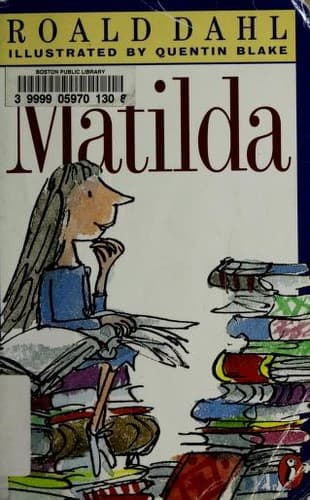
- Matilda
Roald Dahl
4.3 (648k) average on GoodreadsFantasyWhile both feature endearing protagonists, Matilda offers a strong, continuous narrative arc with clear conflict, antagonist, and character development, leading to a definitive resolution. Paddington Goes to Town is a collection of vignettes without a central plot driving the entire book.
- Harry Potter and the Sorcerer's Stone
J.K. Rowling
4.5 (7M) average on GoodreadsFantasyRescued from a miserable life under the stairs, an orphaned boy discovers he's a wizard destined for a magical school, where he uncovers a dangerous secret tied to the dark wizard who murdered his parents.
- The Hunger Games
Suzanne Collins
4.3 (6.4M) average on GoodreadsFantasyIn a future where children fight to the death on live television, Katniss Everdeen volunteers for the arena, turning a death sentence into a fight for survival and a spark of rebellion.
- Nineteen Eighty-Four
George Orwell
4.2 (5.5M) average on GoodreadsFictionWinston Smith dreams of truth and rebellion in a world where Big Brother watches all, but he confronts the terrifying power of a regime that controls not just actions, but thoughts.





Enjoyed the summary?
A summary gives you the shape of the book. The book itself has the detail, the examples and the voice.
Find Paddington Goes to Town on AmazonAs an Amazon Associate, BookBrief earns from qualifying purchases. How we're funded