
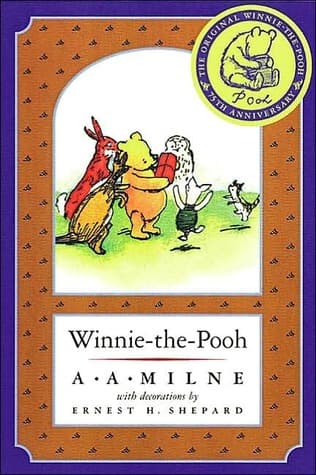
Synopsis
Covers the whole plot, including the ending.
- Difficulty
- Easy
- Pacing
- Slow
- Mood
- Whimsical, Heartwarming, Gentle, Nostalgic
- Read it if
- You want a classic, heartwarming tale of friendship, imagination, and simple joys, perfect for reading aloud or reliving childhood nostalgia.
- Skip it if
- You prefer fast-paced plots, complex character arcs, or stories with high stakes and dramatic conflict.
Winnie-the-Pooh Plot Summary
Covers the whole plot, including the ending.
Pooh's Honey Dilemma and the Bee Trick
The story starts with Winnie-the-Pooh, a bear with a small brain, finding a tall oak tree with buzzing bees, which means honey. Pooh loves honey but cannot reach the hive. He visits Christopher Robin, explains his problem, and asks for a balloon. Christopher Robin gives him a blue balloon, and Pooh rolls in mud to look like a 'small black cloud.' He floats up to the hive, hoping to trick the bees, but they are suspicious. Christopher Robin, watching, suggests Pooh hum a 'buzzing' sound. The bees are not fooled, and one stings Pooh's nose, making him come down, balloon in hand, with no honey.
Pooh and Piglet's Heffalump Trap
One windy day, Pooh and Piglet talk about scary Heffalumps, large, elephant-like creatures that steal honey. They decide to set a trap: a deep pit covered with branches, with a pot of honey at the bottom. That night, Pooh, feeling hungry, checks the trap and eats all the honey. In the dark, he accidentally falls into his own pit. Piglet, waking up the next morning, sees Pooh's footprints leading to the pit and, hearing a noise, thinks he has caught a Heffalump. He tells Christopher Robin, who finds Pooh stuck, covered in honey, and helps him out.
Eeyore Loses His Tail
Eeyore, the gloomy donkey, is especially sad one morning because he lost his tail. Pooh, feeling bad for his friend, offers to help find it. Pooh asks Owl, who, in a long-winded way, suggests putting up an advertisement. As Pooh leaves Owl's house, he sees a bell-pull on Owl's door. Pooh realizes it is Eeyore's missing tail. Owl had found it and mistakenly thought it was a useful bell-pull. Pooh gets it back, and Christopher Robin reattaches it to Eeyore with a drawing pin, making Eeyore quietly happy.
Piglet Meets a Heffalump (or So He Thinks)
One windy day, Piglet is alone in his house when a strong gust of wind blows down a tree branch, making a loud noise. He thinks it's a Heffalump trying to get him, so Piglet hides under his bed, shaking. Meanwhile, Pooh, also in the strong wind, tries to find a sheltered spot. He stumbles into Piglet's house, making thumps and bumps. Piglet, hearing these sounds, becomes even more sure that the Heffalump is inside. When Pooh finally calls out, Piglet realizes it's his friend and comes out, relieved but a bit embarrassed by his fear.
Eeyore's Birthday Surprise
Eeyore feels especially sad because it's his birthday, and he expects no one to remember. Pooh, hearing this, decides to get him a present: a pot for honey. On his way to Eeyore, Pooh eats all the honey, leaving him with an empty pot. Meanwhile, Piglet decides to get Eeyore a balloon, but he trips and pops it. Despite their mistakes, they give Eeyore the empty pot and the popped balloon. Eeyore is happy with the useful pot for putting things in and the broken balloon, which he can store in the pot. Christopher Robin eventually arrives with a new balloon for Eeyore.
Kanga and Roo Arrive in the Forest
A new family, Kanga and her baby Roo, arrives in the Hundred Acre Wood, causing excitement and some worry among the residents. Rabbit, always planning, decides they must 'educate' Kanga and Roo about forest customs. He plots with Pooh and Piglet to 'kidnap' Roo while Kanga is busy. Their plan involves Piglet pretending to be Roo in Kanga's pouch while Roo is taken away. The plan goes wrong when Kanga, smarter than they thought, realizes the trick. She plays along, giving Piglet a bath and cod-liver oil, much to his dismay, before showing she knew all along.
Christopher Robin Organizes an Expotition to the North Pole
Christopher Robin announces a big 'Expotition' to find the North Pole, and all the animals of the Hundred Acre Wood eagerly join. They walk through the forest, facing different challenges and making important 'discoveries,' like Rabbit's useful knowledge of the woods. During the trip, Roo falls into a stream. Pooh quickly finds a long stick and uses it to help Roo out. Christopher Robin, seeing Pooh's cleverness and the stick's length, says the stick *is* the North Pole and Pooh found it, making Pooh humbly happy and his friends applaud.
Piglet is Entirely Surrounded by Water
Heavy rains cause a flood in the Hundred Acre Wood. Piglet is trapped in his house, surrounded by water, with only a few chairs and an umbrella. He writes a message in a bottle, 'HELP! PIGLET (ME),' and throws it into the water. Meanwhile, Pooh and Christopher Robin are also in the flood. Pooh sends a message to Christopher Robin, who, with Owl, eventually finds Piglet's bottle. Owl, always talking a lot, misunderstands the message but takes credit for finding it. Christopher Robin and Pooh then set out in an upside-down umbrella boat to rescue Piglet.
Christopher Robin Rescues Piglet and Pooh
After finding Piglet's message in a bottle, Christopher Robin, with the somewhat proud Owl, sets off in a boat (an upturned umbrella) to find Piglet. They eventually find Piglet's house, which is almost completely under water, with Piglet sitting on a branch. Christopher Robin skillfully steers the umbrella boat to rescue Piglet. Soon after, they see Pooh, who is also stuck on a small island. The three friends are reunited, safe from the flood, thanks to Christopher Robin's quick thinking and bravery.
Christopher Robin's Farewell
The book ends with a gentle and slightly sad chapter where Christopher Robin and Pooh share a quiet moment on a hill overlooking the Hundred Acre Wood. Christopher Robin hints that he will soon be leaving, meaning school and growing up. He asks Pooh to promise they will always be friends and that Pooh will always remember him. Pooh, loyal and loving, agrees. It is a bittersweet moment, showing the lasting strength of their friendship even as childhood begins to fade.
Winnie-the-Pooh Characters
Winnie-the-Pooh
Protagonist
A kind-hearted, honey-loving bear of 'very little brain'.
Winnie-the-Pooh is the central character, a lovable, somewhat naive teddy bear with a profound love for honey. He often finds himself in comical predicaments due to his simple-mindedness and insatiable appetite. Despite his 'very little brain,' Pooh possesses a deep sense of loyalty, kindness, and friendship. He's often the initiator of adventures, though sometimes accidentally, and his good intentions always shine through. His simplicity allows him to appreciate the small joys in life and provides a foil for the more 'clever' animals like Rabbit and Owl.
Relationships: Christopher Robin (Best friend, confidant, owner); Piglet (Best friend, adventure companion); Eeyore (Sympathetic friend); Rabbit (Friend, sometimes exasperated by Pooh's simplicity); Owl (Acquaintance, sought for advice); Kanga (Friend); Roo (Friend)
Christopher Robin
Major Supporting
The imaginative and wise young boy, owner of the toys.
Christopher Robin is the human boy who lives with his animal friends in the Hundred Acre Wood. He is depicted as wise, patient, and the ultimate authority figure for the animals, often resolving their problems with calm logic and kindness. He represents the innocent imagination of childhood, bringing the toys to life through his play. His presence grounds the fantastical adventures in a gentle reality, and his impending growth into adulthood forms a poignant undertone to the narrative, particularly in the final chapter.
Relationships: Winnie-the-Pooh (Best friend, closest companion); Piglet (Friend); Eeyore (Friend, sympathetic to his gloom); Rabbit (Friend); Owl (Friend); Kanga (Friend); Roo (Friend)
Piglet
Major Supporting
A small, timid pig who is Pooh's best friend.
Piglet is a very small, timid, and easily frightened pig who lives in a large house in the Hundred Acre Wood. Despite his nervousness, he is fiercely loyal to Pooh and often accompanies him on adventures, sometimes reluctantly. He is characterized by his stutter and his habit of saying 'Oh, dear!' when anxious. Piglet's small size and fearfulness make him endearing, and he often shows unexpected bravery when it matters most, especially in support of his friends. He represents the anxieties and insecurities that even the smallest individuals can overcome.
Relationships: Winnie-the-Pooh (Best friend, loyal companion); Christopher Robin (Friend); Eeyore (Friend); Rabbit (Friend); Kanga (Initially fearful, then friend)
Eeyore
Major Supporting
A perpetually gloomy and pessimistic donkey.
Eeyore is an old grey donkey, perpetually gloomy and pessimistic, who finds little joy in life. He often expects the worst and is prone to melancholy, believing that no one truly cares for him. Despite his downcast nature, he is a beloved member of the group, and his friends often try to cheer him up or include him in their activities. His tail, attached by a drawing pin, is a recurring source of concern for him. Eeyore's character provides a contrast to the general cheerfulness of the other animals, adding a touch of dry wit and realism to their world.
Relationships: Winnie-the-Pooh (Sympathetic friend); Christopher Robin (Friend, often tries to help Eeyore); Piglet (Friend); Rabbit (Acquaintance, sometimes annoyed by Eeyore's gloom)
Rabbit
Supporting
An organized and bossy rabbit who likes to be in charge.
Rabbit is one of the more 'clever' animals in the Hundred Acre Wood, known for his organized nature, his extensive list of 'friends and relations,' and his bossiness. He enjoys planning and often takes charge of group activities, though his plans don't always go as intended. He can be impatient with Pooh's simple-mindedness and Eeyore's gloom but is ultimately a good friend. His garden is a source of pride, and he values order and routine.
Relationships: Winnie-the-Pooh (Friend, often exasperated by Pooh); Piglet (Friend, often a follower in Rabbit's plans); Christopher Robin (Friend, respects Christopher Robin's authority); Owl (Acquaintance, sometimes collaborates on plans); Kanga (Initially suspicious, then friend)
Owl
Supporting
A verbose and self-important owl who fancies himself wise.
Owl is a pompous and verbose character who considers himself the wisest animal in the Hundred Acre Wood, despite often misunderstanding situations or giving incorrect advice. He lives in a grand house and enjoys using long, complicated words, often to the confusion of his friends. While his advice is not always sound, he is well-meaning and his friends often turn to him for his perceived wisdom. He is particularly fond of storytelling, even if his tales are lengthy and somewhat embellished.
Relationships: Winnie-the-Pooh (Friend, often sought for advice); Christopher Robin (Friend); Eeyore (Acquaintance); Rabbit (Acquaintance, sometimes collaborates on plans)
Kanga
Supporting
A kind and sensible kangaroo mother.
Kanga is a kind, sensible, and maternal kangaroo who arrives in the Hundred Acre Wood with her joey, Roo. She is protective of Roo but also very patient and understanding with the other animals, even when they try to trick her. She brings a nurturing presence to the forest, often looking after the younger or more helpless characters. Her practical nature and calm demeanor provide a balance to some of the more chaotic personalities.
Relationships: Roo (Son); Winnie-the-Pooh (Friend); Piglet (Friend (after initial trickery)); Christopher Robin (Friend)
Roo
Supporting
Kanga's energetic and curious joey.
Roo is Kanga's energetic and curious joey, who lives in her pouch. He is the youngest of the animal friends and is full of youthful enthusiasm and innocence. He enjoys playing and is often a source of unexpected events, such as falling into the stream during the 'Expotition.' His presence adds a dynamic, childlike element to the group, and he is generally well-liked by everyone, even if his energy can sometimes be a handful.
Relationships: Kanga (Mother); Winnie-the-Pooh (Friend); Piglet (Friend); Christopher Robin (Friend)
Heffalump
Mentioned
A feared, mysterious, elephant-like creature.
Heffalumps are imaginary, elephant-like creatures that exist primarily in the fears and imaginations of Pooh and Piglet. They are never actually seen but are a source of great anxiety, especially for Piglet, who believes they steal honey. The idea of Heffalumps allows for humorous misunderstandings and plot devices, such as the Heffalump trap and Piglet's fear during the storm. They represent the unknown and the things that characters fear but never truly encounter.
Winnie-the-Pooh Themes
Friendship and Loyalty
The strong bonds between Christopher Robin and his animal friends, especially Pooh and Piglet, are central to the book. Their loyalty appears in many actions, from Pooh trying to find Eeyore's tail to Piglet's constant companionship with Pooh. They support each other through fears, floods, and birthdays, showing that true friendship involves care, understanding, and shared adventures. The last chapter, with Christopher Robin's request to Pooh, confirms the theme of lasting friendship.
“Pooh, promise you won't forget about me, ever. Not even when I'm a hundred.”
Imagination and Childhood Innocence
The entire world of the Hundred Acre Wood comes from childhood imagination, brought to life by Christopher Robin playing with his toys. The animals' adventures, their fears (like Heffalumps), and their simple joys all come from this imaginative world. The book celebrates childhood innocence, where an empty pot can be a perfect gift, and a stick can be the North Pole. The hint of Christopher Robin growing up suggests this pure imaginative world will eventually fade, making the stories more precious.
“Wherever they go, and whatever happens to them on the way, in that enchanted place on the top of the Forest, a little boy and his Bear will always be playing.”
The Simple Joys of Life
Winnie-the-Pooh often shows the beauty and happiness found in simple things. Pooh's love for honey, Eeyore's quiet happiness with an empty pot and a popped balloon, or the joy of a shared 'expotition' are all examples. The characters do not seek great achievements or money; their happiness comes from friendship, food, and the comfort of home. This theme encourages readers to value the small, everyday moments that bring warmth and happiness.
“When you are a Bear of Very Little Brain, and you Think of Things, you find sometimes that a Thing which seemed very Thingish inside you is quite different when it gets outside, and has other people looking at it.”
Acceptance and Individuality
Each character in the Hundred Acre Wood has distinct personality traits, from Pooh's simplicity to Eeyore's sadness to Rabbit's bossiness. Despite their differences and occasional frustrations, they accept each other. Eeyore's pessimism is never truly changed, but his friends still include him. Piglet's shyness is understood. This theme shows the importance of accepting individuality and building a community where everyone, with all their quirks, is valued and belongs.
“It is more fun to talk with someone who doesn't use long, difficult words but rather short, easy words like "What about lunch?"”
Plot Devices & Literary Techniques
Anthropomorphism
Animals with human characteristics and emotions.
The primary plot device in 'Winnie-the-Pooh' is the anthropomorphism of the animal characters. Pooh, Piglet, Eeyore, Rabbit, Owl, Kanga, and Roo all exhibit distinct human-like personalities, engage in complex conversations, and partake in adventures that mirror human experiences, albeit in a simplified, childlike manner. This allows readers to relate to the characters and their dilemmas, exploring themes of friendship, fear, and joy through the lens of these charming, relatable animals.
Narrator-Character Interaction
The narrator directly addresses and converses with Pooh and Christopher Robin.
A unique narrative technique is the direct interaction between the omniscient narrator and the characters, particularly Pooh and Christopher Robin. The narrator often pauses the story to explain something to Pooh, or to ask Christopher Robin a question, or even to correct Pooh's understanding of events. This metafictional element blurs the line between storyteller and story, enhancing the whimsical, intimate, and conversational tone, making the reader feel like an active participant in the telling of the tale.
Repetition and Familiarity
Recurring phrases, character traits, and settings create comfort.
Milne uses repetition of character traits (Pooh's love for honey, Eeyore's gloom, Piglet's timidity) and familiar phrases ('Oh, bother!', 'A Bear of Very Little Brain') to create a comforting and predictable world. The consistent setting of the Hundred Acre Wood and the recurring dynamics between the friends establish a sense of security and warmth. This repetition reinforces the characters' identities and allows for gentle humor, making the stories accessible and reassuring for young readers.
Childlike Logic and Misunderstanding
Characters' simple interpretations drive humor and plot points.
Many plot points and comedic moments arise from the characters' childlike logic and frequent misunderstandings. Pooh's belief that rolling in mud makes him a 'small black cloud' or Piglet's conviction that the noise in his house is a Heffalump are prime examples. Owl's misinterpretation of Eeyore's tail as a bell-pull, or his grandiloquent but often incorrect pronouncements, also fall into this category. This device highlights the innocent, often literal, way young minds interpret the world, generating gentle humor and relatable situations.
Winnie-the-Pooh Quotes
“People say nothing is impossible, but I do nothing every day.”
“You can't stay in your corner of the Forest waiting for others to come to you. You have to go to them sometimes.”
“A little consideration, a little thought for others, makes all the difference.”
“Rivers know this: there is no hurry. We shall get there some day.”
“I am a Bear of Very Little Brain, and long words Bother me.”
“How lucky I am to have something that makes saying goodbye so hard.”
“It is more fun to talk with someone who doesn't use long, difficult words but rather short, easy words like 'What about lunch?'”
“Some people care too much. I think it's called love.”
“We'll be Friends Forever, won't we, Pooh?' asked Piglet. 'Even longer,' Pooh answered.”
“If the person you are talking to doesn't appear to be listening, be patient. It may simply be that he has a small piece of fluff in his ear.”
“The things that make me different are the things that make me.”
“When you are a Bear of Very Little Brain, and you Think of Things, you find sometimes that a Thing which seemed very Thingish inside you is quite different when it gets out into the open and has other people looking at it.”
“I think we dream so we don't have to be apart for so long. If we're in each other's dreams, we can be together all the time.”
“Sometimes the smallest things take up the most room in your heart.”
Quiz
10 questions on the plot and the characters. Each answer comes with a short explanation.
Question 1
What does Winnie-the-Pooh use to try to reach honey from a beehive in the first chapter?
- A ladder
- A balloon
- A long stick
- A rope swing
Show answer
B. A balloon In the first chapter, Pooh uses a blue balloon to float up to a beehive, hoping to get honey, but ends up covered in mud to look like a cloud.
Question 2
Who is the owner of the Hundred Acre Wood and the human friend of the animals?
- Piglet
- Eeyore
- Christopher Robin
- Rabbit
Show answer
C. Christopher Robin Christopher Robin is the young boy who owns the Hundred Acre Wood and is the central human character, often helping his animal friends in their adventures.
Question 3
What event does Eeyore celebrate in the book, where he receives gifts from his friends?
- A housewarming party
- A birthday
- A harvest festival
- A tea party
Show answer
B. A birthday Eeyore's birthday is a key event where his friends give him gifts, such as a burst balloon and an empty honey pot, which he accepts with his typical gloomy gratitude.
Question 4
What creature do Pooh and Piglet try to catch by digging a trap, thinking it is a dangerous beast?
- A Woozle
- A Heffalump
- A Jagular
- A Snark
Show answer
B. A Heffalump Pooh and Piglet dig a trap to catch a Heffalump, a creature they imagine as large and elephant-like, but it turns out to be Pooh himself stuck in the hole.
Question 5
Why does Pooh get stuck in Rabbit's doorway after visiting for honey?
- He ate too much honey and grew too fat
- The doorway was magically shrinking
- Rabbit locked him in as a joke
- He was trying to hide from a storm
Show answer
A. He ate too much honey and grew too fat Pooh visits Rabbit and eats so much honey that he becomes too fat to fit back through the doorway, leading to a week-long stay until he slims down.
Question 6
What is the main theme illustrated by the characters' simple adventures and friendships in the Hundred Acre Wood?
- The importance of wealth and success
- The value of imagination and childhood innocence
- The dangers of the natural world
- The complexity of adult relationships
Show answer
B. The value of imagination and childhood innocence The book emphasizes themes of imagination, friendship, and the innocent, playful perspective of childhood, as seen in the characters' whimsical adventures.
Question 7
Which character is known for being pessimistic and often losing his tail?
- Tigger
- Eeyore
- Owl
- Kanga
Show answer
B. Eeyore Eeyore is the gloomy donkey who frequently loses his tail and has a pessimistic outlook, yet is cared for by his friends in the Hundred Acre Wood.
Question 8
In the story, what do Pooh and Piglet mistake for a Woozle when following tracks in the snow?
- Their own footprints
- Rabbit's footprints
- A Heffalump's tracks
- Christopher Robin's footprints
Show answer
A. Their own footprints Pooh and Piglet follow circular tracks in the snow, believing they are tracking a Woozle, but they are actually walking in circles and following their own footprints.
Question 9
What practical lesson about problem-solving is demonstrated when Pooh uses a balloon to get honey?
- Always ask for help from friends
- Creativity can lead to unexpected outcomes
- Avoid risks to stay safe
- Use tools properly for efficiency
Show answer
B. Creativity can lead to unexpected outcomes Pooh's attempt to use a balloon shows creative thinking, but it also highlights how imaginative solutions can have humorous or unintended consequences, like getting covered in mud.
Question 10
Which detail about the setting is central to the book's charm and narrative structure?
- It is based on a real forest in England
- It is a magical land with talking animals
- It represents a child's imaginative play world
- It is constantly changing with seasons
Show answer
C. It represents a child's imaginative play world The Hundred Acre Wood is portrayed as a whimsical, imaginative space where Christopher Robin's toys come to life, reflecting a child's perspective and enhancing the story's playful tone.
Winnie-the-Pooh FAQ
What is 'Winnie-the-Pooh' about?
'Winnie-the-Pooh' follows the gentle adventures of a boy named Christopher Robin and his stuffed animal friends in the Hundred Acre Wood. The episodic stories include Pooh's attempts to get honey using a balloon, Piglet's encounter with a mysterious Heffalump, and Eeyore's forgotten birthday celebration, all highlighting themes of friendship and simple joys.
Why should I read 'Winnie-the-Pooh'?
You should read 'Winnie-the-Pooh' for its timeless charm, gentle humor, and profound insights into friendship and childhood. The book's whimsical adventures, like Pooh's honey-seeking escapades or Eeyore's birthday, offer both entertainment and subtle life lessons about kindness and imagination.
What is the background/setting of 'Winnie-the-Pooh'?
The book is set in the Hundred Acre Wood, a peaceful, idyllic forest inspired by Ashdown Forest in England. This setting serves as a backdrop for the adventures of Christopher Robin and his animal friends, creating a safe, imaginative world where simple events like picnics and explorations unfold.
What are the most memorable quotes?
Memorable quotes include Pooh's 'People say nothing is impossible, but I do nothing every day,' and Eeyore's 'Thanks for noticing me' during his birthday. These lines capture the book's blend of whimsy and melancholy, reflecting characters' personalities and the story's gentle philosophy.
What writing style does the author use?
A.A. Milne uses a simple, lyrical prose style with a gentle, conversational tone, often breaking the fourth wall to address the reader. The narrative is episodic and whimsical, blending humor with poignant moments, as seen in stories like Pooh's balloon adventure or Eeyore's birthday.
What minor details add significant meaning?
Minor details like Pooh's constant hunger for honey symbolize simple desires and contentment, while Eeyore's lost tail represents feelings of neglect. In Piglet's Heffalump story, the imagined monster reflects childhood fears, adding depth to the characters' emotional worlds.
What are some subtle foreshadowing moments?
Subtle foreshadowing occurs when characters' traits hint at future events, such as Pooh's clumsiness leading to mishaps like getting stuck in Rabbit's hole. In Eeyore's birthday story, early mentions of his gloominess foreshadow the forgotten celebration and eventual joyful resolution.
What unexpected character connections exist?
Unexpected connections include Rabbit's bossy nature clashing with Pooh's easygoing attitude, yet they collaborate in adventures like the Heffalump hunt. Also, Christopher Robin's role as a gentle leader subtly ties all characters together, mediating conflicts like Eeyore's birthday disappointment.
What are unspoken character motivations?
Unspoken motivations include Pooh's desire for acceptance driving his honey-seeking antics, and Piglet's bravery stemming from a need to overcome his small size and fears. Eeyore's pessimism masks a longing for attention, evident in his subdued joy when friends remember his birthday.
What psychological complexities do characters exhibit?
Characters show psychological complexities like Pooh's simple-mindedness paired with occasional wisdom, and Piglet's anxiety contrasted with courageous acts. Eeyore's depression is balanced by moments of gratitude, reflecting a nuanced portrayal of emotions in a child-friendly way.
What are the major emotional turning points?
Major emotional turning points include Eeyore's birthday, where his friends' efforts transform his sadness into joy, and Piglet facing the Heffalump, which marks a growth in confidence. Pooh's rescue from Rabbit's hole also strengthens bonds through shared concern and help.
How do relationship dynamics evolve?
Relationship dynamics evolve from casual play to deeper loyalty, as seen when friends rally to celebrate Eeyore's birthday despite initial forgetfulness. Pooh and Piglet's partnership grows through adventures like the Heffalump hunt, highlighting trust and mutual support in the face of fears.
Which parts remain ambiguous or open-ended?
Ambiguous parts include the true nature of the Heffalump—whether it's real or imaginary—leaving it to reader interpretation. Also, the stories' episodic structure means some adventures, like Pooh's balloon journey, end without resolution, emphasizing the ongoing nature of childhood play.
What are controversial scenes or decisions?
Controversial scenes are minimal, but some readers debate Pooh's use of a balloon to trick bees for honey as ethically questionable. Additionally, Eeyore's initial neglect on his birthday raises questions about friendship and responsibility, though it's resolved positively.
'Winnie-the-Pooh' ending explained: how it ends & what it means
The book doesn't have a single overarching ending but concludes with episodic stories like Eeyore's birthday, emphasizing themes of community and kindness. This structure suggests that friendship and simple joys are ongoing, reflecting the timeless, cyclical nature of childhood adventures.
About the author
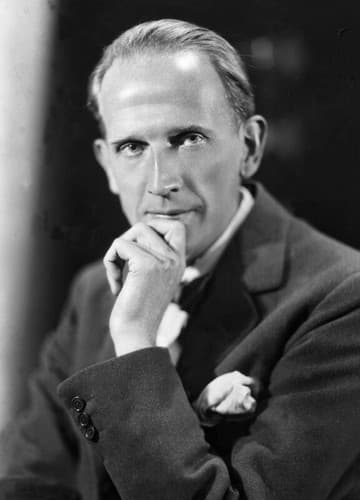
A.A. Milne was an English playwright, novelist, and poet, best known for his children's books featuring the character Winnie-the-Pooh. His collections of poems, When We Were Very Young and Now We Are Six, along with the stories Winnie-the-Pooh and The House at Pooh Corner, have become beloved classics of children's literature worldwide. Milne's work is celebrated for its gentle humor, whimsical characters, and exploration of childhood innocence.
Similar books
- Alice's Adventures in Wonderland
Lewis Carroll
4.0 (245k) average on GoodreadsFantasyWhile both books feature imaginative, non-sensical worlds, Winnie-the-Pooh is significantly less surreal and more grounded in the emotional and psychological landscape of childhood. Carroll's work often challenges logic and reality more directly, whereas Milne's fantasy is built upon the gentle expansion of a child's toy world. Pooh's world, though magical, feels more internally consistent within a child's play, unlike Alice's more chaotic and dreamlike experiences.
- Harry Potter and the Sorcerer's Stone
J.K. Rowling
4.5 (7M) average on GoodreadsFantasyRescued from a miserable life under the stairs, an orphaned boy discovers he's a wizard destined for a magical school, where he uncovers a dangerous secret tied to the dark wizard who murdered his parents.
- The Hunger Games
Suzanne Collins
4.3 (6.4M) average on GoodreadsFantasyIn a future where children fight to the death on live television, Katniss Everdeen volunteers for the arena, turning a death sentence into a fight for survival and a spark of rebellion.
- 1984
George Orwell
4.2 (3.1M) average on GoodreadsPoliticsIn a future where surveillance and thought control are absolute, a man's search for truth clashes with the Party, showing that hope can be a form of rebellion.
- Divergent
Veronica Roth
4.2 (2.9M) average on GoodreadsFantasyIn a society divided by virtues, a sixteen-year-old's difference from the norm starts a rebellion that threatens her world.
- The Hobbit, or There and Back Again
J.R.R. Tolkien
4.3 (2.9M) average on GoodreadsFantasyA comfort-loving hobbit named Bilbo Baggins is whisked away by a mischievous wizard and a band of dwarves on an unexpected journey to reclaim stolen treasure from a fearsome dragon, discovering courage and a magical ring along the way.





Enjoyed the summary?
A summary gives you the shape of the book. The book itself has the detail, the examples and the voice.
Find Winnie-the-Pooh on AmazonAs an Amazon Associate, BookBrief earns from qualifying purchases. How we're funded