

Synopsis
Covers the whole plot, including the ending.
- Difficulty
- Hard
- Pacing
- Slow
- Mood
- Epic, Grand, Philosophical, Theological, Tragic, Sublime
- Read it if
- You are interested in a foundational work of English literature, epic poetry, or a detailed, dramatic retelling of the biblical story of the Fall from a unique theological and philosophical perspective.
- Skip it if
- You prefer modern prose, fast-paced narratives, or find dense, archaic language and extensive theological discourse challenging.
Paradise Lost Plot Summary
Covers the whole plot, including the ending.
Satan's Rebellion and Expulsion
The story begins with Satan, once Lucifer, and his fallen angels in Hell, a fiery dungeon after their defeat in a war against God. Satan, despite his despair, gathers his lieutenants, including Beelzebub, Moloch, Belial, and Mammon. He declares they will never submit to God and vows to continue their war through trickery. They build Pandemonium, a grand palace in Hell, where they hold a council. They decide to investigate a new world where a new race is rumored to live.
The Council in Pandemonium
In Pandemonium, the council meets. Moloch wants to restart open war against Heaven. Belial argues for a more cautious approach, suggesting they endure their current state, as more conflict would only worsen their suffering. Mammon proposes making Hell a self-sufficient kingdom, focusing on its riches rather than engaging with God. Beelzebub, prompted by Satan, suggests corrupting God's new creation, Man, to hurt God indirectly. This plan is approved, and Satan volunteers to journey alone to Earth.
Satan's Journey to Earth
Satan begins his difficult journey from Hell, passing through gates guarded by Sin and Death, his offspring. They recognize him and clear his way. Satan then crosses the vast, formless abyss of Chaos. He meets Chaos, who directs him toward the new universe. With great effort, Satan reaches the outer sphere of the cosmos, focused on Earth.
God Foresees the Fall
Meanwhile, in Heaven, God the Father watches Satan's progress and foresees the Fall of Man. He states that Man will fall by his own free will and thus deserve punishment. Yet, in his mercy, God also decrees that Man will be offered grace and redemption. He asks who among the heavenly host will pay the price for Man's sin. Only the Son of God, Christ, volunteers to sacrifice himself, promising to become human and suffer death to atone for humanity's wrongs.
Creation of the World and Man
Before Satan's arrival, the poem describes the universe's creation. After Satan's first rebellion, God commanded his Son to create a new world. The Son, with angels, went into Chaos. He brought order out of disorder, forming the heavens, stars, and Earth in six days. He created all life, ending with Adam and Eve in the Garden of Eden. They were given control over all creatures and told their duties. They were forbidden to eat from the Tree of Knowledge of Good and Evil, or they would die.
Satan's Arrival in Eden and Observation
Satan, disguised as a lesser angel, passes the archangel Uriel, who guards the sun, and descends to Earth. He lands on Mount Niphates and, after a moment of envy, enters the Garden of Eden by leaping its wall. He disguises himself as a cormorant and sits on the Tree of Life, watching Adam and Eve. He sees their beauty and harmony. He overhears their conversation about God's single rule regarding the Tree of Knowledge, seeing it as the weak point for his temptation plan.
Gabriel Dispatches Ithuriel and Zephon
As night falls in Eden, the archangel Gabriel, leader of the angelic guard, senses an evil spirit in Paradise. He sends two cherubim, Ithuriel and Zephon, to find the intruder. They find Satan, disguised as a toad, whispering evil dreams into Eve's ear. When touched by Ithuriel's spear, Satan returns to his true form. A fight starts between Satan and the two angels, who recognize him. Gabriel arrives and challenges Satan. Satan, seeing a divine sign, leaves Eden, vowing to return.
Raphael Warns Adam
In Heaven, God, aware of Satan's escape and his plan to corrupt humanity, sends the archangel Raphael to Eden. Raphael's job is to warn Adam about disobedience and prepare him against temptation. Raphael tells the story of Satan's rebellion in Heaven, describing the war and the fallen angels' expulsion. He explains Satan's envy and his plan to destroy Adam and Eve's happiness. Raphael stresses the importance of free will and obedience to God's commands, especially about the forbidden fruit, reminding Adam of the serious results of breaking the rule.
The Temptation of Eve
Satan returns to Eden, this time as a serpent. He finds Eve alone, who has separated from Adam to work more efficiently. The serpent approaches Eve and flatters her. He then questions God's rule, suggesting God is keeping knowledge from them out of envy. He claims to have eaten the fruit and gained speech and intelligence. He convinces Eve that eating the fruit will make her like God, knowing good and evil, and that God's threat of death is a lie. Eve, convinced by his arguments and the fruit's look, eats it.
The Fall of Adam and Its Immediate Aftermath
Eve, after eating the fruit, feels new sensations and believes herself to be elevated. She finds Adam, eager to share her discovery. Adam, shocked by her act, is torn. His love for Eve overcomes his judgment. He chooses to share her fate, believing he cannot live without her, and eats the fruit. Immediately, they lose their innocence. They feel shame, guilt, and lust, covering themselves with fig leaves and blaming each other. Their perfect harmony is broken.
God's Judgment and the Son's Intercession
God, seeing the Fall, sends the Son to Earth to judge Adam and Eve. The Son confronts them, and they try to shift blame: Adam blames Eve and God; Eve blames the serpent. The Son announces their punishments: the serpent is cursed to crawl and eat dust; Eve is condemned to pain in childbirth and submission to her husband; Adam is sentenced to toil and death, and the Earth is cursed. But, the Son also offers hope, hinting at a future redeemer who will defeat the serpent, pointing to the eventual victory over sin and death.
Satan's Return to Hell and Punishment
Satan returns to Hell, expecting praise from his followers for corrupting mankind. He brags about his victory. But, as he finishes his speech, Satan and all his followers turn into hissing serpents. They are forced to eat bitter ashes, a mocking version of the forbidden fruit. This punishment shows their ultimate defeat and God's justice, even in their moment of supposed triumph.
Adam and Eve's Repentance and Hope
After their judgment, Adam and Eve feel deep regret. They reconcile and pray for God's forgiveness, showing true repentance. God hears their prayers. He sends the archangel Michael to lead them out of Eden, but also to show Adam the future of mankind. This includes the results of their sin, the flood, Abraham, Moses, and finally, the Messiah's birth, life, death, and resurrection. This vision gives Adam and Eve new hope and faith in God's plan for salvation.
Expulsion from Paradise
With the vision of mankind's future and the promise of a redeemer, Adam and Eve are ready for their expulsion. Michael leads them to the eastern gate of Eden, where a flaming sword and cherubim guard the entrance. Adam and Eve, now wearing animal skins from God, are banished from paradise. They leave Eden hand in hand, looking back with sorrow but also with hope and a new understanding. They step into the world, ready to face the challenges of their fallen existence, armed with repentance and faith.
Paradise Lost Characters
Satan
Antagonist
The proud, rebellious leader of the fallen angels.
Satan, formerly Lucifer, is a complex figure characterized by immense pride, ambition, and an unyielding will. He is intelligent, charismatic, and a masterful orator, capable of rallying his defeated forces even in the depths of Hell. His primary motivation is hatred of God and a desire for revenge, which manifests as a determination to corrupt God's new creation, Man. He believes himself wronged by God's exaltation of the Son and refuses to submit to any authority he perceives as tyrannical. Despite his suffering, he never repents, instead finding strength in his defiance.
Relationships: God (Adversary, object of hatred and rebellion); Beelzebub (Chief lieutenant and confidant); Sin (Incestuous daughter and gatekeeper of Hell); Death (Incestuous son, product of Sin and Satan); Adam (Victim of temptation, object of envy); Eve (Primary target of temptation, object of envy)
God the Father
Protagonist/Divine Sovereign
The omnipotent, omniscient, and benevolent creator and ruler of the universe.
God the Father is depicted as the ultimate authority, possessing infinite power, wisdom, and goodness. He foresees all events, including the Fall of Man, but maintains that humanity's actions stem from free will. He is just in his judgments but also merciful, offering salvation through his Son. His actions are driven by divine love and order, seeking to maintain harmony and righteousness throughout creation. He is not merely a judge but also a loving parent, providing guidance and a path to redemption for his creation, even after their transgression.
Relationships: The Son (Beloved Son, co-creator, and instrument of grace); Satan (Rebellious former angel, adversary); Adam (Creation, subject of divine law and mercy); Eve (Creation, subject of divine law and mercy)
The Son (Jesus Christ)
Protagonist/Divine Redeemer
God's beloved Son, co-creator, and the future Redeemer of mankind.
The Son is depicted as the embodiment of God's love and mercy. He is co-eternal and co-equal with God the Father, acting as the instrument of creation and divine judgment. His most significant role is his voluntary offer to sacrifice himself for the redemption of fallen humanity, demonstrating immense selflessness and compassion. He is the active agent of God's will, driving Satan from Heaven, creating the world, pronouncing judgment on Adam and Eve, and ultimately offering hope for salvation. He represents divine justice tempered with boundless grace.
Relationships: God the Father (Beloved Son, co-equal, executes divine will); Satan (Conqueror in the War in Heaven, ultimate vanquisher); Adam (Creator, judge, and future redeemer); Eve (Creator, judge, and future redeemer)
Adam
Protagonist
The first man, created in God's image, residing in Paradise.
Adam is initially depicted as intelligent, noble, and deeply devoted to God. He is the rational and dominant partner in his relationship with Eve, tasked with understanding God's laws and protecting their innocence. His love for Eve is profound, but it ultimately leads to his downfall when he chooses to share her fate rather than obey God's command. After the Fall, he experiences shame, guilt, and despair, but through repentance and divine revelation, he gains a deeper understanding of God's plan and finds hope in the promise of a redeemer.
Relationships: God (Creator, sovereign, source of law and mercy); Eve (Wife, beloved companion, source of temptation); Satan (Tempter, adversary); Raphael (Divine messenger, instructor); Michael (Divine messenger, revealer of future)
Eve
Protagonist
The first woman, created from Adam's rib, susceptible to flattery.
Eve is portrayed as exquisitely beautiful, graceful, and initially innocent. She is Adam's beloved companion, but also somewhat more susceptible to flattery and curiosity. Her desire for independent action and knowledge, combined with Satan's cunning manipulation, leads her to eat the forbidden fruit first. After the Fall, she experiences the same shame and guilt as Adam, and initially blames him. However, she eventually repents and, through shared suffering and prayer, reconciles with Adam and finds solace in God's mercy and the promise of a future redeemer.
Relationships: God (Creator, sovereign, source of law and mercy); Adam (Husband, beloved companion, fellow transgressor); Satan (Primary tempter, deceiver)
Raphael
Supporting
The archangel sent to warn Adam about Satan's plot.
Raphael is a benevolent and instructive archangel, sent by God to educate Adam about the dangers facing him. He recounts the story of Satan's rebellion and expulsion from Heaven, providing Adam with crucial context about the nature of evil and the importance of obedience. He emphasizes free will and warns Adam specifically about the forbidden fruit and Satan's malicious intent. Raphael serves as a divine messenger, embodying God's paternal care and desire to prevent humanity's fall, though respecting their ultimate freedom of choice.
Relationships: God (Servant, messenger); Adam (Instructor, warner)
Michael
Supporting
The archangel who leads Adam and Eve out of Paradise and reveals their future.
Michael is a warrior archangel, depicted as God's chief general, who defeated Satan in the War in Heaven. After the Fall, he is sent to Eden to expel Adam and Eve. Before their banishment, he mercifully grants Adam a vision of future human history, revealing the consequences of their sin, the lineage of righteous men, and the eventual coming of the Messiah. This revelation provides Adam and Eve with hope and fortitude for their life outside Paradise. Michael represents divine justice and the measured severity of God's will, tempered with providential care.
Relationships: God (Servant, chief warrior angel); Satan (Conqueror in war); Adam (Expeller, revealer of future)
Beelzebub
Supporting
Satan's chief lieutenant and second in command.
Beelzebub is a powerful and astute fallen angel, second only to Satan in rank and influence. He is depicted as a shrewd strategist, often articulating Satan's unspoken thoughts or framing them in a way that gains consensus. In the infernal council, he proposes the plan to corrupt mankind, effectively setting the stage for the central conflict of the epic. He is a loyal, though suffering, follower of Satan, sharing his master's pride and malice against God.
Relationships: Satan (Chief lieutenant, strategic advisor); Moloch (Fellow fallen angel, debates strategy); Belial (Fellow fallen angel, debates strategy); Mammon (Fellow fallen angel, debates strategy)
Sin
Supporting
The monstrous offspring of Satan, who guards the gates of Hell.
Sin is a grotesque, half-woman, half-serpent figure born from Satan's head during his rebellion. She holds the key to the gates of Hell and embodies the corrupting nature of transgression. Her existence is a constant reminder of Satan's original sin and the destructive power of evil. She has an incestuous relationship with Satan and gives birth to Death, further illustrating the self-perpetuating nature of sin and its progeny. She eagerly assists Satan in his journey to Earth, anticipating the expansion of her dominion.
Relationships: Satan (Daughter, lover, co-conspirator); Death (Son, product of incest)
Death
Supporting
The shadowy, terrifying offspring of Sin and Satan.
Death is a horrifying, shadowy figure, born from the incestuous union of Sin and Satan. He is a relentless and insatiable force, embodying the ultimate consequence of sin. He lurks at the gates of Hell with his mother, waiting for the opportunity to expand his realm. His existence is a direct result of Satan's rebellion, and his power grows with the Fall of Man. He is driven by an eternal hunger and promises to follow Satan's path to Earth, anticipating the vast harvest of souls that will result from humanity's transgression.
Paradise Lost Themes
Free Will vs. Predestination
Milton explores whether human actions are predetermined or if people have free will. God states that Man will fall by his 'own free will,' not by divine command, emphasizing that Adam and Eve can choose obedience or disobedience. Raphael tells Adam to 'stand fast' through his own choice. Satan, in contrast, often complains about God's tyranny, though his choices lead to his damnation. The epic confirms human agency and moral responsibility in the face of temptation.
“I made him just and right, / Sufficient to have stood, though free to fall.”
The Nature of Good and Evil
Milton examines the origins of good and evil. Good is tied to obedience to God, reason, and love, seen in Adam and Eve's harmony and the Son's sacrifice. Evil comes from pride, disobedience, and envy, personified by Satan. His line, 'Evil be thou my Good,' shows his deliberate twisting of values. The epic illustrates how evil corrupts from within, turning beauty into ugliness and harmony into conflict. It also explores how evil can appear as freedom or enlightenment.
“The mind is its own place, and in itself / Can make a Heav'n of Hell, a Hell of Heav'n.”
Pride and Disobedience
Pride causes both Satan's rebellion and humanity's Fall. Satan's refusal to bow before the Son comes from his pride and ambition, leading him to challenge God. Eve's desire for knowledge equal to God's and to act alone is fueled by pride and vanity, which Satan exploits. Adam's disobedience, though motivated by love for Eve, is a failure to prioritize God's command. Pride and disobedience lead to banishment, suffering, and the loss of innocence for both angels and humans.
“Here at least / We shall be free; th' Almighty hath not built / Here for his envy, will not drive us hence.”
Redemption and Divine Mercy
Despite the tragic Fall, a main theme is God's mercy and the promise of redemption. God, though just, foresees the Fall and plans for salvation through the Son's sacrifice. The Son's willingness to become human and suffer shows God's love and mercy. Even after their expulsion, Adam and Eve are not abandoned; God clothes them, and Michael reveals a future where a Messiah will defeat sin and death. This theme offers hope beyond immediate punishment.
“Man shall not quite be lost, but sav'd who will, / Yet not by might, nor power, but by my grace.”
The Dangers of Knowledge Without Wisdom
The forbidden Tree of Knowledge of Good and Evil is key to this theme. Adam and Eve are tempted by the promise of becoming 'as gods, knowing good and evil.' Satan convinces Eve that God withholds this knowledge out of envy. However, their new knowledge brings shame, guilt, and a painful awareness of their fallen state, not enlightenment. They gain knowledge of evil through experience, not wisdom, leading to suffering. This suggests that some knowledge, without divine guidance, can be dangerous.
“And from the Tree her fatal hand she reached, / And pluck'd, she ate: Earth felt the wound, and Nature from her seat / Sighing through all her Works gave signs of woe, / That all was lost.”
Plot Devices & Literary Techniques
Epic Simile
Extended, elaborate comparisons used to elevate the narrative and describe complex ideas.
Milton frequently employs epic similes, often stretching over several lines, to describe characters, scenes, or actions with vivid detail and grandeur. For example, Satan's vast size is compared to a 'floating Atlas' or a 'Tuscan artist's telescope' (Book I), giving the reader a sense of his immense scale and cosmic significance. These similes not only provide striking imagery but also draw connections to classical literature and expand the scope of the poem beyond its immediate narrative, enriching its thematic depth and elevating its style.
Invoking the Muse
Milton directly appeals to a divine source of inspiration at the beginning of each book.
At the outset of key sections, Milton invokes a heavenly Muse (specifically, the 'Heav'nly Muse' or 'Spirit that doth prefer / Before all Temples th' upright heart and pure') for guidance and inspiration. This device serves several purposes: it positions the epic within the classical tradition (like Homer and Virgil), asserts the divine truth and importance of his subject matter (contrasting with pagan muses), and humbly acknowledges that such a grand and sacred story requires divine assistance to be told accurately and eloquently. It elevates the poet's role as a conduit for divine truth.
In Medias Res
The epic begins in the middle of the action, with background events revealed later.
Milton opens 'Paradise Lost' 'in medias res' (in the middle of things), with Satan and his fallen angels already defeated and awakening in Hell. This immediately plunges the reader into the consequences of the rebellion, creating dramatic tension. The preceding events, such as the War in Heaven and the creation of the world, are recounted later through flashbacks or narrative explanations (e.g., Raphael's account to Adam in Books V-VIII). This narrative structure allows Milton to immediately establish the central conflict and characters, while gradually filling in the necessary backstory at strategic points.
Foreshadowing and Prophecy
Hints and explicit revelations about future events, particularly concerning redemption.
Milton uses foreshadowing extensively, often through God's pronouncements and angelic revelations. From God's initial foresight of Man's Fall and the promise of a Redeemer (Book III), to Michael's detailed vision of human history, including the coming of Christ, Noah's flood, and the lineage of patriarchs (Book XI-XII), the narrative constantly points towards future events. This device serves to underscore God's omniscience, provide hope amidst tragedy, and frame the immediate events of the Fall within a larger, redemptive cosmic plan, emphasizing the eventual triumph of good over evil.
Paradise Lost Quotes
“Of Man's first disobedience, and the fruit Of that forbidden tree, whose mortal taste Brought death into the World, and all our woe, With loss of Eden, till one greater Man Restore us, and regain the blissful seat, Sing, Heavenly Muse!”
“The mind is its own place, and in itself Can make a Heaven of Hell, a Hell of Heaven.”
“Better to reign in Hell, than serve in Heaven.”
“All is not lost; th' unconquerable will, And study of revenge, immortal hate, And courage never to submit or yield.”
“Long is the way And hard, that out of Hell leads up to light.”
“A mind not to be changed by place or time. The mind is its own place, and in itself Can make a Heaven of Hell, a Hell of Heaven.”
“Awake, arise, or be for ever fall'n.”
“Solitude sometimes is best society, And short retirement urges sweet return.”
“For neither Man nor Angel can discern Hypocrisy, the only evil that walks Invisible, except to God alone.”
“Nor love thy life, nor hate; but what thou liv'st Live well, how long or short permit to Heaven.”
“The World was all before them, where to choose Their place of rest, and Providence their guide: They hand in hand with wandering steps and slow, Through Eden took their solitary way.”
“Abashed the Devil stood, And felt how awful goodness is, and saw Virtue in her shape how lovely.”
“He for God only, she for God in him.”
“Thus was the Law of God to Man proclaimed, But with a gentler voice, and sweeter sound.”
Quiz
10 questions on the plot and the characters. Each answer comes with a short explanation.
Question 1
Which angel, known for his beauty, leads the rebellion against God in 'Paradise Lost'?
- Gabriel
- Michael
- Satan
- Raphael
Show answer
C. Satan Satan, originally named Lucifer, is the primary antagonist and leader of the fallen angels.
Question 2
What is the primary motivation for Satan's rebellion against God, as depicted in Book I?
- Desire for revenge for God's creation of humanity
- Envy of God's power and refusal to submit to His will
- A belief that God was unjust in His rule
- A misunderstanding of God's divine plan
Show answer
B. Envy of God's power and refusal to submit to His will Satan's famous line, 'Better to reign in Hell than serve in Heaven,' encapsulates his refusal to submit to God's authority.
Question 3
Which two characters are the first humans created by God in 'Paradise Lost'?
- Cain and Abel
- Noah and his wife
- Adam and Eve
- Abraham and Sarah
Show answer
C. Adam and Eve Adam and Eve are the central human characters whose fall from grace forms a major part of the epic.
Question 4
What is the name of the capital city of Hell, built by the fallen angels, mentioned in Book I?
- Pandemonium
- Tartarus
- Hades
- Gehenna
Show answer
A. Pandemonium Pandemonium is the magnificent, yet infernal, palace and council-chamber constructed by the demons.
Question 5
Before his direct confrontation with Adam and Eve, into what creature does Satan first transform himself to enter the Garden of Eden unnoticed?
- A lion
- A toad
- A serpent
- An eagle
Show answer
B. A toad Satan first enters Eden as a toad to whisper evil dreams into Eve's ear, before later possessing the serpent.
Question 6
Which archangel is sent by God to warn Adam about the dangers of disobedience and to instruct him about the nature of free will?
- Michael
- Uriel
- Gabriel
- Raphael
Show answer
D. Raphael Raphael recounts the story of the war in Heaven and warns Adam about Satan's impending attack.
Question 7
What is the immediate consequence of Adam and Eve eating the forbidden fruit, as described in Book IX?
- They gain immediate divine power and knowledge.
- They become immortal and immune to suffering.
- They experience shame, guilt, and a loss of innocence, covering themselves with fig leaves.
- They are instantly struck down by God's wrath.
Show answer
C. They experience shame, guilt, and a loss of innocence, covering themselves with fig leaves. Upon eating the fruit, their eyes are opened to their nakedness, and they feel shame for the first time.
Question 8
What is the ultimate fate of Sin and Death, personified as characters, at the end of 'Paradise Lost'?
- They are banished back to Hell and sealed away.
- They are allowed to roam the Earth freely, forever tormenting humanity.
- They are redeemed and allowed back into Heaven.
- They are destroyed by Michael.
Show answer
B. They are allowed to roam the Earth freely, forever tormenting humanity. Sin and Death build a bridge from Hell to Earth, allowing them to spread their influence globally after humanity's fall.
Question 9
How does Milton portray God the Father's decision to allow humanity to fall, yet simultaneously plan for their redemption?
- As an act of arbitrary power, demonstrating His unpredictable nature.
- As a demonstration of His justice and mercy, foreseeing the fall but offering salvation through the Son.
- As a sign of His indifference to the fate of His creations.
- As a necessary evil to test humanity's loyalty.
Show answer
B. As a demonstration of His justice and mercy, foreseeing the fall but offering salvation through the Son. God explains His foreknowledge and the provision of a redeemer (the Son) as proof of His justice and love, not a predetermination that removes free will.
Question 10
What is the primary stylistic feature of 'Paradise Lost' that contributes to its epic quality?
- Short, simple sentences and colloquial language.
- Rhyming couplets and regular meter.
- Blank verse (unrhymed iambic pentameter) and elevated, complex syntax.
- Prose narration with occasional poetic interludes.
Show answer
C. Blank verse (unrhymed iambic pentameter) and elevated, complex syntax. Milton famously chose blank verse for its 'liberty' and 'dignity,' suitable for the epic's grand themes, and employs highly complex, Latinate sentence structures.
Paradise Lost FAQ
What is the central conflict of 'Paradise Lost'?
'Paradise Lost' centers on the epic conflict between God and Satan, following Satan's rebellion in Heaven and his subsequent expulsion to Hell. The narrative then shifts to his vengeful plot to corrupt God's newest creation, humanity, leading to the Fall of Man.
Who are the primary protagonists and antagonists in the story?
The primary protagonists are Adam and Eve, representing humanity's innocence and their eventual fall from grace. The chief antagonist is Satan, depicted as a charismatic but ultimately self-destructive rebel against divine authority. God and the Son are also central, representing divine justice and mercy.
Where does the story primarily take place?
The story spans multiple cosmic locations. It begins in Hell, transitions to Heaven, then focuses heavily on Earth, specifically the Garden of Eden, where Adam and Eve reside. There are also descriptions of Chaos, the realm between these established worlds.
What is the significance of the title 'Paradise Lost'?
The title directly refers to the loss of the Garden of Eden, humanity's idyllic home, due to Adam and Eve's disobedience. It also signifies the loss of their innocence, immortality, and direct communion with God, leading to a life of toil and eventual death.
How does the poem explain the existence of evil in a world created by a benevolent God?
Milton attributes the existence of evil to free will, particularly Satan's rebellious choice and Adam and Eve's decision to disobey God's command. God allows free will, even knowing its potential for sin, to ensure that love and obedience are freely given, not coerced.
What is the significance of Satan's transformation into a serpent?
Satan transforms into a serpent to cunningly deceive Eve, as his original angelic form would have been too obvious or terrifying. This disguise allows him to approach Eve subtly, exploit her curiosity, and deliver his tempting arguments without immediately revealing his true, malevolent intent.
Are there any allusions to classical Greek or Roman mythology in the poem?
Yes, Milton frequently alludes to classical mythology, often comparing Satan and his fallen angels to figures like the Titans or giants who rebelled against Zeus. These allusions elevate the epic scope of the poem and draw parallels between biblical narratives and ancient heroic traditions.
What role do the Archangels Gabriel and Raphael play in the narrative?
Gabriel guards the gates of Paradise, confronting Satan during his initial entry. Raphael is sent by God to warn Adam and Eve about the dangers of disobedience and to recount the story of Satan's rebellion and expulsion from Heaven, providing them with crucial knowledge they ultimately disregard.
How does Milton portray the relationship between Adam and Eve before the Fall?
Before the Fall, Adam and Eve share a relationship of mutual love, respect, and innocent companionship, though Adam is presented as having a degree of intellectual superiority and leadership. Their bond is characterized by shared labor, prayer, and physical intimacy within the bounds of their sinless state.
What psychological motivations drive Satan's rebellion against God?
Satan's rebellion stems from a profound sense of pride, envy, and an inability to accept subordinate status, particularly after the exaltation of the Son. He craves absolute autonomy and views God's authority as tyrannical, leading him to prefer ruling in Hell over serving in Heaven.
How does Eve's decision to eat the fruit reflect her psychological state?
Eve's decision is influenced by a blend of curiosity, vanity, and a desire for knowledge and perceived equality with Adam and even God. Satan's flattery and his promise of god-like wisdom appeal to her nascent desire for self-enhancement, overriding her obedience.
What is Adam's psychological motivation for eating the forbidden fruit?
Adam's motivation is primarily love and loyalty to Eve. He recognizes the gravity of her sin but chooses to share her fate rather than face a life without her, demonstrating a deep, albeit flawed, devotion that ultimately prioritizes his earthly bond over divine command.
How does the psychological impact of the Fall manifest in Adam and Eve?
Immediately after eating the fruit, Adam and Eve experience shame, guilt, and fear, leading them to hide from God and blame each other. Their innocent love transforms into lust and resentment, and they become acutely aware of their nakedness and mortality.
Is Satan presented as a purely evil character, or does he possess admirable qualities?
Milton imbues Satan with a complex mix of evil and admirable qualities. While fundamentally driven by malice and pride, he displays immense courage, leadership, rhetorical skill, and an unwavering defiance against overwhelming odds, making him a compelling, albeit tragic, figure.
Does 'Paradise Lost' justify the ways of God to men, as Milton claims?
This is a central interpretive debate. Milton attempts to justify God's actions by emphasizing free will and divine justice, but some readers find God's portrayal as somewhat distant or harsh, while Satan's rebellious spirit often garners more sympathy, leading to varied interpretations of the poem's success in its stated goal.
How does Milton challenge traditional epic conventions in 'Paradise Lost'?
Milton challenges conventions by choosing a Christian subject matter over classical mythology, focusing on spiritual warfare and moral choices rather than physical battles, and making humanity's fall, rather than a hero's triumph, the central tragic event. His hero is arguably Adam, whose 'heroism' lies in repentance.
What is the significance of the 'happy fault' (felix culpa) in the poem?
The concept of 'felix culpa' suggests that the Fall, despite its tragic consequences, ultimately led to a greater good: humanity's redemption through Christ. This 'happy fault' allowed for the demonstration of God's immense mercy and the eventual possibility of a 'paradise within, happier far' through faith.
How does the ending of 'Paradise Lost' offer a sense of hope despite the tragedy?
The ending, though depicting Adam and Eve's expulsion from Eden, offers hope through Michael's prophecies of future redemption, culminating in the coming of the Messiah. They leave the Garden hand-in-hand, having gained wisdom and repentance, with the promise of God's continued grace and a 'paradise within'.
About the author
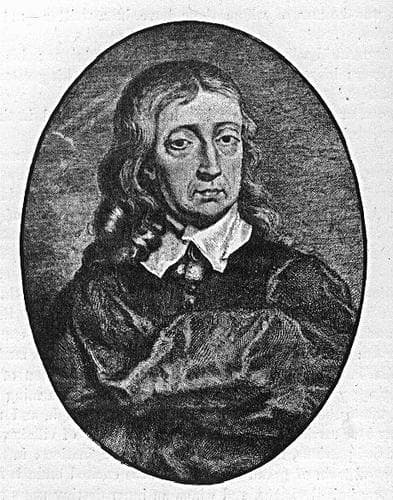
John Milton was an English poet and intellectual. His 1667 epic poem Paradise Lost, written in blank verse and including over ten chapters, was written in a time of immense religious flux and political upheaval. It addressed the fall of man, including the temptation of Adam and Eve by the fallen angel Satan and God's expulsion of them from the Garden of Eden. Paradise Lost elevated Milton's reputation as one of history's greatest poets. He also served as a civil servant for the Commonwealth of England under its Council of State and later under Oliver Cromwell.
Similar books
- The Divine Comedy
Dante Alighieri
4.0 (120k) average on GoodreadsFantasyBoth are epic poems exploring theological themes, journeys through supernatural realms, and the nature of sin and salvation.
- Angels & Demons
Dan Brown
3.9 (2.7M) average on GoodreadsThrillerA Harvard symbologist races through Rome's ancient sites, deciphering cryptic clues to unmask the Illuminati and stop a vengeful plot to destroy the Vatican with a stolen antimatter weapon.
- Gone Girl
Gillian Flynn
4.1 (2.3M) average on GoodreadsThrillerA wife's sudden disappearance on her fifth anniversary reveals a web of lies and psychological warfare, exposing the secrets within a seemingly perfect marriage.
- The Girl on the Train
Paula Hawkins
3.9 (2.1M) average on GoodreadsThrillerA woman’s fascination with a seemingly perfect couple she watches from her daily train commute leads her into a dark investigation when she witnesses something that shatters their idyllic image.
- The Lovely Bones
Alice Sebold
3.8 (2M) average on GoodreadsFantasyA murdered teenage girl watches from the afterlife as her family struggles with grief and her killer remains free, wanting to bridge the gap between worlds to bring him to justice.
- The Da Vinci Code
Dan Brown
3.9 (1.9M) average on GoodreadsThrillerA symbologist and a cryptologist race through European landmarks, deciphering ancient codes and uncovering a conspiracy that could rewrite the foundations of Christianity.





Enjoyed the summary?
A summary gives you the shape of the book. The book itself has the detail, the examples and the voice.
Find Paradise Lost on AmazonAs an Amazon Associate, BookBrief earns from qualifying purchases. How we're funded