
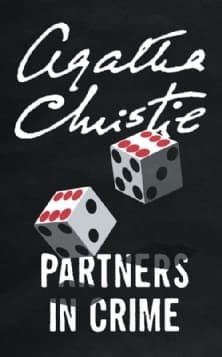
Synopsis
Covers the whole plot, including the ending.
- Difficulty
- Easy
- Pacing
- Fast
- Mood
- Lighthearted, Witty, Adventurous, Humorous
- Read it if
- You enjoy short, interconnected mysteries, witty banter, and a playful homage to classic detective tropes.
- Skip it if
- You prefer a single, complex mystery with deep character development over a collection of episodic adventures.
Partners in Crime Plot Summary
Covers the whole plot, including the ending.
A Chance for Adventure
Tommy and Tuppence Beresford, bored with domestic life after WWI, are approached by Mr. Carter, a high-ranking intelligence official. He offers them a unique undercover assignment: to take over Blunt's International Detective Agency. The former head, Mr. Blunt, has disappeared, and the agency is suspected of being a front for Soviet espionage. Tommy will pose as Mr. Theodore Blunt, while Tuppence takes on the role of his secretary, Miss Robinson. This new role promises the excitement and danger they both want, pulling them back into the world of intrigue they knew during the war.
The Pink Pearl Mystery
Their first 'case' is a test from Mr. Carter: finding a stolen pink pearl belonging to Lady Vandemeyer. Posing as the Blunts, Tommy and Tuppence move through high society and minor criminals. They meet Jane Howard, who seems involved with the pearl's disappearance, and Mrs. Sprot, a woman with a mysterious past. Through deductions and calculated risks, Tuppence, in particular, shows her skill for observation and quick thinking. They successfully get the pearl back, proving their ability to Mr. Carter and gaining confidence in their new undercover roles, despite Tommy's initial doubts about Tuppence's methods.
The Affair of the Seven Stars
A client, Mrs. Van Snyder, asks the agency about unsettling events around her family, ending with a mysterious message from her dead brother, Mr. Kingston, about 'the seven stars.' Tommy and Tuppence investigate, meeting a spiritualist medium, Dr. Charles, and a strange young man named Daniel. They suspect a coded message about a hidden will or fortune. Tuppence, using her usual charm and cleverness, enters the spiritualist's group. They uncover a plan to manipulate Mrs. Van Snyder for money, with the 'seven stars' referring to a specific group of people rather than astrology, ultimately exposing the fraudsters.
The Sunningdale Mystery
Captain Marvell hires the agency to investigate the murder of Mr. Harrison, found stabbed on the Sunningdale golf course. The case appears to be a classic 'locked-room' scenario, as Harrison was alone. Tommy and Tuppence go to Sunningdale and interview the suspects, including Harrison's secretary, his fiancée, and other golf club members. They carefully check alibis and motives, uncovering a complex web of lies and hidden relationships. Tuppence's sharp eye for detail and Tommy's logical approach help them piece together the events, revealing a clever method used to commit the murder and frame an innocent person.
The House of Lurking Death
The Beresfords are called to investigate the death of a politician, Sir James Peel, at his country estate, Laurels. His death is first called an accident, but his family suspects foul play. Tommy and Tuppence immerse themselves in the household, observing the eccentric family, staff, and the estate's complex dynamics. They find a history of strange incidents and a general feeling of unease. Tuppence, through her understanding of human nature, identifies a pattern of manipulation and subtle poisoning. They eventually unmask a clever murderer who has been systematically eliminating family members for inheritance.
The Unbreakable Alibi
Mr. Ralph Merton seeks the agency's help, claiming he is accused of a crime he could not have committed due to an 'unbreakable alibi.' He says he was in two places at once. Tommy and Tuppence, curious about the apparent impossibility, look into Merton's story and situation. They discover a careful plan involving a look-alike and clever timing, designed to create the illusion of an alibi while a crime was happening elsewhere. Tuppence's imaginative thinking, combined with Tommy's methodical investigation, exposes the elaborate deception, proving that even the most perfect alibi can be broken with careful checking.
The Man Who Was No. 16
As the Beresfords continue their work, more cases with subtle links to the Soviet network appear. They receive cryptic messages and meet suspicious people, all hinting at a powerful and elusive figure known only as 'No. 16.' This case is a culmination of their undercover mission, as they realize they are getting close to the true leader of the spy ring. They must use all their experience and observation skills to identify No. 16 among a group of suspects, knowing that a wrong move could expose their identities and put them in danger. The tension rises as they near the final confrontation.
The Case of the Poisoned Chocolates
A client, Mr. Parker, brings the agency a box of poisoned chocolates, claiming they were sent anonymously. The case quickly becomes a murder investigation when a woman who ate one of the chocolates dies. Tommy and Tuppence investigate the sender, the intended victim, and various people who might have a motive. They uncover a tangled web of relationships, grudges, and hidden desires. Tuppence's intuitive leaps and Tommy's logical deductions lead them through red herrings and false leads, revealing a cunning killer who used the chocolates to commit murder while trying to avoid suspicion.
The Adventure of the Sinister Stranger
While on a seemingly routine investigation, Tommy and Tuppence encounter a sinister stranger who seems to be following them. This meeting leads to a pursuit and further investigation, as they realize this person is connected to the larger Soviet espionage plot. The stranger's actions and cryptic communications lead them to a secret meeting place and a network of conspirators. This case further highlights the danger of their mission and the widespread nature of the enemy they face, bringing them closer to identifying the elusive No. 16 and the full scope of the threat.
The Gentleman Dressed in Newspaper
The agency receives an inquiry about a series of cryptic messages in the personal columns of various newspapers. These messages, seemingly nonsense, spark Tuppence's interest; she suspects they are coded communication. She carefully analyzes the patterns and seemingly random words, with Tommy's help in cross-referencing information. They discover that the 'gentleman dressed in newspaper' refers to a specific person and that the messages contain instructions or intelligence for the Soviet agents. This case shows Tuppence's talent for code-breaking and her imaginative approach to puzzling clues, bringing them closer to the central conspiracy.
The Cracksman's 'Crack'
Tommy and Tuppence are tasked with recovering sensitive government documents stolen by a notorious burglar. To do this, Tuppence, using her talent for disguise and acting, infiltrates the criminal underworld, posing as an accomplice. Tommy, meanwhile, uses his connections and intelligence training to gather information from the sidelines. They navigate the dangerous world of thieves and fences, facing real threats and close calls. Through Tuppence's daring and Tommy's strategic planning, they successfully retrieve the documents, further proving their versatility and resourcefulness in undercover operations, and showing their ability to adapt to various criminal settings.
The Mystery of the Missing Lady
A frantic gentleman approaches the agency, reporting his wife, Mrs. Vandermeyer, has mysteriously vanished. Tommy and Tuppence begin a search, interviewing her acquaintances and retracing her last known movements. The investigation leads them to a secluded country house and a group of suspicious individuals. As they dig deeper, they uncover a plot involving abduction and coercion, tied to the larger espionage network. The case becomes a race to find the missing lady before she is silenced permanently, with the Beresfords putting themselves in danger to expose the truth and rescue her from her captors.
The Blindman's Buff
The Beresfords are informed that a seemingly harmless blind man holds vital information about the Soviet network. Their challenge is to get this information without alarming him or the agents likely watching him. Tuppence, adopting a sympathetic persona, befriends the man, using her charm and wit to gain his trust. Tommy, meanwhile, maintains surveillance and provides strategic guidance. Through careful conversation and observation, they piece together the clues he unknowingly possesses. This delicate operation requires extreme subtlety and psychological insight, ultimately leading them closer to identifying No. 16 and understanding the full scope of the enemy's plans.
The Crack of Doom
All the individual cases and clues come together, leading Tommy and Tuppence to the true identity of No. 16 – the elusive mastermind behind the Soviet espionage ring. The final confrontation is tense and dangerous, requiring the Beresfords to use all their accumulated skills, courage, and quick thinking. They expose No. 16, revealing their clever plan and the extent of their network. With the help of Mr. Carter's intelligence resources, they successfully dismantle the spy ring, arresting the key figures and neutralizing the threat. The mission concludes with Tommy and Tuppence having successfully completed their undercover assignment, proving their skill as detectives and patriots.
Return to Normalcy (or Not)
With the Soviet spy ring broken and No. 16 caught, Tommy and Tuppence report back to Mr. Carter. Their undercover operation at Blunt's International Detective Agency is officially over. While they have stopped a major espionage threat and proven their abilities, the experience leaves them with a new sense of purpose and a desire for adventure. They reflect on their personal growth and their stronger partnership. Though the immediate danger is over, the thrill of detection and the allure of the unknown suggest that their days of quiet domesticity might be short-lived, hinting at future escapades.
Principal Figures
Tommy Beresford
Protagonist
The more conventional and logical half of the detective duo.
Tommy is outwardly reserved and methodical, often playing the 'straight man' to Tuppence's more flamboyant style. A veteran of WWI intelligence, he possesses a keen sense of duty, logic, and observation. He initially struggles with the unconventional nature of their undercover roles but adapts, relying on his training and a dry wit. He is fiercely protective of Tuppence but also admires her daring. His strength lies in his ability to process facts and follow procedures, providing a grounding influence to Tuppence's more intuitive leaps.
Relationships: Tuppence Beresford (Husband, partner in crime and adventure, foil); Mr. Carter (Superior officer, handler)
Tuppence Beresford
Protagonist
The impulsive, charming, and intuitively brilliant half of the detective duo.
Tuppence is vivacious, quick-witted, and possesses a boundless enthusiasm for adventure. She revels in their undercover roles, adopting various personas with ease and often improvising her way through difficult situations. Her strength lies in her intuition, her ability to read people, and her audacious charm. She is less concerned with conventional methods and more with getting results, often to Tommy's exasperation but ultimate admiration. She is the driving force behind many of their investigations, often making crucial breakthroughs through sheer daring and imaginative thinking.
Relationships: Tommy Beresford (Wife, partner in crime and adventure, complement); Mr. Carter (Superior officer, handler)
Mr. Carter
Supporting
The enigmatic intelligence chief who orchestrates Tommy and Tuppence's mission.
Mr. Carter is a high-ranking official in British intelligence, a shadowy figure who operates behind the scenes. He is the one who recruits Tommy and Tuppence, entrusting them with the dangerous mission of infiltrating Blunt's International Detective Agency to uncover a Soviet spy ring. He provides them with their assignments, guidance, and resources, while also acting as their primary point of contact and overseer. He is shrewd, discreet, and deeply committed to national security, seeing in the Beresfords a unique combination of amateur enthusiasm and wartime experience that makes them ideal for the task.
Relationships: Tommy Beresford (Recruiter, superior); Tuppence Beresford (Recruiter, superior)
No. 16
Antagonist
The elusive and cunning mastermind behind the Soviet spy network.
No. 16 is the overarching antagonist, the unseen and highly dangerous leader of the Soviet espionage ring that Tommy and Tuppence are tasked with dismantling. This individual is a master of disguise, manipulation, and intricate planning, operating with extreme caution and ruthlessness. Their identity is a central mystery throughout the book, revealed only in the final stages of the investigation. No. 16 represents the ultimate threat to British security and a formidable intellectual adversary for the Beresfords, requiring all their combined skills to uncover and apprehend.
Relationships: Tommy Beresford (Primary adversary); Tuppence Beresford (Primary adversary)
Jane Howard
Supporting
A young woman entangled in the 'Pink Pearl' mystery, who proves more than she seems.
Jane Howard appears in the initial 'Pink Pearl' case, seemingly a minor player involved with the theft. She is initially presented as somewhat vulnerable or perhaps a co-conspirator. However, as the Beresfords investigate, it becomes clear that she possesses a hidden resourcefulness and a deeper connection to the underlying plots than first assumed. She serves as an early example of the complex characters Tommy and Tuppence will encounter, where appearances can be deceiving, and loyalties are often unclear. Her involvement helps the Beresfords hone their investigative instincts.
Relationships: Tommy Beresford (Investigated by); Tuppence Beresford (Investigated by)
Lady Vandemeyer
Mentioned
The original owner of the stolen pink pearl.
Lady Vandemeyer is the initial victim in the 'Pink Pearl' case, whose valuable jewel is stolen. Her character serves primarily as a catalyst for the Beresfords' first official 'test' case. Though not a deeply developed character, her loss of the pearl sets the plot in motion and introduces the Beresfords to the world of high-stakes theft and the subtle complexities of their new roles. She represents the type of client the agency would typically serve, grounding their extraordinary mission in the mundane world of private detection.
Mr. Harrison
Mentioned
The victim in 'The Sunningdale Mystery'.
Mr. Harrison is the murder victim in 'The Sunningdale Mystery', found stabbed on a golf course. His death is the central puzzle of that particular case, and the investigation into his life, relationships, and habits forms the core of the Beresfords' inquiry. Through interviews with his associates, fiancée, and secretary, his character is pieced together, revealing a man whose life contained secrets and motives for murder. He serves as a typical victim in a classic mystery, his past providing the clues to his killer.
Sir James Peel
Mentioned
The deceased politician whose death is investigated in 'The House of Lurking Death'.
Sir James Peel is the prominent politician whose seemingly accidental death at his country estate prompts an investigation by Tommy and Tuppence. His character is explored through the accounts of his family and household, revealing a man whose life, though public, contained private complexities and potential enemies. His death becomes the focus of a subtle poisoning plot, showcasing how even seemingly natural deaths can hide sinister intentions. He represents the type of powerful figure whose demise can uncover deep-seated family secrets and resentments.
Ralph Merton
Supporting
A client with a seemingly unbreakable alibi.
Ralph Merton is the client in 'The Unbreakable Alibi' who claims he's been framed for a crime he couldn't have committed due to a perfect alibi. He presents a unique challenge to the Beresfords, as his story initially seems impossible to refute. Merton's character is crucial for demonstrating the ingenuity of the criminal mind and the need for detectives to think outside the box. His case forces Tommy and Tuppence to consider the most elaborate forms of deception, ultimately leading them to a clever solution involving a look-alike.
Relationships: Tommy Beresford (Client, investigated by); Tuppence Beresford (Client, investigated by)
Themes & Insights
The Allure of Adventure and Escapism
Tommy and Tuppence, feeling restless after the war, eagerly take the chance to run Blunt's International Detective Agency. This theme explores the human desire for excitement and purpose beyond everyday domestic life. Their undercover mission offers a thrilling escape, allowing them to shed their conventional identities and embrace danger, intrigue, and the intellectual challenge of solving mysteries. The series of cases, from stolen pearls to international espionage, constantly feeds their craving for adventure, showing how unusual circumstances can revitalize individuals.
“They were restless for adventure, so when they were asked to take over Blunt's International Detective Agency, they leapt at the chance.”
Identity and Undercover Work
A main theme is the exploration of identity through Tommy and Tuppence's undercover roles. They pose as the 'Blunts,' adopting new personas and mimicking famous fictional detectives. This allows them to experiment with different parts of their personalities and develop their detective skills. Tuppence, in particular, enjoys the theatricality of it, using various disguises and accents. The constant need to maintain their cover while also investigating real crimes blurs the lines between their true selves and their assumed identities, making them question who they truly are when not 'playing a part.'
“Tommy was to be Mr. Theodore Blunt and Tuppence, Miss Robinson, his secretary. A glorious adventure!”
Partnership and Complementary Skills
The dynamic between Tommy and Tuppence is central to the novel. They are a partnership where complementary skills lead to success. Tommy is often the more logical, methodical, and cautious investigator, relying on deduction and established procedures. Tuppence is intuitive, impulsive, and often uses her charm and wit to get information, unafraid to bend rules or improvise. Their different approaches, while sometimes leading to humorous disagreements, ultimately make them a strong team, each balancing the other's strengths and weaknesses. Their personal relationship deepens through shared danger and mutual respect for each other's talents.
“Tommy supplied the brains, Tuppence supplied the dash. Together they were irresistible.”
The Nature of Deception and Illusion
Given their undercover roles, deception is a constant theme. The Beresfords constantly engage in it, and they frequently encounter it in their cases. From unbreakable alibis to coded messages and sophisticated spy networks, the novel explores how truth can be hidden and manipulated. Characters often present false fronts, motives are hidden, and appearances are misleading. The detectives' job is to peel back these layers of illusion to reveal the underlying reality, whether it is a murderer's carefully constructed alibi or a spy's secret identity. This theme highlights the constant battle between appearance and reality.
“It's always the obvious things that are the most difficult to see, because you're looking for something complicated.”
The Threat of Espionage and Political Intrigue
Underlying all the individual cases is the main plot of Soviet espionage. This theme adds a darker, more serious dimension to the Beresfords' adventures, reminding the reader of the post-WWI political climate and worries about international relations. The spy ring, led by the mysterious No. 16, represents a significant threat to national security, raising the stakes beyond mere criminal investigations. The subtle clues, coded messages, and dangerous encounters with agents emphasize the widespread and insidious nature of political intrigue, making their mission one of patriotic duty as well as personal excitement.
“There are bigger things at stake than a few stolen jewels, Mr. Blunt. The safety of the Empire, no less.”
Plot Devices & Literary Techniques
Framing Device: The Detective Agency
Blunt's International Detective Agency serves as the central setting and premise.
The concept of Tommy and Tuppence taking over Blunt's International Detective Agency acts as the primary framing device for the entire collection of short stories. It provides a plausible (within the context of the genre) reason for them to encounter a variety of cases. More importantly, it allows them to operate undercover as a front for a larger intelligence operation, seamlessly blending individual mysteries with an overarching espionage plot. This device enables the episodic nature of the book while maintaining narrative cohesion and a sense of progression towards a larger goal.
Undercover Identity
Tommy and Tuppence assume the identities of 'Mr. and Mrs. Blunt'.
The Beresfords' undercover identities as Mr. Theodore Blunt and his secretary, Miss Robinson (who sometimes poses as his wife), are crucial to the plot. This device allows them to infiltrate various social circles and criminal underworlds without revealing their true intentions as intelligence agents. It also provides opportunities for humor as they try to embody the 'Blunt' persona, often mimicking famous fictional detectives. This constant role-playing heightens the sense of adventure and allows them to investigate without raising immediate suspicion from the true Soviet agents they are trying to uncover.
The Imitation of Famous Detectives
Tommy and Tuppence consciously mimic the styles of established fictional detectives.
Throughout their cases, Tommy and Tuppence deliberately adopt the methods and mannerisms of well-known fictional detectives, such as Sherlock Holmes, Hercule Poirot, and even the 'Old Man in the Corner.' This meta-fictional device adds an layer of playful homage to the mystery genre. It also serves as a way for the Beresfords to define their own investigative styles, often trying on different personas before settling into a more unique 'Beresford' approach. This device provides comic relief and allows Christie to subtly comment on the conventions of detective fiction.
The Overarching Espionage Plot
Individual cases are connected to a larger Soviet spy network.
While each chapter presents a self-contained mystery, they are all subtly linked by the underlying mission to uncover a Soviet espionage ring and identify its elusive leader, No. 16. This plot device provides a strong narrative through-line, adding suspense and a sense of urgency to the Beresfords' work. It elevates the stakes beyond mere crime-solving, imbuing their adventures with national importance. Clues about the spy ring are gradually revealed across different cases, culminating in a final confrontation that ties the seemingly disparate stories together into a cohesive whole.
The Red Herring
Misleading clues and false suspects designed to distract the reader and detectives.
Agatha Christie expertly employs red herrings in nearly every case presented in 'Partners in Crime.' These are misleading clues, suspicious characters, or seemingly obvious solutions that divert the attention of both the Beresfords and the reader from the true culprit or the actual method of the crime. For example, in 'The Sunningdale Mystery,' the initial focus is on a single, isolated victim, leading to assumptions about the nature of the crime. This device creates suspense and challenges the reader to think critically, making the eventual reveal of the truth more satisfying.
Partners in Crime Quotes
“The young people, Tommy and Tuppence, were a great success. They were not detectives, but partners in crime.”
“It's the little things that give people away, not the big ones.”
“One must be careful not to make a fetish of facts.”
“The truth is often stranger than fiction, especially in detective stories.”
“There are times when a little bluff is worth a good deal of evidence.”
“One never knows what one can do till one tries.”
“Sometimes the most innocent people have the most to hide.”
“It's a great mistake to imagine that all criminals are stupid.”
“The greatest art of a detective is to know where to look and what to overlook.”
“Life is a game, and one must play it according to the rules, or break them with style.”
“The human mind is a curious thing, full of twists and turns.”
“There's nothing so dangerous as a woman who knows what she wants.”
“One should always be prepared for the unexpected.”
“The most effective disguise is often to be yourself, only slightly different.”
“It's all a matter of putting yourself in the other person's shoes.”
Quiz
10 questions on the plot and the characters. Each answer comes with a short explanation.
Question 1
Which detective agency do Tommy and Tuppence Beresford take over at the beginning of 'Partners in Crime'?
- Parker Pyne Investigations
- Blunt's International Detective Agency
- International Detective Service
- Scotland Yard Associates
Show answer
B. Blunt's International Detective Agency Tommy and Tuppence take over Blunt's International Detective Agency, which serves as their cover for their secret service work.
Question 2
What was the first 'triumphant recovery' mentioned in the summary that Tommy and Tuppence achieved?
- A stolen diamond necklace
- A valuable painting
- A pink pearl
- Missing government documents
Show answer
C. A pink pearl The summary explicitly states their 'triumphant recovery of a pink pearl' as an early success.
Question 3
In the story 'The Sunningdale Mystery', what type of crime occurs on the golf course?
- A poisoning
- A stabbing
- A kidnapping
- A robbery
Show answer
B. A stabbing The summary specifically mentions 'a stabbing on Sunningdale golf course', referring to the short story 'The Sunningdale Mystery'.
Question 4
What is the primary motivation for Tommy and Tuppence to take on the detective agency role?
- Financial necessity
- A desire for adventure and to escape boredom
- To prove their intelligence to each other
- To help a friend in need
Show answer
B. A desire for adventure and to escape boredom The introduction states they 'were restless for adventure' and 'leapt at the chance', indicating boredom and a craving for excitement as their main drive.
Question 5
Which famous fictional detective's style do Tommy and Tuppence often attempt to imitate in their cases?
- Sherlock Holmes
- Hercule Poirot
- Various popular fictional detectives of the era
- Miss Marple
Show answer
C. Various popular fictional detectives of the era 'Partners in Crime' is unique as each story sees Tommy and Tuppence adopting the methods and personas of different contemporary fictional detectives (like Sherlock Holmes, Hercule Poirot, Dr. Thorndyke, etc.), making 'various' the best answer.
Question 6
What type of communication method is mentioned as a source of 'cryptic messages' in some of their cases?
- Telegram
- Coded radio broadcasts
- Personal columns of newspapers
- Anonymous letters
Show answer
C. Personal columns of newspapers The summary notes 'cryptic messages in the personal columns of newspapers' as one of the intriguing cases.
Question 7
What dangerous item is mentioned as being involved in one of the cases Tommy and Tuppence investigate?
- A poisoned dart
- A booby-trapped package
- A box of poisoned chocolates
- A contaminated drink
Show answer
C. A box of poisoned chocolates The summary specifically lists 'a box of poisoned chocolates' as one of the challenges they face.
Question 8
Beyond being a detective agency, what is the true, underlying purpose of Tommy and Tuppence's involvement with Blunt's organization?
- To gather intelligence for a rival agency
- To expose corruption within the police force
- To act as secret service agents for the British government
- To write a book about their experiences
Show answer
C. To act as secret service agents for the British government While not explicitly stated in the provided summary, a key detail of 'Partners in Crime' is that Tommy and Tuppence are recruited by the British Secret Service (specifically, by the head of M.I.5, Mr. Carter) to pose as the owners of Blunt's International Detective Agency to uncover a network of Russian Bolshevik agents.
Question 9
What is the overarching narrative structure of 'Partners in Crime'?
- A single, continuous mystery novel
- A collection of interconnected short stories
- A series of novellas with distinct plots
- A frame story enclosing one main mystery
Show answer
B. A collection of interconnected short stories 'Partners in Crime' is a collection of short stories, each presenting a different case, though they are loosely connected by Tommy and Tuppence's overarching mission.
Question 10
What distinguishes Tommy and Tuppence's approach to detective work in this book from more traditional detectives?
- They rely heavily on advanced forensic science.
- They often employ disguise and physical combat.
- They deliberately mimic the styles of other famous fictional detectives.
- They primarily solve cases through psychological analysis.
Show answer
C. They deliberately mimic the styles of other famous fictional detectives. A central theme and unique aspect of 'Partners in Crime' is that Tommy and Tuppence, in each story, adopt the methods and mannerisms of a different famous fictional detective of the time, often with humorous results.
Partners in Crime FAQ
What prompts Tommy and Tuppence Beresford to take over Blunt's International Detective Agency?
Tommy and Tuppence are feeling restless and bored with their domestic life, yearning for adventure and excitement. The offer to take over the agency provides them with the perfect opportunity to re-engage with the world of espionage and mystery, fulfilling their desire for a more thrilling existence.
How do Tommy and Tuppence operate within Blunt's agency, and what is their primary objective?
They pose as the true Blunt and his secretary, Miss Robinson, adopting various detective personas for each case to mimic famous fictional detectives. Their primary objective, given by the mysterious 'Number One,' is to uncover a dangerous Soviet spy ring operating in England, using the agency as a front for their intelligence work.
What is the significance of the 'pink pearl' case in the overall narrative?
The recovery of the pink pearl is the first successful case Tommy and Tuppence undertake at Blunt's Agency, establishing their cover and proving their capabilities to their superiors. It serves as a lighthearted introduction to their new roles and sets the stage for more complex and dangerous assignments.
Can you describe the range of cases Tommy and Tuppence encounter at the agency?
Their cases are diverse and often parody classic detective tropes, including a stabbing on a golf course, deciphering cryptic newspaper messages, investigating a locked-room mystery involving a poisoned chocolate box, and recovering stolen jewels. Each case is designed to test their observational skills and ability to adopt different detective styles.
What is the ultimate goal of the Soviet spy ring Tommy and Tuppence are investigating?
The spy ring, led by the elusive 'Mr. Carter,' aims to destabilize British society and government through various means, including industrial espionage, political assassination, and the infiltration of key institutions. Tommy and Tuppence's mission is to identify the key players and dismantle their network.
How does the 'Sunningdale golf course stabbing' connect to the larger spy plot?
The golf course stabbing, initially appearing as a simple murder, is revealed to be linked to the spy ring through a coded message found on the victim. It's one of the early instances where Tommy and Tuppence realize their detective work is directly intertwined with their espionage mission, rather than being separate cases.
What is the true identity of 'Number One' and their connection to Blunt's Agency?
'Number One' is revealed to be Mr. Carter, the head of the Soviet spy ring, who is using Blunt's Agency to gather intelligence on his own network and identify potential traitors. Tommy and Tuppence are unknowingly working for the very person they are supposed to be investigating, adding a layer of ironic complexity.
Are there any recurring characters or motifs that subtly hint at the overarching spy plot?
Various seemingly innocuous characters or details, such as certain codes or seemingly random encounters, often turn out to be subtle clues or contacts related to the spy network. The constant presence of foreign agents or suspicious individuals in their cases consistently points towards the larger international conspiracy.
How do Tommy and Tuppence's various detective personas affect their personalities and methods?
Adopting the personas of detectives like Sherlock Holmes, Hercule Poirot, or Father Brown allows them to experiment with different investigative styles and thought processes. This forces them to think outside their usual boxes and adapt, often leading to breakthroughs they wouldn't achieve otherwise, while also highlighting their individual strengths and weaknesses.
What psychological impact does their undercover work have on Tommy and Tuppence's marriage?
Their undercover work revitalizes their marriage by injecting excitement and shared purpose, but also introduces new stresses and deceptions. They rely heavily on each other's wit and support, strengthening their bond through shared danger and the constant need for mutual trust and understanding.
How do Tommy and Tuppence cope with the constant deception and danger inherent in their mission?
They often rely on their sense of humor and their strong partnership to navigate the dangers and deceptions. Their ability to switch personas and their shared understanding of the 'game' allows them to maintain a degree of emotional distance from the perilous situations, preventing burnout and fear.
Does the novel explore the concept of identity given their frequent role-playing?
Yes, the novel delves into the fluidity of identity as Tommy and Tuppence constantly shift roles and adopt new personas. It suggests that identity can be a performance, and that by stepping into different shoes, they gain new perspectives on themselves and their capabilities, blurring the lines between their true selves and their adopted identities.
Is 'Partners in Crime' primarily a parody of detective fiction, or a genuine spy thriller?
It skillfully blends both elements. While many cases are clear parodies of famous detective styles, the overarching narrative about the Soviet spy ring provides a genuine thriller framework. The humor and lightheartedness of the parodies serve to mask the underlying seriousness and danger of their espionage mission.
What message does the book convey about the nature of adventure and domesticity?
The book suggests that adventure isn't necessarily found by abandoning domesticity, but can be integrated into it, or even arise from a desire to escape its monotony. Tommy and Tuppence's journey shows that a longing for excitement can coexist with, and even enrich, a committed partnership.
How does Agatha Christie use humor in this collection compared to her other works?
Agatha Christie employs a more overt and playful sense of humor in 'Partners in Crime' than in many of her other standalone mysteries. The humor often stems from the Beresfords' witty banter, their often clumsy attempts at mimicry, and the satirical take on various detective tropes, making it a lighter read.
What is the significance of the book being a collection of short stories rather than a single novel?
The short story format allows Christie to showcase Tommy and Tuppence's versatility in adopting different detective personas for each case, offering a diverse array of mysteries. It also gradually builds the overarching spy plot, revealing details incrementally across the various adventures, rather than in one continuous narrative.
How does the ending resolve both the detective cases and the spy plot?
The ending sees Tommy and Tuppence successfully unmasking Mr. Carter as 'Number One' and dismantling the core of the Soviet spy ring. While individual cases are often resolved within their respective stories, the final chapters tie up the overarching espionage narrative, bringing their mission for British intelligence to a triumphant close.
What role do supporting characters play in advancing the plot or providing clues?
Supporting characters, such as the actual Mr. Blunt, various agency contacts, and the victims or suspects in their cases, often provide crucial information, misdirections, or subtle clues that Tommy and Tuppence must decipher. Their interactions are vital for advancing both the individual mysteries and the overarching spy narrative.
About the author
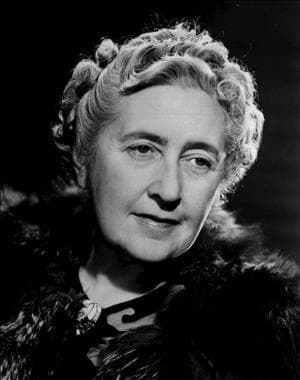
Dame Agatha Mary Clarissa Christie, Lady Mallowan, was an English writer known for her 66 detective novels and 14 short story collections, particularly those revolving around fictional detectives Hercule Poirot and Miss Marple. She also wrote the world's longest-running play, the murder mystery The Mousetrap, which has been performed in the West End since 1952. A writer during the "Golden Age of Detective Fiction", Christie has been called the "Queen of Crime". She also wrote six novels under the pseudonym Mary Westmacott. In 1971, she was made a Dame (DBE) by Queen Elizabeth II for her contributions to literature. Guinness World Records lists Christie as the best-selling fiction writer of all time, her novels having sold more than two billion copies.
Similar books
- The Secret Adversary
Agatha Christie
3.9 (42k) average on GoodreadsThrillerFeatures the same detective duo, Tommy and Tuppence, in their first adventure.
- The Adventures of Sherlock Holmes
Arthur Conan Doyle
4.3 (243k) average on GoodreadsMysteryA classic collection of short detective stories, which 'Partners in Crime' often parodies.
- Angels & Demons
Dan Brown
3.9 (2.7M) average on GoodreadsThrillerA Harvard symbologist races through Rome's ancient sites, deciphering cryptic clues to unmask the Illuminati and stop a vengeful plot to destroy the Vatican with a stolen antimatter weapon.
- Gone Girl
Gillian Flynn
4.1 (2.3M) average on GoodreadsThrillerA wife's sudden disappearance on her fifth anniversary reveals a web of lies and psychological warfare, exposing the secrets within a seemingly perfect marriage.
- The Girl on the Train
Paula Hawkins
3.9 (2.1M) average on GoodreadsThrillerA woman’s fascination with a seemingly perfect couple she watches from her daily train commute leads her into a dark investigation when she witnesses something that shatters their idyllic image.
- The Lovely Bones
Alice Sebold
3.8 (2M) average on GoodreadsFantasyA murdered teenage girl watches from the afterlife as her family struggles with grief and her killer remains free, wanting to bridge the gap between worlds to bring him to justice.





Enjoyed the summary?
A summary gives you the shape of the book. The book itself has the detail, the examples and the voice.
Find Partners in Crime on AmazonAs an Amazon Associate, BookBrief earns from qualifying purchases. How we're funded