

Synopsis
Covers the whole plot, including the ending.
- Difficulty
- Medium
- Pacing
- Moderate
- Mood
- Intriguing, Intellectual, Classic
- Read it if
- You enjoy classic detective stories, intricate puzzles, and a master of deduction at work.
- Skip it if
- You prefer continuous narratives over episodic short stories or find Victorian prose difficult.
The Adventures of Sherlock Holmes Plot Summary
Covers the whole plot, including the ending.
A Scandal in Bohemia: The Woman's Triumph
Sherlock Holmes is approached by a masked client who reveals he is Wilhelm Gottsreich Sigismond von Ormstein, King of Bohemia. He is engaged to a Scandinavian princess, but his past affair with American opera singer Irene Adler threatens the marriage. Adler has a photograph of herself and the King, which she has threatened to send to the princess's family. Holmes, in disguise, investigates Adler's house and watches her routine. He fakes a street brawl and a fire to trick Adler into showing the photograph's hiding place. However, Adler, realizing Holmes's trick, leaves with the photograph, leaving a letter for Holmes and a portrait of herself. The King is upset, but Holmes respects Adler's intelligence, keeping her photograph as a reminder of the one time he was outsmarted.
The Red-Headed League: A Peculiar Ploy
Jabez Wilson, a red-headed pawnbroker, asks Holmes about an odd situation. Two months earlier, his assistant, Vincent Spaulding, showed him an ad for 'The Red-Headed League,' offering a good-paying, easy job only for red-headed men. Wilson got the job, which involved copying the Encyclopaedia Britannica for four hours daily in an empty office. Suddenly, the League closed, and Wilson found the office locked. Holmes and Watson investigate. Holmes notices Spaulding's stained trousers and taps on the pavement outside Wilson's shop. He realizes the 'League' was a trick to keep Wilson out of his shop, allowing Spaulding and his partner, John Clay (a known criminal), to dig a tunnel from the pawnbroker's cellar to a nearby bank's vaults. Holmes, with the police and a bank director, catches the robbers as they come out of the tunnel, arresting Clay.
A Case of Identity: The Disappearing Fiancé
Mary Sutherland, a typist, asks Holmes for help because her fiancé, Hosmer Angel, disappeared on their wedding day. Her stepfather, James Windibank, is a private man who does not want her to marry. Mary describes Hosmer as having a strange voice, poor eyesight, and writing letters on a typewriter. Holmes quickly suspects Windibank. He sees that Hosmer Angel's description matches Windibank in disguise, especially the thick glasses and a fake mustache. Holmes concludes that Windibank, wanting to keep Mary's inheritance, created Hosmer Angel to woo and then leave her, ensuring she stayed single and dependent. Holmes confronts Windibank, revealing his deception, though Mary is heartbroken as she slowly accepts the truth.
The Boscombe Valley Mystery: A Son's Accusation
Alice Turner asks Holmes to investigate the murder of Charles McCarthy. Her friend James McCarthy, Charles's son, has been arrested. James was found near his father's body, and their last words were an argument. Holmes and Watson travel to Boscombe Valley. Holmes examines the crime scene, noting a large stone used as the weapon and a left-handed person's footprint. He interviews James, who admits arguing with his father but denies the murder. Holmes also talks with Patience Moran, a local girl, and eventually confronts John Turner, Alice's father and Charles McCarthy's old friend. Turner confesses to the murder, saying Charles McCarthy had blackmailed him for years about a shared criminal past in Australia. He killed him in anger after McCarthy threatened to tell Alice.
The Five Orange Pips: A Family Curse
John Openshaw visits Holmes, scared. His uncle, Elias Openshaw, died suddenly after getting an envelope with five orange pips and the letters 'K.K.K.' inside. Elias had lived in America and was a colonel in the Confederate army. A few years later, John's father also died after getting a similar envelope. Now, John has received the same message. Holmes realizes K.K.K. refers to the Ku Klux Klan and that the Openshaws are targets because of documents Elias brought back about the Klan. Holmes tells John to put the documents, which instruct him to put them on the sundial, in a box with his initials and an address. However, John is found dead in the Thames, killed by the Klan. Holmes tracks the ship 'Lone Star,' which he believes carried the killers, and sends a similar envelope with five orange pips to the ship's captain, vowing justice.
The Man with the Twisted Lip: A Beggar's Secret Life
Neville St. Clair, a respected businessman, disappears from an opium den in a poor part of London. His wife says she saw him at the window, calling for help, before a disfigured beggar, Hugh Boone, appeared. Police find Boone in the room, with St. Clair's clothes, but no sign of St. Clair. Boone is arrested. Holmes investigates the opium den and the area. He notices timeline inconsistencies and the beggar's description. After careful observation and a night of thought, Holmes realizes Neville St. Clair IS Hugh Boone. St. Clair had been living two lives, making more money begging in disguise than from his business. The 'disappearance' was a trick to leave his respectable identity and continue begging. Holmes confronts St. Clair, who confesses. Holmes, understanding the situation, agrees to keep his secret if he stops his double life.
The Adventure of the Blue Carbuncle: A Christmas Theft
Watson visits Holmes on Christmas Day. Holmes is looking at an old hat and a Christmas goose. A commissionaire, Peterson, found the hat and goose, along with a blue carbuncle, after a street fight. Holmes recognizes the jewel as the Countess of Morcar's famous carbuncle, recently stolen from the Hotel Cosmopolitan. Police arrested John Horner, a plumber, based on clues. Holmes places an ad for the lost goose, and an old man, Henry Baker, claims it. Holmes gives him a new goose. Holmes then traces the goose to a market, then to a dealer, Mr. Windigate, and finally to a publican, Mr. Breckinridge. By asking questions, Holmes learns the carbuncle was swallowed by a goose by James Ryder, the hotel attendant, who then mistakenly took the wrong goose from his sister's birds. Holmes confronts Ryder, who confesses to the theft, saying the Countess's maid, Catherine Cusack, helped him.
The Adventure of the Speckled Band: A Serpent's Deadly Strike
Helen Stoner visits Holmes, scared for her life. Two years earlier, her twin sister, Julia, died mysteriously, saying 'the speckled band' before her death, just before her wedding. Helen is now engaged and has had to move into Julia's old bedroom, which is next to her stepfather, Dr. Grimesby Roylott's, room. Roylott is a violent, poor aristocrat who loves exotic animals. Holmes and Watson visit Stoke Moran, Roylott's estate. Holmes notices several odd things in Julia's room: a fake bell-pull that does not work, a ventilator opening into Roylott's room, and the bed bolted to the floor. Holmes realizes Roylott is using a poisonous snake, the 'speckled band,' to murder his stepdaughters to keep their inheritance. Holmes and Watson spend a night in Julia's room. When the snake tries to enter through the ventilator, Holmes hits it, driving it back through the opening, where it attacks and kills Dr. Roylott.
The Adventure of the Engineer's Thumb: A Mutilation and a Money Scheme
Victor Hatherley, a hydraulic engineer, visits Holmes with a bad injury: his thumb has been cut off. He tells a strange story: he was offered a well-paying, secret job by Colonel Lysander Stark, to inspect a hydraulic press at a remote country house at night. He was promised a large sum and sworn to secrecy. During his inspection, he found the press was used not for Fuller's earth, as claimed, but for making fake coins. Stark and his partners attacked him when he learned their secret, and he escaped, losing his thumb. Holmes and Watson immediately go to the house in Berkshire. They find the house burned down, having caught fire during Hatherley's escape. The criminals have gone, but Holmes confirms the coin counterfeiting and the gang's violent nature, though they escape capture.
The Adventure of the Noble Bachelor: A Runaway Bride
Lord Robert St. Simon asks Holmes for help after his American fiancée, Hatty Doran, disappears from their wedding breakfast soon after the ceremony. The only clues are a note in her pocket and her discarded wedding dress and ring. Holmes investigates, interviewing Lord St. Simon, Hatty's father, and the maid. He learns Hatty seemed worried before the wedding. Holmes realizes Hatty was not kidnapped but left willingly. He finds her at a private hotel with a mysterious man. It turns out Hatty was already married to Frank Moulton, a man she thought was dead, who had reappeared in London. Seeing him at the wedding, she fled with him. The note was from Frank, and the discarded items were to distract people. Holmes arranges for Lord St. Simon to learn the truth quietly, saving him from more public shame, while Hatty is reunited with her true love.
The Adventure of the Beryl Coronet: A Family Scandal
Alexander Holder, a respected banker, brings Holmes a serious problem: the Beryl Coronet, a valuable national treasure he holds as collateral for a loan, has been damaged, with three beryls missing. His wild son, Arthur, was found holding the coronet, seemingly trying to bend it, and is the main suspect. Holder's ward, Mary, is also in the house. Holmes examines the scene and the broken coronet. He notices a fresh footprint outside the window and other small clues. He realizes Arthur is covering for someone. Through careful investigation, Holmes finds that Mary, Holder's ward, was working with her lover, Sir George Burnwell, to steal the beryls. Arthur, seeing Burnwell's attempt, intervened and struggled with him, damaging the coronet more, and then took the blame to protect Mary, whom he secretly loved. Holmes finds the missing beryls, exposing Mary's betrayal and clearing Arthur's name.
The Adventure of the Copper Beeches: A Governess's Ordeal
Violet Hunter, a young governess, asks Holmes for advice about an odd job offer from Jephro Rucastle of the Copper Beeches. The terms are very generous, but she must cut her hair short, wear a specific blue dress, and sit in a certain chair, facing away from the window, at certain times. She also hears strange noises from a locked part of the house. Holmes suspects trouble. He and Watson visit the estate. Holmes discovers that Rucastle is trying to impersonate his own daughter, Alice, who had disappeared after inheriting money. Rucastle is making Violet pose as Alice to keep Alice's fiancé, Mr. Fowler, who knows Alice has short hair and a blue dress, from finding the real Alice. The real Alice is held captive in a locked part of the house, guarded by a fierce mastiff. Holmes and Watson rescue Alice. Rucastle is attacked by his own dog, which is later shot.
Principal Figures
Sherlock Holmes
Protagonist
Brilliant consulting detective, master of deduction and observation.
Sherlock Holmes is a highly intelligent and eccentric consulting detective with an unparalleled ability for deductive reasoning and observation. He lives at 221B Baker Street, where he receives clients and conducts his investigations. Holmes is characterized by his logical mind, scientific approach to crime, and occasional use of disguises. While often aloof and seemingly devoid of emotion, he possesses a strong sense of justice and a deep respect for intellectual adversaries, as shown by his admiration for Irene Adler. He is meticulous in his methods, often analyzing minute details that others overlook, and is driven by the intellectual challenge of solving complex cases.
Relationships: Dr. John Watson (Flatmate, chronicler, and loyal friend); Irene Adler (Intellectual adversary and the only woman to outwit him); Lestrade (Scotland Yard inspector, often relying on Holmes's superior intellect)
Dr. John Watson
Supporting
Holmes's loyal companion, chronicler, and moral compass.
Dr. John Watson is Sherlock Holmes's flatmate, confidant, and the narrator of most of their adventures. A former army surgeon who served in Afghanistan, Watson brings a grounded, empathetic perspective to Holmes's often cold logic. He is intelligent in his own right, though he consistently marvels at Holmes's genius. Watson serves as the reader's entry point into Holmes's world, translating Holmes's complex deductions into understandable narratives. His presence provides a human element to the stories, often expressing concern for victims and bringing a sense of warmth and camaraderie to the otherwise solitary Holmes.
Relationships: Sherlock Holmes (Flatmate, partner in solving crimes, and closest friend); Mary Morstan (Future wife (in later stories, though not in this collection))
Irene Adler
Supporting
'The Woman' who outwits Sherlock Holmes in 'A Scandal in Bohemia'.
Irene Adler is an American opera singer and adventuress, famously known as 'the woman' who outsmarted Sherlock Holmes in 'A Scandal in Bohemia'. She is depicted as beautiful, intelligent, resourceful, and independent, possessing a keen wit and an ability to think several steps ahead, even of Holmes. Her quick thinking and bold actions, such as disguising herself and leaving a letter for Holmes, earn her Holmes's profound respect and admiration. She represents a rare intellectual challenge and is the only character to ever truly defeat Holmes, making a lasting impression on him.
Relationships: Sherlock Holmes (Intellectual adversary and object of his professional respect); King of Bohemia (Former lover and source of her blackmail material)
Jabez Wilson
Supporting
Red-headed pawnbroker, victim of a bizarre bank robbery scheme.
Jabez Wilson is a good-natured, somewhat gullible, red-headed pawnbroker who becomes the unwitting pawn in 'The Red-Headed League'. His distinct red hair makes him a perfect target for the elaborate scheme devised by John Clay. Wilson is a man of routine and simple pleasures, and his excitement over the well-paying, undemanding job of copying the Encyclopaedia Britannica highlights his naivety. His detailed, albeit confused, account of the Red-Headed League provides Holmes with the initial clues needed to unravel the complex plot against the bank. He is a classic example of an ordinary citizen caught up in an extraordinary criminal enterprise.
Relationships: Vincent Spaulding (John Clay) (Deceptive assistant and criminal mastermind)
Dr. Grimesby Roylott
Antagonist
Violent stepfather who uses a snake to murder his stepdaughters.
Dr. Grimesby Roylott is the sinister and violent stepfather in 'The Adventure of the Speckled Band'. A man of immense physical strength and a volatile temper, he is the last survivor of an old, impoverished aristocratic family. His passion for exotic animals, particularly a baboon and a cheetah, adds to his menacing aura. Driven by greed to maintain control of his stepdaughters' inheritance, he devises a cunning and cruel method of murder using a venomous snake. Roylott's menacing presence and his attempts to intimidate Holmes underscore the danger faced by Helen Stoner, making him one of Holmes's most memorable and chilling adversaries.
Relationships: Helen Stoner (Terrified stepdaughter and victim of his schemes); Julia Stoner (Deceased stepdaughter, his first victim)
John Clay (Vincent Spaulding)
Antagonist
Notorious criminal mastermind behind 'The Red-Headed League' bank heist.
John Clay is a notorious and audacious criminal, described by Holmes as a 'four times murderer, forger, and burglar.' In 'The Red-Headed League,' he operates under the alias Vincent Spaulding, working as Jabez Wilson's assistant. Clay is cunning, resourceful, and meticulous in his planning, orchestrating the elaborate Red-Headed League scheme to keep Wilson occupied while he digs a tunnel to a bank vault. His intelligence and audacity make him a formidable opponent, and Holmes expresses a certain professional respect for his abilities, even as he ensures his capture. He represents the calculating and bold criminal element Holmes frequently encounters.
Relationships: Jabez Wilson (Unwitting victim of his scheme); Archie (his accomplice) (Partner in crime)
Helen Stoner
Supporting
Frightened young woman seeking Holmes's help after her sister's mysterious death.
Helen Stoner is the distressed client in 'The Adventure of the Speckled Band'. She is a young woman living under the oppressive and terrifying influence of her stepfather, Dr. Grimesby Roylott. Her fear for her own life, mirroring the mysterious death of her twin sister Julia, drives her to seek Holmes's assistance. Helen is observant enough to notice the strange details surrounding her sister's death and her own predicament, but lacks the deductive power to understand their significance. Her vulnerability and genuine terror create a strong sense of urgency and danger in the narrative, highlighting Roylott's cruelty.
Relationships: Dr. Grimesby Roylott (Abusive stepfather and attempted murderer); Julia Stoner (Deceased twin sister)
Mary Sutherland
Supporting
Naïve young woman deceived by her stepfather in 'A Case of Identity'.
Mary Sutherland is the client in 'A Case of Identity', a young typist who is deeply in love with her vanished fiancé, Hosmer Angel. She is characterized by her naivety and her inability to see beyond the surface of events, even when confronted with obvious contradictions. Her unwavering belief in Hosmer Angel, despite his suspicious disappearance and peculiar characteristics, makes her vulnerable to her stepfather's manipulation. Mary's story highlights the theme of deception and the difficulty of accepting harsh truths, even when presented by Holmes.
Relationships: James Windibank (Deceptive stepfather and 'Hosmer Angel')
Alexander Holder
Supporting
Banker whose reputation is threatened by the theft of the Beryl Coronet.
Alexander Holder is the distraught banker in 'The Adventure of the Beryl Coronet'. He is a man of honor and integrity, deeply concerned with his reputation and the immense responsibility of safeguarding the priceless Beryl Coronet. His blind faith in his son, Arthur, initially leads him to misinterpret the events surrounding the coronet's damage. Holder's anguish and despair over the potential ruin of his family name and his business drive the urgency of Holmes's investigation. He represents the respectable Victorian gentleman whose world is suddenly shattered by scandal and betrayal within his own household.
Relationships: Arthur Holder (Misunderstood son); Mary (Deceptive ward)
James Windibank
Antagonist
Mary Sutherland's stepfather, who impersonates Hosmer Angel to prevent her marriage.
James Windibank is the cunning and manipulative stepfather in 'A Case of Identity'. He is a man driven by financial greed, wishing to keep his stepdaughter Mary's inheritance for himself. To achieve this, he invents the persona of Hosmer Angel, wooing Mary only to abandon her on their wedding day. Windibank is careful in his deception, using disguises and typewritten letters to conceal his identity. His cold, calculating nature and lack of remorse for the emotional damage he inflicts on Mary make him a particularly despicable villain, representing the selfish and cruel side of human nature that Holmes often exposes.
Relationships: Mary Sutherland (Stepdaughter and victim of his deception)
Themes & Insights
Reason vs. Emotion
This theme is important to 'The Adventures of Sherlock Holmes', shown by the difference between Holmes's calm, logical way and Watson's more human perspective. Holmes always focuses on facts and scientific deduction, often ignoring emotions as distractions. However, stories like 'A Scandal in Bohemia' subtly challenge this, as Holmes's inability to understand Irene Adler's emotional intelligence leads to his only loss. Watson, on the other hand, often feels sympathy for clients and is amazed by the human drama in each case. This provides a needed balance to Holmes's purely intellectual search for truth. The interaction between these two approaches often shows the full complexity of people and crime.
“'Data! Data! Data! I can't make bricks without clay.”
Justice and Morality
The search for justice drives Holmes's investigations, but the stories often explore the details of morality. While Holmes usually works within the law to bring criminals to justice, there are times when he shows a more flexible moral code. For example, in 'The Man with the Twisted Lip', he lets Neville St. Clair go free, seeing the unique situation and that public exposure would cause more harm. Similarly, in 'The Adventure of the Blue Carbuncle', he lets James Ryder escape, believing the shock and fear he felt are enough punishment. This suggests that for Holmes, justice is not always strict legal punishment, but sometimes a broader sense of fairness or even mercy, especially when the crime is not violent or the criminal is truly sorry.
“'I am not a whole-hearted admirer of the law, Watson, and I have found that it is not always a perfect expression of justice.”
Deception and Disguise
Deception, by both criminals and Holmes, is a repeated and important theme. Many cases depend on a character living a double life or using disguises to hide their true plans. In 'A Case of Identity', James Windibank creates the entire character of Hosmer Angel to deceive Mary Sutherland. In 'The Man with the Twisted Lip', Neville St. Clair lives a secret life as a beggar, Hugh Boone. Holmes often uses disguises, from a drunken groom in 'A Scandal in Bohemia' to an old man in 'The Red-Headed League', to get information. These deceptions show the hidden complexities of Victorian society and how easily appearances can mislead, making Holmes's ability to see through them even more impressive.
“'It has long been an axiom of mine that the smaller the crime, the more difficult it is to detect.”
The Dangers of Greed and Obsession
Many crimes in 'The Adventures of Sherlock Holmes' are caused by greed or an unhealthy desire. Dr. Grimesby Roylott in 'The Speckled Band' murders his stepdaughters for their inheritance, while the plan in 'The Red-Headed League' is a detailed scheme to steal from a bank. In 'The Beryl Coronet', the theft is for money and a desperate attempt to pay debts. These stories serve as warnings, showing how uncontrolled desires for wealth or power can lead people down bad paths, resulting in violence, betrayal, and their eventual downfall. Holmes consistently reveals these underlying reasons, showing the destructive power of human faults.
“'It is a capital mistake to theorize before one has data. Insensibly one begins to twist facts to suit theories, instead of theories to suit facts.”
The Power of Observation and Deduction
This is arguably the most important theme, showing Holmes's unique method. Every story shows the power of careful observation of small details and the logical conclusions drawn from them. Holmes can guess a client's job, recent activities, or even personality traits from their clothes, hands, or even the mud on their boots. In 'The Red-Headed League', the worn knees of Vincent Spaulding's trousers provide an important clue. In 'The Speckled Band', the fake bell-pull and ventilator are key to understanding how the murder happened. This theme not only entertains but also encourages the reader to pay more attention to the world around them, showing that truth can often be found in small, overlooked things.
“'You see, but you do not observe. The distinction is clear.”
Plot Devices & Literary Techniques
The Unreliable Narrator (Watson)
Watson's perspective shapes the reader's understanding of Holmes and the cases.
Dr. Watson serves as the primary narrator for most of Holmes's adventures. While generally reliable in recounting events, his perspective is inherently limited by his less acute observational skills compared to Holmes. He often omits details he deems insignificant or fails to connect clues, only for Holmes to later reveal their importance. This narrative device builds suspense, allows Holmes's deductions to appear more astonishing, and highlights the gulf between ordinary perception and Holmes's genius. Watson's human touch also makes Holmes more relatable, as the reader experiences the cases through a more conventional lens.
The 'Aha!' Moment (Deductive Reveal)
Holmes's dramatic explanation of the solution after the client's initial confusion.
A classic structural device in these stories is the 'Aha!' moment, where Holmes, after patiently gathering facts and making his deductions, dramatically reveals the solution to Watson and the client. This usually occurs after Watson or the client has struggled with the mystery, often proposing incorrect theories. Holmes's explanation, often delivered with calm confidence, systematically connects all the seemingly disparate clues, making the solution appear inevitable in retrospect. This device provides immense satisfaction to the reader and underscores Holmes's intellectual superiority, making his process clear and his genius undeniable.
The Red Herring
Misleading clues or suspects designed to divert the reader and Watson.
Conan Doyle frequently employs red herrings to distract the reader and Watson from the true solution, making Holmes's eventual reveal more impactful. For example, in 'The Red-Headed League,' the entire premise of the league itself is a red herring, designed to keep Jabez Wilson occupied. In 'The Beryl Coronet,' Arthur Holder is strongly implicated in the theft, leading both his father and Watson to suspect him, only for Holmes to uncover the real culprit. These misleading elements create suspense and allow Holmes's brilliance in discerning the truth amidst deception to shine.
The Client's Narrative
The case begins with a client presenting their baffling problem to Holmes.
Many stories in the collection begin with a client arriving at 221B Baker Street and recounting their strange or troubling tale to Holmes and Watson. This device immediately immerses the reader in the mystery, presenting the facts and the client's emotional state directly. It establishes the central enigma and provides the initial set of clues and complications that Holmes must unravel. The client's often bewildered and sometimes fragmented account serves as the raw material for Holmes's deductions, highlighting the difference between merely experiencing events and truly observing them.
The Exotic/Unusual Crime
Crimes with bizarre or seemingly impossible elements.
Conan Doyle often presents Holmes with crimes that possess an unusual or exotic element, making them appear particularly baffling. Examples include the mysterious deaths associated with 'five orange pips,' the 'speckled band' (a venomous snake), or the bizarre employment of 'The Red-Headed League.' These unique crime elements serve to heighten the mystery and challenge Holmes's deductive powers, often masking a surprisingly simple, albeit sinister, human motive. They add a touch of the extraordinary to the everyday Victorian setting, captivating the reader's imagination and pushing the boundaries of conventional crime-solving.
The Adventures of Sherlock Holmes Quotes
“When you have eliminated the impossible, whatever remains, however improbable, must be the truth.”
“It is a capital mistake to theorize before one has data. Insensibly one begins to twist facts to suit theories, instead of theories to suit facts.”
“You see, but you do not observe. The distinction is clear.”
“There is nothing more deceptive than an obvious fact.”
“I never guess. It is a shocking habit—destructive to the logical faculty.”
“My mind rebels at stagnation. Give me problems, give me work, give me the most abstruse cryptogram, or the most intricate analysis, and I am in my own proper atmosphere.”
“The world is full of obvious things which nobody by any chance ever observes.”
“Mediocrity knows nothing higher than itself, but talent instantly recognizes genius.”
“What one man can invent another can discover.”
“It is my business to know what other people do not know.”
“The game is afoot.”
“Education never ends, Watson. It is a series of lessons, with the greatest for the last.”
“I am a brain, Watson. The rest of me is a mere appendix.”
“The lowest and vilest alleys in London do not present a more dreadful record of sin than does the smiling and beautiful countryside.”
Quiz
10 questions on the plot and the characters. Each answer comes with a short explanation.
Question 1
In 'A Scandal in Bohemia', why does Sherlock Holmes initially fail to retrieve the photograph from Irene Adler?
- He is physically overpowered by her bodyguard
- She outsmarts him by anticipating his plan and leaving the country with it
- Watson accidentally warns her during the investigation
- The King of Bohemia secretly retrieves it first
Show answer
B. She outsmarts him by anticipating his plan and leaving the country with it Irene Adler deduces Holmes's identity and plan, then leaves England with the photograph, making her the only person to outwit Holmes in the stories, as noted in the book's description.
Question 2
What unusual organization does Jabez Wilson join in 'The Red-Headed League'?
- A society for collectors of rare coins
- A league that pays him to copy out the Encyclopedia Britannica
- A group dedicated to preserving red-headed heritage
- A secret club for pawnbrokers
Show answer
B. A league that pays him to copy out the Encyclopedia Britannica Wilson is hired by the Red-Headed League to copy the Encyclopedia Britannica daily, which is actually a ruse to keep him away from his pawnshop so criminals can tunnel into a bank vault.
Question 3
In 'The Blue Carbuncle', where is the stolen gem initially discovered?
- Hidden in a Christmas goose
- Concealed in a hotel room safe
- Buried in a garden in Brixton
- Sewn into the lining of a coat
Show answer
A. Hidden in a Christmas goose The Blue Carbuncle, a precious gem stolen from the Countess of Morcar, is found by Holmes in the crop of a Christmas goose, leading to a holiday-themed investigation.
Question 4
What deadly creature is used in the murder plot in 'The Speckled Band'?
- A venomous snake
- A poisoned dart
- A trained falcon
- A rabid dog
Show answer
A. A venomous snake Dr. Grimesby Roylott uses a swamp adder (a venomous snake) to kill his stepdaughter through a ventilator, creating the 'speckled band' effect mentioned in her dying words.
Question 5
How does Holmes refer to Irene Adler after the events of 'A Scandal in Bohemia'?
- As his greatest adversary
- As 'the woman'
- As a misguided romantic
- As a common criminal
Show answer
B. As 'the woman' Holmes respects Irene Adler's intellect and refers to her as 'the woman' thereafter, highlighting her unique role in defeating him, as mentioned in the book's description.
Question 6
What is the primary reason Holmes takes on cases, as revealed throughout the stories?
- For financial gain and fame
- To combat boredom and exercise his intellect
- To uphold legal justice as a sworn officer
- To please his friend Dr. Watson
Show answer
B. To combat boredom and exercise his intellect Holmes often expresses that he pursues mysteries to stave off ennui and challenge his deductive skills, rather than for money or formal duty.
Question 7
In 'The Adventure of the Engineer's Thumb', what profession is the client, Victor Hatherley?
- A hydraulic engineer
- A railway conductor
- A factory foreman
- A shipbuilder
Show answer
A. A hydraulic engineer Victor Hatherley is a hydraulic engineer who loses his thumb in a mysterious incident involving a secret press used for counterfeiting.
Question 8
Which story features Holmes deducing a man's entire life from his hat?
- 'The Blue Carbuncle'
- 'The Red-Headed League'
- 'A Scandal in Bohemia'
- 'The Speckled Band'
Show answer
A. 'The Blue Carbuncle' In 'The Blue Carbuncle', Holmes examines a lost hat and infers details about its owner's intellect, domestic life, and recent activities, showcasing his deductive methods.
Question 9
What common theme in these stories reflects Conan Doyle's realism, as noted in the description?
- Holmes's infallibility in every case
- The portrayal of Holmes as defeated by Irene Adler
- The use of supernatural elements in mysteries
- Watson's role as the primary detective
Show answer
B. The portrayal of Holmes as defeated by Irene Adler The description highlights that Conan Doyle showed realism by having Holmes defeated by Irene Adler in 'A Scandal in Bohemia', contrasting with Holmes's usual reputation for infallibility.
Question 10
In 'The Adventure of the Noble Bachelor', what is the central mystery regarding Lady St. Simon?
- She is accused of theft from her husband
- She disappears immediately after her wedding
- She is suspected of being an impostor
- She is involved in a political conspiracy
Show answer
B. She disappears immediately after her wedding Lady St. Simon vanishes after her marriage to Lord St. Simon, leading Holmes to investigate a case involving bigamy and a former lover from America.
The Adventures of Sherlock Holmes FAQ
What is 'The Adventures of Sherlock Holmes' about?
This collection of twelve short stories follows the brilliant detective Sherlock Holmes and his friend Dr. John Watson as they solve various mysteries in late Victorian London. The cases range from bizarre puzzles like 'The Red-Headed League'—where a man is paid to copy an encyclopedia—to dangerous investigations like 'The Speckled Band,' involving a deadly snake.
Why should I read 'The Adventures of Sherlock Holmes'?
The stories are foundational to the detective genre, featuring Holmes's iconic deductive reasoning and memorable characters like Watson. They offer clever plots, atmospheric Victorian settings, and introduce Irene Adler—the only person to outsmart Holmes—making them both entertaining and historically significant.
What is the background/setting of 'The Adventures of Sherlock Holmes'?
Set in late 19th-century London and its surroundings, the stories reflect the social and technological context of the Victorian era. Holmes operates from 221B Baker Street, using methods like forensic analysis and disguise, against a backdrop of gaslit streets, fog, and emerging modernity.
What are the most memorable quotes from 'The Adventures of Sherlock Holmes'?
Famous lines include Holmes's deduction principle: 'When you have eliminated the impossible, whatever remains, however improbable, must be the truth' from 'The Sign of the Four' (referenced in these stories), and his description of Adler in 'A Scandal in Bohemia': 'To Sherlock Holmes she is always the woman.'
What writing style does Arthur Conan Doyle use in 'The Adventures of Sherlock Holmes'?
Doyle employs a first-person narrative through Dr. Watson's perspective, creating a sense of realism and immediacy. The style is concise and engaging, blending detailed observations with fast-paced plots, often starting with a client's visit to Baker Street and culminating in Holmes's dramatic revelations.
What minor details add significant meaning in 'The Adventures of Sherlock Holmes'?
In 'The Blue Carbuncle,' the goose's crop tag reveals the gem's theft, turning a simple Christmas mystery into a crime story. In 'The Speckled Band,' the bell-pull that doesn't work and the ventilator between rooms are crucial clues that Holmes uses to deduce the murder method.
What are some subtle foreshadowing moments in 'The Adventures of Sherlock Holmes'?
In 'The Red-Headed League,' the advertisement's absurdity hints at a larger criminal scheme. In 'A Scandal in Bohemia,' Holmes's initial underestimation of Irene Adler foreshadows his eventual defeat, as he notes she has 'the mind of the most resolute of men.'
What unexpected character connections exist in 'The Adventures of Sherlock Holmes'?
In 'The Blue Carbuncle,' the stolen gem connects a hotel theft to an innocent goose-seller, showing how crime can entangle unrelated people. In 'The Speckled Band,' Dr. Roylott's stepdaughters are linked through inheritance disputes, revealing family tensions driving the plot.
What are unspoken character motivations in 'The Adventures of Sherlock Holmes'?
Holmes's pursuit of intellectual challenge often overrides financial gain, as seen in 'The Red-Headed League' where he solves the case for fun. Watson's loyalty stems from admiration and a desire for adventure, while Irene Adler in 'A Scandal in Bohemia' is motivated by love and self-preservation, not malice.
What psychological complexities do characters exhibit in 'The Adventures of Sherlock Holmes'?
Holmes displays a mix of genius and eccentricity, with mood swings between intense focus and boredom. Watson balances medical pragmatism with emotional sensitivity, serving as Holmes's moral compass. Villains like Dr. Roylott in 'The Speckled Band' show calculated cruelty masked by respectability.
What are the major emotional turning points in 'The Adventures of Sherlock Holmes'?
In 'A Scandal in Bohemia,' Holmes's defeat by Irene Adler humbles him and marks her as 'the woman.' In 'The Speckled Band,' the rescue of Helen Stoner from her stepfather's plot provides cathartic relief. Watson's narration often highlights moments of danger or revelation that deepen their friendship.
How do relationship dynamics evolve in 'The Adventures of Sherlock Holmes'?
Holmes and Watson's partnership grows from acquaintances to trusted allies, with Watson increasingly participating in investigations. Holmes's respect for Irene Adler shifts from rivalry to admiration. Client interactions, like with the desperate Helen Stoner, show Holmes's protective side beneath his detached demeanor.
Which parts remain ambiguous or open-ended in 'The Adventures of Sherlock Holmes'?
The fate of minor characters is often left unclear, such as the thief in 'The Blue Carbuncle' whom Holmes lets go. Holmes's personal life and past are rarely detailed, adding to his enigmatic aura. Some mysteries, like the full extent of Adler's life after 'A Scandal in Bohemia,' are unresolved.
What are controversial scenes or decisions in 'The Adventures of Sherlock Holmes'?
Holmes's decision to release the criminal in 'The Blue Carbuncle' based on Christmas spirit sparks debate about justice vs. mercy. In 'The Speckled Band,' Dr. Roylott's death by his own snake raises ethical questions about Holmes's indirect responsibility. Adler's outsmarting of Holmes challenged gender norms of the time.
'The Adventures of Sherlock Holmes' ending explained: how it ends & what it means
The collection doesn't have a unified ending, as each story concludes with Holmes solving the case. Overall, it establishes Holmes's reputation and his dynamic with Watson. The final story, 'The Copper Beeches,' ends with Holmes reflecting on the 'grimmest' aspects of humanity, underscoring the series' theme of reason uncovering darkness.
About the author
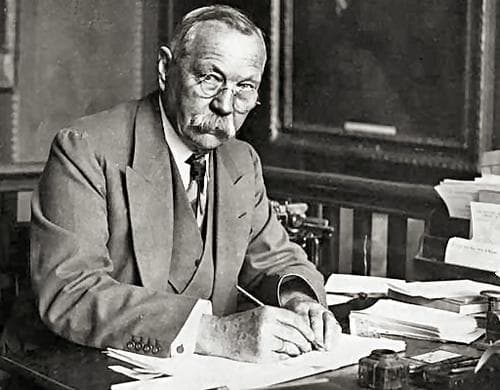
Sir Arthur Ignatius Conan Doyle was a British writer and physician. He created the character Sherlock Holmes in 1887 for A Study in Scarlet, the first of four novels and fifty-six short stories about Holmes and Dr. Watson. The Sherlock Holmes stories are milestones in the field of crime fiction.
Similar books
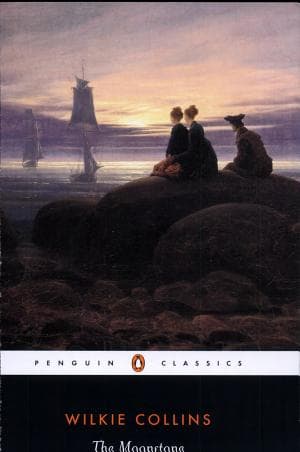
- The Moonstone
Wilkie Collins
3.9 (79k) average on GoodreadsHistorical FictionA foundational work of detective fiction with a complex plot and multiple perspectives.
- Angels & Demons
Dan Brown
3.9 (2.7M) average on GoodreadsThrillerA Harvard symbologist races through Rome's ancient sites, deciphering cryptic clues to unmask the Illuminati and stop a vengeful plot to destroy the Vatican with a stolen antimatter weapon.
- Gone Girl
Gillian Flynn
4.1 (2.3M) average on GoodreadsThrillerA wife's sudden disappearance on her fifth anniversary reveals a web of lies and psychological warfare, exposing the secrets within a seemingly perfect marriage.
- The Girl on the Train
Paula Hawkins
3.9 (2.1M) average on GoodreadsThrillerA woman’s fascination with a seemingly perfect couple she watches from her daily train commute leads her into a dark investigation when she witnesses something that shatters their idyllic image.
- The Lovely Bones
Alice Sebold
3.8 (2M) average on GoodreadsFantasyA murdered teenage girl watches from the afterlife as her family struggles with grief and her killer remains free, wanting to bridge the gap between worlds to bring him to justice.
- The Da Vinci Code
Dan Brown
3.9 (1.9M) average on GoodreadsThrillerA symbologist and a cryptologist race through European landmarks, deciphering ancient codes and uncovering a conspiracy that could rewrite the foundations of Christianity.





Enjoyed the summary?
A summary gives you the shape of the book. The book itself has the detail, the examples and the voice.
Find The Adventures of Sherlock Holmes on AmazonAs an Amazon Associate, BookBrief earns from qualifying purchases. How we're funded