

Synopsis
Covers the whole plot, including the ending.
- Difficulty
- Medium
- Pacing
- Fast
- Mood
- Gritty, Suspenseful, Intense, Action-packed
- Read it if
- You enjoy gritty, intense thrillers with a highly skilled protagonist on the run, facing overwhelming odds and a deep conspiracy.
- Skip it if
- You prefer softer mysteries or shy away from detailed descriptions of violence and military tactics.
Point of Impact Plot Summary
Covers the whole plot, including the ending.
The Invitation
Bob Lee Swagger, a Vietnam veteran and legendary Marine Corps sniper, lives a quiet life in the Arkansas hills, marked by his past. His peace ends when Colonel Samuel Vincent, with a civilian named Michael Sandor, visits him. They claim to represent a secret group protecting the country and ask for Bob Lee's help. They say a skilled sniper plans to kill a controversial archbishop at a rally in Washington D.C., and they need Bob Lee to identify the potential sniper's position and methods so the Secret Service can stop the attack. Bob Lee is hesitant but eventually agrees due to a sense of duty and his unique skills.
The Setup
Bob Lee travels to Washington D.C. with Vincent and Sandor. He receives blueprints, maps, and information on the archbishop's route and the rally site. Bob Lee carefully studies the area, using his knowledge of ballistics, wind, and vantage points. He identifies a specific, normal-looking window in a building across from the rally as the most likely sniper's nest. He gives a detailed report, including the type of rifle, ammunition, and likely modifications the assassin would use. He does not know he is being manipulated into providing the exact plan for his own framing.
The Assassination and Frame-Up
On the day of the rally, Bob Lee is in an observation post, a pre-arranged spot, far from the identified sniper's nest, supposedly to watch for the real threat. But as the archbishop begins his speech, a shot rings out, and the archbishop falls dead. At the same time, an operative bursts into Bob Lee's post, shoots him in the shoulder, and plants a rifle. Bob Lee, wounded but still dangerous, disarms and kills his attacker. He realizes he has been set up. The rifle found with him matches the description he provided, and a nationwide manhunt immediately begins, naming him as the assassin.
On the Run
Wounded and confused, Bob Lee escapes the immediate search. He uses his survival skills to disappear into the city, becoming a ghost. The FBI, led by agents like Nick Memphis, starts a large investigation, sure of Bob Lee's guilt based on the strong evidence planted against him. Bob Lee, now hunted, understands that his only chance to survive and clear his name is to find out who framed him and why. He must rely on his instincts and the skills he tried to leave behind, becoming a one-man army against a powerful, unseen enemy.
Unexpected Allies
While on the run, Bob Lee contacts Sarah Fenn, a woman he met briefly in D.C., who was Sandor's assistant. Sarah, at first cautious, believes Bob Lee's innocence after seeing inconsistencies and threats against her own life. At the same time, FBI agent Nick Memphis, despite the evidence, starts to doubt Bob Lee's guilt, noticing oddities in the official story. Memphis, a dedicated but somewhat naive agent, finds himself pushed aside by his superiors as he digs deeper, eventually leading to his suspension. This sets the stage for an unlikely alliance between the framed sniper, the sympathetic woman, and the discredited agent.
Unraveling the Conspiracy
Bob Lee, Sarah, and Nick Memphis begin to work together, combining their resources and insights. Bob Lee uses his knowledge of firearms and ballistics to find differences in the official evidence. Sarah provides important information from her time with Sandor, including details about the organization and its members. Nick, though unofficial, uses his FBI training to access information and analyze the flaws in the official investigation. They discover that the plot goes far beyond a simple assassination, involving high-ranking government officials and a group aiming to gain power and control through planned chaos.
The True Target and Motive
As they investigate, Bob Lee, Sarah, and Nick uncover the true reason for the archbishop's assassination: to create a national crisis, justifying more surveillance, military action, and a loss of civil liberties. The archbishop was a pawn, a figure whose death would spark public outrage and fear, clearing the way for the conspirators' agenda. The shadowy organization, led by figures like Colonel Vincent and Senator Meachum, aims to establish military rule, believing they are saving the country. Bob Lee realizes he was chosen not just for his skills, but because his past made him a convenient scapegoat.
Confrontation in the Hills
The conspirators, realizing Bob Lee is alive and investigating, track him to his isolated retreat in the Arkansas hills. A heavily armed team, led by Sandor, is sent to eliminate him and anyone with him. This sets up a brutal and intense confrontation on Bob Lee's home ground. Bob Lee, using his knowledge of the terrain, his expert marksmanship, and his booby traps, turns his property into a deadly fortress. Sarah and Nick join him, and despite their lack of combat experience, they bravely help him fight for their lives and for justice.
The Battle for Justice
In a final battle, Bob Lee systematically eliminates the conspirators' hit squad, showing his sniping and tactical skills. He confronts Sandor directly, uncovering more details about the conspiracy and Senator Meachum's involvement. Though facing overwhelming odds, Bob Lee, with Sarah and Nick's help, manages to turn the situation around. He survives the assault and gathers strong evidence that exposes the full extent of the conspiracy, including the masterminds' identities. This evidence is crucial for clearing his name and bringing the powerful figures to justice.
Aftermath and Resolution
After the brutal confrontation, the evidence gathered by Bob Lee, Sarah, and Nick comes to light, forcing the FBI and other authorities to acknowledge the conspiracy. Senator Meachum and other high-ranking officials involved are exposed and face justice. Bob Lee's name is officially cleared, and the manhunt for him ends. However, the experience leaves a lasting mark on him. While he finds some peace and a bond with Sarah and Nick, he remains a solitary figure, always watchful, knowing the depths of corruption he uncovered. He returns to his quiet life, but now with a renewed purpose and a readiness to act if his country truly needs him.
Point of Impact Characters
Bob Lee Swagger
Protagonist
A legendary Marine sniper framed for assassination, fighting for his life and truth.
Bob Lee Swagger is a decorated Vietnam War veteran and one of the finest snipers in Marine Corps history. He is a man of few words, deeply moral, and possesses an almost superhuman ability with a rifle and an uncanny understanding of ballistics and tactics. Haunted by his past actions in Vietnam, he seeks a quiet, reclusive life in rural Arkansas. His driving force is a strong sense of justice and a deep-seated loyalty, even when betrayed. He values truth and honor above all else, which makes his framing for the archbishop's murder a profound personal affront.
Relationships: Sarah Fenn (Initially a contact, later a trusted ally and confidante.); Nick Memphis (Initially an FBI pursuer, later a crucial ally and friend.); Colonel Samuel Vincent (Manipulative betrayer, former superior.); Michael Sandor (Primary antagonist, the orchestrator of his frame-up.)
Sarah Fenn
Supporting
A former assistant to Sandor who becomes Bob Lee's ally.
Sarah Fenn is initially an unassuming, somewhat naive young woman working for Michael Sandor. She is intelligent and observant, but initially unaware of the dark dealings around her. Her initial interactions with Bob Lee are brief, but she quickly becomes entangled in the conspiracy when she realizes the truth about Sandor and the organization. Driven by a newfound sense of danger and a desire for justice, she bravely assists Bob Lee and Nick, providing crucial insider information and moral support. She represents the innocent caught in a web of corruption, finding her own strength in the face of adversity.
Relationships: Bob Lee Swagger (Trusted ally and close friend.); Nick Memphis (Ally in the investigation.); Michael Sandor (Former employer, now an enemy.)
Nick Memphis
Supporting
A young, ambitious FBI agent who doubts the official narrative.
Nick Memphis is a bright, dedicated, and by-the-book FBI agent. He initially leads the investigation into Bob Lee Swagger, convinced of his guilt based on the presented evidence. However, his sharp intellect and commitment to the truth lead him to question inconsistencies in the official story. Despite pressure from his superiors, he pursues these anomalies, eventually leading to his suspension. He is a moral compass in the corrupted landscape, representing the ideal of justice within the system. His determination to uncover the truth, even at personal cost, makes him an invaluable ally to Bob Lee.
Relationships: Bob Lee Swagger (Initially pursuer, then trusted ally and friend.); Sarah Fenn (Ally in the investigation.); FBI Superiors (Antagonistic due to his investigation into the conspiracy.)
Michael Sandor
Antagonist
The cunning orchestrator of the frame-up and a key conspirator.
Michael Sandor is a smooth, sophisticated, and utterly ruthless operative who works for the shadowy organization. He is the primary agent responsible for recruiting and manipulating Bob Lee Swagger, meticulously orchestrating the frame-up. Sandor is highly intelligent, a master of deception, and possesses a chilling pragmatism, believing that the ends justify any means. He is driven by a deep conviction in the conspirators' ideology and a desire for control. He is a formidable opponent, capable of both physical violence and psychological manipulation, representing the insidious nature of the conspiracy.
Relationships: Bob Lee Swagger (The target of his manipulation and frame-up.); Colonel Samuel Vincent (Collaborator in the conspiracy.); Sarah Fenn (His unsuspecting assistant.)
Colonel Samuel Vincent
Antagonist
A high-ranking military figure who manipulates Bob Lee.
Colonel Samuel Vincent is a seemingly benevolent, authoritative military figure who initially approaches Bob Lee Swagger. He uses his military credibility and appeals to Bob Lee's patriotism to draw him into the plot. Vincent is a key member of the conspiracy, driven by a twisted sense of duty and a belief that he is acting for the greater good of the country, even if it means sacrificing innocent lives and democratic principles. He represents the corruption within the military-industrial complex, using his position and influence to further the conspirators' agenda. He is a master manipulator, exploiting trust and loyalty.
Relationships: Bob Lee Swagger (His victim of manipulation.); Michael Sandor (Collaborator in the conspiracy.); Senator Meachum (Superior in the conspiracy.)
Senator Meachum
Antagonist
The powerful political mastermind behind the conspiracy.
Senator Meachum is the ultimate puppet master of the conspiracy, a highly influential and charismatic politician. He is the ideological leader, believing that America is on the brink of collapse and that only a strong, authoritarian hand can save it. His motives are rooted in a misguided patriotism and a profound distrust of the democratic process. Meachum orchestrates the archbishop's assassination to create a crisis that will allow him and his allies to seize greater control. He operates from the shadows, using his power and connections to manipulate events and silence opposition. He embodies the danger of unchecked political power and extremist ideologies.
Relationships: Colonel Samuel Vincent (Subordinate and collaborator.); Michael Sandor (Operative, following his directives.)
Archbishop
Mentioned
The initial target of the assassination plot.
The Archbishop is a prominent, controversial religious figure whose public assassination serves as the catalyst for the entire plot. He is not a deeply developed character but rather a symbolic figure whose death is intended to ignite public outrage and fear, paving the way for the conspirators' agenda. His death is a calculated act designed to destabilize the nation and justify increased governmental control. He represents the innocent victim caught in a much larger, more sinister political game.
Point of Impact Themes
Betrayal and Redemption
The novel explores betrayal, especially the betrayal of trust and patriotism. Bob Lee Swagger, a war hero, is betrayed by those who use his sense of duty. This betrayal forces him to confront his past and fight for his future. His journey is one of redemption, not just for his name, but for the ideals he believed in. He redeems himself by exposing corruption, showing that true patriotism means upholding justice, even against the powerful. The scene where he realizes he has been framed, after providing the details used against him, is a strong moment of betrayal.
“They used me. They used everything I know, everything I am, to kill a man and frame me for it.”
The Nature of Patriotism
The book questions simple ideas of patriotism, contrasting Bob Lee's love for his country with the conspirators' twisted, authoritarian version. The conspirators, like Senator Meachum and Colonel Vincent, believe they are acting patriotically by trying to seize control and 'save' America through undemocratic means. Bob Lee, initially driven by a traditional sense of duty, learns that true patriotism involves questioning authority, defending individual liberties, and fighting corruption within the system. The novel suggests that blind obedience can be as dangerous as outright malice. His decision to fight back, rather than surrender, shows his understanding of true patriotism.
“There’s a difference between loving your country and loving your government. I love my country.”
Conspiracy and Corruption
A main theme is the widespread nature of conspiracy and corruption within high levels of government and the military. The plot reveals a large, connected network of powerful individuals willing to assassinate, frame, and manipulate for their own agenda. The story shows how such a conspiracy can operate, using trust and power. It highlights the dangers when those sworn to protect the nation instead try to control it. The gradual uncovering of Senator Meachum's involvement, from shadowy figures to a powerful political mastermind, shows this theme.
“The rot goes deeper than you can imagine, Agent Memphis. It’s in the foundations.”
The Burden of Skill
Bob Lee Swagger's exceptional skills as a sniper are both his greatest asset and his biggest burden. He tries to escape his past and the violence of his abilities, but he is pulled back into it precisely because of his unique talents. The novel explores the ethical implications of having such lethal skill and the weight of that knowledge. His skills are used by the conspirators, but ultimately, they are also the tools he uses for survival and justice. The detailed descriptions of his marksmanship and tactical thinking highlight this double-edged sword.
“A man like me, you never really leave the war behind. It’s in your blood, in your eyes.”
Justice vs. Law
The story often contrasts true justice with the letter of the law, especially when the legal system itself is compromised. Bob Lee, framed by the law, must operate outside it to achieve justice. Nick Memphis, an FBI agent, struggles with this conflict as he realizes the official investigation is a sham. The novel argues that sometimes, to achieve true justice, one must defy corrupt laws and institutions. The entire manhunt for Bob Lee, where he is legally guilty but morally innocent, embodies this conflict.
“Sometimes, to find the truth, you have to break a few rules.”
Plot Devices & Literary Techniques
The Unreliable Narrator (Implied)
Information presented to the protagonist is deliberately misleading.
While not a literal unreliable narrator, the information Bob Lee Swagger receives from Vincent and Sandor is entirely fabricated to manipulate him. This device creates dramatic irony and suspense, as the reader knows Bob Lee is being set up, but must watch him unwittingly walk into the trap. It heightens the sense of betrayal when the truth is revealed and underscores the cunning of the conspirators. This device is crucial in the initial setup scenes, where Bob Lee's expertise is used against him.
The MacGuffin (The Archbishop)
A plot device that drives the story but is not inherently important itself.
The Archbishop serves as a MacGuffin. His identity and beliefs are not central to the plot; rather, his assassination is merely the inciting incident designed to trigger a specific chain of events. The conspirators don't necessarily care about the Archbishop himself, but about the chaos and fear his death will generate. This device allows the plot to focus on the conspiracy and Bob Lee's journey, rather than the political or religious implications of the target.
Mistaken Identity / Frame-Up
The protagonist is wrongly accused and hunted for a crime they didn't commit.
This is a core plot device. Bob Lee Swagger is meticulously framed for the archbishop's murder, with all evidence pointing to his guilt. This immediately establishes him as an underdog, forces him on the run, and creates high stakes for his survival and the clearing of his name. It fuels the mystery as he, and the reader, must uncover who framed him and why. This device drives the entire narrative, transforming Bob Lee from a reclusive veteran into a man fighting for his life and honor.
The Unlikely Alliance
Disparate characters are forced to work together against a common enemy.
The alliance between Bob Lee Swagger (the framed sniper), Sarah Fenn (the civilian with inside knowledge), and Nick Memphis (the discredited FBI agent) is an essential plot device. These characters, from different backgrounds and with different skills, are forced to trust each other due to the extraordinary circumstances. Their combined abilities and perspectives are crucial for unraveling the complex conspiracy, as no single character could succeed alone. This device adds depth to the character interactions and broadens the scope of the investigation.
The Familiar Territory Showdown
The final confrontation takes place in an environment intimately known by the protagonist.
The climax of the story, where the conspirators hunt Bob Lee in his own Arkansas hills, is a classic use of this device. Bob Lee's intimate knowledge of the terrain, his pre-laid traps, and his superior survival skills turn his home into a deadly advantage against the heavily armed but unfamiliar hit squad. This device allows the protagonist to leverage their unique skills and knowledge to overcome superior numbers, creating a thrilling and satisfying resolution to the conflict.
Point of Impact Quotes
“I never saw a man who loved a gun as much as Earl Swagger.”
“The bullet is the message. The gun is just the delivery system.”
“There are only two kinds of people in the world: those who can shoot and those who can't.”
“You can't kill what's already dead inside.”
“The world is a dangerous place, not because of those who do evil, but because of those who look on and do nothing.”
“Every man has a line, and when it's crossed, things change. Forever.”
“He moved with the economy of a man who knew precisely what he was doing and why.”
“A sniper's greatest weapon isn't his rifle, it's his patience.”
“In the end, it always comes down to who wants it more.”
“The past isn't dead. It isn't even past.”
“He had seen too much, done too much, to ever truly be at peace.”
“Some men are born to trouble, and some men go looking for it. He was both.”
“The only thing worse than a lie is the truth, badly told.”
“Sometimes you just gotta do what you gotta do, no matter the cost.”
Quiz
10 questions on the plot and the characters. Each answer comes with a short explanation.
Question 1
What is Bob Lee Swagger's primary skill that the shadowy organization seeks to exploit?
- Explosives expert
- Marine sniper
- Hand-to-hand combat specialist
- Undercover operative
Show answer
B. Marine sniper Bob Lee Swagger is introduced as one of the best Marine snipers in Vietnam, a skill central to the plot's assassination setup.
Question 2
Where does Bob Lee Swagger prefer to live before being drawn back into the mission?
- Texas desert
- Arkansas hills
- Montana mountains
- Florida everglades
Show answer
B. Arkansas hills The synopsis states that Bob Lee Swagger is seduced into leaving his 'beloved Arkansas hills' for the mission.
Question 3
What is Bob Lee's immediate realization after the assassination plot is executed?
- He successfully completed his mission.
- He was set up and is now the target of a manhunt.
- He needs to find a new identity.
- The target was not who he expected.
Show answer
B. He was set up and is now the target of a manhunt. The text explicitly states that 'Bob Lee Swagger, alleged lone gunman, comes out of the operation alive, the target of a nationwide manhunt, his only allies a woman he just met and a discredited FBI agent.'
Question 4
What is Bob Lee's primary motivation once he realizes he's been framed?
- To escape the country and live in hiding.
- To track down the men who set him up and expose the conspiracy.
- To negotiate a deal with the FBI.
- To exact revenge on the assassination target's family.
Show answer
B. To track down the men who set him up and expose the conspiracy. The synopsis clearly states, 'Now Bob Lee Swagger is on the run, using his lethal skills once more—but this time to track down the men who set him up and to break a dark conspiracy aimed at the very heart of America.'
Question 5
Who are Bob Lee's initial allies after he is framed?
- His former Marine comrades.
- A woman he just met and a discredited FBI agent.
- A sympathetic journalist and a local sheriff.
- The shadowy military organization that hired him.
Show answer
B. A woman he just met and a discredited FBI agent. The text specifies his 'only allies a woman he just met and a discredited FBI agent.'
Question 6
What is the nature of the organization that recruits Bob Lee Swagger?
- A foreign intelligence agency.
- A shadowy military organization.
- A domestic terrorist group.
- A private security firm.
Show answer
B. A shadowy military organization. The synopsis describes them as 'a shadowy military organization' that seduces Bob into the mission.
Question 7
What does the phrase 'the game is rigged' imply about Bob Lee's recruitment and mission?
- The target was not the intended victim.
- He was intended to be a patsy, framed for the assassination.
- The mission was a test of his loyalty.
- His payment for the mission was withheld.
Show answer
B. He was intended to be a patsy, framed for the assassination. The phrase 'unaware until too late that the game is rigged' followed by his framing indicates he was meant to take the fall for the assassination.
Question 8
How does the organization convince Bob Lee to take 'one last mission for his country'?
- They threaten his family.
- They offer him a large sum of money.
- With consummate psychological skill.
- They appeal to his sense of patriotism directly.
Show answer
C. With consummate psychological skill. The text states they 'seduce Bob into leaving his beloved Arkansas hills for one last mission for his country' with 'consummate psychological skill.'
Question 9
The conspiracy Bob Lee uncovers is described as being 'aimed at the very heart of America.' What does this suggest about its scope and severity?
- It involves a minor political scandal.
- It is a vast, dangerous plot threatening fundamental American values or institutions.
- It's a personal vendetta against a high-ranking official.
- It targets a specific geographical region of the country.
Show answer
B. It is a vast, dangerous plot threatening fundamental American values or institutions. The phrase 'aimed at the very heart of America' implies a deep, systemic threat to the nation's core principles, government, or stability, far beyond a simple crime.
Question 10
What is the primary internal conflict Bob Lee Swagger faces at the beginning of the story?
- His desire for wealth versus his moral compass.
- His longing to be left alone and leave killing behind versus being drawn back into violence.
- His loyalty to his family versus his duty to his country.
- His past trauma from Vietnam versus his current peaceful life.
Show answer
B. His longing to be left alone and leave killing behind versus being drawn back into violence. The text states, 'all Bob Lee Swagger wants to be left alone and to leave the killing behind,' setting up his internal struggle when he is 'seduces... for one last mission.'
Point of Impact FAQ
What is the central premise of 'Point of Impact'?
The novel centers on Bob Lee Swagger, a decorated but disillusioned Vietnam War sniper, who is lured out of retirement by a shadowy organization for what he believes is a patriotic mission to prevent an assassination. He soon discovers he's been set up as the fall guy for a political murder, forcing him to go on the run to clear his name and expose the true conspirators.
Who are the primary antagonists Bob Lee Swagger faces?
Bob Lee's main adversaries are a cabal of powerful, corrupt former military and intelligence officials, including Senator Meachum, Hugh Meachum, and Colonel Schreck. They orchestrated the assassination of an activist archbishop and framed Bob Lee to further their own political agendas and maintain their influence.
How does Bob Lee Swagger initially get involved in the conspiracy?
He is approached by Hugh Meachum, who claims to represent a legitimate government agency. Meachum appeals to Bob Lee's patriotism and his past military service, convincing him that his unique skills are needed to scout a potential assassination site and predict a sniper's actions, thereby preventing an attack on a prominent figure.
Who helps Bob Lee Swagger once he is on the run?
Bob Lee receives crucial assistance from Sarah Fenn, the widow of his former spotter from Vietnam, and Nick Memphis, a discredited FBI agent. Sarah provides emotional support and practical help, while Memphis, initially pursuing Bob Lee, comes to believe his innocence and uses his investigative skills to uncover the conspiracy.
What is the significance of Bob Lee's past as a Marine sniper?
His past as a highly skilled and decorated sniper in Vietnam is central to the plot. It makes him the perfect patsy, as his known abilities and psychological profile are exploited by the conspirators. It also provides him with the unique survival and combat skills necessary to evade capture and hunt down his enemies.
What is the 'Point of Impact' that gives the book its title?
The title refers to the moment an assassin's bullet strikes its target, but more broadly, it symbolizes the critical juncture where Bob Lee's life dramatically changes. It also alludes to the precise planning and execution required for the assassination, and Bob Lee's unique ability to predict and analyze such an event.
Are there any subtle clues early on that indicate Bob Lee is being set up?
Yes, subtle details like the overly specific and almost too-perfect scenario presented by Meachum, and the insistence on Bob Lee being the 'only' one capable of the task, can be seen as red flags. The lack of official documentation or a clear chain of command for his 'mission' also hints at its illicit nature.
What role does the character of Earl Swagger, Bob Lee's father, play in the narrative, even though he's not present?
Earl Swagger, a legendary lawman from earlier Hunter novels, serves as a significant influence on Bob Lee. Bob Lee often reflects on his father's principles of justice and self-reliance, which guide his actions. Earl's legacy provides Bob Lee with a moral compass and a sense of his own heritage as a man who fights for what's right.
How does the author use Bob Lee's PTSD from Vietnam to inform his character and actions?
Bob Lee's PTSD is a foundational element, manifest in his desire for isolation, his distrust of authority, and his hyper-awareness of his surroundings. However, it also fuels his remarkable resilience and combat effectiveness when thrust back into a life-or-death situation, as his past trauma has honed his survival instincts.
Describe the psychological manipulation employed by Meachum to recruit Bob Lee.
Meachum expertly preys on Bob Lee's dormant patriotism and his sense of duty, appealing to his unique skills as a sniper. He creates a scenario that validates Bob Lee's past experiences and makes him feel essential, subtly flattering him while also isolating him from external verification, making him vulnerable to the deception.
What psychological transformation does Bob Lee undergo during the course of the novel?
Bob Lee transforms from a reclusive, weary veteran seeking peace into a man re-engaged with a sense of purpose and justice. Initially a victim, he evolves into an active hunter, reclaiming his identity not as a killer, but as a protector and avenger, fighting for truth and his own honor.
How does Nick Memphis's character arc reflect a psychological journey?
Nick Memphis undergoes a significant psychological shift from a by-the-book, somewhat naive FBI agent to a disillusioned but determined investigator willing to bend rules for justice. He overcomes his initial prejudices and fear to trust Bob Lee, ultimately risking his career and life to expose the truth, demonstrating moral courage and growth.
What is the novel's commentary on the nature of patriotism and military service?
The novel critiques blind patriotism and the exploitation of veterans, showing how Bob Lee's genuine love for his country is twisted and used against him by corrupt elements. It suggests that true patriotism lies in upholding justice and truth, even against those in power, rather than unquestioning obedience.
Does 'Point of Impact' present a pessimistic or optimistic view of government and power?
The novel presents a largely pessimistic view of government and power, depicting a deep-seated corruption within high echelons. However, the ultimate triumph of Bob Lee, Sarah, and Nick, and their ability to expose the conspiracy, offers a glimmer of optimism that individuals can fight against systemic injustice, even if at great personal cost.
How does the author use the setting of rural Arkansas to enhance Bob Lee's character and the story?
Rural Arkansas reinforces Bob Lee's desire for a simple, isolated life and his deep connection to the land, which provides him with comfort and a sense of belonging. It also highlights his self-sufficiency and survival skills, as he is adept at living off the grid and navigating the wilderness, which proves crucial during his flight.
What ethical dilemmas does Bob Lee face regarding his use of violence?
Bob Lee grapples with the morality of using his lethal skills, which he had tried to leave behind. He must decide when violence is justified – for self-preservation, for revenge, or for justice. The novel explores the fine line between a killer and a man fighting for what's right, forcing him to confront his past and present identity.
What is the ultimate fate of the primary conspirators in 'Point of Impact'?
Bob Lee Swagger systematically hunts down and eliminates many of the key conspirators, including Hugh Meachum and Colonel Schreck, using his sniper skills and tactical prowess. Senator Meachum is also exposed, facing public disgrace and likely legal repercussions, effectively dismantling their power structure.
How does the novel explore the theme of trust and betrayal?
Trust and betrayal are central themes. Bob Lee is betrayed by those he trusted to serve his country, forcing him to learn to trust strangers like Sarah and Memphis. His journey is about discerning true allies from enemies, and the profound impact of broken trust on an individual's psyche and worldview.
About the author

Stephen Hunter is an American author known for his work in the thriller genre, particularly focusing on military and firearms themes. His notable works include "Point of Impact," which introduces the character Bob Lee Swagger, and its sequel "Time to Hunt." Hunter's writing often explores the complexities of warfare and the psychological aspects of his characters.
Similar books
- The Day of the Jackal
Frederick Forsyth
4.3 (118k) average on GoodreadsThrillerFeatures a meticulous assassin, a political assassination plot, and a thrilling manhunt.
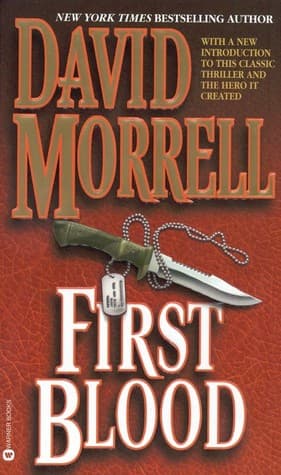
- First Blood
David Morrell
4.0 (7k) average on GoodreadsThrillerShowcases a highly trained veteran using his survival skills against authorities in a relentless chase.
- The Bourne Identity
Robert Ludlum
4.0 (397k) average on GoodreadsThrillerLudlum's 'The Bourne Identity' also features a protagonist on the run, framed, and unraveling a deep conspiracy, but it distinguishes itself through its amnesia plot device, which adds a layer of existential mystery to the character's journey. While Swagger knows who he is and what he's capable of, Bourne's struggle to reclaim his identity while fighting for survival offers a different kind of psychological tension. Hunter's novel is more grounded in realistic military tactics and weaponry, whereas Ludlum often leans into more elaborate, almost fantastical, spycraft and a faster, more overtly frantic pace. 'Point of Impact' is a technical thriller with a personal vendetta; 'Bourne' is a psychological spy thriller about identity and institutional betrayal.
- Angels & Demons
Dan Brown
3.9 (2.7M) average on GoodreadsThrillerA Harvard symbologist races through Rome's ancient sites, deciphering cryptic clues to unmask the Illuminati and stop a vengeful plot to destroy the Vatican with a stolen antimatter weapon.
- Gone Girl
Gillian Flynn
4.1 (2.3M) average on GoodreadsThrillerA wife's sudden disappearance on her fifth anniversary reveals a web of lies and psychological warfare, exposing the secrets within a seemingly perfect marriage.
- The Girl on the Train
Paula Hawkins
3.9 (2.1M) average on GoodreadsThrillerA woman’s fascination with a seemingly perfect couple she watches from her daily train commute leads her into a dark investigation when she witnesses something that shatters their idyllic image.




Enjoyed the summary?
A summary gives you the shape of the book. The book itself has the detail, the examples and the voice.
Find Point of Impact on AmazonAs an Amazon Associate, BookBrief earns from qualifying purchases. How we're funded