
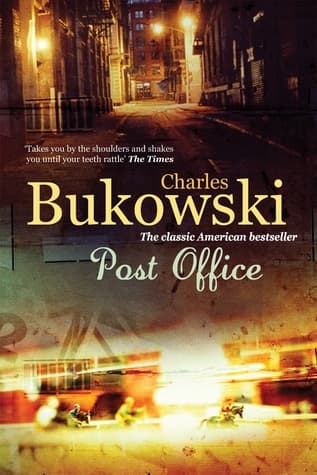
Synopsis
Covers the whole plot, including the ending.
- Difficulty
- Easy
- Pacing
- Moderate
- Mood
- Gritty, Cynical, Absurdist, Bleak, Humorous
- Read it if
- You enjoy dark humor, gritty realism, and a raw, unflinching look at the absurdities of working-class life and bureaucracy, with a focus on an anti-hero protagonist's struggles.
- Skip it if
- You prefer optimistic narratives, conventional plot structures, or are sensitive to explicit language, misogyny, and themes of alcoholism and despair.
Post Office Plot Summary
Covers the whole plot, including the ending.
The Accidental Postman
Henry Chinaski, always an outsider and a drinker in Los Angeles, tells how he got a job at the U.S. Post Office by chance. Needing money after being unemployed and drinking a lot, he applies for a temporary mail carrier job, expecting to be turned down. To his surprise, he is hired. His initial training is disorganized and disappointing, with unskilled instructors and confusing bureaucracy. Chinaski quickly sees that the job is exhausting, physically demanding and mentally draining, but he keeps at it because he has to, fueled by cheap wine and the small hope of earning enough to live and support his love for horse racing.
The Mail Carrier's Ordeal
Chinaski's daily life as a mail carrier is a series of bad experiences and shames. He fights aggressive dogs, walks on difficult ground, and deals with bad weather, all while carrying heavy mailbags. His routes are often poorly planned, leading to long hours and tiredness. He often argues with his supervisors, especially the cruel Mr. Stone, who seems to enjoy making Chinaski's life hard. Chinaski's defiance and dislike for authority often get him into trouble, but he finds comfort in his after-work routines of drinking and gambling, which offer a temporary escape from the dullness. He sees his coworkers slowly decline, many stuck in the same boring routine.
Encounters with Coworkers and Supervisors
Chinaski meets many strange people at the Post Office. He sees the different ways his fellow carriers and clerks cope with madness and giving up. There is the always angry Mr. Stone, the overly eager Mr. Jaffe, and others who either accept the system or are slowly destroyed by it. Chinaski stays distant and cynical, finding most of his colleagues either sad or annoying. He often argues with supervisors, which often leads to punishments or threats of being fired. His only real connection seems to be the shared misery and dark humor that sometimes appear among the more rebellious employees.
Love and Larceny with Joyce
Chinaski meets Joyce, a woman who also likes alcohol and dislikes typical life. Their relationship is passionate and unstable, marked by heavy drinking, frequent arguments, and moments of gentle, if chaotic, understanding. Joyce is as unconventional as Chinaski, and their shared experiences of poverty and being outsiders connect them. They commit small crimes, like shoplifting, to get more money and add excitement to their otherwise bleak lives. Despite the disorder, Joyce gives Chinaski a temporary feeling of companionship and shared rebellion against the ordinary world, offering a brief break from the loneliness of his postal life.
The Clerk's Life
After years as a mail carrier, Chinaski moves to a clerk position, hoping for an easier time. However, the clerk's job, mostly working the night shift, is just as exhausting. He sorts mail endlessly, dealing with different sets of unskilled supervisors and equally unhappy coworkers. The indoor environment offers no escape from the boredom, and the repeated nature of the work makes him more hopeless. He continues his heavy drinking and gambling, using them to cope. The change in roles only confirms his belief that the Post Office is a trap, a symbol of human waste and inefficiency.
Women, Booze, and the Track
Throughout his postal career, Chinaski's life outside of work centers on three main things: women, booze, and horse racing. He has various relationships, some short and some more important, like his time with Joyce. Alcohol is always with him, dulling the pain of his life and fueling his short moments of happiness or sadness. The racetrack is his safe place, where he can dream of a big win that might free him from the Post Office. These habits are not just pleasures but necessary ways to survive, giving him temporary relief and a sense of purpose beyond the postal routine.
The Second Stint and the Breakdown
After leaving the Post Office for a while, Chinaski cannot find other work and has to go back, again as a clerk. This second time is even harder than the first. The years of abuse, from the job and his lifestyle, start to hurt his mental and physical health. He gets worse headaches, anxiety, and a deep feeling of hopelessness. The repeated work and the oppressive atmosphere push him close to a nervous breakdown. He becomes more cynical and rebellious, but his defiance now has real suffering in it.
The Final Escape
Chinaski's health keeps getting worse, with constant headaches, dizziness, and a general feeling of being unwell. He knows he cannot stand another day at the Post Office. One morning, getting ready for work, he simply decides he cannot go in. He calls in sick, then packs a small bag, and drives away, leaving the Post Office and his twelve years of service behind him forever. This final act of defiance is not a victory but a desperate escape from a life that was slowly killing him. He does not know what he will do next, but the feeling is one of great relief and freedom, even if it is into an unknown future.
Post Office Characters
Henry Chinaski
Protagonist
A cynical, alcoholic writer trapped in the U.S. Postal Service
Henry Chinaski is the novel's protagonist and Bukowski's semi-autobiographical alter ego. He is a misanthropic, alcoholic, and gambling-addicted man who finds himself working for the U.S. Post Office. Chinaski views the world with a cynical, often darkly humorous, perspective, despising authority, societal norms, and most of his fellow human beings. He is driven by a desire for simple pleasures—women, booze, and the racetrack—and a profound aversion to conventional work. Despite his outward toughness, he struggles with deep-seated loneliness and a sense of alienation, using alcohol and his defiant attitude as coping mechanisms. His only true ambition seems to be to escape the drudgery of his life.
Relationships: Joyce (tumultuous, co-dependent romantic relationship); Mr. Stone (antagonistic supervisor); Betty (brief, volatile romantic encounter)
Joyce
Supporting
Chinaski's equally unconventional and alcoholic girlfriend
Joyce is one of Chinaski's significant romantic partners in the book. She is depicted as an equally heavy drinker and a free spirit who shares Chinaski's disdain for conventional society. Their relationship is intense and often chaotic, marked by drunken arguments, moments of tenderness, and petty acts of rebellion like shoplifting. Joyce provides Chinaski with companionship and a sense of shared understanding, a rare thing in his isolated life. She is not afraid to challenge him and is a strong, if flawed, character in her own right, representing a brief period of shared, chaotic joy for Chinaski.
Relationships: Henry Chinaski (tumultuous, co-dependent romantic relationship)
Mr. Stone
Antagonist
A sadistic and authoritarian Post Office supervisor
Mr. Stone is one of Chinaski's primary antagonists, a supervisor at the Post Office who seems to take particular pleasure in making Chinaski's life miserable. He embodies the oppressive, bureaucratic, and often cruel nature of the institution. Stone is portrayed as petty, vindictive, and obsessed with control, constantly looking for ways to punish or discipline Chinaski. His interactions with Chinaski highlight the power imbalance and the protagonist's ongoing struggle against authority. He represents the dehumanizing aspects of the postal system.
Relationships: Henry Chinaski (antagonistic supervisor-employee relationship)
Mr. Jaffe
Supporting
An overly enthusiastic and naive Post Office supervisor
Mr. Jaffe is another supervisor, but unlike Stone, he is portrayed as almost comically enthusiastic and naive about the Post Office system. He tries to instill a sense of pride and efficiency in the workers, but his efforts are often met with Chinaski's cynical disdain. Jaffe represents the more absurd, almost pathetic, side of the bureaucracy, contrasting with Stone's outright malice. Chinaski views him with a mixture of pity and contempt, seeing him as a deluded cog in the machine.
Relationships: Henry Chinaski (supervisor-employee relationship, characterized by Chinaski's disdain)
Betty
Supporting
A brief, volatile romantic interest of Chinaski's
Betty is a woman with whom Chinaski has a brief but memorable affair. Their relationship is characterized by heavy drinking, arguments, and a shared sense of aimlessness. She is another example of the damaged and unconventional women Chinaski attracts, providing a glimpse into his personal life outside of the Post Office. Her presence highlights Chinaski's struggle to maintain stable relationships and his gravitation towards individuals who mirror his own chaotic existence.
Relationships: Henry Chinaski (brief, volatile romantic encounter)
Mr. Henderson
Supporting
A cynical and resigned mail carrier
Mr. Henderson is a fellow mail carrier who Chinaski occasionally interacts with. He represents the older, more resigned postal workers who have been broken by the system. Henderson shares Chinaski's cynical view of the Post Office but lacks Chinaski's rebellious spirit, having long ago given up on fighting against the machine. His character serves to show Chinaski a possible future if he doesn't escape, a cautionary tale of slow decay within the system.
Relationships: Henry Chinaski (colleague, shared misery)
The Mailbags
Mentioned
An oppressive symbol of Chinaski's daily burden
While not a character in the traditional sense, the mailbags are a constant, oppressive presence in Chinaski's life as a carrier. They are described as heavy, waterlogged, and cumbersome, representing the physical and psychological burden of his job. Chinaski's struggle with the mailbags symbolizes his larger struggle against the weight of his circumstances and the soul-crushing nature of his employment. They are a tangible manifestation of the drudgery and physical toll of his work.
Post Office Themes
Alienation and Disillusionment
The novel explores the theme of alienation through Henry Chinaski's experience in the U.S. Postal Service. Chinaski feels deeply separated from his coworkers, supervisors, and the social norms that value work and conformity. He sees the Post Office as a dehumanizing machine, and his job as meaningless, leading to a deep sense of disappointment with life and work. This alienation is a main part of his character, driving him to rely on alcohol and gambling as ways to escape a world he feels no part of.
“It began as a mistake.”
The Dehumanizing Nature of Labor
A main theme is the exhausting and dehumanizing effect of repetitive, unsatisfying work. Bukowski clearly shows the Post Office as a bureaucratic hell where people are reduced to parts of a machine, their identities removed by the monotonous tasks and oppressive supervision. Chinaski's physical exhaustion, mental breakdown, and his colleagues' various forms of madness show how the work drains life and spirit, leaving little room for personal satisfaction or dignity. The Post Office is a symbol for the larger system that uses and discards its workers.
“The post office was a cross between a slave ship and a lunatic asylum.”
Escapism and Self-Destruction
Chinaski's life is about his efforts to escape the dullness of his job through alcohol, gambling, and women. These habits, while offering temporary comfort, also lead to self-destruction. His heavy drinking and careless behavior are both a rebellion against his situation and a way to numb the pain. The racetrack, with its promise of a big win, represents a dream of freedom from his postal prison. This theme shows the ways people cope when stuck in bad situations, even if those ways are ultimately harmful.
“I was born to drink and gamble. And I could do both well.”
Rebellion Against Authority
Chinaski often rebels against authority figures, especially his Post Office supervisors. His defiance, whether through sarcastic comments, disobedience, or simply refusing to follow rules, is a core part of his character. This rebellion is not always effective, often leading to punishment, but it is important to his sense of self and his refusal to be completely broken by the system. It is a useless yet constant struggle against the oppressive power structures that try to control and lessen him, representing a small act of personal freedom.
“They were trying to break me. They had been trying to break me for twelve years.”
The Absurdity of Existence
Underneath Chinaski's struggles is a deep sense of the absurd. The Post Office itself, with its illogical rules, unskilled management, and pointless tasks, becomes a symbol of life's inherent lack of meaning. Chinaski often reacts to the ridiculousness around him with dark, cynical humor, seeing the inherent silliness in human efforts. This theme suggests that life, especially a life limited by social expectations and ordinary labor, is ultimately without inherent purpose, and one must find meaning or simply endure the absurdity.
“It was like working in a morgue. Except the bodies were still walking around.”
Plot Devices & Literary Techniques
First-Person Narrative
Provides direct access to Chinaski's cynical inner world
The entire novel is narrated from Henry Chinaski's first-person perspective. This device is crucial for immersing the reader in his raw, unfiltered thoughts, observations, and cynical worldview. It allows for a direct, intimate connection with his struggles, frustrations, and dark humor, making his experiences feel immediate and authentic. The reader experiences the dehumanizing aspects of the Post Office directly through his eyes, fostering empathy and understanding for his unique form of rebellion and despair.
Satire and Dark Humor
Used to highlight the absurdity and dehumanization of the Post Office
Bukowski employs satire and dark humor to critique the bureaucratic inefficiencies and the soul-crushing nature of the U.S. Postal Service. Chinaski's sarcastic commentary, his observations of his bizarre coworkers, and the ridiculous situations he finds himself in are often presented with a cynical wit. This humor serves not to lighten the mood entirely, but to underscore the absurdity and tragicomedy of his existence, making the grim realities of his job more palatable while simultaneously emphasizing their inherent meaninglessness.
Symbolism of the Mailbags
Represents the physical and psychological burden of labor
The heavy, cumbersome, and often waterlogged mailbags carried by Chinaski are a potent symbol throughout the novel. They represent the physical toll of his labor, the weight of his responsibilities, and the crushing burden of his unfulfilling job. His constant struggle with the mailbags mirrors his broader struggle against the oppressive system of the Post Office and the weight of his own existence. They are a tangible manifestation of the drudgery and the inescapable nature of his work.
Repetition and Monotony
Mirrors the repetitive nature of Chinaski's work and life
The narrative style often uses repetition to reflect the monotonous and cyclical nature of Chinaski's job. Descriptions of endless mail sorting, repetitive routes, and the daily grind of waking up with a hangover only to face another day at the Post Office reinforce the theme of dehumanizing labor. This stylistic choice immerses the reader in Chinaski's experience, making them feel the oppressive tedium and the lack of change in his life, which ultimately contributes to his breakdown and final escape.
Post Office Quotes
“It began not with a bang but a whimper, and then it got worse.”
“That's the problem with the world, it's full of people who are too busy doing things they don't want to do, and not enough people doing things they do want to do.”
“The post office was a great equalizer. There was no escaping it. It was like life itself.”
“I was a man who had met life on its own terms, and it had been a son of a bitch.”
“The world was full of people who were doing things they hated, and I was one of them.”
“Sometimes you just have to pee in the sink.”
“I was just another bum in the world, a postal clerk who couldn't keep his mouth shut.”
“The only thing worse than not having a job was having a job.”
“It was a mistake to be born.”
“You could have a million dollars and still be lonely.”
“I hated the job, but I had to eat, and that was the terrible part.”
“Some people never go crazy, what truly horrible lives they must lead.”
“There are worse things than being alone. Sometimes it takes a long time to realize this, and most of the time when you do, it's too late.”
“My life was a constant struggle between my desire to be a writer and my desire to eat.”
Quiz
10 questions on the plot and the characters. Each answer comes with a short explanation.
Question 1
What is the primary occupation of Henry Chinaski throughout the majority of the novel 'Post Office'?
- Taxi driver
- U.S. Postal Service employee
- Racetrack gambler
- Bartender
Show answer
B. U.S. Postal Service employee The book explicitly states that Henry Chinaski spent more than twelve years of his life working for the U.S. Postal Service, which is the central focus of the narrative.
Question 2
Which of the following are described as Henry Chinaski's 'three true, bitter pleasures'?
- Reading, writing, and solitude
- Women, booze, and racetrack betting
- Fine dining, travel, and classical music
- Work, discipline, and saving money
Show answer
B. Women, booze, and racetrack betting The book description clearly states his three bitter pleasures are women, booze, and racetrack betting, which form a significant part of his off-duty life.
Question 3
What kind of challenges does Chinaski face during his mail delivery routes?
- Navigating complex urban labyrinths and avoiding traffic jams.
- Lugging waterlogged mailbags up mud-soaked mountains and outsmarting vicious guard dogs.
- Dealing with demanding customers and strict delivery deadlines.
- Repairing broken-down postal vehicles and managing difficult weather conditions.
Show answer
B. Lugging waterlogged mailbags up mud-soaked mountains and outsmarting vicious guard dogs. The book description highlights the physical challenges of his job, specifically mentioning 'lugging waterlogged mailbags up mud-soaked mountains' and 'outsmart vicious guard dogs.'
Question 4
What is the general tone and style of the novel 'Post Office' as described in the summary?
- Uplifting and inspirational
- Romantic and whimsical
- Grimly hysterical and realistic
- Fast-paced and suspenseful
Show answer
C. Grimly hysterical and realistic The summary refers to the book as an 'introduction to the grimly hysterical world' of Bukowski, indicating a dark yet humorous and realistic approach.
Question 5
The novel 'Post Office' is considered significant for Charles Bukowski because:
- It was his first published work of poetry.
- It marked his transition from short stories to full-length historical fiction.
- It was the classic 1971 novel that catapulted him to national fame.
- It won him the Pulitzer Prize for literature.
Show answer
C. It was the classic 1971 novel that catapulted him to national fame. The summary explicitly states that this 1971 novel 'catapulted its author to national fame,' highlighting its importance in Bukowski's career.
Question 6
How does Henry Chinaski generally cope with the daily grind of his postal job?
- He meticulously plans his day to maximize efficiency and minimize stress.
- He relies on his bitter pleasures of women, booze, and betting to endure and escape the monotony.
- He actively seeks promotions and new responsibilities to find fulfillment.
- He engages in philosophical introspection to find meaning in his work.
Show answer
B. He relies on his bitter pleasures of women, booze, and betting to endure and escape the monotony. Chinaski's 'bitter pleasures' are presented as his coping mechanisms against the harsh reality of his job, helping him 'drag his hangover out of bed every dawn' and survive the day.
Question 7
What does the phrase 'It began as a mistake' at the beginning of the book likely refer to regarding Chinaski's postal career?
- A clerical error in his initial job application.
- His decision to take the job at the Post Office in the first place.
- An accidental delivery that led to his long tenure.
- A misunderstanding with a coworker on his first day.
Show answer
B. His decision to take the job at the Post Office in the first place. Given Chinaski's general disdain for his job and the 'lost more than twelve years' description, 'It began as a mistake' most likely refers to his regretful decision to ever join the Postal Service.
Question 8
The description of Chinaski having to 'pray to survive the day-to-day trials of sadistic bosses and certifiable coworkers' suggests what about the workplace environment?
- It is a highly competitive and meritocratic environment.
- It is characterized by supportive colleagues and fair management.
- It is a hostile, dysfunctional, and mentally draining place to work.
- It offers opportunities for personal growth and development.
Show answer
C. It is a hostile, dysfunctional, and mentally draining place to work. The terms 'sadistic bosses' and 'certifiable coworkers' along with the need to 'pray to survive' strongly indicate a deeply hostile and dysfunctional work environment.
Question 9
How does Henry Chinaski's character align with Charles Bukowski's public persona as the 'Dirty Old Man'?
- Chinaski's meticulous habits and clean-living lifestyle mirror Bukowski's disciplined work ethic.
- Chinaski's focus on women, booze, and a generally unrefined, gritty existence reflects the 'Dirty Old Man' persona.
- Chinaski's intellectual pursuits and high-brow interests are characteristic of Bukowski's hidden depths.
- Chinaski's optimism and cheerful outlook on life contrast with Bukowski's cynical reputation.
Show answer
B. Chinaski's focus on women, booze, and a generally unrefined, gritty existence reflects the 'Dirty Old Man' persona. The summary explicitly connects Chinaski to Bukowski's 'legendary writer, poet, and Dirty Old Man' persona, which is defined by his known proclivities for women, alcohol, and a raw, unfiltered view of life.
Question 10
The genre labels 'Thriller' and 'Mystery' in the prompt, when applied to 'Post Office,' are likely meant to be interpreted as:
- Literal genre classifications, indicating a plot with suspenseful crimes and detective work.
- Figurative descriptions of the psychological suspense and unpredictable nature of daily survival.
- A mislabeling, as the book is primarily a romance novel.
- An indication that Chinaski is secretly involved in espionage during his mail routes.
Show answer
B. Figurative descriptions of the psychological suspense and unpredictable nature of daily survival. Given the summary's focus on Chinaski's struggle to 'survive the day-to-day trials' and the 'grimly hysterical world,' 'Thriller' and 'Mystery' are not literal. Instead, they likely refer to the suspense and uncertainty of navigating a chaotic existence and the 'mystery' of how one endures such a life.
Post Office FAQ
What is Post Office about?
"Post Office" by Charles Bukowski is a semi-autobiographical novel chronicling the miserable and absurd twelve years Henry Chinaski spends working for the U.S. Postal Service. It details his various jobs as a mail carrier and sorting clerk, interspersed with his off-duty pursuits of women, alcohol, and racetrack betting, all while battling sadistic bosses, eccentric coworkers, and the crushing monotony of bureaucratic labor.
Why should I read Post Office?
You should read "Post Office" for its raw, unflinching, and often darkly humorous portrayal of the working-class experience and the individual's struggle against soul-crushing bureaucracy. It offers a unique window into the mind of Henry Chinaski, Bukowski's iconic alter ego, and provides a stark, yet oddly compelling, narrative of survival and defiance in the face of mundane despair.
What is the background/setting of Post Office?
The novel is primarily set in various post office branches and the streets of Los Angeles, California, during the 1950s and 60s. The setting emphasizes the gritty, unglamorous urban landscape, serving as a backdrop to Chinaski's monotonous work life and his attempts to find meaning and escape in the city's underbelly.
What are the most memorable quotes?
Some memorable quotes include Chinaski's cynical observations like "It began as a mistake," referring to his postal career, and his defiant declaration "I was a man who had not been born into a good world and who desired something more than what he saw." Another is his reflection, "The problem was that I was a happy man, but I was living in a world of unhappy men."
What writing style does the author use?
Bukowski employs a direct, unadorned, and often vulgar prose style, characterized by short sentences and a conversational tone that mirrors Chinaski's cynical and world-weary voice. His writing is brutally honest, darkly humorous, and devoid of pretense, reflecting the raw reality of his protagonist's life.
What minor details add significant meaning?
Minor details like Chinaski's constant hangovers and his meticulous tracking of races in the daily newspaper highlight his cyclical existence and his reliance on escapism. The specific, often disgusting, descriptions of the mail — from dog-chewed letters to waterlogged parcels — underscore the thankless and often absurd nature of his job, emphasizing its dehumanizing effect.
What are some subtle foreshadowing moments?
Early on, Chinaski's repeated thoughts of quitting, despite his financial desperation, subtly foreshadow his eventual break from the Postal Service. His increasingly volatile interactions with superiors and the escalating absurdity of his tasks also hint at an inevitable breaking point, rather than a gradual retirement.
What unexpected character connections exist?
While not deeply interconnected in a traditional plot sense, Chinaski's various relationships with women, like the volatile Joyce and the more stable Betty, reveal unexpected facets of his character, showing his capacity for both tenderness and cruelty. His fleeting connections with other postal workers, though often antagonistic, underscore a shared, unspoken misery.
What are unspoken character motivations?
Chinaski's unspoken motivation for enduring the postal service for so long, despite his hatred for it, seems to be a deep-seated fear of true destitution and a perverse adherence to a routine, however miserable. He also appears to be driven by a need to observe and document the absurdities of life, which fuels his later writing.
What psychological complexities do characters exhibit?
Henry Chinaski exhibits a complex mix of self-loathing and fierce independence, cynicism and a yearning for genuine connection. He's often his own worst enemy, sabotaging relationships and opportunities, yet he also possesses a resilient spirit that allows him to endure and ultimately escape his circumstances, showcasing a paradoxical strength.
What are the major emotional turning points?
A major emotional turning point occurs when Chinaski finally quits the post office for good, after years of on-again, off-again employment. This decision, fueled by a realization of the toll the job is taking on his soul and a newfound resolve to pursue writing, marks his ultimate liberation from a life of quiet desperation.
How do relationship dynamics evolve?
Chinaski's relationship dynamics are largely tumultuous and transient. With women like Joyce, his relationships quickly devolve into drunken fights and codependency. With others, like Betty, there's a fleeting attempt at normalcy. His relationships with coworkers are mostly antagonistic, evolving from initial tolerance to outright contempt or mutual avoidance, reflecting his inability or unwillingness to form lasting bonds.
Which parts remain ambiguous or open-ended?
While the ending clearly states Chinaski's decision to write, the long-term success or personal happiness derived from this new path remains open-ended. The reader is left to infer his future, knowing only that he has chosen a different struggle, one he hopes will be more fulfilling.
What are controversial scenes or decisions?
Many of Chinaski's interactions with women, often involving casual cruelty, infidelity, and drunken arguments, can be seen as controversial due to their explicit and often misogynistic undertones. His frequent acts of insubordination at work, though often comical, also reflect a deliberate rejection of societal norms that some readers might find challenging.
Post Office ending explained: how it ends & what it means
The novel ends with Henry Chinaski finally, decisively quitting the U.S. Postal Service after over a decade of miserable employment. He sits down at his typewriter and declares, "I felt good. It was the first time in a long time that I'd felt good. I got up and walked over to the window and looked out. And I thought, if they can do this to you, they can do this to anybody." This ending signifies his liberation from a soul-crushing job and his commitment to becoming a writer, asserting his agency and rejecting the conventional path that had nearly destroyed him.
About the author
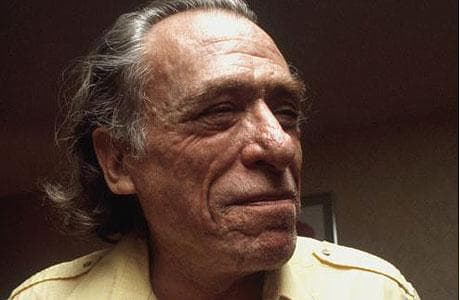
Charles Bukowski was a prolific German-American poet and novelist, often celebrated for his raw, autobiographical style. His notable works include 'Notes of a Dirty Old Man,' 'Factotum,' and 'Ham on Rye,' which vividly depict the gritty realities of working-class life and his own struggles with alcohol and poverty. Bukowski's unflinching prose and anti-establishment themes have cemented his status as a counter-culture icon.
Similar books
- Fear and Loathing in Las Vegas
Hunter S. Thompson
4.1 (299k) average on GoodreadsLifestyleFeatures a cynical, drug-addled protagonist navigating absurd situations with dark humor.
- Factotum
Charles Bukowski
3.9 (61k) average on GoodreadsThrillerAnother autobiographical novel by Bukowski starring Henry Chinaski, exploring his various menial jobs and bohemian lifestyle.
- Catch-22
Joseph Heller
4.0 (723k) average on GoodreadsHistorical FictionExplores the absurdities and dehumanizing nature of bureaucracy and institutions through dark satire.
- The Big Sleep
Raymond Chandler
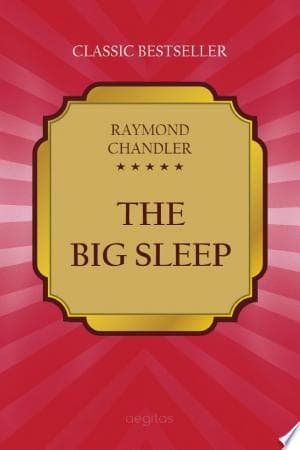
4.0 (126k) average on GoodreadsThrillerWhile both books feature a cynical protagonist navigating a gritty urban landscape, "The Big Sleep" is a quintessential hard-boiled detective novel with a complex, unfolding mystery, clear antagonists, and a resolution (however ambiguous). "Post Office," in contrast, offers no such structure; its 'mystery' is existential, not criminal, and its 'thriller' elements are internal rather than external. Chandler's Phillip Marlowe operates within a moral code, however fractured, while Bukowski's Chinaski often seems to operate without one, driven purely by survival and immediate gratification.
- Angels & Demons
Dan Brown
3.9 (2.7M) average on GoodreadsThrillerA Harvard symbologist races through Rome's ancient sites, deciphering cryptic clues to unmask the Illuminati and stop a vengeful plot to destroy the Vatican with a stolen antimatter weapon.
- Gone Girl
Gillian Flynn
4.1 (2.3M) average on GoodreadsThrillerA wife's sudden disappearance on her fifth anniversary reveals a web of lies and psychological warfare, exposing the secrets within a seemingly perfect marriage.





Enjoyed the summary?
A summary gives you the shape of the book. The book itself has the detail, the examples and the voice.
Find Post Office on AmazonAs an Amazon Associate, BookBrief earns from qualifying purchases. How we're funded