

Synopsis
Covers the whole plot, including the ending.
- Difficulty
- Medium
- Pacing
- Fast
- Mood
- Dark, Suspenseful, Gritty, Disturbing
- Read it if
- You want a dark, intense thriller with deep family secrets, graphic violence, and a relentless pace.
- Skip it if
- You are sensitive to graphic depictions of violence, particularly against women, or prefer lighter mysteries.
Pretty Girls Plot Summary
Covers the whole plot, including the ending.
The Present and a Sudden Loss
Claire Scott, a wealthy woman in Atlanta, has a seemingly perfect life with her husband, Paul Scott. Their happiness ends when Paul is murdered during a home invasion. Claire is attacked but survives, traumatized and grieving. Police, led by Detective Miller, start an investigation, but Claire is too shocked to give much information. This event begins to uncover old secrets and trauma from Claire's past, especially about her older sister, Julia, who vanished twenty years ago.
Paul's Secret Life and the Laptop
Going through Paul's things, Claire finds a hidden laptop. On it, she sees evidence of Paul's double life: a collection of child pornography and videos of young women being tortured and murdered. This discovery shatters her view of her husband and makes her think his murder connects to these terrible activities, not a random invasion. Paul's evil acts betray Claire and force her to face the darkness under her perfect life.
Lydia's Reappearance and Shared Grief
Lydia, Claire's younger sister, reappears after hearing about Paul's murder. The sisters have been separated for years since Julia's disappearance and their family's breakdown. Lydia, a recovering addict and stripper, at first offers comfort, but her presence also brings back painful memories and conflicts. Despite their differences and past anger, Paul's death and the emerging secrets force them to reconnect and work together, though with much mistrust, to find the truth.
Connecting the Murders to Julia's Disappearance
As Claire and Lydia look closer at Paul's laptop, they notice a pattern: some victims in the videos look like Julia, their missing sister. This chilling realization sparks a desperate hope that Julia might still be alive, or that her fate can finally be known. They start investigating the victims and the online forum Paul used, believing his activities link directly to Julia's twenty-year-old disappearance, not just a separate crime.
The Online Forum and the 'Collector'
Claire and Lydia access the dark web forum Paul used, where people share and discuss violent content. They find Paul was known as 'The Collector' and other users mention a 'provider' who supplies victims. The forum is full of depravity, but it also has clues. They realize they are investigating not just Paul's crimes but also the network of people involved in trafficking and murdering young women. Their online search puts them in contact with dangerous individuals who know they are there.
Meeting the 'Provider' and a Shocking Revelation
Through their investigation, Claire and Lydia identify the 'provider' as Dale, an ordinary man with a horrifying secret. They confront him, leading to a violent fight. During this, Dale reveals Julia was not only a victim but also became active in his network, helping to lure other girls. This news shocks Claire and Lydia, making them rethink everything they thought they knew about their missing sister and her disappearance.
Julia's Diary and the Truth Unveiled
The sisters find Julia's hidden diary from her captivity. The diary details her abduction by Dale and his wife, Clara, and the torture she endured. It explains how she was manipulated, forced to participate in their crimes to survive and protect her sisters, whom Dale and Clara threatened. The diary shows Julia's desperate attempts to leave clues and messages, illustrating her strength and her eventual fall into a double life as both victim and perpetrator.
The Confrontation with Clara and Dale
With information from Julia's diary, Claire and Lydia track down Clara and Dale, the couple behind Julia's abduction and the abuse network. A violent and desperate confrontation follows. The sisters, driven by grief, anger, and a desire for justice, fight to end the couple's reign of terror. This encounter is brutal, showing the depth of the evil they face and how far the sisters will go to avenge Julia and the other victims.
The Role of the Police and Detective Miller
While the sisters investigate, Detective Miller and his team also work on Paul's murder. Though initially doubtful of Claire's behavior and claims about Paul's secret life, Miller eventually starts to see the bigger picture. However, the sisters, driven by personal connection and urgency, often act outside the law, taking dangerous risks. Miller's investigation eventually meets the sisters' actions, leading to a complex and morally unclear conclusion about justice.
Lydia's Sacrifice and Claire's Reckoning
In a key moment, Lydia makes a sacrifice to protect Claire and ensure justice, even if it means bending the law. Her actions have deep effects on both sisters. Claire is left to deal with the aftermath of the revelations, the violence, and the loss, not just of Paul, but of her former innocence. She must accept the horrifying truths about her family, her husband, and society's dark side, forever changed by her experience.
The Unveiling of the 'Pretty Girls' Network
As the sisters and Detective Miller's investigation continues, the full horror of the 'Pretty Girls' network is revealed. It is not just Paul, Dale, and Clara; a wider, connected group of people is involved in abducting, torturing, and murdering young women. The book shows how these seemingly ordinary people participate in a depraved online community, sharing content and even victims. This exposure highlights the widespread and harmful nature of such crimes, extending far beyond Paul's initial murder.
Reconciliation and Lingering Scars
Through their shared ordeal and the terrible truths they uncover, Claire and Lydia must face their past hurts and the pain from Julia's disappearance. The journey, though brutal, leads to a tentative reconciliation between the estranged sisters. While the scars of their experiences and family trauma will remain, they find a renewed sense of sisterhood and understanding, allowing them to begin healing and rebuilding their relationship, though forever changed by what they have seen and done.
Pretty Girls Characters
Claire Scott
Protagonist
A wealthy woman whose perfect life unravels after her husband's murder.
Claire is initially presented as a woman living a privileged, seemingly idyllic life, married to a successful architect. She is intelligent, observant, and fiercely independent, but also somewhat naive to the darkness lurking beneath the surface of her world. The brutal murder of her husband, Paul, shatters her reality and forces her to confront long-buried family trauma and the horrifying truth about her husband's secret life. She is driven by a desire for truth and justice, and a desperate need to understand what happened to her sister, Julia.
Relationships: Paul Scott (Husband, later revealed to be a perpetrator of horrific crimes.); Lydia Scott (Estranged younger sister, later reconciled.); Julia Scott (Missing older sister, whose fate drives much of the plot.)
Lydia Scott
Protagonist/Supporting
Claire's estranged younger sister, a recovering addict with a troubled past.
Lydia is the rebellious, troubled younger sister, marked by Julia's disappearance and her family's subsequent breakdown. She has struggled with drug addiction and worked as a stripper, living a life far removed from Claire's. Despite her tough exterior and cynical worldview, she possesses a fierce loyalty and a deep, buried love for her sisters. Her street smarts and experience with the seedier side of life prove invaluable in their investigation, contrasting with Claire's more sheltered background. She is driven by a desire for redemption and to find answers about Julia.
Relationships: Claire Scott (Estranged older sister, later reconciled.); Julia Scott (Missing older sister, whose fate deeply impacted her life.)
Julia Scott
Central Figure (primarily through flashbacks and discovery)
The eldest sister, whose twenty-year disappearance is the core mystery.
Julia is the catalyst for the entire narrative, though she is largely present through the memories of her sisters and the shocking revelations of her fate. She was the bright, promising eldest sister, whose sudden vanishing tore the family apart. Her character is gradually unveiled through her diary and the accounts of her captors, revealing her initial innocence, her resilience in the face of unspeakable horror, and her eventual, horrifying transformation into a participant in the very network that abducted her. Her story is one of unimaginable trauma and moral compromise.
Relationships: Claire Scott (Younger sister, deeply loved and protected.); Lydia Scott (Younger sister, deeply loved and protected.); Dale and Clara (Captors and manipulators.)
Paul Scott
Antagonist (posthumous)
Claire's murdered husband, whose secret life as a pedophile and murderer drives the plot.
Initially presented as Claire's loving and successful husband, Paul is quickly revealed to be a monster. His brutal murder is the inciting incident, but his true role is uncovered through his hidden laptop: he was a participant in a child pornography and murder network, known as 'The Collector'. His character represents the shocking hypocrisy and the hidden evil that can exist behind a facade of normalcy. His actions are not only heinous but also serve as a direct link to Julia's disappearance.
Relationships: Claire Scott (Wife, whom he deceived profoundly.); Dale and Clara (Associates in the 'Pretty Girls' network.)
Detective Miller
Supporting
The lead detective investigating Paul's murder, initially skeptical of Claire.
Detective Miller is a seasoned and dedicated police officer who takes on the seemingly straightforward case of Paul Scott's murder. He is methodical and initially dismissive of Claire's increasingly wild theories, adhering to standard police procedure. As the evidence mounts and the sisters uncover more disturbing truths, Miller becomes more involved, though he struggles to reconcile the official investigation with the personal, often illegal, actions of Claire and Lydia. He represents the formal system of justice, often at odds with the sisters' vigilante approach.
Relationships: Claire Scott (Key witness/suspect, later an unwilling collaborator.); Lydia Scott (Witness/suspect, later an unwilling collaborator.)
Dale
Antagonist
A primary abductor and 'provider' in the child trafficking network.
Dale is one half of the couple responsible for Julia's initial abduction and her subsequent indoctrination into their horrific network. He is portrayed as a calculating and utterly depraved individual, a key player in the 'Pretty Girls' operation. He is manipulative, cruel, and deeply ingrained in the dark web's underbelly. His actions are driven by pure sadism and a desire for control and profit from the exploitation of young women. He represents the face of organized evil within the narrative.
Relationships: Clara (Wife and accomplice in their crimes.); Julia Scott (Victim and later coerced accomplice.)
Clara
Antagonist
Dale's wife and an equally sadistic participant in the abduction network.
Clara is Dale's wife and a terrifyingly complicit partner in his crimes. She is arguably even more chilling than Dale, often displaying a cold, calculating cruelty. She played a significant role in the psychological torment and manipulation of Julia, leveraging her gender to gain trust before betraying it. Clara embodies the idea that evil is not limited to one gender and can be deeply ingrained in seemingly ordinary individuals. Her presence intensifies the horror of Julia's captivity.
Relationships: Dale (Husband and accomplice in their crimes.); Julia Scott (Victim and later coerced accomplice.)
Sam
Supporting
Lydia's former boyfriend and a tattoo artist, who helps the sisters.
Sam is Lydia's ex-boyfriend, a tattoo artist with a gruff exterior but a good heart. Despite their complicated past, he still cares for Lydia and becomes an unexpected ally for the sisters. His knowledge of the local underworld and his willingness to help, even when it puts him in danger, proves crucial. He represents a glimmer of decency and loyalty in the dark world the sisters navigate, providing practical assistance and emotional support when they need it most.
Relationships: Lydia Scott (Former boyfriend, still cares for her.)
Pretty Girls Themes
The Nature of Evil and Deception
The novel shows how evil can hide in plain sight, often behind a normal appearance. Paul Scott, a successful architect and loving husband, is a pedophile and murderer. Dale and Clara, who seem like an ordinary couple, orchestrate a horrific network. The story makes readers confront the idea that evil people do not always look evil, and that deception can be a powerful tool for terrible acts. It challenges the characters, especially Claire, to change their ideas of good and evil.
“The truth was a bitch, but it was all she had.”
Sisterhood, Trauma, and Reconciliation
At its core, 'Pretty Girls' is about the broken bond between sisters and their path to reconciliation amid terrible trauma. Julia's disappearance tore the Scott family apart, leaving Claire and Lydia estranged and deeply hurt. The shared search for Julia's fate forces them to confront their past resentments, different ways of coping, and deep love for each other. Their relationship, initially full of anger and misunderstanding, slowly heals as they rely on each other to navigate the horrors they find, showing the lasting power of family bonds even in the darkest times.
“They were sisters. They were family. And no matter what, they would always have each other.”
Loss of Innocence and Moral Ambiguity
The story depicts a brutal loss of innocence, not only for the victims but also for Claire and Lydia. Claire's comfortable, protected world is violently destroyed, making her face humanity's darkest aspects. Julia's story is the most tragic example, as she is forced to compromise her own morality to survive. The sisters' pursuit of justice often blurs moral lines, as they commit illegal and violent acts. The book suggests that facing such profound evil inevitably scars one's own purity, leaving characters with moral wounds and a changed understanding of justice.
“Sometimes, you had to fight fire with fire. Sometimes, you had to become the monster to kill the monster.”
The Pervasiveness of Online Evil
The novel exposes the internet's dark side, specifically online networks for child pornography, torture, and murder. Paul Scott's hidden laptop and his involvement in the 'Pretty Girls' forum show how the internet connects predators and spreads horrific content, creating an anonymous space for depravity. This theme highlights the terrifying reality of online crime and the difficulty of policing such vast, hidden networks. It warns about the dangers in the digital world.
“The internet was a dark place, a breeding ground for monsters.”
Plot Devices & Literary Techniques
The Hidden Laptop
A crucial object that unlocks the central mystery and reveals Paul's secret life.
Paul Scott's hidden laptop serves as the primary inciting incident for the deeper plot. Initially, his murder appears to be a random home invasion. However, Claire's discovery of the laptop and its horrifying contents—child pornography and snuff films—reveals Paul's true, monstrous nature and provides the first tangible link to the 'Pretty Girls' network. This device shatters Claire's perception of her husband and forces her into an investigation that uncovers the novel's central mysteries, including Julia's fate. It's the key that unlocks the Pandora's Box of the story.
Julia's Diary
A retrospective narrative device that reveals Julia's traumatic experience and transformation.
Julia's diary acts as a powerful retrospective narrative device, providing direct insight into her twenty-year ordeal. Discovered later in the story, it fills in the crucial gaps about her abduction, torture, and eventual forced complicity in the network. The diary allows the reader to experience Julia's perspective, her resilience, her desperation, and her moral compromises. It not only explains her actions but also serves as a poignant testament to her suffering, deepening the emotional impact of her story and offering the sisters the ultimate understanding of their lost sibling.
The 'Pretty Girls' Network/Forum
A dark web community that facilitates the crimes and connects the perpetrators.
The 'Pretty Girls' network, specifically the online forum Paul Scott frequented, functions as a chilling plot device to illustrate the organized nature of the crimes. It's a virtual space where predators connect, share information, and trade victims and content. This forum not only provides Claire and Lydia with vital clues about the perpetrators but also demonstrates the pervasive and insidious nature of such evil. It serves as a terrifying backdrop, highlighting how technology can be exploited for the most heinous purposes and how a community of sadists can operate in plain sight, yet hidden from the mainstream internet.
Estranged Sisters Dynamic
The initial strained relationship between Claire and Lydia, which evolves into a powerful bond.
The initial estrangement between Claire and Lydia, stemming from Julia's disappearance and their family's subsequent breakdown, is a key plot device. This fractured relationship creates initial tension and conflict, forcing the sisters to overcome their personal resentments and communication barriers. Their shared trauma and the urgent need to uncover the truth about Julia compel them to work together, gradually repairing their bond. This dynamic allows for character growth, emotional depth, and highlights the theme of sisterhood and healing, as their individual strengths complement each other in their dangerous investigation.
Pretty Girls Quotes
“The past is never dead. It’s not even past.”
“Sometimes the only way to heal a wound is to rip it open again.”
“Grief is a funny thing. It’s like a wave. It comes and goes, and sometimes it just knocks you flat.”
“You can never really know a person, no matter how close you think you are.”
“The truth will set you free, but first it will piss you off.”
“Some monsters don't live under your bed. They live inside your head.”
“How many secrets could one family hold before it imploded?”
“Sometimes the most beautiful things hide the darkest truths.”
“There’s a difference between forgetting and moving on.”
“The silence was worse than any scream.”
“Everyone has a breaking point.”
“You don't just stop loving someone. You learn to live without them.”
“The past is a mirror, reflecting what we choose to see.”
“Sometimes the hardest part of the truth is realizing you were wrong all along.”
Quiz
10 questions on the plot and the characters. Each answer comes with a short explanation.
Question 1
What significant event happened twenty years prior to the main events of the book, deeply affecting Claire Scott's family?
- Her parents divorced after a major argument.
- Her youngest sister, Lydia, ran away from home.
- Her eldest sister, Julia, went missing without a trace.
- Her family moved to a new city after a house fire.
Show answer
C. Her eldest sister, Julia, went missing without a trace. Twenty years before the story begins, Claire's eldest sister, Julia, disappeared, an event that was never solved and tore the family apart.
Question 2
Who is the other sister in the Scott family, besides Claire and the missing Julia?
- Anna
- Lydia
- Beth
- Sarah
Show answer
B. Lydia Claire has two sisters: Julia, who went missing, and Lydia, with whom she has a complex relationship.
Question 3
What is Claire Scott's profession at the beginning of the novel?
- A police detective
- A high school teacher
- A successful interior designer
- A journalist
Show answer
C. A successful interior designer Claire Scott is introduced as a successful interior designer, living a seemingly perfect life with her husband.
Question 4
What tragic event involving Claire's husband occurs early in the book, setting off a chain of discoveries?
- He is arrested for a past crime.
- He disappears, mirroring Julia's case.
- He commits suicide.
- He confesses to having an affair.
Show answer
C. He commits suicide. Claire's husband, Paul, commits suicide, which leads her to uncover many shocking secrets about his life and connection to the missing girls.
Question 5
What item does Claire find among her husband's belongings that initially links him to the missing girls?
- A diary belonging to Julia.
- A collection of photographs of various young women.
- A map with marked locations of disappearances.
- A locked box containing old police files.
Show answer
B. A collection of photographs of various young women. After Paul's death, Claire finds a hidden collection of disturbing photographs of young women, suggesting his involvement in the disappearances.
Question 6
What is the primary theme explored through the relationship between Claire and Lydia?
- The importance of forgiveness in healing old wounds.
- The enduring strength of sisterly bonds despite trauma and estrangement.
- The dangers of holding onto childhood grudges.
- The contrast between wealth and poverty.
Show answer
B. The enduring strength of sisterly bonds despite trauma and estrangement. Despite their estranged relationship and different paths, the bond between Claire and Lydia proves to be strong, as they unite to uncover the truth about Julia and the other missing girls.
Question 7
What shocking truth does Claire eventually uncover about her sister Julia's disappearance?
- Julia had faked her own death to escape her family.
- Julia was involved in a secret government operation.
- Julia was a victim of a serial killer, and her body was hidden for years.
- Julia was not a victim, but an active participant in the events leading to her disappearance and the subsequent deaths.
Show answer
D. Julia was not a victim, but an active participant in the events leading to her disappearance and the subsequent deaths. Claire discovers that Julia was not merely a victim, but had a much more complex and active role in the dark events surrounding the disappearances, working with Paul.
Question 8
What is the significance of the 'Pretty Girls' club or group mentioned in the book?
- It's a support group for families of missing persons.
- It's a secret online forum where girls share their experiences.
- It's a name given to the victims by the perpetrators, and also refers to a dark network of individuals involved in the crimes.
- It's a fictional detective agency run by Claire and Lydia.
Show answer
C. It's a name given to the victims by the perpetrators, and also refers to a dark network of individuals involved in the crimes. The 'Pretty Girls' refers to the victims of the crimes, but also alludes to a network of individuals, including Julia and Paul, who were involved in a dark and twisted scheme.
Question 9
How does Lydia's background and past experiences contribute to her ability to help Claire uncover the truth?
- Her career as a police officer gives her access to confidential files.
- Her past involvement with underground networks and street life gives her unique insight and contacts.
- She had been secretly investigating Julia's disappearance for years.
- She is a skilled hacker and can access digital evidence.
Show answer
B. Her past involvement with underground networks and street life gives her unique insight and contacts. Lydia's rougher past and connections to the criminal underworld provide her with crucial skills and contacts that Claire, with her sheltered life, lacks, proving invaluable in their investigation.
Question 10
What is a major theme explored regarding the perception of victims and perpetrators in the novel?
- That all victims are innocent and all perpetrators are inherently evil.
- The blurred lines between victim and perpetrator, and how trauma can lead individuals to both roles.
- The idea that only men can be perpetrators of such heinous crimes.
- That society is always quick to judge and condemn victims.
Show answer
B. The blurred lines between victim and perpetrator, and how trauma can lead individuals to both roles. The novel heavily explores the complex and often blurred lines between who is a victim and who is a perpetrator, particularly through the character of Julia and her involvement, suggesting that trauma can twist individuals into unexpected roles.
Pretty Girls FAQ
What is the central mystery that drives the plot of 'Pretty Girls'?
The central mystery revolves around the disappearance of Claire Scott's older sister, Julia, twenty years prior, and how it connects to a new series of abductions and murders of young women. Claire becomes convinced the past and present are linked, leading her to uncover shocking truths about her family and Julia's fate.
Who are the primary protagonists in the story, and what are their relationships?
The primary protagonists are Claire Scott, a successful interior designer, and Lydia Scott, Julia's twin sister, who is a recovering drug addict. They are estranged sisters, both grappling with the unresolved trauma of Julia's disappearance, and are forced to reconnect and collaborate to uncover the truth.
What event triggers Claire's active investigation into Julia's disappearance?
Claire's active investigation is triggered by the disappearance of another young woman, seemingly mirroring Julia's case, and the subsequent discovery of her husband Paul's secret life and his connection to the missing girls. This forces Claire to confront her past and question everything she thought she knew about her family.
How does the narrative structure contribute to the suspense and revelations?
The narrative frequently shifts perspectives between Claire and Lydia, and incorporates diary entries and letters from Julia, offering fragmented clues and differing emotional insights. This multi-perspective approach gradually unveils the horrifying truth, building suspense and allowing readers to piece together the puzzle alongside the characters.
What is the significance of the title 'Pretty Girls' in the context of the novel's themes?
The title 'Pretty Girls' refers to the victims, young women targeted for their perceived beauty, but it also ironically highlights the vulnerability and objectification they face. It underscores the novel's exploration of societal perceptions of women, their value, and the horrific consequences when those perceptions are twisted.
What is the true nature of Paul Scott's involvement in the disappearances?
Paul Scott, Claire's seemingly perfect husband, is revealed to be a key participant in a horrific trafficking and murder ring. He was not only involved in the abduction and torture of young women, including Julia, but also a central figure in orchestrating the crimes, making his betrayal particularly devastating for Claire.
How did Julia Scott's diary entries provide crucial information to Claire and Lydia?
Julia's diary entries, discovered by Claire, detail her initial abduction, her captivity, and the identities of some of her captors, including Paul. They provide a firsthand account of the horrors she endured and confirm the family's long-held suspicions about foul play, guiding Claire and Lydia towards the truth.
What is the role of Adam and his connection to the abductions?
Adam is revealed to be one of the primary perpetrators, a sadistic individual who, along with Paul and others, ran the trafficking ring and tortured the 'pretty girls.' He is particularly brutal and central to the system of abuse, making him a major antagonist and target for Claire and Lydia's revenge.
How does the 'Gentlemen's Club' play into the overarching conspiracy?
The 'Gentlemen's Club' is a euphemism for the network of wealthy, powerful men who participate in or facilitate the abduction, torture, and murder of young women. It highlights the systemic nature of the crimes, protected by influence and money, and the deep corruption underlying the seemingly respectable community.
How does Claire's initial denial and idealization of Paul contribute to her psychological journey?
Claire's initial denial and idealization of Paul, seeing him as a loving husband, makes the revelation of his depravity profoundly shattering. This psychological shock forces her to dismantle her entire perception of reality, leading to a desperate quest for truth and justice that transforms her from a passive victim into an active avenger.
What psychological impact does Julia's disappearance have on Lydia throughout her life?
Julia's disappearance deeply traumatized Lydia, leading to a life of addiction, self-destruction, and estrangement from her family. She carried immense guilt and unresolved grief, which manifested in her self-sabotaging behavior, until the renewed investigation provides her with a chance for redemption and closure.
How do Claire and Lydia's coping mechanisms differ in dealing with their trauma?
Claire copes by burying her trauma, building a seemingly perfect life with Paul, and avoiding the past, while Lydia copes through self-destructive behaviors like drug abuse and isolation. Their differing mechanisms highlight varied responses to profound grief and unresolved mysteries, both ultimately proving unsustainable.
What is the psychological motivation behind the perpetrators' actions?
The perpetrators are driven by a combination of sadistic pleasure, a sense of entitlement, and the power derived from controlling and brutalizing vulnerable young women. Their actions are rooted in deep-seated misogyny and a desire for absolute dominance, fueled by their wealth and social standing.
Is the ending of 'Pretty Girls' morally ambiguous, particularly regarding Claire and Lydia's actions?
The ending is highly morally ambiguous. Claire and Lydia engage in acts of extreme violence and vengeance, taking justice into their own hands rather than relying on the legal system. While their actions are understandable given the horrific crimes, the question of whether their brutal retribution is 'right' or simply perpetuates violence is left for the reader to ponder.
What statement does the novel make about the vulnerability of women in society?
The novel powerfully illustrates the extreme vulnerability of women, particularly young women, to male violence and exploitation, even in seemingly safe environments. It highlights how societal structures, wealth, and power can be used to facilitate horrific crimes and silence victims, emphasizing the constant threat women can face.
Does the book suggest that justice can only be found outside of the legal system in certain circumstances?
The narrative strongly suggests that for the specific, systemic evil depicted, the legal system is often insufficient or compromised. The perpetrators are wealthy and well-connected, implying they would evade conventional justice. Claire and Lydia's vigilante actions, while extreme, are presented as the only effective means of achieving a form of justice and closure for their family.
How does the novel explore themes of family loyalty and betrayal?
Family loyalty is explored through the unbreakable bond between the Scott sisters, despite their estrangement, and their ultimate collaboration to avenge Julia. Betrayal is a central theme, most notably with Paul's horrific actions, but also in the initial failure of the family and authorities to uncover the truth about Julia's disappearance.
What is the significance of the final scene with Claire and Lydia?
The final scene with Claire and Lydia, united in their dark purpose and shared secret, signifies their transformation and the profound, irreversible bond forged through their shared trauma and acts of vengeance. It leaves the reader with a sense of their enduring connection, but also the heavy, morally complex consequences of their choices.
About the author

Karin Slaughter is an American author known for her gripping fiction, particularly in the crime and thriller genres. Her notable works include "Pretty Girls," "The Good Daughter," "Triptych," "The Kept Woman," "A Faint Cold Fear," and "Criminal," which often explore complex characters and dark themes. Slaughter's storytelling has garnered a significant readership and critical attention.
Similar books
- Gone Girl
Gillian Flynn
4.1 (2.3M) average on GoodreadsThrillerExplores dark marital secrets and a missing person's case with shocking twists.
- The Secret Place
Tana French
3.9 (63k) average on GoodreadsThrillerBoth novels explore hidden communities and dark secrets, but Pretty Girls is significantly more explicit in its depiction of violence and less focused on the nuanced psychological introspection characteristic of French's work. French prioritizes atmosphere and character internal states, while Slaughter drives the plot with external, often brutal, action.
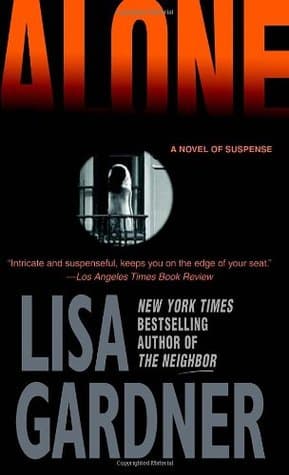
- Alone
Lisa Gardner
4.0 (55k) average on GoodreadsThrillerBoth Slaughter and Gardner blend police procedural elements with high-stakes personal drama and feature strong female protagonists. However, Pretty Girls pushes the boundaries of gore and emotional intensity further, making it a more viscerally impactful and often more disturbing read compared to Gardner's generally more restrained approach to violence.
- Angels & Demons
Dan Brown
3.9 (2.7M) average on GoodreadsThrillerA Harvard symbologist races through Rome's ancient sites, deciphering cryptic clues to unmask the Illuminati and stop a vengeful plot to destroy the Vatican with a stolen antimatter weapon.
- The Girl on the Train
Paula Hawkins
3.9 (2.1M) average on GoodreadsThrillerA woman’s fascination with a seemingly perfect couple she watches from her daily train commute leads her into a dark investigation when she witnesses something that shatters their idyllic image.
- The Da Vinci Code
Dan Brown
3.9 (1.9M) average on GoodreadsThrillerA symbologist and a cryptologist race through European landmarks, deciphering ancient codes and uncovering a conspiracy that could rewrite the foundations of Christianity.





Enjoyed the summary?
A summary gives you the shape of the book. The book itself has the detail, the examples and the voice.
Find Pretty Girls on AmazonAs an Amazon Associate, BookBrief earns from qualifying purchases. How we're funded