

Synopsis
Covers the whole plot, including the ending.
- Difficulty
- Medium
- Pacing
- Moderate
- Mood
- Epic, Mystical, Philosophical, Melancholy, Grand
- Read it if
- You are a long-time fan of Anne Rice's Vampire Chronicles and want to delve deeper into the origins of vampirism and the cosmology of her universe, featuring Lestat prominently.
- Skip it if
- You are looking for a standalone vampire story or are new to the Vampire Chronicles, as it heavily relies on established lore and characters.
Prince Lestat and the Realms of Atlantis Plot Summary
Covers the whole plot, including the ending.
The Awakening of Amel
Prince Lestat de Lioncourt, the leader of the vampire world, is troubled by vivid visions and an ancient presence within him. This presence, initially a comforting spirit, becomes a distinct consciousness. It communicates through images and sensations, hinting at a forgotten history. Lestat is both fascinated and disturbed, as it challenges his understanding of vampirism. He confides in Marius and Louis, who are equally perplexed by his experiences, recognizing this is no ordinary vampire phenomenon.
The Voice of Amel
The presence within Lestat grows, becoming a distinct voice and personality. This entity reveals itself as Amel, the ancient, sentient core that gives vampires immortality. Amel explains it has been dormant for millennia, passed down through generations of vampires, but has now fully awakened within Lestat due to his strength and his role as the Blood Father. Amel's awakening brings a flood of memories and knowledge, overwhelming Lestat with visions of a lost civilization and a catastrophic event. This revelation deeply affects Lestat and other ancient vampires, redefining their understanding of their existence and the Dark Gift.
The Tale of Atalantaya
Through Lestat, Amel begins to tell its origin story. It describes an advanced, ancient civilization called Atalantaya, located on a vast continent in the Atlantic Ocean. The people of Atalantaya were intelligent, technologically sophisticated, and spiritual, living in harmony with nature and possessing remarkable mental powers. Amel explains it was once a pure, crystalline consciousness, integral to Atalantaya's life force. It details the society's structure, its scientific and mystical achievements, and its connection to Earth's energies. This narrative gives the vampires an unprecedented look into a forgotten world, far more complex and powerful than they had imagined, and begins to clarify Amel's purpose.
The Cataclysm and the Scourge
Amel continues its story, revealing the events that led to Atalantaya's downfall. It describes a catastrophic geological upheaval, an earthquake and tsunami, that shattered their continent. To preserve their knowledge and essence, the Atalantayans, led by scientists and mystics, performed a ritual to transfer their collective consciousness and life force into Amel, then a crystalline entity. However, the process was imperfect, transforming Amel into the sentient, blood-craving essence that would become the origin of vampirism. Survivors, scattered and traumatized, carried the transformed Amel within them, leading to the creation of the first vampires and the spread of the Dark Gift as a means of survival.
The First Children of the Scourge
Amel's narrative moves to its journey through time, explaining how it passed from one host to another among surviving Atalantayans. It describes the early, brutal existence of these first 'Children of the Scourge,' who struggled to adapt to their new, blood-dependent nature while retaining fragments of their former civilization's knowledge. Amel recounts how it eventually came to reside within Akasha, the first vampire queen of ancient Egypt, and how her actions, fueled by Amel's instincts, led to the widespread creation of vampires. This section connects Atalantaya's ancient history directly to the known history of the vampire world, providing context for the existence of the Mother and Father and the lineage of all vampires, including Lestat.
The Threat of the Others
As Amel's story unfolds, a darker revelation emerges: the Atalantayans had ancient enemies — beings from other dimensions, referred to as 'The Others.' These entities were responsible for some of the destructive forces that plagued Atalantaya and are now, millennia later, beginning to stir again. Amel warns Lestat and the vampires that these 'Others' threaten not only the vampire world but humanity itself. This revelation adds a new, cosmic dimension to the vampires' struggles, far beyond their previous concerns with human hunters or internal power struggles, making them consider their role as guardians against an existential threat.
The Council of Vampires
Recognizing the implications of Amel's revelations, Lestat calls a global council of the most ancient and powerful vampires. Figures like Marius, Pandora, Mekare, Maharet, Louis, Jesse, and others gather, listening as Lestat, a conduit for Amel, recounts the history of Atalantaya, the cataclysm, and the emergence of the 'Others.' The vampires are initially incredulous, then awestruck and terrified. The council becomes a forum for debate and strategy, as they come to terms with their new identity as remnants of a forgotten civilization and the responsibility of facing these ancient enemies. The unity of the vampire world, under Lestat's leadership, is tested and strengthened by this shared, world-altering knowledge.
The Search for Answers
Inspired by Amel's memories and the urgency, the vampires search for physical evidence of Atalantaya. They use their resources and knowledge to locate potential sites, guided by fragmented memories Amel provides through Lestat. This leads them to explore deep ocean trenches and remote, uncharted regions, searching for remnants of the ancient civilization. The archaeological expedition is dangerous, but it offers a tangible connection to their past and a deeper understanding of Amel's narrative. Through this exploration, they hope to uncover not only Atalantaya's secrets but also potential weaknesses or countermeasures against 'The Others.'
Confrontation with the Others
As the vampires delve deeper into Amel's past and Atalantaya's physical remnants, they encounter 'The Others.' These entities appear as ethereal, powerful beings capable of manipulating reality and draining life force. The confrontations are terrifying, testing the limits of the vampires' strength and ancient powers. Lestat, empowered by Amel, plays a key role, using his connection to the ancient spirit to understand and counteract the 'Others'' abilities. These battles are not just physical; they are also a clash of consciousness and will, forcing the vampires to evolve their understanding of their own powers and the universe.
The Reckoning and Reconciliation
Through the trials and battles, Lestat and Amel achieve a deep reconciliation and unity. Lestat fully embraces Amel as a part of his being, no longer a separate entity but a shared consciousness that enhances his powers and understanding. The vampires, having faced 'The Others' and gained crucial knowledge, realize the threat is ongoing. They commit to continuous vigilance and defense, using their combined ancient wisdom and modern resources. The novel concludes with the vampire world forever changed, burdened by the responsibility of guarding humanity and Atalantaya's legacy against the ancient, cosmic threats that now loom, with Lestat at the forefront, a Prince of the new, expanded vampire realm.
Prince Lestat and the Realms of Atlantis Characters
Lestat de Lioncourt
Protagonist
The Vampire Prince, host to Amel and leader of the vampire world.
Lestat is an audacious, flamboyant, and deeply curious vampire, known for his rockstar persona and his relentless pursuit of truth. He is a natural leader, though often impulsive, and possesses immense strength and charisma. In this novel, he grapples with an ancient, powerful entity, Amel, awakening within him, which challenges his very identity and expands his understanding of the vampiric condition. His inherent courage and willingness to embrace the unknown make him the ideal vessel for Amel's revelations.
Relationships: Amel (Host and integrated consciousness); Louis de Pointe du Lac (Long-standing companion and confidante); Marius de Romanus (Mentor, friend, and fellow ancient vampire); Maharet (Ancient vampire, source of wisdom); Mekare (Ancient vampire, Amel's previous host)
Amel
Central Plot Device/Character
The sentient core of vampirism, an ancient consciousness from Atalantaya.
Amel is not a traditional character but a powerful, ancient consciousness that originated as a crystalline entity in the advanced civilization of Atalantaya. It became the essence of vampirism after a catastrophic event, transforming into a blood-craving spirit. In this novel, Amel fully awakens within Lestat, revealing its vast memories and the true history of the vampiric line. It is the source of all the revelations about Atalantaya and the 'Others,' acting as a narrative voice and an integral force driving the plot.
Relationships: Lestat de Lioncourt (Current host and integrated consciousness); Mekare (Former host, primal connection); Akasha (Former host, through whom it spread vampirism)
Louis de Pointe du Lac
Supporting
Lestat's long-suffering companion and moral compass.
Louis is a melancholic, introspective vampire, often burdened by the moral implications of their existence. He serves as Lestat's primary confidante, offering a grounded and often skeptical perspective. While initially disturbed by Amel's presence, Louis's deep loyalty to Lestat and his inherent curiosity compel him to listen and support Lestat through the unfolding revelations. He represents the more humanistic side of the vampires, struggling with the ancient and cosmic horrors presented by Amel's story.
Relationships: Lestat de Lioncourt (Lover, companion, long-standing bond); Armand (Former lover, complex relationship)
Marius de Romanus
Supporting
Ancient vampire, scholar, and guardian of history.
Marius is one of the oldest and most knowledgeable vampires, a scholar and artist who has witnessed millennia of history. He has a deep understanding of ancient lore and a protective nature, particularly towards the younger vampires and the secrets of their origins. Marius is a trusted advisor to Lestat, his experience and wisdom proving invaluable as Amel's story unravels. He is initially cautious but ultimately accepts the reality of Amel's revelations, drawing upon his vast memory to corroborate details.
Relationships: Lestat de Lioncourt (Friend, mentor figure); Pandora (Lover, companion); Amel (Deep historical connection as an ancient vampire)
Maharet
Supporting
One of the oldest vampires, the twin sister of Mekare.
Maharet is an ancient and powerful vampire, one of the original 'Children of the Scourge' and the twin sister of Mekare. She possesses immense knowledge and a profound connection to the Earth and its history. Maharet is a figure of quiet strength and wisdom, often acting as a stabilizing force among the more volatile vampires. Her unique perspective, having witnessed much of Amel's journey through her sister, makes her a crucial interpreter and corroborator of Amel's narrative.
Relationships: Mekare (Twin sister, profound empathic link); Amel (Deep historical connection as one of the oldest vampires)
Mekare
Supporting
The ancient vampire sister of Maharet, who previously hosted Amel.
Mekare is Maharet's twin sister, an equally ancient and powerful vampire. She was the one who consumed Akasha's brain, thereby taking Amel into herself, becoming the de facto Mother of all vampires after Akasha's destruction. Mekare is a silent, almost primal force, her mind often consumed by the sheer weight of Amel's presence. In this novel, with Amel now fully active within Lestat, Mekare experiences a form of relief, and her ancient connection to Amel provides a unique perspective on the entity's history.
Relationships: Maharet (Twin sister, profound empathic link); Amel (Former host, deep spiritual and physical connection)
Pandora
Supporting
Ancient Roman vampire and Marius's lover.
Pandora is an ancient Roman vampire, intelligent, cultured, and eternally beautiful. She is Marius's long-standing companion and a respected member of the ancient vampire community. Her sharp intellect and historical perspective contribute to the discussions among the vampires as they try to comprehend Amel's revelations. Pandora represents the enduring elegance and intellectual depth of the ancient vampires, even in the face of cosmic upheaval.
Relationships: Marius de Romanus (Lover, companion)
The Others
Antagonists
Mysterious, extra-dimensional entities, ancient enemies of Atalantaya.
The 'Others' are not individual characters but a collective of ancient, powerful, and malevolent entities from other dimensions or planes of existence. They were the adversaries of Atalantaya and are responsible for some of the destructive forces that led to its downfall. Their re-emergence poses an existential threat to both vampires and humanity. They manifest as ethereal beings with reality-bending powers, capable of draining life force and sowing chaos. Their exact nature remains somewhat enigmatic, but their destructive potential is clear.
Relationships: Atalantayans (Ancient enemies); Vampires (New adversaries)
Prince Lestat and the Realms of Atlantis Themes
The Nature of Immortality and Evolution
The novel explores what it means to be immortal, focusing on the evolution of consciousness and purpose. Amel's story shows vampirism as an adaptation of a dying civilization. Vampires, especially Lestat, must rethink their identity—not as cursed humans, but as enduring remnants of an ancient, powerful species. This theme appears in Lestat's willingness to integrate with Amel, evolving his being, and in the collective vampire community's realization that their ancient existence carries a cosmic responsibility. Their long lives give them the perspective to understand and fight threats spanning millennia.
“We are not merely the undead, Louis. We are the Children of the Scourge, the inheritors of a lost world, and the guardians of another.”
Lost Civilizations and Forgotten Histories
A central theme is the discovery of a vast, forgotten history, specifically the civilization of Atalantaya. Amel's narrative acts as an archaeological excavation of the mind, revealing a world more complex and powerful than any known to modern people or ancient vampires. This theme highlights the fragility of memory and history, and how even magnificent empires can vanish. The vampires' journey to understand Atalantaya underscores humanity's cycle of rise and fall, and the potential for ancient knowledge to re-emerge and reshape the present. The physical search for Atalantaya's remnants reinforces the tangible connection to this lost past.
“The ocean holds more secrets than the land, Lestat. And some of those secrets are older than time itself.”
The Interconnectedness of Existence
The novel emphasizes the deep interconnectedness of all life and consciousness, across dimensions and species. Amel, as a collective consciousness, shows how individual lives can merge into a greater whole. The revelation that vampirism originated from a desperate act of preservation by an entire civilization highlights that their existence is tied to something far grander than individual desires. 'The Others' further expand this theme, showing that the universe has diverse forms of life and intelligence, and that Earth is not isolated. This forces vampires to view their world and purpose within a larger, cosmic framework, where their actions have far-reaching effects.
“We are all fragments of a greater design, Lestat. The universe breathes through us, and we through it.”
Responsibility and Leadership in Crisis
With Amel's awakening and the threat of 'The Others,' responsibility and leadership are central. Lestat, having become the Prince of the vampires, must lead his kind through an existential crisis. He must synthesize and communicate Amel's knowledge, unite disparate ancient vampires, and strategize against an unprecedented foe. This theme explores the burdens of leadership, the need for collective action, and the moral imperative to protect not just their own kind, but also humanity, against cosmic threats. The council of vampires illustrates the challenges and strengths of shared leadership in the face of overwhelming odds.
“To lead is to carry the weight of all who follow, Lestat. Especially when the path ahead is shrouded in ancient darkness.”
Identity and Transformation
Lestat's journey, and by extension, all vampires, focuses on identity and transformation. Lestat's body becomes a vessel for Amel, forcing him to integrate a separate, ancient consciousness into his own. This process changes his understanding of who he is as a vampire and a sentient being. The vampires collectively undergo a similar transformation, shedding their previous understanding of their origins to embrace a new, more cosmic identity as Atalantaya's inheritors. This theme explores how identity is fluid, constantly reshaped by new knowledge, experiences, and the integration of diverse elements, leading to deep personal and collective evolution.
“I am Lestat. And I am Amel. We are one now, and in that unity, a new consciousness is born.”
Plot Devices & Literary Techniques
The Inner Voice / Shared Consciousness
Amel's direct communication and integration with Lestat.
This device allows Amel to communicate its vast history and current concerns directly to Lestat and, through him, to the reader and other characters. It serves as the primary expositional tool, revealing the intricate history of Atalantaya, the origins of vampirism, and the threat of 'The Others.' It also functions as a character development device for Lestat, as he grapples with and eventually integrates this powerful consciousness, transforming his own identity and abilities. The shared consciousness creates a unique narrative perspective, blending Lestat's immediate experiences with Amel's millennia-spanning memories.
The Ancient Cataclysm
The destruction of Atalantaya, which led to Amel's transformation.
The cataclysm that destroyed Atalantaya is a pivotal plot device, serving as the inciting incident for the entire vampiric lineage. It explains the origin of Amel's current form and its blood-craving nature, providing a scientific and mystical justification for vampirism beyond a simple curse. This event creates the deep historical background necessary for the novel's themes of lost civilizations and evolutionary transformation. It also sets up the long-term consequences, as the 'Others' who contributed to the cataclysm now resurface as antagonists.
The Global Vampire Council
A gathering of ancient and powerful vampires.
This device serves multiple functions: it facilitates the dissemination of Amel's complex narrative to a wide array of important characters, allowing for varied reactions and interpretations. It highlights Lestat's leadership role and the unity (or disunity) of the vampire world. Furthermore, it acts as a strategic planning hub, where the vampires can collectively brainstorm solutions and prepare for the emerging threats. The council scenes provide opportunities for character interaction, exposition, and the exploration of different philosophical viewpoints on their new reality.
The Others / Extra-Dimensional Threat
Ancient, powerful entities from beyond Earth.
The introduction of 'The Others' elevates the stakes of the narrative from internal vampire politics or conflicts with humans to a cosmic, existential threat. This device provides a clear external antagonist, giving the vampires a shared enemy that forces them to unite and evolve. It expands the scope of the Vampire Chronicles into the realm of science fiction and cosmic horror, demonstrating that there are forces far beyond even the most ancient vampires' comprehension. Their unique powers and mysterious origins challenge the vampires' established understanding of their own world.
Prince Lestat and the Realms of Atlantis Quotes
“The greatest truths are often the simplest, and the most profound revelations come not from the complex, but from the elegant.”
“We are all, in our own way, creatures of the past, carrying the weight of ages, the whispers of forgotten glories and tragedies.”
“Immortality is not a gift, but a burden, a relentless tide of memory that threatens to drown the present.”
“The universe is a symphony, and we, its brief, vibrant notes, are part of a grander design than we can ever fully comprehend.”
“What is a god but a being of immense power, whose will shapes reality, and whose nature is beyond our grasp?”
“To truly know oneself is to confront the darkness within, to embrace the beast and find the light that still burns.”
“Love, in its purest form, is a recognition of the divine in another, a resonance of souls across the vastness of existence.”
“The greatest empires fall not from external assault, but from internal decay, from the erosion of their own foundational truths.”
“Every secret kept, every truth denied, builds a prison around the soul, brick by silent brick.”
“Beauty is a weapon, a shield, and a curse, all woven into the fabric of our being.”
“There are more things in heaven and earth, Horatio, than are dreamt of in your philosophy.”
“The echoes of ancient voices can still be heard, if one only knows how to listen past the din of the modern world.”
“We are not merely flesh and blood; we are thought, we are consciousness, we are the living embodiment of an eternal dance.”
Quiz
10 questions on the plot and the characters. Each answer comes with a short explanation.
Question 1
What ancient, mysterious power takes possession of Lestat's body and soul at the beginning of the novel?
- An ancient Egyptian god
- An otherworldly spirit from Atalantaya
- The spirit of Akasha, the first vampire
- A demon from the Underworld
Show answer
B. An otherworldly spirit from Atalantaya The novel centers on Lestat battling and ultimately reconciling with a strange otherworldly form that has taken possession of his body and soul, revealed to be an ancient spirit from Atalantaya.
Question 2
What is the name of the great sea power of ancient times that is revealed through the inhabiting spirit?
- Lemuria
- Mu
- Atalantaya
- Hyperborea
Show answer
C. Atalantaya The text explicitly states that the spirit tells the 'hypnotic tale of a great sea power of ancient times' known as 'Atalantaya, the lost realms of Atlantis'.
Question 3
How was the inhabiting spirit previously considered by vampires for thousands of years?
- Malevolent and destructive
- Neutral and indifferent
- Benign and harmless
- A source of immense power
Show answer
C. Benign and harmless The description notes that this spirit was 'previously considered benign for thousands of vampire years and throughout the Vampire Chronicles'.
Question 4
What is Lestat's primary role or characteristic described in the novel's synopsis?
- A reluctant hermit
- A scholar and historian
- Hero, leader, and irrepressible spirit
- A tragic figure seeking redemption
Show answer
C. Hero, leader, and irrepressible spirit Lestat is described as 'hero, leader, inspirer, irresistible force, irrepressible spirit' at the novel's center.
Question 5
What type of geographical feature was Atalantaya described as in ancient times?
- A vast desert kingdom
- A mysterious heaven on earth situated on a boundless continent
- An island archipelago in the Pacific
- A subterranean civilization
Show answer
B. A mysterious heaven on earth situated on a boundless continent The text describes Atalantaya as 'a mysterious heaven on earth situated on a boundless continent'.
Question 6
What ocean was the legendary empire of Atalantaya said to have thrived in?
- The Pacific Ocean
- The Indian Ocean
- The Arctic Ocean
- The Atlantic Ocean
Show answer
D. The Atlantic Ocean The summary states that the force came to build and rule 'the great legendary empire of centuries ago that thrived in the Atlantic Ocean'.
Question 7
What is the central conflict Lestat faces in the novel?
- Leading a new generation of vampires against ancient enemies.
- Battling and ultimately reconciling with an otherworldly spirit possessing him.
- Searching for the lost secrets of vampire origins.
- Protecting humanity from supernatural threats.
Show answer
B. Battling and ultimately reconciling with an otherworldly spirit possessing him. The core of the novel is Lestat 'battling (and ultimately reconciling with) a strange otherworldly form that has somehow taken possession of Lestat's undead body and soul'.
Question 8
What is the broader implication for all vampires regarding the Atalantaya spirit?
- They must learn to harness its power for their own gain.
- They must help the spirit return to its original form.
- They must reckon with the terrifying force of this ageless, all-powerful spirit.
- They must prevent the spirit from ever fully manifesting again.
Show answer
C. They must reckon with the terrifying force of this ageless, all-powerful spirit. The text concludes by stating that 'indeed all the vampires, must reckon so many millennia later with the terrifying force of this ageless, all-powerful Atalantaya spirit'.
Question 9
The description refers to the inhabiting spirit as having 'all the force, history, and insidious reach of the unknowable Universe'. What thematic element does this emphasize about the spirit?
- Its benevolent and protective nature.
- Its limited and localized influence.
- Its profound, ancient, and cosmic significance.
- Its easily understood and predictable behavior.
Show answer
C. Its profound, ancient, and cosmic significance. The phrase 'all the force, history, and insidious reach of the unknowable Universe' highlights the spirit's immense, ancient, and almost cosmic power and mystery, making it a profound force.
Question 10
What is the primary narrative device used to reveal the history of Atalantaya?
- Lestat's own memories of ancient times.
- The discovery of ancient texts and artifacts.
- The hypnotic tale told through the possessing Atalantaya spirit.
- Through the collective unconscious of all vampires.
Show answer
C. The hypnotic tale told through the possessing Atalantaya spirit. The text states, 'It is through this spirit... that we come to be told the hypnotic tale of a great sea power of ancient times'.
Prince Lestat and the Realms of Atlantis FAQ
What is the central conflict in 'Prince Lestat and the Realms of Atlantis'?
The central conflict revolves around Lestat de Lioncourt battling a strange, otherworldly spirit that has taken possession of his undead body and soul. This spirit, later revealed to be an ancient consciousness from Atalantaya, forces Lestat and ultimately all vampires to confront their origins and the true nature of their existence.
Who is Amel and what is its significance to the vampires?
Amel is the ancient, otherworldly spirit that originally gave rise to the vampires and has resided within the Blood for millennia. It is the collective consciousness of the Atlantean scientists and philosophers who sought to preserve their knowledge, and its possession of Lestat is a catalyst for revealing the true history of vampires and Atlantis.
How does the novel connect the origins of vampires to Atlantis?
The novel reveals that the 'spirit' that turns humans into vampires is actually the collective consciousness of the Atlantean people, specifically their scientists and philosophers, known as Amel. They infused their essence into a human host, which then became the progenitor of all vampires, linking their very existence to the lost civilization of Atalantaya.
What role does Lestat play in resolving the crisis with Amel?
Lestat initially struggles against Amel's possession but ultimately embraces its presence, allowing Amel to fully manifest and communicate its history and purpose. Through Lestat, Amel is able to share the story of Atalantaya and its desire to reunite with its scattered consciousness, leading to a profound understanding and reconciliation.
Who are the 'Children of the Millennia' and how do they react to Amel's revelations?
The 'Children of the Millennia' are the ancient and powerful vampires, such as Marius, Armand, Maharet, and Mekare. They are initially wary and sometimes hostile towards Amel's sudden manifestation through Lestat, but eventually come to accept and integrate the new understanding of their origins, leading to a shift in their collective identity.
What is the significance of the 'Great Realm' of Atalantaya beyond its physical location?
The 'Great Realm' of Atalantaya represents not just a lost continent but a pinnacle of ancient civilization, scientific advancement, and philosophical inquiry. Its significance lies in its quest for immortality and knowledge, which ultimately led to the creation of Amel and thus the vampire species, making it the ancestral home of all vampires' consciousness.
How does the 'reconciliation' between Lestat and Amel impact the vampire world?
The reconciliation between Lestat and Amel leads to a deeper understanding of the vampire condition, transforming the 'curse' into a legacy of an ancient, advanced civilization. It fosters a new sense of unity and purpose among vampires, as they now share a common, profound origin and a collective consciousness within Amel.
Are there any subtle clues in previous Vampire Chronicles novels that hinted at Amel's true nature or Atlantean origins?
While not explicitly detailed, earlier books often alluded to the 'spirit' within the blood, its ancient origins, and its mysterious sentience, particularly through characters like Akasha and Marius. These earlier descriptions of the 'dark gift' or 'the Mother's spirit' can be reinterpreted as veiled references to Amel's Atlantean consciousness, waiting to fully reveal itself.
How does Lestat's personality and leadership style contribute to his unique role in this crisis?
Lestat's irrepressible spirit, innate curiosity, and willingness to embrace the unknown make him uniquely suited to host and communicate with Amel. His natural leadership and ability to inspire others allow him to bridge the gap between Amel's ancient consciousness and the wary vampire community, guiding them towards acceptance and understanding.
What psychological impact does the revelation of Amel's true identity have on the ancient vampires?
The revelation profoundly challenges the ancient vampires' long-held beliefs about their existence and purpose, forcing them to re-evaluate their identities. It can cause initial shock and existential crisis, but ultimately offers a new framework for understanding their 'curse' as a profound connection to a lost, advanced civilization, potentially alleviating feelings of isolation.
How does Amel's experience of millennia within the vampire bloodline affect its 'personality' or goals?
Amel's millennia within the vampire bloodline have given it a vast, collective memory of human and vampire experiences, shaping its 'personality' into a repository of knowledge and a yearning for understanding and reunification. Its goal is not malicious but driven by a desire to share its history and bring its scattered consciousness back together, seeking a form of cosmic order.
Does the novel suggest that Amel has a 'will' or 'agency' beyond merely preserving Atlantean knowledge?
The novel strongly suggests Amel possesses a will and agency beyond simple preservation. It actively seeks to communicate, influence, and ultimately reunite its scattered consciousness, using Lestat as a vessel. This implies a conscious drive to fulfill its ancient purpose, evolving beyond mere data storage into an active force in the vampire world.
Is the depiction of Atalantaya as a 'heaven on earth' a romanticized view, or is there a darker side implied?
While initially presented as a 'heaven on earth' due to its advanced knowledge and peaceful existence, the creation of Amel itself implies a darker undercurrent. The Atlanteans' extreme measures to achieve immortality and preserve their minds, essentially sacrificing individual consciousness for a collective one, suggests a certain hubris or desperation that challenges the purely idyllic image.
How does the scientific and philosophical approach of Atalantaya contrast with or complement the mystical elements of the Vampire Chronicles?
The scientific and philosophical origins of Atalantaya, focused on preserving knowledge through a collective consciousness, provide a rational, almost sci-fi explanation for the mystical phenomenon of vampirism. This contrasts with earlier, more purely supernatural explanations, but ultimately complements them by grounding the 'magic' in an ancient, advanced science, bridging the gap between fantasy and science fiction.
Does the ending suggest a definitive resolution for Amel and the vampires, or does it leave room for future conflicts?
The ending provides a significant resolution regarding Amel's history and its integration with the vampire collective, fostering a new sense of purpose and understanding. However, the vastness of Amel's consciousness and the implications of its power leave ample room for future conflicts, challenges, and explorations of its influence on the evolving vampire society.
What philosophical questions does the novel raise about individuality versus collective consciousness?
The novel deeply explores the tension between individual identity and collective consciousness through Amel's nature. It questions whether the sacrifice of individual minds for a unified, immortal entity is a triumph or a tragedy, and how individual vampires reconcile their unique personalities with their shared connection to a vast, ancient, and potentially overwhelming collective mind.
How does Lestat's acceptance of Amel challenge the traditional vampire narrative of eternal solitude and damnation?
Lestat's acceptance of Amel fundamentally redefines the vampire narrative. Instead of eternal solitude or damnation, it offers a profound connection to an ancient, collective consciousness and a shared, meaningful origin. This shift provides a sense of belonging and a grander purpose, moving away from individual suffering towards a collective legacy.
About the author

Anne Rice was an American author of gothic fiction, erotic literature, and Christian literature. She was best known for her series of novels The Vampire Chronicles. The first book became the subject of a film adaptation—Interview with the Vampire (1994).
Similar books
- The Vampire Lestat
Anne Rice
4.1 (177k) average on GoodreadsFantasyFeatures Lestat's perspective and delves into ancient vampire history.
- Memnoch the Devil
Anne Rice
3.8 (75k) average on GoodreadsFantasyExplores profound theological and cosmic questions within the Vampire Chronicles.
- A Discovery of Witches
Deborah Harkness
4.0 (369k) average on GoodreadsFantasyBlends ancient lore, powerful supernatural beings, and a quest for origins.
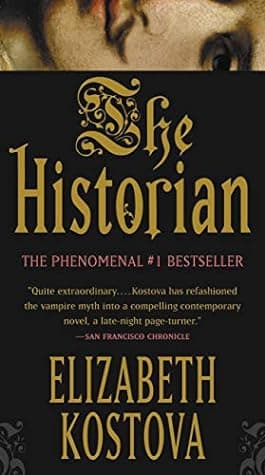
- The Historian
Elizabeth Kostova
3.8 (242k) average on GoodreadsThrillerKostova's The Historian (2005) offers a more traditional, academic-gothic approach to vampire lore, focusing on historical research, epistolary elements, and the pervasive legend of Dracula. In contrast to Rice's fantastical Atlantean origins and extraterrestrial threats, Kostova grounds her narrative firmly in European history and folklore, emphasizing the terrifying ambiguity and psychological horror of the vampire. While both authors create rich historical backdrops, Kostova's is meticulously researched and integrated into a mystery, whereas Rice's is a grand, speculative mythology. Rice's work here is more about expanding the cosmic scope of vampirism, while Kostova delves into its historical dread.
- Harry Potter and the Sorcerer's Stone
J.K. Rowling
4.5 (7M) average on GoodreadsFantasyRescued from a miserable life under the stairs, an orphaned boy discovers he's a wizard destined for a magical school, where he uncovers a dangerous secret tied to the dark wizard who murdered his parents.
- The Hunger Games
Suzanne Collins
4.3 (6.4M) average on GoodreadsFantasyIn a future where children fight to the death on live television, Katniss Everdeen volunteers for the arena, turning a death sentence into a fight for survival and a spark of rebellion.




Enjoyed the summary?
A summary gives you the shape of the book. The book itself has the detail, the examples and the voice.
Find Prince Lestat and the Realms of Atlantis on AmazonAs an Amazon Associate, BookBrief earns from qualifying purchases. How we're funded