
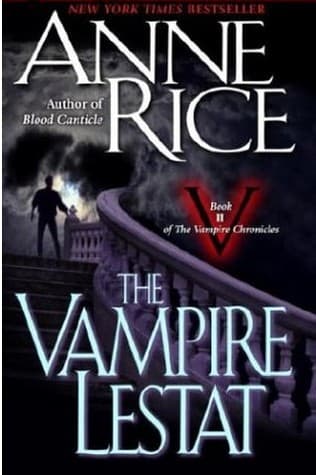
Synopsis
Covers the whole plot, including the ending.
- Difficulty
- Medium
- Pacing
- Variable
- Mood
- Gothic, Philosophical, Epic, Melancholy, Decadent
- Read it if
- You love gothic atmospheres, philosophical vampires, and epic historical sagas with a touch of rock and roll.
- Skip it if
- You prefer fast-paced horror over introspective character studies and intricate lore, or dislike morally ambiguous protagonists.
The Vampire Lestat Plot Summary
Covers the whole plot, including the ending.
Awakening in the Modern World
After decades of sleep, Lestat de Lioncourt wakes up in 1980s New Orleans to a rock band. He dislikes the modern world and other vampires' perceived weakness, so he decides to use human technology and become a rock star. He forms a band called 'The Vampire Lestat' and writes a book, telling the world about vampires. This goes against old vampire rules and is meant to provoke powerful, hidden elders, especially Marius, whom he wants to find.
Childhood in Auvergne
Lestat's story shifts to his human life in Auvergne, France, in the 1760s. He talks about his noble family: his blind father, his mother, Gabrielle, and his six brothers. Lestat feels like an outsider, wanting adventure beyond their castle. He hunts wolves with his dog, Remy, and dreams of leaving his small town. His mother, Gabrielle, is the only one who understands and supports his ambition, creating a strong bond. This part shows Lestat's rebellious nature and his wish for meaning and excitement.
Escape to Paris and the Embrace
Lestat, with Gabrielle, goes to Paris, where he becomes a successful actor. His life changes when the ancient vampire Magnus, a lonely and mad creature, kidnaps him. Magnus chooses Lestat as his successor. Magnus turns Lestat into a vampire, then kills himself by jumping into a fire, leaving Lestat to deal with his new, scary life alone. Lestat gets Magnus's money and secret lair, but also the burden of immortality and the need for blood.
Learning to Be a Vampire
At first, Lestat is horrified by his condition. He struggles to control his thirst and understand his new powers. He accidentally kills a street vendor but then learns to hunt more carefully. He finds comfort with Gabrielle, who is dying. To save her and make her immortal, Lestat turns her into a vampire, making their bond stronger. Together, they explore Paris, enjoying their secret and new abilities. They also meet the hidden Parisian vampires, led by Armand, who are suspicious of Lestat's independence.
Encounter with Armand and Marius's Call
Lestat and Gabrielle's showy presence in Paris attracts Armand and his coven, who are fanatical devil-worshippers. They try to make Lestat join them, but he rejects their old beliefs and challenges their power. During this time, Lestat starts to hear a strong, telepathic call from an ancient vampire, telling him to come to a distant island. This mysterious message, later found to be from Marius, hints at an older vampire world and a secret that his rock music is accidentally threatening.
Journey to Marius and the Origins of Vampires
Following the telepathic call, Lestat travels across Europe, eventually finding Marius on a remote Greek island. Marius, an ancient Roman vampire, tells him how vampires started: the first vampires, Akasha and Enkil, the 'Mother and Father,' are now still statues, holding the essence of vampire life. Marius explains he guards them and warns that if they are destroyed, all vampires will die. He also warns Lestat about telling humans about vampires, which Lestat's band is now doing.
Akasha's Awakening and the Ancient Ones
Lestat's loud rock music, heard globally, reaches Akasha, waking her from her long sleep. Her awakening creates a psychic ripple, drawing ancient vampires from around the world to Lestat. These include Louis, Pandora, and other powerful beings who dislike Lestat telling the world about vampires. The music forces the hidden vampire world into a conflict with the modern era and Lestat's bold challenge to their secrecy. Akasha's reawakening means a dangerous change in the vampire world.
The Concert and Akasha's Appearance
Lestat's concert in San Francisco is a big event, drawing human fans and many ancient vampires. During the show, Akasha appears, a beautiful and powerful figure. She easily kills attacking vampires who try to stop Lestat, showing her great power. Akasha then takes Lestat as her new partner, taking him from the concert. This dramatic event is a key moment, as Lestat is now directly involved with the oldest and most powerful vampire, his plan having worked better than he expected.
Akasha's Vision and Global Purge
Akasha, with Lestat, starts her plan for the world. She says she will kill all human men, believing them to be the source of all evil, and create a female-led society with women and children. Lestat is shocked by her cruelty and the size of her plan, realizing he has unleashed a force he cannot control. He becomes a reluctant part of it, watching her brutal actions as she travels the world, carrying out her purge.
Confrontation in the Desert
As Akasha's purge continues, the remaining ancient vampires, including Marius, Louis, Pandora, Maharet, and Mekare, meet in the desert. They are united against Akasha's madness. They discuss how to stop her, seeing the threat she poses to humanity and their own kind. Lestat, increasingly upset by Akasha's actions, is torn between his interest in her power and his strong moral objections to her genocide. He eventually joins the ancient vampires, getting ready for a final, desperate fight.
Akasha's Demise and the Transfer of Power
During the fight in the desert, Akasha is finally defeated. It is revealed that Mekare, Maharet's twin sister and one of the first humans to become vampires after Akasha, is the true heir to the first vampiric power. Mekare eats Akasha's brain and heart, taking the essence of the Mother and Father into herself, ending Akasha's rule. This act stabilizes the vampire race, ensuring their survival under a new, kinder, and ancient consciousness. Lestat thinks about what these events mean.
Principal Figures
Lestat de Lioncourt
Protagonist
Rebellious 18th-century French aristocrat turned vampire rock star.
Lestat is a complex and often contradictory figure, driven by a profound curiosity and a desire for meaning. Born into a minor noble family in Auvergne, he yearned for adventure and escaped to Paris to become an actor. After being forcibly 'Embraced' by Magnus, he struggles with his vampiric nature but ultimately embraces it with a flamboyant defiance. He is bold, often arrogant, but also possesses a deep capacity for love and loyalty, especially towards his mother, Gabrielle, and later Louis. His decision to become a rock star and reveal vampires to the world is both an act of ego and a desperate search for connection and understanding.
Relationships: Gabrielle de Lioncourt (Mother and companion, whom he turns into a vampire.); Louis de Pointe du Lac (His first vampire companion and 'child'.); Magnus (His reluctant sire, who immediately commits suicide.); Marius (Ancient guardian who reveals the origins of vampires.); Akasha (The Vampire Queen, whom he inadvertently awakens and becomes her consort.)
Gabrielle de Lioncourt
Supporting
Lestat's fiercely independent and intellectual mother, whom he turns into a vampire.
Gabrielle is Lestat's mother and his closest confidante in his human life. She is intelligent, rebellious, and deeply unconventional for her time, sharing Lestat's thirst for knowledge and adventure. Dying of consumption, she is given the Embrace by Lestat, becoming one of the first vampires he creates. As a vampire, she retains her independence and strength, often appearing more aloof and self-sufficient than Lestat, preferring solitude and intellectual pursuits over emotional attachments. She encourages Lestat's individuality and challenges his more sentimental side.
Relationships: Lestat de Lioncourt (Her son and sire, sharing a profound, almost spiritual bond.)
Marius de Romanus
Supporting
Ancient Roman vampire and guardian of Akasha and Enkil.
Marius is an incredibly ancient and powerful vampire, originally a Roman scholar, who has been the guardian of Akasha and Enkil, the 'Mother and Father' of all vampires, for nearly two millennia. He is wise, philosophical, and immensely knowledgeable about vampire history and lore, having witnessed centuries of human and vampiric evolution. He is initially critical of Lestat's recklessness but eventually comes to respect his spirit. Marius provides Lestat with crucial information about the origins of their kind and the true nature of their existence, serving as a mentor figure.
Relationships: Lestat de Lioncourt (Reluctant mentor and source of ancient knowledge.); Akasha and Enkil (Their millennia-long guardian.); Pandora (His former companion.)
Akasha
Antagonist
The Queen of the Damned, the first vampire, awakened by Lestat's music.
Akasha is the original vampire, the 'Mother' of their kind, who has been in an inert, statue-like state for millennia alongside her consort, Enkil. Originally a ruthless queen of Kemet, she was transformed into a vampire through a demonic ritual. Awakened by Lestat's rock music, she emerges with a terrifying, absolute vision to purge the world of all human men, believing them to be the source of evil. She is immensely powerful, beautiful, and utterly ruthless, acting with a chilling certainty in her divine right to reshape the world. Her actions drive the central conflict of the latter half of the book.
Relationships: Enkil (Her consort and the 'Father' of vampires.); Lestat de Lioncourt (Her chosen new consort after her awakening.); Mekare (Her ancient rival and eventual destroyer.)
Enkil
Supporting
The King of the Damned, Akasha's consort and the 'Father' of vampires.
Enkil is the ancient King of Kemet and Akasha's consort, who was also transformed into a vampire alongside her. Like Akasha, he has existed in an inert, statue-like state for millennia, connected to the primal source of vampiric power. He is less prominent than Akasha, often depicted as more passive, seemingly drained of will and life by his long existence. His destruction by Akasha is a pivotal moment, showing her ruthless disregard for even her oldest companion, and highlighting the transfer of the ancient power.
Relationships: Akasha (His consort and the 'Mother' of vampires.)
Armand
Supporting
Ancient vampire leader of a Parisian coven, later Lestat's 'child'.
Armand is an ancient vampire, originally Andrei, a Russian icon painter, who was made by Marius and later led a coven of devil-worshipping vampires in Paris. He is depicted as beautiful, tormented, and deeply steeped in old-world superstitions and rituals. He initially attempts to force Lestat to conform to his coven's ways but is ultimately captivated by Lestat's defiance and modern spirit. Though his role is brief in this book, his initial confrontation with Lestat highlights the clash between ancient vampiric traditions and Lestat's radical individualism.
Relationships: Lestat de Lioncourt (Initially a rival, later captivated by him.); Marius (His sire.)
Louis de Pointe du Lac
Supporting
Lestat's melancholic and moralistic first companion, featured in 'Interview with the Vampire'.
Louis is Lestat's first vampire companion, whom Lestat Embraced in 18th-century New Orleans. In 'The Vampire Lestat,' Louis appears as a more mature and weary figure, still grappling with the moral implications of his existence. He is critical of Lestat's decision to reveal vampires to the world through rock music, finding it reckless and dangerous. Despite their often-strained relationship, Louis is drawn back into Lestat's orbit by the unfolding crisis with Akasha, demonstrating his enduring, if complex, loyalty and concern for his maker.
Relationships: Lestat de Lioncourt (His sire and complex lifelong companion.); Claudia (Their shared vampire 'child' (mentioned from previous book).)
Maharet
Supporting
One of the oldest and most powerful ancient vampires, twin sister of Mekare.
Maharet is an incredibly ancient vampire, one of the 'Great Family' and twin sister to Mekare. She originated in a pre-Egyptian culture and bears a deep, personal connection to the origins of Akasha and Enkil. She is depicted as a powerful, wise, and stoic figure, possessing immense knowledge and a profound sense of responsibility for the vampire race. Maharet has been a silent observer and guardian for millennia, maintaining a detailed 'blood history' of her descendants. She plays a crucial role in the final confrontation, revealing the true history and the means to stop Akasha.
Relationships: Mekare (Her twin sister, sharing an unbreakable ancient bond.); Akasha (Ancient adversary, linked by shared origin.)
Mekare
Supporting
Maharet's twin sister, the true inheritor of the primal vampiric power.
Mekare is Maharet's twin sister, also an incredibly ancient vampire. She was the one who initially consumed Akasha's brain in ancient times, though the power eventually reverted to Akasha. Cursed by Akasha to be mute and disfigured for millennia, she has been held captive or hidden by various vampires throughout history. Her true significance is revealed at the climax: she is the one destined to fully consume Akasha and become the new 'Mother' of all vampires, a role she fulfills with grim determination. Her silence and suffering make her a tragic yet ultimately powerful figure.
Relationships: Maharet (Her twin sister, sharing an unbreakable ancient bond.); Akasha (Her ancient tormentor and ultimate victim.)
Magnus
Mentioned
Eccentric, ancient vampire who forcibly turns Lestat and then commits suicide.
Magnus is the ancient vampire who forcibly Embraces Lestat in 18th-century Paris. He is depicted as reclusive, immensely wealthy, and utterly insane after centuries of existence. He chooses Lestat seemingly at random, bestows upon him his fortune and the gift of vampirism, and then immediately throws himself into a fire, seeking permanent death. His brief but impactful appearance serves as Lestat's abrupt and traumatic introduction to the vampire world, leaving him to figure out his new existence entirely on his own.
Relationships: Lestat de Lioncourt (His sire, though their interaction is minimal.)
Themes & Insights
Identity and Self-Discovery
Lestat's journey is about self-discovery, both as a human wanting purpose and as a vampire dealing with his monstrous side. From his rebellious youth to his decision to become a rock star, Lestat constantly tries to define himself against social norms and other vampires' expectations. His search for knowledge about his origins, especially from Marius, helps him understand his place in the world. He thinks about the morality of his existence, the need for blood, and his role in the vampire hierarchy, always questioning what it means to be Lestat.
“I was a monster. I was a demon. I was a thing of the night. And I knew it, and I rejoiced.”
Rebellion and Conformity
Lestat is always a rebel, challenging rules at every turn. As a human, he went against his family's expectations; as a vampire, he openly rejects the secrecy and old traditions of his kind, especially Armand's coven. His choice to tell the world about vampires through his rock band is the ultimate act of defiance, forcing a conflict between the hidden ancient world and modern society. This theme looks at the tension between individual freedom and the demands of group identity, showing Lestat's refusal to follow the rules of humans or vampires.
“I was going to give the world a shock. I was going to tell them everything.”
The Nature of Good and Evil
The book explores good and evil, especially through vampirism. Lestat, though a killer, often struggles with his actions' morality and tries to understand the 'purpose' of evil. Akasha's plan to purge humanity raises questions about using violence for a perceived greater good. Ancient vampires, like Marius and Maharet, offer different views on the world's balance and their kind's role. The story suggests that good and evil are not absolute but tied to power, survival, and personal choice, often blurring the lines between hero and monster.
“Evil is a point of view. We are immortal. And what you call evil, I call natural.”
Immortality and the Burden of Existence
Immortality is shown not as a gift but as a burden, leading to boredom, madness, and deep loneliness. Lestat at first embraces his new life with energy, but he also has times of despair and long sleep. Characters like Magnus and Enkil show the potential for madness that comes with endless centuries. Marius and Maharet, though old and powerful, carry the weight of much knowledge and the responsibility of guarding old secrets. The story explores how vampires handle time passing, losing loved ones, and trying to find meaning in an eternal life, often making them question if immortality is even good.
“To be immortal is to be eternal. And to be eternal is to be lonely.”
The Power of Art and Storytelling
Art, in its various forms, is a strong force throughout the novel. Lestat's early love for acting hints at his later showmanship as a rock star. His autobiography is a deliberate act of storytelling, a way to reclaim his story and challenge his kind's secrecy. The rock music itself is a central plot device, able to wake old beings and bring vampires together. This theme shows how art can cross time, tell deep truths, cause change, and even hold immense, almost magical, power to shape reality and connect different beings across centuries.
“I was a creature of words, of music, of paint. I was an artist.”
Plot Devices & Literary Techniques
First-Person Narrative (Lestat's Autobiography)
The entire story is framed as Lestat's tell-all memoir.
The novel is presented as Lestat's autobiography, written in the first person. This allows for intimate access to his thoughts, motivations, and experiences, shaping the reader's perception of events through his unique, often flamboyant, and biased perspective. It also serves as a meta-narrative device, as the 'book' Lestat is writing within the story is the 'book' the reader is holding. This allows for his retrospective commentary on events, his interactions with other vampires (who read his book), and his direct address to the reader, creating a highly personal and engaging narrative voice.
Flashback Structure
The modern-day rock star plot is frequently interrupted by Lestat's life story.
While the overarching plot begins in the 1980s with Lestat's rock band, the majority of the novel consists of extensive flashbacks to Lestat's human life in 18th-century France and his early centuries as a vampire. This non-linear structure gradually reveals Lestat's origins, his 'Embrace,' and his early interactions with other vampires, providing crucial context for his present-day actions and motivations. The flashbacks are triggered by Lestat's decision to write his autobiography, allowing him to recount his history in vivid detail and build the world of vampires piece by piece for the reader.
The Mother and Father (Akasha and Enkil)
The ancient, inert vampires who are the source of all vampiric life.
Akasha and Enkil are not just characters but a central plot device, representing the primal source of vampiric existence. Their inert, statue-like state for millennia is what keeps all other vampires alive. Their awakening, triggered by Lestat's music, is the catalyst for the entire climax of the novel. The threat of their destruction, or Akasha's destructive will once awakened, drives the ancient vampires to unite. They embody the profound mystery of vampiric origins and the terrifying fragility of their entire species, making them the ultimate MacGuffin and existential threat.
Lestat's Music/Autobiography
The means by which Lestat reveals vampires to the world and awakens Akasha.
Lestat's decision to form a rock band and write an autobiography about vampires is the primary inciting incident of the novel's modern-day plot. The music and the book are not merely expressions of his ego but powerful plot devices. They serve to break the ancient covenant of secrecy among vampires, drawing out both allies and enemies. Crucially, the sheer volume and psychic resonance of his music act as a direct summons to Akasha, awakening her from her millennia-long sleep and setting in motion the global crisis. It's a manifestation of Lestat's rebellious spirit with far-reaching, unforeseen consequences.
The Vampire Lestat Quotes
“I am the vampire Lestat. I'm immortal. More or less. The light of the sun, the sustained heat of an intense fire—these things might destroy me. But then again, they might not.”
“Evil is always possible. And goodness is eternally difficult.”
“The world changes, we do not, therein lies the irony that finally kills us.”
“I wanted love and goodness in this which is living death. It was impossible from the beginning, because you cannot have love and goodness when you do what you know to be monstrous.”
“To kill is to be a god. To kill is to be a devil. To kill is to be both.”
“The only power that exists is inside ourselves.”
“We are the things that were once men, and we are the things that will never be men again.”
“Beauty is a savage garden.”
“I never asked for life, I never asked to be what I am. But I have it, and I will use it.”
“The blood is the life, and it shall be mine.”
“We are the vampires, the damned, and we are beautiful.”
“To be powerful is to be lonely. To be eternal is to be alone.”
“I have always been a rebel, even in death.”
“The night is my kingdom, and I rule it with a velvet glove.”
Quiz
10 questions on the plot and the characters. Each answer comes with a short explanation.
Question 1
What is Lestat's original human profession before becoming a vampire?
- A wealthy merchant
- An aristocrat/nobleman
- A soldier in the French army
- A playwright in Paris
Show answer
B. An aristocrat/nobleman In the book, Lestat is described as an aristocrat in pre-revolutionary France before his transformation, which establishes his privileged background and sets the stage for his journey.
Question 2
In what time period does Lestat become a rock star?
- The 1970s
- The 1980s
- The 1990s
- The 1960s
Show answer
B. The 1980s The book explicitly mentions Lestat as a rock star in the 'demonic, shimmering 1980s,' highlighting his adaptation to modern times and blending of supernatural elements with contemporary culture.
Question 3
What is Lestat's primary motivation throughout the centuries?
- To accumulate wealth and power
- To seek revenge on his maker
- To find others like him and understand his existence
- To destroy all other vampires
Show answer
C. To find others like him and understand his existence The book describes Lestat as rushing through the centuries 'in search of others like him, seeking answers to the mystery of his eternal, terrifying existence,' emphasizing his quest for identity and connection.
Question 4
Which historical event serves as a backdrop for Lestat's early life?
- The French Revolution
- The American Revolution
- World War I
- The Renaissance
Show answer
A. The French Revolution Lestat's origins are set in 'pre-revolutionary France,' implying the turmoil of the French Revolution as a key historical context that influences his transformation and early vampire experiences.
Question 5
How does Lestat's story differ from typical vampire narratives?
- He is portrayed as purely evil and monstrous
- He is a hero with a complex, passionate inner life
- He avoids human contact entirely
- He is killed by a vampire hunter early on
Show answer
B. He is a hero with a complex, passionate inner life Anne Rice's novel presents Lestat as 'the vampire hero' with a 'passionate, complex, and thrilling' story, subverting traditional vampire tropes by exploring his emotions and motivations in depth.
Question 6
What aspect of Lestat's character makes him 'a creature of the darkest and richest imagination'?
- His ability to transform into animals
- His blend of aristocratic past and modern rock star persona
- His immunity to sunlight
- His role as a king of vampires
Show answer
B. His blend of aristocratic past and modern rock star persona The book highlights Lestat's journey from an aristocrat in pre-revolutionary France to a rock star in the 1980s, showcasing Anne Rice's imaginative fusion of historical and contemporary elements in his character.
Question 7
Why is Lestat's existence described as 'eternal' and 'terrifying'?
- Because he is constantly hunted by humans
- Because he faces physical decay over time
- Because he grapples with immortality and its psychological burdens
- Because he is cursed to never find love
Show answer
C. Because he grapples with immortality and its psychological burdens Lestat's search for answers to his existence reflects the terror and complexity of immortality, a central theme in the book where he navigates centuries of loneliness and self-discovery.
Question 8
In what way does Lestat's rock star persona relate to his vampire nature?
- It allows him to hide his identity completely
- It symbolizes his rebellion and desire for attention in the modern world
- It is a cover for his job as a nightclub owner
- It helps him recruit new vampires through music
Show answer
B. It symbolizes his rebellion and desire for attention in the modern world Lestat's role as a rock star in the 1980s ties into his charismatic and flamboyant character, using fame as a metaphor for his supernatural allure and his ongoing struggle to connect with others across time.
Question 9
What does Lestat's journey through the centuries primarily symbolize in the novel?
- The decline of aristocratic values
- The evolution of music and art
- The search for meaning and identity in an immortal life
- The conflict between science and superstition
Show answer
C. The search for meaning and identity in an immortal life Lestat's centuries-spanning quest mirrors the human desire for purpose, as he seeks others like him and grapples with the existential questions posed by his vampire condition.
Question 10
How does Anne Rice's portrayal of Lestat challenge traditional fantasy tropes?
- By making him a minor character in a larger epic
- By depicting him as a villain with no redeeming qualities
- By focusing on his inner psychological depth rather than just supernatural action
- By setting the story entirely in a fictional world
Show answer
C. By focusing on his inner psychological depth rather than just supernatural action Rice emphasizes Lestat's 'mesmerizing story --- passionate, complex, and thrilling,' using his vampire nature to explore themes of identity, morality, and emotion, which elevates the narrative beyond typical fantasy conventions.
The Vampire Lestat FAQ
What is 'The Vampire Lestat' about?
The novel follows Lestat de Lioncourt, an 18th-century French aristocrat turned vampire, as he recounts his transformation and centuries-long journey from pre-revolutionary France to 1980s rock stardom. He seeks other vampires like himself to uncover the origins and meaning of his immortal existence, while grappling with his nature and place in the world.
Why should I read 'The Vampire Lestat'?
It offers a rich, first-person perspective on vampire mythology, blending historical fiction with dark fantasy and exploring themes of immortality, identity, and existential angst. Lestat's charismatic and complex narration, along with the vivid settings from 18th-century France to modern-day America, makes it a compelling and immersive read.
What is the background/setting of 'The Vampire Lestat'?
The story spans from the opulent, aristocratic world of pre-revolutionary France in the 1700s to the flashy, demonic rock scene of 1980s America. Key locations include Lestat's family estate in Auvergne, Parisian theaters, and the vibrant nightlife of San Francisco, reflecting his evolution through time.
What are the most memorable quotes?
Notable quotes include Lestat's reflections on his nature, such as 'I am the vampire Lestat. I'm immortal. More or less. The light of the sun, the sustained heat of an intense fire—these things might destroy me. But then again, they might not.' Another is his existential musing: 'Evil is always possible. And goodness is eternally difficult.'
What writing style does the author use?
Anne Rice employs a lush, descriptive, and introspective first-person narrative, with Lestat as the charismatic and unreliable narrator. The prose is rich in historical detail and emotional depth, blending gothic horror with philosophical inquiry to explore themes of immortality and morality.
What minor details add significant meaning?
Lestat's recurring fascination with theater and performance, from his early days in Parisian plays to his rock star persona, underscores his desire for identity and validation. The golden chalice used in his transformation symbolizes both his aristocratic past and the cursed gift of immortality.
What are some subtle foreshadowing moments?
Early references to Lestat's rebellious nature and thirst for adventure hint at his eventual embrace of vampirism. His mother Gabrielle's declining health foreshadows her transformation into a vampire, while mentions of ancient vampire lore set up the later revelations about Marius and the origins of vampires.
What unexpected character connections exist?
Lestat discovers that his maker, Magnus, is connected to an ancient lineage of vampires, including Marius, who becomes a mentor figure. His mother Gabrielle, transformed into a vampire, becomes a companion, and his rivalry with Armand ties back to earlier events in vampire history, revealing a web of relationships across centuries.
What are unspoken character motivations?
Lestat's drive for fame and immortality masks a deep-seated fear of insignificance and a longing for connection. Gabrielle's transformation is motivated not just by survival but by a desire to escape the constraints of her mortal life and gender roles, seeking freedom in vampirism.
What psychological complexities do characters exhibit?
Lestat embodies a conflict between his aristocratic upbringing and monstrous nature, often oscillating between hedonism and existential despair. Armand struggles with religious guilt and loss of faith after centuries of existence, while Marius represents a weary wisdom burdened by the secrets of vampire origins.
What are the major emotional turning points?
Key moments include Lestat's transformation by Magnus, which fills him with both terror and exhilaration; his reunion with his mother Gabrielle as a vampire, deepening their bond; and his confrontation with Armand, which forces him to question his place in the vampire world and his own morality.
How do relationship dynamics evolve?
Lestat's relationship with Gabrielle shifts from filial duty to a complex partnership as fellow vampires. His interactions with Marius move from awe to mentorship and eventual conflict over vampire secrets. The rivalry with Armand evolves from animosity to a grudging understanding of shared loneliness and power struggles.
Which parts remain ambiguous or open-ended?
The true origins of vampires, as hinted by Marius, are left partially unexplained, inviting speculation. Lestat's ultimate fate and whether he finds lasting peace or continues his restless journey are open to interpretation, as is the moral ambiguity of his actions throughout the centuries.
What are controversial scenes or decisions?
Lestat's decision to turn his dying mother Gabrielle into a vampire sparks debate over whether it was an act of love or selfishness. His embrace of 1980s rock stardom, using his vampiric nature for fame, raises questions about the commercialization of his immortal existence and moral compromises.
'The Vampire Lestat' ending explained: how it ends & what it means
The novel ends with Lestat achieving rock stardom in the 1980s, using his music to reveal vampire secrets to the world, but facing backlash from other vampires. This signifies his rebellion against the old order and search for meaning in modernity, suggesting that immortality is a continuous journey of self-discovery and conflict.
About the author
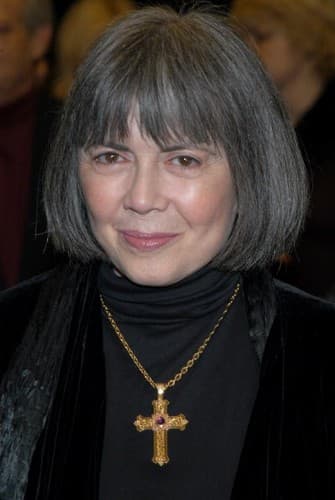
Anne Rice was an American author of gothic fiction, erotic literature, and Christian literature. She was best known for her series of novels The Vampire Chronicles. The first book became the subject of a film adaptation—Interview with the Vampire (1994).
Similar books
- Interview With The Vampire
Anne Rice
4.0 (485k) average on GoodreadsFantasyExplores the same universe and characters with a similar introspective style.
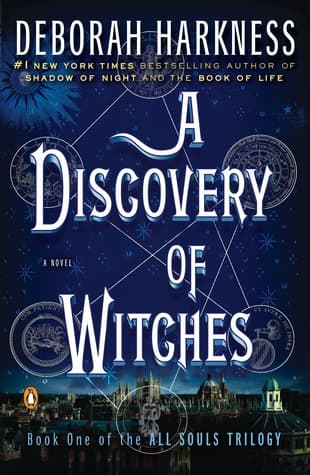
- A Discovery of Witches
Deborah Harkness
4.0 (369k) average on GoodreadsFantasyFeatures ancient, powerful supernatural beings and a blend of historical and contemporary settings.
- Twilight
Stephenie Meyer
3.9 (842) average on GoodreadsLiterary FictionWhile both feature sympathetic vampires, Rice's The Vampire Lestat offers significantly more sophisticated prose, deeper philosophical themes, and a broader historical scope. Meyer's Twilight primarily focuses on a teenage romance within a supernatural setting, often simplifying vampire lore. Rice's work explores complex questions of identity, good versus evil, and the search for meaning over centuries, with a rich literary ambition that far surpasses the more commercial and youth-oriented approach of Twilight.
- Harry Potter and the Sorcerer's Stone
J.K. Rowling
4.5 (7M) average on GoodreadsFantasyRescued from a miserable life under the stairs, an orphaned boy discovers he's a wizard destined for a magical school, where he uncovers a dangerous secret tied to the dark wizard who murdered his parents.
- The Hunger Games
Suzanne Collins
4.3 (6.4M) average on GoodreadsFantasyIn a future where children fight to the death on live television, Katniss Everdeen volunteers for the arena, turning a death sentence into a fight for survival and a spark of rebellion.
- 1984
George Orwell
4.2 (3.1M) average on GoodreadsPoliticsIn a future where surveillance and thought control are absolute, a man's search for truth clashes with the Party, showing that hope can be a form of rebellion.




Enjoyed the summary?
A summary gives you the shape of the book. The book itself has the detail, the examples and the voice.
Find The Vampire Lestat on AmazonAs an Amazon Associate, BookBrief earns from qualifying purchases. How we're funded