

Core Idea
- Difficulty
- Medium
- Read it if
- You want to deepen your prayer life, understand the emotional and theological depth of the Psalms, or seek a scriptural framework for expressing your full range of human emotions to God.
- Skip it if
- You are looking for a historical-critical academic analysis of the Psalms or a highly systematic theology text.
Key Takeaways from Psalms
The Psalms as the Church's Hymnal
Understanding the Psalms as a foundational Christian songbook, echoing both Israel's laments and the believer's petitions.
The Psalms are not just ancient Hebrew poetry; they are the essential hymnal of the Christian Church, a role they have held since the Church began. While they started as the songs of Israel, expressing deep sorrow and joy, for Christians, they go beyond their original context to become hymns of prayer, praise, joy, and longing for those who live 'in Christ.' This view encourages believers to see the Psalms as a living collection of prayers and songs that express the full range of human emotion and spiritual experience within a Christian framework. They offer a way to express faith, doubt, suffering, and gratitude, connecting contemporary believers to a long tradition of worship.
“In this rendering, the Psalms become once again what they were for Christian believers from the very beginning: the hymnal of the Church.”
In the book: The preface by Fr. John Breck explicitly states this re-emphasis on the Psalms' role as the Church's hymnal, connecting it to its historical use by Christian believers.
Try this: Integrate the Psalms more intentionally into personal and communal worship. Use them as templates for prayer, allowing their structure and language to guide expressions of praise, lament, and petition. Consider reciting or singing them regularly.
Related ideas: christian-worship, liturgy, spiritual-formation
God Hears and Responds
The Psalms convey an enduring assurance of God's boundless mercy and responsiveness to prayer.
A core message in the Psalms is the assurance that God is not distant or uncaring, but actively hears and responds to human prayer. This response is marked by boundless mercy, love, and compassion, echoing through thousands of years of human experience. This idea counters modern skepticism or personal doubt about whether prayer works, basing it on the historical and spiritual testimony of the psalmist. It suggests that engaging with the Psalms can itself be a way to experience this divine responsiveness, building deeper trust in God's attentive nature, regardless of immediate circumstances or the perceived 'answer' to prayer.
“At the same time their very language can convey to us the assurance that, as he has throughout the millennia, God hears our prayer and responds to it with boundless mercy, love, and compassion.”
In the book: Fr. John Breck's preface highlights the assurance conveyed by the Psalms' language regarding God's hearing and responding to prayer with mercy, love, and compassion.
Try this: When facing spiritual doubt or unanswered prayers, turn to the Psalms (e.g., Psalm 13, Psalm 27, Psalm 103) to reaffirm faith in God's attentiveness and compassion. Use them to articulate feelings of abandonment or hope, trusting in God's character.
Related ideas: prayer, divine-mercy, faith, spiritual-assurance
Davidic Roots and Poetic Structure
The Psalms' profound emotional depth is often rooted in David's experiences and structured by poetic devices like chiasmus.
Understanding the Psalms means appreciating their historical context, especially their strong connection to King David, and their poetic structure. Many psalms are attributed to David, reflecting his life, from shepherd to king, warrior, and repentant sinner. This personal connection gives the Psalms raw, relatable human emotion. Also, poetic devices like chiasmus (a literary figure where words, grammatical constructions, or concepts are repeated in reverse order) are important. Chiasmus, in particular, allows the psalmist to hold 'ruining oppositions of actual experience' within an artistic framework, creating balance and resolution, even in chaos. This structure is not just aesthetic; it is theological, suggesting that even in life's inversions and contradictions, there is an underlying divine order and purpose.
“Professor Sheehan's brief introductory exposition of the Davidic roots of Psalms and the poetics of chiasmus guides us in understanding how the ruining oppositions of actual experience are held in Psalms within the musical disciplines of lyric art.”
In the book: The preface mentions Professor Sheehan's exposition on the 'Davidic roots' and 'poetics of chiasmus' as key to understanding how 'ruining oppositions' are held within the 'musical disciplines of lyric art.'
Try this: When reading the Psalms, pay attention to repeated themes or phrases that might indicate a chiastic structure. Research specific psalms attributed to David (e.g., Psalm 51, Psalm 23) to connect the text to his life experiences. This can deepen understanding of the emotional and theological layers.
Related ideas: hebrew-poetry, chiasmus, king-david, literary-analysis
Finding God in the Ruins
The Psalms offer a path to perceive God's presence and love even amidst life's brokenness and suffering.
One of the deepest insights from the Psalms is that we can encounter God not despite, but within the 'ruins' of human experience. This refers to moments of despair, loss, injustice, or deep suffering where life feels broken. The psalmist expresses these raw emotions; these expressions become the way God's presence is revealed. The 'musical disciplines of lyric art' do not erase the pain but contain it, allowing believers to hold their brokenness before God until a new understanding emerges—one where God is 'seen, and felt, and overwhelmingly and gratefully loved.' This transformative process is central to the Psalms' spiritual power, offering hope that even the most desolate circumstances can become places for divine encounter.
“held, until God Himself can be seen in the ruins: seen, and felt, and overwhelmingly and gratefully loved.”
In the book: The preface directly states that through the Psalms, 'God Himself can be seen in the ruins: seen, and felt, and overwhelmingly and gratefully loved.'
Try this: When experiencing personal 'ruins' or deep distress, turn to the lament psalms (e.g., Psalm 22, Psalm 69, Psalm 88). Allow the psalmist's words to validate your pain, and intentionally seek to articulate your feelings to God, trusting that this process can lead to a deeper awareness of His presence and love.
Related ideas: suffering, divine-presence, lament, spiritual-resilience
The Psalmist's Inner Transformation
Engaging with the Psalms changes the individual's inner world, not their external circumstances.
A critical insight from the Psalms is that their power is not in changing external realities, but in changing the internal world of the one who prays them. The 'psalmist's world'—their circumstances, challenges, and suffering—often stays the same, yet their engagement with God through these sacred songs changes them. This highlights an inner spiritual process: facing adversity with honesty and turning it towards God through prayer and praise reframes the individual's perspective, strengthens their faith, and refines their character. This challenges a purely transactional view of prayer, showing that the deepest work God often does is within the heart and mind of the believer, regardless of whether external problems are immediately resolved.
“The psalmist's world doesn't change as he turns his experience toward God. What changes is he himself.”
In the book: The preface explicitly states, 'The psalmist's world doesn't change as he turns his experience toward God. What changes is he himself.'
Try this: Practice reflective journaling after engaging with a Psalm. Focus not on what you want God to change in your circumstances, but on what God might be changing within you—your perspective, your attitude, your trust, or your understanding of His character.
Related ideas: inner-transformation, spiritual-growth, prayer-effects, personal-change
Acquiring the Mind of Christ
The ultimate aim of engaging with the Psalms is to cultivate a Christ-like mindset.
The internal transformation from the Psalms leads to 'acquiring the very mind of Christ.' This is the spiritual goal for every believer. To have the mind of Christ means to embody His humility, compassion, wisdom, and selfless love; to see the world and respond to its challenges as He would. By immersing oneself in the Psalms, which express the full range of human emotion and yet consistently return to God in trust and praise, one is gradually shaped into this divine pattern. The Psalms, then, are not just prayers, but a spiritual discipline that forms one's inner being towards Christ-likeness, preparing believers to live out their faith with integrity and grace in a complex world.
“How he changes is toward acquiring the very mind of Christ, to which each of us is called.”
In the book: The preface directly links the psalmist's internal change to 'acquiring the very mind of Christ, to which each of us is called.'
Try this: After engaging with a Psalm, reflect on how it challenges or encourages you to think, feel, or act more like Christ. Specifically, identify one Christ-like quality (e.g., forgiveness, humility, compassion) that the Psalm highlights and commit to practicing it in your day.
Related ideas: christ-likeness, spiritual-discipline, sanctification, christian-ethics
A Language for Every Emotion
The Psalms provide a divinely inspired vocabulary for expressing the entire spectrum of human feelings to God.
The Psalms have a comprehensive emotional range. They express everything from the deepest despair and agonizing lament ('My God, my God, why have you forsaken me?') to ecstatic praise and deep joy ('The Lord is my shepherd; I shall not want.'). This breadth validates the full human experience before God. It teaches believers that no emotion—anger, fear, doubt, sorrow, or boundless happiness—is inappropriate to bring to God. The Psalms give us permission and the words to express our rawest feelings, fostering an honest and authentic relationship with God, rather than a sanitized or performative one. This makes them therapeutic and accessible for anyone dealing with complex emotions.
“They remain, certainly, the songs of Israel: from its cries of lamentation to its shouts of exultation.”
In the book: Fr. John Breck's preface highlights the Psalms as 'songs of Israel: from its cries of lamentation to its shouts of exultation,' illustrating their wide emotional range.
Try this: When you feel overwhelmed by a particular emotion (e.g., sadness, anger, joy), seek out a Psalm that resonates with that feeling. Use its words to express your heart to God, allowing the text to guide and validate your emotional experience.
Related ideas: emotional-expression, spiritual-honesty, lament, praise
Psalms as Petitions and Praise
For Christians, the Psalms serve as a dual expression of earnest requests and heartfelt adoration.
Beyond their historical and poetic meaning, the Psalms function as both petitions and praise for the Christian believer. They are a rich source for expressing 'longing'—deep desires, needs, and earnest requests brought before God. At the same time, they are 'hymns of praise,' offering a profound language for expressing 'joy' and adoration for God's character, works, and faithfulness. This dual nature is important: it keeps prayer from becoming only a list of demands and prevents praise from becoming detached from the realities of human struggle. The Psalms model a balanced spiritual life where believers can confidently ask God for help while also glorifying Him, understanding that both aspects are integral to a vibrant faith 'in Christ.'
“But for the Christian reader, they become as well hymns of petition and praise that express both the joy and the longing of those who live 'in Christ'.”
In the book: Fr. John Breck's preface explicitly describes the Psalms for Christians as 'hymns of petition and praise that express both the joy and the longing of those who live 'in Christ'.'
Try this: When structuring your personal prayer time, intentionally incorporate both petitionary prayers (asking for needs) and prayers of praise (thanking and adoring God). Use different Psalms to inspire each category, ensuring a holistic approach to prayer.
Related ideas: petitionary-prayer, praise-worship, christian-prayer, spiritual-balance
A Timeless Spiritual Mirror
The Psalms reflect universal human experiences, making them perpetually relevant across cultures and generations.
Despite their ancient origins, the Psalms are timeless, acting as a spiritual mirror for humanity across thousands of years. The core human experiences they express—joy, sorrow, betrayal, hope, fear, faith, doubt, and the search for meaning—are universal. This lasting relevance means that a modern reader can find their own struggles and aspirations echoed in the words of a psalmist from thousands of years ago. This universality shows the unchanging nature of both human experience and God's character. The Psalms bridge the gap between ancient Israel and contemporary believers, offering a continuous narrative of faith and struggle that is deeply relatable and comforting, asserting that God's mercy and love are constant throughout history.
“as he has throughout the millennia, God hears our prayer and responds to it with boundless mercy, love, and compassion.”
In the book: The preface emphasizes God's consistent response 'throughout the millennia,' implying the timelessness of the human experience of prayer and divine interaction found in the Psalms.
Try this: Regularly engage with the Psalms to gain perspective on your own life. When facing a challenging situation, consider which Psalm might have been written for your experience, and allow its ancient wisdom to speak to your modern context.
Related ideas: universal-themes, spiritual-relevance, timeless-wisdom, human-experience
Psalms Quotes
“The Lord is my shepherd; I shall not want.”
“He makes me lie down in green pastures; he leads me beside still waters.”
“Your word is a lamp to my feet and a light to my path.”
“The heavens declare the glory of God; the skies proclaim the work of his hands.”
“Be still, and know that I am God.”
“I will give thanks to the Lord with my whole heart; I will recount all of your wonderful deeds.”
“Create in me a clean heart, O God, and renew a right spirit within me.”
“Oh, taste and see that the Lord is good!”
“Why are you cast down, O my soul, and why are you in turmoil within me? Hope in God.”
“Precious in the sight of the Lord is the death of his saints.”
“Unless the Lord builds the house, those who build it labor in vain.”
“I lift up my eyes to the mountains—where does my help come from? My help comes from the Lord, the Maker of heaven and earth.”
“The Lord is a refuge for the oppressed, a stronghold in times of trouble.”
“Let everything that has breath praise the Lord! Praise the Lord!”
Quiz
10 questions on the main ideas. Each answer comes with a short explanation.
Question 1
According to Fr. John Breck's preface, what primary role do the Psalms take on for Christian believers?
- A historical record of ancient Israel's kings.
- The hymnal of the Church.
- A collection of legal statutes for the early Church.
- Prophecies of future events.
Show answer
B. The hymnal of the Church. Fr. John Breck's preface explicitly states that 'the Psalms become once again what they were for Christian believers from the very beginning: the hymnal of the Church.'
Question 2
Beyond being the songs of Israel, what additional expressions do the Psalms become for the Christian reader, according to the preface?
- Detailed genealogies of biblical figures.
- Hymns of petition and praise.
- Instructions for temple rituals.
- Philosophical treatises.
Show answer
B. Hymns of petition and praise. The preface notes that for the Christian reader, the Psalms 'become as well hymns of petition and praise that express both the joy and the longing of those who live 'in Christ''.
Question 3
What assurance can the very language of the Psalms convey to us, according to Fr. John Breck?
- That human efforts alone can solve all problems.
- That God hears our prayer and responds with boundless mercy, love, and compassion.
- That suffering is a sign of divine abandonment.
- That the future is entirely predetermined and unchangeable.
Show answer
B. That God hears our prayer and responds with boundless mercy, love, and compassion. The preface states, 'At the same time their very language can convey to us the assurance that, as he has throughout the millennia, God hears our prayer and responds to it with boundless mercy, love, and compassion.'
Question 4
Who guides the reader in understanding the Davidic roots of Psalms and the poetics of chiasmus?
- Fr. John Breck
- Anonymous
- Professor Sheehan
- The psalmist
Show answer
C. Professor Sheehan The text explicitly mentions, 'Professor Sheehan's brief introductory exposition of the Davidic roots of Psalms and the poetics of chiasmus guides us in understanding...'
Question 5
How are the 'ruining oppositions of actual experience' held within the Psalms, according to Professor Sheehan's exposition?
- Through philosophical debate.
- Within the musical disciplines of lyric art.
- By ignoring the negative aspects of life.
- Through strict adherence to legal codes.
Show answer
B. Within the musical disciplines of lyric art. The text explains that Professor Sheehan's exposition guides us in understanding 'how the ruining oppositions of actual experience are held in Psalms within the musical disciplines of lyric art'.
Question 6
What is the ultimate outcome of holding these 'ruining oppositions' within the Psalms, as described in the text?
- The complete eradication of suffering.
- God Himself can be seen in the ruins.
- A purely intellectual understanding of God.
- A return to the pre-fall state of humanity.
Show answer
B. God Himself can be seen in the ruins. The text states these oppositions are 'held, until God Himself can be seen in the ruins: seen, and felt, and overwhelmingly and gratefully loved.'
Question 7
When the psalmist turns his experience toward God, what is it that changes?
- The psalmist's external world and circumstances.
- God's nature and character.
- The psalmist himself.
- The fundamental truths of the universe.
Show answer
C. The psalmist himself. The text explicitly states, 'The psalmist's world doesn't change as he turns his experience toward God. What changes is he himself.'
Question 8
The introduction suggests that the transformation of the psalmist is towards acquiring what?
- Greater worldly power and influence.
- The ability to perform miracles.
- The very mind of Christ.
- A comprehensive understanding of all scripture.
Show answer
C. The very mind of Christ. The text concludes, 'How he changes is toward acquiring the very mind of Christ, to which each of us is called.'
Question 9
What is the significance of the phrase 'from its cries of lamentation to its shouts of exultation' in describing the Psalms as songs of Israel?
- It highlights the exclusive focus on positive emotions in the Psalms.
- It demonstrates the narrow emotional range of ancient Israelite worship.
- It illustrates the full spectrum of human experience and emotion expressed in the Psalms.
- It implies that only lamentation is truly authentic in the Psalms.
Show answer
C. It illustrates the full spectrum of human experience and emotion expressed in the Psalms. This phrase from the preface ('from its cries of lamentation to its shouts of exultation') emphasizes the comprehensive emotional breadth of the Psalms, encompassing both sorrow and joy, which are integral to human and spiritual experience.
Question 10
The statement that the Psalms 'remain, certainly, the songs of Israel' while also becoming 'hymns of petition and praise' for Christians suggests what about their nature?
- Their meaning is static and unchanging across different religious contexts.
- They possess a dual nature, maintaining their original context while gaining new significance.
- Their value for Christians completely supersedes their value for Israel.
- They are only relevant to those who directly descend from ancient Israel.
Show answer
B. They possess a dual nature, maintaining their original context while gaining new significance. The preface indicates a continuity and an expansion of meaning: 'They remain, certainly, the songs of Israel... But for the Christian reader, they become as well hymns of petition and praise...' This points to a layered understanding where the original context is preserved while new spiritual applications are found.
Psalms FAQ
What makes this rendering of the Psalms unique for Christian readers?
This rendering emphasizes the Psalms as the hymnal of the Church, transforming them into hymns of petition and praise that express the joy and longing of believers 'in Christ,' while still honoring their origins as the songs of Israel.
What is the primary purpose of reading the Psalms, according to this book?
The primary purpose is to experience personal transformation, moving towards acquiring 'the mind of Christ' by turning one's experiences toward God, confident in His boundless mercy, love, and compassion.
Does reading the Psalms guarantee an immediate change in one's external circumstances?
No, the book suggests that the psalmist's external world doesn't necessarily change. Instead, the transformation occurs within the reader, altering their perspective and inner state as they engage with God.
What is 'chiasmus' and how does it relate to understanding the Psalms?
Chiasmus is a poetic device where elements are presented and then repeated in reverse order. Professor Sheehan uses it to explain how the Psalms hold opposing experiences within their lyric art, allowing God to be seen and felt amidst life's 'ruins.'
How do the Psalms convey God's responsiveness to prayer?
Through their very language, the Psalms offer assurance that God hears our prayers, just as He has for millennia, and responds with boundless mercy, love, and compassion, affirming His constant presence.
How is this book different from other translations or commentaries on the Psalms?
This book specifically focuses on the Psalms' function as the Christian Church's hymnal and a tool for spiritual transformation, guiding readers to see God in their struggles and acquire the mind of Christ, rather than just providing linguistic analysis.
Can the Psalms still be appreciated by those who are not Christian believers?
Absolutely. While highlighting their Christian significance, the book acknowledges the Psalms' enduring role as the songs of Israel, encompassing universal human experiences from lamentation to exultation.
What role do the 'Davidic roots' play in understanding the Psalms in this book?
Professor Sheehan's exposition of the Davidic roots provides historical context and helps readers understand the origins and foundational themes of the Psalms, linking them to a rich tradition of faith and expression.
About the author

Anonymous may refer to:Anonymity, the state of an individual's identity, or personally identifiable information, being publicly unknown Anonymous work, a work of art or literature that has an unnamed or unknown creator or author Anonymity, a property of a voting rule, saying that it does not discriminate apriori between voters
Similar books
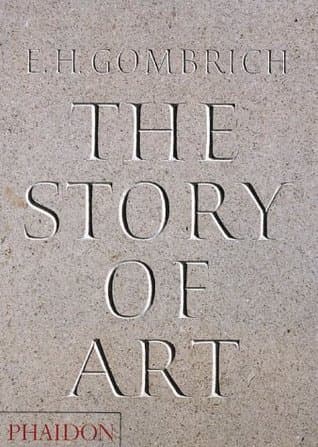
- The Story of Art
E.H. Gombrich
3.9 (311k) average on GoodreadsReferenceExplore thousands of years of human creativity, from ancient cave art to modern masterpieces, with Gombrich's classic account, updated with new insights into art's changing story.
- The New Drawing on the Right Side of the Brain
Betty Edwards
3.9 (297k) average on GoodreadsPsychologyLearn to draw by using the often-ignored visual side of your brain, changing how you see the world.
- Go Ask Alice
Anonymous
3.7 (293k) average on GoodreadsReferenceA teenage girl's diary chronicles her swift decline into 1970s drug culture, from an innocent game to addiction, ending in her tragic death.
- Their Eyes Were Watching God
Zora Neale Hurston
3.9 (266k) average on GoodreadsReferenceIn early 20th-century Florida, Janie Crawford searches for identity, love, and independence, defying social norms to find her voice.
- On Writing: A Memoir of the Craft
Stephen King
4.3 (222k) average on GoodreadsBiography - Holy Bible: King James Version
Anonymous
4.4 (220k) average on GoodreadsReferenceThis foundational text, spanning millennia and continents, combines divine revelation, human history, and lasting wisdom, shaping the spiritual and ethical outlook of Western civilization.


Enjoyed the summary?
A summary gives you the shape of the book. The book itself has the detail, the examples and the voice.
Find Psalms on AmazonAs an Amazon Associate, BookBrief earns from qualifying purchases. How we're funded