
Synopsis
Covers the whole plot, including the ending.
- Difficulty
- Medium
- Pacing
- Fast
- Mood
- Intense, Suspenseful, Gritty, Action-packed
- Read it if
- You enjoy fast-paced, high-stakes political thrillers with a morally ambiguous protagonist and intense action sequences.
- Skip it if
- You prefer nuanced character studies, are sensitive to graphic violence, or dislike stories with a strong focus on covert operations and political maneuvering.
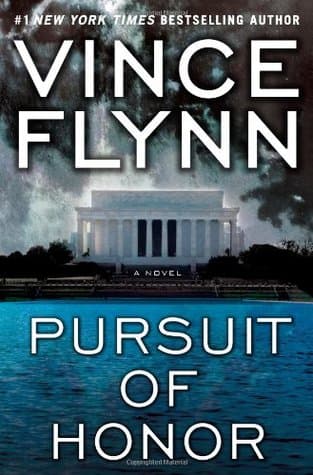
Pursuit of Honor Plot Summary
Covers the whole plot, including the ending.
The Aftermath and New Orders
Six days after a terror attack in Washington D.C. killed 185 people, including government and CIA staff, Mitch Rapp and his protégé, Mike Nash, deal with the aftermath. Al-Qaeda carried out the attack, leaving the nation and its intelligence community in disarray. CIA Director Irene Kennedy and National Security Advisor Marcus Dumond unofficially ask Rapp to hunt down the three remaining al-Qaeda terrorists responsible: Mullah Mansour and his two associates, Hakim and Karim. This mission is outside official channels due to political issues and the need for quick action, putting Rapp and Nash in a legally uncertain spot.
Nash's Fragility and Rapp's Concern
Mike Nash, who saw the horrors of the D.C. attacks firsthand, is struggling under extreme psychological pressure. He shows signs of severe trauma, including emotional outbursts and trouble focusing, which Rapp notices with growing worry. Rapp sees that Nash is not ready for the ruthless operation ahead, so he makes the tough choice to remove him from the active pursuit. Rapp understands the personal cost of such missions and fears Nash's state could risk both the mission and his friend's life. This decision is also partly to protect Nash from the political fallout of a 'black ops' mission.
The European Hunt Begins
Rapp, with his core team including Scott Coleman, starts tracking Mullah Mansour. Their intelligence leads them to Europe, where Mansour is believed to be planning more attacks. The hunt is hard because intelligence is scattered after the D.C. attack, and they must operate very discreetly to avoid international incidents. They follow a complex path of informants, safe houses, and terrorist cells, slowly piecing together Mansour's movements and plans. Rapp fights not only terrorists but also bureaucracy and the cautious approaches of European intelligence agencies.
A Developing Threat in London
As Rapp and his team get closer, they uncover a new plot: Mullah Mansour plans to detonate a dirty bomb in London. The target is a major economic summit with global leaders, including the American President. This discovery makes their mission much more urgent, changing it from a revenge hunt to a race against time to prevent another attack. The dirty bomb, though not nuclear, would cause widespread panic, contamination, and economic chaos, fulfilling Mansour's goal of destabilizing Western powers and spreading terror.
Nash's Desperation and Betrayal
Feeling abandoned and dealing with his trauma, Mike Nash becomes a target for manipulation. A former CIA operative, angry and wanting to expose Rapp's 'extra-legal' operations and discredit the agency, approaches Nash. This operative uses Nash's fragile mental state and his feeling of betrayal by Rapp, convincing him that Rapp's methods are illegal and wrong. Nash, desperate for purpose and validation, and driven by a mistaken sense of justice, gets caught in a conspiracy that leads him to leak classified information, accidentally endangering Rapp's mission and team.
The London Infiltration
With the London summit approaching, Rapp and his team secretly infiltrate the city. They work quickly, using their skills in intelligence gathering, surveillance, and direct action. The team finds key operatives in Mansour's network in London and starts to disrupt their plans. The operation is very dangerous, as Mansour's cells are well-established and loyal. Rapp's goal is not just to stop the bomb but to capture or kill Mansour and his main associates, Hakim and Karim, to prevent future attacks.
Confrontation and Capture
The London operation ends with Rapp's team directly confronting Mansour's operatives as they try to deploy the dirty bomb. A brutal and intense shootout happens in London. Rapp, using his combat skills and strategic thinking, leads the attack. Several terrorists are killed, and important intelligence is found. The dirty bomb is located and disarmed just before it can explode, preventing a disaster. Mansour, however, escapes with Hakim and Karim during the chaos, despite Rapp's relentless chase.
The Hunt Continues to Pakistan
Despite the success in London, Mansour's escape strengthens Rapp's resolve. Intelligence from the London operation, combined with new CIA efforts, indicates that Mansour and his remaining lieutenants, Hakim and Karim, fled to Pakistan's tribal regions. This moves the fight to a much more dangerous and politically sensitive area. Rapp and his team prepare for a secret operation in a region known for lawlessness and a strong al-Qaeda presence, knowing this will be the final confrontation with the person behind the D.C. attacks.
Nash's Redemption and Sacrifice
Mike Nash, realizing the seriousness of his actions and the danger he put Rapp in, tries to make amends. He attempts to warn Rapp about the rogue operative and the leaked information. However, his efforts are cut short. The rogue operative, fearing exposure, kills Nash. Nash dies in a violent confrontation, his death a sad reminder of war's psychological cost and the terrible results of betrayal, even when caused by trauma and manipulation. His sacrifice, though late, is a final act of loyalty to Rapp and his country.
Final Confrontation in Pakistan
Rapp and his team, deep in the Pakistani tribal areas, finally corner Mullah Mansour, Hakim, and Karim. The fight is brutal. Rapp, driven by a desire for justice for the D.C. attack victims and Nash's death, fights Mansour personally. After a fierce struggle, Rapp kills Mansour and his remaining associates. This ends the immediate threat from this al-Qaeda cell and brings some closure for the D.C. tragedy, though the cost has been immense.
Political Fallout and Rapp's Future
After Mansour's elimination, Rapp returns to Washington D.C. to face the inevitable political uproar. His 'black ops' methods and the deaths of Mike Nash and the rogue operative draw intense scrutiny from politicians and the media. Despite the successes, Rapp's actions are seen as controversial, and he faces demands for accountability. However, with the support of Irene Kennedy and Marcus Dumond, Rapp navigates the political scene, understanding that his work, though morally ambiguous to some, is vital for national security. He remains committed to his role, ready for the next threat.
Principal Figures
Mitch Rapp
Protagonist
Elite counterterrorism operative, driven by a fierce sense of justice and duty.
Mitch Rapp is the CIA's most effective and ruthless counterterrorism operative. Haunted by personal loss and driven by an unyielding desire to protect his country, Rapp operates outside conventional boundaries, often employing brutal tactics to neutralize threats. He possesses exceptional combat skills, strategic brilliance, and an uncompromising moral code that prioritizes national security above all else. His methods frequently put him at odds with politicians and bureaucrats, but his track record of success makes him indispensable. He is fiercely loyal to his team and those he trusts.
Relationships: Mike Nash (Mentor and protégé, deep professional and personal bond); Irene Kennedy (Director of CIA, Rapp's primary handler and staunch supporter); Marcus Dumond (National Security Advisor, supports Rapp's unconventional methods); Scott Coleman (Leader of Rapp's black ops team, trusted colleague and friend)
Mike Nash
Supporting/Tragic Figure
Rapp's protégé, traumatized by the D.C. attacks and manipulated by external forces.
Mike Nash is a talented but less experienced counterterrorism operative, serving as Mitch Rapp's protégé. He is deeply affected by the D.C. terrorist attacks, having witnessed firsthand the horrific violence and its aftermath. This trauma leaves him emotionally vulnerable and susceptible to manipulation. Despite his loyalty to Rapp, his psychological fragility and a misguided sense of justice lead him down a path of betrayal, ultimately resulting in his tragic death. He represents the immense psychological toll of counterterrorism work.
Relationships: Mitch Rapp (Mentor and protégé, deep professional and personal bond); Rogue Operative (Manipulator, exploits Nash's vulnerability)
Irene Kennedy
Supporting
Director of the CIA, Rapp's steadfast ally and political protector.
Irene Kennedy is the astute and politically savvy Director of the CIA. She is one of Mitch Rapp's most trusted allies, understanding the necessity of his brutal methods for national security, even when they operate outside legal strictures. Kennedy frequently acts as Rapp's shield against political backlash, navigating the treacherous waters of Washington D.C. to ensure he has the resources and freedom to operate. She possesses a keen intellect and a strong moral compass, always prioritizing the safety of the American people.
Relationships: Mitch Rapp (Director and operative, professional and deeply trusting relationship); Marcus Dumond (Colleague, collaborates on national security matters)
Mullah Mansour
Antagonist
Ruthless al-Qaeda leader and mastermind behind the D.C. attacks and London dirty bomb plot.
Mullah Mansour is a fanatical and highly intelligent al-Qaeda leader, the primary antagonist of the novel. He orchestrates the devastating D.C. terrorist attacks and subsequently plans a dirty bomb attack in London. Mansour is driven by an extreme ideology and a desire to inflict maximum damage and chaos upon Western nations. He is cunning, elusive, and commands a loyal network of operatives. His ruthlessness makes him a formidable adversary for Mitch Rapp, representing the existential threat of global terrorism.
Relationships: Mitch Rapp (Arch-nemesis, primary target of Rapp's pursuit); Hakim (Loyal lieutenant)
Marcus Dumond
Supporting
National Security Advisor, a pragmatic leader who supports Rapp's covert operations.
Marcus Dumond is the National Security Advisor, a key figure in the U.S. government's response to the terrorist attacks. He is a pragmatic and decisive leader who recognizes the need for unconventional tactics in the face of extreme threats. Like Irene Kennedy, he understands Rapp's value and provides him with unofficial authorization and support for his black operations, often shielding him from political scrutiny. Dumond is focused on results and national security, willing to make difficult decisions for the greater good.
Relationships: Mitch Rapp (Supports Rapp's operations, high-level authority); Irene Kennedy (Colleague, collaborates on national security matters)
Scott Coleman
Supporting
Leader of Rapp's black ops team, a seasoned and loyal operative.
Scott Coleman is a highly experienced and effective black ops operative, leading Mitch Rapp's elite team. He is a loyal and dependable colleague, providing invaluable support and tactical expertise during dangerous missions. Coleman is pragmatic, calm under pressure, and shares Rapp's dedication to the mission. He is a master of various combat and infiltration techniques, making him an essential asset in the pursuit of terrorists. His presence offers a steadying force within the high-stakes environment.
Relationships: Mitch Rapp (Trusted colleague and friend, team leader)
Hakim
Antagonist
Mansour's dedicated and ruthless lieutenant.
Hakim is one of Mullah Mansour's most trusted and fanatically loyal lieutenants. He is a ruthless operative, deeply committed to Mansour's extremist ideology and plays a significant role in executing the terror plots. Hakim is dangerous and skilled, making him a formidable opponent in combat. He remains by Mansour's side through the London plot and subsequent escape, embodying the unwavering resolve of the terrorist network. He is ultimately eliminated by Rapp in Pakistan.
Relationships: Mullah Mansour (Loyal lieutenant and fellow terrorist)
Karim
Antagonist
Another of Mansour's key operatives.
Karim is another significant operative within Mullah Mansour's al-Qaeda cell, involved in the planning and execution of the terrorist attacks. While less prominent than Hakim, he is equally dedicated and dangerous. He represents another layer of Mansour's network, contributing to the operational capabilities of the terrorist group. Karim is also ultimately eliminated during Rapp's final pursuit in Pakistan.
Relationships: Mullah Mansour (Loyal operative and fellow terrorist)
Rogue Operative
Mentioned/Minor Antagonist
Disgruntled former CIA agent who manipulates Mike Nash.
This unnamed rogue operative is a former CIA agent harboring resentment against the agency and its 'extra-legal' operations, particularly those involving Mitch Rapp. He actively seeks to expose and discredit Rapp, believing his methods are immoral and unconstitutional. He preys on Mike Nash's vulnerability and trauma, manipulating him into leaking classified information. His actions inadvertently endanger Rapp's mission and ultimately lead to Nash's death, highlighting the internal threats and political complexities Rapp faces.
Relationships: Mike Nash (Manipulates Nash for his own agenda); Mitch Rapp (Antagonistic, seeks to expose Rapp)
Themes & Insights
The Morality of Counterterrorism
The book explores the ethical challenges in fighting terrorism. Mitch Rapp often works in a morally gray area, using methods that are illegal by normal standards but seen as necessary for national security. The D.C. attack and the London dirty bomb plot show the extreme nature of the threat, forcing people like Irene Kennedy and Marcus Dumond to approve actions they would not normally. Mike Nash's internal struggle and betrayal come from his inability to accept Rapp's harsh effectiveness with his own morals, showing the deep psychological cost of this moral tightrope walk. The story suggests that 'honor' here is often found not in following strict laws, but in being willing to do what is needed to protect innocent lives, regardless of personal or political cost.
“He didn't care about the rules. He cared about saving lives.”
Trauma and Its Consequences
The psychological effects of violence and war are a major theme, mainly through Mike Nash's story. Nash's experience of the D.C. attacks leaves him deeply traumatized, hurting his judgment and making him easy to manipulate. His emotional weakness and inability to handle the horrors he saw lead him to make terrible choices, ultimately causing his death. This theme shows that even highly trained operatives are not immune to the psychological damage of their work. Rapp, while stronger, also carries the weight of past traumas, influencing his protective stance toward Nash and his relentless pursuit of justice.
“The horrors he had witnessed had broken something inside him.”
The Nature of Loyalty and Betrayal
Loyalty is a core part of Rapp's world, both within his team and toward his country. Rapp's strong loyalty to his mission and trusted colleagues like Scott Coleman contrasts sharply with Mike Nash's tragic betrayal. Nash's actions, though caused by trauma and manipulation rather than malice, show how easily loyalty can break under extreme pressure and feelings of abandonment. The 'rogue operative' further demonstrates betrayal, driven by personal resentment rather than national interest. This theme highlights how fragile trust is and the devastating results when it is broken, especially in high-stakes intelligence operations.
“In this line of work, trust was everything. And sometimes, it was a luxury you couldn't afford.”
Political Interference vs. Operational Necessity
A constant tension in the book is the conflict between Washington D.C.'s political bureaucracy and the practical needs of counterterrorism. Politicians, often focused on public image and legal concerns, frequently stop Rapp from acting quickly. Irene Kennedy and Marcus Dumond act as go-betweens, understanding the need for Rapp's 'black ops' but constantly fighting scrutiny from Congress and media sensationalism. The D.C. attack highlights the disconnect: while politicians debate, Rapp is out neutralizing immediate threats. This theme criticizes the often slow nature of government during a crisis, arguing for decisive, even if unconventional, action.
“While they debated the fine print, the terrorists were planning their next move.”
Plot Devices & Literary Techniques
Ticking Clock
Creates intense urgency and heightens the stakes of the mission.
The discovery of Mullah Mansour's dirty bomb plot in London, specifically targeting an upcoming economic summit, introduces a critical ticking clock. This device immediately elevates the tension, transforming the hunt for justice into a race against time to prevent another catastrophic attack. It forces Rapp and his team to operate with extreme speed and precision, making every decision and action carry immense weight. The impending detonation deadline significantly raises the stakes, impacting tactical choices and character motivations throughout the London sequence.
Red Herring / Misdirection
Initially points to a simpler revenge mission, masking a larger, more immediate threat.
Initially, the plot appears to be a straightforward hunt for the perpetrators of the D.C. attacks, a mission of retribution. However, this focus on past events serves as a subtle misdirection, concealing the immediate and greater danger of the planned London dirty bomb. The narrative establishes Rapp's pursuit of Mansour as a 'clean-up' operation, only to reveal a far more urgent, active threat. This device builds suspense by shifting reader expectations and demonstrating the constant, evolving nature of terrorist threats.
The Fall of a Protégé
Uses a trusted character's downfall to explore trauma and highlight the personal costs of the fight.
The tragic trajectory of Mike Nash, Rapp's protégé, serves as a significant plot device. His severe trauma and subsequent manipulation highlight the immense psychological toll of counterterrorism work and the vulnerability even skilled operatives face. Nash's downfall and eventual death are not just a personal tragedy but also a catalyst for Rapp's renewed determination and a stark reminder of the personal sacrifices involved. This device deepens the emotional stakes and explores the human cost behind the high-octane action, preventing the narrative from becoming solely about external threats.
The Black Operation Mandate
Justifies Rapp's unconventional and often illegal methods.
The 'black operation' mandate, unofficially given to Rapp by Irene Kennedy and Marcus Dumond, is a crucial plot device. It allows Rapp to operate outside legal and political constraints, providing the narrative justification for his brutal and effective methods. This device highlights the tension between conventional law enforcement and the exigencies of national security. It also creates a constant undercurrent of political risk, as Rapp's successes, while vital, always leave him vulnerable to exposure and condemnation, adding another layer of conflict beyond the immediate terrorist threat.
Pursuit of Honor Quotes
“There are no rules in war, only outcomes.”
“The greatest weapon against terror is resolve.”
“Sometimes you have to do bad things to stop worse things.”
“Fear is a powerful motivator, but it can also blind you.”
“Trust is a luxury few in their world could afford.”
“The enemy always thinks they're smarter than they are.”
“It wasn't about revenge; it was about preventing the next attack.”
“Information, properly wielded, was more potent than any bullet.”
“The world was a dangerous place, and someone had to stand in the gap.”
“Loyalty was earned, not given, especially in their line of work.”
“The line between patriot and zealot was often blurred.”
“He didn't seek trouble, but he was always ready for it.”
“Sacrifice was not an option; it was a prerequisite.”
Quiz
10 questions on the plot and the characters. Each answer comes with a short explanation.
Question 1
How many people were killed in the initial series of explosions that devastated Washington, D.C.?
- 100
- 185
- 250
- 50
Show answer
B. 185 The text explicitly states that the explosions killed 185 people, including public officials and CIA employees.
Question 2
What government centers were targeted in the Washington, D.C. explosions?
- The Pentagon and FBI Headquarters
- The White House and Capitol Building
- The National Counterterrorism Center
- CIA Headquarters and the Department of Defense
Show answer
C. The National Counterterrorism Center The text states the explosions 'targeting the National Counterterrorism Center and killing 185 people'.
Question 3
Who is Mitch Rapp's trusted team member mentioned in the synopsis?
- Scott Coleman
- Mike Nash
- Marcus Dumond
- Stan Hurley
Show answer
B. Mike Nash The synopsis mentions 'Mitch Rapp and his trusted team member, Mike Nash'.
Question 4
What is Mitch Rapp's primary unofficial order after the initial shock of the catastrophe?
- To provide security for public officials
- To rebuild the National Counterterrorism Center
- To find the three al Qaeda terrorists still at large
- To conduct an internal investigation of the CIA
Show answer
C. To find the three al Qaeda terrorists still at large The text states, 'Meanwhile, three of the al Qaeda terrorists are still at large, and Rapp has been unofficially ordered to find them by any means necessary.'
Question 5
What is the primary conflict Mitch Rapp faces with Washington officials?
- Disagreement over budget allocations for counterterrorism efforts
- Debate over making friends or foes of agents who took extreme measures for national security
- Arguments about the necessity of international alliances
- Concerns about Rapp's personal vendetta against al Qaeda
Show answer
B. Debate over making friends or foes of agents who took extreme measures for national security The synopsis highlights 'key Washington officials are up in arms over whether to make friends or foes of the agents who stepped between the enemy's bullets'.
Question 6
What specific challenge is Mike Nash experiencing that prompts Rapp to make a critical decision?
- He is questioning his loyalty to Mitch Rapp.
- He is cracking under the pressure of the mission and memories of the attack's horrors.
- He is planning to resign from the counterterrorism team.
- He is secretly communicating with the al Qaeda terrorists.
Show answer
B. He is cracking under the pressure of the mission and memories of the attack's horrors. The text states, 'When he sees Nash cracking under the pressure of the mission and the memories of the horrors he witnessed during the terrorist attack, he makes a call'.
Question 7
What is the overarching theme or 'line' Rapp is described as walking, according to The Salt Lake Tribune quote?
- The line between personal revenge and justice.
- The line between international diplomacy and isolationism.
- The fine line between the moral high ground and violence.
- The line between obeying orders and acting independently.
Show answer
C. The fine line between the moral high ground and violence. The synopsis explicitly quotes The Salt Lake Tribune describing Rapp as 'unafraid 'to walk the fine line between the moral high ground and violence''.
Question 8
How many days after the Washington D.C. explosions does the action of the book begin?
- Immediately
- Three days
- Six days
- Two weeks
Show answer
C. Six days The very first sentence states, 'The action begins six days after a series of explosions devastated Washington, D.C.'
Question 9
What is the core reason Rapp often finds himself at odds with politicians?
- His desire for personal glory over national security.
- His inability to follow protocol and chain of command.
- His need to illustrate the realities of national security to politicians with an obstructed view.
- His constant attempts to undermine their authority.
Show answer
C. His need to illustrate the realities of national security to politicians with an obstructed view. The text states, 'Rapp finds himself in the frustrating position of having to illustrate the realities of national security to politicians whose view from the sidelines is inevitably obstructed.'
Question 10
What is the ultimate goal Mitch Rapp hopes to achieve by making a call regarding Mike Nash's condition?
- To get Nash court-martialed for his actions.
- To save his friend, appease Capitol Hill, and get closer to the enemy.
- To force the politicians to take a more aggressive stance.
- To secure additional funding for his counterterrorism unit.
Show answer
B. To save his friend, appease Capitol Hill, and get closer to the enemy. Rapp 'makes a call he hopes will save his friend, assuage the naysayers on Capitol Hill, and get him one step closer to the enemy before it's too late.'
Pursuit of Honor FAQ
What is the inciting incident that kicks off the events in 'Pursuit of Honor'?
The story begins six days after a devastating series of explosions rocked Washington, D.C., specifically targeting the National Counterterrorism Center. This attack resulted in the deaths of 185 people, including numerous public officials and CIA employees, setting the stage for Mitch Rapp's extreme measures.
Who are the primary protagonists tasked with responding to the D.C. terrorist attack?
The main protagonists are elite counterterrorism operative Mitch Rapp and his trusted team member, Mike Nash. They are unofficially ordered to track down the remaining al Qaeda terrorists responsible for the D.C. bombings.
What is the central conflict Rapp faces with Washington officials early in the book?
Rapp faces a frustrating conflict with Washington officials who are debating whether to support or condemn the agents, like Rapp and Nash, who acted outside legal boundaries to protect lives during the attack. He must educate them on the realities of national security.
How many al Qaeda terrorists are still at large and being pursued by Rapp?
Three of the al Qaeda terrorists responsible for the devastating attacks in Washington, D.C., are still at large. Rapp is unofficially tasked with finding them 'by any means necessary'.
What difficult decision does Mitch Rapp make regarding Mike Nash?
Mitch Rapp observes Mike Nash cracking under the intense pressure of the mission and the traumatic memories of the attack. Rapp makes a difficult call, hoping to save his friend, appease critics on Capitol Hill, and advance the mission against the terrorists.
What specific target was hit in the Washington D.C. explosions?
The explosions specifically targeted the National Counterterrorism Center, a crucial hub for intelligence and anti-terrorism operations. This choice of target underscores the terrorists' intent to cripple America's ability to respond.
How does the book's title, 'Pursuit of Honor,' connect to Mitch Rapp's actions?
The title reflects Rapp's unwavering commitment to protecting his country and upholding justice, even when it means operating in morally ambiguous territory. He walks 'the fine line between the moral high ground and violence' for the sake of freedom and national safety, embodying his unique code of honor.
What is the significance of the 185 casualties in the D.C. attack?
The high number of casualties, including public officials and CIA employees, highlights the extreme violence and strategic impact of the attack. It emphasizes the scale of the threat and justifies the 'extreme measures' taken by Rapp and his team.
What specific pressures contribute to Mike Nash's breakdown?
Mike Nash is cracking under the immense pressure of the ongoing mission to hunt down the terrorists, compounded by the vivid and traumatic memories of the horrors he personally witnessed during the D.C. terrorist attack. This combination pushes him to his limit.
How does Mitch Rapp's experience prepare him for the psychological toll of the mission?
Rapp's extensive career has made him intimately familiar with the 'personal, physical, and emotional sacrifices required of the job.' This deep understanding allows him to recognize the signs of distress in Nash and anticipate the psychological challenges inherent in counterterrorism operations.
What does Rapp's decision regarding Nash reveal about his leadership style and priorities?
Rapp's decision to intervene with Nash demonstrates his pragmatic and empathetic leadership. He prioritizes both the well-being of his team member and the success of the mission, understanding that a compromised operative is a liability. It shows he values his team beyond just their operational capacity.
How does the book explore the concept of 'extreme measures' in counterterrorism?
'Pursuit of Honor' explores 'extreme measures' by showing Rapp and Nash operating outside legal frameworks to stop terrorists, which is then debated by politicians. It questions where the line should be drawn between effective action and adherence to law in national security crises.
What moral dilemma does Rapp frequently face with politicians?
Rapp constantly faces the moral dilemma of having to justify his often brutal and extra-legal methods to politicians who view national security from a detached, legalistic perspective. He struggles to make them understand the 'realities' of dealing with ruthless enemies.
How does the novel portray the relationship between national security and civil liberties?
The novel portrays a tension where national security, as embodied by Rapp's actions, often supersedes civil liberties or legal protocols in crisis. The debate among Washington officials highlights the friction between the need for decisive action and the preservation of democratic principles.
What is the broader commentary the book makes about the role of a covert operative like Mitch Rapp in a democracy?
The book suggests that covert operatives like Rapp are necessary but often unappreciated instruments of national security, operating in the shadows to protect a system that frequently scrutinizes their methods. It highlights the thankless and morally complex nature of their work.
How does the narrative emphasize the urgency of finding the remaining terrorists?
The narrative emphasizes urgency by stating Rapp is 'unofficially ordered to find them by any means necessary' and that he must act 'before it's too late.' This highlights the immediate threat posed by the at-large terrorists and the potential for further attacks.
What role do 'naysayers on Capitol Hill' play in Rapp's mission?
The 'naysayers on Capitol Hill' represent the political opposition and bureaucracy that complicate Rapp's mission. They question the legality and ethics of his methods, forcing Rapp to navigate political obstacles in addition to hunting terrorists.
How does the book distinguish Rapp's perspective from that of the politicians?
The book distinguishes Rapp's perspective by showing him as someone who understands the 'realities of national security' through direct experience, contrasting with politicians whose 'view from the sidelines is inevitably obstructed.' Rapp operates in the grim practicalities of combat, while politicians deal in legal and ethical frameworks.
About the author

Vince Flynn was an American author known for his political thriller novels. His notable works include "American Assassin," "Transfer of Power," "Memorial Day," "The Third Option," "Pursuit of Honor," and "Protect and Defend," which often feature themes of espionage and counterterrorism. Flynn's writing has garnered a dedicated readership and has contributed significantly to the genre of contemporary thrillers.
Similar books
- American Assassin
Vince Flynn
4.2 (75k) average on GoodreadsThrillerAnother Mitch Rapp novel, offering more insight into his origins and similar action-thriller style.
- The Gray Man
Mark Greaney
4.2 (52k) average on GoodreadsFictionFeatures a highly skilled, morally ambiguous operative on a global hunt, with similar pacing and action.
- Angels & Demons
Dan Brown
3.9 (2.7M) average on GoodreadsThrillerA Harvard symbologist races through Rome's ancient sites, deciphering cryptic clues to unmask the Illuminati and stop a vengeful plot to destroy the Vatican with a stolen antimatter weapon.
- Gone Girl
Gillian Flynn
4.1 (2.3M) average on GoodreadsThrillerA wife's sudden disappearance on her fifth anniversary reveals a web of lies and psychological warfare, exposing the secrets within a seemingly perfect marriage.
- The Girl on the Train
Paula Hawkins
3.9 (2.1M) average on GoodreadsThrillerA woman’s fascination with a seemingly perfect couple she watches from her daily train commute leads her into a dark investigation when she witnesses something that shatters their idyllic image.
- The Da Vinci Code
Dan Brown
3.9 (1.9M) average on GoodreadsThrillerA symbologist and a cryptologist race through European landmarks, deciphering ancient codes and uncovering a conspiracy that could rewrite the foundations of Christianity.





Enjoyed the summary?
A summary gives you the shape of the book. The book itself has the detail, the examples and the voice.
Find Pursuit of Honor on AmazonAs an Amazon Associate, BookBrief earns from qualifying purchases. How we're funded