Estimated read time: 10 min read
One Sentence Summary
"Red Storm Rising" is a techno-thriller novel about a hypothetical World War III between NATO and the Soviet Union, focusing on military strategy and technology.
Table of Contents
Introduction
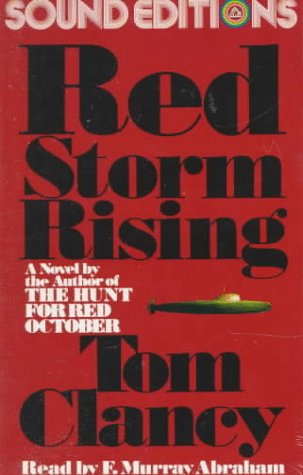
Imagine waking up to the morning news: NATO and the Warsaw Pact are at war, and the fate of the world hangs in the balance. No, this isn’t some lost Cold War headline—it’s the pulse-pounding premise of Tom Clancy’s Red Storm Rising. Published in 1986, this techno-thriller rocketed Clancy to international fame, dazzling readers with a gripping what-if scenario: What if the Cold War went hot, but without nuclear weapons? This is military fiction so vivid, you’ll be ducking for cover during air raids and peering nervously at the sky for MiGs.
Red Storm Rising holds a special place in Cold War literature. It’s a rare beast—a novel beloved by military strategists and casual readers alike, crammed with technical detail but written with such flair and drama that even non-military buffs find themselves swept along. Set against the backdrop of 1980s superpower tensions, Clancy’s thriller is a masterclass in suspense, strategy, and the terrifying plausibility of global conflict.
Historical Context
Set in the mid-1980s, Red Storm Rising drops its readers into a world teetering on the edge. The Cold War is at its frostiest, with the United States and Soviet Union locked in an arms race, their fingers never far from the nuclear button. But Clancy’s genius twist? This war is fought with conventional weapons—jets, tanks, submarines, and soldiers—because both sides know that once nuclear weapons are used, nobody wins.
The story’s inspiration is rooted in real-world anxieties. In the early 1980s, the Soviet Union faced internal economic struggles and external pressure from the West. NATO military exercises, like Able Archer 83, genuinely rattled Soviet leaders, who worried about surprise attacks. Meanwhile, technological advances—think stealth fighters and satellite surveillance—were changing warfare’s rules.
Notable real-life inspirations include:
- The Soviet invasion of Afghanistan, which exposed weaknesses in the USSR’s military machine.
- Escalating arms build-up, especially in Europe.
- The ever-present specter of nuclear annihilation.
Clancy leverages all this, blending fact with fiction until the line disappears. Red Storm Rising isn’t just a novel—it’s a plausible alternate history, a war game come alive.
Brief Synopsis
Plot Overview
At its core, Red Storm Rising is a fast-paced, globe-spanning military thriller that imagines World War III erupting between NATO and the Warsaw Pact forces. After a terrorist attack devastates a Soviet oil refinery, the USSR faces a crippling energy crisis. Desperate for resources, Soviet leaders decide to seize Western Europe by force, betting on a swift, conventional blitzkrieg before the West can react.
The narrative follows multiple perspectives—from American and Soviet military officers to intelligence analysts and submarine crews—offering a panoramic view of the conflict. As the Red Army pushes west, NATO rallies to defend, leading to epic land, sea, and air battles across Europe and the North Atlantic.
Setting
Clancy’s story unfolds across a meticulously detailed canvas:
- Europe: From the German plains to the icy fjords of Norway, battle lines crisscross NATO’s frontiers.
- North Atlantic: Submarines and carrier groups wage a deadly chess match beneath the waves.
- Moscow and Washington: War rooms pulse with tension, as leaders gamble with millions of lives.
The atmosphere is taut, electric, and unrelenting. Clancy’s Europe is a land of rolling tanks, frantic air sorties, and cities on the brink. The North Atlantic is a storm-tossed arena where every blip on sonar could mean death.
Main Characters
Here’s a handy table to keep track of the novel’s key players:
| Name | Role | Key Traits | Importance to Plot |
|---|---|---|---|
| Robert Toland | U.S. Naval Intelligence Analyst | Analytical, level-headed, resourceful | Uncovers Soviet plans; drives intelligence subplot |
| Alekseyev | Soviet General | Pragmatic, strategic, conflicted | Leads Soviet ground forces; embodies Soviet military perspective |
| Edwards | U.S. Air Force Officer | Courageous, adaptable, loyal | Key participant in Icelandic operations |
| Mikhail Sergetov | Soviet Politburo Member | Loyal, insightful, cautious | Political maneuvering shapes Soviet decisions |
| Morris | U.S. Navy Commander | Decisive, experienced, resilient | Leads anti-submarine operations in Atlantic |
| Tomasov | Soviet Submarine Captain | Clever, determined, patriotic | Major player in naval warfare |
| O'Malley | U.S. Navy Pilot | Bold, skillful, quick-witted | Participates in crucial air operations |
| Major Valentina Golitzen | Soviet KGB Agent | Cunning, ruthless, loyal | Orchestrates terrorist attack setting the plot in motion |
| Patrick Flynn | U.S. Air Force NCO | Resourceful, brave, inventive | Supports Edwards during Iceland campaign |
With so many viewpoints, Clancy crafts a “war of perspectives,” showing how every decision ripples outward.
Plot Summary
The Spark: Terror and Oil
The Soviet Union is desperate. A terrorist attack—engineered by their own KGB—obliterates a massive oil refinery, plunging the USSR into crisis. Without fuel, their military and economy will collapse. The Politburo decides: seize the oil-rich Persian Gulf, but first, neutralize NATO in Europe to prevent Western intervention.
The Red Storm Breaks
Soviet forces unleash a stunning conventional assault. Armored columns surge across the German border, paratroopers seize key airfields, and Spetsnaz commandos sow chaos behind NATO lines. The West is caught off guard, scrambling to respond. Epic tank battles rage across Germany, while air forces clash for supremacy in the skies.
The Battle for the North Atlantic
Control of the Atlantic sea lanes becomes crucial. Soviet submarines and surface fleets attempt to sever NATO’s supply lines, while U.S. carrier groups and attack submarines fight back. The undersea war is intense—silent, deadly, and suspenseful.
Iceland: The Unsung Battlefield
Iceland, a strategic chokepoint in the Atlantic, becomes a battleground. Soviet paratroopers seize the island, threatening to cut off NATO. A ragtag U.S. force, led by Edwards and Flynn, launches a desperate guerrilla campaign to sabotage the occupation and pave the way for liberation.
The Tides Turn
As the war grinds on, both sides suffer staggering losses. NATO begins to regain its footing, leveraging superior technology and intelligence (thanks in part to Toland’s insights). A daring counterattack in Norway, audacious submarine actions, and mounting Soviet casualties shift the momentum.
Endgame: War’s Bitter Lessons
With their offensive stalling and the West rallying, Soviet leadership faces internal dissent. The risk of nuclear escalation looms, but rational minds prevail—barely. The novel ends with open questions: What has been gained? What has been lost? And at what cost?
Themes and Motifs
Red Storm Rising bristles with big ideas and recurring motifs:
- The Fragility of Peace: How quickly an uneasy peace can unravel when nations are desperate or misinformed.
- Technology’s Double-Edged Sword: Advances like stealth aircraft and satellite surveillance can tip battles—but also breed overconfidence.
- Human Fallibility: Even the best-laid plans go awry, and even the most powerful leaders are vulnerable to mistakes and misjudgments.
- The Horror and Banality of War: Clancy alternates high-octane action with quiet, personal moments—fear, boredom, heroism, and heartbreak.
- East vs. West: The novel humanizes both sides, showing Soviet soldiers and leaders as complex, conflicted, and sometimes sympathetic.
A recurring motif is the “red storm” itself—a metaphor for the unstoppable, unpredictable chaos of war.
Literary Techniques and Style
Tom Clancy’s style is instantly recognizable:
- Multiple Perspectives: By hopping between American and Soviet viewpoints, Clancy creates a panoramic narrative, capturing the war’s complexity.
- Technical Realism: Clancy’s research is legendary. From submarine sonar to tank tactics, every detail feels authentic, immersing readers in the machinery of modern combat.
- Suspenseful Pacing: Action scenes are tightly written, with cliffhangers and rapid scene shifts keeping adrenaline high.
- Straightforward Prose: Clancy’s language is clear, direct, and unpretentious—perfect for conveying both the big strategic picture and the small human dramas.
- Symbolism and Irony: The “red storm” is both literal (the Soviet offensive) and symbolic (the uncontrollable nature of war). Clancy also uses irony to underscore the unpredictability and futility of conflict.
Author's Background
Before he became the godfather of the techno-thriller, Tom Clancy was an insurance broker with a passion for military history and hardware. His 1984 debut, The Hunt for Red October, stunned both readers and military experts with its technical accuracy and gripping storytelling.
Clancy’s influences include:
- Cold War geopolitics and military technology.
- Classic military fiction and real-world war games.
- Conversations with military insiders—Clancy famously gleaned details from unclassified sources, piecing together highly plausible scenarios.
His impact is enormous:
- Popularized the techno-thriller genre.
- Inspired generations of writers, filmmakers, and even real-world military planners.
- Brought complex military and geopolitical issues into mainstream fiction.
Red Storm Rising stands as one of Clancy’s most ambitious and influential works—praised for its realism, its scope, and its ability to turn global conflict into page-turning drama.
Key Takeaways
- War is Unpredictable: Even the best technology and planning can’t guarantee victory.
- Humanity on Both Sides: Soldiers and leaders, East and West, are driven by fear, hope, mistakes, and moments of heroism.
- Peace is Fragile: Small events (like an act of terror) can spiral into catastrophe.
- Technology is a Game-Changer: But it’s no substitute for human courage and adaptability.
- Leadership Matters: Individual decisions—good and bad—shape the course of history.
Reader's Takeaway
Why does Red Storm Rising still matter? For one, it’s a wake-up call—reminding us how close the world once came to disaster, and how easily complex systems can unravel. It’s also a deeply human story: amid the thunder of tanks and the roar of jets, ordinary people make impossible choices, endure hardship, and find moments of grace.
For college students, the book is a crash course in Cold War history, military strategy, and the human cost of conflict. For lecturers, it’s a gold mine for discussion—about ethics, technology, leadership, and the enduring relevance of war literature.
Conclusion
Red Storm Rising is more than a military thriller—it’s a mirror held up to the anxieties and ambitions of its era, and a timeless meditation on war and peace. Tom Clancy crafts a world at war that feels terrifyingly possible, drawing readers into the cockpit, the command center, and the trenches. Whether you’re a history buff, a strategy game fanatic, or just someone looking for a gripping read, this novel delivers action, insight, and plenty to think about long after the last page.
So, next time you hear thunder on the horizon, remember: the “red storm” can rise anywhere, anytime—and the real challenge is finding the wisdom to weather it. Dive into Clancy’s world, and prepare for a literary battle you’ll never forget.
Red Storm Rising FAQ
What is 'Red Storm Rising' about?
'Red Storm Rising' is a military techno-thriller novel by Tom Clancy that depicts a fictional World War III scenario between NATO and the Warsaw Pact, primarily focusing on the conflict between the United States and the Soviet Union in the late 20th century.
Is 'Red Storm Rising' part of a series?
No, 'Red Storm Rising' is a standalone novel and is not part of Tom Clancy's Jack Ryan series, though it shares a similar style and thematic focus on military technology and strategy.
Who are the main characters in 'Red Storm Rising'?
The novel features a large ensemble cast, but some key characters include Lieutenant Commander Michael Edwards, Major Robert Toland, and Soviet General Alekseyev, among others.
What is the primary setting of the novel?
'Red Storm Rising' is set across several locations including Western Europe, the North Atlantic, and the Soviet Union, reflecting the global scope of the conflict depicted in the book.
How realistic is the military technology described in 'Red Storm Rising'?
Tom Clancy is known for his accurate and detailed depictions of military technology and tactics, and 'Red Storm Rising' is praised for its realism, based on extensive research and consultation with military experts.
When was 'Red Storm Rising' published?
'Red Storm Rising' was first published in 1986.
Did Tom Clancy write 'Red Storm Rising' alone?
No, Tom Clancy co-authored 'Red Storm Rising' with Larry Bond, who contributed significant expertise in wargaming and military tactics.
Is 'Red Storm Rising' suitable for readers new to military fiction?
Yes, while the book contains detailed military terminology and strategy, it's accessible to new readers and offers a compelling, fast-paced narrative.
Has 'Red Storm Rising' been adapted into other media?
'Red Storm Rising' inspired a popular 1988 computer game by MicroProse, but there has not been a major film or television adaptation of the novel.