
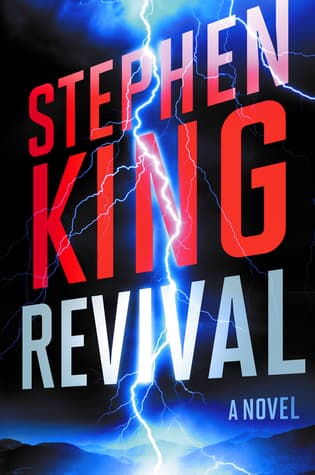
Synopsis
Covers the whole plot, including the ending.
- Difficulty
- Medium
- Pacing
- Variable
- Mood
- Dark, Existential, Unsettling, Melancholy, Despairing
- Read it if
- You want a dark, philosophical horror story that explores themes of faith, addiction, and the terrifying unknown beyond death, with a slow-burn build-up to a truly unsettling conclusion.
- Skip it if
- You prefer your horror with clear-cut villains and heroes, or if you're looking for a hopeful or redemptive ending. This book is bleak and offers no comfort.
Revival Plot Summary
Covers the whole plot, including the ending.
The Arrival of Reverend Jacobs
In 1962, six-year-old Jamie Morton, living in Harlow, Maine, meets Charles Jacobs, the new Methodist minister. Jacobs is charming, handsome, and quickly liked by the town. He brings energy to the church, and his wife, Patsy, is also admired. Jamie feels a special connection to Jacobs because they both like electricity. Jacobs, an amateur inventor, shows Jamie simple electrical experiments, building a strong bond. Jamie's family, especially his mother and older sister Claire, are also interested in the Reverend. Jacobs' presence influences the peaceful, small-town life, bringing wonder and hope to the community through his sermons and involvement.
Tragedy and a Blasphemous Farewell
Tragedy strikes the Jacobs family when Patsy and their young son, Morrie, die in a car accident caused by a drunk driver. The town is devastated. At their funeral, Reverend Jacobs gives a shocking 'Terrible Sermon,' rejecting God, calling religion a lie, and cursing heaven. His outburst upsets the whole congregation and town. Despite Jamie's mother trying to help, Jacobs is forced to leave Harlow in shame, his once-promising future as a minister gone. Jamie, deeply affected by losing his friend and the sudden departure of the minister, feels empty and confused.
Jamie's Drifting Years and Reconnection
Years pass, and Jamie Morton's life becomes difficult. He becomes a professional musician, playing guitar in bar bands, traveling across the country. By the mid-1980s, he has a severe heroin addiction, his life out of control. While performing in a small Colorado town, Jamie sees a poster for 'Silent Charles,' a stage magician making dazzling 'portraits in lightning' with electricity. Recognizing his old friend, Jamie attends the show. After the performance, he talks to Jacobs backstage. Jacobs, still interested in electricity, is now a showman. He helps Jamie stop using heroin with a mysterious 'secret electrical cure,' a process that leaves Jamie feeling changed but free of his addiction.
Jacobs' Darker Experiments
Jamie continues to see Jacobs over the next decades. Jacobs goes from a stage performer to a traveling faith healer, using 'secret electricity' to cure various illnesses, from blindness to paralysis. He charges high fees for these 'cures.' Jamie watches Jacobs' methods, which involve applying electrical currents to patients. While many say they are healed, Jamie notices unsettling side effects: some patients develop strange tics, others have periods of being unresponsive, and a few even die by suicide. Jamie grows more uneasy about the true nature of Jacobs' 'miracles' and the long-term results of his electrical treatments, suspecting something bad behind the cures.
The 'Second Life' and the Search for Mary Fay
Jacobs, now rich and powerful, tells Jamie his true, terrifying goal: he thinks he can use electricity to tap into the 'secret electricity' of the human soul and talk to the afterlife. He calls this achieving a 'second life.' He specifically wants to find Mary Fay, a woman he met as a faith healer who said she had a profound near-death experience. Jacobs thinks Mary Fay holds the key to understanding death and what comes after. He asks Jamie, who is uniquely sensitive to electricity, to help him with his most dangerous and ambitious experiment, promising to show the ultimate truth about existence.
The Final Experiment in the Granite State
Jamie, despite his worries and fear, feels a strange, almost magnetic pull to Jacobs, an inescapable bond. He travels to a remote, well-protected compound in the New Hampshire wilderness, where Jacobs has set up his lab. Jacobs has a team of assistants, including the now-old Mary Fay, who is in a wheelchair and seems fragile but clear-headed. The compound has large, custom-built electrical equipment. Jamie realizes that Jacobs' experiments have gone far beyond simple healing, into something unsettling and potentially disastrous. He feels trapped, used in Jacobs' quest for forbidden knowledge.
The 'Secret Electricity' Revealed
Jacobs begins his final, most powerful experiment, with Jamie and Mary Fay as key parts. Using a huge amount of electricity and many devices, Jacobs opens a portal, a tear in reality. It is not the heavenly afterlife he first sought, but something much older and more terrifying. Through the portal, they see a desolate, industrial place with grotesque, insect-like beings. These entities, called 'the Great Other,' are the true controllers of human suffering and the ultimate fate of souls after death. They are parasites, feeding on human despair and consciousness, making the afterlife a horrifying, endless servitude.
Mary Fay's Warning and Jamie's Horror
During the experiment, Mary Fay, who had a near-death experience before, acts as a channel. As the portal opens, she screams a warning to Jamie, describing the horrifying reality of 'the Great Other' and their parasitic nature. She reveals that human souls are not reborn or sent to a peaceful heaven, but are enslaved and tortured by these entities in a vast, desolate 'Negative Country.' The revelation destroys any hope of a good afterlife. The huge electrical surge and the opening of the portal cause a massive feedback loop, overwhelming the equipment and creating a disaster within the compound. Jamie sees the full, terrifying truth of Jacobs' discovery.
The Aftermath and Jamie's Escape
The experiment ends in a violent explosion of energy. Charles Jacobs, consumed by his ambition and the forces he released, is destroyed, his body disintegrated by the electrical power. Jamie, though badly hurt and mentally scarred by the horrific visions of the Great Other, miraculously lives through the disaster. He escapes the destroyed compound, leaving behind the ruins of Jacobs' life's work and the horrifying truth he found. The experience changes Jamie forever, haunted by the knowledge of the true nature of death and the afterlife, forever burdened by the vision of the 'Negative Country' and its monstrous inhabitants.
A Life in the Shadow of the Truth
In the years after the incident, Jamie withdraws from the world, living a quiet, isolated life. He tries to understand the horrors he saw and what they mean for humanity. He carries the burden of knowing the truth about the afterlife, a truth so bleak and horrifying that he can never share it. He is tormented by Jacobs' final, chilling words, which hinted at the true purpose of the 'revival' – not salvation, but a horrifying awakening to eternal damnation. Jamie's life becomes a slow, painful wait for his own meeting with the 'Great Other,' living under the shadow of a truth no one else knows or could understand.
Principal Figures
Jamie Morton
Protagonist
A musician haunted by a childhood bond and the terrifying truth of the afterlife.
Jamie Morton is the central protagonist, whose life spans five decades, from a curious six-year-old boy to an old man burdened by unspeakable knowledge. His initial fascination with electricity and his bond with Charles Jacobs shape his entire existence. He struggles with addiction and a nomadic lifestyle, but ultimately, his unwilling participation in Jacobs' experiments defines him. Jamie is perceptive and deeply affected by the events around him, often feeling a strange compulsion towards Jacobs even as he fears him. He represents humanity's unwitting walk towards a horrifying truth, and his journey is one of profound loss, addiction, and ultimate existential horror.
Relationships: Charles Jacobs (mentor, friend, manipulator, ultimate antagonist); Claire Morton (beloved older sister); Patsy Jacobs (admired figure from childhood)
Charles Jacobs
Antagonist
A brilliant but obsessed minister turned electrical showman and faith healer, seeking forbidden knowledge.
Charles Jacobs is the charismatic and ultimately terrifying antagonist. Initially a beloved Methodist minister, his life is shattered by the death of his family, leading him to renounce God and become obsessed with 'secret electricity.' His intellect and charisma are undeniable, allowing him to reinvent himself multiple times, first as a stage performer, then as a faith healer. However, his true motivation is to find a way to communicate with the dead, believing he can unlock the secrets of the afterlife. His pursuit of this knowledge becomes increasingly dark and dangerous, leading him to manipulate and ultimately endanger Jamie, all in service of his ultimate, horrific discovery.
Relationships: Jamie Morton (mentee, accomplice, test subject); Patsy Jacobs (deceased wife, catalyst for his obsession); Mary Fay (key to his ultimate experiment)
Claire Morton
Supporting
Jamie's older sister, a constant presence and source of familial connection.
Claire is Jamie's older sister, who remains a stable and loving presence in his life. She is initially captivated by Reverend Jacobs, like many in Harlow. As Jamie drifts through his early adulthood, Claire represents the anchor to his past and his family. She worries about his well-being, especially during his struggles with addiction, and attempts to offer him support and a sense of normalcy. While not directly involved in Jacobs' later, darker experiments, her presence highlights Jamie's lost innocence and the profound changes he undergoes, providing a contrast to the increasingly bizarre world he finds himself in with Jacobs.
Relationships: Jamie Morton (younger brother); Charles Jacobs (initially admired minister)
Patsy Jacobs
Mentioned
Charles Jacobs' beloved wife, whose tragic death is the catalyst for his spiritual downfall.
Patsy Jacobs is Charles Jacobs' beautiful and kind wife. Her presence in Harlow, alongside her husband, contributes to the initial charm and appeal of the Jacobs family. Her tragic death, along with their young son Morrie, in a car accident, is the pivotal event that shatters Charles Jacobs' faith and sets him on his dark, obsessive path. Although she appears only briefly in the narrative, her memory and the grief surrounding her loss are the driving force behind Jacobs' decades-long quest to understand and conquer death. She represents the lost innocence and the initial, benevolent face of Reverend Jacobs before his fall.
Relationships: Charles Jacobs (husband); Jamie Morton (admired figure from childhood)
Mary Fay
Supporting
A woman with a near-death experience, whose testimony becomes crucial to Jacobs' final experiment.
Mary Fay is an elderly woman whom Charles Jacobs encounters during his faith-healing circuit. She claims to have had a profound near-death experience, seeing a terrifying, industrial-like afterlife inhabited by monstrous entities. Her detailed accounts of this 'Negative Country' align with Jacobs' growing theories about 'secret electricity' and the true nature of the beyond. Jacobs eventually recruits her for his ultimate experiment, believing her unique connection makes her a vital conduit. Her final, desperate warning to Jamie during the experiment confirms the horrific reality of the afterlife and the malevolent entities known as 'the Great Other.'
Relationships: Charles Jacobs (manipulator, 'healer'); Jamie Morton (fellow participant in the final experiment)
Hugh Morton
Supporting
Jamie's father, a pragmatic and hardworking man.
Hugh Morton is Jamie's father, a salt-of-the-earth, pragmatic man who works at the local mill. He is a loving father but less outwardly emotional than Jamie's mother. He represents the traditional, grounded values of small-town Maine. While he is also affected by Reverend Jacobs' presence and eventual departure, his reaction is more measured than his wife's. He provides a sense of stability and normalcy in Jamie's early life, contrasting with the dramatic and unsettling events that unfold later. His character helps ground the story in a realistic setting before it delves into the fantastical and horrific.
Relationships: Jamie Morton (son); Mrs. Morton (wife)
Mrs. Morton
Supporting
Jamie's mother, deeply religious and initially devoted to Reverend Jacobs.
Jamie's mother is a devout and emotional woman, deeply involved in the Harlow Methodist Church. She is immediately captivated by Reverend Jacobs and his wife, seeing them as a blessing to the community. Her faith is strong, which makes Jacobs' 'Terrible Sermon' particularly devastating to her. She attempts to intervene on Jacobs' behalf during his banishment, highlighting her compassion and strong sense of loyalty. Her initial admiration for Jacobs contrasts sharply with his later actions, underscoring the profound impact he has on the town's moral and spiritual fabric.
Relationships: Jamie Morton (son); Hugh Morton (husband); Charles Jacobs (initially revered minister)
Morrie Jacobs
Mentioned
Charles and Patsy Jacobs' young son, whose death fuels his father's obsession.
Morrie Jacobs is the young son of Charles and Patsy Jacobs. His brief existence and tragic death alongside his mother in the car accident are crucial to the plot. His loss, combined with his mother's, completely breaks Charles Jacobs and sets him on his path of renouncing God and obsessively pursuing the secrets of death. Morrie serves as a poignant symbol of the innocent lives lost and the profound grief that can drive a man to extreme and dangerous measures. His death is the initial spark for the entire horrifying journey that Jacobs and Jamie embark upon.
Relationships: Charles Jacobs (father); Patsy Jacobs (mother)
Themes & Insights
Faith, Doubt, and Blasphemy
The novel explores the fragility of faith and the destructive power of doubt. Charles Jacobs begins as a charismatic minister, representing faith and hope. But his family's tragic death destroys his beliefs, leading to his offensive 'Terrible Sermon' and a life spent trying to prove God does not exist or is evil. This theme continues through Jamie's early admiration for Jacobs, his later doubt about Jacobs' 'cures,' and finally, the horrifying discovery of an afterlife without a kind God. The book suggests that sometimes, a 'revival' of faith can lead to a more terrifying truth.
“What if there is no God? What if there's only a great, dark, electric current, and we're all just sparks in it?”
Addiction and Revival
Addiction is a theme, especially through Jamie Morton's struggles with heroin. His 'revival' from addiction, brought about by Charles Jacobs with an electrical cure, is an important moment. However, this 'cure' has a cost, suggesting that not all revivals are good. The theme also applies to Jacobs' own addiction – his strong desire for forbidden knowledge and his obsession with 'secret electricity' and the afterlife. Both men experience 'revival,' but Jamie's is physical with spiritual consequences, while Jacobs' is spiritual and intellectual with disastrous physical results, suggesting some 'cures' are worse than the illness.
“For every cure there is a price.”
The Price of Knowledge and Forbidden Science
The novel looks at the dangerous choice of seeking forbidden knowledge. Charles Jacobs' constant search to understand the afterlife, using electricity, pushes the limits of science and morality. His experiments, first presented as helpful 'cures,' slowly show their bad side effects and eventually reveal a horrifying truth. The story asks if some truths are better left unknown and if people can handle what happens when they look beyond what is known. The cost of Jacobs' knowledge is not only his own destruction but the eternal suffering of all humanity, as shown by 'the Great Other.'
“Some things are better left alone, Jamie. Some doors, once opened, can never be shut.”
The Nature of Death and the Afterlife
This is the main theme of 'Revival.' The book starts with the common human fear of death and the hope for a peaceful afterlife, seen in Jacobs' early ministry. But this hope is systematically taken away as Jacobs' experiments lead to the discovery of the 'Negative Country' and 'the Great Other' – a horrifying, mechanical, and parasitic dimension where human souls are eternally enslaved. The novel questions traditional ideas of heaven and hell, replacing them with a vision of cosmic horror that changes the meaning of human existence and the ultimate fate of consciousness. It is a bleak and terrifying new definition of 'what comes next.'
“There is no heaven, no hell, no God, no Devil. Only the Great Other, and the Negative Country where they feed.”
Plot Devices & Literary Techniques
The 'Secret Electricity'
A mysterious, quasi-supernatural electrical force that Jacobs believes connects to the afterlife.
The 'secret electricity' is a central plot device, evolving from a simple scientific curiosity in Jamie's childhood to Jacobs' obsessive tool for contacting the dead. Jacobs believes this force is the essence of life and consciousness, a hidden energy that pervades everything. He uses it for his 'portraits in lightning,' his 'cures' for addiction and illness, and ultimately, to open a portal to the afterlife. It serves as a pseudo-scientific explanation for the supernatural elements of the story, blurring the lines between science fiction and horror. The electricity itself becomes a character, a powerful, unpredictable force that ultimately consumes Jacobs.
The 'Terrible Sermon'
Charles Jacobs' blasphemous funeral sermon, serving as the catalyst for his transformation.
The 'Terrible Sermon' is a pivotal plot device and a defining moment for Charles Jacobs. Delivered at the funeral of his wife and son, this sermon is a public denunciation of God, faith, and religious belief, a raw outpouring of grief and rage. It immediately alienates the town and leads to Jacobs' banishment, marking his definitive break from his former life as a minister. This event is the point of no return for Jacobs, setting him on his dark, obsessive path to disprove or redefine the afterlife. It also deeply impacts Jamie, who witnesses the shocking transformation of his beloved mentor.
The 'Negative Country' / 'The Great Other'
The revealed horrifying dimension of the afterlife and its parasitic inhabitants.
The 'Negative Country' and 'the Great Other' are the ultimate reveals of the novel, functioning as the horrifying answer to Jacobs' quest for the afterlife. This is not a traditional heaven or hell but a desolate, industrial landscape inhabited by grotesque, insectoid entities that feed on human souls. This concept shatters all conventional religious beliefs and presents a cosmic horror that is far more terrifying than any traditional devil. It serves as the ultimate price of Jacobs' forbidden knowledge and the devastating truth that Jamie must live with, forever altering the meaning of death for the reader and the characters.
The Faustian Bargain
Jacobs' pact with unseen forces and Jamie's unwitting involvement in it.
The Faustian Bargain is a classic literary device employed throughout the novel. Charles Jacobs, driven by grief and a thirst for knowledge, makes a metaphorical pact to uncover the secrets of death, sacrificing his soul and sanity in the process. He offers 'cures' that come with a terrible price, exchanging physical healing for spiritual or mental damage. Jamie, in turn, enters his own, less conscious, Faustian bargain by accepting Jacobs' electrical 'cure' for his heroin addiction, becoming inextricably bound to Jacobs' dark quest. This device highlights the theme of the price of knowledge and the dangers of tampering with forces beyond human comprehension.
Revival Quotes
“Heaven is a myth. God is a myth. We are only what we are. The universe is a great deal of nothing and a few things that come and go.”
“You can't eat your cake and have it too, but you can certainly try to eat someone else's.”
“The past is a place where you can always go, but you can never stay.”
“Every addiction is a love affair, and every love affair is an addiction.”
“There's no such thing as a free lunch, and there's no such thing as a free miracle.”
“What is the greatest power in the universe? It is the power to give life, and the power to take it away.”
“The older you get, the more you realize that the world is full of things that can't be explained.”
“Sometimes the cure is worse than the disease.”
“We're all just passing through, Jamie. Some of us just pass through a little faster than others.”
“There are other worlds than these, and they are all around us.”
“People don't change, Jamie. Not really. They just get better at hiding who they really are.”
“The world is a monster, and we are all just its playthings.”
“Electricity is the secret of life. And death.”
“Sometimes, when you look into the abyss, the abyss looks back into you.”
Quiz
10 questions on the plot and the characters. Each answer comes with a short explanation.
Question 1
What is the primary shared interest that initially bonds Jamie Morton and Reverend Charles Jacobs?
- Their love for rock and roll music
- A fascination with simple experiments in electricity
- A mutual passion for collecting toy soldiers
- Their shared experience of childhood tragedy
Show answer
B. A fascination with simple experiments in electricity The book explicitly states that Jamie and the Reverend share a deeper bond based on their fascination with simple experiments in electricity, which becomes a recurring motif throughout their relationship.
Question 2
What event leads to Reverend Jacobs being banished from the small New England town?
- He is caught having an affair with Jamie's mother.
- He commits a violent crime against a town resident.
- A tragic event strikes his family, causing him to curse God and mock religious belief.
- He attempts to convert the town to a new, non-Christian religion.
Show answer
C. A tragic event strikes his family, causing him to curse God and mock religious belief. After a tragedy befalls his family, Reverend Jacobs delivers a shocking sermon where he curses God and denounces all religious belief, leading to his expulsion from the shocked community.
Question 3
When Jamie encounters Jacobs again in his mid-thirties, what is Jacobs's profession?
- He is running a traveling revival tent.
- He is a university professor specializing in physics.
- He is a showman creating 'portraits in lightning' on stage.
- He is a reclusive inventor, working on secret electrical devices.
Show answer
C. He is a showman creating 'portraits in lightning' on stage. Jamie, in his mid-thirties and struggling with addiction, rediscovers Jacobs working as a showman, creating dazzling 'portraits in lightning' as part of a stage act.
Question 4
What is Jamie's primary struggle when he reconnects with Jacobs as an adult?
- A failing marriage and financial instability.
- An addiction to heroin and a nomadic, desperate lifestyle as a bar-band musician.
- A severe physical illness that conventional medicine cannot cure.
- A crisis of faith after losing his family in an accident.
Show answer
B. An addiction to heroin and a nomadic, desperate lifestyle as a bar-band musician. The synopsis explicitly states that Jamie is 'addicted to heroin, stranded, desperate' when he encounters Jacobs again, highlighting his personal demons at that stage of his life.
Question 5
The title 'Revival' is said to have many meanings in the novel. Which of the following best represents one of its thematic interpretations?
- The resurgence of traditional religious practices in modern society.
- The cyclical nature of life and death, leading to literal resurrection.
- The idea that for every cure or 'revival' of health or fortune, there is a hidden, often terrible, price.
- The revival of classic rock and roll music from Jamie's past.
Show answer
C. The idea that for every cure or 'revival' of health or fortune, there is a hidden, often terrible, price. The synopsis directly states, 'Because for every cure there is a price…' indicating that 'revival' in the context of the book refers to a recovery or restoration that comes with a dark, often unforeseen, consequence.
Question 6
The novel spans five decades. What era does the story initially begin in?
- The late 1970s
- The early 1960s
- The mid-1950s
- The early 1980s
Show answer
B. The early 1960s The book's setting is established as 'In a small New England town, in the early 60s,' when Jamie first meets Reverend Jacobs.
Question 7
What literary tradition is 'Revival' stated to be in, according to the description?
- The British Gothic tradition of Mary Shelley and Bram Stoker.
- The American tradition of Nathaniel Hawthorne and Edgar Allan Poe.
- The Southern Gothic tradition of William Faulkner and Flannery O'Connor.
- The Beat Generation literature of Jack Kerouac and Allen Ginsberg.
Show answer
B. The American tradition of Nathaniel Hawthorne and Edgar Allan Poe. The description explicitly praises the book as 'a masterpiece from King, in the great American tradition of Nathaniel Hawthorne and Edgar Allan Poe,' highlighting its dark, psychological, and often supernatural themes.
Question 8
What distinguishes the bond between Jamie and Reverend Jacobs, even after Jacobs's initial banishment?
- Their shared musical talent and desire to form a band.
- A pact that is described as 'beyond even the Devil’s devising,' implying a supernatural or deeply unsettling connection.
- A mutual secret involving a past crime they committed together.
- Their shared grief over the loss of their respective families.
Show answer
B. A pact that is described as 'beyond even the Devil’s devising,' implying a supernatural or deeply unsettling connection. The synopsis mentions, 'Their bond becomes a pact beyond even the Devil’s devising,' suggesting a profound and potentially sinister connection that transcends normal human relationships.
Question 9
The synopsis hints at 'the most terrifying conclusion Stephen King has ever written.' What thematic element is most likely to contribute to this terrifying conclusion, given the book's description?
- A sudden, apocalyptic global disaster.
- The ultimate cost or consequence of Jacobs's 'cures' and experiments with electricity, revealing a horrifying truth about life and death.
- A serial killer reveal that implicates a beloved town figure.
- The complete mental breakdown of Jamie Morton, leading to his self-destruction.
Show answer
B. The ultimate cost or consequence of Jacobs's 'cures' and experiments with electricity, revealing a horrifying truth about life and death. The core theme of 'for every cure there is a price' strongly implies that the terrifying conclusion will involve the ultimate, dreadful consequences of Jacobs's electrical 'revivals' and his tampering with forces beyond human understanding, likely revealing a cosmic horror.
Question 10
How does the town initially react to Reverend Jacobs and his wife upon their arrival?
- They are met with suspicion and distrust due to their unusual demeanor.
- The townspeople are immediately charmed and captivated by both of them, feeling a strong admiration.
- They are largely ignored by the community, failing to make an impression.
- The women are charmed, but the men are openly hostile.
Show answer
B. The townspeople are immediately charmed and captivated by both of them, feeling a strong admiration. The synopsis states, 'The men and boys are all a bit in love with Mrs Jacobs; the women and girls – including Jamie’s mother and beloved sister – feel the same about Reverend Jacobs,' indicating widespread admiration and charm.
Revival FAQ
What is "Revival" about?
"Revival" by Stephen King follows the lifelong, intertwined fates of Jamie Morton and the enigmatic Reverend Charles Jacobs. It begins in a small 1960s New England town where a young Jamie forms a bond with the new, charismatic minister, Charles Jacobs, over their shared fascination with electricity. After a devastating family tragedy, Jacobs publicly renounces God and is exiled, only to reappear decades later as a traveling faith healer and showman, drawing Jamie back into his orbit with increasingly dark and dangerous electrical 'cures' that come with a terrifying price.
Why should I read "Revival"?
You should read "Revival" for its chilling exploration of faith, addiction, and the terrifying consequences of scientific hubris, all delivered through King's masterful storytelling. It offers a deeply unsettling conclusion that many consider one of King's most disturbing, blending elements of gothic horror, science fiction, and a poignant character study across five decades, making it a unique and memorable read.
What is the background/setting of "Revival"?
The story spans five decades, beginning in the early 1960s in a small, idyllic New England town where Jamie Morton grows up. It then follows Jamie's nomadic life as a rock musician struggling with addiction, and Reverend Jacobs's various guises as a traveling showman, a 'faith healer,' and eventually a dark magician. The settings range from small-town churches to carnival tents, dingy bars, and isolated laboratories, all contributing to the escalating sense of dread.
What are the most memorable quotes?
One memorable quote is Jacobs's chilling pronouncement: 'There's no God, Jamie. Not in the way we think of him. There's only the great, indifferent mechanism.' Another is the recurring warning, 'For every cure there is a price,' which encapsulates the novel's central theme of dark bargains and unforeseen consequences.
What writing style does the author use?
Stephen King employs a first-person narrative from Jamie Morton's perspective, giving the story an intimate, confessional tone. The style is rich with detail, gradually building atmosphere and dread, and features King's characteristic blend of colloquial language, vivid descriptions, and a keen sense of psychological realism, even as it delves into the supernatural and cosmic horror.
What minor details add significant meaning?
Jamie's lifelong fascination with photography, particularly capturing static electricity, mirrors Jacobs's obsession, subtly linking their fates. Also, the recurring motif of insects, especially the 'lightning bugs' and later the 'Ants of God,' foreshadows the terrifying, alien nature of the 'Sixth Great Secret' and the ultimate cosmic horror that Jacobs unleashes.
What are some subtle foreshadowing moments?
Early on, Jacobs's intense, almost manic energy during his electrical experiments, and his unsettling sermons about 'secret electricity' and the 'Great Secret,' hint at his later, darker pursuits. The tragic accident that claims his family, caused by a simple electrical short, ironically sets him on a path to master and weaponize that very force, foreshadowing the devastating 'cures' he later offers.
What unexpected character connections exist?
Beyond Jamie and Jacobs, an unexpected connection is revealed between Jacobs and the 'silent majority' he 'cures' later in life. Many of his patients, seemingly healed of various ailments, are unknowingly bound to him and his increasingly sinister experiments, becoming part of a wider, unwitting network essential to his ultimate goal, a connection Jamie slowly uncovers.
What are unspoken character motivations?
Reverend Jacobs's unspoken motivation, after his family's death, shifts from grief to a profound, almost insane, desire to prove there is 'something more' beyond death, driven by rage against a seemingly indifferent God. He isn't just seeking a cure for ailments but a definitive answer to the afterlife, no matter the cost. Jamie's unspoken motivation for repeatedly returning to Jacobs is a mix of morbid curiosity, a deep-seated loyalty from childhood, and a desperate hope for his own 'revival' from addiction and purposelessness.
What psychological complexities do characters exhibit?
Jamie Morton exhibits profound psychological complexity through his lifelong struggle with addiction, his conflicted feelings towards Jacobs (a mix of admiration, fear, and reluctant loyalty), and his passive nature that often leads him to be a witness rather than an actor, making him susceptible to Jacobs's influence. Jacobs, on the other hand, embodies the complexity of a man consumed by grief and intellectual pride, whose pursuit of forbidden knowledge transforms him from a charismatic preacher into a terrifying, nihilistic sorcerer, blurring the lines between genius and madness.
What are the major emotional turning points?
The most significant emotional turning point is the tragic accident that kills Jacobs's family, leading to his 'Terrible Sermon' where he renounces God, shocking the town and setting him on his dark path. For Jamie, a major turning point is his desperate reunion with Jacobs while Jamie is addicted to heroin, as it marks his entry into Jacobs's adult world of dangerous 'cures' and the beginning of his understanding of the true 'price' involved.
How do relationship dynamics evolve?
The relationship between Jamie and Jacobs evolves from a mentor-mentee bond over shared scientific curiosity in childhood to a complex, almost parasitic relationship in adulthood. Jamie becomes a reluctant assistant and witness to Jacobs's increasingly unholy experiments, while Jacobs sees Jamie as a necessary tool, a 'faithful dog' for his ultimate goal. Their dynamic shifts from mutual fascination to a bond forged by shared secrets, fear, and a terrifying pact that Jamie can't escape.
Which parts remain ambiguous or open-ended?
While the ending is quite definitive in its horror, the exact nature of the 'Sixth Great Secret' and the full scope of the 'Auntie' entity from the 'Null' remain somewhat ambiguous, leaving readers to ponder the true cosmic scale of Jacobs's discovery. The ultimate fate of humanity, implied by the terrifying glimpse into the afterlife, is also left to chilling speculation.
What are controversial scenes or decisions?
Jacobs's 'Terrible Sermon' where he publicly curses God and religion is a highly controversial scene, as it directly challenges traditional faith and sets the tone for his descent. Later, his decision to offer 'cures' that inevitably lead to horrific side effects and spiritual enslavement, and Jamie's reluctant participation in these endeavors, spark moral debate about the ethics of desperation and the pursuit of forbidden knowledge.
"Revival" ending explained: how it ends & what it means
The novel culminates in Jacobs's final, desperate experiment to find 'something more' beyond death, using Jamie as his crucial 'negative electricity.' Jacobs successfully opens a portal to an alternate dimension, the 'Null,' revealing a terrifying cosmic horror: a vast, indifferent landscape overseen by the monstrous 'Auntie,' who controls the souls of the dead. Jacobs and Jamie witness the horrific reality of the afterlife, where souls are tormented and used as playthings by this entity. The ending means that Jacobs's 'revival' of the dead was not a cure, but a direct conduit to this horrifying, nihilistic truth, suggesting that there is no heaven or hell, only an alien, indifferent torment beyond human comprehension, leaving Jamie traumatized and haunted by this ultimate, terrifying knowledge.
About the author
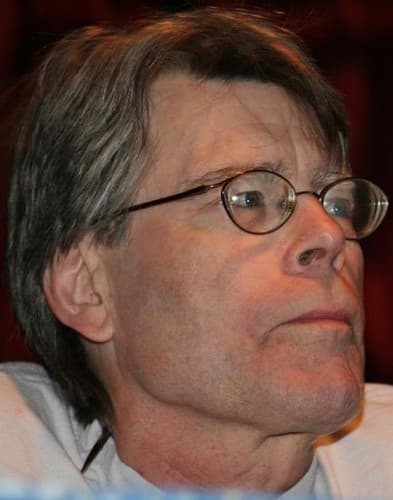
Stephen Edwin King is an American author of horror, supernatural fiction, suspense, crime, science-fiction, and fantasy novels. Described as the "King of Horror", his books have sold more than 350 million copies as of 2006, and many have been adapted into films, television series, miniseries, and comic books. King has published over 65 novels/novellas, including seven under the pen name Richard Bachman, and five non-fiction books. He has also written approximately 200 short stories, most of which have been published in book collections.
Similar books
- Pet Sematary
Stephen King
4.0 (425k) average on GoodreadsThrillerDeals with the tragic consequences of defying death and the corrupting nature of grief.
- A Head Full of Ghosts
Paul Tremblay
3.8 (46k) average on GoodreadsThrillerWhile Paul Tremblay's A Head Full of Ghosts operates primarily within the psychological horror and possession subgenres, it shares with Revival a deep dive into the erosion of faith and the questioning of reality. Both books explore how deeply held beliefs can be shattered by inexplicable events. However, A Head Full of Ghosts uses a metafictional framing device and focuses more on the ambiguity of madness versus the supernatural, whereas Revival ultimately delivers a concrete (albeit terrifying) cosmic explanation for its horrors. Revival offers a more traditional horror narrative with a clear, devastating antagonist, while Tremblay's work thrives on unsettling uncertainty and unreliable narration.
- Angels & Demons
Dan Brown
3.9 (2.7M) average on GoodreadsThrillerA Harvard symbologist races through Rome's ancient sites, deciphering cryptic clues to unmask the Illuminati and stop a vengeful plot to destroy the Vatican with a stolen antimatter weapon.
- Gone Girl
Gillian Flynn
4.1 (2.3M) average on GoodreadsThrillerA wife's sudden disappearance on her fifth anniversary reveals a web of lies and psychological warfare, exposing the secrets within a seemingly perfect marriage.
- The Girl on the Train
Paula Hawkins
3.9 (2.1M) average on GoodreadsThrillerA woman’s fascination with a seemingly perfect couple she watches from her daily train commute leads her into a dark investigation when she witnesses something that shatters their idyllic image.
- The Da Vinci Code
Dan Brown
3.9 (1.9M) average on GoodreadsThrillerA symbologist and a cryptologist race through European landmarks, deciphering ancient codes and uncovering a conspiracy that could rewrite the foundations of Christianity.




Enjoyed the summary?
A summary gives you the shape of the book. The book itself has the detail, the examples and the voice.
Find Revival on AmazonAs an Amazon Associate, BookBrief earns from qualifying purchases. How we're funded