
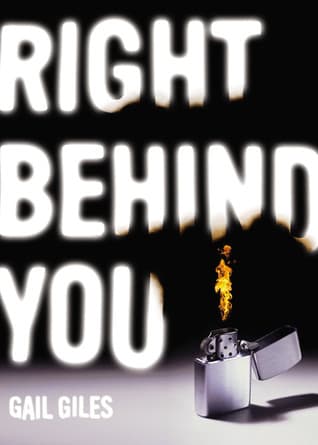
Synopsis
Covers the whole plot, including the ending.
- Difficulty
- Medium
- Pacing
- Moderate
- Mood
- Suspenseful, Dark, Psychological, Tense
- Read it if
- You enjoy psychological thrillers with morally ambiguous protagonists and a focus on past trauma.
- Skip it if
- You prefer lighthearted stories or are sensitive to themes of child violence and intense psychological distress.
Right Behind You Plot Summary
Covers the whole plot, including the ending.
A Troubled Past
Kip, now eighteen, is released from the juvenile ward where he spent nine years for setting another child, Julian, on fire. His mother, whom he barely recognizes, picks him up and takes him to a small apartment. The transition is jarring, filled with unspoken tension about his past. Kip struggles with the routines of freedom, haunted by memories of the incident and his institutionalized life. He feels like an outsider, always aware of the 'murderer' label he carries, even though Julian survived. His mother, distant and overwhelmed, tries to reconnect, but the years of separation and the trauma of Kip's crime have created a large gap between them.
First Steps into Freedom
Kip gets a job at a local library, a quiet place where he hopes to blend in. His supervisor, a kind older woman named Mrs. Henderson, seems unaware of his past, giving him a sense of normalcy he desperately wants. He enjoys the order and the books, finding a temporary escape from his internal conflict. However, the outside world remains a challenge. He struggles with social interactions, constantly on guard, fearing recognition or judgment. He finds comfort in anonymity, watching others from a distance, trying to understand the rules of a society he has been largely excluded from. The library becomes his sanctuary, a place where he can almost forget who he is.
A Glimpse of Connection
At the library, Kip meets Sarah, a bright and independent young woman who works at a nearby café. Their first interactions are hesitant, but Sarah's genuine curiosity and lack of judgment slowly break down Kip's defenses. He is drawn to her openness and how easily she navigates the world. Their conversations are a relief, allowing Kip to experience a connection untainted by his past. For the first time in years, he feels a glimmer of hope for a future that might include real relationships, a future where he is not defined only by his worst mistake.
Shadows of the Past
Just as Kip begins to feel somewhat normal, he starts receiving anonymous, unsettling messages. These messages are vague but deeply personal, referencing details only known to those familiar with his past crime. A drawing of a matchstick man, a cryptic note, a subtle hint — each one sends a jolt of fear through him. He immediately suspects Julian, the boy he set on fire, believing he is seeking revenge. The messages are a stark reminder that his past is not truly behind him, threatening to unravel the new life he is trying to build. The anonymity of the messages adds to the terror, making him feel constantly watched and vulnerable.
Escalating Threats
The anonymous threats escalate from cryptic notes to more direct and menacing actions. Kip's apartment is vandalized, with the same matchstick man drawing left as a calling card. He sees figures lurking, feels watched, and experiences intense paranoia. The fear of exposure becomes overwhelming, jeopardizing his job and his growing relationship with Sarah. He starts to withdraw, his trust in others eroding. He tries to find an explanation, revisiting the traumatic memories of the incident with Julian, searching for clues about who might be orchestrating this torment and why. His fragile peace shatters, replaced by constant anxiety.
A Desperate Confession
Overwhelmed by the escalating threats and the fear of losing Sarah, Kip makes the difficult decision to confess his past. He reveals the truth about setting Julian on fire when he was nine, the years in the juvenile ward, and the constant burden of his crime. Sarah, initially shocked and disturbed, struggles to process the revelation. Her reaction is a mix of fear, confusion, and a deep sense of betrayal, as she grapples with the image of the gentle man she thought she knew versus the dark secret he carries. This confession is a monumental step for Kip, a desperate plea for understanding and acceptance, but it risks destroying the one meaningful connection he has made.
Sarah's Dilemma
Sarah retreats, needing space to process Kip's confession. She struggles with the moral implications of his past, his violent actions, and the fact that he kept such a deep secret from her. Her trust is shaken, and she questions everything she thought she knew about him. Despite her fear and confusion, she still cares for Kip, recognizing his pain and remorse. She confides in a friend, seeking advice, but ultimately knows the decision to stay or leave is hers. This period is agonizing for Kip, as he waits for her decision, knowing his future happiness depends on her understanding and forgiveness.
The Truth About Julian
Driven by the need to understand the source of the threats, Kip takes matters into his own hands. He uses his library access and growing detective skills to research Julian. He discovers that Julian, now an adult, had been severely scarred by the fire, both physically and emotionally. Julian had a difficult life, marked by trauma and anger, and had recently been released from a psychiatric facility. This information complicates Kip's story, revealing a victim who is not just a ghost from the past, but a living, suffering individual who may be seeking revenge. The revelation fuels Kip's guilt but also provides a concrete suspect.
A Confrontation and a Twist
Kip, with Sarah reluctantly by his side, tracks Julian down. The confrontation is tense and emotional. Julian, scarred and bitter, confirms his hatred for Kip but denies sending the threats. He reveals his own struggles and the profound impact of the fire on his life, but his actions are not those of a cunning tormentor. As they talk, a subtle detail, a phrase, or a specific piece of information makes Kip realize that the true stalker is someone else entirely — someone much closer to him, who had intimate knowledge of both his and Julian's past. The realization is a gut punch, turning his world upside down once more.
The True Culprit Revealed
The shocking truth emerges: Kip's own mother has been orchestrating the threats. Her motive is complex and twisted, rooted in her own guilt and trauma from Kip's crime. She never truly processed the incident, and her actions are a desperate, misguided attempt to punish Kip, to make him understand the depth of his actions, and perhaps to absolve herself of her own perceived failures as a parent. She believed that by keeping him constantly on edge, by making him confront his past, she could somehow 'cure' him or make him truly atone. The revelation is devastating for Kip, a betrayal far deeper than he could have imagined, shattering the already fragile possibility of family reconciliation.
The Aftermath and a New Path
The truth about his mother's manipulation leaves Kip reeling. The layers of deception and the psychological torment she inflicted are almost too much to bear. Sarah, horrified by the extent of the betrayal, stands by Kip, offering unwavering support. Kip realizes that he can no longer live under the shadow of his past or his mother's twisted attempts at 'justice.' He decides to press charges against his mother, a painful but necessary step towards his own healing and to break free from her toxic influence. This decision marks a turning point, as Kip consciously chooses to take control of his own narrative, to seek true justice, and to build a future defined by his own choices, not by the mistakes of his past or the manipulations of others.
Right Behind You Characters
Kip
Protagonist
A young man haunted by a childhood crime, seeking redemption.
Kip is an eighteen-year-old who spent nine years in a juvenile ward for setting another child on fire. He is intelligent, introspective, and deeply remorseful, carrying the immense burden of his past. He is socially awkward and withdrawn, constantly on guard, fearing judgment and exposure. Despite his dark history, he yearns for normalcy, connection, and a chance at redemption. He is resilient, slowly learning to trust and to fight for his own future, even when confronted by overwhelming obstacles. His quiet demeanor hides a profound internal struggle with guilt and identity.
Relationships: Sarah (Romantic interest, confidante); Kip's Mother (Estranged, manipulative parent); Julian (Victim of Kip's childhood crime)
Sarah
Supporting
Kip's kind and supportive love interest.
Sarah is a bright, independent, and empathetic young woman who works at a local café. She is open-minded and sees beyond Kip's initial shyness, drawn to his quiet intensity. When confronted with Kip's dark past, she struggles with the revelation but ultimately chooses to stand by him, demonstrating immense compassion and strength. She represents the possibility of a normal, accepting life for Kip, and her unwavering support becomes a crucial anchor for him as he navigates the re-emergence of his past. She is a voice of reason and a source of emotional stability.
Relationships: Kip (Romantic interest, confidante)
Kip's Mother
Antagonist
A woman consumed by guilt and trauma, resorting to manipulation.
Kip's mother is initially presented as distant and overwhelmed by the burden of her son's past. However, she is later revealed to be the true orchestrator of the threats against Kip. Her actions stem from a deeply twisted form of guilt and unresolved trauma, believing she must punish Kip and force him to confront his actions to truly atone. She is manipulative and psychologically abusive, using her intimate knowledge of Kip's past to torment him. Her love for Kip is warped by her own pain and inability to cope, leading her to inflict further suffering under the guise of 'helping' him.
Relationships: Kip (Estranged, manipulative parent)
Julian
Supporting
The scarred victim of Kip's childhood crime.
Julian is the child Kip set on fire, now an adult. He bears both physical and emotional scars from the incident, having endured a difficult life marked by trauma and anger. He spent time in a psychiatric facility, reflecting the profound psychological impact of his childhood experience. While he harbors resentment and hatred towards Kip, he is not the one orchestrating the current threats. He serves as a powerful reminder of the real-world consequences of Kip's actions and complicates the narrative, showing that victims are also complex individuals with their own struggles.
Relationships: Kip (Victim of Kip's childhood crime)
Mrs. Henderson
Supporting
Kip's kind and unsuspecting supervisor at the library.
Mrs. Henderson is Kip's supervisor at the local library. She is a kind, elderly woman who treats Kip with respect and offers him a sense of normalcy without knowing his past. She provides a safe and stable environment for Kip, representing the possibility of acceptance and a fresh start in an unsuspecting world. Her presence highlights the stark contrast between the mundane, peaceful life Kip desires and the hidden turmoil he carries. She is a minor character but provides an important anchor of normalcy and kindness in Kip's life.
Relationships: Kip (Employer/employee)
Right Behind You Themes
Redemption and Forgiveness
The novel explores Kip's journey to find redemption for his past crime. He deals with immense guilt and the societal label of 'murderer,' even though his victim survived. His attempts to build a new life, connect with Sarah, and confront his past are all part of this quest for self-forgiveness and the hope of being forgiven by others. The story questions whether true redemption is possible for such an act and what it entails, especially when the victim's suffering continues. Kip's ultimate decision to take control of his life and seek justice for the manipulation he endured is a significant step in his personal redemption.
“How can Kip tell anyone that he really is--or was--a murderer?”
The Weight of the Past
This theme is central to the story, as Kip's entire life is overshadowed by his childhood crime. The years in the juvenile ward, the distant relationship with his mother, and the constant fear of exposure are all direct results of his past. The anonymous threats are a physical manifestation of this burden, preventing him from truly moving forward. The novel shows how past actions, even those committed in childhood, can have lasting impacts on an individual's identity, relationships, and perception of the world. It shows that escaping one's past is often impossible, and true freedom comes from confronting it.
“He felt like an outsider, constantly aware of the label 'murderer' he carries, even though Julian survived.”
Identity and Self-Perception
Kip struggles intensely with his identity. Is he forever defined by the horrific act he committed as a child, or can he create a new self? He grapples with the 'murderer' label, feeling it as an inescapable part of who he is. His interactions with Sarah, who initially knows nothing of his past, allow him to explore a different identity, one not burdened by his secret. The psychological torment inflicted by his mother further complicates his self-perception, forcing him to confront the dark parts of his history. The novel explores how external perceptions and internal guilt shape who we believe ourselves to be.
“He desperately tries to find an explanation, revisiting the traumatic memories of the incident with Julian, searching for clues about who might be orchestrating this psychological torment and why.”
Betrayal and Trust
The theme of betrayal runs through the story, particularly in the revelation of Kip's mother as the antagonist. Her manipulation is a deep betrayal of a child by a parent, shattering Kip's already fragile trust. Sarah's initial struggle to trust Kip after his confession also highlights this theme, as she grapples with the secret he kept. The novel explores the devastating impact of betrayal on relationships and the difficulty of rebuilding trust once it has been broken. Kip's journey is ultimately about learning whom to trust and how to trust himself.
“The revelation is devastating for Kip, a betrayal far deeper than he could have imagined, shattering the already fragile possibility of family reconciliation.”
Plot Devices & Literary Techniques
Anonymous Threats
Cryptic messages and acts of vandalism that create suspense.
The anonymous threats, initially vague notes and later escalating to vandalism, serve as a primary driver of suspense and plot progression. They are designed to psychologically torment Kip, making him constantly fear exposure and forcing him to confront his past. This device keeps the reader guessing about the identity of the stalker and their motives, creating a sense of dread and paranoia that mirrors Kip's own internal state. The 'matchstick man' drawing becomes an ominous symbol, linking the threats directly to Kip's childhood crime.
The Unreliable Narrative (Partial Knowledge)
Kip's limited perspective on his past and the present threats.
The story is primarily told from Kip's perspective, but his knowledge is deliberately limited, especially regarding the true nature of the threats and the full story of his past actions. For instance, he initially assumes Julian is the stalker. This device creates dramatic irony and suspense, as the reader experiences the mystery alongside Kip, gradually uncovering the truth. It also highlights Kip's internal struggle and his difficulty in processing his own traumatic memories, making him an imperfect narrator of his own history.
Symbolism of Fire
Represents destruction, trauma, and the indelible mark of the past.
Fire is a potent symbol throughout the novel, directly linked to Kip's central crime. It represents the destructive power of his actions and the trauma it inflicted on both Julian and himself. The memory of the fire burns in Kip's mind, a constant reminder of his guilt. The 'matchstick man' drawing serves as a recurring visual motif, bringing the symbolism of fire back to the forefront and reinforcing the idea that his past, like a fire, leaves indelible scars and can reignite at any moment.
The Library as a Sanctuary
A place of quiet refuge and unexpected connection for Kip.
The library where Kip works serves as a symbolic sanctuary for him. It's a quiet, ordered environment that offers anonymity and a temporary escape from his turbulent past. Surrounded by stories, he finds a sense of peace and purpose. It's also where he meets Sarah, signifying that even in a place of refuge, new and meaningful connections can form. The contrast between the library's calm atmosphere and the chaos of Kip's inner world and external threats highlights his yearning for a normal life.
Right Behind You Quotes
“Every time I think things can't get worse, they do.”
“The woods don't care about your rules.”
“Fear has a smell, and I was reeking of it.”
“Sometimes, the truth is just too ugly to look at.”
“You can run, but you can't hide from yourself.”
“The quiet was worse than any scream.”
“We all carry our own prisons with us.”
“Trust is a luxury I couldn't afford.”
“The world keeps turning, even when yours stops.”
“Survival is a messy business.”
“Some secrets are meant to stay buried.”
“The line between sane and insane was thinner than I thought.”
“Hope is a dangerous thing, especially when it's false.”
“Every shadow held a potential threat.”
Quiz
10 questions on the plot and the characters. Each answer comes with a short explanation.
Question 1
What was the specific crime Kip committed when he was nine years old?
- He pushed another child down a flight of stairs.
- He set another child on fire.
- He drowned another child in a pond.
- He stabbed another child with a knife.
Show answer
B. He set another child on fire. The book explicitly states that Kip set another child on fire when he was nine, leading to his time in a juvenile ward.
Question 2
After years in a juvenile ward, what is Kip's primary goal at the beginning of the story?
- To seek revenge on those who put him in the ward.
- To forget his past and start a fresh life.
- To find and apologize to the victim's family.
- To write a memoir about his experiences.
Show answer
B. To forget his past and start a fresh life. The synopsis clearly states Kip 'is ready for a fresh start' after his time in the ward, indicating his desire to move on from his past.
Question 3
What metaphorical entity from Kip's past begins to 'demand justice' as he tries to start over?
- His former cellmates from the juvenile ward.
- The legal system seeking further punishment.
- The ghosts of his past.
- His estranged family members.
Show answer
C. The ghosts of his past. The synopsis uses the phrase 'the ghosts of his past soon demand justice,' referring to the psychological and emotional repercussions of his crime.
Question 4
What is the central internal conflict Kip faces as he attempts to build a new life?
- Whether to pursue higher education or a vocational trade.
- How to hide his past and prevent anyone from discovering his identity as a former murderer.
- Deciding which new city to settle in permanently.
- Struggling with a new addiction he developed in the ward.
Show answer
B. How to hide his past and prevent anyone from discovering his identity as a former murderer. The core of Kip's struggle is 'How can Kip tell anyone that he really is—or was—a murderer?', highlighting his fear of revealing his past.
Question 5
The phrase 'Right Behind You' in the title likely alludes to what aspect of Kip's experience?
- A literal stalker following him.
- The constant presence and lingering threat of his past actions.
- A new friend who is always supportive.
- His shadow, which he cannot escape.
Show answer
B. The constant presence and lingering threat of his past actions. Given the 'ghosts of his past' demanding justice and his struggle to escape his former identity, 'Right Behind You' metaphorically suggests his past is always close, haunting him.
Question 6
What type of institution did Kip spend years in after his crime?
- An adult prison.
- A mental asylum.
- A juvenile ward.
- A boarding school for troubled youth.
Show answer
C. A juvenile ward. The synopsis explicitly states Kip spent 'years in a juvenile ward' after his crime, indicating he was a minor when he committed it.
Question 7
What is the primary genre of 'Right Behind You'?
- Romance.
- Fantasy.
- Thriller, Mystery.
- Historical Fiction.
Show answer
C. Thriller, Mystery. The provided information clearly labels the book as 'Thriller, Mystery.'
Question 8
The narrative suggests Kip's secret is 'painful.' What does this imply about his current emotional state regarding his past actions?
- He is indifferent to what he did.
- He feels no remorse or guilt.
- He is tormented by his past and the memory of his crime.
- He is proud of his ability to keep a secret.
Show answer
C. He is tormented by his past and the memory of his crime. Describing his secret as 'painful' suggests he carries significant emotional burden, likely guilt, remorse, or trauma, regarding his past actions.
Question 9
Considering the plot, what is the most likely reason Kip finds it difficult to reveal his secret to anyone new?
- He fears no one would believe him.
- He fears immediate rejection, judgment, and the loss of any chance at a normal life or relationships.
- He believes it's illegal to discuss his past after his release.
- He genuinely cannot remember the details of the event.
Show answer
B. He fears immediate rejection, judgment, and the loss of any chance at a normal life or relationships. The phrase 'How can Kip tell anyone that he really is—or was—a murderer?' points to the social stigma and fear of being ostracized, making it impossible to form genuine connections if his past is known.
Question 10
The 'ghosts of his past' demanding justice implies a rising tension. What does this foreshadow for Kip's fresh start?
- He will successfully integrate into society without any issues.
- His past will inevitably catch up to him, leading to confrontation or exposure.
- He will find a way to make amends and be fully forgiven by society.
- He will discover he was wrongly accused of the crime.
Show answer
B. His past will inevitably catch up to him, leading to confrontation or exposure. The demand for 'justice' from 'ghosts of his past' in a thriller context strongly foreshadows that his attempts to escape will be futile, and his past actions will resurface, likely with significant consequences.
Right Behind You FAQ
What is the central premise of 'Right Behind You'?
The book follows Kip, a young man recently released from a juvenile psychiatric facility after serving time for setting another child on fire when he was nine. He attempts to start a new life with a foster family, but is haunted by his past actions and the constant fear of his secret being discovered, leading to a struggle with guilt, identity, and the lingering consequences of his crime.
Who is Kip and what is his primary internal conflict?
Kip is the protagonist, a troubled young man trying to escape his past as a child arsonist and murderer. His primary internal conflict revolves around his deep-seated guilt and shame over setting Seth on fire, coupled with his desperate desire for a normal life and connection, all while grappling with whether he is inherently evil or capable of redemption.
What role does Kip's foster family, the Bensons, play in his journey?
The Bensons, particularly Mrs. Benson, offer Kip a chance at a normal life, a stable home, and a semblance of family that he desperately craves. They represent hope and a potential path to integration, but their unawareness of his full past creates a constant tension and fear for Kip, making their acceptance feel conditional and fragile.
Who was Seth and what was his relationship with Kip before the incident?
Seth was the child Kip set on fire when they were both nine years old, leading to Seth's death. Their relationship prior to the incident is portrayed as complex, with elements of rivalry, bullying from Seth's side, and Kip's suppressed anger and fear, culminating in the tragic act that defines Kip's life.
How does the book explore the concept of guilt and redemption?
The book deeply explores Kip's overwhelming guilt, which manifests as constant anxiety, nightmares, and a struggle to forge genuine connections. Redemption is presented as a difficult and uncertain path, requiring Kip to confront his past, accept responsibility, and ultimately decide if he can ever truly forgive himself or be forgiven by others.
Are there any subtle clues about Kip's mental state or potential triggers for his past actions?
Yes, the narrative subtly hints at Kip's past emotional neglect and his difficulty processing strong emotions, which might have contributed to his outburst. His recurring nightmares and heightened sensitivity to certain stimuli, like fire or feeling trapped, serve as persistent reminders of his trauma and potential triggers.
Does the story reveal how Kip's parents reacted to his crime and subsequent institutionalization?
The story reveals that Kip's biological parents effectively abandoned him emotionally, struggling to cope with his crime and ultimately distancing themselves. Their absence and lack of support during his institutionalization further compound Kip's feelings of isolation and unworthiness, impacting his ability to trust and form attachments.
Is there any symbolism behind the recurring motif of fire in Kip's thoughts and experiences?
Fire serves as a powerful and multi-layered symbol throughout the narrative. It represents Kip's destructive past, his guilt, and the burning secret he carries. It also symbolizes the potential for both annihilation and cleansing, mirroring Kip's internal struggle between his past actions and his desire for a fresh start.
How does Kip's fear of discovery impact his interactions with new people, like his classmates or potential friends?
Kip's fear of discovery makes him withdrawn and constantly guarded, preventing him from forming genuine bonds. He is wary of revealing too much about himself, often misinterpreting innocent questions as probing, which leads to isolation and reinforces his belief that he is fundamentally different and unlovable.
What psychological defense mechanisms does Kip employ to cope with his trauma and guilt?
Kip primarily uses repression, attempting to push the memories of the incident with Seth out of his conscious mind, though they resurface in nightmares. He also engages in a form of denial, wanting to believe he is a different person now, and social withdrawal to avoid situations where his past might be exposed.
How does the author portray the psychological weight of carrying a secret of this magnitude?
The author vividly portrays the immense psychological weight through Kip's constant anxiety, paranoia, and internal monologue. His secret becomes a suffocating burden, affecting his sleep, appetite, and ability to experience joy, demonstrating how unresolved guilt can consume an individual's entire being.
Does Kip experience genuine remorse, or is his distress primarily fear of consequences?
The narrative strongly suggests Kip experiences genuine remorse, evidenced by his recurring nightmares, self-loathing, and desperate desire to be a good person. While fear of consequences is present, his internal torment goes beyond mere apprehension, indicating a deep-seated regret for the harm he inflicted upon Seth.
Is Kip's eventual confession, if it occurs, an act of self-preservation or true atonement?
Kip's potential confession is likely a complex blend of both. While revealing his secret could bring immediate negative consequences, the intense psychological burden of carrying it might lead him to believe that honesty is the only path to true freedom and atonement, even if it means sacrificing his current fragile peace.
Does the book ultimately argue that people can change, or that past actions define a person forever?
The book presents a nuanced view, leaning towards the idea that change is possible but incredibly difficult and never fully erases the past. Kip's struggle highlights that while he strives to be different, the repercussions and psychological scars of his actions will always be a part of him, shaping his identity and future path.
How does the author use the 'right behind you' motif to enhance the thriller aspect and Kip's psychological state?
The 'right behind you' motif serves as both a literal and metaphorical threat. Literally, it refers to the constant fear of someone discovering his past. Metaphorically, it represents the inescapable shadow of his crime and guilt, always lurking, making Kip feel perpetually pursued and unable to outrun his history, intensifying the thriller and psychological tension.
Could Kip's actions be interpreted as a result of his own unresolved trauma or neglect, rather than pure malice?
The narrative strongly encourages this interpretation. While not excusing his actions, the book delves into Kip's difficult childhood, emotional struggles, and potential neglect, suggesting that his violent outburst was a tragic consequence of unaddressed psychological issues rather than inherent malice, prompting empathy from the reader.
What is the significance of the book's title, 'Right Behind You'?
The title 'Right Behind You' directly reflects Kip's constant state of paranoia and the inescapable nature of his past. It signifies the ever-present threat of discovery, the lingering ghost of Seth, and the psychological burden of his crime perpetually 'following' him, making true escape impossible.
About the author

Gail Giles is an author known for her young adult fiction. Her notable works include "Right Behind You," which explores themes of redemption and consequences, and "Shattering Glass," a story about manipulation and power dynamics among high school students. Giles's writing often addresses complex emotional and social issues faced by teens.
Similar books
- We Need to Talk About Kevin
Lionel Shriver
4.0 (162k) average on GoodreadsLiterary FictionExplores the aftermath of a child's violent act and the psychological toll on family.
- The Silent Patient
Alex Michaelides
4.1 (507k) average on GoodreadsThrillerFeatures a mystery centered around a past violent event and shocking revelations.
- A Head Full of Ghosts
Paul Tremblay
3.8 (46k) average on GoodreadsThrillerDeals with unreliable narration and the blurring lines between reality and psychological torment.
- One of Us Is Lying
Karen M. McManus
4.0 (216k) average on GoodreadsThrillerMcManus's book shares the mystery genre but distinguishes itself by employing multiple perspectives from a group of teenagers involved in a central mystery. This offers a broader scope of social dynamics and character interaction, whereas Giles's Right Behind You maintains a tighter, more intimate focus on the single protagonist's internal struggle and recovery.
- Angels & Demons
Dan Brown
3.9 (2.7M) average on GoodreadsThrillerA Harvard symbologist races through Rome's ancient sites, deciphering cryptic clues to unmask the Illuminati and stop a vengeful plot to destroy the Vatican with a stolen antimatter weapon.
- Gone Girl
Gillian Flynn
4.1 (2.3M) average on GoodreadsThrillerA wife's sudden disappearance on her fifth anniversary reveals a web of lies and psychological warfare, exposing the secrets within a seemingly perfect marriage.






Enjoyed the summary?
A summary gives you the shape of the book. The book itself has the detail, the examples and the voice.
Find Right Behind You on AmazonAs an Amazon Associate, BookBrief earns from qualifying purchases. How we're funded