
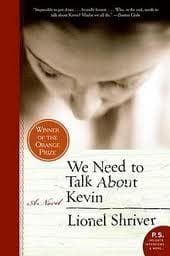
Synopsis
Covers the whole plot, including the ending.
- Difficulty
- Medium
- Pacing
- Moderate
- Mood
- Dark, Disturbing, Psychological, Reflective, Suspenseful
- Read it if
- You enjoy dark psychological thrillers, deeply unsettling character studies, and explorations of nature vs. nurture in the context of extreme evil.
- Skip it if
- You are sensitive to themes of child violence, disturbing content, or find unreliable narrators frustrating.
We Need to Talk About Kevin Plot Summary
Covers the whole plot, including the ending.
Eva's Post-Rampage Life and Initial Letters to Franklin
Two years after her son Kevin committed a massacre, Eva Khatchadourian lives a solitary, poor life in a small house. She is far from her past successful career as a travel writer. She begins writing letters to her estranged husband, Franklin Plaskett, describing her current life and the emotional impact of Kevin's actions. Eva thinks about her initial reluctance to have children, her discomfort with social expectations of motherhood, and the difference between her life before Kevin and her life now. She hints at the strained relationship she had with Kevin from his earliest days, setting up a look into their complex and troubling history. Her letters are a direct confession, trying to understand the tragedy that has defined her life.
Kevin's Infancy and Early Childhood: A Difficult Beginning
Eva describes Kevin's infancy, remembering his constant crying, his resistance to touch, and his seemingly deliberate defiance even as a baby. She describes his colicky periods, his refusal to be comforted, and her growing feeling of distance from him. Unlike other mothers who found joy and connection with their newborns, Eva felt a deep disconnect and even dislike for Kevin. She recounts specific examples of his early manipulative behavior, such as his prolonged bedwetting despite being toilet trained, which she saw as a conscious act of rebellion against her. Franklin, however, always defended Kevin, calling his behavior normal childhood phases or blaming Eva's perceived negativity. This created the first major difference in their parenting.
The Arrival of Celia and Kevin's Escalating Malice
The story moves to the birth of Eva and Franklin's second child, Celia, a cheerful and seemingly normal girl. Eva describes her immediate and deep love for Celia, a sharp contrast to her feelings for Kevin. This contrast deepens her guilt and confusion. Kevin shows no affection for his sister; instead, his behavior becomes more sinister. Eva recounts several incidents, including Kevin deliberately breaking Celia's arm by throwing her off a changing table, and later, blinding her in one eye with drain cleaner. These acts looked accidental to Franklin, but Eva saw them as calculated and malicious. This strengthened her belief in Kevin's inherent evil and increased her fear for Celia's safety.
Kevin's Teenage Years and the Seeds of the Massacre
As Kevin becomes a teenager, Eva notices his increasing social isolation and his detached manner. He does well in school, especially in English, but uses his intelligence to manipulate and provoke those around him, particularly Eva. He shows no real interest in friendships or typical teenage activities, preferring to observe and criticize. Eva recounts times when Kevin would deliberately undermine her authority, mock her values, and express a nihilistic view of the world. She describes his interest in violence and his cold, analytical approach to human suffering, which she interprets as a sign of his future actions. Franklin, however, remains unaware or unwilling to admit the depth of Kevin's disturbing nature, often blaming Eva for being too critical.
The Build-Up to the Massacre and Franklin's Denial
In the days before the massacre, Eva describes a strange calm in Kevin, a quiet intensity she now recognizes as the methodical planning of his horrific act. She remembers small, unsettling details – Kevin's unusual tidiness, his lack of any emotional display, and his increasingly subtle provocations. Franklin, still in denial, continues to believe Kevin is simply a misunderstood teenager. He even buys Kevin a bow and arrow set, an act Eva now sees as tragically ironic given the type of weapons Kevin would use. Eva's attempts to tell Franklin her deep unease are always dismissed. This leaves her feeling isolated, as she alone sees the danger but cannot explain or prevent it.
The Massacre and Its Immediate Aftermath
Eva describes the day of the massacre, April 8th, two days before Kevin's sixteenth birthday, with stark detail. She remembers the first news reports of a school shooting, the agonizing wait for information, and the horrifying confirmation that Kevin was the shooter. The massacre results in the deaths of seven students, a cafeteria worker, and a teacher, Mrs. Karyn Fuller, who had tried to help Kevin. Eva describes the immediate public anger, the media attention, and the devastation that tears through their family and community. Franklin, shattered by the news, finally faces the reality of his son's actions. But the damage is permanent, leading to the complete breakdown of their family and Eva's social exclusion.
Franklin's Reaction and Tragic End
Franklin's reaction to the massacre is deep grief, shock, and a desperate attempt to understand his son's actions. He first tries to support Kevin, visiting him in juvenile detention, and struggles to reconcile the son he thought he knew with the monster who committed such acts. However, the weight of the tragedy and public condemnation eventually overcome him. Eva describes Franklin's increasing fragility and his inability to cope. In a shocking revelation, Eva reveals that Kevin murdered Franklin, not during the massacre, but later, after Franklin visited him in prison. During a visit, Kevin subtly but clearly provokes Franklin into a heart attack, an act of calculated cruelty Eva believes was meant to eliminate the last parts of his family and prove his ultimate control.
Eva's Prison Visits and Kevin's Manipulation
After the massacre, Eva begins regular visits to Kevin in prison. This is a painful ritual she undertakes out of duty and a desperate, perhaps pointless, hope for understanding or connection. During these visits, Kevin remains mostly unrepentant, often playing psychological games with Eva, subtly mocking her and enjoying her discomfort. He rarely shows genuine remorse or explains his actions, instead presenting himself as indifferent or intellectually superior. Eva struggles with these interactions, torn between her maternal instincts and her revulsion at his deeds. These visits show the lasting power dynamic between them, with Kevin still having a strange control over his mother, even from prison.
The Truth About Celia's Death Revealed
Through her letters, Eva gradually reveals the full extent of Kevin's malice, especially concerning Celia. She recounts the 'accidents' that happened to Celia – the broken arm, the blinding with drain cleaner – and her growing certainty that these were not accidents but deliberate acts of cruelty by Kevin. The most devastating revelation comes when Eva pieces together the truth about Celia's death. It was not an accident or an illness; Kevin had deliberately infected Celia with tuberculosis by using a dirty needle to inject her with a small amount of his own sputum, knowing it would be fatal to her weakened immune system. This planned murder of his own sister, carefully executed to look natural, solidifies Kevin's monstrous nature in Eva's eyes.
Kevin's Confession and Eva's Lingering Questions
During one of Eva's final prison visits, before his transfer to an adult facility, Kevin offers a fragmented, almost casual confession. He admits to the massacre and to killing his father, but he denies killing Celia, claiming he would not 'stoop so low'. This denial, however, is a further manipulation, as Eva has already figured out the truth about Celia. When Eva asks him 'Why?', Kevin simply replies, 'I used to think I knew. Now I'm not so sure.' This lack of a clear motive leaves Eva with an unsettling uncertainty. Despite everything, Eva finds herself holding Kevin's hand, a small, unexpected gesture of connection that shows the complex and unresolved nature of their relationship and her lingering, painful love for her son.
We Need to Talk About Kevin Characters
Eva Khatchadourian
Protagonist
Kevin's mother, grappling with the aftermath of his massacre and her own complex feelings about motherhood.
Eva is the narrator and protagonist, a former successful travel writer whose life is irrevocably shattered by her son Kevin's actions. She is intelligent, articulate, and fiercely independent, but also deeply conflicted about motherhood. From the outset, she struggles to connect with Kevin, experiencing a profound sense of alienation and even dislike for him, feelings she grapples with throughout the book. Her letters to Franklin are her attempt to understand what went wrong, to confess her own perceived failings, and to process the trauma. She is observant and analytical, often seeing Kevin's manipulative nature where others, especially Franklin, do not. Her guilt, grief, and a strange, enduring maternal bond define her post-massacre existence.
Relationships: Kevin Khatchadourian (Son; deeply conflicted, often antagonistic, yet with an undeniable maternal bond); Franklin Plaskett (Estranged husband; a source of conflict and misunderstanding regarding Kevin, later murdered by Kevin); Celia Khatchadourian (Daughter; beloved, pure, and a victim of Kevin's malice)
Kevin Khatchadourian
Antagonist
Eva and Franklin's son, a sociopathic teenager responsible for a school massacre.
Kevin is the central antagonist, a chillingly intelligent and manipulative boy who, from infancy, displays a profound lack of empathy and a disturbing propensity for cruelty. He is described as a 'blank slate' who actively resists connection, particularly with his mother. His actions, from bedwetting and deliberate defiance in childhood to blinding his sister and orchestrating a school massacre, are meticulously planned and executed with a cold, detached precision. He relishes in psychological games and holds a strange, almost hypnotic power over those around him. He is the embodiment of the 'nature vs. nurture' debate, leaving Eva and the reader to question the origins of his evil.
Relationships: Eva Khatchadourian (Mother; target of his psychological manipulation, yet also the object of his strange, perhaps only, form of 'attention'); Franklin Plaskett (Father; initially his defender, later a victim of his calculated cruelty); Celia Khatchadourian (Sister; a pure, innocent victim of his extreme jealousy and malice)
Franklin Plaskett
Supporting
Eva's optimistic and often naive husband, who consistently defends Kevin.
Franklin is Eva's husband and Kevin's father, an outwardly genial and optimistic man who embodies the 'glass half full' perspective. He consistently defends Kevin's behavior, attributing it to normal childhood phases or Eva's overly critical nature. He believes in the power of love and positive reinforcement, often clashing with Eva's more cynical and realistic assessment of their son. His denial of Kevin's true nature is a major source of conflict with Eva and ultimately contributes to the tragedy. He is a loving father, particularly to Celia, and a devoted husband, but his inability to see the darkness in Kevin makes him a tragic figure, ultimately becoming a victim of his son's malice.
Relationships: Eva Khatchadourian (Wife; his optimism often clashes with her realism, leading to marital strain); Kevin Khatchadourian (Son; his unwavering defender, later his victim); Celia Khatchadourian (Daughter; his beloved 'little princess')
Celia Khatchadourian
Supporting
Eva and Franklin's younger daughter, a bright and innocent child who becomes a victim of Kevin's jealousy.
Celia is Eva and Franklin's second child, a stark contrast to Kevin. She is described as a cheerful, loving, and outwardly normal girl who brings immense joy to Eva. Her innocence and purity highlight Kevin's malevolence and serve as a catalyst for his most cruel acts. She is adored by both parents, particularly Franklin, and represents the 'normal' family life that Eva yearns for. Her suffering and eventual death at Kevin's hands are among the most devastating revelations in the book, underscoring the depth of Kevin's depravity and the irreversible damage he inflicts upon his family.
Relationships: Eva Khatchadourian (Mother; deeply loved and adored); Franklin Plaskett (Father; deeply loved and adored); Kevin Khatchadourian (Brother; his antagonist and eventual murderer)
Mrs. Karyn Fuller
Supporting
A compassionate high school teacher who attempts to connect with Kevin.
Mrs. Karyn Fuller is the beloved high school teacher who tries to reach out to Kevin, recognizing his intelligence but also sensing his isolation. She represents the empathetic, nurturing figure that Kevin rejects. Despite her efforts, Kevin includes her among his victims in the massacre, a particularly chilling detail that underscores his indiscriminate cruelty and his rejection of any genuine human connection. Her death is a poignant reminder of the innocent lives lost and the futility of trying to 'save' Kevin.
Relationships: Kevin Khatchadourian (Student; she attempts to mentor him, but he brutally murders her)
S.P.L.
Mentioned
Kevin's lawyer, who advises Eva on legal matters.
S.P.L. is Kevin's defense attorney. While not a character with much personal detail, he serves as a conduit for legal information and advises Eva on the intricacies of Kevin's case and the prison system. He represents the detached, bureaucratic side of the legal process and is often the one to deliver grim news or explain the practicalities of Kevin's incarceration. His presence reminds Eva of the legal and societal consequences of Kevin's actions.
Relationships: Kevin Khatchadourian (Client); Eva Khatchadourian (Client's mother; provides legal counsel)
Colin
Mentioned
Eva's ex-boyfriend and a brief confidant.
Colin is an ex-boyfriend of Eva's, whom she briefly reconnects with after the massacre. He offers Eva some solace and a temporary escape from her isolation, but their relationship is ultimately unsustainable due to Eva's overwhelming grief and preoccupation with Kevin. He represents a fleeting possibility of a 'normal' life for Eva, one that she is unable to fully embrace given her circumstances. His presence highlights Eva's deep loneliness and her struggle to move forward.
Relationships: Eva Khatchadourian (Ex-boyfriend; offers temporary comfort)
We Need to Talk About Kevin Themes
Nature vs. Nurture
This is the main theme, explored through Eva's questions about whether Kevin was born evil ('nature') or if her own perceived lack of maternal affection ('nurture') contributed to his acts. Eva carefully examines Kevin's childhood, looking for signs of an innate malevolence that existed before any environmental influence. Franklin, conversely, believes in the power of nurture, always blaming Kevin's behavior on external factors or Eva's negativity. The novel leaves this question open, making the reader face the possibility that some evil may be inherent and unchangeable, regardless of parenting or environment. Kevin's final, vague 'I used to think I knew. Now I'm not so sure' only deepens this uncertainty.
“What if the only thing that's wrong with Kevin is that there's nothing wrong with Kevin?”
Motherhood and Ambivalence
The novel questions common ideas of motherhood. Eva never truly wanted children and openly expresses her discomfort with the sacrifices and social expectations of being a mother. Her struggle to bond with Kevin, her feelings of resentment, and her admitted dislike for him are central to the story. This theme explores the taboo subject of maternal ambivalence and how society sees it. Eva's guilt over her feelings for Kevin is immense, and she constantly questions if her 'un-motherly' sentiments somehow caused or worsened Kevin's problems. The contrast with her deep love for Celia further complicates her understanding of her own maternal capacity.
“I’m not sure I ever did want to be a mother. I just wanted to be a person who had a child.”
Guilt and Responsibility
Eva feels consumed by guilt, not only for Kevin's actions but also for her own perceived failures as a mother. She re-examines every interaction and decision, looking for the moment she could have intervened or done something differently. This theme explores the heavy burden of a parent's responsibility for their child's actions, even when those actions are horrific and seem beyond parental control. Eva also grapples with survivor's guilt and the guilt of being the only one who seemed to truly understand Kevin's darker nature, yet was powerless to stop him. The letters themselves are an act of self-punishment and an attempt to make amends.
“There are people who believe that I am responsible for what Kevin did. And maybe they are right.”
Denial and Self-Deception
Franklin's character shows this theme. He always denies the evidence of Kevin's disturbing behavior, choosing to believe the best of his son and blaming any problems on external factors or Eva's negativity. His denial acts as a shield, preventing him from facing the terrifying reality of Kevin's malice. This theme explores how people, especially parents, can trick themselves into maintaining a desired reality, even when faced with strong opposing evidence. Franklin's inability to see Kevin for who he truly is blinds him to the danger, leading to tragic results for himself and Celia.
“Franklin always saw the best in Kevin, even when the best was invisible.”
The Unknowable Other
This theme deals with the inherent mystery of another person's mind, especially a child's. Despite living with Kevin for sixteen years, Eva never truly understands his motivations or the depth of his nihilism. Kevin remains an 'unknowable other,' a being whose inner world is fundamentally alien to her. His final non-explanation for the massacre—'I used to think I knew. Now I'm not so sure'—only strengthens this theme, suggesting that some evil may be beyond human comprehension or rational explanation. The novel suggests that even the closest relationships can hold an impenetrable core of individuality, especially when psychopathy is involved.
“I suppose it’s the ultimate failure of a parent: to never truly know your child.”
Plot Devices & Literary Techniques
Epistolary Format
The entire novel is presented as a series of letters from Eva to Franklin.
The novel is structured entirely as a series of letters written by Eva Khatchadourian to her estranged husband, Franklin. This epistolary format provides an intimate, subjective, and confessional tone, allowing Eva to directly address Franklin (and, by extension, the reader) with her deepest fears, guilt, and observations. It creates a sense of immediacy and allows for a gradual unfolding of the plot, as Eva recounts past events while also reflecting on her present circumstances. The format also highlights Eva's isolation, as these letters are her primary means of communication and processing, functioning almost as a form of therapy or self-justification.
Unreliable Narrator
Eva's subjective perspective shapes the narrative, leaving room for doubt and interpretation.
Eva is an inherently unreliable narrator, not necessarily because she intentionally deceives, but because her perspective is deeply colored by her guilt, resentment, and her complicated feelings towards Kevin. She admits to her own biases and struggles with her role as a mother, leading the reader to question whether her interpretation of Kevin's actions is entirely accurate or if her own negative feelings influenced his development. This device forces the reader to actively engage with the text, scrutinizing Eva's recollections and forming their own judgments about Kevin's nature and the events that transpired, adding layers of psychological complexity.
Foreshadowing
Subtle hints and ominous details throughout the narrative allude to future tragedies.
Shriver employs extensive foreshadowing, particularly in Eva's descriptions of Kevin's early life. From his 'deliberate' bedwetting to his calculated acts of cruelty towards Celia (the broken arm, the drain cleaner), Eva's narrative is peppered with details that, in hindsight, clearly point towards his violent future. The reader is aware from the outset that Kevin commits a massacre, so the foreshadowing serves to build dread and to illustrate how Eva, in retrospect, sees the warning signs she either ignored or was powerless to act upon. This technique enhances the psychological thriller aspect, making the slow reveal of Kevin's depravity even more chilling.
The 'Massacre' as a MacGuffin
The school shooting serves as the inciting incident, but the true focus is on Eva's internal struggle and the 'why'.
While the school massacre is the central event that propels the narrative, its explicit details are largely secondary to the novel's true purpose: exploring Eva's psychological journey, her relationship with Kevin, and the 'nature vs. nurture' debate. The massacre acts as a MacGuffin, a plot device that sets the story in motion and provides a framework for Eva's introspection, but the novel's core is not about the event itself, but rather the complex web of causes, effects, and emotional fallout that led to it and continues to haunt Eva. The reader knows the 'what' from the beginning, but the entire book is dedicated to uncovering the 'how' and 'why' from Eva's perspective.
We Need to Talk About Kevin Quotes
“I'm not sure you should be the one to have this baby.”
“I used to think I could make up for the rest of the world. Now I'm not so sure.”
“The trouble with children is that they're people.”
“I have to believe that it's the behavior that's monstrous, not the child.”
“You can't make a child love you. You can only hope to be worthy of it.”
“Sometimes I think the only reason we have children is to prove to ourselves that we're not monsters.”
“He was born angry.”
“I wanted a child, but I didn't want Kevin.”
“The world breaks everyone, and afterward, some are strong at the broken places.”
“We are all responsible for the monsters we create.”
“Love is not enough. It never is.”
“He didn't hate me. He just didn't care.”
“The truth is, I never liked him.”
“We are all complicit in the things we choose to ignore.”
Quiz
10 questions on the plot and the characters. Each answer comes with a short explanation.
Question 1
What is the narrative structure of 'We Need to Talk About Kevin'?
- A third-person omniscient account of Kevin's life
- A series of letters from Eva to her estranged husband Franklin
- Kevin's first-person diary entries before the massacre
- A courtroom transcript from Kevin's trial
Show answer
B. A series of letters from Eva to her estranged husband Franklin The entire novel is composed of letters written by Eva Khatchadourian to her husband Franklin, reflecting on their marriage, parenthood, and the events leading up to their son Kevin's school massacre. This epistolary format creates an intimate, confessional tone.
Question 2
How many people did Kevin kill in his school massacre?
- 5 students and 1 teacher
- 7 students, a cafeteria worker, and a teacher
- 9 students and 2 staff members
- 11 victims total, all students
Show answer
B. 7 students, a cafeteria worker, and a teacher Kevin murdered seven fellow high school students, a cafeteria worker, and a teacher who had tried to befriend him, totaling nine victims. This occurs two days before his sixteenth birthday.
Question 3
What is the name of Eva and Franklin's second child?
- Kevin
- Franklin Jr.
- Celeste
- She is never named in the book
Show answer
C. Celeste Eva and Franklin have a daughter named Celeste, who is portrayed as sweet-natured and stands in contrast to Kevin's difficult personality. Celeste's existence highlights the complex dynamics of the family.
Question 4
What significant event occurs when Kevin is six years old that foreshadows his violent tendencies?
- He sets a neighbor's cat on fire
- He deliberately ruins Eva's home office with permanent ink
- He pushes Celeste down the stairs
- He steals a gun from Franklin's collection
Show answer
B. He deliberately ruins Eva's home office with permanent ink At age six, Kevin methodically ruins Eva's meticulously organized home office by spraying permanent ink over her maps and documents. This act of calculated destruction is an early sign of his malicious nature and the tension between him and Eva.
Question 5
Why does Eva feel particularly guilty about the teacher Kevin killed?
- The teacher was Eva's close friend from college
- Eva had recommended Kevin be placed in that teacher's class
- The teacher had tried to befriend Kevin, and Eva had warned her not to
- Eva had fired the teacher from a previous job
Show answer
C. The teacher had tried to befriend Kevin, and Eva had warned her not to Eva feels responsible because she warned the well-meaning teacher, who was trying to connect with Kevin, to stay away from him. She believes her warning might have made Kevin target the teacher specifically, adding to her guilt about the massacre.
Question 6
What was Eva's career before becoming a mother, and how does it relate to the novel's themes?
- She was a lawyer, reflecting themes of justice and blame
- She was a doctor, tying to themes of health and pathology
- She ran a successful travel guide business, connecting to freedom vs. confinement
- She was a journalist, relating to themes of truth and storytelling
Show answer
C. She ran a successful travel guide business, connecting to freedom vs. confinement Eva founded and ran 'A Wing and a Prayer,' a successful series of travel guides for budget travelers. This career symbolizes the freedom and independence she loses to motherhood, highlighting themes of sacrifice, identity, and the constraints of domestic life.
Question 7
How does Franklin's attitude toward Kevin differ from Eva's throughout the novel?
- Franklin is indifferent and mostly absent, while Eva is overly involved
- Franklin is suspicious of Kevin from birth, while Eva is initially hopeful
- Franklin is consistently dismissive of Eva's concerns and sees Kevin as normal, while Eva perceives Kevin as malevolent
- Franklin agrees with Eva but pretends otherwise to keep peace in the family
Show answer
C. Franklin is consistently dismissive of Eva's concerns and sees Kevin as normal, while Eva perceives Kevin as malevolent Franklin consistently refuses to acknowledge Kevin's disturbing behavior, dismissing Eva's worries as exaggeration or maternal failure. This creates marital conflict and isolates Eva, as she feels alone in recognizing Kevin's true nature.
Question 8
What is the significance of the eye injury Kevin sustains as a teenager?
- It was caused by Eva in a fit of rage, symbolizing her broken maternal bond
- It results from a school sports accident, showing Kevin's vulnerability
- Kevin deliberately injures his own eye with drain cleaner, demonstrating his self-destructive tendencies
- Franklin accidentally injures it during an argument, representing paternal failure
Show answer
C. Kevin deliberately injures his own eye with drain cleaner, demonstrating his self-destructive tendencies Kevin intentionally injures his eye with drain cleaner, claiming it was an 'accident.' This act of self-mutilation is a pivotal moment that reveals his capacity for extreme violence and manipulation, further alarming Eva while Franklin remains in denial.
Question 9
In the novel's exploration of nature vs. nurture, what does Eva ultimately conclude about Kevin's evil?
- It was entirely due to her failure as a mother, supporting the nurture argument
- It was purely innate, with Kevin being born evil regardless of parenting
- She remains uncertain, but leans toward it being an inherent part of Kevin from birth
- It was caused by societal influences like violent media, absolving both nature and nurture
Show answer
C. She remains uncertain, but leans toward it being an inherent part of Kevin from birth Throughout her letters, Eva grapples with guilt but increasingly suggests that Kevin's malevolence was intrinsic, present from infancy. The novel leaves this ambiguous, but Eva's reflections imply she believes he was 'born bad,' challenging simple nurture explanations.
Question 10
What is the final revelation in Eva's last visit to Kevin in prison before the novel ends?
- Kevin confesses that he committed the massacre to get Eva's attention
- Kevin reveals he is innocent and was framed by another student
- Kevin admits he doesn't know why he did it, showing his nihilism
- Kevin implies he might have a reason related to Eva, but it remains ambiguous, and they share a moment of connection
Show answer
D. Kevin implies he might have a reason related to Eva, but it remains ambiguous, and they share a moment of connection In the final prison visit, Kevin hints that he might have had a motive related to Eva, but doesn't clarify it. They share a rare, ambiguous moment of emotional connection, leaving readers to ponder the complex mother-son relationship and the unknowability of Kevin's actions.
We Need to Talk About Kevin FAQ
What is 'We Need to Talk About Kevin' about?
The novel follows Eva Khatchadourian, a mother grappling with her son Kevin's horrific school massacre where he killed nine people two days before his sixteenth birthday. Through a series of letters to her estranged husband Franklin, Eva examines her reluctant motherhood, her troubled relationship with Kevin from birth, and her fear that her own dislike for her son may have contributed to his violent actions.
Why should I read 'We Need to Talk About Kevin'?
This psychological thriller offers a chilling exploration of nature versus nurture through the lens of a school shooting, examining uncomfortable questions about maternal ambivalence, parental responsibility, and whether evil can be innate. Shriver's unflinching portrayal of a mother-son relationship gone terribly wrong makes readers question fundamental assumptions about family bonds and accountability.
What is the background/setting of 'We Need to Talk About Kevin'?
The story unfolds through Eva's letters written from her modest apartment in New York City suburbs two years after Kevin's massacre, with flashbacks spanning Kevin's childhood in their affluent suburban home. The narrative moves between present-day visits to Kevin in juvenile detention and memories of their family life before the tragedy.
What are the most memorable quotes from the book?
Key quotes include Eva's reflection 'I'm not sure I love my son' and Kevin's chilling statement 'I used to think I was smart, but then I met kids who were smarter. So I decided to be interesting instead.' Another powerful line is Eva's admission: 'For the longest time, I thought I might have made you up.'
What writing style does Lionel Shriver use?
Shriver employs an epistolary format with Eva's detailed, confessional letters to Franklin, creating an intimate yet unreliable narrative. The prose is intellectually dense with psychological insight, dark humor, and meticulous observations about parenting, class, and American society, all filtered through Eva's defensive, analytical voice.
What minor details add significant meaning to the story?
Kevin's persistent bedwetting into adolescence symbolizes his refusal to conform to developmental norms, while his preference for archery (the weapon used in the massacre) foreshadows the violence. Eva's career running a travel guide series called 'A Wing and a Prayer' ironically contrasts with her trapped domestic life, and the family's perfect suburban home becomes a prison for all three characters.
What are some subtle foreshadowing moments?
Early scenes show Kevin deliberately ruining Eva's map room, destroying her career materials in a precursor to larger destruction. His childhood fascination with archery and target practice, which Franklin encourages as 'father-son bonding,' directly foreshadows the massacre method. Kevin's calculated cruelty toward his sister Celia's guinea pig and later toward Celia herself establishes his pattern of harming the vulnerable.
What unexpected character connections exist?
Franklin's blind devotion to Kevin mirrors his earlier idealization of suburban family life, creating an alliance against Eva that isolates her further. Celia's accidental blinding by drain cleaner that Kevin likely tampered with connects to the novel's themes of willful blindness—Franklin's refusal to see Kevin's malice, society's refusal to acknowledge maternal ambivalence, and Eva's own selective vision about her role.
What are Eva's unspoken motivations throughout the story?
Beneath her intellectual analysis, Eva is motivated by profound guilt and a desperate need to prove she's not solely responsible for Kevin's evil. Her letters serve as both confession and defense, attempting to convince Franklin (and herself) that Kevin's nature was fundamentally malicious from infancy, while simultaneously revealing her own resentment about sacrificed ambitions and compromised identity.
What psychological complexities does Kevin exhibit?
Kevin displays chilling emotional detachment combined with acute social intelligence, allowing him to manipulate his father while tormenting his mother. His violence appears both calculated and expressive—a performance of nihilism that questions whether he experiences genuine emotion or merely simulates appropriate responses. His intelligence makes his evil more terrifying, as it suggests conscious choice rather than psychological breakdown.
What are the major emotional turning points in Eva and Kevin's relationship?
The relationship deteriorates irrevocably when Eva, frustrated by Kevin's refusal to be toilet-trained, breaks his arm—an act of violence that establishes their dynamic of mutual antagonism. Another turning point occurs when teenage Kevin shows unexpected vulnerability after getting his ear pierced, briefly connecting with Eva before retreating behind his usual contempt, highlighting their missed opportunity for genuine connection.
How do the relationship dynamics between Eva, Franklin, and Kevin evolve?
Initially, Eva and Franklin's marriage suffers from differing attitudes toward parenting, with Franklin embracing idealized fatherhood while Eva feels trapped. Kevin expertly exploits this rift, aligning with Franklin to isolate Eva further. After the massacre, all relationships fracture completely—Franklin abandons Eva, visits Kevin in prison alone, and ultimately dies without reconciling with her, leaving Eva as the sole remaining parent to a son she never loved.
Which parts of the story remain ambiguous or open-ended?
The novel deliberately leaves ambiguous whether Kevin was born evil or made evil by Eva's rejection. We never learn Kevin's full internal motivation for the massacre—whether it was calculated nihilism, revenge against his mother, or something else entirely. The ending also leaves open whether Eva's final prison visit represents genuine connection or continued mutual manipulation between mother and son.
What are the most controversial scenes or decisions in the book?
Eva breaking Kevin's arm during toilet training remains highly controversial, as does her admission that she never loved her son. Kevin's calculated murder of the kind teacher who tried to help him (Ms. Raft) and the sympathetic cafeteria worker provokes particular horror. Franklin's persistent denial of Kevin's disturbing behavior, despite mounting evidence, sparks debate about parental willful blindness.
How does 'We Need to Talk About Kevin' end and what does it mean?
The novel ends with Eva visiting Kevin in prison two years after the massacre, following Franklin's death. In a shocking moment, Kevin admits he doesn't know why he committed the murders and asks Eva to get him transferred to a maximum security prison. The ambiguous final lines—'I'm not sure I love my son' versus 'I'm not sure Kevin loves me'—suggest their relationship remains a dark mirror reflecting mutual uncertainty about whether genuine connection ever existed or is possible.
What does Kevin's final request for transfer to maximum security reveal?
Kevin's request to be moved to an adult prison represents either genuine self-preservation (fearing retaliation in juvenile detention) or another manipulation of Eva. It forces her to actively participate in his continued containment, making her complicit in his fate. This final interaction suggests Kevin may understand the consequences of his actions better than he admits, while also ensuring Eva remains tethered to him forever.
How does the novel handle the theme of maternal ambivalence?
Shriver confronts the taboo of maternal ambivalence head-on through Eva's honest admissions about regretting motherhood, resenting her lost freedom, and failing to bond with Kevin. The novel suggests society's refusal to acknowledge that not all women naturally love motherhood or their children creates dangerous silences, potentially contributing to family dysfunction. Eva's guilt stems as much from her feelings as from Kevin's actions.
What role does Franklin's death play in the narrative?
Franklin's death from a heart attack after visiting Kevin alone severs Eva's last connection to her former life and forces her to confront Kevin without Franklin's mediating influence. His death represents the ultimate consequence of his willful blindness—he dies still believing in Kevin's essential goodness, never reconciling with Eva or acknowledging the truth about their son. This leaves Eva as the sole bearer of their shared tragedy.
How does Celia's character function in the story?
Celia serves as a foil to Kevin—sweet, loving, and desperately seeking approval—highlighting that Eva's maternal failure wasn't universal. Her accidental blinding symbolizes the collateral damage of Kevin's malice and the family's dysfunction. Celia's death in the massacre (implied but not confirmed) represents Kevin's ultimate destruction of innocence and his complete rejection of familial bonds.
About the author

Lionel Shriver is an American author known for her thought-provoking fiction. Her notable work, "We Need to Talk About Kevin," explores themes of motherhood and violence through the lens of a mother's correspondence. Shriver's writing often delves into complex social issues and human psychology.
Similar books
- Gone Girl
Gillian Flynn
4.1 (2.3M) average on GoodreadsThrillerExplores a twisted marriage and features a complex, morally ambiguous female narrator.
- The Silent Patient
Alex Michaelides
4.1 (507k) average on GoodreadsThrillerA psychological thriller with a shocking twist and a focus on disturbed minds.
- Room
Emma Donoghue
4.1 (714k) average on GoodreadsThrillerFeatures a mother's intense, complicated relationship with her child under extreme circumstances.
- My Sister's Keeper
Jodi Picoult
4.1 (1.1M) average on GoodreadsYoung AdultPicoult often employs multiple perspectives and a courtroom drama framework to explore ethical dilemmas within families. Shriver, in contrast, maintains a singular, often unreliable, voice and focuses more on the pre-event psychological landscape of a family unraveling, intensifying internal suspense over external plot points.
- The Old Man and the Sea
Ernest Hemingway
3.8 (831k) average on GoodreadsLiterary FictionA Cuban fisherman's long struggle with a giant marlin becomes a story of endurance and dignity, now retold for young adults with illustrations, phonetic guides, and writing prompts in Traditional Chinese.
- One Hundred Years of Solitude
Gabriel García Márquez
4.1 (753k) average on GoodreadsLiterary FictionThrough the multi-generational story of the Buendía family, a mythical town deals with the repeating patterns of time, love, and solitude, as the extraordinary mixes with the ordinary.






Enjoyed the summary?
A summary gives you the shape of the book. The book itself has the detail, the examples and the voice.
Find We Need to Talk About Kevin on AmazonAs an Amazon Associate, BookBrief earns from qualifying purchases. How we're funded