

Synopsis
Covers the whole plot, including the ending.
- Difficulty
- Easy
- Pacing
- Fast
- Mood
- Suspenseful, Urgent, Action-packed
- Read it if
- You enjoy fast-paced thrillers with a high-stakes plot, a detective protagonist balancing personal and professional crises, and a clear good vs. evil narrative.
- Skip it if
- You prefer complex character studies, literary prose, or plots with moral ambiguity. The large family subplot might also feel distracting to some.
Run for Your Life Plot Summary
Covers the whole plot, including the ending.
The First Lesson
The book starts with the discovery of Robert Maxwell, a powerful Wall Street executive, found dead in his apartment. His tongue is cut out, and a note says, 'Remember your manners.' Detective Michael Bennett takes the case. He already juggles his ten adopted children. The crime's dramatic nature and the killer's goal of punishing the 'undeserving rich' immediately strike him. The media quickly covers the story, making the murder and the strange message a sensation, causing fear among New York's wealthy.
A Second Victim and The Teacher's Debut
Soon after Maxwell's death, another New Yorker, a rude celebrity chef, is found murdered in a similar way, his hands cut off. This time, the killer leaves a longer note, signing as 'The Teacher' and stating his goal to 'teach' the city's arrogant a lesson in humility. Detective Bennett and his team, including Detective Santiago, begin to link the victims by their public image of entitlement. The city is afraid, and the police are under pressure to find The Teacher before another attack.
Bennett's Home Life Crisis
During the growing murder investigation, Detective Bennett faces a personal problem. All ten of his adopted children get a severe flu at the same time. This makes Bennett split his time between the demanding case and his large family's needs. His wife, Mary Catherine, a doctor, works hard to care for them, but Bennett feels the stress of balancing his job to protect the city with his role as a father. The constant interruptions and worry for his children add stress to an already difficult situation.
The Pattern Emerges
As The Teacher continues his attacks, targeting people who show different kinds of arrogance—a corrupt politician, an unethical lawyer—Detective Bennett and his team start to see a pattern beyond just 'bad manners.' They realize that each victim, while publicly unpleasant, also holds a specific place in New York's power structure. Bennett thinks The Teacher is not just randomly targeting rude people, but is systematically breaking down a hidden network or sending a message to a specific group. This idea changes the investigation's focus from individual flaws to a possible larger conspiracy.
A Message to the Mayor
The Teacher's boldness grows when he sends a chilling message directly to the Mayor of New York City, warning that the 'lessons' will continue until the city learns its manners, implying that even those in power are not safe. This public challenge increases the panic among the wealthy and puts pressure on Mayor Bloomberg and the NYPD. Bennett realizes that The Teacher's actions are not just about revenge but are a planned public challenge and a direct attack on what he sees as the moral decay of the city's upper class, making the case even more politically charged.
Bennett's Breakthrough
Despite the chaos at home and the pressure, Detective Bennett has a breakthrough. He figures out that the victims, besides their public arrogance, are all connected to a specific, high-stakes real estate project. This link suggests that The Teacher's motive is not just moral but has a more direct, possibly financial or revenge-driven, reason. Bennett believes The Teacher is systematically removing obstacles or punishing those responsible for a past wrong related to this project. This discovery narrows the suspects and gives the investigation a clearer direction.
The Race Against Time
As Bennett looks deeper into the real estate project, he finds clues suggesting that The Teacher's ultimate goal is not just to kill people but to cause a major event that will affect a much larger part of New York City. He realizes that the earlier murders were just steps toward a bigger, more destructive 'lesson.' The exact plan is still unclear, but Bennett understands he has only hours to figure out The Teacher's final target and stop a huge disaster, putting the whole city at risk. Time is running out.
Unmasking The Teacher
Through careful investigation and connecting the real estate project's details, Bennett unmasks The Teacher as Arthur Penhaligon, a brilliant but vengeful architect. Penhaligon's family was ruined and his life destroyed by the unethical actions of the very people he has been targeting, all linked to the dishonest acquisition of his family's land for the development. His 'lessons' are not just about manners but about a deep desire for justice and revenge for the wrongs done to him and his family, ending in a plan to expose their corruption in a dramatic, destructive way.
The Climax: Grand Central Terminal
Bennett figures out that The Teacher's final, most devastating 'lesson' involves a plot to cause a major incident at Grand Central Terminal, meant to expose the corruption in a spectacular way. With little time left, Bennett, even with his children still very sick, races to the terminal. He confronts Arthur Penhaligon among the crowds. A tense standoff happens, with Penhaligon explaining his motives and his elaborate plan, which involves a timed device to create chaos and reveal hidden truths about the city's powerful elite. Bennett tries to talk him down, desperate to stop many deaths.
A City Saved, A Family Reunited
In a dramatic showdown, Detective Bennett disarms The Teacher's device and arrests Arthur Penhaligon, stopping a disaster at Grand Central Terminal. The city is relieved, and Bennett is called a hero. Tired but relieved, he goes home to find his ten children slowly getting better from the flu, their health improving thanks to Mary Catherine's care. The book ends with Bennett thinking about how fragile life is, how complex justice is, and the strength of his family, showing the balance he tries to keep between his demanding job and being a father.
Run for Your Life Characters
Detective Michael Bennett
Protagonist
A dedicated NYPD detective and father of ten adopted children.
Michael Bennett is the lead detective on the high-profile 'Teacher' case. He is a man of integrity, sharp intellect, and unwavering commitment to justice. Beyond his professional life, Bennett is defined by his extraordinary family situation: he and his wife Mary Catherine are parents to ten adopted children. This dual responsibility creates immense pressure, forcing him to constantly balance the demands of his dangerous job with the needs of his large, loving, and often chaotic household. He is empathetic but also relentless in his pursuit of criminals.
Relationships: Mary Catherine (Wife, supportive partner, co-parent); His ten children (Adopted children, source of love and chaos); Detective Santiago (Partner, colleague)
Mary Catherine
Supporting
Michael Bennett's wife and a dedicated doctor.
Mary Catherine is Detective Bennett's wife and a doctor. She is the anchor of their large family, providing stability, love, and medical care for their ten children. Her calm demeanor and practical nature are a perfect counterbalance to Bennett's high-stress profession. Throughout the novel, she shoulders the immense burden of caring for all ten children when they fall ill, allowing Michael to focus on the case, despite her own worry. She is strong, supportive, and fiercely devoted to her family.
Relationships: Detective Michael Bennett (Husband, loving partner); His ten children (Adopted children, primary caregiver)
Arthur Penhaligon (The Teacher)
Antagonist
A brilliant but vengeful architect seeking justice for past wrongs.
Arthur Penhaligon, known as 'The Teacher,' is the calculating and theatrical killer terrorizing New York City. He is a highly intelligent individual, an architect by profession, whose life was destroyed by the corruption of the city's elite. His 'lessons' are meticulously planned acts of revenge, designed to punish those he believes are responsible for his family's ruin and to expose their hypocrisy and greed. He sees himself as an agent of justice, using his targets' 'bad manners' as a pretext for a deeper, more personal vendetta. He is driven by profound grief and a desire for retribution.
Relationships: Robert Maxwell and other victims (Targets of his revenge, perceived as corrupt and arrogant)
Detective Santiago
Supporting
Bennett's loyal and capable detective partner.
Detective Santiago is Michael Bennett's partner in the NYPD. He is a reliable, astute, and dedicated investigator who provides crucial support throughout the 'Teacher' case. Santiago respects Bennett's unique approach and family situation, often stepping up to handle aspects of the investigation when Bennett is pulled in multiple directions. He is a steady presence, offering both professional insight and personal understanding, acting as a sounding board and an extra set of eyes and ears for Bennett.
Relationships: Detective Michael Bennett (Partner, colleague)
Robert Maxwell
Mentioned
The first victim of The Teacher.
Robert Maxwell is a powerful and arrogant Wall Street executive, and the first victim of 'The Teacher.' His murder sets the entire plot in motion. He represents the kind of 'undeserving rich' that The Teacher targets, known for his public displays of entitlement and lack of respect for others. His death, with its gruesome details and cryptic note, immediately signals the unusual and theatrical nature of the killer's motives, drawing Detective Bennett into the high-stakes investigation.
Mayor Bloomberg
Supporting
The Mayor of New York City, under pressure from The Teacher's actions.
Mayor Bloomberg is the politically astute leader of New York City during The Teacher's reign of terror. He is under immense pressure to ensure the safety of the city and to capture the killer. His interactions with Bennett highlight the political stakes of the case and the public's demand for swift action. While a background character, his presence emphasizes the city-wide impact and the urgency of the investigation, as The Teacher's actions directly challenge the authority and perceived security of his administration.
Relationships: Detective Michael Bennett (Subordinate, recipient of pressure)
Run for Your Life Themes
Justice vs. Revenge
This theme is key to the novel, shown through Arthur Penhaligon's actions as 'The Teacher.' While Penhaligon believes he is bringing justice for past wrongs done to his family by the city's wealthy, his methods are vengeful and illegal. Detective Bennett, in contrast, seeks lawful justice, even as he understands Penhaligon's anger. The story makes the reader think about the moral issues of taking the law into one's own hands, even when the system has failed. This appears in the public's mixed reactions to The Teacher's murders, with some feeling the victims 'deserved' it, highlighting the conflict between revenge and legal process.
“Remember your manners.”
The Demands of Family and Career
Detective Michael Bennett's struggle to balance his demanding job with his large family is a main theme. The novel constantly puts the urgent 'Teacher' investigation next to the personal crisis of all ten of his children getting sick. This theme shows the big sacrifices and dedication needed to succeed in both roles. Bennett's strong commitment to his children, even when the city is in danger, shows the importance of family, while his relentless pursuit of the killer shows his professional honesty. It shows the strength and support within his family, especially Mary Catherine, that he can handle these two pressures.
“He was a cop, yes, but first and foremost, he was a father.”
Corruption and Social Critique
The novel criticizes the corruption and arrogance among New York City's wealthy. The Teacher's victims are not chosen by chance; they represent different parts of societal decay: greed, political wrongdoing, and public entitlement. Through Penhaligon's past, the story shows how powerful people can exploit and ruin the lives of ordinary citizens without consequence. This theme connects with public frustration towards systems that seem unfair, making The Teacher, for some, a rebel figure. It highlights that unchecked power and wealth can lead to a disregard for basic human decency and justice.
“The city's rich had forgotten their place, forgotten their humanity.”
Public Perception vs. Reality
This theme looks at the difference between how people, especially public figures, are seen and who they really are. The Teacher targets people based on their public image of arrogance and rudeness, but Bennett's investigation often reveals deeper, more harmful acts of corruption underneath. Similarly, The Teacher himself is at first seen by some as a vigilante, a hero punishing the 'undeserving,' but his actions are those of a dangerous killer. The media plays a big part in shaping these views, making the crimes sensational and influencing public opinion, showing how easily stories can be twisted and how complex human motives are.
“The headlines painted a monster, but the whispers spoke of a hero.”
Plot Devices & Literary Techniques
Red Herring
Misleading clues about The Teacher's primary motive.
Initially, The Teacher's motives appear to be purely moralistic, punishing individuals for 'bad manners' and arrogance. This serves as a significant red herring, diverting the police and the reader from the deeper, more personal, and revenge-driven motive connected to a specific real estate project. This misdirection makes the investigation more challenging for Detective Bennett and builds suspense as he must look beyond the obvious to uncover the killer's true agenda, revealing that the 'manners' are merely a superficial pretext for a profound injustice.
Ticking Clock
A sense of urgency created by The Teacher's escalating plan.
The ticking clock is a crucial device. First, it's the race to catch The Teacher before he kills again. Second, and more critically, it's the realization that The Teacher's final 'lesson' is a large-scale event with a rapidly approaching deadline. This device is intensified by Bennett's personal crisis, as his children's severe illness further limits his time and focus. The urgency builds to a climax at Grand Central Terminal, where Bennett has mere hours, then minutes, to prevent a catastrophe, injecting high tension and stakes into the narrative.
Parallel Plotlines
Two major crises unfolding simultaneously for the protagonist.
The novel masterfully employs parallel plotlines: the high-stakes investigation into 'The Teacher' and Detective Bennett's personal crisis of all ten of his children falling severely ill. These two narratives run concurrently, each demanding Bennett's full attention and creating immense internal and external conflict. The constant shifting between crime scenes and sickbeds amplifies the pressure on Bennett, highlighting his character's resilience and the difficulty of balancing his professional duty with his profound paternal responsibilities, making the overall story more complex and emotionally resonant.
Symbolism
Objects and actions representing deeper meanings.
Symbolism is used subtly throughout. The victims' severed tongues and hands symbolize their 'lack of manners' or their inability to speak truth and act justly, respectively. The name 'The Teacher' itself symbolizes Arthur Penhaligon's self-appointed role as a moral arbiter. Grand Central Terminal, as the site of the planned final attack, symbolizes the heart of New York City, a place of convergence and public life, making its disruption a symbolic attack on the city's very fabric and its sense of security and order. These symbols deepen the thematic resonance of the narrative.
Run for Your Life Quotes
“He knew it wasn't a fair fight, but then, life rarely was.”
“The city was a labyrinth of shadows and secrets, and he was just another ghost in its machine.”
“Every step he took was a gamble, every decision a potential landmine.”
“Justice wasn't about right or wrong; it was about who told the better story.”
“Fear was a constant companion, but he refused to let it lead the way.”
“Some wounds never healed, they just scarred over, reminders of battles fought and lost.”
“The truth was a weapon, and he intended to wield it.”
“In this game, there were no rules, only consequences.”
“He chased ghosts, and sometimes, the ghosts chased back.”
“The past was a relentless tide, always threatening to pull him under.”
“Every minute counted. Every second was a breath held.”
“Trust was a luxury he couldn't afford, not anymore.”
“The silence was louder than any scream, filled with unspoken threats.”
“He was a man running on fumes, but the engine of his will refused to die.”
Quiz
10 questions on the plot and the characters. Each answer comes with a short explanation.
Question 1
What is the primary motive The Teacher claims for his killings in New York City?
- To expose government corruption
- To get revenge on specific individuals
- To teach powerful and arrogant people manners
- To gain political power
Show answer
C. To teach powerful and arrogant people manners The Teacher's message is explicitly stated as 'remember your manners or suffer the consequences!', targeting the powerful and arrogant.
Question 2
What personal challenge does Detective Mike Bennett face concurrently with the high-profile case?
- He is dealing with a recent divorce.
- His partner has been injured in the line of duty.
- All ten of his children have come down with a virulent flu.
- He is struggling with a gambling addiction.
Show answer
C. All ten of his children have come down with a virulent flu. The synopsis clearly states that Mike Bennett 'has to care for his 10 children-all of whom have come down with virulent flu at once!'.
Question 3
What is the killer's self-proclaimed alias?
- The Disciplinarian
- The Professor
- The Teacher
- The Preacher
Show answer
C. The Teacher The synopsis directly names the killer as 'The Teacher'.
Question 4
How many children does Detective Mike Bennett have?
- Five
- Seven
- Ten
- Twelve
Show answer
C. Ten The text specifies that Mike Bennett has '10 children'.
Question 5
What specific group of people does The Teacher target?
- Low-income individuals
- Tourists visiting New York City
- The powerful and the arrogant
- Law enforcement officers
Show answer
C. The powerful and the arrogant The synopsis states The Teacher is 'killing the powerful and the arrogant'.
Question 6
What does Detective Bennett discover that gives him a critical lead in the case?
- A ransom note left at a crime scene
- A secret pattern in The Teacher's lessons
- Witness testimony from a survivor
- Forensic evidence linking the killer to a specific organization
Show answer
B. A secret pattern in The Teacher's lessons Detective Bennett 'Discovering a secret pattern in The Teacher's lessons' is what leads him to realize he has limited time.
Question 7
What is at stake if Detective Bennett fails to stop The Teacher in time?
- His career will be ruined.
- New York faces the greatest disaster in its history.
- The killer will escape the country.
- His children's health will worsen.
Show answer
B. New York faces the greatest disaster in its history. The text indicates Bennett 'has just hours to save New York from the greatest disaster in its history'.
Question 8
How does the public perception of The Teacher differ between the general populace and New York's elite?
- Both groups universally condemn The Teacher.
- The general public sees him as a hero, while the elite see him as a terrorist.
- The general public is indifferent, while the elite are amused.
- Both groups view him with fear and confusion.
Show answer
B. The general public sees him as a hero, while the elite see him as a terrorist. The synopsis states, 'For some, it seems that the rich are finally getting what they deserve. For New York's elite, it is a call to terror.' This highlights the contrasting views.
Question 9
What is the central theme suggested by The Teacher's actions and message?
- The importance of family bonds
- The consequences of arrogance and lack of manners among the powerful
- The struggle between good and evil in a dystopian future
- The resilience of the human spirit in times of crisis
Show answer
B. The consequences of arrogance and lack of manners among the powerful The Teacher's message is 'remember your manners or suffer the consequences!' and he targets 'the powerful and the arrogant', directly addressing the theme of accountability for behavior.
Question 10
What genre is 'Run for Your Life' described as?
- Science Fiction, Romance
- Fantasy, Historical Fiction
- Thriller, Mystery
- Horror, Comedy
Show answer
C. Thriller, Mystery The provided book description explicitly states the genres as 'Thriller, Mystery'.
Run for Your Life FAQ
What is the central premise of 'Run for Your Life'?
The novel centers on Detective Mike Bennett's hunt for a serial killer known as The Teacher, who targets New York City's powerful and arrogant elite, leaving messages about manners. Simultaneously, Bennett must manage the immense personal challenge of caring for his ten adopted children, all of whom are seriously ill with the flu.
Who is the primary antagonist in the story and what is their motive?
The primary antagonist is a calculating serial killer who calls himself The Teacher. His motive appears to be a twisted sense of justice, punishing the wealthy and influential for their perceived lack of manners and arrogance, believing they deserve to suffer consequences for their behavior.
What personal challenges does Detective Mike Bennett face during the investigation?
Beyond the high-pressure murder investigation, Mike Bennett is grappling with a severe domestic crisis: all ten of his adopted children have simultaneously contracted a virulent flu, requiring his constant attention and care. This significantly complicates his ability to fully dedicate himself to the case.
How does The Teacher communicate his ideology or 'lessons'?
The Teacher communicates his ideology through the specific nature of his crimes and the messages he leaves behind, which revolve around the importance of 'manners' and accountability for the powerful. These 'lessons' are intended to shock New York's elite into recognizing their perceived transgressions.
What is the ultimate stakes for New York City if Bennett fails?
The stakes are incredibly high, as Detective Bennett discovers a secret pattern in The Teacher's actions, realizing he has only hours to prevent what is described as 'the greatest disaster in its history.' This suggests a catastrophic event planned by the killer that goes beyond individual murders.
Are there any subtle clues early on that hint at The Teacher's true identity or background?
While not explicitly stated, the repeated emphasis on 'manners' and 'lessons' by The Teacher could subtly hint at a background in education, or a personal history where a lack of respect or proper conduct deeply affected them, potentially pointing to a former teacher or a victim of social injustice.
How does the author use the 'flu epidemic' among Bennett's children to parallel or contrast with the main investigation?
The flu epidemic among Bennett's children serves as a constant, overwhelming personal crisis that mirrors the city-wide terror, creating a sense of urgency and helplessness on both fronts. It contrasts the controlled, calculated violence of The Teacher with the uncontrollable, organic threat to Bennett's family, highlighting his dual burdens.
What 'secret pattern' does Detective Bennett uncover in The Teacher's methods?
The book mentions Bennett discovering a 'secret pattern' in The Teacher's lessons. This pattern likely goes beyond the individual victims, suggesting a larger scheme or a specific sequence of events that, once deciphered, reveals the true magnitude of the killer's ultimate plan, leading to the 'greatest disaster'.
Is there any indication of a prior connection between The Teacher and any of his victims, or is his selection purely ideological?
The synopsis suggests The Teacher targets the 'powerful and arrogant' based on their perceived lack of manners, implying an ideological selection. However, the discovery of a 'secret pattern' could hint at a deeper, more personal connection to certain victims or institutions that initially appear random.
How does the extreme pressure impact Detective Bennett's psychological state?
Detective Bennett is under immense psychological strain, balancing the high-stakes hunt for a cunning serial killer with the critical care of ten sick children. This dual pressure likely leads to exhaustion, moral dilemmas about prioritizing his duties, and moments of profound emotional vulnerability, impacting his decision-making.
What psychological profile might describe The Teacher, given his focus on 'manners' and 'lessons'?
The Teacher's focus on 'manners' and 'lessons' suggests a highly rigid, possibly narcissistic personality with a strong sense of moral superiority. He likely sees himself as an agent of justice, deriving satisfaction from punishing those he deems immoral, indicative of a severe personality disorder with grandiose delusions.
How does the public's reaction—'the rich are finally getting what they deserve'—influence the narrative's psychological tension?
The public's divided reaction creates a complex moral landscape, heightening psychological tension by making The Teacher a perverse anti-hero for some. This public sentiment complicates Bennett's job, as he not only fights a killer but also a segment of the public that tacitly supports the killer's message, creating internal and external conflict.
In what ways does Bennett's role as a father of ten shape his approach to the case?
Bennett's role as a father of ten likely instills in him a profound sense of responsibility and a deep understanding of vulnerability, which might influence his empathy for victims or his determination to protect the innocent. However, the distraction of his sick children also introduces significant stress and time constraints.
Could The Teacher be seen as a modern-day vigilante, and how does the book explore the ethics of such a figure?
Yes, The Teacher embodies a vigilante archetype, taking justice into his own hands against those he perceives as escaping accountability. The book explores the ethics by presenting the public's divided opinion, forcing readers to confront whether the powerful truly deserve their fate and the dangerous implications of private retribution.
What social commentary might the author be making about wealth, power, and justice in New York City?
The author appears to be making a social commentary on the perceived arrogance and impunity of the wealthy elite, and the public's frustration with systemic injustices. The Teacher's actions, and the public's partial support, highlight a societal yearning for accountability from those in power.
How does 'Run for Your Life' contribute to or diverge from typical thriller tropes?
'Run for Your Life' utilizes typical thriller tropes like a cunning killer and a race against time but diverges by integrating an unusually intense personal crisis for the protagonist. This unique blend of domestic drama with high-stakes crime adds a fresh layer of human vulnerability to the typical police procedural.
Is the 'greatest disaster' a physical event, a social collapse, or something else entirely?
The 'greatest disaster in its history' is left ambiguous in the synopsis, but given The Teacher's focus on powerful individuals, it could be a large-scale attack targeting multiple elites, a disruption of critical infrastructure, or even a symbolic act designed to shatter public trust and social order, rather than just a physical explosion.
How might the title 'Run for Your Life' relate to both The Teacher's victims and Detective Bennett's situation?
The title 'Run for Your Life' directly applies to The Teacher's victims, who are being targeted and face mortal danger. It also metaphorically applies to Detective Bennett, who is 'running for his life' against time to save the city, while also emotionally 'running' to keep his family safe and healthy amidst their illness.
About the author

James Patterson is an American author known for his contributions to the thriller and fiction genres. His notable works include "Along Came a Spider," "Kiss the Girls," "1st to Die," "The Angel Experiment," "Suzanne's Diary for Nicholas," and "School's Out—Forever." Patterson has received multiple awards for his writing, including the Edgar Award.
Similar books
- Kiss the Girls
James Patterson
4.0 (313k) average on GoodreadsThrillerFeatures a brilliant detective tracking a serial killer with a distinct modus operandi.
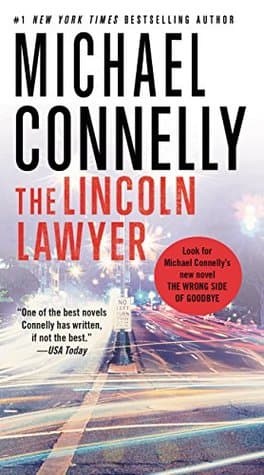
- The Lincoln Lawyer
Michael Connelly
4.2 (193k) average on GoodreadsThrillerInvolves a protagonist juggling intense professional demands with complicated personal life issues.
- The Likeness
Tana French
4.0 (126k) average on GoodreadsThriller"Run for Your Life" prioritizes immediate plot momentum and external conflict, whereas French's The Likeness delves into intricate psychological depth, exploring character identity and motivation with a slower, more introspective pace. Patterson's characters are often defined by their actions; French's are defined by their internal worlds and complex relationships.
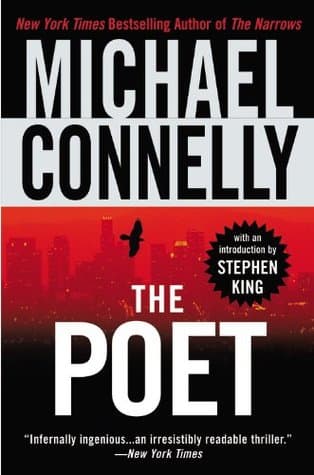
- The Poet
Michael Connelly
4.2 (82k) average on GoodreadsThrillerWhile both are thrillers, Connelly's The Poet offers a more detailed and nuanced detective procedural, focusing on the intricacies of investigation, forensic evidence, and legal processes. Patterson's "Run for Your Life" is less concerned with procedural realism and more focused on the high-stakes cat-and-mouse game between the detective and the killer, favoring dramatic tension over investigative detail. Connelly builds suspense through meticulous uncovering of facts; Patterson through rapid plot progression and escalating threats.
- Angels & Demons
Dan Brown
3.9 (2.7M) average on GoodreadsThrillerA Harvard symbologist races through Rome's ancient sites, deciphering cryptic clues to unmask the Illuminati and stop a vengeful plot to destroy the Vatican with a stolen antimatter weapon.
- Gone Girl
Gillian Flynn
4.1 (2.3M) average on GoodreadsThrillerA wife's sudden disappearance on her fifth anniversary reveals a web of lies and psychological warfare, exposing the secrets within a seemingly perfect marriage.




Enjoyed the summary?
A summary gives you the shape of the book. The book itself has the detail, the examples and the voice.
Find Run for Your Life on AmazonAs an Amazon Associate, BookBrief earns from qualifying purchases. How we're funded