
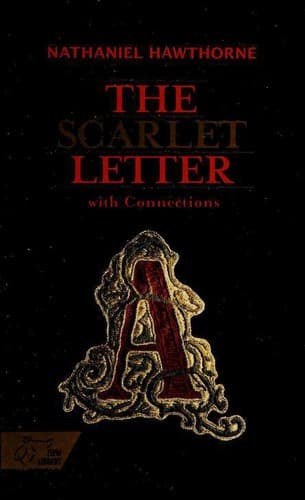
Synopsis
Covers the whole plot, including the ending.
- Difficulty
- Hard
- Pacing
- Slow
- Mood
- Somber, reflective, thought-provoking, critical
- Read it if
- you are studying *The Scarlet Letter* and want supplementary materials for deeper analysis, enjoy classic American literature with rich psychological depth, or are interested in themes of sin, guilt, and societal judgment within a historical context. It's also great for those who appreciate a blend of fiction with critical essays and related works.
- Skip it if
- you prefer fast-paced modern thrillers, dislike classic literature with archaic language, or are not interested in historical fiction or deep moral/psychological explorations.
Scarlet Letter with Connections Plot Summary
Covers the whole plot, including the ending.
The Custom-House
The narrator, a fictionalized Nathaniel Hawthorne, describes his time as a surveyor at the Salem Custom-House. He details the dull routines, the building's decay, and the odd people he works with. There, he finds a dusty, faded scarlet 'A' on a piece of cloth and a manuscript about Hester Prynne's life. This discovery inspires his novel. He sees the Custom-House as a place where the past lingers, connecting him to the historical events and moral issues that will form his story. This sets the stage for the main narrative and establishes the author as a chronicler of a past era.
The Market-Place
The story begins in 17th-century Puritan Boston. Hester Prynne is led from prison to the scaffold in the market-place, carrying her three-month-old baby, Pearl. She must wear a scarlet 'A' (for Adulteress) on her chest for life as a public mark of her sin. Despite the crowd's harsh judgment and the stern faces of the town leaders, Hester acts with dignity, refusing to name her child's father. The scene shows the Puritan community's strict moral code and severe punishment for sin, especially for women, while also showing Hester's initial strength against public condemnation.
The Recognition
On the scaffold, Hester sees an old, deformed man in the crowd. He is a stranger to Boston but known to her: her husband, Roger Chillingworth, presumed lost at sea. Chillingworth signals Hester to keep his identity secret. He learns of Hester's public shaming and her refusal to name the father. His eyes show curiosity and a desire for revenge. Later, Chillingworth visits Hester in prison, posing as a doctor. He makes her promise not to reveal his true identity, vowing to find her lover and get his revenge. This starts the central conflict of psychological torment and hidden sin.
Hester at Her Needle
Released from prison, Hester stays in Boston, living in a secluded cottage outside town. She supports herself and Pearl by her skill as a seamstress, creating beautiful embroidery for the community. However, she is forbidden to decorate her own scarlet letter. Despite her talent, she remains an outcast, facing public scorn and sermons about her sin. Pearl, her daughter, grows into a wild, mischievous child, often seen as a physical reminder of Hester's sin. Their isolation shows the lasting impact of the community's judgment and Hester's ongoing penance as she raises her unique child.
Pearl's Visit to the Governor
Years pass, and Pearl's unusual, sometimes naughty behavior worries the Puritan elders. They suggest she might be a demon-child and Hester an unfit mother. Governor Bellingham and other important figures decide to take Pearl from Hester. Hester, upset, goes to the Governor's mansion with Pearl to argue her case. During the visit, Pearl's erratic behavior is clear, but Hester passionately argues that she can teach Pearl important lessons from her own suffering. Reverend Dimmesdale, with unexpected eloquence, supports Hester, convincing the Governor and others to let Pearl stay with her mother.
The Leech and His Patient
Roger Chillingworth, now a respected doctor, gains acceptance in the community. He dedicates himself to caring for Reverend Dimmesdale, whose health has been declining due to a mysterious heart problem and inner turmoil. Chillingworth moves into Dimmesdale's home, supposedly to provide constant care. However, Chillingworth, driven by revenge, begins to subtly torment Dimmesdale, suspecting the minister is Pearl's father. He questions Dimmesdale's conscience, looking for signs of a hidden sin. He becomes a 'leech' who drains the minister's spiritual and physical health, turning their relationship into a torturous game.
The Minister's Vigil
Overwhelmed by guilt and Chillingworth's torment, Dimmesdale performs secret, painful penances in his private rooms, including self-flagellation and long vigils. One night, he climbs onto the scaffold where Hester was shamed years ago, hoping for public confession but finding none. Hester and Pearl happen to pass by, returning from Governor Winthrop's deathbed, and join Dimmesdale on the scaffold. A meteor streaks across the sky, appearing to form a red 'A.' This moment of shared, hidden connection highlights their intertwined fates and Dimmesdale's deepening internal conflict, along with the supernatural elements that often accompany moral crises in the story.
A Forest Interview
Years later, Hester, seeing Dimmesdale's worsening condition, realizes the extent of Chillingworth's cruel torment. She meets Dimmesdale in the forest and reveals Chillingworth's true identity as her vengeful husband. Dimmesdale is horrified and at first angry at Hester for keeping this secret. However, he quickly forgives her, recognizing the greater evil of Chillingworth's actions. They discuss their past and the burden of their secret. In a moment of rekindled hope and passion, they decide to flee Boston with Pearl and start a new life in Europe, away from the oppressive Puritan society and Chillingworth's influence. This meeting is a turning point, offering a glimpse of possible freedom.
The Election Sermon
The day of the Election Sermon arrives, a major public event in Puritan Boston. Dimmesdale, energized by his decision to flee with Hester and Pearl, delivers his most powerful sermon yet, inspiring the congregation. However, immediately after the sermon, as the procession leaves the church, Dimmesdale, looking pale and weak, sees Hester and Pearl waiting. He calls them to join him on the scaffold, publicly confessing his sin to the astonished community. He tears open his ministerial robe, revealing a self-inflicted 'A' on his chest, then collapses and dies in Hester's arms, finally free from his torment.
The Conclusion
After Dimmesdale's death, Chillingworth, without his object of revenge, wastes away and dies within a year, leaving a large inheritance to Pearl. Hester and Pearl eventually leave Boston, disappearing for many years. Pearl, now a wealthy heiress, travels to Europe, marries into aristocracy, and presumably finds happiness and belonging. Hester, however, eventually returns to her old cottage in Boston, resuming her scarlet 'A' voluntarily. She continues to help and advise other women, her letter changing from a mark of shame into a symbol of empathy and wisdom. She is eventually buried next to Dimmesdale, sharing a single gravestone marked with a scarlet 'A', signifying their lasting, intertwined legacy.
Scarlet Letter with Connections Characters
Hester Prynne
Protagonist
The wearer of the scarlet letter, a woman of strength and resilience.
Hester Prynne is a young, beautiful, and dignified woman who commits adultery in Puritan Boston and is condemned to wear a scarlet 'A' on her chest. Despite public shaming and ostracization, she maintains her composure and integrity. She is a skilled seamstress, providing for herself and her daughter, Pearl. Hester embodies defiance and resilience in the face of societal judgment, evolving from a public sinner to a figure of quiet strength and compassion. Her journey is one of endurance, penance, and eventual redemption through her good works and empathy for others.
Relationships: Pearl (Mother-daughter); Arthur Dimmesdale (Lover/father of Pearl); Roger Chillingworth (Husband)
Arthur Dimmesdale
Protagonist
The tormented minister, secretly Pearl's father.
Reverend Arthur Dimmesdale is a highly respected and eloquent young Puritan minister, secretly the father of Pearl and Hester's lover. He is consumed by guilt and hypocrisy, unable to confess his sin publicly, which leads to severe physical and psychological deterioration. His internal suffering is exacerbated by Roger Chillingworth's relentless psychological torment. Dimmesdale represents the devastating effects of unconfessed sin and the corrosive power of hypocrisy within a rigid moral framework. He is a man torn between his public image of piety and his private agony.
Relationships: Hester Prynne (Lover/mother of Pearl); Pearl (Father-daughter); Roger Chillingworth (Physician/tormentor)
Roger Chillingworth
Antagonist
Hester's vengeful, deformed husband.
Roger Chillingworth is Hester Prynne's elderly, deformed husband, a scholar and physician who arrives in Boston after being held captive by Native Americans. Upon discovering Hester's public shaming, he dedicates his life to uncovering her lover's identity and exacting revenge. He masquerades as a physician, attaching himself to Dimmesdale, whom he suspects, and systematically tortures him psychologically. Chillingworth embodies pure, cold revenge, transforming from a learned man into a fiendish, malevolent figure consumed by his destructive obsession. He represents the corrupting power of vengeance and hatred.
Relationships: Hester Prynne (Husband); Arthur Dimmesdale (Victim/tormented)
Pearl
Supporting
Hester's wild, impish daughter, a living symbol of the scarlet letter.
Pearl is Hester Prynne's illegitimate daughter, a wild, unconventional, and intuitive child. She is often described as an 'elf-child' or 'demon-child' by the Puritan community due to her capricious nature and unusual perceptiveness. Pearl is a living embodiment of the scarlet letter, a constant reminder of Hester's sin, yet also a source of joy and purpose for her mother. She possesses a keen awareness of the hidden truths around her, particularly regarding her mother's letter and Dimmesdale's secret. Her development is crucial to the resolution of the story, as she only becomes fully human after Dimmesdale's public confession.
Relationships: Hester Prynne (Daughter); Arthur Dimmesdale (Daughter)
Governor Bellingham
Supporting
A stern, conservative Puritan magistrate.
Governor Bellingham is an elderly, rigid Puritan magistrate and a prominent figure in the Boston community. He embodies the strict, unyielding moral code and legalistic interpretations of Puritan society. He is involved in the decision to punish Hester and later considers removing Pearl from Hester's custody, reflecting the community's concern for moral order and control over individual lives. While not inherently malicious, his actions are dictated by the harsh doctrines of his time, making him a symbol of the oppressive societal forces Hester and Dimmesdale face.
Mistress Hibbins
Supporting
The Governor's sister and a rumored witch.
Mistress Hibbins is Governor Bellingham's elderly, widowed sister, notorious in the community for being a witch. She often appears at opportune moments, inviting Hester to join her in the forest for nocturnal gatherings with the Black Man (the Devil). Her character serves as a symbolic representation of the dark, supernatural forces and the lurking presence of evil or rebellion that exists just beneath the surface of the strict Puritan society. She offers Hester a path to explicit defiance and association with the forbidden, highlighting the temptations and alternative paths available to those ostracized by the community.
Relationships: Governor Bellingham (Sister)
John Wilson
Supporting
Boston's eldest and most revered minister.
Reverend John Wilson is an elderly, benevolent, but firm Puritan clergyman, senior to Dimmesdale. He is a respected figure in the community and often participates in the public condemnation of Hester Prynne. While he is less severe than some of the other magistrates, he still upholds the strict doctrines of Puritanism. He attempts to persuade Hester to reveal Pearl's father and later questions Pearl's religious upbringing. He represents the more traditional and established religious authority, providing a foil to Dimmesdale's internal conflict and eventual spiritual turmoil.
The Narrator
Supporting
The fictionalized Nathaniel Hawthorne, who discovers Hester's story.
The narrator, a fictionalized version of Nathaniel Hawthorne, introduces the novel through 'The Custom-House' essay. He serves as the frame for the main narrative, establishing the historical context and his own connection to the story through the discovery of Hester's scarlet 'A' and manuscript. He reflects on the past, the nature of guilt, and the societal pressures that shaped the Puritan era. His voice provides a layer of historical commentary and authorial perspective, emphasizing the enduring relevance of the themes explored in Hester Prynne's tale and the interplay between history and imagination.
Scarlet Letter with Connections Themes
Sin, Guilt, and Hypocrisy
The novel explores sin, both public and private. Hester's public sin and punishment allow her to find peace and redemption, as her guilt is open. In contrast, Dimmesdale's hidden sin and hypocrisy lead to his physical and psychological decay, showing the corrosive power of unconfessed guilt. The Puritan community's harsh judgment of Hester, while ignoring its own moral failings, highlights the hypocrisy in rigid societal codes. The theme examines whether open acknowledgment or concealed suffering is more destructive to the human soul.
“It is not, Hester, that I shrank from responsibility for thy sin, or mine. But, Hester, there is a limit beyond which the tormentor may not pass!”
Social Repression vs. Individual Freedom
The strict moral and social codes of the Puritan community are a powerful antagonist in the novel. Hester Prynne's struggle against public condemnation highlights the oppressive nature of a society that demands absolute conformity. Her eventual quiet defiance and capacity for independent thought, particularly her decision to return to Boston, symbolize individual freedom achieved despite, or because of, her initial repression. The forest scenes, where Hester and Dimmesdale feel temporary liberation from societal rules, emphasize the contrast between the stifling town and the liberating wildness.
“The scarlet letter was her passport into regions where other women dared not tread. Shame, Despair, Solitude! These had been her teachers, — stern and wild ones, — and they had made her strong, but taught her much amiss.”
Revenge and Its Corrupting Influence
Roger Chillingworth's character is a clear example of the destructive nature of revenge. Initially a learned and relatively kind man, his obsession with tormenting Hester's lover turns him into a fiendish, malevolent figure. His psychological torture of Dimmesdale shows how vengeance consumes the avenger, stripping away their humanity and leaving a hollow, hateful shell. Chillingworth's death, once his object of revenge is gone, shows that a life dedicated solely to malice is self-destructive and leaves one with nothing.
“He had been calm, pure, lofty, wise, blameless. But now, his spirit was broken, his will was gone, his character was warped. His whole being was a lie.”
Nature vs. Civilization
The novel often contrasts the rigid order of Puritan society with the wild freedom of nature, especially the forest. The town represents civilization, law, and moral judgment, where sin is publicly condemned and conformity enforced. The forest, on the other hand, is a place of refuge, secret meetings, and moral ambiguity, where Hester and Dimmesdale can temporarily shed their societal roles and express their true selves. Pearl, with her wild nature, often symbolizes the untamed aspects of humanity that defy societal control, embodying nature's spirit within civilization's confines.
“The great black forest—for the dwellers in the town, the one place where they could hope to find rest from the eye of the law, and communion with a spirit that was not of this world.”
Identity and Public vs. Private Self
A main theme is how identity is shaped by societal perception versus personal truth. Hester's identity is publicly defined by the scarlet letter, yet her inner strength and compassion create a different, more complex self. Dimmesdale struggles with his dual identity: the revered minister in public and the guilt-ridden sinner in private. The tension between these selves ultimately destroys him. The novel questions the authenticity of an identity built on pretense and explores the psychological cost of living a lie, contrasting it with the painful freedom of an openly acknowledged identity.
“No man, for any considerable period, can wear one face to himself, and another to the multitude, without finally getting bewildered as to which may be the true.”
Plot Devices & Literary Techniques
The Scarlet Letter 'A'
A multi-layered symbol of sin, shame, and eventually, strength.
The scarlet letter 'A' is the central and most potent symbol in the novel. Initially, it represents 'Adultery,' a mark of public shame and condemnation. Over time, its meaning evolves, reflecting Hester's resilience and good works, leading some to interpret it as 'Able' or even 'Angel.' It is a dynamic symbol that changes with perception and context, embodying the complex interplay between individual identity and societal judgment. It also serves as a physical representation of Hester's penance and her enduring connection to her past, becoming a constant visual reminder of the central conflict.
Symbolism of Nature (The Forest)
A place of freedom, passion, and moral ambiguity.
The forest functions as a symbolic contrast to the rigid, ordered Puritan town. It is a place where societal rules are relaxed, where Hester and Dimmesdale can meet in secret, and where their passion briefly rekindles. It represents nature's wildness, freedom, and a more natural, less constrained morality. Pearl, with her elfin nature, often seems most at home in the forest, interacting with animals and embodying its untamed spirit. The forest is a temporary sanctuary from the oppressive judgment of the community, allowing for moments of truth and liberation.
Psychological Realism
Exploration of inner turmoil, guilt, and the human mind.
Hawthorne employs psychological realism by delving deeply into the internal states of his characters, particularly Dimmesdale's profound guilt and Chillingworth's vengeful obsession. The narrative meticulously details the corrosive effects of hidden sin on Dimmesdale's psyche and body, and the destructive power of hatred on Chillingworth. Rather than focusing solely on external events, the novel explores the characters' motivations, fears, and moral struggles, making their inner lives as crucial to the plot as their outward actions. This focus on the mind's landscape adds depth and complexity to the exploration of sin and penance.
The Scaffold
A recurring symbol of public judgment, confession, and revelation.
The scaffold is a crucial plot device, appearing at three pivotal moments in the narrative, each time signifying public exposure and revelation. First, it is the site of Hester's initial public shaming. Second, Dimmesdale stands upon it in a private, nocturnal vigil, an unfulfilled attempt at confession. Finally, it is where Dimmesdale makes his public confession, dying in the process. The scaffold consistently represents the Puritan community's authority, the weight of public opinion, and the ultimate arena for confronting hidden truths. Its recurring presence structures the narrative's progression towards a final, climactic revelation.
Irony
Situational and dramatic irony highlighting hypocrisy and moral complexity.
Irony pervades the novel, particularly dramatic and situational irony. For instance, the community reveres Dimmesdale as a saintly minister, unaware of his hidden sin, while Hester, publicly shamed, often displays greater moral strength and honesty. Chillingworth, posing as a healer, is in fact a tormentor. The strict Puritan society, obsessed with rooting out sin, inadvertently creates a deeper, more destructive form of suffering through its rigidity and hypocrisy. These ironic contrasts underscore the novel's critique of superficial morality and the complex, often contradictory, nature of human behavior and societal judgment.
Scarlet Letter with Connections Quotes
“It is a falsehood to say that the heart is always right. It is often wrong, and very wrong, and very wicked.”
“No man, for any considerable period, can wear one face to the world and another to himself.”
“The very law that condemned her (the scarlet letter) had an inherent pulse of life and a spirit which would not be extinguished.”
“It is a curious subject of observation and reflection, how very little the outer world has to do with the inner life of man.”
“The world's persecution had one advantage: it deprived her of the companionship of her own sex, and thus threw her back upon herself.”
“Heretofore, the scarlet letter had been a brand of infamy; but now, at the touch of joy, it seemed to have a soft and tender warmth, and was no longer the one thing with which the poor little creature was identified.”
“It is a good thing to have a conscience.”
“Pearl was a born outcast of the Puritan settlement.”
“The forest was a place of refuge, a sanctuary from the rigid laws and judgmental eyes of the Puritan community.”
“The tendency of society to persecute and condemn those who deviate from its norms.”
“Chillingworth: 'It is not so awfully wrong to be a devil, if it be the only way to be a devil.'”
“The scarlet letter had not done its office thoroughly. Behold, with what a solemn smile she issues forth!”
“The mind is its own place, and in itself can make a heaven of hell, a hell of heaven.”
“No crown of renown was ever won by the simple and innocent heart.”
Quiz
10 questions on the plot and the characters. Each answer comes with a short explanation.
Question 1
In Nathaniel Hawthorne's 'The Scarlet Letter,' what is the primary symbol associated with Hester Prynne's sin?
- A black veil
- A scarlet letter 'A'
- A silver locket
- A golden crown
Show answer
B. A scarlet letter 'A' The scarlet letter 'A' is embroidered on Hester Prynne's chest as a public mark of her adultery.
Question 2
Who is the father of Hester Prynne's child, Pearl?
- Roger Chillingworth
- Governor Bellingham
- Arthur Dimmesdale
- John Wilson
Show answer
C. Arthur Dimmesdale Arthur Dimmesdale, the minister, is revealed to be Pearl's father, though he initially conceals his role.
Question 3
What is the role of Roger Chillingworth in 'The Scarlet Letter'?
- Hester's first lover
- Pearl's godfather
- A physician seeking revenge
- A Puritan judge
Show answer
C. A physician seeking revenge Roger Chillingworth is Hester's wronged husband who returns and dedicates his life to tormenting Dimmesdale.
Question 4
In Edgar Allan Poe's 'The Tell-Tale Heart,' what sound drives the narrator to commit murder?
- The ticking of a clock
- The beating of the old man's heart
- The creaking of the floorboards
- The howling of a dog
Show answer
B. The beating of the old man's heart The narrator claims to hear the increasingly loud beating of the old man's heart, which he perceives as a sign of guilt or presence.
Question 5
Shirley Jackson's 'The Lottery' is set in a seemingly idyllic village. What is the true nature of the annual lottery?
- A celebration of the harvest
- A ritual to choose a new leader
- A sacrifice to ensure good crops
- A lottery for a cash prize
Show answer
C. A sacrifice to ensure good crops The lottery is a brutal tradition where one villager is randomly selected and stoned to death.
Question 6
Elizabeth Cady Stanton's 'Declaration of Rights and Sentiment' was presented at which significant event?
- The Boston Tea Party
- The Seneca Falls Convention
- The Emancipation Proclamation signing
- The March on Washington
Show answer
B. The Seneca Falls Convention The 'Declaration of Rights and Sentiment' was modeled after the Declaration of Independence and presented at the first women's rights convention in Seneca Falls, New York.
Question 7
In 'The Scarlet Letter,' what is the significance of the 'Custom House' introduction?
- It establishes the setting of the story.
- It explains the historical context of Puritan New England.
- It introduces the main characters and their relationships.
- It provides a critique of the U.S. government.
Show answer
B. It explains the historical context of Puritan New England. The 'Custom House' essay serves as a frame narrative, where the narrator discusses his own experiences and finds the original scarlet letter, setting the stage for the novel.
Question 8
Who is implied to have killed Arthur Dimmesdale, according to the provided connections?
- Hester Prynne
- Pearl
- Roger Chillingworth
- The question is unanswerable from the text
Show answer
C. Roger Chillingworth While not explicitly stated as murder, Roger Chillingworth's relentless psychological torment and manipulation of Dimmesdale ultimately contribute to his death.
Question 9
The phrase 'A double standard' by Frances E.W. Harper likely refers to:
- The differing legal systems for men and women.
- The unequal treatment of men and women regarding morality and social expectations.
- The hypocrisy of religious leaders.
- The economic disparity between social classes.
Show answer
B. The unequal treatment of men and women regarding morality and social expectations. Frances E.W. Harper was a prominent abolitionist and suffragist, and 'A double standard' likely addresses the societal norms that judged women more harshly than men for the same transgressions, particularly in relation to sexuality.
Question 10
Elinor Wylie's 'Puritan sonnet' and Doreen Rappaport's 'Nor fitting for your sex' both likely explore themes related to:
- The beauty of the New England landscape.
- The religious fervor of early settlers.
- The restrictive societal roles and expectations placed upon women.
- The challenges of survival in a harsh environment.
Show answer
C. The restrictive societal roles and expectations placed upon women. Given the context of 'The Scarlet Letter' and other connected texts like Stanton's and Harper's, these titles suggest a critique or exploration of the limitations and judgments imposed on women within Puritan or similar patriarchal societies.
Scarlet Letter with Connections FAQ
What is the Scarlet Letter about?
The Scarlet Letter is a historical novel by Nathaniel Hawthorne set in the Puritan Massachusetts Bay Colony. It tells the story of Hester Prynne, who conceives a daughter through an affair and struggles to create a new life of passion and determination.
Who is Arthur Dimmesdale?
Arthur Dimmesdale is the respected young minister of the Boston community and Hester Prynne's secret lover. He is tormented by guilt over their sin and his failure to confess it publicly.
What does the scarlet letter 'A' symbolize?
Initially, the scarlet letter 'A' on Hester Prynne's chest symbolizes her sin of adultery. Over time, as Hester lives with dignity and resilience, the meaning of the 'A' evolves to represent 'Able' or 'Angel' to the community.
What is the significance of 'The Custom House' introduction?
The Custom House introduction provides historical context and a frame narrative for the novel. Hawthorne uses it to explore his own connection to the past and the themes of history, memory, and the role of the author.
How does Hester Prynne's character develop?
Hester Prynne transforms from a societal outcast shamed for her sin into a strong, independent woman. She endures public humiliation with grace and raises her daughter, Pearl, on her own terms.
What is the role of Pearl in The Scarlet Letter?
Pearl is Hester's daughter, a wild and intuitive child who serves as a constant reminder of the sin. She often acts as a catalyst for the truth and reflects the unresolved tensions within the community and her parents.
What is the main conflict in The Scarlet Letter?
The central conflict revolves around sin, guilt, and redemption. It explores the consequences of hidden sin versus public confession, and the hypocrisy within the strict Puritan society.
Are there connections to other works in this edition?
Yes, this edition includes connections to other literary works such as Shirley Jackson's 'Lottery,' Edgar Allan Poe's 'Tell-tale Heart,' and writings by Elizabeth Cady Stanton and Frances E.W. Harper, exploring themes of societal judgment and double standards.
What does 'Connections: Who killed Arthur Dimmesdale?' imply?
This title suggests an exploration of the various factors and individuals, both internal and external, that contributed to Arthur Dimmesdale's physical and psychological decline, hinting at a collective responsibility for his fate.
What is the historical context of The Scarlet Letter?
The novel is set in the mid-17th century Puritanical society of the Massachusetts Bay Colony, a time characterized by strict religious laws, public shaming, and a rigid social structure.
About the author
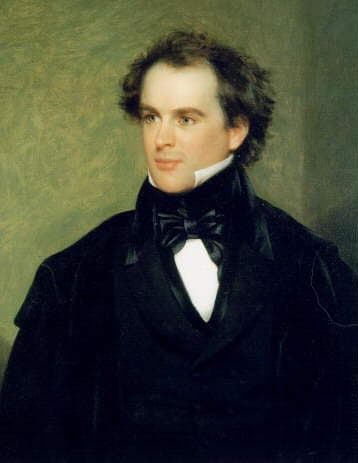
Nathaniel Hawthorne was an American novelist and short story writer. His works often focus on history, morality, and religion.
Similar books
- The Crucible
Arthur Miller
3.6 (323k) average on GoodreadsHistorical FictionExplores Puritan society, hysteria, and false accusations.
- Ethan Frome
Edith Wharton
3.4 (108k) average on GoodreadsHistorical FictionDeals with forbidden love, moral dilemmas, and societal constraints.
- Harry Potter and the Sorcerer's Stone
J.K. Rowling
4.5 (7M) average on GoodreadsFantasyRescued from a miserable life under the stairs, an orphaned boy discovers he's a wizard destined for a magical school, where he uncovers a dangerous secret tied to the dark wizard who murdered his parents.
- The Hunger Games
Suzanne Collins
4.3 (6.4M) average on GoodreadsFantasyIn a future where children fight to the death on live television, Katniss Everdeen volunteers for the arena, turning a death sentence into a fight for survival and a spark of rebellion.
- Nineteen Eighty-Four
George Orwell
4.2 (5.5M) average on GoodreadsFictionWinston Smith dreams of truth and rebellion in a world where Big Brother watches all, but he confronts the terrifying power of a regime that controls not just actions, but thoughts.
- Pride & Prejudice
Jane Austen
4.3 (4.9M) average on GoodreadsElizabeth Bennet and Mr. Darcy navigate love and misunderstanding, learning that first impressions can be wrong.





Enjoyed the summary?
A summary gives you the shape of the book. The book itself has the detail, the examples and the voice.
Find Scarlet Letter with Connections on AmazonAs an Amazon Associate, BookBrief earns from qualifying purchases. How we're funded