
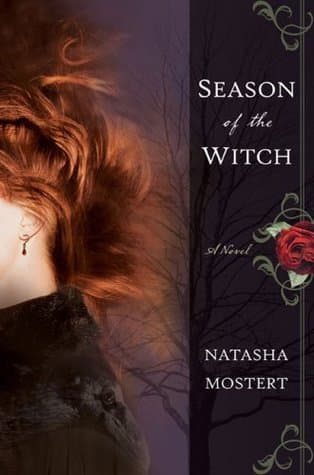
Synopsis
Covers the whole plot, including the ending.
- Difficulty
- Medium
- Pacing
- Moderate
- Mood
- Atmospheric, Suspenseful, Mysterious, Romantic
- Read it if
- You enjoy gothic thrillers with a blend of ancient magic, modern technology, and a compelling love triangle.
- Skip it if
- You prefer straightforward mysteries without supernatural elements or complex psychological battles.
Season of the Witch Plot Summary
Covers the whole plot, including the ending.
A Plea from the Past
Gabriel Blackstone, an information thief and remote viewer, lives a solitary life. His routine changes when his former lover, Clara, contacts him. She is distraught over the disappearance of her stepson, Gideon, a young man who dabbled in esoteric practices. Clara suspects Gideon's recent interest in alchemy and a pair of reclusive, wealthy sisters, Minnaloushe and Morrighan Monk, might be connected to his vanishing. Gabriel, despite his reservations about Clara and their past, feels compelled to take the case, intrigued by the unusual circumstances and the sisters' mysterious reputation. He begins his investigation by researching the Monk sisters, looking into their unusual interests and their isolated life in a grand Victorian house in London.
The Monk Sisters' Labyrinth
Gabriel's initial remote viewing attempts on the Monk sisters prove challenging. He senses a powerful mental barrier around their Victorian home, hinting at advanced mental disciplines. His research reveals their deep immersion in alchemy and the ancient Art of Memory, practices far beyond casual interest. He learns they are independently wealthy, allowing them to dedicate their lives to these pursuits. Gabriel's suspicions are heightened when he finds evidence of Gideon's increasing involvement with the sisters, specifically his attempts to learn their methods. The more he observes Minnaloushe and Morrighan, the more their world seems to be a complex, carefully constructed labyrinth of intellect and arcane knowledge, drawing him in despite the clear danger.
Infiltration and Attraction
Driven by a need for closer access, Gabriel physically infiltrates the Monk sisters' house. He uses his hacking skills to disable their security systems and his stealth to navigate the sprawling, antique-filled rooms. During his clandestine searches, he discovers intricate alchemical diagrams, ancient texts, and evidence of advanced memory palaces. He also encounters the sisters themselves, observing their interactions and sensing their powerful, almost ethereal presence. He finds himself increasingly drawn to Minnaloushe, the more outwardly ethereal and intellectual of the two, despite his professional detachment. This unexpected attraction complicates his mission, blurring the lines between investigation and personal involvement.
The Art of Memory Revealed
Through his observations and stolen documents, Gabriel begins to understand the Monk sisters' mastery of the Art of Memory. He realizes they are not merely dabbling in a historical curiosity but have refined it into a sophisticated system for information storage and manipulation, creating vast, intricate mental spaces. He learns their ultimate goal is not to turn lead into gold, but to achieve a form of ultimate knowledge and power through this mental architecture, a process they refer to as 'solar alchemy.' This revelation shifts his understanding of their 'witchcraft' from a mystical practice to a highly disciplined, intellectual pursuit.
Gideon's Fate Uncovered
As Gabriel looks deeper, he uncovers disturbing evidence suggesting Gideon's disappearance was not voluntary. He finds fragmented notes and mental imprints indicating Gideon was attempting to learn the sisters' advanced Art of Memory techniques but struggled to keep pace. Gabriel pieces together that Gideon likely overreached, attempting to access or replicate their complex mental constructs without proper training or understanding. The chilling realization dawns on him: Gideon wasn't just missing, he was likely trapped or destroyed within the very mental spaces the sisters had created, a victim of his own ambition and their formidable mental power. This discovery solidifies Gabriel's belief that one of the sisters is responsible for Gideon's demise.
Caught in the Web
Gabriel's clandestine activities eventually lead to his discovery. The sisters, especially the more perceptive Morrighan, become aware of his intrusions. Instead of immediately retaliating, they subtly draw him into their orbit, testing his abilities and observing his reactions. Gabriel finds himself in a dangerous game of cat and mouse, where his own mental prowess is pitted against theirs. He realizes that his initial attraction to Minnaloushe might have been a deliberate ploy to disarm him, and that the sisters are far more dangerous and manipulative than he initially believed. He is now caught in their web, no longer a detached observer but a participant in their intricate, deadly game.
The Trap of Attraction
Despite the mounting evidence of danger and the clear manipulation, Gabriel finds himself increasingly captivated by Minnaloushe. Her intellect, her ethereal beauty, and the depth of her knowledge exert a powerful pull on him. He struggles to reconcile his professional duty to expose the truth about Gideon with his personal feelings. He questions whether his attraction is genuine or another facet of the sisters' psychological warfare. This emotional entanglement compromises his judgment, making him vulnerable to their machinations and blurring the lines of morality and self-preservation. He is torn between his mission and a dangerous, illicit desire.
The Mind Palace Battle
The conflict escalates when Gabriel is drawn into a direct mental confrontation. One of the sisters, revealed to be the true antagonist, forces Gabriel into a battle within her own mind – a vast and complex memory palace. This is not a physical fight, but a high-stakes duel of wills, intellect, and mental fortitude. Gabriel must navigate the treacherous, symbolic architecture of her consciousness, searching for weaknesses and truth, while simultaneously defending his own mind from her attacks. The stakes are his life and sanity, and the truth about Gideon's murder hangs in the balance within this abstract battlefield.
Unmasking the Killer
During the intense mental battle, Gabriel uncovers the truth about Gideon's fate and the identity of his killer. It is revealed that Morrighan, the more practical and ruthless sister, was directly responsible for Gideon's demise. Gideon, in his ambition, had attempted to steal or forcibly access their most guarded mental constructs, leading Morrighan to trap and ultimately destroy his consciousness within her own mind palace. Minnaloushe, while aware of her sister's actions, had been conflicted and less directly involved in the fatal act. This revelation shatters Gabriel's perceptions and forces him to confront the dark side of the sisters' abilities.
The Aftermath and Escape
Having unmasked Morrighan and survived the mental confrontation, Gabriel manages to extract himself from the sisters' dangerous influence, though with significant mental and emotional scars. He escapes the Victorian house, leaving the Monk sisters and their arcane world behind. The experience changed him; his understanding of reality, consciousness, and power is altered. While he might have saved himself, and possibly Minnaloushe from her sister's darker influence, the encounter leaves him with a lingering sense of unease and a deeper appreciation for the hidden, formidable forces that exist beyond the conventional realm. He carries the weight of what he witnessed, a lone survivor of a unique and terrifying encounter.
Principal Figures
Gabriel Blackstone
Protagonist
An information thief and remote viewer drawn into a world of mental alchemy.
Gabriel is a highly skilled hacker and 'remote viewer,' a rare ability allowing him to perceive events at a distance. He is intelligent, analytical, and initially detached, preferring to observe from the shadows. His past relationship with Clara hints at a capacity for emotional connection, though he generally maintains a cynical, self-protective facade. He is driven by a strong sense of curiosity and a need to uncover truth, even when it puts him in grave danger. His unique mental abilities make him both an ideal investigator and a formidable opponent.
Relationships: Clara (Former lover, client); Minnaloushe Monk (Object of dangerous attraction, intellectual sparring partner); Morrighan Monk (Antagonist, formidable mental opponent); Gideon (The missing stepson he investigates)
Minnaloushe Monk
Supporting/Love Interest
One of two powerful witch sisters, ethereal and intellectually captivating.
Minnaloushe is one of the Monk sisters, independently wealthy and deeply immersed in the Art of Memory and 'solar alchemy.' She is portrayed as the more ethereal, intellectual, and perhaps more conflicted of the two. Her beauty and profound knowledge are captivating, drawing Gabriel in despite the danger. She possesses immense mental power but seems to operate with a different moral compass than her sister, hinting at an internal struggle. She is a master of mental manipulation and the Art of Memory, capable of constructing vast inner worlds.
Relationships: Morrighan Monk (Sister, partner in alchemy, accomplice/victim of manipulation); Gabriel Blackstone (Object of dangerous attraction, intellectual sparring partner); Gideon (Student/victim of the sisters' practices)
Morrighan Monk
Antagonist
The more ruthless and pragmatic of the two witch sisters.
Morrighan is the other Monk sister, equally brilliant and powerful in the Art of Memory but far more pragmatic and ruthless than Minnaloushe. She is the driving force behind the sisters' more extreme pursuits, willing to eliminate obstacles to achieve their ultimate knowledge and power. She is highly perceptive and quickly identifies Gabriel's intrusion, becoming his primary mental adversary. Her lack of compunction and cold intellect make her a truly formidable and terrifying antagonist, embodying the dangerous extremes of their 'solar alchemy.'
Relationships: Minnaloushe Monk (Sister, partner in alchemy, dominant influence); Gabriel Blackstone (Primary mental adversary); Gideon (Victim of her ruthlessness)
Clara
Supporting
Gabriel's former lover and the catalyst for his investigation.
Clara is Gabriel's former lover who initiates the plot by asking him to investigate her stepson Gideon's disappearance. She is distraught and desperate, representing the conventional world's helplessness against the esoteric forces at play. Her past relationship with Gabriel adds a layer of personal complexity to his involvement, although her role is primarily to set the events in motion. She is not privy to the full extent of the sisters' powers, only their suspicious reclusiveness.
Relationships: Gabriel Blackstone (Former lover, client); Gideon (Stepson)
Gideon
Mentioned/Victim
Clara's stepson, whose disappearance triggers the investigation.
Gideon is Clara's stepson, a young man with a fascination for esoteric practices, particularly alchemy and the Art of Memory. He is ambitious and perhaps naive, drawn to the Monk sisters' knowledge but ultimately overwhelmed and destroyed by their advanced techniques. His ambition to gain ultimate knowledge mirrors, in a twisted way, the sisters' own goals, but without their discipline or innate power. He serves as a cautionary tale, demonstrating the perils of dabbling in forces beyond one's understanding.
Relationships: Clara (Stepson); Minnaloushe Monk (Teacher/observer); Morrighan Monk (Teacher/killer)
Themes & Insights
The Allure and Danger of Ultimate Knowledge
The novel explores the human desire for ultimate knowledge and the perilous path one takes to achieve it. The Monk sisters represent the extreme pursuit of this goal through their mastery of the Art of Memory and 'solar alchemy,' aiming for ultimate power through understanding. Gideon's demise is a stark warning about the dangers of seeking such knowledge without proper discipline or respect for its inherent risks. Gabriel himself is drawn into this pursuit, risking his sanity and life to uncover the sisters' secrets, reflecting the intoxicating nature of forbidden knowledge. The theme highlights that while knowledge can be empowering, its unrestrained pursuit can lead to destruction.
“The mind, when properly trained, can become a weapon, a fortress, or a labyrinth. But woe betide those who enter without a map.”
Mind as a Landscape
A central theme is the concept of the human mind not just as a faculty, but as a tangible, navigable space. The Art of Memory is depicted as a method for constructing intricate 'memory palaces' within the mind, allowing for vast information storage and manipulation. The sisters' home itself is a physical manifestation of their mental architecture. The climax of the story, a mental duel within Minnaloushe's mind palace, literally transforms the mind into a battlefield. This theme blurs the lines between internal thought and external reality, suggesting that consciousness can be a space as real and dangerous as any physical location.
“Her mind was a cathedral of thought, vast and intricate, but with shadowed crypts where secrets lay buried.”
Manipulation and Deception
The narrative is steeped in layers of manipulation and deception, both mental and interpersonal. The Monk sisters, particularly Morrighan, are masters of psychological warfare, using their intellect and allure to control others. Gabriel, as an information thief, is himself a practitioner of deception, but he finds himself outmaneuvered by the sisters' more profound techniques. Minnaloushe's ambiguous role and her attraction to Gabriel also serve as a form of manipulation, blurring his judgment. This theme highlights the constant struggle between truth and illusion, and how easily one's perceptions can be twisted by powerful minds.
“Every glance, every word, was a carefully constructed path leading precisely where she wished me to go.”
The Nature of Power
The novel explores different facets of power: the tangible power of wealth and influence, the intellectual power of knowledge and memory, and the almost supernatural power of advanced mental abilities. The Monk sisters wield all three, using their inherited wealth to fund their esoteric pursuits and their mastery of the Art of Memory to achieve a form of ultimate intellectual dominance. The conflict arises from the struggle for this power, as Gabriel attempts to dismantle their control. The theme questions the responsibility that comes with such power and the moral compromises made in its pursuit, especially when it extends into the very fabric of consciousness.
“They sought not to turn lead to gold, but to transmute consciousness itself into pure, unadulterated power.”
Plot Devices & Literary Techniques
Remote Viewing
Gabriel's psychic ability to perceive distant events.
Remote viewing is Gabriel Blackstone's primary investigative tool and a key plot device. It allows him to gather initial information about the Monk sisters and their home without immediate physical risk. This ability introduces the fantastical element early on, establishing that the story operates beyond conventional reality. It also serves as a precursor to the more advanced mental battles, demonstrating a baseline level of psychic ability that Gabriel possesses, preparing the reader for the sisters' even greater mental prowess.
The Art of Memory (Memory Palace)
An ancient mnemonic technique used by the sisters for ultimate knowledge.
The Art of Memory, specifically the construction of 'memory palaces,' is the central plot device driving the sisters' power and the core mystery. It is initially presented as an esoteric historical curiosity but quickly evolves into a sophisticated, almost magical system for organizing, accessing, and manipulating vast amounts of information within the mind. This device creates the unique setting for the climax (the mental duel), explains the sisters' advanced intellect, and provides the mechanism for Gideon's demise, making the mind itself a dangerous, navigable space.
The Gothic Victorian House
A sprawling, antique-filled mansion that reflects the sisters' minds.
The Monk sisters' rambling Victorian house serves as more than just a setting; it is a physical manifestation of their complex, antique-filled minds and their reclusive lifestyle. Its labyrinthine corridors, hidden rooms, and ancient artifacts mirror the intricate mental landscapes they construct with the Art of Memory. The house creates an atmosphere of mystery, history, and subtle menace, enhancing the gothic thriller elements of the story and providing a tangible representation of the sisters' inner worlds.
The Love Triangle (Implied/Dangerous)
Gabriel's dangerous attraction to Minnaloushe.
While not a traditional love triangle in the romantic sense, Gabriel's dangerous attraction to Minnaloushe, contrasted with his professional duty and the threat posed by Morrighan, functions as a powerful plot device. It complicates Gabriel's mission, compromises his judgment, and raises the personal stakes. This emotional entanglement provides a strong internal conflict for Gabriel and serves as a potential vulnerability that the sisters exploit, adding a layer of psychological tension and human drama to the intellectual and fantastical elements.
Season of the Witch Quotes
“Love is not a feeling, it's a decision. It's an act of will.”
“Some secrets are best left buried, not because they are evil, but because their truth would shatter the world as we know it.”
“The past is never truly gone. It lurks in the shadows, waiting for the opportune moment to reclaim its hold.”
“Magic isn't about waving wands and incantations; it's about understanding the hidden connections, the subtle energies that bind the universe.”
“Fear is the oldest and strongest emotion of mankind, and the oldest and strongest kind of fear is fear of the unknown.”
“There are more things in heaven and earth, Horatio, than are dreamt of in your philosophy.”
“Every choice we make, no matter how small, sends ripples through the fabric of destiny.”
“The greatest trick the devil ever pulled was convincing the world he didn't exist.”
“Sometimes, the only way to find your true self is to get lost first.”
“Power is a dangerous mistress. It promises freedom, but often delivers only chains.”
“The heart has its reasons, which reason knows nothing of.”
“To truly see, you must first learn to close your eyes to what you think you know.”
“Even in the darkest night, there is always a flicker of light, a spark of hope waiting to be rekindled.”
Quiz
10 questions on the plot and the characters. Each answer comes with a short explanation.
Question 1
What is Gabriel Blackstone's primary profession at the beginning of the story?
- Private Investigator
- Hacker and Information Thief
- University Professor
- Art Dealer
Show answer
B. Hacker and Information Thief Gabriel Blackstone is introduced as a hacker and information thief, skilled in 'remote viewing,' making 'b' the correct answer.
Question 2
What ancient practice do the Monk sisters primarily dabble in, besides alchemy?
- Astronomy
- The Art of Memory
- Necromancy
- Divination with Tarot Cards
Show answer
B. The Art of Memory The Monk sisters are described as dabbling in alchemy and the ancient 'Art of Memory,' which was invented by the Greeks.
Question 3
What is the ultimate goal of the Monk sisters' 'white' or 'solar' alchemy?
- To turn lead into gold
- To achieve immortality
- To attain ultimate knowledge and therefore ultimate power
- To heal the sick
Show answer
C. To attain ultimate knowledge and therefore ultimate power The text states that the sisters aim to use alchemy 'not to turn lead into gold but to attain ultimate knowledge and therefore ultimate power.'
Question 4
Who initially asks Gabriel to investigate the disappearance of her stepson?
- Minnaloushe Monk
- Morrighan Monk
- A former lover of Gabriel's
- The stepson's mother
Show answer
C. A former lover of Gabriel's Gabriel is asked by a 'former lover' to investigate the disappearance of her stepson, which is the inciting incident for his involvement.
Question 5
What specific type of dwelling do the Monk sisters inhabit in London?
- A modern penthouse apartment
- A sprawling Victorian house
- A minimalist loft
- A historic castle
Show answer
B. A sprawling Victorian house The Monk sisters live in a 'rambling Victorian house in London,' which adds to the gothic atmosphere.
Question 6
What specific skill does Gabriel possess that makes him suitable for investigation beyond typical hacking?
- Forensic Accounting
- Martial Arts Expertise
- Remote Viewing
- Advanced Cryptography
Show answer
C. Remote Viewing Gabriel is described as a 'skilled 'remote viewer',' which is a key ability he uses in the story.
Question 7
What is Gabriel's immediate conclusion about the client's stepson's disappearance once he begins his investigation?
- He ran away to join a cult.
- He was kidnapped for ransom.
- He had been murdered by one of the sisters.
- He faked his own death.
Show answer
C. He had been murdered by one of the sisters. Gabriel 'soon becomes convinced that his client’s son had been murdered and that one of the women is the killer.'
Question 8
What is the primary danger Gabriel faces when he is 'caught snooping' by the sisters?
- Being exposed to the authorities
- Financial ruin
- Mortal danger and a fight within one of the sister's minds
- Being forced to join their alchemical experiments
Show answer
C. Mortal danger and a fight within one of the sister's minds When caught, Gabriel 'realizes that he is in mortal danger' and must 'fight one of the sisters within the landscape of her own mind' to save himself.
Question 9
The novel's description compares it to 'The Matrix' and 'Interview with the Vampire.' What thematic elements from these inspirations are most evident in the synopsis?
- A dystopian future and a secret society of vampires.
- Digital infiltration, powerful ancient beings, and a blurring of reality.
- Rebellious artificial intelligence and the history of vampirism.
- Time travel and immortal creatures.
Show answer
B. Digital infiltration, powerful ancient beings, and a blurring of reality. Gabriel's hacking/remote viewing (Matrix) and the powerful, ancient-practicing witch sisters (Interview with the Vampire) suggest digital infiltration, powerful ancient beings, and the blurring of reality, especially with the mind-fight element.
Question 10
The 'Art of Memory' is mentioned as being used by historical figures like Giordano Bruno and Leonardo Da Vinci. What does this detail imply about its nature within the story?
- It is a mundane historical curiosity with no practical use.
- It is a complex system for improving mundane recall, unrelated to magic.
- It is an ancient, esoteric practice with mystical or magical implications, often associated with powerful intellects.
- It is a modern technological innovation disguised as an ancient art.
Show answer
C. It is an ancient, esoteric practice with mystical or magical implications, often associated with powerful intellects. Associating the Art of Memory with alchemists and magi like Bruno and Da Vinci, in the context of 'white witches' seeking 'ultimate knowledge and power,' implies it's an esoteric, perhaps mystical, practice rather than a mundane one.
Season of the Witch FAQ
What is Gabriel Blackstone's primary skill and how does he use it in the story?
Gabriel Blackstone is an information thief and a skilled 'remote viewer.' He uses this ability to mentally project himself into places to gather information, which is crucial for his investigations, including the disappearance of his client's stepson.
Who are Minnaloushe and Morrighan Monk, and what is their unusual pursuit?
Minnaloushe and Morrighan Monk are two independently wealthy, beautiful sisters residing in a Victorian house in London. They are 'solar' witches who dedicate their time to studying alchemy and the ancient Art of Memory, aiming for ultimate knowledge and power rather than material wealth.
What is the central mystery Gabriel is trying to solve?
Gabriel is investigating the disappearance of his former lover's stepson. He quickly suspects that the stepson has been murdered and believes one of the Monk sisters is responsible, leading him to try and uncover which sister is the killer.
How does the ancient Art of Memory connect to the sisters' goals?
The sisters utilize the ancient Art of Memory, a technique used by historical figures like Giordano Bruno and Leonardo Da Vinci, as a means to organize and access vast amounts of knowledge. This practice is integral to their pursuit of ultimate knowledge and power through 'solar' alchemy.
What happens when Gabriel is caught snooping by the sisters?
When Gabriel is discovered infiltrating their world and secrets, he finds himself in mortal danger. He must then race against time to fully unlock their mysteries before they can retaliate against him, intensifying the stakes of his investigation.
How does the concept of 'remote viewing' mirror or contrast with the sisters' 'Art of Memory'?
Gabriel's 'remote viewing' allows him to mentally observe distant locations, while the sisters' 'Art of Memory' is about constructing elaborate mental architectures for knowledge retention. Both involve mental projection and manipulation of information, but Gabriel's is external observation, while the sisters' is internal organization and power.
What is the significance of the sisters being 'solar' witches rather than traditional alchemists seeking gold?
The term 'solar' witches signifies their focus on light, knowledge, and ultimate power, distinct from the material pursuits of traditional alchemy. It suggests a higher, more intellectual or spiritual form of magic, aligning with their pursuit of ultimate understanding rather than base transformation.
How does the 'Matrix meets Interview with the Vampire' comparison manifest in the story's themes?
The 'Matrix' element likely refers to Gabriel's hacker skills, remote viewing, and the mind-bending combat within a mental landscape, while 'Interview with the Vampire' points to the gothic atmosphere, the seductive, ancient nature of the witch sisters, and the potential for a dangerous, immortal love triangle.
What role does the 'love triangle' play in Gabriel's investigation and personal danger?
The love triangle is central to Gabriel's entanglement and peril. As he becomes entranced by one of the sisters, his emotional investment complicates his objective investigation, making him vulnerable and blurring the lines between adversary and lover, ultimately endangering his life.
How does Gabriel's profession as an 'information thief' influence his psychological state throughout the narrative?
Gabriel's life as an information thief likely makes him inherently distrustful and analytical, constantly seeking hidden data. This could lead to a sense of paranoia but also sharpens his observational skills, making him both effective and psychologically isolated.
What psychological vulnerabilities does Gabriel display as he becomes 'entranced' by the sisters?
As Gabriel becomes entranced, he shows vulnerability to manipulation and seduction, potentially compromising his objective judgment. This emotional pull suggests a deep-seated need for connection or a susceptibility to powerful, enigmatic figures, which the sisters expertly exploit.
How might the sisters' dedication to 'ultimate knowledge' impact their moral compass and psychological makeup?
Their singular focus on 'ultimate knowledge' could lead to a detachment from conventional morality, viewing others as mere obstacles or tools in their grand pursuit. Psychologically, this might manifest as extreme intellectualism, arrogance, and a lack of empathy for those who don't share their lofty goals.
What is the psychological impact of fighting 'within the landscape of her own mind' for Gabriel?
Fighting within a sister's mind would be profoundly disorienting and psychologically taxing for Gabriel. It would force him to confront her deepest fears, desires, and defenses, potentially blurring his own sense of self and reality, and demanding immense mental fortitude.
Is Gabriel's client, his former lover, merely a catalyst for the plot, or does she have a deeper role or hidden agenda?
While initially a catalyst, the fact that she is Gabriel's former lover suggests a deeper emotional connection that could be exploited. Her role might extend beyond just hiring him, potentially involving her in the sisters' machinations or having her own secrets related to the stepson's disappearance.
What are the potential implications of the ending where Gabriel has to 'save the one he loves, presuming she is not guilty'?
This phrase suggests a profound moral and emotional dilemma for Gabriel. It implies that the woman he loves, likely one of the sisters, might actually be the killer, forcing him to choose between justice and personal affection, or to redefine his understanding of guilt and innocence.
Could the 'ultimate power' the sisters seek through knowledge extend beyond the physical realm, perhaps impacting reality itself?
Given the 'Matrix' comparison and the mental combat, it's highly plausible that their 'ultimate power' transcends physical boundaries. It could involve the ability to manipulate perceptions, control minds, or even subtly alter the fabric of reality through their advanced understanding and mental prowess.
How might the gothic Victorian setting contribute to the novel's themes of mystery and the supernatural?
The rambling Victorian house provides an ideal gothic backdrop, enhancing the sense of mystery, decay, and hidden secrets. Its architecture and historical context evoke a sense of the past, aligning with the ancient Art of Memory and the timeless nature of witchcraft, deepening the supernatural atmosphere.
Is the 'murder' of the stepson a literal physical act, or could it be a more esoteric or mental 'killing' given the sisters' powers?
While Gabriel initially suspects a literal murder, the sisters' advanced mental abilities and the 'Matrix' influence suggest it could be more esoteric. The 'killing' might involve erasing his memory, trapping his consciousness, or otherwise incapacitating him in a non-physical way, making the nature of the crime ambiguous.
Similar books
- Interview With The Vampire
Anne Rice
4.0 (485k) average on GoodreadsFantasyFeatures gothic atmosphere, supernatural beings, and intense romantic undertones.
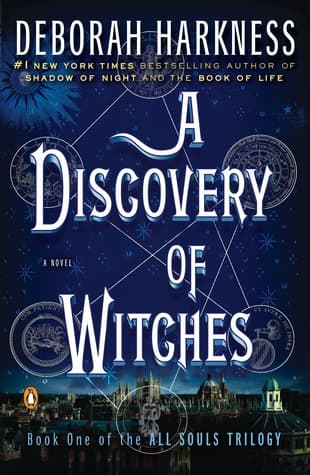
- A Discovery of Witches
Deborah Harkness
4.0 (369k) average on GoodreadsFantasyCombines ancient magic, intellectual pursuits, and a romance between a human and a supernatural being.
- Memory Man
David Baldacci
4.1 (109k) average on GoodreadsThrillerWhile both "Season of the Witch" and Baldacci's "Memory Man" center on protagonists with extraordinary memory abilities, their approaches diverge significantly. Baldacci's Amos Decker possesses hyperthymesia, a real neurological condition, making his memory a source of trauma and a tool for realistic crime solving. Mostert's 'mind palace' is a more fantastical and esoteric concept, allowing for a broader exploration of psychological manipulation and ancient secrets. "Memory Man" is a more straightforward police procedural/thriller, focusing on the gritty reality of crime and its psychological impact, whereas "Season of the Witch" embraces a more mystical and romanticized view of memory, blending it with elements of fantasy and gothic mystery.
- Angels & Demons
Dan Brown
3.9 (2.7M) average on GoodreadsThrillerA Harvard symbologist races through Rome's ancient sites, deciphering cryptic clues to unmask the Illuminati and stop a vengeful plot to destroy the Vatican with a stolen antimatter weapon.
- Gone Girl
Gillian Flynn
4.1 (2.3M) average on GoodreadsThrillerA wife's sudden disappearance on her fifth anniversary reveals a web of lies and psychological warfare, exposing the secrets within a seemingly perfect marriage.
- The Girl on the Train
Paula Hawkins
3.9 (2.1M) average on GoodreadsThrillerA woman’s fascination with a seemingly perfect couple she watches from her daily train commute leads her into a dark investigation when she witnesses something that shatters their idyllic image.





Enjoyed the summary?
A summary gives you the shape of the book. The book itself has the detail, the examples and the voice.
Find Season of the Witch on AmazonAs an Amazon Associate, BookBrief earns from qualifying purchases. How we're funded