

Synopsis
Covers the whole plot, including the ending.
- Difficulty
- Medium
- Pacing
- Moderate
- Mood
- Atmospheric, Melancholy, Brooding, Erotic
- Read it if
- You enjoy gothic atmospheres, philosophical explorations of good and evil, and complex, morally ambiguous characters in a vampire setting.
- Skip it if
- You prefer fast-paced horror, clear-cut heroes and villains, or traditional vampire lore without much introspection.
Interview With The Vampire Plot Summary
Covers the whole plot, including the ending.
The Interview Begins
The novel opens in a San Francisco apartment, where a young reporter, Daniel Molloy, interviews Louis de Pointe du Lac, who says he is a vampire. Louis looks young but carries the weight of centuries. He begins his life story, starting as a rich plantation owner in late 18th-century Louisiana. He describes his deep grief after his brother's death, which made him reckless and open to dying. This made him an easy target for Lestat de Lioncourt, a charming but cruel vampire who offers Louis a choice between death and eternal life as one of the undead.
Transformation and Early Undead Life
Lestat attacks Louis, nearly drains him, and then turns him into a vampire. Overwhelmed by the pain and the appeal of immortality, Louis accepts. He wakes as a vampire, changed forever, and is horrified by his new nature and the strong desire for human blood. Lestat, amused by Louis's moral struggle, forces him to accept his vampiric instincts, feeding on slaves and townspeople. Louis dislikes killing humans and tries to live on animal blood, much to Lestat's scorn, who mocks his 'humanity' and makes him face the truth of their predatory life.
The Arrival of Claudia
Years pass, and Louis grows more unhappy, thinking about leaving Lestat. During a plague in New Orleans, Louis finds a small child, Claudia, orphaned and near death beside her mother. In despair, and perhaps wanting to keep Louis with him, Lestat turns Claudia into a vampire, trapping her forever in a five-year-old's body. Claudia quickly adapts, showing a mix of childlike innocence and vampiric cruelty. Her creation at first brings a strange sense of family and joy to their dark lives, with Louis seeing her as a daughter.
Claudia's Growing Resentment
Decades pass, and Claudia, despite her growing intelligence and adult understanding, stays trapped in her child's body. This physical state becomes an unbearable torture, stopping her from having adult desires or independence. She grows to deeply resent Lestat, blaming him for her eternal childhood. Her hatred leads to a carefully planned attempt to kill Lestat. She feeds him the blood of dead children and then cuts his throat, believing she has freed herself and Louis from his control. Louis feels conflicted, horrified by her act but understanding her desperation.
Fleeing New Orleans
After Lestat's supposed death, Louis and Claudia get rid of his body in a swamp and burn their New Orleans mansion, symbolizing their break from the past. They travel across the Atlantic, searching for others like them, hoping to find answers about their origins and the true nature of vampirism. Their travels take them through various European cities, but their search fails, leading to growing frustration and loneliness. They find only rumors and empty promises, strengthening their belief that they might be unique or the last of their kind.
The Theâtre des Vampires
Their search finally brings them to Paris, where they discover the Théâtre des Vampires, a group of vampires who pretend to be human actors performing grotesque 'vampire plays' for mortal audiences, who think the killings are fake. Here, Louis is immediately drawn to Armand, the old and mysterious leader of the group, who is centuries older than Lestat. Armand offers Louis intellectual companionship and a deeper understanding of their kind, something Louis has always wanted. Claudia, however, remains wary of the Parisian vampires and their theatrical life.
Claudia's Betrayal and Demise
Claudia, still wanting a companion in her eternal childhood, secretly turns a young Parisian doll maker, Madeleine, into a vampire. This breaks the group's strict, unwritten rules against creating new vampires without the leader's permission, especially a child. The Parisian vampires, led by Armand, find out about Claudia's act. In a brutal punishment, they separate Louis from Claudia and Madeleine, exposing them to the rising sun. Louis watches as Claudia and Madeleine are burned, a scene that scars him forever and fuels his hatred for the Parisian group.
Louis's Revenge and Departure
Devastated by Claudia's death, Louis falls into deep despair. Driven by grief and rage, he returns to the Théâtre des Vampires and, with new ferocity, sets fire to the theater, killing most of the group in a blaze. Armand, who had offered Louis a chance to join him and leave Claudia, is spared but sees Louis's brutal act. Louis, now completely alone and consumed by sorrow, rejects Armand's continued offers, finding no comfort in his company. He wanders the world for decades, a solitary figure haunted by his past and Claudia's memory.
Reunions and Reflections
Over the centuries, Louis sometimes meets Lestat, who survived Claudia's attempt on his life and appears occasionally, often weakened. Each meeting strengthens Louis's dislike for Lestat and his own unending sadness. He thinks about their true existence—a constant fight between their predatory instincts and the remnants of their human morality. He describes his journey through time, observing human history, always an outsider, never truly belonging, and carrying the burden of his immortality and the losses he has endured, especially Claudia's death.
The Interview's Conclusion
Louis finishes his long story, describing his centuries of wandering, his meetings with other vampires (most of whom he found disappointing or monstrous), and his unending search for meaning. He expresses his deep weariness and the burden of immortality. The reporter, Daniel Molloy, at first fascinated and empathetic, becomes more captivated by the appeal of vampirism. Instead of being repulsed by Louis's suffering, Daniel is drawn to the power and eternal life Louis describes. He begs Louis to make him a vampire, causing Louis, disgusted by Daniel's naive wish, to lash out and disappear, leaving the reporter alone with a dangerous new obsession.
Interview With The Vampire Characters
Louis de Pointe du Lac
Protagonist
A melancholic and moralistic vampire struggling with his predatory nature.
Louis is a wealthy 18th-century Louisiana plantation owner transformed into a vampire by Lestat. He is deeply introspective, moralistic, and perpetually tormented by the guilt of killing humans for sustenance. He yearns for understanding and companionship, constantly questioning the meaning of his existence and the nature of good and evil. His struggle with his vampiric identity defines his centuries-long journey, making him a reluctant monster who never fully embraces his dark gift. He is often driven by a quest for knowledge and a desire to find others of his kind who share his moral quandaries.
Relationships: Lestat de Lioncourt (Sire and tormentor; a complex relationship of love, hate, and dependency.); Claudia (Surrogate daughter and companion; a bond of deep love and shared suffering.); Armand (Potential lover and intellectual guide; a brief, intense, but ultimately unfulfilled connection.); Daniel Molloy (Interviewer; a reluctant confessor to a naive listener.)
Lestat de Lioncourt
Antagonist/Supporting
A flamboyant, amoral, and powerful vampire who revels in his nature.
Lestat is the charismatic and often cruel vampire who transforms Louis. He is the antithesis of Louis, embracing his predatory nature with relish and finding joy in the hunt and the power of his immortality. He is a showman, flamboyant and theatrical, with a penchant for grand gestures and a dismissive attitude towards human morality. While he often torments Louis, there's a complex, almost possessive affection he holds for him and later Claudia. He represents the unbridled, unapologetic aspect of vampirism, often acting as a foil to Louis's perpetual angst.
Relationships: Louis de Pointe du Lac (Chose Louis as his companion; a turbulent, love-hate, master-disciple dynamic.); Claudia (Created her out of a twisted desire to keep Louis, leading to her intense hatred and his near-death.)
Claudia
Supporting
A child vampire trapped in an eternal five-year-old's body, intelligent and vengeful.
Claudia is a five-year-old girl transformed into a vampire by Lestat. She quickly adapts to her new nature, displaying a chilling blend of childlike innocence and mature ruthlessness. Her intelligence develops rapidly, but her physical body remains that of a child, which becomes an unbearable prison. This paradox fuels her deep resentment, especially towards Lestat, for denying her a natural life and the ability to grow. She is fiercely possessive of Louis and longs for an adult female companion, leading to her ultimate downfall. She embodies the tragic consequences of eternal youth without growth.
Relationships: Louis de Pointe du Lac (Surrogate daughter; a profound and loving bond, though strained by her ruthless acts.); Lestat de Lioncourt (Her creator, whom she despises and attempts to murder.); Madeleine (Her created companion, born of desperation and leading to her demise.)
Armand
Supporting
An ancient, enigmatic leader of the Parisian coven, offering Louis solace and a different perspective.
Armand is an ancient vampire, centuries older than Lestat, and the leader of the Théâtre des Vampires in Paris. He is enigmatic, wise, and profoundly melancholic, having lived through countless human eras. He is drawn to Louis's suffering and intellectual curiosity, seeing in him a kindred spirit. Armand represents an older, more philosophical understanding of vampirism, one that has reconciled with its predatory nature but is still capable of profound thought and emotion. He offers Louis a chance at a different kind of companionship and a deeper understanding of their kind, but his methods and the customs of his coven prove fatal for Claudia.
Relationships: Louis de Pointe du Lac (A deeply intellectual and emotional connection; a potential mentor and lover.); Lestat de Lioncourt (Aware of Lestat's existence and reputation, but not directly involved with him.)
Daniel Molloy
Mentioned
The young, ambitious reporter interviewing Louis.
Daniel Molloy is the young, ambitious reporter who interviews Louis de Pointe du Lac in modern-day San Francisco. Initially professional and intrigued, he gradually becomes more captivated and ultimately obsessed with the allure of vampirism. He represents the human fascination with the dark and forbidden, failing to grasp the profound suffering Louis describes. His naive desire for immortality highlights the seductive danger of the vampire myth, contrasting sharply with Louis's world-weariness.
Relationships: Louis de Pointe du Lac (Interviewer and confessor; the catalyst for Louis's recounting of his life story.)
Madeleine
Supporting
A Parisian doll maker transformed by Claudia to be her companion.
Madeleine is a Parisian doll maker whom Claudia transforms into a vampire out of desperation for a female companion. She is a fragile and melancholic figure, grieving the loss of her own child. Her transformation is a tragic act, as she quickly becomes a devoted but ultimately doomed companion to Claudia. Her brief existence as a vampire highlights the Parisian coven's strict laws and the brutal consequences of breaking them, serving as a mirror to Claudia's own tragic fate.
Relationships: Claudia (Her creator and companion; a bond of shared desperation and impending doom.)
Interview With The Vampire Themes
The Burden of Immortality and Existential Angst
The novel explores the psychological cost of eternal life. Louis, in particular, deals with guilt, loneliness, and the struggle to find meaning in an existence that goes beyond human understanding. He constantly questions his purpose and the moral effects of his predatory nature, leading to deep sadness. This is clear from his initial despair after his brother's death, which makes him open to Lestat, to his centuries of wandering, haunted by Claudia's memory and the lives he's taken. His repeated attempts to find comfort or companionship show this deep crisis.
“I was a vampire, and I had been a vampire for two hundred years, and I was still a vampire, and I would be a vampire for all eternity. And I hated it.”
Morality vs. Predatory Nature
A main conflict in the novel is the internal struggle between Louis's remaining human morality and the predatory nature of vampirism. Louis constantly fights his craving for human blood, often trying to live on animal blood, much to Lestat's amusement. This theme contrasts sharply with Lestat, who fully accepts his vampiric instincts without regret, and Claudia, who quickly adapts to killing with a chilling practicality. Louis's guilt over his victims, his desire for redemption, and his longing for a 'human' connection define his character, showing the constant tension between his chosen identity and his monstrousness. The Parisian vampires further complicate this by making their predation ritualistic, blurring the lines of 'good' and 'evil' among the undead.
“Evil is a point of view. We are immortal. And what you see as evil, we have come to see as an 'interesting point of view.'”
Love, Loss, and Family (Twisted)
Despite their monstrous nature, the vampires in the novel form complex, often destructive, family bonds. Louis's initial change is partly due to his grief and loneliness. Lestat's creation of Claudia, though a twisted act, forms a surrogate family that brings both comfort and pain. Louis's love for Claudia and his devastating grief over her death are central to his character, driving many of his later actions. These relationships involve dependency, betrayal, and a desperate search for connection in an otherwise solitary life. The theme explores how even immortal beings want to belong and how these bonds can bring both great joy and unbearable suffering.
“To be loved, to be cared for, to be protected, to be understood. Was that too much to ask of an immortal?”
The Allure and Danger of the Supernatural
The novel explores humanity's fascination with the dark and forbidden. While Louis tells his life as a tale of suffering and horror, the reporter Daniel Molloy becomes more fascinated by the power and eternal life Louis describes. This shows the dangerous appeal of the supernatural, where the promise of immortality and power can overshadow the loneliness and moral decay. The Théâtre des Vampires further shows this, where humans willingly take part in a macabre illusion, blind to the true horror behind the curtain. The story warns against romanticizing immortality, showing that eternal life comes with great burdens.
“You want it, don't you? You want to be me.”
Plot Devices & Literary Techniques
First-Person Narrative (Interview Format)
The entire story is told through Louis's subjective recollection to a reporter.
The novel is framed as an interview between Louis and Daniel Molloy, allowing for a deeply personal and subjective account of Louis's centuries-long life. This device provides immediate access to Louis's internal thoughts, moral struggles, and emotional pain, making him a sympathetic, if monstrous, protagonist. It also creates a sense of immediacy and confession. The interview format emphasizes the idea of a 'secret history' being revealed and allows for Louis's reflections on the meaning of his experiences, rather than just a straightforward recounting of events. The reporter's reactions also serve to highlight the human perception of the supernatural.
The Unreliable Narrator
Louis's memory and perspective are filtered through centuries of trauma and personal bias.
While Louis is the primary narrator, his account is filtered through centuries of personal trauma, guilt, and the subjective nature of memory. He admits to forgetting details or having altered perspectives over time. This unreliability is subtle but significant, particularly in his portrayal of Lestat, who is often depicted as purely villainous, yet later books in the series offer different perspectives. This device challenges the reader to question Louis's absolute truth and consider the psychological impact of his experiences, adding depth and complexity to his character and the events he describes.
Symbolism of Blood
Blood represents life, death, sustenance, and the vampire's spiritual connection.
Blood in 'Interview With The Vampire' is far more than just sustenance; it is life itself, the essence of power, and the medium through which vampirism is transmitted and sustained. For Louis, the act of taking blood is a constant source of moral conflict and guilt, symbolizing his monstrous nature. For Lestat, it is a source of pleasure and power. The sharing of blood also signifies a profound, almost spiritual, bond between vampires. The draining of victims is depicted with a sensual, almost ritualistic quality, underscoring the intimate and terrifying connection between the vampire and its prey. It represents the ultimate sacrifice and the ultimate transgression.
Gothic Setting and Atmosphere
Utilizes decaying grandeur and shadowy locales to evoke dread and mystery.
The novel employs classic Gothic elements, particularly in its settings. The decaying grandeur of the Pointe du Lac plantation, the shadowy streets of New Orleans, and the macabre Théâtre des Vampires in Paris all contribute to a pervasive atmosphere of dread, mystery, and romantic melancholy. These settings are not merely backdrops but active participants in the narrative, reflecting the internal states of the characters and the dark nature of their existence. The contrast between opulent decay and vibrant human life further emphasizes the vampires' outsider status and their timeless, haunting presence in the world.
Interview With The Vampire Quotes
“I was a vampire. I had been a vampire for ten years. I was a young vampire, but I was a vampire nonetheless. And I was alone.”
“The only power that exists is the power to define the terms. The power to say what is and what is not.”
“Evil is a point of view. We are all God's children. There is no Hell. There is only loneliness.”
“To be a vampire is to be a creature of eternal loneliness.”
“I was a killer, and I knew it. And I was a killer, and I loved it.”
“The world changes, we do not. Therein lies the irony that kills us.”
“Don't be afraid. I'm going to give you the choice I never had.”
“You are a monster, Louis. Just like me. Just like all of us.”
“The dark gift, Louis. The dark gift.”
“I saw that the world was not a place of order, but of chaos.”
“Child, you are not a monster. You are a miracle. You are my miracle.”
“For the first time, I felt a terrible hunger, a thirst that was not for water, but for blood.”
“There are no easy answers for a vampire. No easy way out.”
“I was nothing without him. I was nothing before him. I was nothing at all.”
Quiz
10 questions on the plot and the characters. Each answer comes with a short explanation.
Question 1
What is the name of the interviewer who records Louis's story?
- Daniel Molloy
- Armand
- Lestat de Lioncourt
- Santiago
Show answer
A. Daniel Molloy The young man who interviews Louis throughout the novel is named Daniel Molloy.
Question 2
In what city does Louis first encounter Lestat and become a vampire?
- Paris
- New Orleans
- London
- New York
Show answer
B. New Orleans Louis is turned into a vampire by Lestat in late 18th-century New Orleans.
Question 3
What is Louis's primary internal conflict throughout the novel?
- His desire to overthrow Lestat and lead other vampires.
- His struggle to reconcile his human morality with his vampiric nature.
- His quest to find the origins of all vampires.
- His fear of the sun and human hunters.
Show answer
B. His struggle to reconcile his human morality with his vampiric nature. Louis constantly grapples with the morality of killing humans to survive, contrasting sharply with Lestat's pragmatic view.
Question 4
What is the specific circumstances under which Claudia is made a vampire?
- She was a wealthy heiress Lestat wanted to control.
- She was a dying orphan Louis found in a plague-ridden house.
- She was a young actress Lestat admired.
- She was a servant girl who discovered their secret.
Show answer
B. She was a dying orphan Louis found in a plague-ridden house. Claudia was a child dying of plague whose mother had abandoned her. Louis, in a moment of weakness and despair, fed on her, and Lestat subsequently turned her to keep Louis with him.
Question 5
How does Claudia ultimately meet her end?
- She is destroyed by Louis in a fit of rage.
- She is exposed to sunlight by the Parisian vampires.
- She commits suicide due to her eternal child form.
- She is killed by Lestat in a final confrontation.
Show answer
B. She is exposed to sunlight by the Parisian vampires. In Paris, the Théâtre des Vampires coven, led by Armand, traps Claudia and Madeleine in a courtyard and exposes them to the rising sun as punishment for attempting to kill Lestat.
Question 6
What is the name of the vampire coven Louis and Claudia encounter in Paris?
- The Children of the Night
- The Coven of the Ram
- The Théâtre des Vampires
- The Brotherhood of the Blood
Show answer
C. The Théâtre des Vampires In Paris, Louis and Claudia discover a coven of vampires who disguise themselves as actors performing gruesome plays for humans at the Théâtre des Vampires.
Question 7
What is the primary reason Claudia resents Lestat?
- His cruelty towards humans.
- His refusal to teach her more about vampiric origins.
- His decision to make her a vampire, trapping her in a child's body forever.
- His lack of ambition and desire to remain hidden.
Show answer
C. His decision to make her a vampire, trapping her in a child's body forever. Claudia's greatest torment and source of hatred for Lestat is that he made her a vampire, condemning her to an eternal existence with the mind of an adult but the body of a child, unable to experience adult desires or growth.
Question 8
What significant revelation does Louis learn about the Parisian vampires and their history, particularly from Armand?
- They are all descended from a single, ancient Egyptian vampire.
- They have no true history or ancient knowledge, their 'traditions' are largely made up.
- They possess a secret cure for vampirism.
- They are actively working to integrate into human society.
Show answer
B. They have no true history or ancient knowledge, their 'traditions' are largely made up. Louis, seeking ancient wisdom, is profoundly disillusioned when Armand reveals that the Parisian coven, and indeed many vampires, have lost much of their history, and their perceived 'ancient' knowledge is often fabricated or misinterpreted.
Question 9
After Claudia's death, what is Louis's immediate act of revenge against the Théâtre des Vampires?
- He challenges Armand to a duel to the death.
- He sets fire to the theater, killing the remaining vampires inside.
- He tracks down and individually murders each member of the coven.
- He exposes their existence to the human authorities.
Show answer
B. He sets fire to the theater, killing the remaining vampires inside. Consumed by grief and rage over Claudia's death, Louis returns to the Théâtre des Vampires, locks the doors, and sets the entire building ablaze during the day, destroying all the vampires trapped inside.
Question 10
What is the final fate of Lestat as described by Louis in the interview?
- He is killed by Louis in a final confrontation.
- He escapes to the New World and is never seen again.
- He is found decades later, weakened and living in squalor in New Orleans.
- He joins Armand's coven in Paris.
Show answer
C. He is found decades later, weakened and living in squalor in New Orleans. After Louis and Claudia leave him for dead, Louis eventually finds Lestat decades later, living in a dilapidated mansion in New Orleans, severely weakened and sustained by rats, a shadow of his former self.
Interview With The Vampire FAQ
What is the central premise of 'Interview With The Vampire'?
The novel centers on Louis de Pointe du Lac, who, in the late 20th century, grants an interview to a young reporter, Daniel Molloy. Louis recounts his two-century-long life as a vampire, detailing his transformation by Lestat in 1791 New Orleans and his subsequent struggles with immortality and morality.
Who are the primary vampire characters introduced in the story?
The main vampire characters are Louis de Pointe du Lac, the reluctant and melancholic narrator; Lestat de Lioncourt, his flamboyant, often cruel sire; and Claudia, a child vampire created by Lestat to bind Louis, who matures intellectually but remains physically a child.
What is the setting for the beginning of Louis's vampiric life?
Louis's vampiric existence begins in late 18th-century New Orleans, specifically on his indigo plantation, Pointe du Lac. This setting provides a rich backdrop of Southern gothic atmosphere, slavery, and decadence, which Lestat exploits.
Why does Louis agree to tell his story to Daniel Molloy?
Louis seemingly agrees to tell his story as a form of catharsis, seeking understanding or perhaps even a release from his existential torment by sharing his experiences. He hopes that by detailing his life, Molloy or the wider world might grasp the profound loneliness and moral dilemmas of his immortality.
What is Lestat's main motivation for turning Louis into a vampire?
Lestat turns Louis primarily out of loneliness and a desire for companionship. He is drawn to Louis's beauty and despair after the deaths of his brother and sister, seeing him as a potential partner in immortality, someone to share his existence with.
How does Lestat's initial portrayal differ from his later appearances in the Vampire Chronicles?
In 'Interview', Lestat is largely depicted as a cruel, manipulative, and somewhat hedonistic antagonist from Louis's perspective. However, in subsequent books like 'The Vampire Lestat', he is revealed to be more complex, an adventurous philosopher and rock star, driven by a quest for knowledge and a deeper understanding of his existence.
What is the significance of Claudia's creation for Louis and Lestat?
Claudia's creation by Lestat, turning a dying child into a vampire, serves as a twisted attempt to bind Louis to him, providing a 'family' unit. For Louis, she becomes a surrogate daughter and a source of profound, complicated love, while for Lestat, she is a tool and later a dangerous rival.
Are there any subtle hints about the origins of vampires within this first novel?
While 'Interview' doesn't explicitly detail the ancient origins of vampires, it does allude to an 'Old World' and the existence of older, more powerful vampires. Louis and Claudia's journey to Europe is specifically to seek out these ancient beings and learn the true history of their kind.
What is the symbolic meaning of Louis's constant struggle with feeding on humans?
Louis's persistent aversion to killing humans for blood symbolizes his clinging to his lost humanity and his moral conscience. It represents his refusal to fully embrace the predatory nature of vampirism, setting him apart from Lestat and reflecting his internal conflict between his human past and his vampiric present.
How does Claudia's psychological development contrast with her physical form?
Claudia experiences a profound psychological and intellectual maturation, developing into a cunning, intelligent, and deeply resentful woman. This growth tragically clashes with her eternal child's body, creating immense frustration and a severe identity crisis as she can never experience adult life or love.
What psychological impact does immortality have on Louis?
Immortality plunges Louis into profound melancholy and existential despair. He experiences endless ennui, witnesses centuries of human change, and grapples with the loss of everyone he ever knew, leading to a deep sense of isolation and a constant search for meaning that forever eludes him.
How does the 'family' dynamic between Louis, Lestat, and Claudia reflect human dysfunctional families?
The trio forms a highly dysfunctional family unit: Lestat as the abusive, controlling 'father,' Louis as the conflicted, submissive 'mother,' and Claudia as the 'child' who rebels against her creators. Their relationships are fraught with manipulation, resentment, and a twisted form of love, mirroring the complexities and pathologies found in human families.
Is Louis a reliable narrator of his own story?
Louis is arguably an unreliable narrator, as his perspective is deeply colored by his melancholic nature, his resentment towards Lestat, and his own moral anguish. He often presents himself as a victim, and his memories, filtered through centuries of pain, may not always reflect the objective truth, especially concerning Lestat's motivations.
What is the ultimate fate of Claudia, and what does it signify?
Claudia is tragically destroyed by sunlight by the Parisian vampires, led by Armand, as punishment for attempting to kill her maker, Lestat. Her death signifies the harsh, unforgiving laws of the vampiric world and the ultimate futility of her rebellion against her eternal childhood, solidifying Louis's despair.
Does Louis ever find true peace or understanding in his vampiric existence?
No, Louis never finds true peace. By the end of the interview, he remains deeply tormented, having failed to find answers or solace in his journey. His decision to attack Daniel Molloy at the end suggests his continued struggle and inability to reconcile with his nature or find meaning.
How does the novel challenge traditional notions of good and evil within its supernatural context?
The novel blurs the lines of good and evil by presenting vampires not as purely monstrous but as complex beings capable of love, despair, and moral struggle. Louis, despite being a killer, grapples with conscience, while Lestat, though cruel, exhibits moments of vulnerability, forcing readers to question simplistic moral binaries.
What is the significance of the Parisian Théâtre des Vampires?
The Théâtre des Vampires is a macabre performance troupe of vampires who masquerade as human actors pretending to be vampires. It represents a cynical, decadent aspect of vampire society, where real violence is disguised as entertainment, and serves as a trap for Louis and Claudia.
How does the novel explore themes of identity and self-discovery?
Through Louis's narrative, the novel deeply explores themes of identity as he grapples with his transformation from human to vampire. He constantly questions who and what he is, seeking to define himself outside of Lestat's influence and to understand the nature of his new existence, often through profound introspection and suffering.
What role does the setting of New Orleans play in the novel's atmosphere and themes?
New Orleans, with its decadent French Quarter, gothic architecture, and history of slavery and rebellion, provides a rich, atmospheric backdrop that perfectly mirrors the themes of decay, hidden darkness, and sensuality. It sets a tone of exotic melancholy and provides a fertile ground for Lestat's predatory nature and Louis's despair.
About the author

Anne Rice was an American author of gothic fiction, erotic literature, and Christian literature. She was best known for her series of novels The Vampire Chronicles. The first book became the subject of a film adaptation—Interview with the Vampire (1994).
Similar books
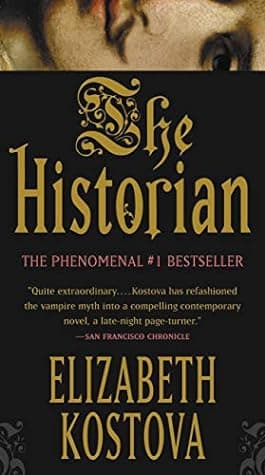
- The Historian
Elizabeth Kostova
3.8 (242k) average on GoodreadsThrillerHistorical fiction blending mystery and vampire lore with a strong sense of place and scholarly pursuit.
- A Discovery of Witches
Deborah Harkness
4.0 (369k) average on GoodreadsFantasyFeatures ancient, powerful vampires and a focus on their history and intricate society, with a romantic element.
- Harry Potter and the Sorcerer's Stone
J.K. Rowling
4.5 (7M) average on GoodreadsFantasyRescued from a miserable life under the stairs, an orphaned boy discovers he's a wizard destined for a magical school, where he uncovers a dangerous secret tied to the dark wizard who murdered his parents.
- The Hunger Games
Suzanne Collins
4.3 (6.4M) average on GoodreadsFantasyIn a future where children fight to the death on live television, Katniss Everdeen volunteers for the arena, turning a death sentence into a fight for survival and a spark of rebellion.
- 1984
George Orwell
4.2 (3.1M) average on GoodreadsPoliticsIn a future where surveillance and thought control are absolute, a man's search for truth clashes with the Party, showing that hope can be a form of rebellion.
- Divergent
Veronica Roth
4.2 (2.9M) average on GoodreadsFantasyIn a society divided by virtues, a sixteen-year-old's difference from the norm starts a rebellion that threatens her world.





Enjoyed the summary?
A summary gives you the shape of the book. The book itself has the detail, the examples and the voice.
Find Interview With The Vampire on AmazonAs an Amazon Associate, BookBrief earns from qualifying purchases. How we're funded