
Estimated read time: 9 min read
One Sentence Summary
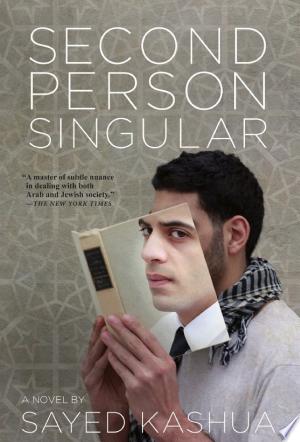
"Second Person Singular" follows two Arab Israelis whose lives intertwine through a mysterious note in a used book, exploring identity, assimilation, and self-deception in contemporary Jerusalem.
Table of Contents
Introduction
Imagine picking up a stranger’s note from the dry cleaner—only to realize it might expose a devastating secret about your closest relationship. This is the riveting premise of Second Person Singular by Sayed Kashua, a novel that dances along the razor's edge of personal identity, social aspiration, and the tangled web of Israeli-Palestinian life. With sharp wit and emotional depth, Kashua crafts a story that’s as much about self-discovery as it is about the secrets we keep from ourselves and others. Whether you’re a college student seeking a nuanced take on identity, or a lecturer looking for a powerful classroom read, this summary will guide you through the book’s labyrinth of intrigue and insight.
Historical Context
Set in contemporary Israel, Second Person Singular unfolds against the backdrop of the ongoing Israeli-Palestinian conflict, a reality that shapes the personal and professional lives of the characters. The novel explores the daily existence of Arab citizens of Israel—Palestinians who straddle the line between their cultural heritage and the demands of assimilation into a predominantly Jewish society.
The Social Landscape
- Arab Minority in Israel: The protagonists are part of the Arab minority, navigating societal expectations, prejudices, and the complexities of bilingual, bicultural life.
- Jerusalem and Jerusalemites: The novel is steeped in the unique atmosphere of Jerusalem, a city marked by its religious, cultural, and political divides.
Kashua’s own experiences as an Arab-Israeli inform the novel’s authenticity, offering readers a window into often-overlooked perspectives within Israeli literature.
Brief Synopsis
Plot Overview
Second Person Singular weaves together the lives of two main characters: a successful Arab-Israeli lawyer and a young social worker with artistic ambitions. Their stories intersect in unexpected ways, centering on a mysterious note discovered in the lawyer’s wife's handwriting. This note, left in the pocket of a suit picked up from the dry cleaner, hints at an affair and sends the lawyer on an obsessive quest for the truth.
The narrative explores themes of jealousy, self-doubt, and the complex relationship between identity and social mobility. As the lawyer’s investigation spirals, we also follow the social worker’s journey—one marked by reinvention, existential searching, and the constant negotiation between belonging and alienation.
Setting
Second Person Singular is set primarily in Jerusalem, with its bustling Arab neighborhoods, upscale Jewish districts, and the ever-present hum of cross-cultural tension. The city is more than a backdrop; it’s a living, breathing character whose contradictions mirror those of the protagonists.
Atmosphere:
- Urban intensity: The city’s chaos and beauty are palpable, from crowded coffee shops to quiet domestic spaces.
- Cultural collision: The novel’s settings highlight the friction and fascination between Arab and Jewish worlds.
Main Characters
Below is a table outlining the main characters, their roles, key traits, and importance to the plot:
| Name | Role | Key Traits | Importance to Plot |
|---|---|---|---|
| The Lawyer | Protagonist | Ambitious, successful, insecure, obsessive | Drives the main plot, represents social aspiration |
| The Social Worker | Secondary Protagonist | Artistic, introspective, alienated, lost | Offers a counterpoint to the lawyer, identity arc |
| The Lawyer’s Wife | Supporting Character | Educated, enigmatic, independent | Central to the mystery and the lawyer’s obsession |
| Yonathan | Supporting Character | Jewish Israeli, deceased, intellectual | Catalyst for identity confusion and plot twist |
| The Lawyer’s Son | Minor Character | Innocent, observant, sensitive | Highlights generational pressures |
Plot Summary
The Discovery
The lawyer, a rising star among Arab professionals in Jerusalem, prides himself on his perfect family and hard-won success. His world tilts when he finds a used note in his wife's handwriting—clearly intended for someone else—accompanying a book left with a suit at the dry cleaners. The note’s intimate tone suggests a betrayal, igniting a storm of suspicion and self-doubt.
The Investigation
Obsessed, the lawyer launches a secret investigation. He retraces his wife's steps, interrogates her friends, and even stalks strangers, all while maintaining a facade of normalcy. His anxiety is palpable—readers can almost hear his heart pounding as he pores over clues late into the night.
Parallel Lives
Meanwhile, the narrative introduces a young Arab social worker, struggling to find his place in Israeli society. Dissatisfied with his life, he becomes entwined with the world of art and intellectual circles, even assuming the identity of Yonathan, a deceased Jewish Israeli whose name he adopts after a bizarre twist of fate. This act of self-reinvention sets off its own series of existential dilemmas.
The Collision
As the lawyer edges closer to the truth, his and the social worker’s paths converge. Their lives intersect in ways neither could have predicted, forcing both men to confront uncomfortable truths about who they are—and who they pretend to be.
The Resolution
Without revealing major spoilers, the climax brings both characters face-to-face with the consequences of their actions and the fluidity of identity. The novel ends on a note that is both haunting and hopeful, inviting readers to grapple with the same questions as its protagonists.
Themes and Motifs
Identity and Self-Perception
At its core, Second Person Singular is a meditation on identity—how it’s constructed, perceived, and sometimes stolen. The novel asks: Who are we when we’re alone, and who are we when others are watching?
- Passing and assimilation: Characters grapple with the desire to blend in versus the need to stay true to their roots.
- Performance of self: There’s a constant tension between authenticity and the roles demanded by society.
Jealousy and Obsession
The lawyer’s journey is one of obsessive jealousy, fueled by insecurity and the fear of losing everything he’s built.
- Suspicion as self-destruction: His paranoia threatens the very relationships he seeks to protect.
Language and Power
Language—Hebrew and Arabic, written and spoken—serves as both bridge and barrier.
- Code-switching: Characters navigate between languages, each with its own social baggage.
- Literary references: Books and notes play pivotal roles, symbolizing both connection and misunderstanding.
Social Mobility and Alienation
The struggle to ascend socially comes at a cost.
- Success vs. belonging: Achieving professional success often leads to a sense of isolation.
- Alienation: Both protagonists feel like outsiders, unable to fully belong to either world.
Motifs
- Letters and notes: Written communication drives the plot and symbolizes hidden truths.
- Mirrors and doubles: Characters reflect and distort one another, reinforcing themes of duality and self-perception.
Literary Techniques and Style
Narrative Structure
Kashua employs a dual narrative that alternates between the lawyer and the social worker, gradually weaving their stories together. The structure mirrors the novel’s thematic focus on duality and disconnection.
Point of View
The novel plays with perspective, often addressing the reader in the second person singular—a rare and disorienting choice that deepens the sense of alienation and intimacy.
Symbolism
- The note: Represents the fragile trust in relationships.
- Adopted identities: Symbolize the fluidity (and instability) of selfhood in a divided society.
Realism and Irony
Kashua’s writing is grounded in the mundane details of everyday life—grocery shopping, school runs, awkward social encounters—infused with biting irony and humor that exposes the absurdities of social ambition.
Language
The prose is direct and unadorned, yet layered with subtext. Kashua’s skillful use of dialogue captures the nuances of bilingual life.
Author's Background
Sayed Kashua is a Palestinian-Israeli author, journalist, and television creator, best known for his witty and incisive explorations of Arab identity in Israel. Born in Tira, Israel, Kashua was educated in both Arabic and Hebrew schools, a duality reflected in his fiction.
Influences and Other Works
- Satirical columnist: Kashua’s columns in Israeli newspapers often tackle social issues with humor and candor.
- Television: He created the acclaimed sitcom Arab Labor, which explores similar themes.
- Legacy: Kashua is a leading voice in contemporary Middle Eastern literature, known for challenging stereotypes and humanizing the Arab-Israeli experience.
Key Takeaways
- Identity is multifaceted: The search for self is complicated by social, linguistic, and cultural pressures.
- Jealousy can be corrosive: Obsession with betrayal can destroy trust and relationships.
- Assimilation is double-edged: Social mobility often leads to alienation and existential doubt.
- Language shapes reality: The ability to switch languages is both a tool and a source of tension.
- Truth is slippery: Perceptions are often more powerful than facts.
Reader's Takeaway
Second Person Singular is a novel that will linger in your mind long after you’ve finished the final page. Emotionally raw and intellectually stimulating, it challenges readers to question their own assumptions about identity, success, and belonging. For college students, the book offers a rare opportunity to see the world through eyes both familiar and foreign; for lecturers, it’s a treasure trove of discussion topics about literature, society, and the human condition. Kashua invites us to laugh at our contradictions, mourn our losses, and—perhaps most importantly—empathize with those whose stories are rarely told.
Conclusion
Sayed Kashua’s Second Person Singular is more than a novel about suspicion and secrets—it’s a profound exploration of what it means to be caught between worlds. With vivid characters, a suspenseful plot, and biting social commentary, it’s a must-read for anyone interested in the complexities of identity and the power of narrative. Whether you’re drawn by its humor, its heart, or its haunting questions, this book promises to leave you changed. Dive in, and discover the many layers waiting beneath the surface.
Ready to unravel the mysteries of identity, language, and belonging? Pick up Second Person Singular and see how Sayed Kashua turns the ordinary into the extraordinary.
Second Person Singular FAQ
What is 'Second Person Singular' by Sayed Kashua about?
'Second Person Singular' is a novel that explores the lives of two Palestinian men living in Jerusalem—an ambitious lawyer and a social worker—whose stories intertwine through a mysterious letter. The book delves into themes of identity, culture, and self-perception against the backdrop of Israeli society.
Who is the author Sayed Kashua?
Sayed Kashua is a Palestinian-Israeli author, journalist, and screenwriter known for his works that explore the experiences of Arab citizens in Israel. He is recognized for his unique blend of humor and social commentary.
What are the main themes in 'Second Person Singular'?
The main themes include identity and self-identity, the complexities of living as an Arab in Israeli society, social mobility, class, love, betrayal, and the intersections of personal and political lives.
Is 'Second Person Singular' based on true events?
While the novel draws from the real-life experiences of Palestinians in Israel, it is a work of fiction. However, Sayed Kashua often incorporates autobiographical elements and social realities into his narratives.
What genre does 'Second Person Singular' belong to?
'Second Person Singular' is a contemporary literary fiction novel, blending elements of psychological drama and social commentary.
What is the significance of the title 'Second Person Singular'?
The title refers to the grammatical form that addresses 'you', reflecting the book's exploration of personal identity and the sense of being observed or judged by society and oneself.
Do I need to be familiar with Israeli or Palestinian culture to enjoy the book?
No prior knowledge is required, but familiarity with the cultural and political context may deepen your understanding of the characters' struggles and the novel's nuances.
Has 'Second Person Singular' received any awards or notable recognition?
The novel was well received by critics and readers and helped further establish Sayed Kashua's reputation as a significant voice in contemporary literature, though it may not have won major international awards.
Is the book available in English?
Yes, 'Second Person Singular' was originally written in Hebrew and has been translated into English and several other languages.
Are there any adaptations of 'Second Person Singular'?
As of now, there are no known film or television adaptations of the novel.