

Synopsis
Covers the whole plot, including the ending.
- Difficulty
- Easy
- Pacing
- Moderate
- Mood
- Heartwarming, Humorous, Relatable, Optimistic
- Read it if
- You enjoy lighthearted middle-grade fantasy with themes of friendship, self-discovery, and the challenges of growing up.
- Skip it if
- You prefer complex magic systems or stories without a strong focus on interpersonal relationships and school drama.
Seeing Cinderella Plot Summary
Covers the whole plot, including the ending.
The Arrival of the Magic Glasses
Calliope Meadow Anderson, a writer who often feels like a background character in her own life, faces several challenges. Her best friend, Ellen, is becoming distant, her parents are constantly arguing, and she's just been prescribed a pair of 'hideous' new glasses. To her surprise, these aren't ordinary glasses; they allow Callie to hear the thoughts of everyone around her. Initially, this ability is overwhelming and confusing, revealing the mundane and often unkind thoughts of her classmates and teachers. Callie tries to understand this new, intrusive power, questioning its origin and how it will impact her already complicated life, especially her relationship with Ellen and her crush, Ben. She quickly realizes the glasses offer both an advantage and a significant burden.
Auditions and Understudy Decisions
The school announces auditions for their production of 'Cinderella.' Callie, despite her usual shyness, decides to try out. Using her magic glasses, she anticipates the director's preferences and delivers a flawless audition, securing the lead role of Cinderella. However, Ellen, who has always wanted to play Cinderella, is disappointed when she's cast as the stepsister. Seeing Ellen's heartbreak and hearing her despairing thoughts through the glasses, Callie, true to her habit of putting Ellen first, sacrifices her own dream. She approaches the director and convinces him to swap roles, making Ellen Cinderella and taking on the understudy position herself, much to Ellen's delight and Callie's quiet resignation.
Navigating Thoughts and Friendships
With her magic glasses, Callie gains insight into the minds of her friends and classmates. She discovers that Ellen, while appearing sweet, has selfish thoughts and often takes Callie for granted. This realization is painful for Callie, who has always idealized their friendship. She also learns that her crush, Ben, is not as perfect as she imagined, and that some of her classmates, like the new girl, Willow, have hidden struggles. The constant stream of thoughts makes it difficult for Callie to distinguish between genuine feelings and fleeting impressions, leading to confusion and a growing sense of isolation. She feels burdened by the secrets she now knows, making her question everyone's true intentions.
The Secret Admirer
Amidst the chaos of rehearsals and her new telepathic abilities, Callie begins receiving anonymous, encouraging notes. These notes are kind, thoughtful, and specifically praise her writing and her quiet strength. This unexpected attention brings a small spark of joy to Callie's otherwise overwhelming life. She immediately suspects Ben, her long-time crush, is the secret admirer. Her magic glasses, however, don't provide a clear answer, as Ben's thoughts are often muddled or focused on other things. Callie starts to pay closer attention to those around her, trying to decipher who could be sending these sweet messages, adding another layer of mystery to her extraordinary year.
Willow's Secret and the Fake Friend
Callie uses her glasses to learn more about Willow, the new girl who has quickly befriended Ellen. Initially, Callie's thoughts about Willow are negative, fueled by jealousy and the perceived threat to her friendship with Ellen. However, the glasses reveal that Willow is actually a kind, insecure girl dealing with her own family struggles, and she genuinely admires Callie's writing. Simultaneously, Callie discovers that Tiffany, a popular and seemingly friendly girl, is actually manipulating Ellen and subtly undermining Callie. Tiffany's thoughts betray her true intention: to steal Ellen away and gain popularity by associating with the 'Cinderella' lead, showing Callie the deceptive nature of some social dynamics.
Parental Struggles and a New Perspective
Callie's parents' constant arguments are a source of stress for her. The magic glasses offer an unsettling, yet clarifying, window into their thoughts. She overhears their anxieties, their frustrations with each other, and their underlying love, which is often buried under miscommunication. This insight is painful but also helps Callie understand that their issues are complex and not her fault. She realizes that her parents are struggling in their own ways, and their problems are not a reflection of a lack of love for her. This new perspective, while heavy, allows Callie to approach her family situation with more empathy and less self-blame.
The Performance and the Truth
On the night of the 'Cinderella' performance, Ellen falls ill, forcing Callie to step into the lead role. Despite her initial nervousness, Callie shines on stage, embracing the spotlight for the first time. During the performance, she continues to use her glasses, processing the thoughts of the audience and her fellow cast members. Backstage, the identity of her secret admirer is finally revealed: it's not Ben, but Justin, a quiet, kind boy who has always admired Callie's creativity and intelligence. This revelation is a pleasant surprise, challenging Callie's preconceived notions about who notices her and for what reasons, and making her realize that she is seen and appreciated for her true self.
Confronting Ellen and Forging New Paths
After the performance, Callie, empowered by her new confidence and the truths revealed by her glasses, finally confronts Ellen about their unbalanced friendship. She expresses her feelings of being overlooked and taken for granted, explaining how she always puts Ellen first. Ellen, initially defensive, is forced to acknowledge her own selfishness. While their friendship doesn't immediately heal, this honest conversation marks a turning point. Callie also solidifies her new friendships with Willow and Justin, appreciating their genuine support and kindness. She begins to understand that true friendship is reciprocal and that she deserves to be a leading lady in her own life, not just an understudy.
The Glasses' Limitations and Self-Discovery
As Callie continues to navigate her life with the magic glasses, she realizes their limitations. While they offer insight, they don't provide all the answers, nor do they solve her problems for her. She learns that understanding people's thoughts doesn't necessarily make them like her more, or make her own decisions easier. The glasses are a tool, but true self-discovery comes from within. She understands that she has to trust her own instincts and make her own choices, rather than relying solely on what others think. This realization is important for her growth, empowering her to use her own voice and stand up for herself, even without the constant stream of others' thoughts.
Embracing Her Story
By the end of the year, Callie has changed significantly. She has learned to speak her mind, appreciate genuine friendships, and accept herself, flaws and all. She continues to write, but now her stories are infused with new confidence and a deeper understanding of human nature, inspired by her experiences with the magic glasses. She realizes that her life doesn't have to be a fairy tale, but it can be extraordinary in its own way, with her as the protagonist. Callie decides to keep the glasses, not as a crutch, but as a reminder of her journey and the lessons she learned about perception, empathy, and the importance of being true to herself. She is ready to write her own happy ending, on her own terms.
Seeing Cinderella Characters
Calliope "Callie" Meadow Anderson
Protagonist
A shy, aspiring writer who gains the ability to read minds through magical glasses.
Callie is an introverted middle schooler who feels like a side character in her own life story. She loves writing and often retreats into her imagination. Initially, she lacks confidence, constantly deferring to her best friend, Ellen, and struggling with her parents' marital problems. The magic glasses thrust her into a world of unfiltered thoughts, forcing her to confront uncomfortable truths about her friends, family, and herself. She is empathetic but often prioritizes others' happiness over her own.
Relationships: Ellen (Best friend, often taken for granted by Ellen); Ben (Long-time crush); Justin (Secret admirer, later a genuine friend); Willow (New friend, initially misunderstood); Mom and Dad (Parents, whose marital struggles deeply affect her)
Ellen
Supporting
Callie's best friend, who is often self-centered and takes Callie for granted.
Ellen is Callie's lifelong best friend, a seemingly sweet and popular girl who secretly harbors selfish tendencies. She dreams of being a star and often expects Callie to support her ambitions, even at Callie's expense. Through the magic glasses, Callie learns that Ellen's thoughts are often focused on herself and her own desires, revealing a less flattering side to their friendship. She is oblivious to Callie's sacrifices until confronted.
Relationships: Callie (Best friend, often takes advantage of Callie's kindness); Willow (New friend, initially seen as a threat by Callie); Tiffany (Manipulative 'friend' who tries to steal her away from Callie)
Justin
Supporting
A quiet, artistic boy who becomes Callie's secret admirer and genuine friend.
Justin is a thoughtful and observant classmate who quietly admires Callie's writing and her unique qualities. He is initially overlooked by Callie, who is focused on Ben. Justin's genuine kindness and appreciation for Callie's true self are revealed through his anonymous notes and later confirmed when he is unmasked as her secret admirer. He represents a more authentic and supportive friendship than Callie has experienced.
Relationships: Callie (Secret admirer, later a close friend)
Willow
Supporting
A new girl in school who becomes a true friend to Callie.
Willow is a new student who initially seems to be a threat to Callie's friendship with Ellen. However, through the magic glasses, Callie discovers that Willow is a kind, intelligent, and somewhat insecure girl dealing with her own challenges. She genuinely admires Callie's writing and becomes a supportive and understanding friend, offering a refreshing perspective compared to Ellen's sometimes self-absorbed nature.
Relationships: Callie (New friend, initially misunderstood); Ellen (Friend, but not as close as with Callie)
Ben
Supporting
Callie's long-time crush, who is not as perfect as she imagined.
Ben is the popular, athletic boy Callie has had a crush on for a long time. She idealizes him, imagining him as her Prince Charming. The magic glasses, however, reveal that Ben is a typical middle school boy with normal, sometimes self-absorbed, thoughts. He is not the profound, romantic figure Callie had built him up to be in her mind, and he is not her secret admirer.
Relationships: Callie (Callie's crush, but ultimately not a romantic match)
Tiffany
Supporting
A manipulative classmate who tries to undermine Callie and steal Ellen's friendship.
Tiffany is a seemingly friendly and popular girl who, through her thoughts, is revealed to be calculating and manipulative. She attempts to befriend Ellen with the ulterior motive of gaining social status and isolating Callie. She represents the superficial and sometimes cruel dynamics of middle school social hierarchies.
Relationships: Ellen (False friend, trying to manipulate her); Callie (Antagonistic, tries to undermine her)
Callie's Mom
Supporting
Callie's mother, who is struggling with her marriage.
Callie's mom is a loving but stressed parent, caught in marital difficulties with Callie's father. Her thoughts, revealed through the glasses, show her anxieties, frustrations, and underlying love for her family. She is trying to navigate a difficult period in her life, which impacts the family dynamic.
Relationships: Callie (Mother-daughter relationship, sometimes strained by family issues); Callie's Dad (Wife, in a struggling marriage)
Callie's Dad
Supporting
Callie's father, who is also struggling with his marriage.
Callie's dad is a character grappling with marital issues, similar to Callie's mom. His thoughts reveal his own frustrations and anxieties about the family situation. While he loves Callie, his focus is often on his own struggles, which makes him seem distant at times. He is part of the strained parental dynamic that Callie observes.
Relationships: Callie (Father-daughter relationship, sometimes strained by family issues); Callie's Mom (Husband, in a struggling marriage)
Seeing Cinderella Themes
The Dangers and Benefits of Knowing Too Much
The central theme is Callie's ability to read minds. While this power initially seems like a dream come true, allowing her to ace tests and understand social cues, it quickly becomes a burden. Callie learns that people's inner thoughts are often messy, contradictory, and not always kind, leading to disillusionment with Ellen and Ben. However, it also allows her to see Willow's true struggles and Justin's genuine admiration, helping her form deeper connections. The theme explores the idea that complete transparency isn't always desirable and that true understanding requires empathy beyond mere knowledge.
“Maybe knowing everything wasn't all it was cracked up to be. Sometimes, it was better not to know.”
Finding Your Own Voice and Identity
Callie begins the story as an understudy in her own life, constantly deferring to Ellen and hiding behind her writing. The magic glasses force her to confront who she is and who she wants to be. By seeing how others truly perceive her, and by realizing that many of her own assumptions were wrong, Callie gains the courage to speak up, pursue her own passions (like playing Cinderella), and define her own worth. Her journey is about moving from the background to the forefront of her own narrative, learning to trust her instincts and embrace her unique self, rather than trying to fit into others' expectations.
“I was tired of being the understudy. It was time for me to be the star of my own story.”
The Complexity of Friendship and Loyalty
The novel explores the intricacies of middle school friendships, particularly through Callie's relationship with Ellen. Callie's loyalty to Ellen is tested by Ellen's self-centeredness, which Callie discovers through the glasses. This theme highlights that true friendship requires reciprocity and honesty, not just one-sided sacrifice. Callie learns to distinguish between genuine friends, like Willow and Justin, who appreciate her for who she is, and those who take advantage or are manipulative, like Tiffany. It's a journey of understanding that sometimes, letting go of an unhealthy friendship is necessary for personal growth.
“A real best friend wouldn't make you feel like you were invisible.”
Perception vs. Reality
A core theme is the contrast between how things appear on the surface and the underlying reality, especially concerning people's thoughts and intentions. Callie's glasses shatter her preconceived notions: Ellen isn't as sweet as she seems, Ben isn't her destined prince, and Willow isn't a threat. This theme emphasizes that outward appearances can be deceiving and that people often hide their true feelings or struggles. It teaches Callie to look beyond the superficial and to understand that everyone has an inner world, often complex and contradictory, challenging her to develop a more nuanced and empathetic view of the world.
“It was weird how different people's thoughts were from the words that came out of their mouths.”
Plot Devices & Literary Techniques
Magic Glasses
A pair of ordinary-looking glasses that grant the wearer telepathic abilities.
The magic glasses are the central magical element and plot device. They allow Callie to hear the unfiltered thoughts of everyone around her. This ability serves as the catalyst for the entire story, driving Callie's internal and external conflicts. They reveal truths about characters, advance the plot by providing crucial information, and force Callie to confront difficult realities. The glasses are both a blessing and a curse, enabling her growth but also overwhelming her, ultimately leading her to understand the importance of her own judgment and empathy over mere knowledge.
The 'Cinderella' Production
A school play that mirrors Callie's personal journey of self-discovery.
The school's production of 'Cinderella' serves as a powerful extended metaphor for Callie's life. Initially, she is cast as the lead but gives it up for Ellen, reflecting her role as an 'understudy' in her own life. When she eventually steps into the role of Cinderella, it symbolizes her transformation from a shy, overlooked girl into a confident protagonist. The play's narrative of a hidden princess finding her true place directly parallels Callie's journey of finding her own voice and stepping into the spotlight of her own story. It provides a structured backdrop for her emotional development.
Secret Admirer Notes
Anonymous notes of encouragement that provide a mystery and boost Callie's confidence.
The secret admirer notes are a classic plot device used to introduce an element of mystery and romantic intrigue. For Callie, these notes provide much-needed validation and a sense of being seen, boosting her self-esteem at a time when she feels overlooked. The mystery of the sender (initially assumed to be Ben, later revealed to be Justin) serves to challenge Callie's assumptions about who notices her and for what reasons, ultimately leading to a more genuine connection and highlighting the theme of perception versus reality. They offer a tangible sign of appreciation that helps Callie believe in herself.
Seeing Cinderella Quotes
“The hardest part about being a princess wasn't the ball gowns or the glass slippers. It was the waiting.”
“Sometimes, the magic isn't in what you get, but in what you finally see.”
“A happy ending isn't a destination; it's a choice you make, every single day.”
“Perhaps the slipper didn't fit everyone because it wasn't just about size; it was about spirit.”
“The greatest spell cast upon me wasn't by a fairy godmother, but by my own belief in the impossible.”
“Even a pumpkin can become a carriage if you have enough faith... and a little help.”
“You don't need a crown to be a queen, just a heart that rules with kindness.”
“The stepsisters saw a maid; the Prince saw a mystery. What we see often depends on what we're looking for.”
“Silence can be louder than any shout, especially when it's the silence of your own dreams.”
“Sometimes, the most important journey is the one you take to understand yourself, not to find a prince.”
“A true prince isn't just someone who sweeps you off your feet, but someone who helps you stand taller on your own.”
“The magic was always there, not just in the swish of a wand, but in the flicker of hope in my own heart.”
“It wasn't about escaping my life, but about finding the courage to live it fully, on my own terms.”
Quiz
10 questions on the plot and the characters. Each answer comes with a short explanation.
Question 1
What magical ability do Callie's new glasses grant her?
- The ability to fly
- The ability to read people's thoughts
- The ability to become invisible
- The ability to predict the future
Show answer
B. The ability to read people's thoughts Callie's new, 'hideously large and geeky' glasses are magical and allow her to read people's thoughts.
Question 2
What play does Callie try out for and initially get the lead role in?
- Sleeping Beauty
- Snow White
- Cinderella
- Beauty and the Beast
Show answer
C. Cinderella Callie tries out for her school's production of 'Cinderella' and actually gets the lead part.
Question 3
What is Callie's primary internal conflict throughout the story?
- Struggling to improve her grades in school
- Learning to be a leading lady in her own life instead of staying in the background
- Deciding whether to keep her magical glasses a secret
- Overcoming her fear of public speaking
Show answer
B. Learning to be a leading lady in her own life instead of staying in the background The central question of the story is whether Callie can 'learn to be a leading lady in her own life' or if she is 'destined to stay in the background forever.'
Question 4
Why does Callie give up the lead role in the play?
- She decided she didn't want the responsibility.
- She felt Ellen deserved it more.
- The director asked her to step down.
- She was too busy with other activities.
Show answer
B. She felt Ellen deserved it more. Callie chooses to let Ellen have the lead and be Ellen's understudy, continuing a pattern from their friendship.
Question 5
What is one of the key personal issues Callie is dealing with at the beginning of the book, besides her best friend acting weird?
- Her parents are moving to a new city.
- Her parents' marriage is falling apart.
- She is struggling with a new school.
- She has to get a part-time job.
Show answer
B. Her parents' marriage is falling apart. The summary states that 'her parent's marriage is falling apart,' adding to Callie's pre-existing worries.
Question 6
How do Callie's magical glasses initially impact her academic performance?
- She starts failing all her classes due to distractions.
- She becomes a top student by answering all questions correctly.
- She only excels in history, not other subjects.
- They have no noticeable effect on her grades.
Show answer
B. She becomes a top student by answering all questions correctly. With the glasses, Callie is 'for the first time ever... answering all the questions right in math class,' indicating an improvement in her academic performance.
Question 7
What does the phrase 'Can this supporting actress learn to be a leading lady in her own life?' imply about Callie's character arc?
- She is literally an actress who wants a lead role in Hollywood.
- She typically takes a secondary role in her own life and lets others lead.
- She struggles with memorizing lines for school plays.
- She dreams of becoming a famous playwright.
Show answer
B. She typically takes a secondary role in her own life and lets others lead. The metaphor of 'supporting actress' versus 'leading lady' refers to Callie's tendency to defer to others, like Ellen, and stay in the background of her own life.
Question 8
How does Callie's relationship with her best friend, Ellen, evolve or present a challenge in the story?
- Ellen moves away, causing Callie to make new friends.
- Ellen is acting strangely and Callie continually puts Ellen's needs before her own.
- Callie and Ellen become rivals for the same boy.
- Ellen tries to steal Callie's magical glasses.
Show answer
B. Ellen is acting strangely and Callie continually puts Ellen's needs before her own. The summary mentions Ellen 'is acting weird,' and Callie's act of giving up the lead role to Ellen highlights Callie's pattern of prioritizing Ellen's desires over her own.
Question 9
What is one of the new character dynamics introduced into Callie's life during the year?
- A new teacher who assigns too much homework.
- A new girl who has something to hide and a 'best friend stealer'.
- A new pet that causes chaos at home.
- A new coach for a sports team.
Show answer
B. A new girl who has something to hide and a 'best friend stealer'. The synopsis explicitly states, 'Add in a new girl who has something to hide, a secret admirer, a best friend stealer who isn't what she seems'.
Question 10
How does the 'fairy tale' theme relate to Callie's personal journey?
- Callie wishes for a fairy tale life, and the magical glasses literally grant her wishes.
- Callie writes fairy tales, and her real life begins to mirror the fantastical elements and challenges of those stories, pushing her to find her own 'happily ever after'.
- Callie is forced to live in a magical kingdom and interact with real fairy tale creatures.
- The entire story turns out to be a fairy tale Callie wrote herself.
Show answer
B. Callie writes fairy tales, and her real life begins to mirror the fantastical elements and challenges of those stories, pushing her to find her own 'happily ever after'. Callie writes fairy tales and wishes her life was more like one. The magical glasses and the 'Cinderella' play parallel the fantastical elements and the theme of finding one's own leading role within a seemingly ordinary life.
Seeing Cinderella FAQ
What is the central conflict Callie Meadow Anderson faces at the beginning of 'Seeing Cinderella'?
Callie's central conflict stems from her desire for a fairy-tale life clashing with her mundane reality. She's struggling with her best friend Ellen's changing behavior, her parents' marital troubles, and the dreaded need for 'hideously large and geeky glasses,' which symbolize her feelings of inadequacy and being an outsider.
How do Callie's new glasses change her perception of the world and her relationships?
The magical glasses allow Callie to read people's thoughts, giving her unprecedented insight into their true feelings and intentions. This power initially helps her academically and reveals what Ellen and her crush, Jeremy, truly think of her, but it also complicates her relationships by exposing uncomfortable truths.
What significant decision does Callie make regarding the school play, and what does it reveal about her character?
Despite getting the lead role of Cinderella, Callie chooses to let Ellen have the part and becomes her understudy. This decision highlights Callie's long-standing habit of prioritizing Ellen's desires over her own, reflecting her struggle with self-worth and her tendency to remain in the background.
Who are some of the key secondary characters introduced, and what roles do they play in Callie's journey?
Key secondary characters include Ellen, Callie's best friend whose changing behavior causes friction; Jeremy, Callie's longtime crush; and a 'new girl' who harbors a secret and potentially becomes a rival or complicates friendships. These characters serve as catalysts for Callie's self-discovery and challenge her established routines.
What is the ultimate lesson Callie must learn by the end of the book?
Callie must learn to be the 'leading lady' in her own life, rather than a supporting character. This involves embracing her own desires, speaking up for herself, and understanding that true happiness comes from within, not from living vicariously through others or relying solely on magic.
What specific 'hidden detail' about Ellen's behavior is revealed through the glasses that explains her 'acting weird'?
Through the glasses, Callie likely discovers Ellen's true feelings about their friendship, perhaps her insecurities, her jealousy, or her growing independent desires that make her seem distant. This revelation forces Callie to confront the reality of their evolving bond.
How does the 'secret admirer' subplot connect to Callie's journey of self-discovery, beyond just being a romantic interest?
The secret admirer, while offering validation, also forces Callie to look past superficial admiration and consider who truly sees and appreciates her for who she is. It might challenge her preconceived notions of romance and self-worth, pushing her to value genuine connection over idealized affections.
Are there any specific instances where the magic glasses misinterpret or overcomplicate a situation for Callie, despite their 'truth-telling' ability?
The glasses might lead Callie to misinterpret thoughts without context, or overwhelm her with too much information, causing anxiety or misunderstanding a character's true intentions based solely on fleeting thoughts. This could make her doubt genuine kindness or overreact to minor frustrations.
What is the significance of Callie's parents' marital troubles mirroring her own struggles with friendship?
Her parents' struggles likely reflect the theme of relationships changing and needing effort, providing a parallel to Callie's own difficulties with Ellen. It shows Callie that even long-standing bonds require communication and self-advocacy, reinforcing the lessons she needs to learn in her own friendships.
How does Callie's initial perception of her 'hideously large and geeky glasses' evolve throughout the story, psychologically speaking?
Initially, the glasses symbolize Callie's insecurity and desire to blend in. As she uses them, they become a source of power and insight, but also a burden. Psychologically, her acceptance of the glasses mirrors her growing acceptance of her unique qualities and her willingness to stand out.
Analyze the psychological impact of Callie consistently choosing to be Ellen's understudy. What core belief does this action reinforce in Callie?
This action reinforces Callie's core belief that she is secondary or less deserving than Ellen. Psychologically, it's a pattern of self-sabotage and a manifestation of low self-esteem, where she prioritizes maintaining a comfortable, albeit unfulfilling, supporting role rather than risking rejection or failure in the spotlight.
How does the pressure of knowing people's thoughts via the glasses affect Callie's own internal monologue and self-perception?
Knowing others' thoughts likely makes Callie hyper-aware of how she is perceived, potentially leading to increased anxiety, self-consciousness, and a constant internal battle to manage her own actions and thoughts to align with desired perceptions. It could make her overly critical of herself.
What psychological shift occurs in Callie when she begins to understand that 'fairy tales' aren't always what they seem, particularly in real life?
Callie undergoes a psychological shift from idealized fantasy to realistic understanding. She learns that real life, unlike her stories, is messy and requires active participation, not just waiting for a magical solution. This pushes her to take agency and define her own happy ending.
Is the magic of the glasses purely external, or does it serve as a metaphor for Callie's developing intuition and empathy?
While the magic is literal, it also functions as a powerful metaphor. The glasses represent Callie's developing intuition and empathy, forcing her to pay closer attention to social cues and emotional undercurrents, ultimately teaching her to 'read' people even without their magical aid.
The book title 'Seeing Cinderella' has a dual meaning. What are the two primary interpretations?
The title refers to Callie 'seeing' the Cinderella story unfold in her school play, but more importantly, it signifies Callie learning to 'see' herself as a Cinderella-like figure – a protagonist deserving of her own happy ending, rather than just observing others' stories. It's about self-recognition.
How does the 'best friend stealer who isn't what she seems' subplot challenge traditional narrative tropes about female friendships and rivalry?
This subplot likely subverts the typical 'mean girl' trope by revealing the 'stealer' has complexities or sympathetic reasons for her actions. It forces Callie to look beyond surface-level judgments and understand the nuances of human behavior, promoting a more empathetic view of rivalry.
Does the book ultimately suggest that magic is necessary for Callie to achieve her goals, or is it a tool to facilitate her growth towards self-reliance?
The book strongly suggests that magic is a catalyst for growth, not a crutch. While the glasses provide initial insight, Callie's true transformation comes from internalizing those lessons and applying them through her own courage and self-advocacy, ultimately becoming self-reliant.
In what ways does 'Seeing Cinderella' reinterpret or comment on classic fairy tale themes for a modern young adult audience?
'Seeing Cinderella' reinterprets themes of self-worth, true beauty, and agency. It shows that a 'prince' (or romantic interest) isn't the sole solution, and that a 'fairy godmother' (or magic) serves to empower the protagonist to save herself, emphasizing internal strength over external rescue.
About the author

Jenny Lundquist is an author known for her work in children's and young adult fiction. Her notable book, "Seeing Cinderella," explores themes of friendship and self-acceptance through the lens of a modern retelling of the classic fairy tale. Lundquist's writing often resonates with younger audiences, addressing relatable issues in an engaging manner.
Similar books
- The Princess Diaries
Meg Cabot
4.0 (624) average on GoodreadsYoung AdultFeatures a relatable teen protagonist navigating unexpected changes, school life, and self-discovery.
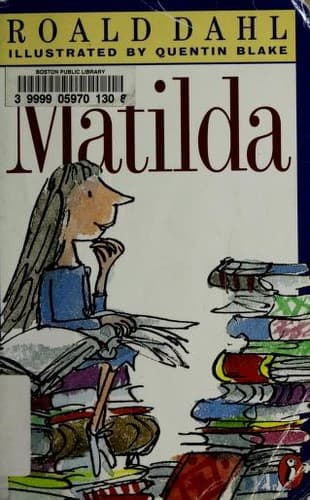
- Matilda
Roald Dahl
4.3 (648k) average on GoodreadsFantasyA young protagonist gains a secret, unique ability that helps her navigate difficult family and school situations.
- Stargirl
Jerry Spinelli
3.8 (296k) average on GoodreadsChildren'sBoth books explore themes of individuality and societal pressure. However, Stargirl focuses on the impact of an unconventional individual (Stargirl) on a conventional community and how that community reacts. "Seeing Cinderella" centers more on the individual's (Willow's) internal struggle with perception and how she navigates the truths revealed by her magic glasses, rather than her impact on others' conformity.
- Harry Potter and the Sorcerer's Stone
J.K. Rowling
4.5 (7M) average on GoodreadsFantasyRescued from a miserable life under the stairs, an orphaned boy discovers he's a wizard destined for a magical school, where he uncovers a dangerous secret tied to the dark wizard who murdered his parents.
- The Hunger Games
Suzanne Collins
4.3 (6.4M) average on GoodreadsFantasyIn a future where children fight to the death on live television, Katniss Everdeen volunteers for the arena, turning a death sentence into a fight for survival and a spark of rebellion.
- 1984
George Orwell
4.2 (3.1M) average on GoodreadsPoliticsIn a future where surveillance and thought control are absolute, a man's search for truth clashes with the Party, showing that hope can be a form of rebellion.





Enjoyed the summary?
A summary gives you the shape of the book. The book itself has the detail, the examples and the voice.
Find Seeing Cinderella on AmazonAs an Amazon Associate, BookBrief earns from qualifying purchases. How we're funded