
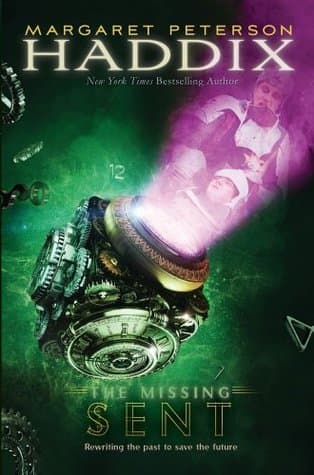
Synopsis
Covers the whole plot, including the ending.
- Difficulty
- Medium
- Pacing
- Fast
- Mood
- Suspenseful, Adventurous, Mysterious, Thought-provoking
- Read it if
- You enjoy fast-paced historical mysteries with a time-travel twist, and appreciate a blend of adventure and ethical dilemmas suitable for young readers.
- Skip it if
- You prefer hard science fiction with strict time-travel rules, or if you dislike historical fiction that takes significant liberties with known events.
Sent Plot Summary
Covers the whole plot, including the ending.
The Unexpected Mission
After the events of 'Found,' Jonah and Chip begin to understand their identities as 'missing children of history.' Their lives change again when JB, a time purist, intervenes. JB believes their existence causes problems in the timeline and sends Jonah, Chip, Katherine, and Alex back to 1483. He promises that if they can "fix" history and ensure events happen correctly, they can return home. The four children, confused but determined, find themselves in a different, dangerous world.
Arrival in 15th Century England
Arriving in 1483 London, Jonah, Chip, Katherine, and Alex are disoriented by the sights, sounds, and smells of the past. JB's instructions lead them to a hidden chamber where they find period clothing and a map. Here, JB's true plans for Chip and Alex are revealed: they are Edward V and Richard, Duke of York, the young princes missing from the Tower of London. Katherine and Jonah must help them take on their historical roles. This news is a shock, especially for Chip and Alex, who must now accept their royal heritage and the dangerous politics that come with it.
The Tower of London
Following JB's clues, the four children head to the Tower of London. Their mission is to enter the Tower and ensure Chip and Alex are recognized as the rightful princes. This is a scary task, as the Tower is both a royal residence and a prison. They manage to get in, using their future knowledge and historical context from JB. Inside, they must convince guards and courtiers of Chip and Alex's true identities, all while dealing with the political situation around King Edward V and his younger brother, Richard.
Meeting Richard III
Inside the Tower, the children quickly meet Richard, Duke of Gloucester, soon to be King Richard III. He is a clever and ambitious man. Jonah, Katherine, Chip (as Edward V), and Alex (as Richard) must be careful in their interactions with him, knowing their lives and history depend on them playing their parts well. This meeting reminds them of the danger they are in, as Richard III is the historical figure thought to have caused the princes' disappearance and murder. The children now know that 'fixing history' might mean walking into a deadly trap.
The Historical Records
While Chip and Alex try to establish themselves in the royal court, Katherine and Jonah research historical records in the Tower's library. They want to understand their mission and what 'fixing history' means. Their research uncovers the truth: according to history, the Princes in the Tower were murdered, likely by Richard III. This discovery jeopardizes the entire mission, as they realize following JB's instructions might lead Chip and Alex to their deaths. The moral questions are serious, forcing them to wonder if they can, or should, let such a tragedy happen.
The Dilemma of Intervention
The truth about the princes' historical fate creates a moral crisis among the four children. Jonah and Katherine are torn between their duty to JB to 'fix history' and their loyalty to Chip and Alex. They cannot imagine knowingly sending their friends to their deaths, even if it means preserving the timeline. Chip and Alex are terrified, understanding the seriousness of their situation. This conflict makes them question JB's motives and their mission. They begin to look for other ways to fulfill JB's directive without sacrificing their friends, leading to tense discussions and brainstorming.
Escape Attempts
Determined to prevent the princes' historical murder, Jonah and Katherine begin to plan an escape for Chip and Alex from the Tower of London. They look into secret passages, disguises, and their limited knowledge of the Tower's layout. However, the Tower is a fortress, and security is tight, especially around the royal children. Their attempts are dangerous and risk exposure, which would jeopardize their mission and their lives. They face many close calls, showing how hard it is to change a major historical event within the Tower.
JB's Intervention and the Paradox
Just as Jonah and Katherine are about to start a more complex escape plan, JB unexpectedly reappears. He is angry, having noticed their attempts to change the timeline. JB explains the serious consequences of altering history, emphasizing that even small changes can create devastating paradoxes that could unravel their own time. He repeats that their main goal is to ensure history happens as it should, no matter the personal cost. His warning forces the children to face the ethical problem of their mission: is it worth saving their friends if it means destroying their own future? JB's appearance also makes them question how much he truly knows about the princes' fate.
The 'Switch'
Under great pressure from JB and the threat to Chip and Alex, the children create a desperate and clever plan. They realize that 'fixing history' does not necessarily mean letting the princes die, but rather ensuring the historical *perception* of their deaths remains. Their plan involves creating the illusion of the princes' disappearance and presumed murder, while secretly taking Chip and Alex to safety. This requires careful coordination, convincing decoys, and a deep understanding of historical records to ensure their actions match what history *remembers*, rather than what actually happened to the real princes.
The Escape and the Aftermath
With quick thinking, some luck, and a daring move, Jonah, Katherine, Chip, and Alex carry out their plan. They create a scenario that leads to the historical belief that the Princes in the Tower vanished or were murdered, while secretly helping Chip and Alex escape. The exact details of their method are kept secret, ensuring the historical record is not disturbed. Once Chip and Alex are safely out of the Tower and hidden, the immediate danger passes. The children realize they have successfully navigated a dangerous historical event, saving their friends' lives while maintaining the timeline's integrity, or at least its perception.
Return to the Present
Having completed their mission, JB reappears and, as promised, returns Jonah, Chip, Katherine, and Alex to their own time. They are relieved to be back in the present, but the experience in 1483 has changed them. The trauma of facing their friends' potential deaths and the moral complexities of their mission weigh heavily on them. While JB confirms that history is now 'fixed,' the children have questions about the true fate of the original Edward V and Richard, Duke of York, and the ethics of their actions. They also wonder about the original 'missing' children and their roles.
New Realities, New Threats
Back in their own time, Jonah, Chip, Katherine, and Alex try to process their adventure. They are aware of their connection to history and the ongoing plans of JB and the time purists. The experience has strengthened their bond, but it has also created a sense of unease. They understand their lives are no longer ordinary and that they will likely be called upon for similar dangerous missions. The knowledge that they are 'missing children' with a role to play in maintaining or correcting the timeline gives them a sense of responsibility and the anticipation of future challenges, knowing their journey is not over.
Sent Characters
Jonah Skidmore
Protagonist
An adopted boy who discovers he is a 'missing child of history.'
Jonah is a thoughtful and often anxious teenager who was adopted as an infant. He is intelligent and possesses a strong moral compass, often questioning the ethical implications of their missions. He struggles with the sudden revelation of his true identity as a 'missing child' and the responsibilities it entails. He acts as a grounding force for the group, often trying to think through problems logically and protect his friends. He is driven by a desire to understand his past and ensure the safety of those he cares about.
Relationships: Chip Winston (Close friend and fellow 'missing child'); Katherine Skidmore (Adopted sister and confidante); Alex (Friend and fellow 'missing child'); JB (Antagonistic mentor/controller)
Chip Winston (Edward V)
Protagonist
A seemingly ordinary boy who discovers he is Edward V, King of England.
Chip is initially portrayed as a somewhat naive and innocent boy, having grown up in the present day. He is gentle and kind but finds himself thrust into the terrifying reality of being a historical figure. His transformation into Edward V, King of England, is a massive shock, and he struggles with the burden of royalty and the looming threat to his life. He relies heavily on Jonah and Katherine for support and guidance, often feeling overwhelmed by the danger. His primary drive is survival and a yearning for a normal life.
Relationships: Jonah Skidmore (Close friend and protector); Katherine Skidmore (Friend and protector); Alex (Brother and fellow 'missing child'); JB (Controller of his destiny)
Katherine Skidmore
Supporting
Jonah's younger adopted sister, resourceful and quick-witted.
Katherine is Jonah's younger sister, known for her intelligence, bravery, and practical problem-solving skills. She is often the most resourceful of the group, quickly adapting to new situations and thinking on her feet. Despite her younger age, she displays remarkable courage and determination, especially when her friends are in danger. She provides emotional support and practical assistance, often being the one to research and devise plans. She is driven by loyalty to her brother and friends and a strong desire for justice.
Relationships: Jonah Skidmore (Adopted brother and close confidante); Chip Winston (Friend and protector); Alex (Friend and protector)
Alex (Richard, Duke of York)
Supporting
A younger 'missing child' who is revealed to be Richard, Duke of York.
Alex is the youngest of the four, a quiet and somewhat timid boy who is revealed to be Richard, Duke of York, the younger of the Princes in the Tower. He is often scared and overwhelmed by the dangerous situations they find themselves in, relying heavily on the older children for comfort and protection. His innocence highlights the brutality of their historical mission and the threat to his life. Despite his fear, he shows moments of quiet resilience.
Relationships: Chip Winston (Brother and fellow 'missing child'); Jonah Skidmore (Protector and friend); Katherine Skidmore (Protector and friend)
JB
Antagonist/Mentor
A mysterious time purist from the future, orchestrating the children's missions.
JB is a enigmatic and seemingly ruthless figure from a future organization dedicated to preserving the timeline. He is the primary driver of the children's missions, sending them to various historical periods to 'fix' anomalies. His motives are driven by a rigid adherence to historical accuracy, often prioritizing the timeline over individual lives. He is highly intelligent and manipulative, using the children's desperation to return home as leverage. While he provides them with information and the means to travel through time, he remains emotionally detached and morally ambiguous, making him an antagonist even as he guides them.
Relationships: Jonah Skidmore (Controller and antagonist); Chip Winston (Controller and antagonist); Katherine Skidmore (Controller and antagonist); Alex (Controller and antagonist)
Richard, Duke of Gloucester (Richard III)
Antagonist
The ambitious uncle of the princes, who becomes King Richard III.
Richard, Duke of Gloucester, is a historical figure depicted as cunning, ambitious, and ruthless. He is the uncle of Edward V and Richard, Duke of York, and is the primary suspect in their historical disappearance and presumed murder. He presents a polite but chilling demeanor, making the children constantly wary of his intentions. He represents the direct threat to Chip and Alex's lives and the ultimate obstacle the children must overcome to 'fix' history without sacrificing their friends. His presence instills fear and urgency in the protagonists.
Relationships: Chip Winston (Edward V) (Nephew and rival for the throne); Alex (Richard, Duke of York) (Nephew and rival for the throne)
Angela
Mentioned
One of the 'missing children' from the first book, briefly mentioned.
Angela is one of the other 'missing children' who was introduced in the previous book, 'Found.' While not physically present in 'Sent,' she is mentioned by Jonah and Chip as they reflect on their shared experiences and the broader implications of their identities. Her story serves as a reminder of the larger mystery surrounding the missing children and the diverse historical backgrounds from which they originated. Her absence in this mission highlights the specific focus on the Princes in the Tower.
Relationships: Jonah Skidmore (Fellow 'missing child'); Chip Winston (Fellow 'missing child')
Sent Themes
The Weight of History vs. Personal Morality
The main theme is the ethical problem the characters face: whether to let historical events, even tragic ones like the murder of the Princes in the Tower, happen as recorded, or to intervene to save lives. JB represents strict adherence to history, while Jonah and Katherine prioritize personal morality and friendship. This conflict is clear when they discover Chip and Alex's historical fate, making them question the cost of 'fixing' history. The children's attempts to find a third way—keeping the perception of history while saving their friends—highlights this tension.
“History is like a river, Jonah. You can’t just dam it up or divert it without causing a flood downstream.”
Identity and Belonging
The theme of identity is important, especially for Chip and Alex, who must suddenly accept their roles as historical princes. Jonah and Katherine also deal with their identities as 'missing children' with unusual pasts. The sudden change from ordinary teenagers to historical figures forces them to confront who they are and where they belong. Their struggle to balance modern sensibilities with historical roles, and their desire for a 'normal' life, shows the complexities of their unique existence. This theme is clear in Chip's initial confusion and fear at being called 'Your Majesty.'
“I’m Chip! I’m not some dead king!”
The Nature of Time and Paradox
The book explores the philosophical questions of time travel and the possibility of paradoxes. JB's warnings about the catastrophic results of changing the timeline emphasize history's delicate balance. The children constantly fear that their actions, even small ones, could unravel their own present. Their solution—creating a historical *perception* of events rather than directly causing them—is a clever look at how history is recorded and remembered versus what actually happened. This theme raises questions about fate versus free will within a fixed timeline.
“Every change you make, every deviation, creates a ripple that can become a tidal wave, wiping out your own existence.”
Friendship and Loyalty
At its core, 'Sent' is a story about strong friendship. Jonah and Katherine's loyalty to Chip and Alex drives their desperate attempts to save them from their historical fate. Despite pressure from JB and risks to themselves, they refuse to abandon their friends. Their teamwork, support, and willingness to risk their lives for each other are central to their success. This theme provides the emotional center of the story, grounding the sci-fi elements in relatable human connection.
“We’re not leaving them to die, Jonah. We just can’t.”
Plot Devices & Literary Techniques
Time Travel
The primary mechanism for moving characters between historical periods.
Time travel is the foundational plot device, enabling the children to journey from their present day to 1483. It's not a free-form ability; rather, it's controlled by JB, who uses specialized technology and portals to transport them. This device allows for the exploration of historical events and creates the central conflict of the story. The limitations and dangers of time travel, particularly the risk of creating paradoxes, are frequently emphasized, adding tension and stakes to their missions. It's the catalyst for all their adventures and challenges.
The 'Missing Children' Trope
Children from various historical periods, taken from their original timelines.
This device establishes the protagonists' unique origins and their connection to historical figures. Jonah, Chip, Katherine, and Alex are not ordinary children but individuals whose presence in the present day is an anomaly. This trope provides a compelling backstory and a reason for JB's intervention. It creates a sense of destiny and importance for the characters, as they are intrinsically linked to the events they must 'fix.' It also raises questions about their true identities and their place in the grand scheme of time.
Historical Inaccuracy/Anomaly
Discrepancies in the timeline that the characters must correct.
The central driving force of the plot is the concept of historical inaccuracies or 'anomalies' that JB claims the children's very existence causes. These anomalies necessitate their intervention to restore the correct historical record. In 'Sent,' the anomaly is the fact that the original Princes in the Tower vanished, while Chip and Alex are their historical counterparts. This device creates a clear mission objective and introduces the tension between what *should* happen historically and what the characters *want* to happen for their friends.
The Ethical Dilemma
A moral choice between two undesirable outcomes.
This is a crucial plot device that elevates the story beyond a simple adventure. The ethical dilemma centers on whether the protagonists should allow Chip and Alex to die to preserve history, or save them and risk catastrophic temporal paradoxes. This choice is presented as a no-win situation by JB, forcing the children to think creatively and morally. It generates significant internal and external conflict, making the characters question authority and their own values, ultimately leading to their ingenious solution.
Cryptic Clues and Instructions
Vague guidance from JB that forces the characters to deduce and explore.
JB rarely provides explicit, step-by-step instructions. Instead, he offers cryptic clues, historical documents, and general directives that force Jonah, Katherine, Chip, and Alex to research, interpret, and make their own decisions. This device adds an element of mystery and suspense, as the characters must piece together the puzzle of their mission. It also allows for character development, as they learn to rely on their own intelligence and resourcefulness rather than simply following orders, especially when faced with the ethical dilemma.
Sent Quotes
“The past is like a puzzle, and sometimes you have to find the missing pieces to understand the present.”
“It's one thing to read about history, and quite another to live it.”
“Sometimes the biggest dangers aren't the ones you expect, but the ones you don't even see coming.”
“You can't change what's already happened, but you can learn from it.”
“Being brave doesn't mean you're not scared. It means you do what you have to do even when you are.”
“Every choice you make echoes through time.”
“Sometimes the truth is stranger than anything you could ever imagine.”
“It's hard to trust people when you know they might not even exist in your own time.”
“History isn't just dates and names; it's stories, real lives, and the choices people made.”
“Even the smallest actions can have the biggest repercussions.”
“There's a difference between knowing something and truly understanding it.”
“Family isn't just about who you're related to by blood, but who you choose to protect.”
“The future is always uncertain, but that doesn't mean you shouldn't try to make it better.”
“Sometimes, the only way to save the future is to fix the mistakes of the past.”
Quiz
10 questions on the plot and the characters. Each answer comes with a short explanation.
Question 1
Which historical year do Jonah, Chip, Katherine, and Alex first get sent back to by JB?
- 1918
- 1483
- 1603
- 1776
Show answer
B. 1483 The children are sent back to 1483 by JB, the time purist, which is the year the Princes in the Tower disappeared.
Question 2
What is the primary goal JB sets for Jonah and the others in 1483?
- To prevent a major war from breaking out
- To retrieve a lost historical artifact
- To fix history so they can return to their present-day lives
- To gather information for a future time-travel mission
Show answer
C. To fix history so they can return to their present-day lives JB's promise is that if they can 'fix history,' they will be able to return to their own time.
Question 3
Who are Chip and Alex revealed to be in their true identities in 1483 England?
- Merchants and their apprentice
- Knights in training
- The king and prince of England
- Scholars studying ancient texts
Show answer
C. The king and prince of England Chip and Alex discover their true identities are the young king and prince of England, the historical 'Princes in the Tower'.
Question 4
What specific historical event complicates Chip and Alex's mission to reclaim their identities?
- A famine sweeping through the country
- A plague outbreak in London
- The historical record stating the princes were murdered
- A rebellion led by a rival noble family
Show answer
C. The historical record stating the princes were murdered The main complication is the historical fact that the Princes in the Tower, whom Chip and Alex are, were believed to have been murdered.
Question 5
What is JB's primary motivation for sending the children back in time?
- To test the limits of time travel technology
- To prove his theory about historical anomalies
- To correct historical inaccuracies caused by time travel
- To rescue specific individuals from the past
Show answer
C. To correct historical inaccuracies caused by time travel JB is described as a 'time purist,' indicating his goal is to correct errors or 'fix history' that has been altered, likely by previous time travelers.
Question 6
What does the title 'Sent' most directly refer to in the context of the book's plot?
- The children sending messages to the future
- The children being dispatched or transported through time
- The emotional state of feeling lost or abandoned
- A secret organization sending spies into the past
Show answer
B. The children being dispatched or transported through time The children are 'sent' back in time by JB, directly referring to their involuntary journey to the past.
Question 7
Before being sent back in time, what significant discovery had Jonah and Chip made about themselves?
- They possessed latent magical abilities
- They were actually missing children from history
- They were part of a top-secret government experiment
- They were clones from the future
Show answer
B. They were actually missing children from history The book description states they had 'barely adjusted to the discovery that they are actually the missing children of history.'
Question 8
What moral dilemma do the children face regarding 'fixing history'?
- Whether to use their future knowledge for personal gain
- How to fix history if it means Chip and Alex will die as per historical records
- If they should attempt to change the outcome of a major battle
- Deciding which historical figures deserve to be saved
Show answer
B. How to fix history if it means Chip and Alex will die as per historical records The core dilemma is explicitly stated: 'How can they fix history if it means that Chip and Alex will die?'
Question 9
What term is used to describe JB's role or ideology regarding time and history?
- A temporal architect
- A chronological guardian
- A time purist
- A historical revisionist
Show answer
C. A time purist JB is specifically identified as 'a time purist' in the book's description, indicating his desire for historical accuracy.
Question 10
What literary genre elements are combined in 'Sent' according to the description?
- Mystery, Romance, and Thriller
- Fantasy, Historical Fiction, and Science Fiction
- Dystopian, Contemporary, and Horror
- Adventure, Mythology, and Satire
Show answer
B. Fantasy, Historical Fiction, and Science Fiction The provided genre tags for the book are Fantasy, Children's, Historical Fiction, Science Fiction, and Young Adult. Fantasy, Historical Fiction, and Science Fiction are the core genre elements combined.
Sent FAQ
What is the central premise of 'Sent' and how does it connect to the previous book, 'Found'?
'Sent' continues the story from 'Found,' where Jonah and Chip discovered they were among 36 missing historical children kidnapped from their original time periods. In 'Sent,' a time purist named JB sends Jonah, Chip, Katherine, and Alex back to 1483 England, tasking them with correcting a perceived historical anomaly related to Chip and Alex's true identities as the Princes in the Tower.
Who are the main protagonists sent back in time, and what are their historical identities?
The main protagonists sent back are Jonah, Chip, Katherine, and Alex. Chip and Alex are revealed to be the historical Princes in the Tower: Edward V, the uncrowned king of England, and his younger brother, Richard, Duke of York. Jonah and Katherine accompany them as support.
What is the specific historical period and event the children are trying to 'fix'?
The children are sent to 1483 England, specifically to the period immediately following the death of King Edward IV. They must navigate the political intrigue surrounding the succession, as their mission involves Chip and Alex reclaiming their identities as the young king Edward V and Prince Richard, who historically disappeared and were presumed murdered in the Tower of London.
Who is JB, and what is his motivation for sending the children back in time?
JB is a time purist and a character from the previous book, 'Found.' He believes that the 36 missing children were never supposed to be in the modern era and sees their presence as a distortion of history. His motivation is to 'correct' these anomalies by sending them back to their proper times, hoping they will fulfill their historical roles.
What is the primary conflict or dilemma faced by the children once they arrive in 1483?
The primary conflict is the shocking realization that, according to historical records, the Princes in the Tower were murdered. The children face the moral dilemma of whether to 'fix' history by allowing Chip and Alex to reclaim their identities, knowing it will lead to their historical deaths, or to try and alter history to save them, potentially creating new paradoxes.
How does the 'time purist' philosophy of JB contrast with the views of other characters or organizations involved in time travel?
JB's 'time purist' philosophy emphasizes strict adherence to the original timeline, believing any deviation is catastrophic. This contrasts with the more lenient or interventionist approaches of other organizations, like the present-day time police, who might prioritize the safety of the children or the stability of the present over absolute historical accuracy.
What clues or foreshadowing exist regarding the true fate of the original Princes in the Tower, beyond the children's initial understanding?
Throughout their time in 1483, the children encounter various historical figures and subtle hints that suggest the truth about the princes' disappearance might be more complex than a simple murder. They learn about different factions and motivations, implying that the historical records might be incomplete or biased, which challenges their initial assumption of an inevitable demise for Chip and Alex.
Are there any subtle indications that JB's understanding of history or his motivations might be flawed or incomplete?
Yes, there are subtle indications. JB's rigid insistence on a singular, unalterable historical truth sometimes clashes with the children's experiences and observations in 1483. His lack of concern for the children's well-being and his absolute certainty, despite the known historical tragedy, suggest a potentially detached or even misguided perspective on the complexities of time and human lives.
How do the children's modern sensibilities clash with the societal norms and expectations of 15th-century England?
The children's modern sensibilities clash significantly with 15th-century norms. They struggle with the rigid social hierarchy, the lack of personal freedom, the different roles for boys and girls (especially Katherine), and the casual acceptance of violence and political intrigue. Their speech patterns and knowledge also risk exposing them as outsiders.
How does the pressure of their historical identities affect Chip and Alex psychologically?
The pressure of their historical identities profoundly affects Chip and Alex. Chip, as King Edward V, struggles with the immense responsibility and the constant threat to his life, questioning if he can live up to the role. Alex, as Prince Richard, grapples with his brother's predicament and his own vulnerability, experiencing fear and a loss of innocence as he confronts the harsh realities of power and survival.
What psychological impact does witnessing the political machinations and dangers of 1483 have on Jonah and Katherine?
Witnessing the political machinations and dangers of 1483 deeply impacts Jonah and Katherine. They experience intense fear and anxiety for their friends' lives, developing a heightened awareness of historical brutality and the fragility of life. This exposure forces them to mature rapidly and make difficult moral choices, challenging their understanding of right and wrong.
How do the characters cope with the moral dilemma of potentially sacrificing Chip and Alex for the sake of 'fixing' history?
The characters cope with this moral dilemma in various ways. Jonah initially struggles with the idea of letting his friends die but eventually seeks alternative solutions. Katherine is fiercely protective and rebels against the idea of their sacrifice. All of them experience significant emotional distress and actively try to find loopholes or ways to save Chip and Alex without completely derailing history.
In what ways do Chip and Alex's personalities evolve as they embrace, or resist, their historical roles?
Chip evolves from a somewhat ordinary boy to a more serious and burdened figure, grappling with kingly responsibilities and the weight of his fate. Alex, initially playful, becomes more observant and fearful, understanding the danger they are in but also showing flashes of princely courage and loyalty to his brother. Both boys mature significantly under duress.
Does the book suggest a definitive answer to the historical mystery of the Princes in the Tower, or does it leave room for ambiguity?
The book carefully navigates the historical mystery of the Princes in the Tower, offering a compelling narrative explanation that integrates the children's journey while still acknowledging the historical ambiguity. It provides a plausible scenario for their disappearance and survival, but leaves enough room for the original historical mystery to remain a topic of debate, rather than presenting a definitive, universally accepted 'answer.'
What philosophical questions about fate versus free will does 'Sent' explore through the children's experiences?
'Sent' deeply explores philosophical questions of fate versus free will. The children are initially told their fate is sealed by history, but their choices and attempts to survive demonstrate agency. The narrative questions whether individuals can defy predetermined historical outcomes or if their actions, even when intended to alter history, ultimately contribute to its original course.
How does the concept of 'history' itself become a character or antagonist in the novel?
The concept of 'history' acts as a powerful, almost antagonist force in the novel. It represents an immutable, predetermined path that threatens to consume Chip and Alex. JB and the time police embody history's rigid demands, while the children's struggle against it highlights the human desire to defy fate and forge their own narratives, challenging the idea of history as an unchangeable record.
What is the significance of the children's relationships and loyalty in overcoming the challenges of 1483?
The significance of the children's relationships and loyalty is paramount. Their bond is their strongest asset, allowing them to support each other emotionally, strategize together, and resist the immense pressure to abandon Chip and Alex to their historical fate. Their unwavering loyalty to one another provides the motivation and strength to challenge the very fabric of history.
How does 'Sent' comment on the nature of power and corruption in historical contexts?
'Sent' comments extensively on the nature of power and corruption in historical contexts, particularly through the lens of the Wars of the Roses. It illustrates how ambition, fear, and the desire for control can lead to betrayal, murder, and the manipulation of truth, even among family members. The children witness firsthand how easily power can corrupt and endanger innocent lives.
About the author

Margaret Peterson Haddix is an American author known for her works of children's and young adult fiction. Some of her notable books include "Among the Hidden," "Just Ella," "Among the Impostors," "Among the Betrayed," "Running Out of Time," and "Among the Brave." Her stories often explore themes of identity, freedom, and the consequences of societal rules.
Similar books
- Found
Margaret Peterson Haddix
4.2 (7k) average on GoodreadsFantasyThis is the direct prequel, sharing characters and the foundational premise of missing historical children.
- A Wrinkle in Time
Madeleine L'Engle
4.0 (1.1M) average on GoodreadsFantasyFeatures young protagonists on a fantastical, dimension-hopping adventure to save loved ones and confront cosmic forces.
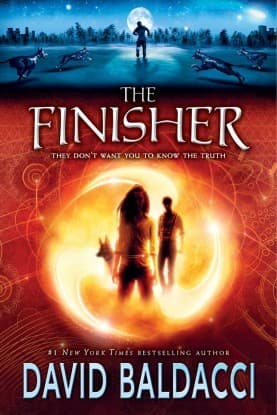
- The Finisher
David Baldacci
3.8 (14k) average on GoodreadsFantasyWhile both Sent and Baldacci's The Finisher feature young protagonists in fantastical, high-stakes situations, Haddix's novel grounds its fantasy in historical events, offering a blend of education and adventure. The Finisher, in contrast, creates an entirely new, dystopian fantasy world with its own unique lore and challenges, focusing more on world-building and prophecy. Haddix's characters are often reacting to existing historical pressures, whereas Baldacci's protagonist, Vega Jane, is actively unraveling the mysteries of her invented world. Sent leans into the 'what if' of history, while The Finisher builds a 'what is' of a new reality.
- Harry Potter and the Sorcerer's Stone
J.K. Rowling
4.5 (7M) average on GoodreadsFantasyRescued from a miserable life under the stairs, an orphaned boy discovers he's a wizard destined for a magical school, where he uncovers a dangerous secret tied to the dark wizard who murdered his parents.
- The Hunger Games
Suzanne Collins
4.3 (6.4M) average on GoodreadsFantasyIn a future where children fight to the death on live television, Katniss Everdeen volunteers for the arena, turning a death sentence into a fight for survival and a spark of rebellion.
- 1984
George Orwell
4.2 (3.1M) average on GoodreadsPoliticsIn a future where surveillance and thought control are absolute, a man's search for truth clashes with the Party, showing that hope can be a form of rebellion.




Enjoyed the summary?
A summary gives you the shape of the book. The book itself has the detail, the examples and the voice.
Find Sent on AmazonAs an Amazon Associate, BookBrief earns from qualifying purchases. How we're funded