
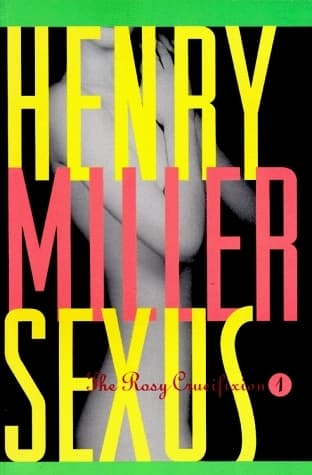
Synopsis
Covers the whole plot, including the ending.
- Difficulty
- Medium
- Pacing
- Variable
- Mood
- Provocative, Philosophical, Sensual, Autobiographical
- Read it if
- You are interested in a raw, uncensored exploration of sexuality, philosophy, and the bohemian lifestyle of 1920s New York, with a focus on stream-of-consciousness narrative.
- Skip it if
- You prefer traditional plot structures, find explicit sexual content and misogynistic undertones off-putting, or dislike lengthy philosophical digressions.
Sexus Plot Summary
Covers the whole plot, including the ending.
A New Beginning, a Familiar Despair
The novel starts with Henry Miller, recently married to Maude, thinking about his life in Brooklyn. He works at the 'Cosmodemonic Telegraph Company' but finds his job dull and meaningless. Despite his new home life, Henry feels trapped and unsatisfied, already wanting to leave his wife and duties. He sees his marriage to Maude as temporary, a step to something more, though he is not sure what that is. His days are full of thoughts about art, freedom, and the pointlessness of normal life, setting up his search for self-discovery and sexual freedom, even as he deals with his current life.
The Bohemian Lure of Greenwich Village
Henry starts going to Greenwich Village, drawn to its bohemian feel and the promise of artistic and intellectual excitement. He meets many writers, painters, and unusual people who show the freedom and non-conformity he wants. These meetings make him want to leave his ordinary life and live more genuinely. He has long, philosophical talks about art, sex, and society, finding a temporary escape from his home troubles. This time changes his view significantly, as he starts to actively look for experiences that challenge social norms and his own ideas about life and relationships, further separating him from Maude.
The Arrival of Mara: A Seductive Catalyst
Henry meets Mara, a striking and unrestrained dancer who immediately captivates him with her raw sensuality and independent spirit. She represents everything he feels is missing from his life with Maude — passion, unpredictability, and no middle-class limits. Their first meetings have a strong sexual tension. Mara's presence acts as a powerful trigger, increasing Henry's unhappiness with his marriage and pushing him further towards open rebellion against traditional morals. He becomes obsessed with her, seeing her as a muse and a symbol of the free life he wants, despite the problems her presence brings to his already turbulent life.
The Escalation of Desire and Deception
Henry begins a passionate affair with Mara, marked by intense physical closeness and a deep emotional bond he feels he has never had before. Their encounters are shown in detail, displaying an open exploration of sexuality. At the same time, Henry continues to live with Maude, keeping up a show of normal home life, though with growing difficulty. He struggles with the guilt of his lies, yet Mara's appeal and the promise of a life without social expectations are too strong to resist. The affair becomes a main part of his life, controlling his thoughts and actions and further separating him from his duties.
The Financial Struggle and Artistic Aspirations
Amid his romantic involvements, Henry faces severe money problems. He quits his job at the Cosmodemonic Telegraph Company, choosing a life of poverty to follow his artistic goals. He struggles to find steady work, often relying on friends' generosity or temporary, low-paying jobs. Despite the hardship, he stays committed to writing, seeing it as his only true calling. This period shows his strong dedication to art, even at the cost of comfort and stability. His poverty often puts him in difficult situations, further showing his rejection of capitalism and his choice of a more bohemian, unconventional life.
The Love Triangle Intensifies
The love triangle between Henry, Maude, and Mara reaches a breaking point. Maude eventually finds out about Henry's cheating, leading to explosive arguments and emotional breakdowns. Maude is devastated by his betrayal, but Henry, caught between his desire for Mara and a lingering sense of duty, struggles to say how he feels. The house becomes a battleground of accusations, pleas, and blame. Despite the pain he causes, Henry feels an unstoppable pull towards Mara, convinced she holds the key to his artistic and personal freedom. This period has intense emotional instability and a growing sense of crisis in Henry's personal life.
Escape to the Countryside, A Brief Respite
Wanting to escape the city's chaos and the fallout with Maude, Henry and Mara decide to move to the countryside. They imagine a simple life, free from social pressures, where Henry can write and their love can grow. However, their rural peace is short-lived. The change of scenery does little to solve their basic problems. Mara's changing moods and Henry's self-focus lead to new tensions. The countryside's isolation also brings their individual worries to the surface, showing that external changes cannot fix internal conflicts, and their relationship remains as turbulent as ever, despite the temporary calm.
Return to the City and Shifting Dynamics
Unable to keep up their life in the countryside, Henry and Mara return to New York, where they continue their unconventional life. Their relationship changes further, with periods of intense passion mixed with arguments and emotional distance. Henry continues to struggle with his writing, feeling pressure to create something meaningful while dealing with financial instability. They move through the city's bohemian groups, meeting old friends and new acquaintances, each interaction shaping their views. The return to the city brings a renewed sense of urgency to Henry's artistic goals and forces him to face the long-term future of his relationship with Mara.
The Philosophical Quest Continues
Throughout his difficult experiences, Henry's search for meaning and truth grows stronger. He thinks deeply about existence, art, and human relationships. He reads widely, discusses unusual ideas with friends, and reflects on his own experiences to understand the universe. These intellectual explorations often mix with his sexual adventures, as he sees both as ways to discover himself. His thoughts are often like a stream of consciousness, showing his chaotic inner world and his constant search for a personal philosophy that can combine his desires with his intellectual hopes, often leading to more questions than answers.
The Enduring Power of Mara
As the story goes on, Mara becomes a central, almost legendary figure in Henry's life. Despite their frequent arguments, her unpredictable nature, raw sexuality, and strong spirit continue to inspire and trouble him. She is not just a lover but a muse, a symbol of the wild life he wants to live. Henry sees her as a force of nature, an example of the feminine that both grounds and frees him. Their relationship, though difficult, is shown as important to his artistic and personal growth, a place where his identity as a writer and a man is formed, even as he thinks about a future without her.
The Lingering Shadow of Maude
Even after their separation and Henry's time with Mara, Maude's presence still affects his life. She represents the traditional, domestic life he purposefully left, a constant reminder of his past choices and the pain he caused. His memories of her, often with guilt and a strange nostalgia, reappear throughout the story. Maude contrasts with Mara, showing the social expectations and responsibilities Henry so strongly rejects. Her lasting influence shows the deep impact of his decision to break free from traditional marriage, highlighting how his journey towards self-freedom is irreversible.
Anticipation of a New Horizon
Towards the end of the novel, Henry seriously thinks about leaving America. The idea of moving to Europe, especially Paris, is a recurring thought, representing the ultimate escape and the promise of a truly free artistic and personal life. He feels that America, with its strict values and focus on money, can no longer hold his spirit or help his artistic growth. This desire for a new place shows his constant search for freedom and his belief that a complete change of location and culture is needed for him to fully realize himself. The novel ends with this anticipation, hinting at the further adventures and changes that await him.
Principal Figures
Henry Miller
Protagonist
A struggling writer and insatiable seeker of truth and carnal experience.
Henry Miller is the autobiographical protagonist, a man consumed by an intense desire for artistic expression, sexual freedom, and a profound understanding of existence. He is deeply introspective, constantly questioning societal norms, morality, and the meaning of life. He views conventional work and marriage as soul-crushing and is driven by an almost pathological need to break free from all constraints. Despite his intellectual pursuits, he is also highly sensual, exploring sex as a primary means of self-discovery and connection. He is often selfish and irresponsible, prioritizing his desires and art above the feelings of others, yet he possesses a brutal honesty and a unique philosophical perspective that defines his character.
Relationships: Maude (wife, later estranged); Mara (lover, muse, and intense partner); Carl (close friend and intellectual confidant)
Mara
Supporting
Henry's passionate, uninhibited lover and muse, embodying raw sensuality.
Mara is Henry's primary lover and a central figure in his life during this period. She is depicted as a vibrant, unconventional, and highly sexual woman, often described as a dancer with an untamed spirit. Mara embodies the raw, carnal freedom and unpredictability that Henry craves. She is passionate, volatile, and fiercely independent, challenging Henry's perceptions and pushing him further into an exploration of uninhibited sexuality. While she inspires Henry's writing and fuels his desire for a life beyond bourgeois conventions, their relationship is also marked by intense arguments and emotional turmoil, reflecting her complex and often enigmatic personality. She is a force of nature, both exhilarating and exhausting.
Relationships: Henry Miller (lover and muse)
Maude
Supporting
Henry's long-suffering wife, representing the conventional life he rejects.
Maude is Henry's wife at the beginning of the novel, a woman who symbolizes the domesticity and conventionality that Henry increasingly finds suffocating. She is depicted as loving but ultimately unable to satisfy Henry's restless spirit and artistic ambitions. Her devotion to Henry is often met with his neglect and eventual betrayal. Maude represents the societal expectations and responsibilities that Henry consciously abandons in his pursuit of freedom and self-realization. Her pain and confusion over Henry's infidelity serve as a stark contrast to his unbridled pursuit of pleasure and art, highlighting the destructive side of his quest for liberation.
Relationships: Henry Miller (wife, later estranged)
Carl
Supporting
Henry's intellectual friend and confidant, sharing philosophical discussions.
Carl is one of Henry's closest friends and an intellectual companion. He is often present in Henry's philosophical discussions, serving as a sounding board for Henry's ideas about art, society, and existence. Carl shares Henry's disdain for conventional life and often participates in their bohemian escapades. He provides a sense of camaraderie and intellectual stimulation for Henry, offering a different perspective while still aligning with Henry's anti-establishment views. Carl represents the intellectual and artistic community that nurtures Henry's aspirations and helps him articulate his complex thoughts, providing a crucial element of support and understanding in Henry's chaotic life.
Relationships: Henry Miller (close friend and intellectual confidant)
O'Mara
Supporting
A bohemian acquaintance, often involved in Henry's social circle.
O'Mara is a character who frequently appears in Henry's bohemian circles. He is one of the many colorful personalities Henry encounters in Greenwich Village and beyond. While not as central as Mara or Carl, O'Mara contributes to the vibrant, unconventional atmosphere that Henry seeks. He is often involved in the group discussions, parties, and general camaraderie that define Henry's social life outside of his domestic sphere. O'Mara helps illustrate the diverse and eccentric nature of Henry's chosen community, reinforcing the idea of a life lived outside the mainstream. He represents the broader cultural milieu that influences Henry's developing worldview.
Relationships: Henry Miller (acquaintance/friend)
Tania
Mentioned
A woman from Henry's past, recalled through his memories.
Tania is a figure from Henry's past, often recalled in his stream-of-consciousness reflections. She represents an earlier period in his life, potentially a former lover or a significant figure from his youth. Her presence in the narrative is primarily through Henry's memories and musings, serving to illustrate the historical context of his romantic and sexual development. Tania helps to build a more complete picture of Henry's past relationships and his evolving understanding of love and desire. Her memory contributes to the layered complexity of Henry's inner world, showing that his current pursuits are part of a longer, ongoing journey of self-discovery.
Relationships: Henry Miller (past relationship/memory)
MacGregor
Supporting
A friend and fellow artist, providing companionship and intellectual exchange.
MacGregor is another friend in Henry's bohemian circle, often engaging in philosophical and artistic discussions. He shares Henry's passion for art and his disdain for conventional society, offering intellectual camaraderie. MacGregor's presence reinforces the importance of community and shared values for Henry, even as Henry often feels isolated in his unique vision. He is a supportive figure who understands Henry's artistic struggles and aspirations, providing a sense of validation and encouragement. MacGregor helps to paint a picture of the supportive, albeit often chaotic, environment in which Henry attempts to forge his identity as a writer.
Relationships: Henry Miller (friend and fellow artist)
The Cosmodemonic Telegraph Company Colleagues
Mentioned
Faceless figures representing the mundane, soul-crushing world of conventional work.
These are the unnamed or briefly mentioned colleagues from Henry's job at the Cosmodemonic Telegraph Company. They represent the anonymous, bureaucratic, and utterly soul-crushing world of conventional employment that Henry so despises. They serve as a collective foil to Henry's artistic and bohemian aspirations, embodying the conformity and meaninglessness he seeks to escape. Their presence, however fleeting, emphasizes Henry's profound alienation from mainstream society and his desperate need to break free from its shackles, highlighting his internal conflict between survival and artistic integrity.
Relationships: Henry Miller (colleagues (antagonistic to his spirit))
Themes & Insights
Identity and Self-Discovery
The novel is about Henry Miller's constant search for his true self. He always questions his role as a husband, a worker, and an artist, letting go of social expectations to create an identity based on real experience and personal truth. His sexual encounters, philosophical thoughts, and artistic efforts are all ways for him to explore himself, leading him to reject traditional morality for an authentic, though often messy, life. This theme appears in his thoughts about his purpose and his choice to leave a stable life for an uncertain artistic future.
“I have no money, no resources, no hopes. I am the happiest man alive.”
Sexual Liberation and Expression
Sex is shown not just as a physical act but as a deep philosophical and spiritual experience, important to Henry's search for freedom. Through his open and unrestrained encounters with Mara and others, Miller challenges the strict sexual norms of his time. He sees sex as a way to deeper understanding, a basic force that connects him to the core of life and helps him break free from a puritanical society. The detailed descriptions of sexual acts show this theme, presenting sexuality as a vital and life-changing part of human existence.
“To sing you must first open your mouth. You must have a pair of lungs, and a little knowledge of music. It is not necessary to have a master, or a school, or even a piano. You just sing.”
Rejection of Bourgeois Society
Henry strongly rejects the values, systems, and ways of life of middle-class society. He sees traditional marriage, steady jobs (like his at the 'Cosmodemonic Telegraph Company'), and money pursuits as stifling and meaningless. His choice of poverty, bohemianism, and a wandering life is a deliberate act of rebellion against what he sees as a false and hypocritical world. This rejection is central to his search for freedom, as he wants to live a life free from the expectations and limits of mainstream culture, even if it means personal hardship and social disapproval.
“The world is not a place where you can find happiness. It's a place where you can only find yourself.”
Art and the Artist's Struggle
The novel deeply explores the struggles and reasons of an artist. Henry is driven by a strong desire to write, seeing it as his main purpose, even when facing poverty, rejection, and personal chaos. His life experiences, especially his sexual adventures and philosophical thoughts, are seen as material for his art. The theme shows the artist's need for authenticity, freedom, and a willingness to cross boundaries to express creativity, often at great personal cost. His inner thoughts often focus on the nature of art and the artist's special role in society.
“I am a man who is trying to find himself, and if I have to destroy everything that stands in my way, I will do it.”
The Nature of Love and Relationships
Miller presents a complex and often conflicting view of love and relationships. He explores the damaging parts of traditional marriage through his relationship with Maude, comparing it with the raw, passionate, and often difficult connection he shares with Mara. Love is shown as a powerful, sometimes overwhelming force, often mixed with desire, jealousy, and pain. The novel challenges traditional ideas of loyalty and commitment, suggesting that real connection might exist outside social norms, even if it causes emotional wreckage. His relationships are less about romantic ideals and more about deep, often painful, self-discovery.
“Love is a game, and the more you play, the more you lose.”
Plot Devices & Literary Techniques
Stream of Consciousness
Narrative technique mirroring Henry's unfiltered thoughts and experiences.
The novel is largely narrated through Henry Miller's stream of consciousness, presenting his thoughts, feelings, memories, and observations in a continuous, unfiltered flow. This device allows readers direct access to Henry's complex inner world, his philosophical musings, sexual fantasies, and existential anxieties. It blurs the lines between plot, reflection, and digression, creating an intimate and immersive experience that mirrors the chaotic, non-linear nature of human thought. This technique is crucial for conveying Henry's subjective reality and his unique perspective on life, love, and art, making the reader feel deeply embedded in his psyche.
Autobiographical Fiction
Blending personal experience with fictionalized elements for raw authenticity.
While presented as fiction, 'Sexus' is deeply autobiographical, drawing heavily from Henry Miller's own life experiences, relationships, and philosophical development. This device lends a raw, confessional authenticity to the narrative, making the protagonist's struggles and triumphs feel intensely personal and real. Miller uses his own life as source material, often exaggerating or reinterpreting events to serve his artistic and thematic purposes. This blending of fact and fiction allows for an unvarnished exploration of controversial themes, giving the work a powerful, almost documentary-like quality despite its fictional framing.
Explicit Sexual Detail
Graphic descriptions of sex as a means of philosophical and personal exploration.
The novel employs explicit sexual detail not merely for shock value, but as a fundamental device for exploring themes of liberation, identity, and the primal aspects of human nature. These graphic descriptions challenge societal taboos and serve to underscore Henry's rejection of conventional morality. Sex is depicted as a transformative experience, a path to self-discovery, and a powerful force that connects individuals to their deepest desires and to the essence of life itself. The explicitness is integral to Miller's philosophical project, pushing the boundaries of what literature can express about the human condition.
Philosophical Monologues and Digressions
Extended passages of introspection and commentary on life, art, and society.
Throughout the narrative, Henry engages in extensive philosophical monologues and digressions, often interrupting the plot to offer his profound (and sometimes rambling) insights on a wide range of subjects: art, love, society, religion, and the meaning of existence. These passages are central to the novel's intellectual core, allowing Miller to articulate his worldview and challenge conventional thought. They provide depth to Henry's character, revealing his relentless intellectual curiosity and his desire to understand the fundamental truths of life, often overshadowing the narrative action itself and giving the book its distinctive philosophical weight.
Sexus Quotes
“I have no money, no resources, no hopes. I am the happiest man alive.”
“The world is a cancer, and my only hope is to die laughing.”
“To sing you must first open your mouth. You must have a pair of lungs, and a little knowledge of music. It is not necessary to have a master's degree in music. But you must have some desire to sing. And you must not be afraid to make a fool of yourself.”
“All my life I've been running away from something. I've been running away from myself.”
“The aim of life is to live, and to live means to be aware, joyously, drunkenly, serenely, divinely aware.”
“Every man has his own destiny: the only imperative is to follow it, to accept it, no matter where it leads him.”
“What is not in the open is not.”
“The moment one ceases to be a child, one is dead.”
“I am a man of peace, but if war comes, I will be the first to fight.”
“To imagine a language is to imagine a form of life.”
“One's destination is never a place but rather a new way of looking at things.”
“The only thing we can be sure of is change.”
“Life is a journey, not a destination.”
“The greatest prison where I live is myself.”
Quiz
10 questions on the plot and the characters. Each answer comes with a short explanation.
Question 1
What is the name of the protagonist in 'Sexus'?
- Carl
- Alfred
- Henry
- Walter
Show answer
C. Henry The protagonist of 'Sexus' is a thinly veiled autobiographical character named Henry, representing Henry Miller himself.
Question 2
What is the protagonist's primary occupation at the beginning of 'Sexus'?
- A struggling writer
- Working at the Cosmodemonic Telegraph Company
- A jazz musician
- An art teacher
Show answer
B. Working at the Cosmodemonic Telegraph Company At the outset of 'Sexus', Henry is working a mundane job at the Cosmodemonic Telegraph Company, which he finds stifling and unfulfilling.
Question 3
Which city serves as the primary setting for the events described in 'Sexus'?
- Paris
- New York City
- London
- Brooklyn
Show answer
B. New York City While Miller is often associated with Paris, 'Sexus' is primarily set in New York City, particularly focusing on the protagonist's life and relationships there before his eventual move to Europe.
Question 4
What is the name of Henry's second wife, whose tumultuous relationship forms a central part of the novel?
- Mona
- June
- Anna
Show answer
B. June June Mansfield (referred to as Mona in some of his other works) is Henry's second wife in 'Sexus', and their intense, often destructive relationship is a core element of the narrative.
Question 5
What major life decision does Henry make that signifies his break from conventional society and pursuit of an artistic life?
- He moves to a secluded cabin in the woods to write.
- He quits his job at the Cosmodemonic Telegraph Company to dedicate himself to writing.
- He joins a bohemian artist commune.
- He divorces June to marry a wealthy patron.
Show answer
B. He quits his job at the Cosmodemonic Telegraph Company to dedicate himself to writing. A pivotal moment is Henry's decision to leave his stable but soul-crushing job, marking his commitment to a life of art and personal freedom, regardless of the financial consequences.
Question 6
Which of the following best describes a recurring thematic concern in 'Sexus'?
- The pursuit of capitalist success and the American Dream.
- The exploration of personal freedom, sexual liberation, and the rejection of bourgeois values.
- The struggle for political reform and social justice.
- The quiet contemplation of nature and spirituality.
Show answer
B. The exploration of personal freedom, sexual liberation, and the rejection of bourgeois values. 'Sexus' is deeply concerned with Henry's quest for absolute personal and sexual freedom, his disdain for conventional morality, and his embrace of a more authentic, albeit often chaotic, existence.
Question 7
How does Henry's relationship with his first wife, Maude, contrast with his relationship with June?
- Maude represents a stable, conventional life, while June embodies chaos and passion.
- Maude is depicted as a free spirit, while June is portrayed as reserved and domestic.
- Both relationships are equally passionate and destructive.
- Maude is an artist, while June is a homemaker.
Show answer
A. Maude represents a stable, conventional life, while June embodies chaos and passion. Maude represents the conventional, settled life that Henry feels compelled to escape, providing a stark contrast to the tumultuous, all-consuming, and often destructive passion he shares with June.
Question 8
What literary style is characteristic of 'Sexus' and much of Miller's work?
- Strictly linear, objective realism
- Stream-of-consciousness, highly subjective, often digressive prose with autobiographical elements
- Formal, academic language with classical allusions
- Minimalist prose focusing on dialogue and external action
Show answer
B. Stream-of-consciousness, highly subjective, often digressive prose with autobiographical elements Miller's writing in 'Sexus' is deeply personal, flowing in a stream-of-consciousness style, blurring the lines between fiction and autobiography, and often diverging into philosophical or descriptive digressions.
Question 9
The title 'Sexus' explicitly refers to what aspect of the human experience that the book delves into deeply?
- The spiritual connection between individuals
- The role of gender in society
- Sexuality and the exploration of carnal desires and relationships
- The psychological impact of social class
Show answer
C. Sexuality and the exploration of carnal desires and relationships The title 'Sexus' directly points to the novel's explicit and extensive exploration of sexuality, desire, and the physical aspects of human relationships, which was highly controversial at the time of its publication.
Question 10
What is the broader literary context or movement that 'Sexus' and the 'Rosy Crucifixion' trilogy are often associated with, given their themes and style?
- The Lost Generation
- The Beat Generation (though predating it, it heavily influenced it)
- Postmodernism
Show answer
B. The Beat Generation (though predating it, it heavily influenced it) While written before the official emergence of the Beat Generation, Miller's radical themes of sexual freedom, anti-establishment sentiment, and unconventional narrative style in 'Sexus' and his other works profoundly influenced writers of the Beat movement.
Sexus FAQ
What is 'Sexus' about?
'Sexus' is the first volume of Henry Miller's 'The Rosy Crucifixion' trilogy, a semi-autobiographical novel chronicling protagonist 'Henry Miller's' tumultuous life in New York in the late 1920s. It delves into his decision to abandon his mundane job and marriage to June Mansfield (Mara) to pursue his dream of becoming a writer, exploring themes of artistic struggle, sexual liberation, and the chaotic nature of love and desire.
Why should I read 'Sexus'?
You should read 'Sexus' for its raw, unfiltered exploration of human desire, artistic ambition, and the complexities of relationships, all presented with Miller's distinctive, energetic prose. It offers a no-holds-barred look at a man's struggle for self-realization against societal norms, making it a powerful and often provocative read for those interested in avant-garde literature and psychological depth.
What is the background/setting of 'Sexus'?
The novel is primarily set in the gritty, vibrant landscape of New York City during the late 1920s, with specific scenes often taking place in Greenwich Village apartments, speakeasies, and cafes. This urban backdrop serves as a crucible for Henry's artistic and sexual awakenings, reflecting the era's changing social mores and the burgeoning bohemian counterculture.
What are the most memorable quotes?
Memorable quotes often capture Miller's philosophical and visceral style, such as his reflections on the nature of writing ('To sing you must first open your mouth. You must have a pair of lungs, and a little knowledge of music. It is not necessary to have an accordion, or a harmonica, or a guitar.') or his candid observations on love and sex, though specific quotes are often too explicit for general listing.
What writing style does the author use?
Henry Miller employs a highly autobiographical, stream-of-consciousness style, characterized by its frank, confessional tone, vivid imagery, and often explicit language. His prose is energetic, rhythmic, and philosophical, blending narrative with digressions, social commentary, and deeply personal reflections, often blurring the lines between fiction and memoir.
What minor details add significant meaning?
The detailed descriptions of the bohemian artists and intellectuals Henry encounters, even minor ones, underscore the vibrant, often chaotic intellectual and social milieu he desperately seeks to join. The constant struggle for money, even for basic necessities like food, highlights the profound sacrifice Henry is making for his artistic dream, emphasizing the depth of his commitment.
What are some subtle foreshadowing moments?
Subtle foreshadowing includes Henry's growing disillusionment with Mara's theatricality and the increasing financial strain on their marriage, hinting at the eventual dissolution of their relationship and his need to escape. His recurring dreams and philosophical musings about a 'new life' also subtly prefigure his eventual departure for Europe, which occurs later in the trilogy.
What unexpected character connections exist?
Beyond Henry's intense connection with Mara, his often transactional yet deeply philosophical relationships with various women and fellow artists reveal unexpected intellectual and emotional bonds. For instance, some of the peripheral characters who lend him money or offer him a place to stay form a network of support, highlighting the communal aspect of the bohemian struggle, even if fleeting.
What are unspoken character motivations?
Henry's unspoken motivation is often a desperate need for authenticity and self-expression, driving his rejection of conventional life and his relentless pursuit of writing, even at great personal cost. Mara's unspoken motivation, beneath her flamboyant exterior, seems to be a profound fear of abandonment and a desire for control, which she often attempts to exert through dramatic manipulation.
What psychological complexities do characters exhibit?
Henry exhibits a complex blend of intellectual arrogance, profound insecurity, and an almost childlike idealism regarding art and love. Mara, on the other hand, displays narcissistic tendencies, a flair for performance, and deep emotional volatility, often swinging between intense affection and cruel indifference, creating a highly toxic dynamic with Henry.
What are the major emotional turning points?
A major emotional turning point is Henry's definitive decision to quit his job at the telegraph company, signifying his full commitment to his artistic path, regardless of the consequences. Another is the escalating emotional confrontations with Mara, which strip away the romantic illusions of their early relationship, revealing the raw, often painful truth of their incompatibility.
How do relationship dynamics evolve?
The relationship dynamics between Henry and Mara evolve from an initial passionate, almost obsessive entanglement into a volatile cycle of love, jealousy, and mutual destruction. What begins as an intense artistic and sexual bond gradually deteriorates under financial strain, artistic frustrations, and Mara's increasingly erratic behavior, pushing Henry towards a breaking point.
Which parts remain ambiguous or open-ended?
Many aspects of Mara's true past and her motivations remain intentionally ambiguous, presented through Henry's often biased and speculative lens. The ultimate success or failure of Henry's artistic endeavors is also left open-ended at the close of 'Sexus,' as he is still very much in the throes of his struggle, leaving readers to wonder about his future as a writer.
What are controversial scenes or decisions?
The explicit sexual descriptions and the often misogynistic portrayal of women are highly controversial aspects of 'Sexus,' challenging conventional morality and literary norms. Henry's decision to abandon his responsibilities and embrace a life of poverty and sexual freedom, often at the expense of others, also remains a point of contention and debate among readers.
'Sexus' ending explained: how it ends & what it means
'Sexus' ends with Henry still deeply entangled in his tumultuous relationship with Mara, financially destitute, and struggling to find his voice as a writer. He has made the decisive break from his conventional life but is far from achieving peace or success. The ending signifies the beginning of his true artistic and personal quest, leaving him on the precipice of further challenges and transformations, which unfold in the subsequent volumes of 'The Rosy Crucifixion' trilogy.
About the author
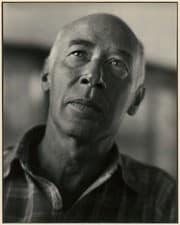
Henry Valentine Miller was an American novelist. He broke with existing literary forms and developed a new type of semi-autobiographical novel that blended character study, social criticism, philosophical reflection, stream of consciousness, explicit language, sex, surrealist free association, and mysticism. His most characteristic works of this kind are Tropic of Cancer, Black Spring, Tropic of Capricorn, and the trilogy The Rosy Crucifixion, which are based on his experiences in New York and Paris. He also wrote travel memoirs and literary criticism, and painted watercolors.
Similar books
- Tropic of Cancer
Henry Miller
3.7 (65k) average on GoodreadsLiterary FictionShares the same author's distinctive style, autobiographical themes, and explicit exploration of sexuality.
- On The Road
Jack Kerouac
3.6 (349k) average on GoodreadsLifestyleCaptures a similar sense of bohemian wandering, unconventional relationships, and a search for meaning, though with a different era and focus.
- Lady Chatterley's Lover
D.H. Lawrence
3.5 (102k) average on GoodreadsHistorical FictionExplores themes of sexual liberation and societal constraints, though with a more romantic and less overtly philosophical approach.
- Nineteen Eighty-Four
George Orwell
4.2 (5.5M) average on GoodreadsFictionWinston Smith dreams of truth and rebellion in a world where Big Brother watches all, but he confronts the terrifying power of a regime that controls not just actions, but thoughts.
- The Frozen River
Ariel Lawhon
4.4 (600k) average on GoodreadsFictionIn 1789 Maine, a heroic midwife's diary helps her expose a murder and get justice in a town that wants to silence her.
- A Man Called Ove
Fredrik Backman
4.4 (569k) average on GoodreadsFictionA stubborn widower, who lives by strict rules, finds his quiet world changed by a lively new family next door, making him face his past and find happiness in human connection.




Enjoyed the summary?
A summary gives you the shape of the book. The book itself has the detail, the examples and the voice.
Find Sexus on AmazonAs an Amazon Associate, BookBrief earns from qualifying purchases. How we're funded