

Synopsis
Covers the whole plot, including the ending.
- Difficulty
- Medium
- Pacing
- Fast
- Mood
- Feverish, Restless, Exhilarating, Melancholy, Adventurous
- Read it if
- You are drawn to stories of restless youth, bohemian lifestyles, and the search for meaning on the open road; you appreciate stream-of-consciousness prose and a strong sense of place.
- Skip it if
- You prefer tightly plotted narratives, characters with clear motivations, or stories with a definitive resolution; you dislike meandering prose or depictions of drug use and casual relationships.
On The Road Plot Summary
Covers the whole plot, including the ending.
Sal Paradise's Restless Beginnings and the Arrival of Dean Moriarty
Sal Paradise, a young writer in Paterson, New Jersey, and New York City, feels a deep emptiness after his divorce and his aunt's illness. He wants more from life. His world changes with the arrival of Dean Moriarty, an energetic young man from Denver, recently out of reform school. Dean, with his young wife Marylou, impresses Sal with his spontaneous way of thinking, his constant search for feelings, and his enthusiasm for life, jazz, and the road. Sal sees in Dean his own unexpressed desires and the freedom he wants. This sets up their intertwined lives.
First Westward Journey: Hitchhiking to Denver
Inspired by Dean and his own restlessness, Sal decides to go west. He hitchhikes from New York, meeting many different people and seeing the vastness of America. He works briefly as a farmhand in North Carolina, gets rides from truckers, and sleeps outside. His trip takes him through Chicago and to Denver, where he meets Dean, Marylou, and their Beat friends again, including Carlo Marx. This first trip shows Sal the raw reality of the American landscape and the temporary lives of its people, making him want more adventure.
Denver Revelry and the Rush to San Francisco
In Denver, Sal enters Dean's chaotic and exciting world, full of late-night talks, jazz clubs, and drug-filled parties with friends like Carlo Marx and Ed Dunkel. Dean's energy and unpredictable nature control their lives. After a time of intense fun, Dean, Marylou, and Ed Dunkel decide to move to San Francisco. Sal, low on money, follows them by bus, crossing mountains in a snowstorm. He meets them in San Francisco, where their life of free exploration, jazz, and casual relationships continues, strengthening Sal's interest in Dean's spontaneous life.
Sal's Return East and Dean's Brief Stint in New York
Feeling a need to return home and take a break from Dean's fast life, Sal decides to go back to the East Coast. He travels alone, thinking about his experiences. Soon after, Dean, having left Marylou, arrives in New York with a new girlfriend, Camille, who is pregnant with his child. Dean's presence excites Sal's New York literary friends, bringing his energetic style and philosophical ideas to their discussions. However, Dean's inability to stay in one place and his constant need to move soon make him leave Camille and return to the West, leaving Sal wanting his friend to come back.
Second Westward Journey: Dean's Return and the Cross-Country Dash
Dean Moriarty, now with his third wife, Inez, and another child coming, returns to New York in a stolen car. His arrival makes Sal want adventure again. Sal, Dean, and Marylou (who has rejoined them) take a frantic, fast drive back west. This trip has Dean's reckless driving, their constant search for jazz and excitement, and a general disregard for societal rules. They stop briefly in Denver to see Dean's family and friends, then go to San Francisco, where Dean tries to manage his two wives, Camille and Inez, leading to domestic chaos.
San Francisco Chaos and Dean's Desertion
In San Francisco, Dean's complicated home life with Camille and Inez breaks down. His inability to commit to one woman or one place, along with his constant search for experience, creates a difficult situation. Sal watches Dean's struggles and his ability for both great love and deep irresponsibility. Dean eventually leaves both women and children, driven by his desire to wander and his need to move on. Sal thinks about the results of Dean's actions and the sadness under his friend's happy outside, feeling a sense of loss.
Third Westward Journey: To New Orleans and Mexico
Dean reappears, and he and Sal, with Stan Shepard, go on a third major trip, this time heading south to New Orleans to visit Old Bull Lee (William S. Burroughs). The trip is marked by poverty, hitchhiking, and a growing sense of desperation and tiredness. After a short, drug-filled stay in New Orleans, they decide to go further south into Mexico, driven by Dean's belief that ultimate freedom and experience can be found there. The trip through Mexico is hard, with heat, poverty, and cultural differences, pushing their physical and mental limits.
Mexico City: Freedom and Illness
Arriving in Mexico City, Sal feels a great sense of freedom and joy. The culture, the cheap drugs, and the feeling of complete freedom from American rules lead him to a peak experience, a moment of pure happiness. His joy is short-lived. Sal gets very sick with dysentery and a fever. Dean Moriarty, always restless and self-absorbed, leaves Sal behind in Mexico City to pursue another woman, promising to return but never doing so. Sal is left alone, sick and abandoned, feeling the pain of Dean's impulsiveness.
Sal's Recovery and Return to New York
After Dean leaves, a kind Mexican woman nurses Sal back to health. Being abandoned and sick gives him a deeper, sadder understanding of Dean's character and their friendship. He slowly gets his strength back and, with help, eventually makes the long trip back to New York. The return is not a triumph, but a quiet reflection, as he thinks about his intense travels and his complex relationship with Dean. He is changed by the road, no longer the same restless young man who first set out.
Final Encounter and Lingering Memories
Months later, Dean Moriarty makes a final, brief visit to Sal in New York. He is getting ready for another trip, this time to San Francisco with a new companion, a French-Canadian girl. Their meeting has sadness, as their intense bond seems to have faded, replaced by a tired understanding. Dean is still restless, still searching, but the magic of their shared youth is gone. Sal watches him leave, knowing it is likely their last meeting. He is left to think about their adventures, the 'mad ones,' and the bittersweet memories of the road, forever marked by the search for experience and Dean Moriarty's charismatic, elusive spirit.
Principal Figures
Sal Paradise
Protagonist
A young, aspiring writer searching for meaning and experience on the open road.
Sal Paradise, the narrator and Kerouac's autobiographical stand-in, is a sensitive, intellectual, and restless young man. He is driven by a deep longing for spiritual fulfillment, authentic experience, and a release from the conventions of society. Initially somewhat naive, he is profoundly influenced by Dean Moriarty, who embodies the freedom and 'kick' he seeks. Sal is an observer and a participant, absorbing the world around him and attempting to articulate its essence through his writing. His journey is one of self-discovery, marked by moments of ecstatic joy and profound melancholy, as he grapples with the allure and the costs of a life lived on the fringes.
Relationships: Dean Moriarty (Intense, complex friendship, mentor-mentee dynamic, object of fascination); Carlo Marx (Intellectual friend, fellow writer, confidant); Marylou (Brief romantic entanglement, companion on the road)
Dean Moriarty
Antagonist/Supporting
A charismatic, impulsive, and utterly uninhibited individual who embodies the Beat spirit of freedom and reckless abandon.
Dean Moriarty, based on Neal Cassady, is the electrifying, central figure who catalyzes Sal's adventures. He is a force of nature: a fast talker, a reckless driver, a tireless lover, and a relentless seeker of 'IT' – the ultimate experience. Dean is driven by an insatiable hunger for sensation, jazz, sex, and movement, embodying a raw, untamed American spirit. While incredibly charismatic and inspiring, he is also deeply irresponsible, abandoning wives and children, and ultimately, Sal. He represents both the exhilarating promise of absolute freedom and the destructive potential of living without boundaries or consequences.
Relationships: Sal Paradise (Intense, complex friendship, source of inspiration and eventual disillusionment); Marylou (First wife, on-again, off-again lover); Camille (Second wife, mother of his children); Inez (Third wife, mother of his children); Carlo Marx (Friend, intellectual sparring partner)
Marylou
Supporting
Dean's young, beautiful, and equally wild first wife and frequent companion on the road.
Marylou is Dean Moriarty's first wife, a beautiful, free-spirited, and sexually liberated young woman. She is as impulsive and uninhibited as Dean, often participating in their madcap adventures and casual sexual encounters. Marylou is initially presented as a symbol of youthful freedom and sensuality, openly embracing the Beat lifestyle. She shares a complex, on-again, off-again relationship with Dean and also has a brief, unconsummated romantic connection with Sal. Her character highlights the gender dynamics and sexual politics of the Beat generation, often being a victim of Dean's fickle nature but also asserting her own agency.
Relationships: Dean Moriarty (First wife, volatile romantic relationship); Sal Paradise (Brief romantic interest, travel companion)
Carlo Marx
Supporting
An intellectual, poetic friend of Sal and Dean, representing the more introspective side of the Beat movement.
Carlo Marx, based on Allen Ginsberg, is Sal's close friend and a fellow intellectual and poet. He is a brilliant but tormented figure, prone to long, philosophical monologues and intense emotional outbursts. Carlo serves as a foil to Dean's raw energy, representing the more cerebral and literary aspect of the Beat generation. He shares Sal's fascination with Dean but also possesses a critical distance, often questioning Dean's recklessness. His discussions with Sal and Dean provide much of the philosophical underpinning of the novel, exploring themes of existence, art, and the search for truth.
Relationships: Sal Paradise (Close intellectual friend, confidant); Dean Moriarty (Friend, intellectual sparring partner, object of fascination)
Old Bull Lee
Supporting
An eccentric, drug-addicted writer and intellectual, based on William S. Burroughs, living in New Orleans.
Old Bull Lee, based on William S. Burroughs, is an older, highly intelligent, and cynical intellectual living in New Orleans. He is portrayed as a detached observer of society, deeply immersed in drug use (particularly heroin) and unconventional philosophies. Lee represents a more extreme, cynical, and experimental facet of the Beat sensibility. His home becomes a temporary refuge and intellectual hub for Sal and Dean during one of their journeys south. His calm, almost academic approach to his drug addiction and his sharp observations offer a contrast to Dean's frenetic energy and Sal's romantic idealism.
Relationships: Sal Paradise (Intellectual acquaintance, host); Dean Moriarty (Acquaintance, host)
Camille
Supporting
Dean's second wife and the mother of his children, who struggles with his infidelity and nomadic lifestyle.
Camille is Dean Moriarty's second wife, a more stable and conventional woman than Marylou, who tries to create a home and family with Dean in San Francisco. She is pregnant with Dean's child and represents the domestic responsibilities that Dean consistently shuns. Camille's character highlights Dean's inability to settle down and his destructive impact on those who try to anchor him. Her frustration and despair over Dean's infidelities and constant disappearances offer a poignant counterpoint to the carefree image of the road, revealing the emotional wreckage left in Dean's wake.
Relationships: Dean Moriarty (Second wife, mother of his children, abandoned by him)
Remi Boncoeur
Supporting
A friend of Sal's from New York who shares a brief, tumultuous period living together in San Francisco.
Remi Boncoeur is a friend of Sal's from New York who Sal lives with for a period in San Francisco. He is a somewhat flamboyant and opinionated character, often getting into arguments with Sal. Their shared living situation is marked by poverty and petty squabbles, but also by moments of camaraderie. Remi provides a temporary anchor for Sal during a phase of his westward journey before Sal once again succumbs to the call of the road and Dean's influence. He represents a different kind of companion, one less aligned with the wild abandon of Dean but still part of Sal's transient world.
Relationships: Sal Paradise (Friend, roommate)
Ed Dunkel
Supporting
A quiet, often-ignored friend of Dean's who is perpetually dragged along on the Beat adventures.
Ed Dunkel is a peripheral but persistent member of Dean's circle. He is often depicted as a passive, somewhat bewildered figure, frequently abandoned or overlooked by Dean and the others. His wife, Galatea, is even more long-suffering. Ed's presence highlights the casual disregard and sometimes cruelty that can exist within the Beat group, as he is often left to fend for himself. He represents the hangers-on, the less charismatic figures who are drawn into the orbit of more dynamic personalities like Dean, enduring the hardships without fully sharing in the exhilaration.
Relationships: Dean Moriarty (Friend, often-abandoned travel companion); Galatea (Wife)
Inez
Supporting
Dean's third wife, who is pregnant with his child and tries to establish a stable life with him.
Inez is Dean Moriarty's third wife, a quiet and somewhat conventional woman who becomes pregnant with his child. Like Camille, she represents Dean's attempts at domesticity and the inevitable failure of those attempts due to his restless nature. Inez is often overshadowed by Dean's other relationships and his constant need for movement. Her presence in the narrative further illustrates Dean's inability to commit and the emotional toll his lifestyle takes on the women in his life, even those who try to provide him with stability.
Relationships: Dean Moriarty (Third wife, mother of his child, abandoned by him)
Themes & Insights
Freedom vs. Responsibility
This theme is a main part of the novel, shown mostly through Dean Moriarty. Dean shows complete freedom: freedom from societal rules, work, common relationships, and even self-preservation. He lives only for the moment, looking for 'kicks.' However, this radical freedom comes at a cost, as seen when he leaves his wives and children, and eventually Sal. Sal Paradise thinks about this, admiring Dean's freedom but also feeling guilt and a need for connection. The book asks if true freedom can exist without considering its effect on others, suggesting a tragic exchange.
“'What is that feeling when you're driving away from people and they recede on the plain till you see their specks disappearing? It's the too-huge world vaulting us, and it's good-bye. But we lean forward to the next crazy adventure under the sky.'”
The Search for 'It' and Transcendence
Sal and Dean are always looking for an elusive 'IT,' a moment of pure experience, truth, or spiritual transcendence, often found in jazz, drugs, sex, or the speed of the road. This 'IT' means a deeper meaning beyond the everyday. Dean's energy is entirely focused on this search, believing 'IT' can be found in every heightened feeling. Sal, who thinks more, looks for 'IT' through observation and writing, hoping to capture these experiences. The theme suggests a spiritual quest, even if the methods are unusual and often self-destructive, to reach a higher state of being.
“'The only people for me are the mad ones, the ones who are mad to live, mad to talk, mad to be saved, desirous of everything at the same time, the ones who never yawn or say a commonplace thing, but burn, burn, burn like fabulous yellow roman candles exploding like spiders across the stars.'”
Restlessness and Wanderlust
The story is driven by an intense restlessness and desire to wander. Sal and Dean are always moving, crossing America many times. This constant movement is not just physical; it is a symbol for an inner spiritual and existential search, a refusal to be limited by place or societal expectations. The open road stands for endless possibility and escape from stagnation. The theme explores the appeal and the eventual pointlessness of constantly running, as the characters often repeat behaviors despite changing locations, suggesting that true peace might not come from external movement alone.
“'No matter what Dean did he could never go as far as he wanted to go, so now he had a new idea, which was to go as far as he could in the time allotted, and then turn around and go back.'”
Friendship and Betrayal
The complicated friendship between Sal Paradise and Dean Moriarty is the emotional heart of the novel. Sal is drawn to Dean's exciting energy, seeing him as an inspiration and a catalyst for his own life. Their bond is strong, filled with shared experiences, deep talks, and mutual admiration. However, Dean's irresponsibility and self-centeredness lead to moments of betrayal, especially when he leaves a sick Sal in Mexico. This theme explores the limits of admiration and the painful realization that even inspiring people can be flawed and hurtful, making Sal face the darker side of his idolization.
“'I was behind Dean, and Dean was behind nobody, and Dean was going to make it and make it and make it. But he never made it. He never made it, and I was the one who was going to make it.'”
The American Landscape and Identity
The vast American landscape is not just a setting but an active part of the novel. The journeys across the country—from East Coast cities to plains, mountains, and the Southwest—shape the characters' experiences and views. The road itself becomes a symbol of American freedom, possibility, and a search for a national identity different from European influences. Kerouac's writing often celebrates the beauty and raw energy of America, suggesting that the nation's true spirit is in its vastness and the nomadic lives of its people, deeply influencing Sal's understanding of himself as an American writer.
“'The air was sweet and cold and pure. It was a beautiful night. I was a young man and I was going to the West. I felt like a great pioneer.'”
Plot Devices & Literary Techniques
Stream of Consciousness Narrative
A narrative style that mimics the free flow of thought, emotion, and sensory input.
Kerouac employs a spontaneous prose style, often referred to as 'spontaneous bop prosody,' which mirrors the improvisational nature of jazz. The narrative in 'On the Road' is characterized by long, unbroken sentences, rapid shifts in focus, and a direct, unedited voice that reflects Sal Paradise's immediate perceptions and thoughts. This technique immerses the reader directly into Sal's subjective experience, conveying the frenetic energy, sensory overload, and emotional intensity of the Beat lifestyle and the constant movement of the road, blurring the lines between observation and internal monologue.
The Road as Metaphor
The physical journey across America symbolizes a spiritual and existential quest.
The literal highways and byways traversed by Sal and Dean serve as a powerful metaphor for their inner journeys of self-discovery, rebellion, and the search for 'IT.' The open road represents freedom from societal constraints, endless possibility, and a rejection of stagnation. Each leg of their cross-country trips signifies a new phase of their quest, a new set of experiences, and a deeper plunge into the unknown. It is both a physical path and a symbolic route to spiritual enlightenment, even as it sometimes leads to disillusionment and exhaustion.
Episodic Structure
The narrative unfolds as a series of distinct, yet interconnected, adventures and encounters.
The novel is structured as a series of loosely connected episodes, reflecting the transient and unpredictable nature of the characters' lives. Each chapter or section often details a particular journey, a specific city, or a memorable encounter, rather than a tightly plotted, linear progression. This episodic structure emphasizes the spontaneous, improvisational quality of their travels and relationships, allowing for a diverse cast of characters and settings to be introduced without rigid adherence to a conventional plot arc. It mirrors the 'bop' rhythm of jazz, moving from one distinct improvisation to the next.
The Anti-Hero (Dean Moriarty)
A central character who lacks conventional heroic attributes but drives the narrative with his compelling flaws.
Dean Moriarty functions as an anti-hero. While he inspires Sal and embodies a radical form of freedom and vitality, he also possesses profound flaws: irresponsibility, selfishness, and a destructive impulsiveness that leads to the abandonment of his family and friends. He is not a moral exemplar but a charismatic force that both attracts and repels. His compelling, flawed nature challenges traditional notions of heroism, forcing Sal (and the reader) to confront the complexities of human nature and the dark side of unbridled passion and freedom.
On The Road Quotes
“The only people for me are the mad ones, the ones who are mad to live, mad to talk, mad to be saved, desirous of everything at the same time, the ones who never yawn or say a commonplace thing, but burn, burn, burn like fabulous yellow roman candles exploding like spiders across the stars and in the middle you see the blue centerlight pop and everybody goes 'Awww!'”
“What is that feeling when you're driving away from people and they recede on the plain till you see their specks disappearing? It's the too-huge world, and we are all rushing through it.”
“Our brains were crackling and popping like a frying pan.”
“I was halfway across America, at the dividing line between the East of my youth and the West of my future.”
“No matter what Dean and I were doing, we were always knowing we'd have to leave it someday.”
“And we all began to babble, just like we did in the old days, and everybody was happy.”
“The air was sweet, like a girl's breath, and the stars were winking at me from the dark.”
“He was simply a youth tremendously excited with life, and though he was a con-man, he was only conning because he wanted to live and to love and to talk and to get excited more than anything else.”
“I like too many things and get all confused and hung-up running from one falling star to another till I drop. This is the American night.”
“With the coming of Dean Moriarty began the part of my life you could call my life on the road.”
“We were going to the end of the road and we didn't know what we would find there, but we knew it would be good.”
“But at least I know what I'm doing and I'm not running around like a chicken with its head cut off.”
“Soon it got dark, and I was all alone on the road, going to New York, and it was a happy thing.”
“The one thing that we yearn for in our living days, that makes us sigh and groan and undergo sweet agonies, is love, or the lack of it.”
Quiz
10 questions on the plot and the characters. Each answer comes with a short explanation.
Question 1
Which real-life friend of Jack Kerouac served as the primary inspiration for the character of Dean Moriarty?
- Allen Ginsberg
- William S. Burroughs
- Neal Cassady
- Lucien Carr
Show answer
C. Neal Cassady The book description explicitly states that 'On The Road' is 'Based on Kerouac?s adventures with Neal Cassady,' who is widely known to be the real-life inspiration for Dean Moriarty.
Question 2
What is the primary mode of transportation for Sal Paradise and Dean Moriarty throughout their cross-country adventures?
- Trains
- Buses
- Hitchhiking and cars
- Motorcycles
Show answer
C. Hitchhiking and cars The novel is famous for its depiction of 'the open road' and the characters' frequent use of hitchhiking and various borrowed or purchased cars to travel across the United States.
Question 3
What cultural movement did 'On The Road' help to define and popularize?
- The Lost Generation
- The Beat Generation
- The Hippie Movement
- The Jazz Age
Show answer
B. The Beat Generation The provided text clearly states that the book 'defined what it meant to be 'Beat'' and is a seminal work of the Beat Generation.
Question 4
How many cross-country road trips do Sal Paradise and Dean Moriarty undertake together in the novel?
- Two
- Three
- Four
- Five
Show answer
C. Four The description states, 'On The Road tells the story of two friends whose four cross-country road trips are a quest for meaning and true experience.'
Question 5
Which recurring element, described as a 'sense of language as jazz,' is central to Kerouac's writing style in 'On The Road'?
- Formal, academic prose
- Short, fragmented sentences
- Spontaneous prose with rhythmic, improvisational qualities
- Highly descriptive, Victorian-era language
Show answer
C. Spontaneous prose with rhythmic, improvisational qualities The text mentions the book is 'imbued with Kerouac?s love of America, his compassion for humanity, and his sense of language as jazz,' referring to his signature 'spontaneous prose' style that mimics the improvisational nature of jazz music.
Question 6
What best describes the emotional tone or mixture of feelings expressed by the characters in their quest for meaning?
- Unwavering optimism and joy
- Cynicism and disillusionment
- A mixture of sad-eyed naïveté and wild abandon
- Stoicism and detachment
Show answer
C. A mixture of sad-eyed naïveté and wild abandon The description highlights this specific emotional blend: 'Expressing a mixture of sad-eyed naïveté and wild abandon.'
Question 7
Besides the open road, what other elements are mentioned as 'pulsating' through the rhythms of late-1940s/1950s underground America in the novel?
- Politics, religion, and family values
- Jazz, sex, and illicit drugs
- War, poverty, and social reform
- Academia, classical music, and fine dining
Show answer
B. Jazz, sex, and illicit drugs The text explicitly states the book is 'Pulsating with the rhythms of late-1940s/1950s underground America, jazz, sex, illicit drugs, and the mystery and promise of the open road.'
Question 8
What overarching theme does 'On The Road' represent as 'the quintessential American vision'?
- The pursuit of material wealth and success
- Conformity and social stability
- Freedom and hope
- Isolation and despair
Show answer
C. Freedom and hope The description concludes by stating, 'On The Road is the quintessential American vision of freedom and hope.'
Question 9
What is the significance of the book's publication date, September 5, 1957, as mentioned in the text?
- It marked the end of Kerouac's writing career.
- It was the date Kerouac began his first cross-country trip.
- It signifies the book's profound and lasting impact on American culture since its release.
- It was the day the Beat Generation officially formed.
Show answer
C. It signifies the book's profound and lasting impact on American culture since its release. The text states, 'On September 5, 1957, Jack Kerouac?s novel On The Road was published. Since then, few books have had as profound an impact on American culture.' The date is highlighted for its cultural significance.
Question 10
The book's impact is described as 'setting them free' for which group of people?
- Government officials and politicians
- Generations of writers, musicians, artists, poets and seekers
- Academic scholars and literary critics
- Corporate executives and business leaders
Show answer
B. Generations of writers, musicians, artists, poets and seekers The description explicitly states that the book 'has inspired generations of writers, musicians, artists, poets and seekers who cite their discovery of the book as the event that 'set them free.''
On The Road FAQ
What is 'On The Road' about?
Jack Kerouac's 'On The Road' follows the spontaneous, cross-country adventures of Sal Paradise and his charismatic, wild friend Dean Moriarty. Their four road trips across late 1940s/1950s America are a relentless quest for 'IT' – a transcendent experience, meaning, and true freedom, fueled by jazz, drugs, sex, and a longing for authentic existence outside societal norms.
Why should I read 'On The Road'?
You should read 'On The Road' to experience a seminal work that defined the Beat Generation and profoundly impacted American culture. It offers a raw, energetic glimpse into a search for freedom and meaning, inspiring generations with its vibrant prose, exploration of counter-culture, and a deep sense of longing for genuine experience on the open road.
What is the background/setting of 'On The Road'?
'On The Road' is set in post-World War II America, primarily across various cities and highways of the United States, from New York to Denver, San Francisco, and even Mexico. The backdrop is the underground culture of the late 1940s and early 1950s, characterized by bebop jazz clubs, illicit drug use, bohemian lifestyles, and a restless rejection of conventional society.
What are the most memorable quotes?
Some memorable quotes include "The only people for me are the mad ones, the ones who are mad to live, mad to talk, mad to be saved, desirous of everything at the same time, the ones who never yawn or say a commonplace thing, but burn, burn, burn like fabulous yellow roman candles exploding like spiders across the stars." Another is "Dean and I were back on the road again. We were going to go to San Francisco."
What writing style does the author use?
Kerouac employs a spontaneous prose style, often referred to as 'spontaneous bop prosody,' mimicking the improvisational rhythms of jazz. Sentences are long, breathless, and fluid, conveying a sense of immediacy, energy, and stream-of-consciousness, filled with vivid descriptions, colloquialisms, and an almost poetic cadence that mirrors the characters' restless energy.
What minor details add significant meaning?
The constant references to jazz music, particularly bebop, are not just background but reflect the improvisational, frenetic, and soulful spirit of the characters' lives. Similarly, the detailed descriptions of various forms of transportation—hitchhiking, old cars breaking down—underscore the transient nature of their existence and their determined pursuit of movement.
What are some subtle foreshadowing moments?
Early on, Sal's observations about Dean's inability to settle down or commit, despite his charm, subtly foreshadow the eventual emotional wreckage Dean leaves in his wake and his ultimate isolation. The fleeting nature of every connection they make on the road also hints at the impermanence of their 'beat' lifestyle and the eventual fading of their youthful exuberance.
What unexpected character connections exist?
While not entirely unexpected given the Beat circle, the recurring appearances of characters based on real-life figures like William S. Burroughs (Old Bull Lee) and Allen Ginsberg (Carlo Marx) create a web of interconnectedness that grounds the novel in a specific historical and cultural movement, revealing the tight-knit nature of the Beat Generation's core.
What are unspoken character motivations?
Beneath Dean Moriarty's frenetic energy and pursuit of kicks lies an unspoken, perhaps even unconscious, fear of stasis and a deep-seated insecurity stemming from his difficult childhood. Sal Paradise, while seeking thrills, also carries an unspoken longing for intellectual stimulation and a desire to understand the profound chaos he witnesses, rather than just participate in it.
What psychological complexities do characters exhibit?
Dean Moriarty exhibits a complex mix of boundless charisma, self-destructiveness, and a profound inability to form lasting emotional bonds, leaving a trail of abandoned wives and children. Sal Paradise grapples with his own identity, oscillating between admiration for Dean's freedom and a growing weariness with the destructive aspects of their lifestyle, revealing a subtle internal conflict between longing and disillusionment.
What are the major emotional turning points?
A major emotional turning point for Sal is his increasing disillusionment with Dean's irresponsibility, particularly when Dean abandons him sick in Mexico. Another is Sal's realization that his quest for 'IT' has brought him both profound experiences and profound exhaustion, leading him to seek a more settled, reflective existence, marking a shift from pure abandon to a desire for meaning.
How do relationship dynamics evolve?
The central relationship between Sal and Dean evolves from one of intense admiration and shared adventure to one marked by increasing strain and eventual disillusionment. Sal initially idolizes Dean's freedom and vitality, but as Dean's recklessness escalates, Sal begins to see the destructive consequences and distances himself, highlighting the maturation of Sal's perspective.
Which parts remain ambiguous or open-ended?
The ultimate meaning of 'IT' remains ambiguous; it's a perpetually sought, never fully grasped, transcendent experience that shifts throughout the novel. The long-term fates of many secondary characters, like Marylou or Camille, are also left open-ended, reflecting the transient nature of the Beat lifestyle and the fleeting connections made on the road.
What are controversial scenes or decisions?
Dean Moriarty's repeated abandonment of his wives and children, often for new adventures or women, is highly controversial, showcasing a profound moral ambiguity in his pursuit of freedom. The casual drug use and sexual encounters, while integral to the Beat ethos, were also controversial at the time of publication and continue to spark debate about the characters' ethics.
'On The Road' ending explained: how it ends & what it means
The novel ends with Sal attending a Duke Ellington concert in New York, while Dean Moriarty is left alone and isolated, trying to find a ride. This ending signifies Sal's gradual detachment from Dean's chaotic lifestyle and his move towards a more contemplative existence, contrasting with Dean's perpetual, ultimately self-defeating, restlessness. It suggests that while the road offered profound experiences, ultimate freedom might lie in finding inner peace rather than constant external movement.
About the author

Jean-Louis Lebris de Kérouac, known as Jack Kerouac, was an American novelist and poet who, alongside William S. Burroughs and Allen Ginsberg, was a pioneer of the Beat Generation.
Similar books
- Fear and Loathing in Las Vegas
Hunter S. Thompson
4.1 (299k) average on GoodreadsLifestyleExplores counter-culture road trips with a wild, experimental style and themes of excess and disillusionment.
- Into the Wild
Jon Krakauer
3.7 (2k) average on GoodreadsFantasyChronicles a young man's quest for freedom and meaning by rejecting conventional society and embracing a life on the road.
- Zen and the Art of Motorcycle Maintenance: An Inquiry Into Values
Robert M. Pirsig
3.8 (200k) average on GoodreadsPsychologyCombines a philosophical journey with a physical road trip, exploring themes of quality and personal meaning.
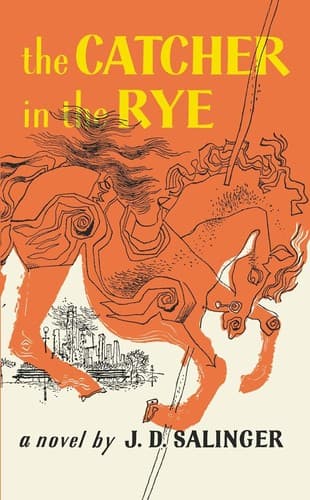
- The Catcher in the Rye
J.D. Salinger
3.8 (2.7M) average on GoodreadsYoung AdultBoth explore youthful alienation and societal critique, but Salinger's novel is more introspective, psychologically nuanced, and confined to a single protagonist's internal turmoil. Kerouac's is expansive, external, and driven by kinetic energy across vast geographical spaces.
- Eat, Pray, Love
Elizabeth Gilbert
3.6 (1.5M) average on GoodreadsLifestyleA heartbroken writer leaves her conventional life for a year-long global search for pleasure in Italy, spiritual devotion in India, and unexpected love and balance in Bali.
- Wild: From Lost to Found on the Pacific Crest Trail
Cheryl Strayed
4.0 (615k) average on GoodreadsLifestyleAfter losing her mother and her marriage, a young woman impulsively hikes over a thousand miles of the Pacific Crest Trail alone, finding strength and healing in the unforgiving wilderness.




Enjoyed the summary?
A summary gives you the shape of the book. The book itself has the detail, the examples and the voice.
Find On The Road on AmazonAs an Amazon Associate, BookBrief earns from qualifying purchases. How we're funded