

Synopsis
Covers the whole plot, including the ending.
- Difficulty
- Medium
- Pacing
- Variable
- Mood
- Dark, Suspenseful, Unsettling, Atmospheric, Mysterious
- Read it if
- You love psychological thrillers with unreliable narrators, intricate mysteries, and a dark, unsettling atmosphere.
- Skip it if
- You prefer straightforward narratives, happy endings, or are sensitive to themes of mental illness and trauma.
Shutter Island Plot Summary
Covers the whole plot, including the ending.
Arrival at Ashecliffe and the Missing Patient
U.S. Marshals Edward 'Teddy' Daniels and Chuck Aule travel by ferry to Shutter Island, home to Ashecliffe Hospital for the Criminally Insane, in September 1954. Their mission is to investigate the disappearance of Rachel Solando, a patient who drowned her three children and was housed in a locked cell in Ward C, despite constant surveillance. Upon arrival, they meet Warden McPherson and Dr. Cawley, the hospital's chief psychiatrist. Teddy immediately feels uneasy and notes the heavy security, including armed guards and barbed wire. He tells Chuck that he's also looking for an arsonist named Andrew Laeddis, whom he believes is hiding on the island, responsible for the fire that killed his wife, Dolores Chanal.
Initial Investigation and Growing Suspicion
Teddy and Chuck begin interviewing the staff and patients. They learn that Rachel Solando left a cryptic note, 'The law of 4; who is 67?' and her file is missing. The staff seems uncooperative and evasive, especially Dr. Cawley and his colleague, Dr. Naehring. Teddy experiences severe migraines and vivid flashbacks of his wife, Dolores, and his traumatic experiences as a soldier liberating Dachau during World War II. He notices the staff's odd behavior and their reluctance to provide full access to patient records or certain areas of the hospital, particularly Ward C. Teddy's suspicions deepen. He believes the hospital is hiding something more sinister than a simple missing patient.
The Storm and the Search for Rachel
A powerful hurricane comes to Shutter Island, cutting off communication with the mainland and trapping the marshals. The storm causes power outages and further chaos, allowing some patients to escape their cells. Teddy and Chuck intensify their search for Rachel Solando, believing she might be hidden somewhere on the island. During the storm, Teddy has increasingly vivid and disturbing visions of Dolores, who warns him about the island and Andrew Laeddis. He also recalls the horrific scene of his children's bodies. He grows more convinced that the hospital conducts illegal experiments on its patients, possibly mind control or lobotomies, and that Rachel's disappearance is a cover-up.
Ward C and the Lighthouse
Defying the staff, Teddy sneaks into Ward C, the most dangerous ward. There he encounters George Noyce, a patient who was a former Ashecliffe doctor. Noyce cryptically warns Teddy about the hospital's true nature, mentioning experiments and the lighthouse as the real location of their operations. He also tells Teddy to 'Run!' and implies that Chuck is not who he seems. These encounters increase Teddy's paranoia. He becomes obsessed with the lighthouse, believing it holds the key to the hospital's secrets and the truth about Andrew Laeddis. He suspects that Laeddis is either a patient there or involved in the experiments.
Chuck's Disappearance and the Cave Woman
After attempting to scale the cliffs towards the lighthouse with Chuck, Teddy gets separated from his partner, who seemingly falls into the water and disappears. Teddy frantically searches for Chuck but finds no trace. Believing Chuck has been captured or killed by the hospital staff, Teddy continues alone. He discovers a hidden cave where he encounters a woman who claims to be the real Rachel Solando, a former psychiatrist at Ashecliffe. She tells Teddy that she was institutionalized after discovering the hospital's unethical experiments, specifically psychotropic drugs and surgical procedures aimed at creating compliant, memory-wiped individuals. She warns him that he is also a patient and that the marshals' investigation is a setup.
The Truth Revealed: Edward Daniels is Andrew Laeddis
Teddy eventually makes his way to the lighthouse, where he finds Dr. Cawley waiting for him. There, Dr. Cawley reveals the shocking truth: Teddy Daniels is not a U.S. Marshal, but Andrew Laeddis, the most dangerous patient at Ashecliffe, incarcerated for murdering his wife, Dolores. 'Teddy Daniels' and 'Andrew Laeddis' are anagrams, and 'Rachel Solando' and 'Dolores Chanal' are also anagrams. The entire investigation was an elaborate role-play, designed by Dr. Cawley and 'Chuck Aule' (who is actually Dr. Sheehan, Andrew's primary psychiatrist) to allow Andrew to confront his delusions and trauma in a controlled environment, hoping to bring him back to reality and prevent him from undergoing a lobotomy.
Andrew's Delusion and the Tragic Past
Dr. Cawley explains that Andrew Laeddis murdered his manic-depressive wife, Dolores Chanal, two years prior, after she drowned their three children. Andrew, unable to cope with the immense guilt and trauma, constructed an elaborate delusion where he was U.S. Marshal Teddy Daniels, investigating a missing patient Rachel Solando and searching for an arsonist Andrew Laeddis. He believed the hospital was experimenting on people and that Dolores was killed by Laeddis. The staff, including Dr. Sheehan (as Chuck) and a nurse playing Rachel Solando, participated in this intricate therapy, hoping to break through his psychosis. The 'migraines' were withdrawal symptoms from his medication.
The Choice: Reality or Lobotomy
For a brief moment, Andrew Laeddis acknowledges the truth, recognizing Dr. Sheehan as his doctor and admitting his identity and the murder of his wife and children. He recounts the tragic events with clarity and remorse. However, the next morning, as he sits with Dr. Sheehan, Andrew reverts to his 'Teddy Daniels' persona, asking 'Chuck' if they need to get off the island. Dr. Sheehan, disheartened, exchanges a knowing look with Dr. Cawley. Andrew Laeddis, unable or unwilling to remain in the painful reality, chooses to retreat into his delusion, effectively sealing his fate for a lobotomy, as the experimental therapy has failed.
Principal Figures
Edward 'Teddy' Daniels / Andrew Laeddis
Protagonist/Patient
U.S. Marshal investigating a disappearance, who is actually a patient with a fabricated identity.
Teddy Daniels is introduced as a U.S. Marshal, a World War II veteran with a haunted past, investigating a missing patient at Ashecliffe. He is driven by a desire to uncover the truth about the hospital and to find Andrew Laeddis, the man he believes killed his wife. He suffers from migraines and vivid hallucinations, which he dismisses as stress. In reality, Teddy Daniels is Andrew Laeddis, a patient at Ashecliffe Hospital, who murdered his wife, Dolores, after she drowned their three children. His persona as Teddy is a complex delusion to cope with his unbearable guilt and trauma.
Relationships: Chuck Aule / Dr. Sheehan (Partner/Primary psychiatrist); Dolores Chanal (Deceased wife, victim of his delusion); Dr. Cawley (Hospital director/Therapist)
Chuck Aule / Dr. Sheehan
Supporting/Psychiatrist
Teddy's seemingly naive partner, who is actually his primary psychiatrist.
Chuck Aule appears as Teddy's new, somewhat inexperienced partner, initially deferring to Teddy's authority. He often seems a step behind Teddy's deductions but is consistently supportive. He plays a crucial role in Teddy's investigation, always by his side. In reality, Chuck Aule is Dr. Sheehan, Andrew Laeddis's primary psychiatrist. He meticulously plays the role of Chuck as part of the elaborate therapeutic role-play designed to bring Andrew back to reality, observing his patient's behavior and guiding him through the fabricated scenario.
Relationships: Edward 'Teddy' Daniels / Andrew Laeddis (Partner/Patient); Dr. Cawley (Colleague, co-creator of the therapy)
Dr. John Cawley
Antagonist/Hospital Director
The enigmatic chief psychiatrist of Ashecliffe, who orchestrates the entire 'investigation'.
Dr. Cawley is the charismatic and seemingly benevolent chief psychiatrist of Ashecliffe Hospital. He presents himself as progressive, believing in talking therapy over more brutal methods. He appears cooperative but maintains a subtle air of control and mystery throughout the investigation. He is the architect of the elaborate role-play designed to confront Andrew Laeddis with his past. He genuinely believes in the therapy's potential but is also prepared to resort to a lobotomy if it fails, viewing it as a last resort for Andrew's violent tendencies.
Relationships: Edward 'Teddy' Daniels / Andrew Laeddis (Patient); Chuck Aule / Dr. Sheehan (Colleague, co-creator of the therapy)
Dolores Chanal
Supporting/Victim
Teddy's deceased wife, whose memory haunts him and is central to his delusion.
Dolores Chanal is Teddy's deceased wife, who appears in his vivid dreams and hallucinations, often warning him about the island or urging him to find Andrew Laeddis. She is depicted as loving but troubled. In reality, Dolores was Andrew Laeddis's wife, a manic-depressive woman who, in a fit of psychosis, drowned their three children. Andrew subsequently murdered her. Her death and his inability to cope with her actions and his own violence are the root cause of his elaborate delusion. Her presence symbolizes his guilt and trauma.
Relationships: Edward 'Teddy' Daniels / Andrew Laeddis (Deceased wife)
Rachel Solando (delusional patient)
Supporting/Patient
A patient who disappeared after drowning her children, central to Teddy's fabricated investigation.
Rachel Solando is the patient whose disappearance triggers the marshals' investigation. She is described as a multiple murderess who drowned her three children. She is presented as a crucial part of Teddy's fabricated case. In the delusion, she leaves cryptic notes. In reality, the character of 'Rachel Solando' is played by a nurse, and her 'disappearance' is part of the therapeutic role-play. The actual Rachel Solando is a patient with a similar history, whose narrative parallels Andrew's own wife's actions, further fueling his delusion.
Relationships: Edward 'Teddy' Daniels / Andrew Laeddis (Subject of investigation)
Dr. Naehring
Supporting/Psychiatrist
A German psychiatrist at Ashecliffe, whose demeanor adds to Teddy's suspicions.
Dr. Naehring is a stern, intellectual German psychiatrist at Ashecliffe, often seen alongside Dr. Cawley. His philosophical pronouncements and somewhat cold, detached manner make Teddy deeply suspicious, reinforcing Teddy's belief that the doctors are involved in nefarious experiments. He embodies the 'mad scientist' trope within Teddy's delusion. In reality, he is a colleague of Dr. Cawley and Dr. Sheehan, participating in the observation and treatment of Andrew Laeddis, playing his part to provoke a reaction from Andrew.
Relationships: Dr. Cawley (Colleague); Chuck Aule / Dr. Sheehan (Colleague)
George Noyce
Supporting/Patient
A patient in Ward C who provides cryptic warnings to Teddy.
George Noyce is a patient in Ward C, encountered by Teddy during his clandestine search. He is a former Ashecliffe doctor who was institutionalized after attacking a guard. He gives Teddy cryptic warnings about the hospital's true nature, mentioning experiments and the lighthouse. He is the first to explicitly tell Teddy to 'Run!' and hints that Chuck isn't who he seems. In reality, Noyce is a patient who, in a moment of lucidity during the role-play, tries to break through Andrew's delusion, hinting at the truth without directly revealing it.
Relationships: Edward 'Teddy' Daniels / Andrew Laeddis (Fellow patient (in reality))
Warden McPherson
Supporting/Hospital Administrator
The strict, unyielding warden of Ashecliffe Hospital.
Warden McPherson is the no-nonsense, by-the-book warden of Ashecliffe Hospital. He is responsible for the hospital's security and order. He appears rigid and uncooperative with Teddy's investigation, especially regarding access to certain areas and files, which further fuels Teddy's paranoia about a cover-up. He represents the institutional authority that Teddy suspects is corrupt. In reality, he is a key figure in maintaining the controlled environment for Andrew's therapy, ensuring the elaborate charade remains intact.
Relationships: Dr. Cawley (Colleague/Superior)
Themes & Insights
Identity and Self-Deception
The novel explores how an individual constructs and clings to a fabricated identity to escape unbearable truth. Teddy Daniels's entire persona is a complex delusion, a shield against the horrific reality of his past. He meticulously builds a narrative of a heroic marshal, seeking justice, while subconsciously suppressing the fact that he is Andrew Laeddis, a murderer. The narrative forces the reader to question Teddy's identity alongside him, culminating in the shocking reveal that his entire existence is a lie he tells himself to survive.
“Which would be worse – to live as a monster, or to die as a good man?”
Trauma and Memory
Shutter Island looks at the psychological impact of severe trauma, particularly from war and personal tragedy. Teddy's flashbacks to Dachau and his wife's death are not just memories but intrusive, destabilizing forces that blur the line between reality and hallucination. The novel illustrates how the mind copes with overwhelming pain by distorting or erasing traumatic events, leading to a fractured sense of self. His 'migraines' and visions are physical manifestations of his mind's struggle with repressed memories.
“Memory, truth, and fantasy, they are all the same thing, aren't they?”
The Nature of Sanity and Madness
The book constantly blurs the lines between sanity and madness, questioning what truly constitutes either. Ashecliffe Hospital, a place for the criminally insane, becomes a microcosm where Teddy's own sanity is tested and ultimately revealed to be fragile. The doctors, in their attempt to 'cure' Andrew, engage in an elaborate deception that could be seen as its own form of madness. The ending forces the reader to reconsider everything, showing the subjective and often fluid nature of mental health and the desperation to escape painful realities, even if it means choosing delusion.
“You are a violent, delusional man, Andrew. A very, very dangerous man.”
Guilt and Atonement
Andrew Laeddis's entire delusion is a manifestation of his overwhelming guilt over his wife's murder and, more profoundly, his failure to prevent his children's deaths. His 'investigation' for Andrew Laeddis and Rachel Solando is a subconscious quest for atonement, a way to project his own monstrous acts onto external figures. The story explores the crushing weight of responsibility and the lengths a human mind will go to avoid facing its darkest deeds, even creating an entire alternate reality where he is a hero rather than a perpetrator.
“I didn't save them. I didn't save any of them.”
Plot Devices & Literary Techniques
Unreliable Narrator
Teddy Daniels's perspective is revealed to be entirely fabricated, misleading the reader.
The entire narrative is presented through the subjective and ultimately deluded perspective of Teddy Daniels. The reader experiences the story as Teddy does, including his suspicions, hallucinations, and 'deductions.' This device creates immense suspense and confusion, as the reader trusts Teddy's interpretation of events, only to have that trust shattered by the final revelation. It forces a complete re-evaluation of every scene and character interaction, highlighting the power of self-deception and the fragility of perception.
Anagrams
Character names are cleverly disguised anagrams, hinting at the true identities.
The use of anagrams for key character names is a subtle yet crucial plot device. 'Edward Daniels' is an anagram of 'Andrew Laeddis,' and 'Rachel Solando' is an anagram of 'Dolores Chanal.' These linguistic clues are hidden in plain sight, offering a clever hint to the observant reader about the true nature of the protagonist and his past. They serve as a structural element that underpins the central twist, demonstrating the meticulous construction of Andrew's delusion by both himself and the doctors.
The Lighthouse
A symbolic location that represents truth, confinement, and the ultimate choice.
The lighthouse serves as a potent symbol throughout the novel. Initially, it is presented as a mysterious, forbidden place where illegal experiments are supposedly conducted, a focal point for Teddy's paranoia. It represents the dark secrets of Shutter Island. Ultimately, it is revealed to be the place where Dr. Cawley finally confronts Andrew with the truth, turning it into a symbol of brutal reality and the final, inescapable choice Andrew must make between sanity and lobotomy. It is both a place of revelation and a place of no return.
The Hurricane
A literal and metaphorical storm that isolates the island and reflects Teddy's internal turmoil.
The hurricane that hits Shutter Island serves multiple functions. Literally, it cuts off the island from the mainland, trapping Teddy and intensifying the sense of isolation and claustrophobia. Metaphorically, it mirrors Teddy's internal psychological storm – his escalating paranoia, hallucinations, and the violent clash between his delusion and reality. The chaos of the storm provides a perfect backdrop for the unraveling of his mind, blurring the lines between external events and internal psychological breakdown.
Shutter Island Quotes
“Which would be worse, to live as a monster, or to die as a good man?”
“You're not a good man, Teddy. You're not a bad man. You're just a man.”
“The mind is a labyrinth, my friend. We are all lost in it.”
“God loves violence. We have to love violence. It's the only thing that works.”
“There's no moral compass here, Chief. There's just a compass pointing to whatever they want it to point to.”
“Memory is a funny thing. Sometimes it hides, sometimes it reveals.”
“It's all a game, Teddy. A very complicated game. And you're playing it whether you want to or not.”
“We are not here to judge, Mr. Daniels. We are here to help.”
“Sanity is not a choice. It's a privilege.”
“You have to let go, Teddy. You have to let go of the past.”
“The truth is a matter of perspective, Mr. Daniels. And perspective can be a dangerous thing.”
“We're all trapped on this island, Chief. Some of us just don't know it yet.”
“There are some places, Mr. Daniels, where the line between good and evil blurs.”
“You think you know yourself, don't you? You think you know what you're capable of.”
Quiz
10 questions on the plot and the characters. Each answer comes with a short explanation.
Question 1
What is the primary reason U.S. Marshal Teddy Daniels and his partner Chuck Aule come to Shutter Island?
- To investigate a series of unexplained deaths among the staff.
- To deliver a new, dangerous patient to Ashecliffe Hospital.
- To investigate the disappearance of a patient, Rachel Solando.
- To assess the security protocols of the high-security mental institution.
Show answer
C. To investigate the disappearance of a patient, Rachel Solando. Teddy and Chuck arrive on Shutter Island specifically to investigate how Rachel Solando, a multiple murderess, managed to disappear from a locked cell under surveillance.
Question 2
What is the name of the hospital on Shutter Island?
- Blackwell Asylum
- Ashecliffe Hospital for the Criminally Insane
- St. Jude's Psychiatric Ward
- Elias Psychiatric Institute
Show answer
B. Ashecliffe Hospital for the Criminally Insane The book clearly states that Shutter Island is home to Ashecliffe Hospital for the Criminally Insane, where the majority of the story takes place.
Question 3
What natural disaster is bearing down on Shutter Island during Teddy and Chuck's investigation?
- A severe earthquake
- A killer hurricane
- A massive snowstorm
- A prolonged drought leading to water shortages
Show answer
B. A killer hurricane The narrative mentions a 'killer hurricane relentlessly bears down on them,' adding to the isolated and tense atmosphere on the island.
Question 4
What year does the story of 'Shutter Island' take place?
- 1948
- 1954
- 1962
- 1970
Show answer
B. 1954 The very first line of the book's description states, 'The year is 1954,' setting the historical context for the story.
Question 5
What is the initial perceived danger of Rachel Solando, the missing patient?
- She possesses classified government secrets.
- She is a known arsonist and could burn down the facility.
- She is a multiple murderess and poses a threat to others.
- She is a master of disguise and could escape the island unnoticed.
Show answer
C. She is a multiple murderess and poses a threat to others. Rachel Solando is described as a 'multiple murderess,' indicating her dangerous nature and the urgency of her recapture.
Question 6
What unsettling elements are hinted at regarding Ashecliffe Hospital's operations?
- Illegal gambling rings and drug trafficking.
- Radical experimentation, horrifying surgeries, and covert shadow wars.
- A secret society of cultists performing rituals.
- Smuggling of valuable artifacts and historical documents.
Show answer
B. Radical experimentation, horrifying surgeries, and covert shadow wars. The description mentions 'hints of radical experimentation, horrifying surgeries, and lethal countermoves made in the cause of a covert shadow war,' raising suspicions about the hospital's true nature.
Question 7
What is the crucial twist about Teddy Daniels mentioned in the book's synopsis?
- He is secretly working for the hospital's director.
- He is not a real U.S. Marshal.
- He is not who he seems, implying his identity or sanity is compromised.
- He is Rachel Solando's estranged brother.
Show answer
C. He is not who he seems, implying his identity or sanity is compromised. The synopsis ends with the revealing line, 'But then neither is Teddy Daniels,' strongly hinting at a major twist regarding his true identity or mental state, which is central to the book's mystery.
Question 8
What does the phrase 'nothing at Ashecliffe Hospital is what it seems' primarily suggest about the plot?
- The hospital is underfunded and poorly managed.
- The staff are all secretly planning to escape the island.
- There are hidden agendas, deceptions, and a manipulated reality within the institution.
- The hospital is a front for a legitimate government research facility.
Show answer
C. There are hidden agendas, deceptions, and a manipulated reality within the institution. This phrase is a classic thriller trope that foreshadows widespread deception, hidden motives, and a reality that is far different from what is initially presented, especially concerning the hospital's true purpose and methods.
Question 9
How is Shutter Island itself characterized in the description, contributing to the story's atmosphere?
- As a bustling tourist destination.
- As a remote and barren island.
- As a lush, tropical paradise.
- As a heavily populated industrial center.
Show answer
B. As a remote and barren island. The island is described as 'remote and barren,' which enhances the sense of isolation, entrapment, and dread crucial for a psychological thriller set in such a confined space.
Question 10
What is the overarching theme conveyed by the statement 'No one is going to escape Shutter Island unscathed'?
- The island's harsh weather conditions make physical escape impossible.
- The psychological impact of the events will deeply affect everyone involved, regardless of physical escape.
- The hospital has insurmountable security measures.
- There's a contagious disease on the island.
Show answer
B. The psychological impact of the events will deeply affect everyone involved, regardless of physical escape. Given the psychological thriller genre and the hints of deception and sinister undertones, 'unscathed' strongly implies mental or emotional damage, suggesting that even those who physically leave will be profoundly changed or broken by their experience on the island.
Shutter Island FAQ
What is Shutter Island about?
Shutter Island follows U.S. Marshal Teddy Daniels and his partner Chuck Aule as they investigate the disappearance of Rachel Solando, a patient from Ashecliffe Hospital for the Criminally Insane, located on a remote island. As a hurricane hits, Teddy's investigation uncovers dark secrets about the hospital's experimental treatments and his own past, blurring the lines between reality and delusion.
Why should I read Shutter Island?
You should read Shutter Island for its masterful blend of psychological thriller and mystery, its relentless build-up of suspense, and its shocking twist ending that recontextualizes the entire narrative. Lehane's intricate plotting and exploration of trauma, memory, and perception make it a deeply immersive and thought-provoking experience.
What is the background/setting of Shutter Island?
The story is set in 1954 on Shutter Island, a desolate, rocky island off the coast of Massachusetts, which houses Ashecliffe Hospital for the Criminally Insane. The remote, isolated, and storm-battered environment, combined with the hospital's gothic architecture and secretive staff, creates an oppressive and claustrophobic atmosphere central to the plot.
What are the most memorable quotes?
One of the most memorable quotes, often debated, is 'Which would be worse – to live as a monster, or to die as a good man?' Another impactful line is Teddy's recurring thought, 'You have to know what you're looking for, Chuck, otherwise you're never gonna find it,' which takes on a different meaning by the end.
What writing style does the author use?
Dennis Lehane employs a gritty, atmospheric, and highly descriptive writing style that effectively builds tension and unease. He uses vivid imagery, particularly of the island's harsh environment and the hospital's unsettling interior, coupled with first-person narration (from Teddy's perspective) that plunges the reader into his increasingly paranoid and unreliable mind.
What minor details add significant meaning?
The repeated migraines Teddy experiences, his aversion to water, and the detailed descriptions of his wife Dolores's death by fire are all seemingly minor but crucial details. They foreshadow his true identity and the traumatic events that led to his breakdown, revealing the depth of his delusion.
What are some subtle foreshadowing moments?
Subtle foreshadowing includes Dr. Cawley's overly patient and therapeutic approach to Teddy, the staff's knowing glances, and the fact that Teddy and Chuck are the only two marshals on the island. Also, the lighthouse, which Teddy believes holds dark secrets, ultimately becomes the site of his 'treatment' and the revelation.
What unexpected character connections exist?
The most significant unexpected connection is that 'Chuck Aule' is actually Dr. Sheehan, Teddy's primary psychiatrist, posing as his partner to facilitate his elaborate role-play therapy. Similarly, 'Rachel Solando' is a projection of Teddy's murdered wife, Dolores Chanal, and also another patient who is part of the therapeutic charade.
What are unspoken character motivations?
The unspoken motivation for Dr. Cawley and the hospital staff is their desperate attempt to save Andrew Laeddis (Teddy) from permanent lobotomy by allowing him to play out his elaborate fantasy, hoping he will voluntarily confront his trauma. Their actions are driven by a mix of medical ethics and compassion.
What psychological complexities do characters exhibit?
Teddy Daniels (Andrew Laeddis) exhibits profound psychological complexities, primarily dissociative fugue and a highly elaborate delusion as a coping mechanism for the trauma of murdering his wife, Dolores, after she drowned their children. His mind constructs a new reality to escape an unbearable truth, showcasing the extremes of human denial.
What are the major emotional turning points?
A major emotional turning point is when Teddy 'remembers' the details of his wife Dolores drowning their children and his subsequent act of killing her. This traumatic memory shatters his constructed reality, leading to his temporary acceptance of his true identity as Andrew Laeddis and the horrific truth of his past.
How do relationship dynamics evolve?
The relationship between Teddy and 'Chuck' (Dr. Sheehan) evolves from a seemingly professional partnership into a carefully orchestrated therapeutic one, where Chuck guides Teddy through his delusion. The perceived adversarial relationship between Teddy and Dr. Cawley transforms into that of a doctor trying to save a patient, highlighting the manipulative yet caring nature of their dynamic.
Which parts remain ambiguous or open-ended?
The very end of the book leaves a crucial ambiguity: whether Andrew Laeddis truly regresses into his delusion deliberately to choose lobotomy, or if his brief moment of clarity was just another temporary state before his mind succumbed to the fantasy again. His final statement to Dr. Sheehan ('Which would be worse – to live as a monster, or to die as a good man?') is the core of this debate.
What are controversial scenes or decisions?
The decision by Dr. Cawley and his staff to allow Andrew Laeddis to fully embody his delusion as 'Teddy Daniels' for an extended period, complete with role-playing staff and fabricated scenarios, is controversial. Critics might argue it's an unethical and potentially dangerous form of therapy, rather than a compassionate last resort before irreversible treatment.
Shutter Island ending explained: how it ends & what it means
The book ends with the revelation that U.S. Marshal Teddy Daniels is actually Andrew Laeddis, a patient at Ashecliffe Hospital who murdered his wife Dolores after she drowned their children. His 'investigation' was an elaborate role-play designed by Dr. Cawley and Dr. Sheehan (posing as Chuck) to help him confront his trauma. In the final scene, Andrew seems to briefly acknowledge his true identity but then appears to regress, asking 'Which would be worse – to live as a monster, or to die as a good man?' before being led away for a lobotomy, implying he either chose to retreat into delusion or was genuinely unable to maintain lucidity.
About the author

Dennis Lehane is a critically acclaimed author known for his gritty crime novels set in Boston. His notable works include "Mystic River," "Shutter Island," and the award-winning "Live by Night." Lehane's powerful storytelling and complex characters have earned him a dedicated readership and numerous accolades.
Similar books
- Gone Girl
Gillian Flynn
4.1 (2.3M) average on GoodreadsThrillerFeatures an unreliable narrator and a twisting, dark mystery.
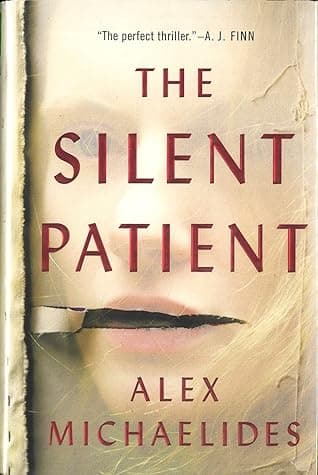
- The Silent Patient
Alex Michaelides
4.1 (507k) average on GoodreadsThrillerInvolves a therapist trying to uncover the truth about a patient in a psychiatric facility.
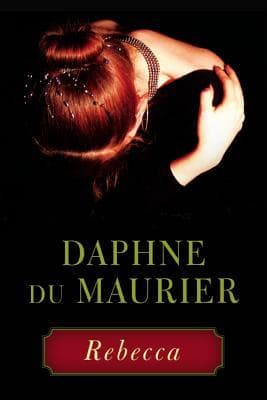
- Rebecca
Daphne du Maurier
4.2 (450k) average on GoodreadsThrillerCreates a strong sense of atmospheric dread and psychological suspense.
- Angels & Demons
Dan Brown
3.9 (2.7M) average on GoodreadsThrillerA Harvard symbologist races through Rome's ancient sites, deciphering cryptic clues to unmask the Illuminati and stop a vengeful plot to destroy the Vatican with a stolen antimatter weapon.
- The Girl on the Train
Paula Hawkins
3.9 (2.1M) average on GoodreadsThrillerA woman’s fascination with a seemingly perfect couple she watches from her daily train commute leads her into a dark investigation when she witnesses something that shatters their idyllic image.
- The Da Vinci Code
Dan Brown
3.9 (1.9M) average on GoodreadsThrillerA symbologist and a cryptologist race through European landmarks, deciphering ancient codes and uncovering a conspiracy that could rewrite the foundations of Christianity.




Enjoyed the summary?
A summary gives you the shape of the book. The book itself has the detail, the examples and the voice.
Find Shutter Island on AmazonAs an Amazon Associate, BookBrief earns from qualifying purchases. How we're funded