

Synopsis
Covers the whole plot, including the ending.
- Difficulty
- Medium
- Pacing
- Moderate
- Mood
- Philosophical, Meta-theatrical, Disturbing, Confusing
- Read it if
- You enjoy meta-theatrical plays, philosophical discussions on reality and illusion, or stories that challenge traditional narrative structures.
- Skip it if
- You prefer straightforward, linear plots without abstract concepts or a lack of clear resolution.
Six Characters in Search of an Author Plot Summary
Covers the whole plot, including the ending.
The Rehearsal Interrupted
The play starts on a bare stage where the PRODUCER (or Director) and the ACTORS are rehearsing 'The Rules of the Game' by Luigi Pirandello. The actors complain about the script and the producer's demands. Suddenly, six strange figures in mourning clothes walk onto the stage. These are the CHARACTERS: THE FATHER, THE MOTHER, THE STEPDAUGHTER, THE SON, THE BOY, and THE CHILD. They say they are unfinished characters from an author's imagination, demanding their tragic story be brought to life on stage, as their author abandoned them. The Producer, at first annoyed, becomes interested by their unusual request and the raw drama of their narrative.
The Characters' Unfinished Story
The CHARACTERS begin to explain their situation. THE FATHER, an intellectual and self-deceptive man, says he encouraged his wife, THE MOTHER, to leave him and live with his secretary, which led to the birth of three children: THE STEPDAUGHTER, THE BOY, and THE CHILD. He believed he was acting with good intentions, freeing his wife from a life he felt she didn't enjoy. THE MOTHER, a suffering and emotional woman, describes her pain and the poverty she faced with her new family after being left. THE SON, the Father's legitimate child, remains distant and resentful of the whole situation, refusing to acknowledge the new family or their suffering.
The Encounter at Madame Pace's
The most scandalous part of the CHARACTERS' story unfolds. After the secretary dies, the Mother and her three children return to the city, living in poverty. To support her family, THE STEPDAUGHTER is forced to work as a seamstress for MADAME PACE, who secretly runs a brothel. THE FATHER, unaware of the Stepdaughter's new job and thinking he was approaching a casual acquaintance, visits Madame Pace's. He is about to engage in a sordid act with the Stepdaughter when THE MOTHER bursts in, recognizing her daughter and stopping the incestuous encounter. This revelation deeply disturbs the PRODUCER and ACTORS, showing the raw and morally complex nature of the Characters' drama.
The Producer's Attempt to Recreate
Interested by the dramatic potential, the PRODUCER decides to try staging the CHARACTERS' story. He assigns his ACTORS to play THE FATHER, THE MOTHER, and THE STEPDAUGHTER. However, the Characters immediately object to the actors' interpretations. THE FATHER argues that the actor playing him cannot capture his true inner torment and intellectual justifications. THE STEPDAUGHTER is disgusted by the actress's superficial portrayal of her anger and despair. They insist that their reality, their 'fixed' existence as characters, cannot be replicated by mere actors, leading to constant conflicts between the real and the imagined, the spontaneous and the artistic representation.
Madame Pace's Manifestation
During attempts to stage the scene at Madame Pace's, something remarkable happens. As the CHARACTERS describe the setting and THE STEPDAUGHTER calls for her, MADAME PACE herself, a character only mentioned but never fully 'written' by their author, suddenly appears on stage from behind a flat. She is an exaggerated, flashily dressed figure. Her appearance further blurs the line between fiction and reality, showing the powerful, independent existence of the characters. Her sudden presence adds another layer of confusion and surrealism to the drama, as the Producer and actors deal with a character that has seemingly willed herself into being.
The Son's Detachment
Throughout the entire process, THE SON remains stubbornly distant and resentful. He refuses to acknowledge his half-siblings or the tragic circumstances that connect the CHARACTERS. He sees the whole situation as a humiliating spectacle and an invasion of his privacy. He constantly expresses his disdain for the theatrical process and the attempts to expose his family's private miseries. His aloofness highlights the theme of alienation and the different ways people cope with shared trauma, as he rejects any reconciliation or participation in the 'play' of their lives.
The Garden Pond Tragedy
The CHARACTERS insist on performing the final, most tragic events of their story. They move to a part of the stage representing a garden with a pond. THE BOY, overwhelmed by the family's misery and the public spectacle, shoots himself. At the same time, THE CHILD, the youngest and most innocent, drowns in the garden pond. These events unfold with chilling realism, leaving the PRODUCER and ACTORS horrified and questioning whether these deaths are 'real' or simply the fixed, unchangeable ending of the Characters' narrative. The ambiguity deepens the play's exploration of illusion and reality.
The Producer's Confusion and Collapse
After the shocking deaths of THE BOY and THE CHILD, the PRODUCER is completely confused. He cannot understand what he has just seen—were these real deaths, or just the predetermined, unalterable 'reality' of the CHARACTERS' story? The ACTORS are equally bewildered and traumatized. The Producer declares that the whole experience has been a failure, a 'madness,' because he cannot make sense of the conflicting realities presented. He dismisses the company, defeated by the Characters' uncontainable, unstageable truth, leaving the audience to consider the nature of existence and artistic representation.
The Characters' Enduring Existence
Even after the PRODUCER declares the rehearsal over and the play impossible to stage, the CHARACTERS remain on stage, their figures in the dimming light. Their story, though rejected by the theatrical company as too real, too chaotic, and too unstageable, continues to exist for them. They are forever bound by their tragic narrative, destined to relive it or exist within its parameters. Their final presence emphasizes the central idea that characters, once conceived, have an independent life and an unchangeable reality, regardless of whether an author or a director chooses to bring them to life.
The Aftermath and Lingering Questions
The stage is eventually empty, but the unsettling questions raised by the CHARACTERS' intrusion remain. The audience is left to grapple with the implications of what they have witnessed: the conflict between life and art, the nature of identity, the reliability of perception, and the power of narrative. The play does not offer easy answers but rather opens up a philosophical inquiry into the essence of theatre and human existence, leaving a lasting impression of the fragility of reality and the enduring power of stories, whether finished or abandoned.
Six Characters in Search of an Author Characters
The Producer (Director)
Supporting/Antagonist (in a meta-theatrical sense)
The pragmatic director of the theatrical company, attempting to stage a play.
The Producer is a practical, somewhat exasperated man, initially focused on the mundane aspects of theatrical production. He represents the conventional theatre establishment, concerned with rules, scripts, and audience reception. He is initially annoyed by the Characters' intrusion but becomes increasingly fascinated and then overwhelmed by their raw, unstageable reality. His attempts to impose order and artistic form on their chaotic lives ultimately fail, leading to his despair.
Relationships: The Actors (Their director, often frustrated by their complaints.); The Six Characters (Initially dismissive, then intrigued, then overwhelmed by their story and existence.)
The Father
Protagonist/Leader of the Characters
An intellectual and self-justifying man, responsible for the family's initial dissolution.
The Father is a complex, verbose, and philosophical figure who articulates the Characters' predicament. He claims to have acted with good intentions, explaining his decision to send his wife away to his secretary as an act of liberation. He is obsessed with justifying his past actions and is horrified by the world's perception of him. He represents the intellectual's attempt to rationalize human passions and the tragedy of being forever fixed in a particular, often misunderstood, moral position.
Relationships: The Mother (His estranged wife, whom he abandoned but still feels a connection to.); The Stepdaughter (His stepdaughter, with whom he nearly committed incest, a source of immense guilt and shame.); The Son (His legitimate son, who despises him and his new family.)
The Mother
Supporting/Victim
A long-suffering and emotional woman, a victim of the Father's decisions and life's hardships.
The Mother is a figure of profound sorrow and maternal suffering. She rarely speaks but expresses her pain through cries and gestures, embodying pure, unadulterated emotion. She is the passive victim of the Father's intellectual machinations and the subsequent poverty and loss she endures. Her grief is constant, and she is deeply attached to her children, particularly The Boy and The Child, whose deaths she helplessly witnesses. She represents raw, unvarnished human suffering.
Relationships: The Father (Her former husband, the cause of much of her suffering.); The Stepdaughter, The Boy, The Child (Her children, whom she loves deeply and suffers for.); The Son (Her legitimate son, with whom she has a strained but still maternal bond.)
The Stepdaughter
Protagonist/Rebellious Figure
A fiery and resentful young woman, forced into prostitution to support her family.
The Stepdaughter is the most vocal and aggressive of the younger Characters. She is filled with rage and bitterness, particularly towards the Father, whom she blames for her family's poverty and her own degradation. She is fiercely protective of her younger siblings and is desperate to see her story, especially the scene at Madame Pace's, portrayed with its full, shocking truth. She represents the raw, unbridled passion and indignation of youth corrupted by circumstance.
Relationships: The Father (Her stepfather, whom she hates and blames for her life's hardships.); The Mother (Her biological mother, whom she tries to protect.); The Boy, The Child (Her younger siblings, whom she deeply cares for.); Madame Pace (Her employer/madam, a figure of her degradation.)
The Son
Supporting/Alienated Figure
The Father's legitimate son, aloof and resentful of his family's dramatic intrusion.
The Son is a figure of profound alienation and resentment. He is disgusted by the entire situation, despises his father, and refuses to acknowledge his half-siblings or their shared history. He wants nothing to do with the theatrical process or the public exposure of his family's private miseries. He represents the individual's desire for privacy and the inability to escape one's origins, even when actively resisting them. His silence and disdain are a powerful presence.
Relationships: The Father (His biological father, whom he resents deeply.); The Mother (His biological mother, for whom he feels a distant pity.); The Stepdaughter, The Boy, The Child (His half-siblings, whom he refuses to acknowledge.)
The Boy
Supporting/Tragic Figure
A silent, withdrawn child, overwhelmed by his family's suffering.
The Boy is a somber, silent figure who rarely speaks. He carries the weight of his family's poverty and misery, often appearing withdrawn and lost. His quiet suffering is a poignant contrast to the more vocal characters. He represents innocent childhood corrupted by tragic circumstances and ultimately succumbs to the pressures, becoming a victim of the family's inescapable fate. His death is a shocking and pivotal moment.
Relationships: The Mother (His mother, whom he is deeply connected to.); The Stepdaughter (His older sister, who cares for him.); The Child (His younger sister, whom he plays with and protects.)
The Child
Supporting/Innocent Victim
The youngest and most innocent of the Characters, oblivious to the family's tragedy.
The Child is the youngest of the Characters and remains largely oblivious to the deep-seated conflicts and pain of her family. She is a symbol of pure innocence, playing on stage even as the family's drama unfolds. Her presence highlights the profound tragedy of their situation, as her innocence is ultimately shattered by her accidental death. Her drowning is a devastating and final blow, emphasizing the destructive force of the family's unresolved past.
Relationships: The Mother (Her mother, who tries to protect her.); The Stepdaughter (Her older sister, who cares for her.); The Boy (Her older brother, with whom she plays.)
Madame Pace
Supporting/Antagonist
A flamboyant madam who runs a secret brothel, exploiting the Stepdaughter.
Madame Pace is a garish and theatrical figure who runs the shop where the Stepdaughter works, which also serves as a brothel. She is a symbol of the moral corruption and desperation that plagues the Characters' lives. Her spontaneous materialization on stage, despite not being fully 'written' by the Characters' author, underscores the independent existence of characters once conceived. She is a catalyst for the play's most shocking scene, the near-incestuous encounter between the Father and Stepdaughter.
Relationships: The Stepdaughter (Her employee, whom she exploits.)
The Actors
Supporting/Representational
The members of the theatrical company, attempting to portray the Characters' story.
The Actors represent the conventional theatrical world, struggling to embody the raw, unstageable reality of the Characters. They are initially dismissive and then increasingly frustrated by the Characters' demands for authenticity. Their inability to truly capture the Characters' essence highlights the limitations of art in replicating life, and the inherent differences between lived experience and staged performance. They serve as a foil to the Characters, emphasizing the play's meta-theatrical themes.
Relationships: The Producer (Their director, whom they obey but also complain to.); The Six Characters (Their 'subjects,' whom they attempt to impersonate but are constantly criticized by.)
Six Characters in Search of an Author Themes
The Illusion of Reality vs. The Reality of Illusion
This is the main theme, exploring the blurred lines between what is real and what is perceived or created. The Characters argue that they are more 'real' than the actors because their reality is fixed and unchangeable, while human reality is constantly shifting. The play questions what truth and existence mean, especially in art. The Producer struggles to know if the deaths of The Boy and The Child are 'real' or simply the unchangeable, tragic ending of the Characters' fictional lives.
“For a drama, you see, is not just a written play. It is life itself.”
The Nature of Identity
The play explores how identity is formed, perceived, and maintained. The Characters have fixed identities, defined by their author's creation, and they resist the actors' attempts to misrepresent them. They are 'fixed' in their suffering and their roles, unable to change or escape their past. This contrasts with the human actors, whose identities are fluid and changing. The Father, in particular, struggles with how others see him versus his own self-perception, showing the subjective nature of identity and the pain of being misunderstood.
“We have no other reality outside of this illusion.”
The Limitations of Art and Theatre
Pirandello critiques conventional theater's ability to capture complex human experience. The Actors cannot embody the raw emotion and specific reality of the Characters, leading to constant clashes. The Producer, representing the theatrical establishment, is ultimately defeated by the unstageable truth of the Characters' lives. The play suggests that art distorts and simplifies reality, and that life's spontaneous, chaotic nature can never be fully contained or replicated on stage.
“That's the trouble with you people! You want to create art, but you can't even reproduce life!”
Alienation and Communication Breakdown
The family of Characters is deeply fragmented, with deep divisions between them. The Son is completely alienated from his family, refusing to acknowledge them or participate in their drama. The Father and Mother have a strained, painful relationship, and the Stepdaughter harbors immense resentment. Their attempts to communicate their 'truth' to the Producer and Actors are constantly met with misunderstanding. This theme highlights the difficulty of true empathy and the isolation that can result from personal trauma and fixed perspectives.
“Each of us, as you see, believes himself to be 'one,' but it's not true: each of us is 'many,' and 'many' in different ways, according to the depths of our being.”
The Power of Narrative and Storytelling
The play emphasizes the power of stories, not just as entertainment but as forces that shape identity and existence. The Characters exist because of their story, and they are desperate to have it told, believing their very being depends on its realization. Their story dictates their reality, showing how narratives, whether personal or artistic, shape our understanding of ourselves and the world. The act of telling and hearing their story deeply affects everyone involved, proving that stories have a life and agency of their own.
“We are characters, sir. We are creatures of art.”
Plot Devices & Literary Techniques
Meta-theatre (Play-within-a-play)
The play self-consciously draws attention to its own theatricality and construction.
The entire play is a prime example of meta-theatre. It takes place on a stage during a rehearsal, with characters discussing the nature of theatre itself. This device constantly reminds the audience that they are watching a play, blurring the lines between the performance and the reality of the characters within the play. It allows Pirandello to directly explore philosophical questions about art, reality, and the relationship between the stage and life.
Breaking the Fourth Wall
Characters directly address the audience, acknowledging their presence.
While the Characters primarily interact with the Producer and Actors, their very presence on stage, demanding their story be told, inherently breaks the fourth wall. They are aware of being characters in a play, and their philosophical discussions often feel directed outwards, inviting the audience to consider the play's themes directly. This device further challenges conventional theatrical illusion and draws the audience into the meta-theatrical debate.
Ambiguity and Paradox
The play deliberately leaves key questions unresolved, focusing on contradictions.
Pirandello masterfully employs ambiguity, particularly regarding the 'reality' of the Characters and their actions. Are The Boy and The Child truly dead, or is it merely the fixed, unchangeable ending of their story being re-enacted? The play thrives on paradoxes: characters who are more real than humans, life that is more fixed than art. This device forces the audience to confront the limitations of logical certainty and embrace the complex, often contradictory nature of existence and perception.
The Unfinished Manuscript
The premise that the Characters were abandoned by their author.
The central premise that the Six Characters were created but then abandoned by an author serves as a powerful metaphor for unfulfilled potential and the independent life of artistic creations. It grants the Characters their unique agency and their desperate plea for completion. This device allows Pirandello to explore the relationship between creator and creation, and the inherent 'fixed' nature of characters once conceived, even if their story remains untold.
Six Characters in Search of an Author Quotes
“A character, sir, may always be a 'somebody'; a man, on the contrary, may be nobody.”
“The drama is in us, sir, and we are the drama. We are impatient to play it.”
“Don't you see that the whole thing is a game?”
“We want to live!”
“We carry our drama within us, and we are our drama.”
“Every character, in a work of art, has a life of his own, a life more intense than that of a human being.”
“You see, it's all a game, a terrible game.”
“What is reality? It is a continually changing, a continually forming, a continually dissolving reality.”
“A fact is like a sack which will not stand up when it is empty. In order that it may stand up, one has to put into it the reason and the sentiment which have caused it to exist.”
“We are characters, sir. We live, fixated for ever and ever in the moment or in the scene in which we were created.”
“It is the illusion of a reality that you want to create.”
“Each one of us has a world of his own inside him.”
“But for us, sir, life is not a game. It is a tragedy.”
“You want to play at acting! We, on the other hand, are condemned to reality.”
Quiz
10 questions on the plot and the characters. Each answer comes with a short explanation.
Question 1
What is the initial activity taking place on stage when the Six Characters first interrupt?
- A dress rehearsal for 'The Rules of the Game'.
- A set construction for a new tragedy.
- A rehearsal for 'Mixing It Up'.
- An audition for a new melodrama.
Show answer
C. A rehearsal for 'Mixing It Up'. The play opens with the actors rehearsing Pirandello's own play, 'Mixing It Up' (also known as 'The Game of Role-Playing').
Question 2
What is the Father's primary motivation for bringing his family to the theatre?
- To find a new play to perform for their own amusement.
- To have their untold drama written and performed by the company.
- To expose the Manager's incompetence to a wider audience.
- To seek financial compensation for past wrongs.
Show answer
B. To have their untold drama written and performed by the company. The Father explicitly states that they are characters in search of an author to give their 'unwritten drama' form and life on stage.
Question 3
Which character claims to be the 'most logical' and tries to explain the characters' predicament to the actors?
- The Mother
- The Step-Daughter
- The Son
- The Father
Show answer
D. The Father The Father takes on the role of explaining their existence and purpose, often engaging in philosophical discussions with the Manager and actors.
Question 4
What is the significant, traumatic event that the Step-Daughter is most eager to reenact and expose?
- The Father abandoning the Mother and children.
- Her encounter with the Father in Madame Pace's shop.
- The death of her biological father.
- The Son's refusal to acknowledge her as family.
Show answer
B. Her encounter with the Father in Madame Pace's shop. The Step-Daughter is obsessed with the scene in Madame Pace's shop, where she, a prostitute, almost has an incestuous encounter with the Father, her stepfather.
Question 5
What is the Manager's initial reaction to the arrival of the Six Characters?
- Immediate enthusiasm for their unique story.
- Annoyance and disbelief, considering them mad.
- Curiosity and a desire to help them immediately.
- Fear that they are ghosts haunting the theatre.
Show answer
B. Annoyance and disbelief, considering them mad. The Manager is initially exasperated by the interruption and thinks the characters are either crazy or playing a prank.
Question 6
What is the central philosophical conflict explored through the interaction between the Characters and the Actors?
- The superiority of written literature over live performance.
- The nature of reality versus artistic illusion, and the fixed reality of characters versus the changing reality of human beings.
- The economic struggles of theatre companies in the modern era.
- The importance of historical accuracy in dramatic adaptations.
Show answer
B. The nature of reality versus artistic illusion, and the fixed reality of characters versus the changing reality of human beings. A core theme is the contrast between the Characters' fixed, 'real' existence within their drama and the actors' attempts to portray them, highlighting the elusive nature of reality and identity.
Question 7
What ultimate fate befalls the two youngest children, the Boy and the Little Girl, at the end of the play?
- They run away together to start a new life.
- They are adopted by the theatre company.
- They both die, the Little Girl drowning and the Boy shooting himself.
- They are sent to live with relatives in the countryside.
Show answer
C. They both die, the Little Girl drowning and the Boy shooting himself. The play culminates in a tragic climax where the Little Girl drowns in the fountain and the Boy shoots himself, an event that further blurs the line between reality and illusion for the theatre company.
Question 8
How does Pirandello use the character of Madame Pace in the play?
- She is an actual actress who helps the characters.
- She is a character conjured into existence by the other characters' need to re-enact a scene.
- She represents the audience's perspective on the unfolding drama.
- She is the original author of the characters' untold story.
Show answer
B. She is a character conjured into existence by the other characters' need to re-enact a scene. Madame Pace is not a living person or an actor; she manifests on stage only when the characters need to reenact the scene from her shop, highlighting the constructed nature of their reality.
Question 9
What does the Son symbolize or represent through his constant aloofness and refusal to participate in the family's drama?
- The inevitability of fate and destiny.
- The individual's desire to escape a predetermined, fixed identity.
- The importance of filial piety and family loyalty.
- The artistic struggle to create original works.
Show answer
B. The individual's desire to escape a predetermined, fixed identity. The Son's refusal to engage with the family's 'drama' can be interpreted as a character's rebellion against their predefined role and a yearning for an existence beyond the author's script.
Question 10
What is the Manager's final conclusion about the 'truth' of the events that transpire with the Six Characters?
- He believes it was all a brilliant theatrical experiment.
- He concludes it was a tragic reality, not an illusion.
- He declares he has 'lost a whole day' and is confused about what is real.
- He decides to write a play based on their story.
Show answer
C. He declares he has 'lost a whole day' and is confused about what is real. Overwhelmed by the tragic events and the blurring of lines between reality and fiction, the Manager is left bewildered, stating he has 'lost a whole day' and is unsure of what truly happened.
Six Characters in Search of an Author FAQ
What is the basic premise of 'Six Characters in Search of an Author'?
The play opens with a theatre company rehearsing a play by Pirandello himself. Their work is dramatically interrupted by the sudden appearance of six 'Characters' – the Father, Mother, Step-Daughter, Son, Boy, and Little Girl – who claim to have an unfinished drama within them and demand that the Director and his actors bring their story to life on stage.
Who are the six 'Characters' and what is their relationship to each other?
The six Characters are a fragmented family unit. The Father, Mother, and Son are the original family. The Step-Daughter, Boy, and Little Girl are the children the Mother had with another man after leaving the Father, making the Step-Daughter the Father's step-child, and the Boy and Little Girl her half-siblings.
What is the central conflict the Characters want to dramatize?
The core conflict revolves around a traumatic and scandalous incident: the Father's unwitting encounter with the Step-Daughter in Madame Pace's brothel, where the Mother discovers them. This event, along with the subsequent death of the Boy and the Little Girl's drowning, forms the tragic climax they wish to see accurately portrayed.
How do the actors and the Director react to the Characters' demands?
The Director is initially annoyed and dismissive, believing the Characters are mad or part of a joke. However, he becomes increasingly intrigued by the raw, compelling drama of their story and attempts to stage it, despite his actors' skepticism and the inherent difficulties of translating 'life' into 'art'.
What is the ultimate fate of the 'play' the Characters try to enact?
The 'play' never reaches a satisfactory conclusion in the traditional sense. The Characters reenact their tragic moments, but the actors struggle to portray their 'reality,' leading to confusion and frustration. The play culminates in the tragic deaths of the Boy and the Little Girl, leaving the audience and company in a state of ambiguity regarding what is real and what is illusion.
What is the significance of Madame Pace's appearance and role in the narrative?
Madame Pace is the proprietor of the brothel where the Father and Step-Daughter are almost caught in a compromising situation. Her sudden, almost magical, materialization from a hat shop set piece emphasizes the Characters' ability to conjure their past and highlights the scandalous nature of the Step-Daughter's forced prostitution.
How does Pirandello use the stage directions to blur the lines between reality and illusion?
Pirandello's stage directions often specify the Characters' distinct appearance – wearing 'masks' that fix their expressions, having a different 'reality' than the actors. He also describes the lighting changes that differentiate them, subtly guiding the audience to question their own perceptions of what is 'real' on stage.
What is the significance of the Boy and Little Girl's silence throughout much of the play?
The Boy and Little Girl remain largely silent, serving as silent witnesses to the family's tragedy until their deaths. Their silence underscores their innocence and vulnerability, making their eventual, almost inevitable, demise even more poignant and emphasizing the devastating consequences of the adult Characters' unresolved conflicts.
How does the play subtly critique the theatrical conventions of its time?
The play constantly breaks the fourth wall and exposes the artifice of theatre. It critiques the idea that actors can truly embody a character's 'reality' and questions the audience's willingness to suspend disbelief, thereby challenging traditional dramatic structures and the very nature of theatrical representation.
How does the Father's philosophy of 'fixed reality' vs. 'fluid reality' contribute to the play's themes?
The Father believes that Characters, once created, have a fixed, eternal reality, unlike mutable human beings. This philosophical stance highlights the play's core theme of the conflict between the unchanging nature of art and the ever-changing, subjective nature of life, and how individuals perceive their own truths.
Analyze the Step-Daughter's psychological state and motivations.
The Step-Daughter is driven by a profound sense of shame, anger, and a desperate need for revenge against the Father for her perceived abandonment and his subsequent actions. Her psychological state is one of bitter resentment, fueling her desire to expose the family's sordid past and ensure its 'truth' is recognized, even if it means reliving her trauma.
How does the Son's detachment reflect a particular psychological response to trauma?
The Son embodies a psychological response of profound alienation and a desperate attempt to disassociate from his dysfunctional family's trauma. He seeks to deny his connection to them and their story, representing a desire to escape the painful 'reality' that defines them, even to the point of appearing cold and unfeeling.
Discuss the Mother's role as a symbol of passive suffering.
The Mother represents the archetypal figure of passive suffering and maternal grief. She is a victim of circumstances and the actions of others, constantly weeping and lamenting her fate, yet seemingly unable to assert her own will or change her situation. Her suffering is a silent, enduring backdrop to the family's tumultuous drama.
What is the play's overarching message about the nature of identity?
The play suggests that identity is not singular or fixed, but rather fragmented, subjective, and constantly interpreted by others. The Characters struggle to have their 'true' identities recognized, revealing that how we see ourselves often clashes with how others perceive us, leading to a profound sense of isolation and misunderstanding.
In what ways does 'Six Characters' challenge the traditional concept of authorship?
Pirandello challenges authorship by presenting 'Characters' who exist independently of a completed play, demanding their story be written. This questions whether authors create characters or if characters possess an inherent 'life' that seeks expression, blurring the lines between creation and independent existence.
Is the play a tragedy, a comedy, or something else entirely?
While containing elements of tragedy (the family's suffering, the children's deaths) and moments of dark comedy (the Director's exasperation, the actors' ineptitude), 'Six Characters' ultimately transcends these labels. It is arguably a meta-theatrical exploration of existence, art, and perception, fitting into Pirandello's unique brand of 'grotesque' drama that blends the serious with the absurd.
How does the play explore the concept of 'truth' and its subjectivity?
The play relentlessly questions the existence of a single, objective 'truth.' Each Character has their own version of events, leading to conflicting narratives. This highlights how truth is subjective, filtered through individual experiences and perceptions, making definitive understanding elusive and emphasizing the impossibility of fully capturing 'reality' in art.
What is the significance of the ambiguous ending of the play?
The ambiguous ending, with the Boy's death being 'real' to some and 'fictional' to others, forces the audience to confront the central themes directly. It leaves the audience without a clear resolution, mirroring the Characters' unresolved drama and prompting continued reflection on the nature of reality, illusion, and the power of theatrical representation.
About the author
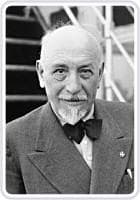
Luigi Pirandello was an Italian dramatist, novelist, poet, and short story writer whose greatest contributions were his plays. He was awarded the 1934 Nobel Prize in Literature for "his almost magical power to turn psychological analysis into good theatre." Pirandello's works include novels, hundreds of short stories, and about 40 plays, some of which are written in Sicilian. Pirandello's tragic farces are often seen as forerunners of the Theatre of the Absurd.
Similar books
- Waiting for Godot
Samuel Beckett
3.8 (160k) average on GoodreadsPhilosophyDeals with the futility of waiting and the elusive nature of meaning, often with a meta-theatrical feel.
- Nineteen Eighty-Four
George Orwell
4.2 (5.5M) average on GoodreadsFictionWinston Smith dreams of truth and rebellion in a world where Big Brother watches all, but he confronts the terrifying power of a regime that controls not just actions, but thoughts.
- The Frozen River
Ariel Lawhon
4.4 (600k) average on GoodreadsFictionIn 1789 Maine, a heroic midwife's diary helps her expose a murder and get justice in a town that wants to silence her.
- A Man Called Ove
Fredrik Backman
4.4 (569k) average on GoodreadsFictionA stubborn widower, who lives by strict rules, finds his quiet world changed by a lively new family next door, making him face his past and find happiness in human connection.
- The Art of Racing in the Rain
Garth Stein
4.2 (452k) average on GoodreadsFictionThrough the eyes of Enzo, a wise and observant dog, a race car driver's family navigates a journey of love, loss, and resilience, learning that life's most important lessons often come in the curves, not just on the straightaways.
- The Colour of Magic
Terry Pratchett
4.0 (425k) average on GoodreadsFictionOn a discworld hurtling through space on the back of a giant turtle, an inept wizard and his naive, walking-luggage-toting tourist embark on a chaotic, belief-fueled journey to the very edge of their flat planet, encountering dragons that only exist if you believe in them.






Enjoyed the summary?
A summary gives you the shape of the book. The book itself has the detail, the examples and the voice.
Find Six Characters in Search of an Author on AmazonAs an Amazon Associate, BookBrief earns from qualifying purchases. How we're funded