

Synopsis
Covers the whole plot, including the ending.
- Difficulty
- Medium
- Pacing
- Variable
- Mood
- Witty, Poignant, Realistic, Reflective
- Read it if
- You enjoy coming-of-age stories about unexpected fatherhood, or are a fan of Nick Hornby's blend of humor and poignant realism.
- Skip it if
- You dislike stories with significant time jumps or find the premise of a teenager dealing with pregnancy too heavy.
Slam Plot Summary
Covers the whole plot, including the ending.
Skateboarding and First Love
Sixteen-year-old Sam loves skateboarding, especially Tony Hawk, whose poster on his ceiling is a constant companion. Sam lives with his single mum, who had him at 16. He talks about her struggles and their close relationship. Sam's life changes when he meets Alicia, a smart and funny girl, at a party. Their relationship quickly grows, and Sam feels a deep connection, believing she is 'the one'. He navigates the early stages of their romance, including their first kiss and the excitement of a new, serious relationship, all while sharing his feelings and worries with Tony Hawk.
The News and the Fallout
Sam and Alicia's relationship continues and becomes physical. One evening, after Alicia has been unusually quiet, she tells him she's pregnant. The news hits Sam hard, instantly destroying his teenage world of skateboarding, friends, and future plans. He struggles to process the information, feeling disbelief, fear, and a sense of unfairness. His first reaction is denial and a desperate hope it's a mistake. He confides in Tony Hawk, who offers no real solutions, only reflecting Sam's despair. This news marks the sudden end of Sam's carefree adolescence.
Confiding in Mum and the Future's Weight
Sam eventually tells his mum about Alicia's pregnancy. Her reaction is not anger, but understanding and sadness, drawing from her own experience of becoming a mother at 16. She offers Sam practical advice and emotional support, sharing her struggles and reassuring him that he's not alone, but also stressing the big responsibility he's about to face. This conversation highlights their family's repeating history. Sam starts to grasp the huge changes ahead, feeling the weight of impending fatherhood and the loss of his planned future, including university and a skateboarding career.
The First Time Jump
Overwhelmed by the stress of Alicia's pregnancy and his uncertain future, Sam experiences a bizarre event. He is suddenly transported forward in time, finding himself in a different house, holding a baby. This first jump is confusing and brief; he snaps back to his present reality, shaken. He dismisses it as a hallucination or a stress dream, but the vividness of the experience stays with him. This event introduces the story's fantasy element, setting the stage for later time jumps and showing Sam's inner turmoil about becoming a father.
Navigating Pregnancy and Parental Reactions
Sam and Alicia begin telling their families. Alicia's parents are upset but supportive, focusing on practicalities and the future of their daughter and grandchild. Sam's mum remains his support, drawing on her own experiences. The couple attends antenatal classes, which are awkward and eye-opening for Sam, forcing him to face the biological realities of pregnancy and childbirth. He feels more and more isolated from his old friends, who seem to live in a different, simpler world. His relationship with Alicia becomes strained, shifting between tender moments and arguments fueled by fear and uncertainty.
The Second Time Jump and a Glimpse of the Future
Sam experiences another, longer time jump. He finds himself several years in the future, living in a different house and with a different partner, Sarah. He sees his daughter, now a toddler, and observes his future self's interactions. This jump is unsettling because Alicia is not his partner, suggesting a future breakup. He witnesses the joys and frustrations of fatherhood but also the pain of a dissolved relationship. Upon returning to the present, Sam is deeply disturbed by this vision, questioning his future with Alicia and the choices he might make.
Struggles with Responsibility and Alicia
As Alicia's pregnancy progresses, Sam struggles with the huge responsibility. He tries to be supportive, attending appointments and being present, but he often feels overwhelmed and resentful of his lost youth. Arguments between him and Alicia become more frequent and intense, fueled by stress, hormones, and their differing expectations for the future. Sam becomes more withdrawn, unable to fully share his worries, especially about the time jumps. The strain on their relationship is clear, and their once-strong bond begins to weaken under the pressure of impending parenthood.
The Birth and the Third Time Jump
Alicia goes into labor, and Sam is by her side, experiencing the intensity of childbirth. Their daughter, Maya, is born. Her birth is a powerful moment for Sam, a mix of awe and terror. Shortly after Maya's arrival, Sam experiences his most significant time jump yet, propelling him years into a future where he is no longer with Alicia. He sees Maya as an older child, and his future self is clearly struggling, living an unfulfilled life, regretting past decisions. This jump reveals a future where his relationship with Maya is distant, and he is not the father he wants to be, increasing his fears.
The Breakup and Adjusting to Single Fatherhood
The pressures of parenthood, coupled with their youth and unresolved issues, prove too much for Sam and Alicia's relationship. They eventually break up, confirming Sam's time jump visions. Sam moves back in with his mum, adjusting to co-parenting Maya. He finds it very challenging to balance being a good father with his own lingering adolescence and life's practicalities. He struggles with guilt, regret, and the difficulty of seeing Alicia move on, while he tries to forge his own path as a single, young father.
The Final Time Jump and Redemption
After a period of struggle, Sam experiences a final, important time jump. This time, he finds himself in a future where he is a successful, happy, and involved father to Maya. He sees her as a teenager; they have a strong, loving relationship, and he is making good choices, having learned from his past mistakes and the glimpses of less desirable futures. This jump gives Sam hope and purpose, showing him that he can still achieve a fulfilling life and be a great dad, despite the difficult start. He realizes the time jumps were a warning and a guide.
Embracing Fatherhood
Returning to his present, post-breakup reality, Sam is filled with new determination. The final time jump has given him clarity and direction. He understands that his future is not set but shaped by his choices. He dedicates himself to being a present, loving, and responsible father to Maya, learning from the mistakes he saw in the alternate futures. He focuses on his education, finds a job, and actively participates in Maya's life, showing maturity beyond his years. He starts to build a new life, centered around his daughter and his commitment to her well-being.
A New Beginning
Sam continues to grow, finding a balance between his own goals and his responsibilities as a father. While he still has moments of doubt and longing for the path not taken, he finds genuine happiness in his relationship with Maya. He maintains a civil co-parenting relationship with Alicia, recognizing the importance of their shared daughter. The novel ends with Sam looking forward, having accepted his past, including his mum's story and his own journey, and fully embracing his role as a father. He has learned that life's unexpected turns can lead to fulfillment, and that love, in its many forms, is what truly matters.
Slam Characters
Sam
Protagonist
A skateboarding-obsessed teenager thrust into early fatherhood.
Sam is a 16-year-old boy whose world revolves around skateboarding, his close relationship with his young single mum, and his idol, Tony Hawk. He is initially carefree, somewhat naive, and prone to internal monologues, often seeking advice from Tony Hawk's poster. He is deeply in love with Alicia and genuinely wants to do the right thing, but struggles immensely with the shock and responsibility of impending fatherhood. He's often overwhelmed, fearful, and prone to moments of self-pity, but ultimately possesses a strong moral compass and a deep capacity for love.
Relationships: Alicia (girlfriend, then mother of his child, then co-parent); Sam's Mum (close, supportive mother-son bond, shared experience of teen parenthood); Maya (daughter, initially a source of fear, later deep love and purpose); Tony Hawk (imaginary confidant and idol)
Alicia
Supporting
Sam's girlfriend and the mother of his child, who faces teen pregnancy with practicality.
Alicia is Sam's first serious girlfriend. She is intelligent, articulate, and initially seems more mature and grounded than Sam. When she discovers she's pregnant, she faces the news with a pragmatic, albeit scared, attitude, quickly accepting the reality and making plans. She is resilient and determined, but also susceptible to the emotional and physical strains of pregnancy and young motherhood. She eventually grows apart from Sam due to their differing coping mechanisms and maturity levels.
Relationships: Sam (boyfriend, then father of her child, then co-parent); Maya (daughter, deeply loved); Alicia's Parents (supportive, involved parents)
Sam's Mum
Supporting
A young, single mother who experienced teen pregnancy herself and provides unwavering support.
Sam's mum is a pivotal figure in his life. Having gotten pregnant with Sam at 16, she understands his situation intimately. She is portrayed as loving, resilient, and fiercely supportive, offering Sam empathy, practical advice, and a safe space. She is a constant source of stability and wisdom, drawing on her own difficult experiences to guide her son without judgment. Her past mirrors Sam's present, creating a powerful intergenerational connection.
Relationships: Sam (close, supportive mother-son bond); Maya (granddaughter, loved and cared for)
Tony Hawk
Mentioned
Sam's skateboarding idol and imaginary confidant.
Tony Hawk, the legendary skateboarder, exists primarily as a poster on Sam's ceiling and a voice in Sam's head. He represents Sam's youthful aspirations, his escape, and his unburdened past. Sam confides in him, uses him as a sounding board, and projects his anxieties onto him. Tony Hawk serves as a symbolic figure, an embodiment of the carefree life Sam feels he's losing, and a mirror for Sam's internal struggles and hopes.
Relationships: Sam (idol and imaginary confidant)
Maya
Supporting
Sam and Alicia's daughter, whose birth profoundly changes Sam's life.
Maya is Sam and Alicia's daughter. Her existence is the catalyst for Sam's entire journey of maturation. Initially, she is an abstract concept that fills Sam with dread, representing the end of his youth. Through the time jumps, Maya is seen at different ages, from infant to teenager, allowing Sam to witness the potential joys and pains of fatherhood. Her eventual birth and presence in Sam's life become the ultimate motivation for him to become a better person and embrace his responsibilities.
Relationships: Sam (daughter, initially feared, later deeply loved); Alicia (daughter, deeply loved)
Sarah
Mentioned
Sam's future partner in one of his time jump visions.
Sarah appears briefly in one of Sam's time jumps as his partner, several years in the future, when he is no longer with Alicia. She is a glimpse into an alternative future for Sam, suggesting that life continues and new relationships can form even after significant changes. Her presence highlights the fluidity of Sam's future and the choices he might make, or that circumstances might make for him, regarding his romantic life.
Relationships: Sam (future partner in a time-jump scenario)
Alicia's Parents
Supporting
Supportive but concerned parents of Alicia.
Alicia's parents are depicted as generally supportive and responsible individuals. While initially shocked and upset by their daughter's pregnancy, they quickly shift to a practical mindset, focusing on how to support Alicia and the baby. They provide a stable environment for Alicia and are involved in the early stages of Maya's life, offering a contrast to Sam's more chaotic internal world.
Relationships: Alicia (parents, supportive); Maya (grandparents)
Slam Themes
The Weight of Responsibility and Adulthood
The novel explores the sudden burden of responsibility on Sam. His carefree teenage life, focused on skateboarding and friends, is shattered by Alicia's pregnancy. Sam struggles with the loss of his imagined future and the pressure of providing for a child. This theme appears in his thoughts, his worries about money, his struggles with commitment, and his eventual maturity. The time jumps show the long-term results of his choices and the unavoidable nature of his new adult role, forcing him to face what it means to be a father.
“And then I thought about what it meant, really meant, that she was pregnant, and that was when the world really started to spin.”
The Cycle of Parenthood and Intergenerational Influence
A central theme is the repeating pattern of parenthood, especially teenage parenthood. Sam's mum had him at 16, and now Sam faces the same situation. This parallel creates a unique dynamic, as his mum, instead of being angry, offers understanding and support based on her own difficult experiences. Sam's journey mirrors hers, highlighting both the challenges and the potential for resilience and love. The novel suggests that while history might repeat, each generation can learn and make different choices, shaping their own future.
“It was like she was looking at me, but also at herself, years ago, and I knew she knew exactly how I felt.”
The Illusion of Choice and the Reality of Consequences
The time jumps are a powerful way to explore choice and consequence. Sam sees glimpses of potential futures, some bleak, some hopeful, based on his current decisions. These visions remove the idea of a limitless, consequence-free youth, forcing Sam to understand that his actions have lasting impacts on his life and those around him, especially Maya. The story shows that while some events are out of his control, his response and commitment to change determine his future.
“The future wasn't just something that happened to you; it was something you made.”
Love, Loss, and Identity Formation
The novel looks at Sam's changing understanding of love — romantic love for Alicia, family love for his mum, and the unexpected love for his daughter, Maya. He experiences the loss of his teenage identity and the future he imagined. Through these losses, he begins to form a new identity as a father. His journey is one of self-discovery, as he grapples with what it means to be a man, a partner, and a parent. The story shows that true identity is found not in avoiding challenges but in facing them and growing from the experience of both love and loss.
“I didn't know what I was doing, but I knew I had to do it. For her. For Maya.”
Plot Devices & Literary Techniques
Time Jumps (Slamming)
Sam inexplicably jumps forward in time, experiencing glimpses of his future.
The 'slamming' or time jumps are the primary fantastical element and plot device in the novel. Sam experiences sudden, involuntary shifts into various points in his future, allowing him to see the consequences of his current actions (or inactions) and the different paths his life could take. These jumps serve as a powerful narrative tool, providing him with warnings, motivation, and a unique perspective on his impending fatherhood. They prevent him from simply ignoring his responsibilities, forcing him to confront the future and make conscious choices to shape it for the better, ultimately acting as a catalyst for his personal growth.
Tony Hawk as Confidant
Sam's imaginary conversations with a poster of his skateboarding idol.
Sam regularly 'talks' to a poster of Tony Hawk on his ceiling, treating the legendary skateboarder as an imaginary confidant and sounding board. This device allows the reader direct access to Sam's internal thoughts, fears, and anxieties without resorting to lengthy internal monologues. Tony Hawk represents Sam's lost innocence, his pre-parenthood aspirations, and the idealized, carefree world he feels is slipping away. As Sam matures, his dependence on Tony Hawk diminishes, symbolizing his growing independence and acceptance of his adult responsibilities.
First-Person Narrative (Retrospective)
The story is told from Sam's perspective, often reflecting on past events.
The novel is narrated in the first person by Sam, often with a retrospective quality, suggesting he is looking back on these events with some distance and understanding. This perspective allows readers to experience Sam's confusion, fear, and eventual growth intimately. The retrospective aspect hints at the eventual resolution and Sam's maturity, providing a sense of hope even during his darkest moments. It enables a deep dive into his emotional landscape and provides his unique, often humorous, voice to the narrative.
Slam Quotes
“I was seventeen, and the best of me was still to come.”
“You can't really plan for things like that, can you? You just have to deal with them.”
“Skateboarding was the one thing I was good at, the one thing I understood.”
“It’s not just about what you do, it’s about who you become.”
“Sometimes you have to stop thinking about what you want and start thinking about what you need.”
“The future is just the present, only later.”
“Being a parent is like having your heart walk around outside your body.”
“You can’t rewind life. You can only fast-forward.”
“Everyone makes mistakes. The trick is to learn from them.”
“It’s amazing how quickly your priorities can change.”
“Sometimes the best thing you can do is just keep going, even when you don't know where you're going.”
“You don't get to choose your family, but you do get to choose how you deal with them.”
“The world keeps turning, whether you're ready for it or not.”
“There are some things you just can't practice for.”
Quiz
10 questions on the plot and the characters. Each answer comes with a short explanation.
Question 1
What is the name of Sam's girlfriend (and later ex-girlfriend) who gets pregnant?
- Lucy
- Alicia
- Chloe
- Sarah
Show answer
B. Alicia The book clearly states that Sam's girlfriend is Alicia, and their unexpected pregnancy is the central conflict.
Question 2
What is Sam's main hobby and passion throughout the book?
- Playing guitar in a band
- Skateboarding
- Video gaming
- Writing stories
Show answer
B. Skateboarding Sam is a dedicated skateboarder, and his connection to the skate park and his idol, Tony Hawk, is a recurring motif.
Question 3
Who is the famous skateboarder that Sam frequently 'talks' to in his head, seeking advice?
- Rodney Mullen
- Bucky Lasek
- Tony Hawk
- Ryan Sheckler
Show answer
C. Tony Hawk Sam's internal monologue often involves imaginary conversations with his skateboarding idol, Tony Hawk, who serves as a mentor figure.
Question 4
What is the initial reaction of Sam's mother when she finds out about Alicia's pregnancy?
- She is immediately supportive and helpful.
- She is shocked and disappointed, but quickly becomes pragmatic.
- She blames Alicia entirely and forbids Sam from seeing her.
- She laughs it off, thinking it's a joke.
Show answer
B. She is shocked and disappointed, but quickly becomes pragmatic. Sam's mother is initially very upset and shocked by the news, but her practical nature soon takes over, and she begins to help plan for the future.
Question 5
What unique narrative device does Nick Hornby employ to show Sam's potential future?
- Flashbacks to his childhood
- Dreams and nightmares
- Chapters narrated by his future self
- Conversations with a fortune teller
Show answer
C. Chapters narrated by his future self The book features chapters narrated by Sam from the future, offering glimpses into what his life will be like with a child, which is a key structural element.
Question 6
How does Sam's relationship with his own father influence his fears about becoming a parent?
- His father was a perfect role model, making Sam feel inadequate.
- His father left when Sam was young, making Sam fear repeating the cycle.
- His father was overly strict, and Sam fears being the same.
- His father was very distant, making Sam worry he won't bond with his child.
Show answer
B. His father left when Sam was young, making Sam fear repeating the cycle. Sam's father abandoned his family when Sam was young, which is a significant source of anxiety and a strong motivation for Sam not to repeat that mistake.
Question 7
What is the name of Sam and Alicia's baby?
- Lily
- Maya
- Daisy
- Grace
Show answer
B. Maya Sam and Alicia name their daughter Maya, a detail revealed later in the book and in the future-narrated chapters.
Question 8
A significant theme in 'Slam' is the loss of childhood and the premature onset of adulthood. How is this theme most explicitly demonstrated through Sam's actions?
- He stops going to school to get a full-time job.
- He gives up skateboarding entirely to focus on his responsibilities.
- He struggles with giving up his freedom and the activities he loves for baby-related duties.
- He isolates himself from his friends, refusing to participate in any social events.
Show answer
C. He struggles with giving up his freedom and the activities he loves for baby-related duties. Sam frequently grapples with the sacrifices he has to make, such as missing out on skateboarding or hanging out with friends, as he takes on the responsibilities of fatherhood, highlighting the theme of lost youth.
Question 9
What is the primary emotional challenge Sam faces regarding his relationship with Alicia after the pregnancy news?
- He struggles to forgive her for getting pregnant.
- He finds it hard to maintain their romantic relationship while navigating parenthood.
- He feels she is not taking the situation seriously enough.
- He is constantly jealous of her attention being on the baby.
Show answer
B. He finds it hard to maintain their romantic relationship while navigating parenthood. Sam and Alicia's romantic relationship undergoes significant strain as they transition from being teenagers in love to co-parents, struggling to maintain intimacy amidst their new responsibilities.
Question 10
The 'fantasy' or 'science fiction' element mentioned in the book description refers to what specific aspect of the narrative?
- Sam gains superpowers from a skateboarding accident.
- Sam travels back in time to prevent the pregnancy.
- Sam experiences visions of his future life and daughter.
- Sam's skateboard has a sentient AI that gives him advice.
Show answer
C. Sam experiences visions of his future life and daughter. The 'fantasy' or 'science fiction' element in 'Slam' is the unique narrative structure where Sam's future self narrates certain chapters, giving him (and the reader) glimpses into his life several years down the line with his daughter.
Slam FAQ
What is the central premise of 'Slam' and who is the protagonist?
The central premise of 'Slam' revolves around 16-year-old Sam Jones, an avid skateboarder whose life takes an unexpected turn when his girlfriend, Alicia, becomes pregnant. The story explores Sam's struggles with impending fatherhood, his fears about the future, and his attempts to navigate this sudden responsibility while still being a teenager.
How does skateboarding feature in Sam's life and the narrative?
Skateboarding is a central passion for Sam, representing his freedom, identity, and a way to escape his problems. He idolizes Tony Hawk and frequently imagines conversations with him, using Hawk as a moral compass and a figure to confide in, especially when facing difficult decisions about Alicia's pregnancy.
Who is Alicia and what is her role in Sam's story?
Alicia is Sam's girlfriend who becomes pregnant with his child, forcing him to confront adult responsibilities prematurely. She is initially portrayed as more pragmatic and mature than Sam, but her own fears and desires regarding motherhood and their future also come to light as the story progresses.
What is the 'fantasy' or 'science fiction' element mentioned in the book's description?
The fantasy element in 'Slam' is Sam's ability to spontaneously travel forward in time, experiencing glimpses of his future self and the lives of his family. These jumps are often triggered by moments of intense stress or decision-making, offering him a prophetic, yet sometimes confusing, look at what's to come.
How does Sam's relationship with his mother evolve throughout the book?
Sam's relationship with his mother, who was also a teenage parent, is initially strained by his perceived immaturity and her own past experiences. As he grapples with Alicia's pregnancy, he begins to understand and appreciate his mother's sacrifices and resilience, leading to a deeper, more empathetic bond between them.
Are there specific instances where Sam's time travel directly influences his present decisions?
Yes, Sam's time travel often influences his decisions. For example, seeing a future where he is estranged from his child motivates him to try harder to be present and supportive. Similarly, witnessing future arguments or successes helps him navigate current conflicts and make choices that he hopes will lead to a better outcome.
What is the significance of Tony Hawk's imagined presence in Sam's life?
Tony Hawk serves as Sam's internal monologue and a projection of his conscience, offering guidance, questioning his choices, and sometimes providing comedic relief. This imagined mentor helps Sam process his emotions and responsibilities, reflecting his need for a male role model and a sense of direction.
How does the author use the motif of 'slams' beyond skateboarding?
The word 'slam' extends beyond skateboarding to metaphorically represent the abrupt, impactful challenges Sam faces in life, such as Alicia's pregnancy or difficult conversations. It signifies the sudden, often painful, moments that force him to confront reality and grow up, much like a skateboarder taking a hard fall.
What role does Sam's friend, Rabbit, play in his journey?
Rabbit is Sam's loyal best friend and fellow skateboarder, providing much-needed support and a sense of normalcy amidst the chaos. He offers a grounding presence, often listening to Sam's anxieties and reminding him of his identity beyond fatherhood, even if he doesn't always understand the full weight of Sam's situation.
How does Sam's fear of repeating his father's mistakes manifest psychologically?
Sam's father left when he was young, and this abandonment deeply impacts Sam, manifesting as a profound fear of failing as a parent and partner. Psychologically, this drives his internal conflict and his desperate attempts to prove he can be responsible, even as he grapples with the overwhelming nature of impending fatherhood.
What is the psychological impact of Sam's time-traveling on his decision-making and mental state?
The time-traveling creates significant psychological pressure on Sam, as he carries the burden of future knowledge, often seeing both positive and negative outcomes. This can lead to anxiety and confusion, as he tries to reconcile his present actions with potential future consequences, making his choices feel heavily weighted.
How does Sam's identity as a 'skater' clash with his new identity as a 'father'?
Sam's identity as a skater represents his youth, freedom, and passion, which clashes significantly with the responsibilities of fatherhood. Psychologically, he struggles to integrate these two identities, feeling torn between holding onto his childhood and embracing the adult role he is forced into, leading to internal conflict and moments of rebellion.
What psychological defense mechanisms does Sam employ to cope with his situation?
Sam often employs avoidance, escaping into skateboarding or his imagined conversations with Tony Hawk to deflect from his problems. He also uses rationalization to justify his actions or feelings, and sometimes denial, particularly in the initial stages of Alicia's pregnancy, to cope with the overwhelming reality.
Is Sam's time-travel ability a literal magical power or a metaphor for internal foresight?
While presented literally within the narrative, Sam's time-travel ability can be interpreted metaphorically as a heightened sense of foresight or an anxiety-driven manifestation of his intense contemplation of the future. It serves to externalize his internal fears and hopes, allowing him to 'see' the consequences of his choices.
How does 'Slam' challenge traditional notions of masculinity and fatherhood?
'Slam' challenges traditional masculinity by portraying a teenage boy grappling with vulnerability, fear, and emotional responsibility, rather than stoicism. It redefines fatherhood by showing Sam's earnest, albeit imperfect, attempts to be present and supportive, highlighting that maturity and care are not exclusive to older men.
What is the ultimate message about growing up that the book conveys?
The book conveys that growing up is an ongoing process, often triggered by unexpected events, and involves confronting fears, making difficult choices, and taking responsibility for one's actions. It emphasizes that maturity isn't about reaching a certain age, but about learning to navigate life's 'slams' with resilience and a willingness to adapt.
Does the ending of 'Slam' offer a definitive resolution for Sam and Alicia?
The ending of 'Slam' offers a hopeful but not entirely definitive resolution. While Sam has matured significantly and committed to his role as a father, his future with Alicia is still evolving, and the challenges of young parenthood remain. It suggests a continuous journey rather than a neat, tied-up conclusion.
How does Nick Hornby's writing style contribute to the book's appeal for young adults?
Hornby's writing style, characterized by its witty, conversational tone, relatable internal monologues, and authentic portrayal of teenage anxieties, makes the book highly appealing to young adults. He uses humor and direct address to engage readers, making Sam's complex emotional journey accessible and compelling.
About the author

Nicholas Peter John Hornby is an English writer and lyricist. He is best known for his memoir Fever Pitch (1992) and novels High Fidelity and About a Boy, all of which were adapted into feature films. Hornby's work frequently touches upon music, sport, and the aimless and obsessive natures of his protagonists. His books have sold more than 5 million copies worldwide as of 2018. In a 2004 poll for the BBC, Hornby was named the 29th most influential person in British culture. He has received two Academy Award for Best Adapted Screenplay nominations for An Education (2009), and Brooklyn (2015).
Similar books
- About a Boy
Nick Hornby
3.8 (126k) average on GoodreadsFictionFeatures a man forced to mature through an unexpected connection with a child, with Hornby's signature wit.
- The Perks of Being a Wallflower
Stephen Chbosky
4.2 (1.3M) average on GoodreadsPsychologyA poignant young adult novel exploring adolescence, relationships, and the transition to adulthood.
- The Time Traveler's Wife
Audrey Niffenegger
4.0 (1.6M) average on GoodreadsFantasyWhile both involve time travel, Niffenegger's novel integrates time travel as an inherent, often tragic, aspect of the characters' lives with complex rules and consequences, whereas in 'Slam,' it feels more like a convenient narrative tool for Sam's personal growth.
- The Truth About Forever
Sarah Dessen
4.1 (209k) average on GoodreadsYoung AdultDessen's YA novels, like this one, focus on grounded, realistic teenage experiences and emotional development without any fantastical elements. 'Slam' introduces a speculative layer that, while unique, sometimes dilutes the raw emotional impact that a purely contemporary approach might have afforded.
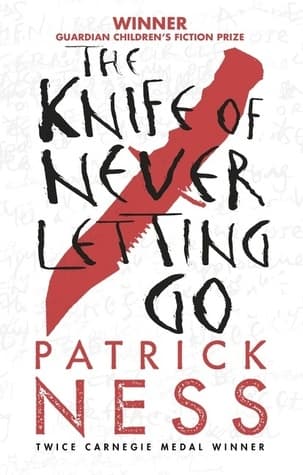
- The Knife of Never Letting Go
Patrick Ness
4.0 (152k) average on GoodreadsThrillerNess's YA speculative fiction masterfully integrates its fantastical elements (the Noise) with the characters' internal and external conflicts, making them inseparable from the story's core themes. In 'Slam,' the time travel, while crucial, doesn't achieve the same level of thematic integration or philosophical depth, often feeling external to Sam's character rather than an intrinsic part of his being.
- Harry Potter and the Sorcerer's Stone
J.K. Rowling
4.5 (7M) average on GoodreadsFantasyRescued from a miserable life under the stairs, an orphaned boy discovers he's a wizard destined for a magical school, where he uncovers a dangerous secret tied to the dark wizard who murdered his parents.





Enjoyed the summary?
A summary gives you the shape of the book. The book itself has the detail, the examples and the voice.
Find Slam on AmazonAs an Amazon Associate, BookBrief earns from qualifying purchases. How we're funded