
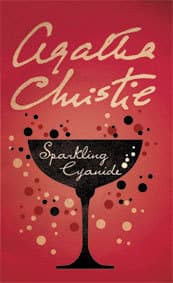
Synopsis
Covers the whole plot, including the ending.
- Difficulty
- Easy
- Pacing
- Moderate
- Mood
- Intriguing, Suspenseful, Classic
- Read it if
- You enjoy classic 'whodunit' mysteries with a contained cast of suspects and intricate plotting.
- Skip it if
- You prefer fast-paced thrillers or stories with minimal character development.
Sparkling Cyanide Plot Summary
Covers the whole plot, including the ending.
The Birthday Party and the Fatal Toast
Rosemary Barton, a beautiful and rich young woman, celebrates her 24th birthday at the Luxembourg restaurant with her husband George Barton, her sister Iris Marle, friends Stephen and Sandra Farr, Anthony Browne, and Lord and Lady Kidderminster. During the party, Rosemary toasts, then collapses and dies almost at once from cyanide poisoning. People first assume suicide because a small packet of cyanide is found in her handbag. However, George Barton, who loved his wife deeply, does not believe she would kill herself and suspects murder. This sets the stage for his own investigation.
George Barton's Investigation
Grief-stricken and convinced Rosemary was murdered, George Barton begins his private investigation. He interviews the guests from the birthday dinner, trying to piece together motives and opportunities. He finds that Rosemary had several secret relationships, including affairs with Stephen Farr and Anthony Browne, which complicates the case. George's search for the truth shows that Rosemary was not as innocent or well-liked as she seemed, making her death a puzzle with many possible culprits. He carefully considers each person's motive and alibi, determined to clear Rosemary's name from the idea of suicide.
The Anniversary Dinner and a Second Death
Exactly one year after Rosemary's death, George Barton re-creates the birthday dinner at the same Luxembourg restaurant. He invites the original six guests: Iris Marle, Stephen and Sandra Farr, Anthony Browne, and Lord and Lady Kidderminster. He intends to make the murderer reveal themselves under the pressure of the re-created scene. During the dinner, George makes a toast, and soon after, he also collapses and dies from cyanide poisoning, exactly like Rosemary. This second, very public murder confirms that Rosemary was indeed murdered and that her killer is one of the people George invited.
Superintendent Kemp Takes Over
With George Barton's dramatic death, the police, led by Superintendent Kemp, are fully involved, with help from Colonel Race. The case changes from a possible suicide to a clear double murder. Kemp and Race systematically interview all suspects, looking into their backgrounds, their relationships with Rosemary and George, and their actions on both nights. They focus on the six guests present at both dinners, knowing the killer must be one of them. The investigation uncovers more secrets and resentments, showing the complex connections surrounding the dead couple.
Iris Marle's Inheritance and Vulnerability
After George Barton's death, his will is read, showing that his entire fortune goes to his sister-in-law, Iris Marle. This sudden inheritance puts Iris in a dangerous position. She is now the wealthiest person in the group and, importantly, the only remaining link to Rosemary and George's family money. This makes her a target for the murderer, who might want to eliminate her to get the inheritance for themselves or someone else. Iris, at first a shy and unnoticed character, finds herself at the center of the dangerous mystery, realizing her life is now at risk.
Anthony Browne's Courtship and Suspicion
Anthony Browne, one of Rosemary's former lovers and a guest at both fatal dinners, begins to pursue Iris Marle intensely after she inherits George's money. His sudden and strong affection for Iris, along with his presence at both murder scenes and his known financial problems, makes him a key suspect to the police and Colonel Race. Iris herself is torn between her growing feelings for Anthony and the nagging suspicion that he might be involved in the murders, possibly seeing her as a way to get the inherited wealth. His motives are closely examined as he becomes more persistent in his pursuit of Iris.
The Kidderminster's Marital Discord
The investigation uncovers the deep marital problems between Lord and Lady Kidderminster. It comes out that Rosemary Barton had an affair with Lord Kidderminster, which caused great pain and jealousy for Lady Alexandra Kidderminster. Lady Kidderminster's dislike for Rosemary was clear, providing a strong motive for the first murder. While Lord Kidderminster seems truly saddened by Rosemary's death, Lady Kidderminster's cold manner and known resentment make her a strong suspect, especially given her access to various substances through her social circle and her general disapproval of Rosemary's flirtatious nature.
Stephen and Sandra Farr's Complex Relationship
Stephen Farr, George's business partner, also had an affair with Rosemary. His wife, Sandra Farr, knew about this and deeply resented Rosemary, though she acted polite. Sandra's calm demeanor and her deep anger over her husband's affair give her a strong motive for Rosemary's murder. The dynamic between Stephen and Sandra is closely examined, as Stephen's guilt and Sandra's quiet fury could both be reasons for the crimes. Their alibis for both nights are thoroughly checked by the police.
Iris's Near-Fatal Accident
As the investigation continues and Iris Marle remains the only heir, she becomes the target of a series of suspicious 'accidents.' One dangerous event involves a heavy piece of masonry falling from a building, narrowly missing her. This event, clearly not accidental, confirms the police's belief that the murderer is trying to eliminate Iris for the inheritance. Colonel Race and Superintendent Kemp increase their surveillance and protection of Iris, realizing the killer is becoming desperate and will stop at nothing, confirming Iris's life is in immediate danger.
The Trap is Set
Seeing the pattern of attacks on Iris, Colonel Race and Superintendent Kemp plan to draw out the killer. They use Iris as bait, setting up a situation where the murderer will feel forced to try another attack on her life, believing they can succeed without being caught. The plan involves watching Iris closely and creating a scenario where the killer might think they have a clear chance. This strategy is risky but necessary to unmask the person who has been very clever and hard to find, leaving few direct clues in the double murder.
The Final Revelation
The trap works, and the murderer is revealed to be Iris Marle herself, or rather, a personality within her. It is discovered that Iris had a dissociative identity disorder, where a darker, more cunning personality, 'Rosemary,' had been inactive but was triggered by George's wealth and jealousy. This personality, mimicking Rosemary's manipulative traits, killed Rosemary for control of George and his money, and then killed George to get the inheritance for 'Iris.' The 'accidents' targeting Iris were staged by this other personality to divert suspicion. The revelation is a shocking twist, showing the psychological complexity behind the crimes.
Aftermath and Justice
With the shocking truth of Iris's dissociative identity disorder revealed, the police and Colonel Race understand the full scope of the tragedy. The 'Rosemary' personality within Iris was the killer, driven by greed and a twisted form of self-preservation. The book ends with the implications of this discovery, leaving the characters and reader to deal with the psychological complexity of the crime. The legal and medical outcomes for Iris are not fully detailed, but the horror of the situation, where the victim and the murderer are the same person, is deeply felt.
Sparkling Cyanide Characters
Iris Marle
Protagonist/Antagonist
Rosemary's seemingly innocent sister and the ultimate murderer.
Initially presented as Rosemary's meek, overshadowed younger sister, Iris Marle appears somewhat naive and lacking in confidence. She is deeply affected by Rosemary's death and later by George's. She becomes the sole heir to George's fortune, placing her in a dangerous position. Her character is central to the mystery, as she is both a potential victim and, ultimately, the surprising perpetrator, though not consciously. Her quiet demeanor hides a profound psychological complexity.
Relationships: Rosemary Barton (Sister, victim of Iris's alternate personality); George Barton (Brother-in-law, victim of Iris's alternate personality); Anthony Browne (Love interest, suspected of being the killer)
Rosemary Barton
Victim
The beautiful, wealthy, and manipulative socialite whose death sets off the mystery.
Rosemary Barton is the catalyst for the entire plot. Beautiful, charming, and wealthy, she is also revealed to be highly manipulative and promiscuous, engaging in multiple affairs. Her death by cyanide poisoning at her own birthday party is initially deemed a suicide, but her husband's conviction of murder proves otherwise. Though dead, her character is vividly painted through the recollections and secrets of those who knew her, revealing a complex personality that attracted both devotion and intense resentment.
Relationships: George Barton (Husband); Iris Marle (Sister); Stephen Farr (Lover); Anthony Browne (Lover); Lord Kidderminster (Lover)
George Barton
Victim
Rosemary's devoted husband, who seeks to prove her murder and is then killed himself.
George Barton is Rosemary's husband, deeply in love with her and utterly convinced that she was murdered, not suicidal. His unwavering belief in her innocence and his determination to find her killer lead him to recreate the fatal dinner party. He is a man driven by grief and a sense of justice, meticulously gathering information about Rosemary's life and her relationships. His tragic death at the anniversary dinner confirms the presence of a murderer and escalates the investigation.
Relationships: Rosemary Barton (Wife); Iris Marle (Sister-in-law)
Colonel Race
Supporting
The astute and experienced intelligence officer assisting the police investigation.
Colonel Race is a recurring character in Agatha Christie's novels, known for his calm demeanor, sharp intellect, and extensive experience in international espionage and criminal investigation. He is brought into the case to assist Superintendent Kemp, providing a seasoned perspective and keen observational skills. Race is instrumental in piecing together the psychological aspects of the crime and understanding the motives and relationships of the suspects. His quiet wisdom and ability to connect disparate clues are crucial to solving the complex double murder.
Relationships: Superintendent Kemp (Colleague, fellow investigator)
Superintendent Kemp
Supporting
The diligent police officer leading the official murder investigation.
Superintendent Kemp is the official police investigator assigned to the double murder of Rosemary and George Barton. He is methodical, thorough, and focused on gathering evidence and interviewing suspects. While perhaps not as intuitively brilliant as Colonel Race, Kemp's dedication to police procedure and his ability to manage the intricate details of the investigation are essential. He works closely with Race, providing the official framework and resources needed to solve the high-profile case.
Relationships: Colonel Race (Colleague, fellow investigator)
Anthony Browne
Suspect
A former lover of Rosemary and a primary suspect, who later courts Iris.
Anthony Browne is a charming but financially struggling man who had an affair with Rosemary. He is present at both fatal dinners and becomes a prime suspect due to his past relationship with Rosemary and his subsequent ardent courtship of Iris Marle after she inherits the fortune. His motives are constantly under scrutiny, as his financial desperation could provide a strong impetus for murder. He is depicted as somewhat reckless and opportunistic, adding to the suspicion surrounding him.
Relationships: Rosemary Barton (Lover); Iris Marle (Love interest, potential victim)
Stephen Farr
Suspect
George's business partner and another of Rosemary's former lovers.
Stephen Farr is George Barton's business partner and another man with whom Rosemary had an affair. He is a seemingly respectable businessman whose involvement with Rosemary adds another layer of complexity to the motives. His wife, Sandra, is aware of his infidelity, creating tension within their marriage. Stephen's alibis and his reactions to the murders are closely examined, as his desire to protect his reputation or his marriage could have driven him to desperate measures.
Relationships: Rosemary Barton (Lover); George Barton (Business partner); Sandra Farr (Wife)
Sandra Farr
Suspect
Stephen Farr's wife, who resented Rosemary for her affair with Stephen.
Sandra Farr is Stephen Farr's wife, a woman who maintained a composed exterior despite her deep-seated resentment towards Rosemary Barton for her affair with Stephen. Her quiet anger and the pain of her husband's infidelity provide her with a strong, albeit subtle, motive for Rosemary's murder. She is observant and intelligent, making her a potentially dangerous adversary. Her alibis and behavior are scrutinized, as her seemingly calm demeanor could hide a vengeful spirit.
Relationships: Stephen Farr (Husband); Rosemary Barton (Object of resentment)
Lord Kidderminster
Suspect
A respected member of society who also had an affair with Rosemary.
Lord Kidderminster is a distinguished and seemingly upright member of society who, despite his position, also engaged in an affair with Rosemary Barton. His involvement complicates the list of suspects, adding a layer of social scandal to the personal betrayals. He appears genuinely affected by Rosemary's death, but his secret relationship with her makes him a person of interest for the police, who investigate how far he might go to protect his reputation and marriage.
Relationships: Rosemary Barton (Lover); Lady Kidderminster (Wife)
Lady Alexandra Kidderminster
Suspect
Lord Kidderminster's wife, intensely jealous of Rosemary.
Lady Alexandra Kidderminster is Lord Kidderminster's wife, a woman known for her sharp tongue and her intense jealousy of Rosemary Barton. She openly disliked Rosemary, making her a strong suspect, particularly for the first murder. Her social connections and knowledge of various substances could provide her with the means to commit the crime. Her disdain for Rosemary's flirtatious nature and her desire to protect her husband and their social standing offer a clear, if not subtle, motive.
Relationships: Lord Kidderminster (Husband); Rosemary Barton (Object of intense jealousy)
Sparkling Cyanide Themes
The Deceptive Nature of Appearances
The novel shows how outward appearances can mislead, especially about character and motive. Rosemary Barton, seemingly a lively socialite, is revealed as manipulative and promiscuous. Iris Marle, first seen as timid and innocent, is ultimately unmasked as the unwitting murderer through an alternate personality. The respectable appearance of the suspects often hides secret affairs, jealousies, and money troubles, showing that true motives and identities are rarely what they seem. The 'accidents' meant to deflect suspicion from Iris exemplify this.
“One never knows, does one? People are so different from what they seem.”
Jealousy and Resentment
Jealousy and resentment are strong forces throughout the story, providing motives for almost every suspect. Lady Kidderminster's intense jealousy over Rosemary's affair with her husband, and Sandra Farr's hidden anger over Stephen's infidelity, are clear. These emotions build under polite social interactions, eventually leading to violence. The desire for what others have—whether affection, social standing, or wealth—drives the tension and suspicion among the characters, making it hard to find the killer until the final revelation that jealousy, in a twisted way, also drove Iris's alternate personality.
“Jealousy is a terrible thing. It can turn a human being into a monster.”
The Pursuit of Justice vs. Personal Revenge
The novel explores the line between seeking justice and taking personal revenge. George Barton's first investigation comes from deep love for Rosemary and a wish to clear her name, showing a pursuit of justice. However, his decision to re-create the fatal dinner, setting a trap, borders on personal vengeance, leading to his own death. The various suspects, each with grievances against Rosemary, show how personal feuds can be mistaken for or mixed with a desire for justice, complicating the police investigation and causing misdirection until Colonel Race brings a more objective approach.
“He wanted justice for Rosemary. And perhaps, a little, revenge.”
Psychological Complexity and Hidden Identities
A main theme is the deep psychological complexity of the human mind and the idea of hidden identities. The final revelation of Iris Marle's dissociative identity disorder, where a separate personality commits the murders, challenges common ideas of guilt. This theme looks at the idea that people can have darker, unconscious parts of themselves capable of extreme acts. It makes the reader question sanity and madness, suggesting that the most dangerous secrets can be those hidden within one's own mind, making the killer also a victim of their own condition.
“The human mind is a strange and terrifying place.”
Plot Devices & Literary Techniques
The Re-enactment
A dramatic recreation of the original murder scene to ensnare the killer.
George Barton's decision to recreate Rosemary's fatal birthday dinner exactly one year later is a pivotal plot device. It serves to confirm that Rosemary was murdered, not suicidal, and immediately leads to George's own death, escalating the stakes. This device is designed to flush out the killer by recreating the circumstances, putting pressure on the suspects, and demonstrating the killer's audacious willingness to repeat the crime under identical conditions, thereby narrowing the field of suspects to those present at both events.
The Unreliable Narrator/Perspective
The reader's perception is shaped by limited and potentially misleading character viewpoints.
While not a first-person narrative in the traditional sense, the story heavily relies on the perspectives and interpretations of various characters, particularly Iris and the police investigators. The initial assumption of Rosemary's suicide, George's certainty of murder, and the shifting suspicions regarding each guest all contribute to an unreliable understanding of events. This device keeps the reader guessing and allows for the shocking twist ending concerning Iris's true nature, as her own perspective is unknowingly unreliable due to her psychological condition.
The Inheritance as a Motive
The sudden transfer of wealth that places Iris in danger and provides a clear motive.
The inheritance of George Barton's substantial fortune by Iris Marle after his death is a crucial plot device. It immediately places Iris in direct danger, as she becomes the most logical next target for a killer motivated by greed. This device provides a clear and compelling motive that can be attributed to several suspects, diverting attention from the true killer. It also explains the subsequent 'accidents' targeting Iris, reinforcing the idea that the murderer seeks to eliminate her to secure the wealth, unknowingly for their own alternate personality.
The Double Murder
The mirroring deaths of Rosemary and George Barton, confirming foul play.
The fact that George Barton dies in the exact same manner, using the same poison, and in the same setting as Rosemary, is a powerful plot device. It immediately dismisses any lingering doubts about Rosemary's death being a suicide and firmly establishes a calculated, audacious murderer. This mirroring of crimes not only heightens the tension but also provides a distinct signature for the killer, suggesting a meticulous and bold individual who is confident in their ability to evade detection, and also narrows the pool of suspects to those present at both events.
Sparkling Cyanide Quotes
“It is not the crime itself that matters, but the motive behind it.”
“Human nature is a curious thing. Given the right circumstances, anyone can be driven to anything.”
“The past, my dear, is never truly dead. It merely lies dormant, waiting for the opportune moment to spring back to life.”
“One can always find a reason to hate, if one looks hard enough.”
“A woman's intuition, my boy, is often more accurate than a man's logic.”
“Money, they say, is the root of all evil. But love, too, can be a powerful corrupting force.”
“The most dangerous lies are the ones we tell ourselves.”
“Every secret has a shelf life. Eventually, it spoils.”
“It's astonishing how little one really knows about the people one thinks one knows best.”
“Revenge, like certain poisons, works slowly but surely.”
“The truth is often inconvenient, which is precisely why so many prefer to avoid it.”
“There are some things, my dear, that are better left undisturbed, like ancient graves.”
“The greatest trick the devil ever pulled was convincing the world he didn't exist, and the greatest trick a murderer pulls is convincing everyone it was an accident.”
“Even the most placid surface can hide the most turbulent depths.”
Quiz
10 questions on the plot and the characters. Each answer comes with a short explanation.
Question 1
What is the initial cause of death officially recorded for Rosemary Barton?
- Heart attack
- Suicide by pistol
- Accidental poisoning by sleeping pills
- Suicide by cyanide
Show answer
D. Suicide by cyanide Rosemary's death was initially ruled a suicide by cyanide, as the poison was found in her drink and she had a history of being dramatic.
Question 2
Which character organizes the dinner party at the Luxembourg restaurant exactly one year after Rosemary's death?
- George Barton
- Iris Marle
- Colonel Race
- Stephen Farr
Show answer
A. George Barton George Barton, Rosemary's husband, organizes the commemorative dinner party, inviting the same six people who were present at the original dinner where Rosemary died.
Question 3
Who is Iris Marle's guardian and older sister?
- Lucilla Drake
- Ruth Lessing
- Rosemary Barton
- Alexandra Farr
Show answer
C. Rosemary Barton Rosemary Barton was Iris Marle's older sister and guardian, which is a key familial relationship in the story.
Question 4
What significant event occurs at the second dinner party, organized by George Barton?
- Iris Marle receives a marriage proposal.
- George Barton is poisoned with cyanide.
- The true killer of Rosemary Barton confesses.
- Colonel Race reveals his identity as a detective.
Show answer
B. George Barton is poisoned with cyanide. At the second dinner, George Barton himself is poisoned with cyanide, making it clear that Rosemary's death was indeed murder and that the killer is still among them.
Question 5
Which character is initially suspected by some of being Rosemary's killer due to a strong motive of jealousy?
- Stephen Farr
- Lucilla Drake
- Sandra Farr (Stephen's wife)
- Anthony Browne
Show answer
C. Sandra Farr (Stephen's wife) Sandra Farr, Stephen's wife, had a strong motive for jealousy as Rosemary was having an affair with Stephen, leading to her being a prime suspect for some characters.
Question 6
What is the primary motive behind Rosemary Barton's murder, as revealed by the end of the novel?
- Revenge for a past betrayal.
- To prevent her from revealing a secret.
- To inherit her substantial fortune.
- Jealousy over her romantic relationships.
Show answer
C. To inherit her substantial fortune. The ultimate motive for Rosemary's murder, and subsequently George's, is financial: to inherit Rosemary's significant wealth which would eventually pass to Iris.
Question 7
Who is Colonel Race's undercover associate who plays a key role in the investigation?
- Anthony Browne
- Stephen Farr
- George Barton
- Lord Caterham
Show answer
B. Stephen Farr Stephen Farr is not just a character involved with Rosemary, but also Colonel Race's undercover associate, working to uncover the truth.
Question 8
What specific detail about the serving of the drinks at the original dinner party becomes crucial to solving the mystery?
- Rosemary always insisted on pouring her own drink.
- The waiter served the drinks in a specific order, from left to right.
- The drinks were mixed and placed on a tray for guests to take, allowing for a switch.
- Only Rosemary's drink was served in a distinct glass.
Show answer
C. The drinks were mixed and placed on a tray for guests to take, allowing for a switch. The fact that the drinks were prepared and placed on a tray for self-selection, rather than being handed out by a server, provided the opportunity for the killer to switch glasses or add poison unnoticed.
Question 9
What is the true identity of the person who committed the murders of Rosemary and George Barton?
- Anthony Browne
- Ruth Lessing
- Sandra Farr
- Iris Marle (revealed to be the true killer, posing as Iris)
Show answer
D. Iris Marle (revealed to be the true killer, posing as Iris) The shocking twist reveals that the 'Iris Marle' present throughout the investigation is actually Ruth Lessing, who murdered Rosemary and George to inherit their fortune, with the real Iris having been killed earlier.
Question 10
How did the killer manage to switch the poisoned drink without suspicion at the first dinner party?
- By distracting the waiter with a sudden loud noise.
- By using a specially designed glass that looked identical but contained a different liquid.
- By swapping the drinks on the tray when everyone was momentarily looking away, and then maneuvering Rosemary to pick up the poisoned one.
- By adding the cyanide to Rosemary's glass while she was in the restroom.
Show answer
C. By swapping the drinks on the tray when everyone was momentarily looking away, and then maneuvering Rosemary to pick up the poisoned one. The killer, Ruth Lessing (posing as Iris), subtly swapped the drinks on the tray, guiding Rosemary to pick up the poisoned glass through manipulation and opportune timing.
Sparkling Cyanide FAQ
What is the central premise of 'Sparkling Cyanide'?
'Sparkling Cyanide' centers around a reunion dinner hosted by George Barton to commemorate the first anniversary of his wife Rosemary's mysterious death, which was officially ruled a suicide. However, George believes she was murdered and orchestrates the dinner to recreate the circumstances of her death, hoping to expose the killer among their close circle of friends and family.
Who are the key characters gathered at the anniversary dinner?
The main characters present at the anniversary dinner include George Barton (Rosemary's husband), Iris Marle (Rosemary's sister), Stephen Farr (a former lover of Rosemary's), Anthony Browne (another suitor), Ruth Lessing (George's secretary), and Alexandra Farr (Stephen's wife). Each has a complex relationship with the deceased Rosemary.
What was the official cause of Rosemary Barton's death a year prior?
Rosemary Barton's death was officially ruled a suicide by poisoning, specifically from cyanide. She collapsed during her birthday dinner, and despite initial suspicions, the coroner's inquest concluded that she had taken her own life, a verdict that George Barton strongly disputes.
How does George Barton attempt to expose the killer at the second dinner?
George Barton meticulously plans the anniversary dinner to replicate Rosemary's original birthday celebration, including seating arrangements and even ordering the same menu. His intention is to observe the reactions of the guests under similar conditions, hoping the killer will betray themselves or make a mistake, but tragically, he too dies from cyanide poisoning during this recreation.
Who takes on the primary investigative role after George Barton's death?
After George Barton's death, Colonel Race, a recurring character in Agatha Christie's novels, takes charge of the investigation. He is a shrewd and experienced intelligence officer who methodically interviews the suspects and uncovers the hidden motives and intricate relationships that led to the double murders.
What is the significance of the two separate poisoning incidents?
The two separate poisoning incidents (Rosemary's and George's) are crucial to the plot, as they initially confuse the investigation. It forces Colonel Race to consider whether the same killer is responsible for both, whether George's death was a copycat, or if it was a desperate act to silence him, ultimately revealing a complex motive that connects both victims.
How does Iris Marle's perspective change throughout the novel?
Iris Marle initially appears as Rosemary's meek and overshadowed younger sister, but her perspective shifts dramatically as she becomes a target herself and falls in love with Anthony Browne. She grows more assertive and independent, eventually playing a crucial role in piecing together the truth, especially after realizing she is in grave danger.
What subtle clues point to the true identity of the killer early on?
Subtle clues include the killer's unusual composure and control under pressure, their careful manipulation of others' perceptions, and the way they divert suspicion. For instance, the killer's detailed knowledge of the household and their ability to act without drawing immediate attention are key indicators, though easily overlooked until the reveal.
What role does the 'cyanide' itself play beyond being the murder weapon?
The 'cyanide' isn't just a murder weapon; its specific use and the method of administration are critical. The fact that it was administered in a drink at a social gathering, and the subsequent attempts to make it appear like suicide, highlight the killer's cunning and their understanding of human behavior and opportunity.
How does Rosemary Barton's character influence the other characters even after her death?
Rosemary Barton's manipulative and flirtatious nature continues to influence the characters profoundly after her death. Her past relationships, the jealousies she stirred, and the secrets she held are the primary motivators for the suspects, driving their actions and emotions, and ultimately leading to the murders.
Analyze the psychological state of George Barton leading up to his death.
George Barton is consumed by grief, guilt, and a powerful need for justice. His mental state is one of obsessive determination, bordering on recklessness, as he is willing to put himself in danger to expose Rosemary's killer. He is driven by a profound sense of failure to protect his wife and a desire for retribution.
How does jealousy manifest among the suspects in the novel?
Jealousy manifests in various forms: Alexandra Farr's quiet resentment of Rosemary's affair with Stephen, Ruth Lessing's professional and personal envy of Rosemary's position and charm, and the competitive rivalry among Rosemary's many suitors. This pervasive jealousy creates a highly charged atmosphere and provides strong motives for murder.
Discuss the psychological impact of being a murder suspect on Iris Marle.
Being a murder suspect, and later a target, has a profound psychological impact on Iris Marle. Initially timid, she experiences fear, paranoia, and a growing sense of isolation. This pressure, however, also forces her to develop resilience, sharpens her observational skills, and ultimately leads her to confront her own vulnerabilities and strengths.
What is the overarching theme of justice explored in 'Sparkling Cyanide'?
The novel explores a complex theme of justice, contrasting official legal justice with a more personal, perhaps vigilante, form. George Barton seeks justice outside the law, leading to his demise. Colonel Race, however, represents the methodical pursuit of truth through investigation, aiming for a justice that is both legal and morally satisfying.
How does the novel challenge assumptions about appearances and relationships?
'Sparkling Cyanide' consistently challenges assumptions by revealing the hidden depths and dark secrets beneath seemingly respectable or loving relationships. Characters who appear devoted are secretly resentful, and those who seem innocent harbor dangerous motives, forcing the reader to question surface-level perceptions of affection and loyalty.
Is the ending of 'Sparkling Cyanide' satisfying for all characters involved?
The ending provides a clear resolution to the murders and identifies the killer, offering a sense of closure to the mystery. However, it's not universally 'satisfying' in a happy sense for all, as lives have been irrevocably altered, and the trauma of the events lingers, particularly for characters like Iris Marle, despite her newfound happiness.
What message might Agatha Christie be conveying about the nature of evil?
Agatha Christie suggests that evil can be insidious and reside in seemingly ordinary people, often masked by charm or a veneer of respectability. The killer's calculated actions and lack of remorse illustrate that evil is not always overtly monstrous but can be coldly rational and driven by deeply personal, selfish motives.
How does the narration by Hugh Fraser contribute to the book's atmosphere?
Hugh Fraser's narration, known for his distinguished and clear voice, lends an authoritative yet engaging tone to the audiobook. His experience with Christie's works, particularly as Captain Hastings in Poirot adaptations, allows him to capture the nuanced suspense and character distinctions effectively, enhancing the thriller and mystery aspects.
About the author
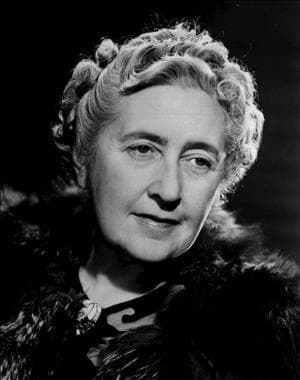
Dame Agatha Mary Clarissa Christie, Lady Mallowan, was an English writer known for her 66 detective novels and 14 short story collections, particularly those revolving around fictional detectives Hercule Poirot and Miss Marple. She also wrote the world's longest-running play, the murder mystery The Mousetrap, which has been performed in the West End since 1952. A writer during the "Golden Age of Detective Fiction", Christie has been called the "Queen of Crime". She also wrote six novels under the pseudonym Mary Westmacott. In 1971, she was made a Dame (DBE) by Queen Elizabeth II for her contributions to literature. Guinness World Records lists Christie as the best-selling fiction writer of all time, her novels having sold more than two billion copies.
Similar books
- And Then There Were None
Agatha Christie
4.3 (822k) average on GoodreadsThrillerFeatures a group of people in an isolated setting with a killer among them.
- Death on the Nile
Agatha Christie
4.1 (127k) average on GoodreadsThrillerExplores complex relationships and a love triangle leading to murder, with multiple suspects.
- Gaudy Night
Dorothy L. Sayers
4.2 (23k) average on GoodreadsHistorical FictionWhile both Christie and Sayers are Golden Age contemporaries, "Gaudy Night" (1935) by Sayers, featuring Lord Peter Wimsey and Harriet Vane, offers a more intellectual and literary mystery. It delves deeper into character psychology and societal commentary, particularly concerning women's roles, and has a more philosophical tone than the plot-driven intricacies of "Sparkling Cyanide," which prioritizes the puzzle over extensive character introspection or social critique.
- Angels & Demons
Dan Brown
3.9 (2.7M) average on GoodreadsThrillerA Harvard symbologist races through Rome's ancient sites, deciphering cryptic clues to unmask the Illuminati and stop a vengeful plot to destroy the Vatican with a stolen antimatter weapon.
- Gone Girl
Gillian Flynn
4.1 (2.3M) average on GoodreadsThrillerA wife's sudden disappearance on her fifth anniversary reveals a web of lies and psychological warfare, exposing the secrets within a seemingly perfect marriage.
- The Girl on the Train
Paula Hawkins
3.9 (2.1M) average on GoodreadsThrillerA woman’s fascination with a seemingly perfect couple she watches from her daily train commute leads her into a dark investigation when she witnesses something that shatters their idyllic image.




Enjoyed the summary?
A summary gives you the shape of the book. The book itself has the detail, the examples and the voice.
Find Sparkling Cyanide on AmazonAs an Amazon Associate, BookBrief earns from qualifying purchases. How we're funded