
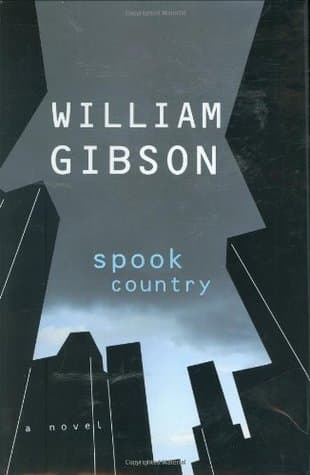
Synopsis
Covers the whole plot, including the ending.
- Difficulty
- Medium
- Pacing
- Moderate
- Mood
- Atmospheric, Suspenseful, Intriguing, Contemporary
- Read it if
- You enjoy intricate, character-driven thrillers with a strong sense of place and cutting-edge technological themes.
- Skip it if
- You prefer fast-paced action over slow-burn mystery and detailed world-building, or dislike multiple, converging plotlines.
Spook Country Plot Summary
Covers the whole plot, including the ending.
The Node Assignment
Hollis Henry, a former rock star and now a journalist, is approached by Node, a new magazine with no public presence, to write about 'locative art.' Her contact, Odile Richard, asks her to interview Bobby Chombo, a reclusive figure known for his military navigation systems and unusual lifestyle. Hollis travels to Los Angeles to begin her investigation, finding Chombo hard to track. She interviews artists and tech figures in the locative art scene, slowly understanding the world of augmented reality and GPS-based installations, while sensing something strange about her assignment and the magazine.
Tito's Introduction
Tito, a young Cuban-Russian 'cutter' in New York, specializes in discreetly transferring sensitive information. A shadowy figure named Jonbe hires him for a series of encrypted data transfers. These jobs involve receiving packages and delivering them to drop-off points, often under surveillance. Tito is skilled and careful, using his intuition and street smarts to navigate the dangerous world of corporate espionage. He generally does not know the content or purpose of the data, focusing only on the precision and security of his operations, which grow in complexity and risk.
Milgrim's Entanglement
Milgrim, an intelligent but addicted Russian translator, receives his prescription drugs from a man named Brown. Brown rescued Milgrim from a drug dealer and now employs him for his language skills. Milgrim's tasks involve translating intercepted Russian communications, often related to military or intelligence. He is a captive, relying on Brown for his daily fix and survival, which allows Brown to exploit his abilities. Milgrim's world is confined to his apartment and Brown's controlled environments, leaving him paranoid and desperate to escape.
The Search for Bobby Chombo
Hollis continues her search for Bobby Chombo. Her investigation reveals that Chombo is not just an artist but a sought-after expert in military navigation and anti-surveillance technology. She learns about his reputation for avoiding detection and his unusual nomadic life. Hollis's attempts to contact him meet dead ends and cryptic messages, suggesting Chombo is either actively avoiding her or is protected. Her journey takes her through tech hubs and underground art scenes, blurring the lines between art, technology, and national security.
The Ghost in the Machine
As Tito continues his assignments, he starts to notice patterns in the data he transfers. He realizes the information is not random but seems related to surveillance and tracking. His suspicion grows as the methods for protecting the data become more sophisticated and his handlers take extreme precautions. He becomes aware of a larger, unseen network, hinted at by cryptic messages and the sheer volume of information he handles. Tito's skills are being used in a game far larger and more dangerous than he first understood.
Milgrim's Revelation
Milgrim's translation work for Brown leads him to uncover fragmented but critical information about a covert operation involving advanced military technology. He pieces together details about a 'cube' — a sophisticated data storage and transmission device — and a network of 'cutters' like Tito. He realizes the communications he is translating are part of a larger, highly sensitive intelligence operation, possibly involving a rogue element or black ops team. Milgrim's understanding of Russian nuances allows him to extract context and intent others might miss, putting him in a dangerous position as he learns too much.
Hollis and the Locative Artists
Hollis learns more about locative art through various artists. She learns how artists use GPS, augmented reality, and other technologies to create experiences that overlay digital information onto the physical world. These artists show how technology can reveal hidden histories, political narratives, or new ways of seeing space. Hollis begins to see how this art form, seemingly harmless, touches on surveillance, data privacy, and the manipulation of perception, mirroring the concerns emerging in her investigation into Bobby Chombo and Node.
The Cube and Its Contents
The 'cube' Milgrim has been translating references for is a highly encrypted, portable data storage device containing crucial intelligence. It is a focal point for various groups, including Brown's employers and the forces pursuing Tito. The cube's contents are hinted to be very valuable, possibly related to national security or a powerful corporation's secrets. Its transfer and retrieval become the main goal of the clandestine operations, driving the actions of Tito, Milgrim, and indirectly, Hollis. The cube is the ultimate prize in the ongoing information war.
The Convergence in Vancouver
Hollis finally tracks Bobby Chombo to Vancouver, where she also meets people connected to the clandestine operations. Tito, following his latest instructions, also arrives in Vancouver, unaware of the converging interests. Milgrim, increasingly desperate and aware of his danger, tries to escape Brown's control, also seeking refuge or information in Vancouver. The city becomes the place where Hollis's journalism, Tito's deliveries, and Milgrim's translations collide, setting the stage for the climax as the various parties close in on the 'cube' and its secrets.
The Confrontation and Resolution
In Vancouver, the characters' paths cross. Hollis, through her persistence, finally meets Bobby Chombo, who reveals parts of the conspiracy. Tito, realizing he is a pawn, uses his skills to navigate the chaos. Milgrim, having escaped Brown's control, tries to use his knowledge for survival. A confrontation happens involving the 'cube,' various intelligence operatives, and Brown's organization. The nature of Node, the significance of locative art, and the web of surveillance and information control are exposed, leading to a violent resolution and a new understanding of the forces at play.
Spook Country Characters
Hollis Henry
Protagonist
A former rock star turned investigative journalist, searching for Bobby Chombo.
Hollis Henry is intelligent, perceptive, and has a strong sense of integrity, tempered by a past as a rock star in the band 'Curfew.' This background gives her a unique perspective on fame, perception, and the ephemeral nature of information. She is driven by a desire to understand the truth behind her assignments, even when they lead her into dangerous and confusing territory. Her journalistic instincts are sharp, and she possesses a resilience that allows her to navigate the murky world of espionage and advanced technology.
Relationships: Odile Richard (Node contact and handler); Bobby Chombo (Subject of her investigation, later an ally); Tito (Brief, indirect interaction, part of the same larger plot)
Tito
Protagonist
A young, skilled 'cutter' specializing in discreet information transfers.
Tito is a quiet, observant, and highly competent young man, originally from Cuba, who speaks fluent Russian. He operates in the shadows of New York's information economy, specializing in secure data transfers. His skills lie in his meticulous attention to detail, his ability to blend in, and his innate understanding of urban environments and surveillance. He is pragmatic and focused on the job at hand, initially detached from the content of the data he carries. He possesses a strong survival instinct and a growing awareness of the dangerous implications of his work.
Relationships: Jonbe (Primary employer/handler); Hollis Henry (Brief, indirect interaction, part of the same larger plot); Milgrim (Indirect connection through the 'cube' operation)
Milgrim
Protagonist/Supporting
A brilliant but addicted Russian translator manipulated by a shadowy handler.
Milgrim is a highly intelligent, nuanced Russian translator, but his intellect is overshadowed by a severe addiction to prescription drugs. He is dependent on Brown, who supplies his drugs in exchange for his translation services. Milgrim is acutely perceptive, capable of discerning subtle meanings and intentions in the intercepted communications he processes. Despite his compromised state, he possesses a strong will for self-preservation and a desire to escape his predicament. His addiction makes him vulnerable, but his mind remains a powerful asset.
Relationships: Brown (Handler and drug supplier, effectively his captor); Tito (Indirect connection through the 'cube' operation)
Bobby Chombo
Supporting
A reclusive and enigmatic expert in military navigation and anti-surveillance.
Bobby Chombo is a highly skilled and secretive individual, a 'producer' in the sense that he makes things happen, particularly in the realm of advanced navigation and anti-surveillance technologies. He works as a troubleshooter for military navigation equipment manufacturers but leads a nomadic, off-the-grid existence, never sleeping in the same place twice. He is a master of evasion and a deep thinker about the implications of technology on privacy and perception. He is a key figure whose knowledge is sought by various factions.
Relationships: Hollis Henry (Interview subject, later a source of crucial information); Various military/intelligence contacts (Professional connections)
Brown
Antagonist/Supporting
Milgrim's handler, a mysterious figure involved in clandestine operations.
Brown is a pragmatic and ruthless individual who operates in the shadows of intelligence and corporate espionage. He controls Milgrim through his drug addiction, exploiting his linguistic talents for his own purposes or those of his shadowy employers. Brown is efficient, calculating, and seemingly emotionless, focused solely on the execution of his missions. He represents the manipulative and exploitative side of the clandestine world, a figure who treats people as disposable assets in a larger game.
Relationships: Milgrim (Handler and captor); Jonbe (Implied professional connection or rival)
Jonbe
Supporting
Tito's primary employer, a figure in the information black market.
Jonbe is a shadowy figure who employs Tito for his 'cutting' services. He operates within the complex and dangerous world of information transfer, acting as an intermediary for sensitive data. Jonbe is professional and discreet, but his true allegiances and ultimate motives remain largely obscured. He represents the commercial side of the clandestine information trade, a facilitator who connects supply with demand in a high-stakes environment.
Relationships: Tito (Employer); Brown (Implied professional connection or rival)
Odile Richard
Supporting
Hollis Henry's contact and handler at the mysterious Node magazine.
Odile Richard is Hollis Henry's initial point of contact for Node magazine. She is professional, articulate, and adept at maintaining the enigmatic facade of the nascent publication. Odile's role is to guide Hollis's investigation, subtly directing her towards certain avenues while withholding the full truth about Node's true nature and objectives. She embodies the controlled and curated information environment that Node represents.
Relationships: Hollis Henry (Employer/employee relationship, later revealed as a handler)
Stella
Mentioned
Hollis Henry's former bandmate from Curfew.
Stella is Hollis Henry's former bandmate from their successful rock group, Curfew. Though not physically present in the main narrative, her presence is felt through Hollis's reflections on their past and the band's legacy. Stella represents Hollis's previous life and the fame she left behind, providing a contrast to her current, more grounded, and dangerous profession.
Relationships: Hollis Henry (Former bandmate and friend)
Spook Country Themes
Information as Currency and Control
The novel explores how information, especially digital data, is the ultimate currency and tool for control. Tito's role as a 'cutter' shows the value of secure, untraceable data transfer. Milgrim's forced translation of intercepted communications shows how raw intelligence can be used as a weapon. The 'cube' itself embodies this theme, a physical representation of valuable, secret information. The characters' lives are shaped by the flow and control of data, showing how knowledge (or lack thereof) dictates power in a networked society.
“He was a cutter, a ghost in the machine, and his job was to move information.”
Surveillance and Privacy in the Digital Age
Gibson examines the widespread nature of surveillance, from GPS tracking to monitoring digital communications. Bobby Chombo's expertise in anti-surveillance technology and his nomadic life are direct responses to this threat. Hollis's investigation into 'locative art' initially seems harmless but soon reveals how technology can overlay reality with hidden data, blurring public and private lines. The constant feeling of being watched, the difficulty of staying anonymous, and the erosion of personal privacy are central anxieties in the story, reflecting a world where every action leaves a digital trace.
“Privacy was a luxury, increasingly unavailable to anyone who wasn't actively trying to avoid it.”
The Nature of Reality and Perception
The novel questions what 'reality' means in an age of digital overlays and manipulated information. Locative art, as Hollis explores it, literally layers digital data onto physical space, inviting viewers to see their environment differently. This artistic concept mirrors the larger conspiracy, where 'truth' is constantly built, hidden, or revealed through fragmented data and controlled stories. The characters struggle to tell real information from disinformation, and their understanding of events is often incomplete, showing how perception can be shaped by the information presented to them.
“Locative art was about seeing the invisible, the data ghosts haunting the physical world.”
Addiction and Control
Milgrim's character arc explores addiction as a tool for control. His drug dependency makes him a captive of Brown, who exploits his language skills. This theme shows how personal weaknesses can be weaponized by those seeking power and information. Milgrim's struggle for sobriety and independence is linked to his fight for freedom from Brown's manipulation, highlighting the insidious nature of control through chemical dependency. His journey underscores the psychological cost of being a pawn in a high-stakes game.
“His addiction was his leash, and Brown held the other end.”
The Blurring of Art, Technology, and Espionage
Spook Country blurs the lines between art, technology, and intelligence operations. Hollis's assignment on 'locative art' directly leads her into a world of military tracking and data espionage. Bobby Chombo, a 'producer' of military navigation tech, is also a key figure in this convergence. The novel suggests that tools and concepts developed in one area, like GPS for art, can be repurposed for others, especially for surveillance and information warfare. This mixing reflects a contemporary reality where technological innovation often has dual-use potential, making it hard to separate harmless applications from more sinister ones.
“The art was a mirror, reflecting the invisible infrastructure of control.”
Plot Devices & Literary Techniques
The 'Cube'
A highly encrypted, portable data storage and transmission device.
The 'cube' serves as the primary MacGuffin of the novel. Its contents are unknown for much of the story but are understood to be of immense value and sensitivity, making it the object of desire for multiple factions. It drives the plot by motivating Tito's transfers, Milgrim's translations, and the overall pursuit by various intelligence operatives. The cube symbolizes the power of information and the lengths to which people will go to acquire or protect it, acting as a focal point for the converging narratives.
Locative Art
Art that uses GPS and digital overlays to create augmented reality experiences.
Locative art functions as a narrative lens through which the themes of surveillance, perception, and digital reality are explored. Hollis's initial assignment to cover this art form slowly reveals its deeper connections to military technology, data tracking, and the manipulation of information. It's a clever device that grounds the abstract concepts of digital espionage in a tangible, artistic context, allowing the reader to understand how digital information can profoundly alter our perception of the physical world and serve as a cover for more sinister operations.
Fragmented Perspectives
The story is told through the alternating viewpoints of three seemingly unconnected protagonists.
This device creates suspense and slowly builds a complex tapestry of the overarching conspiracy. By presenting events through Hollis's journalistic investigation, Tito's 'cutting' operations, and Milgrim's forced translations, the reader, like the characters, pieces together the larger picture. This narrative structure emphasizes the theme of information control and the difficulty of perceiving the full truth in a world of obscured data. It forces the reader to actively engage in connecting the dots, mirroring the characters' own struggles to understand their entangled realities.
Enigmatic Organizations (Node, Brown's Employers)
Shadowy, ill-defined organizations that manipulate the characters.
These organizations, particularly Node and the group employing Brown, serve to underscore the pervasive and often invisible nature of power in the digital age. They operate with unclear motives and vast resources, manipulating individuals like Hollis, Tito, and Milgrim as pawns. Their lack of clear identity enhances the sense of paranoia and the difficulty of fighting against unseen forces. They represent the corporate and governmental entities that control information and technology, blurring the lines between legitimate business and covert operations.
Spook Country Quotes
“She was a creature of the now, and the now was a blur of information.”
“The future is already here—it's just not very evenly distributed.”
“He'd always found the internet to be a place where the present was constantly being rewritten by the past.”
“You don't just walk away from a certain kind of money. It walks with you.”
“The past wasn't dead, wasn't even past. It was just a different kind of present, one you could still trip over.”
“Every object has a story, if you know how to look for it.”
“He felt, in some obscure way, that the world was always trying to tell him something, if only he could learn to listen.”
“The more you knew, the more you realized you didn't know.”
“It was the kind of city where the future had arrived, but hadn't quite unpacked.”
“He understood that some secrets weren't meant to be kept, but to be found.”
“The true currency of the twenty-first century was attention.”
“There was a certain aesthetic to information, a beauty in its flow and its patterns.”
“She was learning that the most dangerous things often looked the most innocuous.”
“The past was like a foreign country, but one you could never truly leave.”
Quiz
10 questions on the plot and the characters. Each answer comes with a short explanation.
Question 1
Which character is an investigative journalist on assignment for a magazine called Node?
- Tito
- Hollis Henry
- Milgrim
- Bobby Chombo
Show answer
B. Hollis Henry Hollis Henry is explicitly stated to be an investigative journalist working for the non-existent magazine Node.
Question 2
What is Tito's primary job or skill, as described in the provided text?
- Troubleshooting military navigation equipment
- Supplying prescription antianxiety drugs
- Performing delicate jobs involving information transfer
- Investigative journalism
Show answer
C. Performing delicate jobs involving information transfer Tito is described as doing 'delicate jobs involving information transfer' from his NoLita warehouse room.
Question 3
What unusual characteristic does the magazine 'Node', for which Hollis Henry works, exhibit?
- It is a highly popular and well-established publication.
- It actively blocks the kind of buzz that magazines normally cultivate before launch.
- It exclusively publishes articles on military technology.
- Its offices are located in a NoLita warehouse.
Show answer
B. It actively blocks the kind of buzz that magazines normally cultivate before launch. The text states Node 'seems to be actively blocking the kind of buzz that magazines normally cultivate before they start up'.
Question 4
What is Milgrim's addiction, and who supplies him?
- Heroin, supplied by Tito
- Alcohol, supplied by Hollis Henry
- Prescription antianxiety drugs, supplied by Brown
- Cocaine, supplied by Bobby Chombo
Show answer
C. Prescription antianxiety drugs, supplied by Brown Milgrim is 'hooked on prescription antianxiety drugs' and states he wouldn't survive without Brown supplying the 'little bubble packs'.
Question 5
What role does Bobby Chombo play in his day job?
- Investigative journalist for Node
- Troubleshooter for manufacturers of military navigation equipment
- Information transfer specialist
- Supplier of antianxiety drugs
Show answer
B. Troubleshooter for manufacturers of military navigation equipment Bobby Chombo's day job is described as a 'troubleshooter for manufacturers of military navigation equipment'.
Question 6
What is the significance of Milgrim's 'very nuanced Russian' in the context of Brown's activities?
- It helps him communicate with Tito, who is from Cuba.
- It is a big part of what Brown is up to, which seems to be military in nature.
- It allows him to write articles for Node magazine.
- It is irrelevant to Brown's operations.
Show answer
B. It is a big part of what Brown is up to, which seems to be military in nature. The text states Milgrim's 'very nuanced Russian would seem to be a big part of it,' referring to Brown's seemingly military activities.
Question 7
Where does Tito live and work?
- In a military base, assisting Brown
- In a hotel, refusing to sleep in the same place twice
- In one room in a NoLita warehouse
- At the Node magazine headquarters
Show answer
C. In one room in a NoLita warehouse Tito 'lives in one room in a NoLita warehouse' and conducts his information transfer jobs from there.
Question 8
What specific instructions has Hollis Henry received regarding Bobby Chombo?
- She has been told to avoid him at all costs.
- She has been told to supply him with antianxiety drugs.
- She has been told to find him.
- She has been told to investigate his military navigation equipment.
Show answer
C. She has been told to find him. The last sentence states: 'Hollis Henry has been told to find him.'
Question 9
Based on the description, what is a key behavioral trait that distinguishes Bobby Chombo?
- He is very social and meets many people.
- He refuses to sleep in the same place twice and meets no one.
- He is open about his military work and often discusses it.
- He is a high-end junkie hooked on prescription drugs.
Show answer
B. He refuses to sleep in the same place twice and meets no one. Bobby Chombo 'refuses to sleep in the same place twice' and 'meets no one,' indicating a highly elusive and secretive nature.
Question 10
What makes Hollis Henry consider the situation with Node magazine 'odd, even a little scary'?
- The magazine is already too popular before its official launch.
- Her assignment requires her to break into locked rooms.
- It is actively blocking the normal pre-launch buzz, which is unusual for a new publication.
- Her editor, Brown, is supplying her with prescription drugs.
Show answer
C. It is actively blocking the normal pre-launch buzz, which is unusual for a new publication. The text states: 'But it seems to be actively blocking the kind of buzz that magazines normally cultivate before they start up. Really actively blocking it. It's odd, even a little scary, if Hollis lets herself think about it much.'
Spook Country FAQ
What is the central mystery driving Hollis Henry's investigation in 'Spook Country'?
Hollis Henry is tasked by the nascent Node magazine to investigate the mysterious 'locative art' installations appearing around the world. Her primary lead is to find Bobby Chombo, a reclusive 'producer' who seems to be at the center of these geographically specific digital art pieces, which often involve projections and augmented reality elements.
Who is Tito and what is his role in the overarching plot?
Tito is a young Cuban-born man living in NoLita, fluent in Russian, who specializes in delicate information transfer and data security. He is initially hired by a mysterious client to secure a specific 'box' containing unknown data, which later puts him in direct contact with the covert operations involving Milgrim and Brown.
How does Milgrim become entangled with the military-grade operations?
Milgrim, a high-end junkie, is 'rescued' by the enigmatic Brown, who then supplies him with his prescription drugs. In exchange, Milgrim's advanced Russian language skills and ability to bypass security systems are exploited for Brown's covert military-linked operations, which involve accessing secure locations and translating sensitive information.
What is unique about the magazine Node that Hollis works for?
Node magazine is unusual because it doesn't officially exist yet, and its pre-launch publicity is being actively suppressed rather than cultivated. This deliberate secrecy and lack of traditional buzz make Hollis suspicious, hinting at a deeper, more clandestine purpose behind her assignment.
Who is Bobby Chombo and why is Hollis instructed to find him?
Bobby Chombo is a highly reclusive 'producer' and troubleshooter for military navigation equipment manufacturers. He is a key figure in the creation of the locative art installations Hollis is investigating, and finding him is crucial to understanding the origin and purpose of these mysterious digital phenomena.
What is the significance of the 'box' that Tito is hired to protect?
The 'box' that Tito handles is a piece of advanced technology containing highly sensitive data, possibly related to state-sponsored surveillance or military intelligence. Its contents are crucial to the plot, as various factions are trying to acquire or secure it, linking Tito's storyline directly to the larger covert operations.
How do the 'locative art' installations connect the seemingly disparate storylines?
The locative art installations, which are Bobby Chombo's creations, serve as a subtle backdrop and a hidden thread connecting Hollis's journalistic quest with the broader themes of surveillance and information control. They represent a new form of digital footprint and a potential cover for more sinister activities, hinting at the intersection of art, technology, and espionage.
What is the true nature of Brown's operations involving Milgrim?
Brown's operations are revealed to be part of a private military contractor's intelligence gathering, specifically targeting a network of Russian intelligence assets. He uses Milgrim's unique skills to access secure locations and translate intercepted communications, often for purposes that blur the lines between corporate espionage and national security.
What is the purpose of Bobby Chombo's constant movement and reclusiveness?
Bobby Chombo's nomadic lifestyle and extreme reclusiveness are a form of operational security, designed to evade detection and tracking by various state and non-state actors interested in his work. His avoidance of fixed locations and personal contact is a direct response to the pervasive surveillance he knows exists in the world.
How does Milgrim's addiction influence his choices and vulnerability?
Milgrim's addiction to prescription antianxiety drugs makes him highly dependent on Brown, who controls his supply. This dependency severely compromises his autonomy and judgment, making him a vulnerable pawn in Brown's schemes, even when he senses the moral ambiguity or danger of his actions.
What psychological toll does Hollis Henry's unconventional journalism take on her?
Hollis Henry's work for a non-existent magazine and her pursuit of elusive subjects like Bobby Chombo place her in a constant state of uncertainty and potential danger. This environment fosters a sense of detachment and resilience, but also a quiet anxiety about the true nature of her employers and the implications of her findings.
How does Tito's background as an information specialist shape his perspective on the world?
Tito's expertise in information transfer and security gives him a unique understanding of the hidden flows of data and power. He sees the world through a lens of encryption, vulnerabilities, and the constant battle for control over information, making him acutely aware of the unseen forces at play.
Is Node magazine a legitimate journalistic endeavor, or something more sinister?
The legitimacy of Node magazine is highly debatable. Its active suppression of pre-launch buzz and its deep interest in highly sensitive, potentially classified information suggest it might be a front for intelligence gathering, a sophisticated form of corporate espionage, or a new model of journalism operating outside traditional ethical boundaries.
What is the novel's commentary on privacy and surveillance in the digital age?
'Spook Country' heavily critiques the erosion of privacy in the digital age, showcasing how individuals like Bobby Chombo must go to extreme lengths to avoid surveillance. It illustrates how personal data, location tracking, and digital footprints are constantly exploited by both state and private entities for various, often nefarious, purposes.
How does the 'locative art' serve as a metaphor for hidden information and control?
The locative art, seemingly innocuous digital overlays on physical space, acts as a potent metaphor for the hidden layers of information and control that permeate our environment. It suggests that what we perceive as reality is often augmented or manipulated by unseen forces, much like the covert operations influencing the characters' lives.
What is the significance of the novel's title, 'Spook Country'?
The title 'Spook Country' refers to the pervasive, often invisible, landscape of espionage, surveillance, and covert operations that underlies everyday life. It suggests a world where intelligence agencies, private contractors, and digital shadows constantly monitor and manipulate events, making any location potentially a 'spook country'.
Do the characters ever truly escape the influence of the 'spook country'?
While some characters achieve temporary respites or shift their allegiances, the novel suggests that a complete escape from the 'spook country' is nearly impossible. The pervasive nature of surveillance and the intertwining of technology with intelligence operations mean that even seemingly free individuals remain within its reach, constantly navigating its unseen boundaries.
About the author
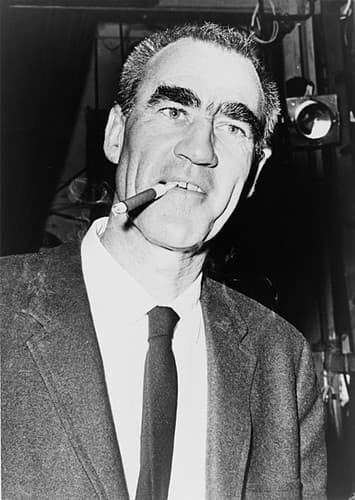
William Ford Gibson is an American-Canadian speculative fiction writer and essayist widely credited with pioneering the science fiction subgenre known as cyberpunk. Beginning his writing career in the late 1970s, his early works were noir, near-future stories that explored the effects of technology, cybernetics, and computer networks on humans—a "combination of lowlife and high tech"—and helped to create an iconography for the information age before the ubiquity of the Internet in the 1990s. Gibson coined the term "cyberspace" for "widespread, interconnected digital technology" in his short story "Burning Chrome" (1982), and later popularized the concept in his acclaimed debut novel Neuromancer (1984). These early works of Gibson's have been credited with "renovating" science fiction literature in the 1980s.
Similar books
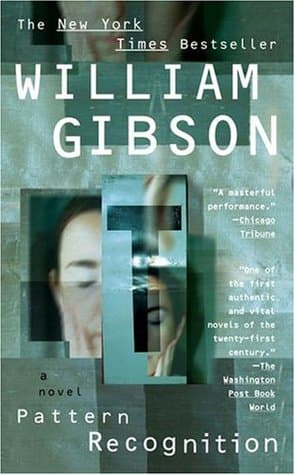
- Pattern Recognition
William Gibson
3.9 (44k) average on GoodreadsThrillerShares Gibson's signature style, focus on contemporary tech, and a female protagonist investigating a mysterious online phenomenon.
- The Da Vinci Code
Dan Brown
3.9 (1.9M) average on GoodreadsThrillerWhile both Spook Country and The Da Vinci Code are thrillers involving a quest for hidden information, Gibson's novel is significantly more intellectually demanding and less reliant on high-octane action sequences. Brown's work prioritizes fast-paced plot twists and easily digestible historical puzzles, whereas Gibson delves into more abstract concepts of data, perception, and the unseen layers of reality. Spook Country offers a more nuanced and less sensationalized exploration of its mysteries.
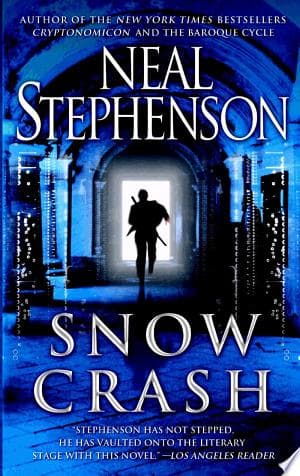
- Snow Crash
Neal Stephenson
4.0 (237k) average on GoodreadsFantasyBoth Gibson and Stephenson are pioneers in cyberpunk and post-cyberpunk literature. While Snow Crash presents a more overtly dystopian and action-packed vision of a future dominated by technology and corporate power, Spook Country offers a more subtle and near-future exploration of similar themes. Stephenson's world is often more exaggerated and satirical, whereas Gibson's is grounded in a more realistic and immediate extrapolation of current trends, focusing on the insidious rather than the overtly catastrophic impacts of technology and surveillance.
- Angels & Demons
Dan Brown
3.9 (2.7M) average on GoodreadsThrillerA Harvard symbologist races through Rome's ancient sites, deciphering cryptic clues to unmask the Illuminati and stop a vengeful plot to destroy the Vatican with a stolen antimatter weapon.
- Gone Girl
Gillian Flynn
4.1 (2.3M) average on GoodreadsThrillerA wife's sudden disappearance on her fifth anniversary reveals a web of lies and psychological warfare, exposing the secrets within a seemingly perfect marriage.
- The Girl on the Train
Paula Hawkins
3.9 (2.1M) average on GoodreadsThrillerA woman’s fascination with a seemingly perfect couple she watches from her daily train commute leads her into a dark investigation when she witnesses something that shatters their idyllic image.




Enjoyed the summary?
A summary gives you the shape of the book. The book itself has the detail, the examples and the voice.
Find Spook Country on AmazonAs an Amazon Associate, BookBrief earns from qualifying purchases. How we're funded