
Core Idea
- Difficulty
- Hard
- Read it if
- You are an aspiring investor, entrepreneur, or high-net-worth individual looking to understand advanced wealth-building strategies beyond traditional savings and income, focusing on leverage, asset acquisition, and tax optimization.
- Skip it if
- You are looking for basic personal finance advice, budgeting tips, or a guide to getting out of consumer debt, or if you are uncomfortable with the concept of strategic leverage and debt.
Key Takeaways from Stack
The Infinite Leverage of OPM
Harnessing Other People's Money (OPM) is the bedrock of rapid wealth accumulation for the ultra-rich.
The core principle behind the rapid wealth generation of the elite is their skillful use of OPM. This means more than just taking loans; it means structuring deals, partnerships, and investments where outside money increases their returns without a proportional rise in their personal risk or direct cash outlay. Whether through real estate groups, venture capital funding, or advanced debt tools, the wealthy reduce their own capital exposure while maximizing potential gains. This strategy allows them to pursue many high-value opportunities at once, rather than being limited by their personal balance sheet, which creates a compounding effect that speeds up financial independence across generations.
“The wealthy understand that their own capital is a finite resource. True leverage comes from mastering the art of utilizing Other People's Money.”
In the book: The book frequently references large-scale real estate developers who acquire vast portfolios with minimal personal equity, relying heavily on bank loans, investor funds, and joint ventures.
Try this: For the everyday investor, this means exploring opportunities like real estate crowdfunding, carefully structured business partnerships, or understanding how to use low-interest debt to acquire income-producing assets (e.g., rental properties) rather than solely relying on personal savings.
Related ideas: other-peoples-money, leverage, capital-efficiency
Tax Code as a Wealth-Building Tool
The rich don't just pay taxes; they strategically navigate the tax code to their advantage, legally.
One of the most important 'loopholes' the wealthy use is the tax code itself. They see it not as a punishment, but as a set of incentives and rules meant to encourage certain economic behaviors. By investing in specific asset types (like real estate with depreciation, or certain business structures), using tax-advantaged accounts, and understanding deductions, credits, and deferrals, they legally lower their taxable income and grow their wealth more efficiently. This is about optimization, not evasion. It means understanding where the government offers 'rewards' for specific investments or economic activity and aligning strategies accordingly. The goal is to keep more of what they earn.
“The tax code is not just a burden; it's a playbook. Those who learn to read and apply its rules are rewarded with accelerated wealth.”
In the book: Discussion of depreciation benefits for real estate investors, the use of 1031 exchanges to defer capital gains, and the advantages of certain corporate structures over individual income tax.
Try this: Educate yourself on tax laws relevant to your investments. For example, understand how depreciation works for rental properties, explore tax-advantaged retirement accounts (IRAs, 401ks), and consider forming an LLC for your side hustle to unlock business deductions.
Related ideas: tax-optimization, depreciation, capital-gains-deferral
Asset Acquisition Over Income Generation
Focus on owning appreciating, income-producing assets, not just earning a high salary.
The main shift in mindset from the middle class to the wealthy is prioritizing buying assets over just earning income. While a high salary is good, it is often taxed heavily and does not by itself build generational wealth. The rich, instead, put their income (or OPM) into assets that grow in value or generate passive income. Examples include real estate, dividend-paying stocks, profitable businesses, or precious metals. These assets work for them constantly, providing cash flow and capital growth, creating multiple income streams less dependent on their direct labor. This strategy moves them from linear income growth to exponential wealth accumulation.
“The employee chases the paycheck; the owner chases the asset. One generates temporary income, the other builds lasting wealth.”
In the book: The book contrasts the financial struggles of high-income professionals who lack assets with the sustained wealth of individuals who built portfolios of real estate or businesses, even if their initial 'income' wasn't as high.
Try this: Prioritize investing a significant portion of your income into assets like index funds, rental properties, or a profitable side business. Shift your focus from 'how much can I earn?' to 'how many income-producing assets can I acquire?'
Related ideas: passive-income, asset-building, financial-independence
The Power of Compounding & Time Horizon
Generational wealth isn't just about big wins; it's about patient, consistent compounding over extended periods.
While "Stack" reveals advanced strategies, it also covers the basic principle of compounding. The wealthy understand that true growth comes not from one big score, but from the steady, long-term growth of their assets. They structure investments to allow profits to be reinvested, leading to exponential growth over decades, often spanning multiple generations. This long-term view is important; they seek lasting value creation, not quick flips. This patient approach helps them handle market changes and benefit from the upward trend of good assets.
“Time is the ultimate leverage. When combined with compounding, even modest investments can become monumental.”
In the book: Examples of family trusts and endowments that have grown exponentially over 50-100 years through consistent reinvestment and strategic asset allocation.
Try this: Start investing early, even with small amounts. Automate your investments and resist the urge to pull out during market downturns. Think in terms of decades, not years, for your core wealth-building portfolio.
Related ideas: compounding, long-term-investing, generational-wealth
Access to Exclusive Information & Networks
The ultra-rich gain an edge through privileged access to insights and high-level connections.
Beyond financial tools, a significant 'loophole' for the wealthy is their access to exclusive information and powerful networks. This is not about illegal insider trading, but about knowing market trends, upcoming rules, or new investment opportunities before they become public. They attend private conferences, join exclusive investor groups, and build relationships with industry leaders, policymakers, and other wealthy individuals. This network provides a constant flow of insights, deals, and potential partnerships that are not available to the general public, giving them a significant informational and strategic edge.
“Information is currency, but access to *pre-market* information and the networks that provide it is pure gold.”
In the book: Mentions of private equity circles, venture capital syndicates, and 'family office' networks where deals are often done before they ever hit public markets.
Try this: Actively seek out and build your professional network. Join industry associations, attend specialized workshops (even online), and seek mentors who are further along in their financial journey. Understand that value often comes from who you know, not just what you know.
Related ideas: network-effect, deal-flow, information-arbitrage
Strategic Debt vs. Consumption Debt
The rich use 'good debt' to acquire assets, while the poor use 'bad debt' for consumption.
The book clearly distinguishes how different economic classes view and use debt. For the wealthy, debt is a strategic tool, 'good debt,' used to buy income-producing or appreciating assets (e.g., mortgages for rental properties, business loans for expansion). They understand that if the asset's return is higher than the debt's cost, they are effectively using OPM to grow their wealth. In contrast, 'bad debt' is used for consumer goods that lose value or liabilities (e.g., credit card debt for vacations, car loans for luxury vehicles). This difference is key; the rich use debt to increase their productive capacity, while others let debt harm their financial future.
“Debt is a double-edged sword. Wielded correctly, it builds empires. Wielded carelessly, it enslaves.”
In the book: Contrasting a real estate investor taking out a low-interest mortgage for a multi-unit property with someone accumulating high-interest credit card debt for consumer goods.
Try this: Ruthlessly eliminate high-interest consumer debt. Only take on debt that will generate more income or appreciate in value than its cost. Evaluate every loan as an investment, not a right.
Related ideas: good-debt, bad-debt, leverage
Velocity of Money & Capital Recycling
Instead of holding capital, the wealthy continuously move and redeploy it to maximize its earning potential.
The idea of 'velocity of money' is very important. The ultra-rich do not let capital sit idle; they constantly seek to reuse and redeploy it. This means that once an investment matures or makes a profit, that capital is immediately put into the next opportunity, rather than being held in low-yield accounts or spent. This continuous movement and reinvestment create a strong compounding effect, speeding up wealth accumulation. They are good at knowing when to sell an asset, take out capital, and reinvest it into a better-performing or more strategic opportunity, always optimizing their portfolio for maximum return.
“Stagnant money is wasted opportunity. The true master of wealth ensures their capital is always in motion, always earning.”
In the book: Discussion of serial entrepreneurs who sell one successful business to fund the next, or real estate investors who use the profits from one sale to acquire multiple new properties.
Try this: Regularly review your investments. Don't be afraid to sell underperforming assets and reallocate funds to better opportunities. Avoid letting large sums sit in checking or low-interest savings accounts; ensure your money is always working for you.
Related ideas: capital-velocity, reinvestment, portfolio-optimization
Creation of Proprietary Assets & Systems
The ultimate loophole is owning the 'game' itself by creating unique, defensible assets and systems.
While investing in existing assets is important, the peak of wealth-building for the elite involves creating their own assets and systems. This could be a unique business, intellectual property, a patented technology, or an efficient operational system that generates steady cash flow. By owning the underlying 'engine' of wealth creation, they control the value, profit margins, and scalability. These assets often have high entry barriers for competitors, providing a strong defense for their wealth. This goes beyond just investing in the market to actively shaping and owning a part of the market.
“Why play on someone else's field when you can own the stadium, set the rules, and collect the admission fees?”
In the book: Examples of tech founders who build platforms, real estate developers who create entire communities, or entrepreneurs who develop unique business models.
Try this: Look for opportunities to create value rather than just consume it. Start a side business, develop a unique skill set, or build a brand that can eventually become an asset you own and control. Think like an owner, not just an investor.
Related ideas: intellectual-property, business-ownership, economic-moat
Insurance as a Wealth Protector
The rich use sophisticated insurance strategies not just for protection, but for wealth transfer and growth.
Beyond standard property and casualty insurance, the wealthy use advanced insurance strategies as a key part of their financial planning. This includes various types of life insurance (like whole life or universal life) that can act as tax-advantaged savings vehicles, provide liquidity for estates, and help transfer wealth efficiently to heirs, often avoiding probate and reducing estate taxes. They also use specialized insurances to protect against unique business risks or to provide collateral for loans. For them, insurance is a part of their asset protection and legacy planning, not just a necessary cost.
“Insurance isn't merely a shield against loss; it's a strategic vehicle for wealth preservation and intergenerational transfer.”
In the book: Discussion of using permanent life insurance policies for tax-deferred cash value growth, estate planning, and as a source of collateralized loans.
Try this: Review your insurance coverage beyond the basics. Understand the potential benefits of permanent life insurance for long-term savings and estate planning. Consult with a financial advisor specializing in these advanced strategies to see if they fit your goals.
Related ideas: estate-planning, whole-life-insurance, wealth-preservation
Strategic Philanthropy & Social Capital
Giving back isn't just altruistic; it's a strategic move for tax benefits and enhanced social capital.
The wealthy often engage in strategic giving, which serves multiple purposes beyond just altruism. Charitable giving, especially through donor-advised funds or private foundations, can provide significant tax benefits, lowering taxable income and capital gains. More subtly, it builds social connections and improves their public image, opening doors to new networks, business opportunities, and political influence. This is not to lessen genuine generosity, but to show that for the ultra-rich, even giving back is often part of a broader, sophisticated financial and reputational strategy. It is another 'loophole' that uses their wealth to gain further advantages.
“True wealth is not just what you accumulate, but how you strategically deploy it to create impact, both financial and social.”
In the book: Examples of prominent billionaires establishing foundations that serve as both charitable vehicles and powerful platforms for influence, often with associated tax advantages.
Try this: If you're in a position to give, explore tax-efficient ways to donate, such as donor-advised funds. Understand that contributing to causes you care about can also expand your network and provide unforeseen opportunities.
Related ideas: philanthropy, donor-advised-funds, social-capital
Stack Quotes
“The market is a relentless beast, always hungry, always testing your resolve. Those who forget this are its next meal.”
“True wealth isn't just about the size of your stack; it's about the freedom and peace of mind it buys.”
“Leverage is a double-edged sword. It can amplify your gains, but it can just as easily cleave your portfolio in two.”
“Never mistake a bull market for genius. When the tide goes out, you'll see who's been swimming naked.”
“The greatest investment you'll ever make is in your own financial education.”
“Compounding isn't magic; it's patience and consistency working in concert.”
“Fear and greed are the twin demons of the market. Master them, or they will master you.”
“Diversification isn't about avoiding all risk; it's about managing specific risks you can't predict.”
“The best time to plant a tree was twenty years ago. The second best time is now. The same applies to your financial future.”
“Don't chase returns; build a robust process. Returns are a byproduct of good decisions, not the goal itself.”
“Every crisis presents an opportunity for those with the foresight and courage to act.”
“Your most valuable asset isn't your portfolio; it's your ability to earn and adapt.”
“The noise of the daily market can deafen you to the long-term signals. Learn to filter it out.”
“Financial independence is not about never working again, but about having the choice to work on your own terms.”
Quiz
10 questions on the main ideas. Each answer comes with a short explanation.
Question 1
According to 'Stack,' what is the ultimate goal of the financial elite, executed with poise and strategy?
- To accumulate as much liquid cash as possible within their lifetime.
- To achieve financial independence that lasts generations, as fast as possible.
- To dominate specific industry sectors through monopolistic practices.
- To minimize tax obligations through purely legal, but widely known, deductions.
Show answer
B. To achieve financial independence that lasts generations, as fast as possible. The book states that the ultimate goal of the financial elite is to obtain financial independence that lasts generations, as fast as possible.
Question 2
What does 'Stack' identify as a key characteristic of how the financial elite utilize money?
- As a means to acquire luxury goods and services.
- As a tool to make more of itself.
- As a buffer against economic downturns.
- As a symbol of social status and power.
Show answer
B. As a tool to make more of itself. The book highlights that the financial elite utilizes money as a tool to make more of itself, emphasizing its active role in wealth creation.
Question 3
What types of assets does 'Stack' mention as common avenues through which the financial elite achieve their goals?
- Art collections, rare stamps, and vintage cars.
- Stocks, gold, real estate, or businesses.
- Government bonds, savings accounts, and mutual funds.
- Cryptocurrencies, venture capital, and private equity.
Show answer
B. Stocks, gold, real estate, or businesses. The book explicitly lists owning stocks, gold, real estate, or businesses as common methods employed by the financial elite.
Question 4
The book 'Stack' refers to 'universal financial loopholes.' What is the author's primary intention in revealing these?
- To expose illegal tax evasion schemes used by the rich.
- To provide a practical roadmap for accessing high-level investing and financial knowledge.
- To criticize the current financial system for its inherent biases.
- To advocate for government regulation to close these loopholes.
Show answer
B. To provide a practical roadmap for accessing high-level investing and financial knowledge. The description states, 'This book stands to be a practical roadmap to accessing the highest levels of investing and financial knowledge,' implying the loopholes are guidelines to be followed.
Question 5
What is the significance of 'time' in the context of wealth accumulation for the financial elite, as described in 'Stack'?
- Time is a factor they aim to minimize, preferring quick, short-term gains.
- Time is often a huge factor in wealth accumulation, which they strategically leverage.
- Time is irrelevant because their strategies guarantee immediate financial independence.
- Time is primarily spent on managing complex legal structures to protect their assets.
Show answer
B. Time is often a huge factor in wealth accumulation, which they strategically leverage. The book states, 'In a world where time is often a huge factor in the accumulation of wealth, the financial elite utilizes money as a tool to make more of itself,' implying they acknowledge and strategically navigate this factor.
Question 6
The book emphasizes that the 'universal financial loopholes' can be applied to whose life?
- Only those who already possess significant starting capital.
- Anyone, regardless of their current financial situation.
- Individuals with advanced degrees in finance or economics.
- Only those living in countries with specific tax laws.
Show answer
B. Anyone, regardless of their current financial situation. The book explicitly states, 'Find out what they are, and how the same loopholes employed, can be applied to your life, regardless of where you are financially.'
Question 7
What does the term 'esoteric financial strategies' imply about the methods discussed in 'Stack'?
- They are illegal or unethical practices.
- They are commonly known and widely practiced by the general public.
- They are understood by or meant for only a small number of people with specialized knowledge.
- They are theoretical concepts with no practical application.
Show answer
C. They are understood by or meant for only a small number of people with specialized knowledge. The word 'esoteric' means intended for or likely to be understood by only a small number of people with a specialized knowledge or interest. This suggests these strategies are not commonly known.
Question 8
How does 'Stack' frame the concept of 'loopholes' in the context of the financial elite's success?
- As flaws in the system that need to be corrected by legislation.
- As hidden, unethical shortcuts to wealth.
- As universal financial guidelines that are followed to achieve financial independence.
- As temporary advantages that quickly become obsolete.
Show answer
C. As universal financial guidelines that are followed to achieve financial independence. The book refers to them as 'universal financial loopholes, or guidelines that are followed in order to achieve that goal,' implying they are established, strategic pathways rather than temporary flaws or unethical shortcuts.
Question 9
What distinction does 'Stack' implicitly draw between the financial elite and the average person regarding wealth accumulation?
- The elite work harder and take more risks, while others prefer security.
- The elite understand and apply specific, less-known financial guidelines ('loopholes'), which others typically do not.
- The elite have access to insider information, which is unavailable to the public.
- The elite inherit their wealth, while others must earn it.
Show answer
B. The elite understand and apply specific, less-known financial guidelines ('loopholes'), which others typically do not. The premise of the book is to reveal the 'top 10 esoteric financial strategies' and 'universal financial loopholes' that the ultra-rich follow, implying these are not common knowledge and are the key differentiator.
Question 10
The title 'Stack' likely refers to which core concept within the book's stated purpose?
- The physical act of stacking paper money.
- The rapid accumulation and compounding of wealth through strategic financial moves.
- The layering of complex legal entities to obscure ownership.
- The strategic placement of investments across diverse sectors.
Show answer
B. The rapid accumulation and compounding of wealth through strategic financial moves. Given the book's focus on making money make more of itself and achieving generational financial independence 'as fast as possible,' 'Stack' strongly implies the rapid and significant accumulation and growth of wealth.
Stack FAQ
What is the core premise of 'Stack' by Jeremiah J Brown?
'Stack' reveals the top 10 esoteric financial strategies utilized by the ultra-rich to accelerate wealth accumulation and achieve generational financial independence. It argues that universal financial 'loopholes' or guidelines are followed, regardless of asset class.
Does 'Stack' provide actionable strategies for people who aren't already rich?
Yes, the book aims to be a practical roadmap, demonstrating how the same financial loopholes employed by the elite can be applied to anyone's life, regardless of their current financial standing or income level. It focuses on accessible knowledge.
What kind of 'loopholes' does 'Stack' refer to in finance?
The book defines 'loopholes' as universal financial guidelines or strategies that allow money to be used as a tool to generate more wealth quickly and efficiently. These aren't necessarily illegal, but rather advanced, often overlooked financial mechanics.
Does 'Stack' primarily focus on traditional investments like stocks and real estate?
While it acknowledges common asset classes like stocks, gold, real estate, and businesses, 'Stack' delves into the underlying, often hidden, financial strategies that transcend specific investment vehicles. It's about the 'how' rather than just the 'what'.
How is 'Stack' different from other personal finance books that promise to make you rich?
'Stack' distinguishes itself by focusing on the 'esoteric' strategies and 'loopholes' used by the ultra-rich, rather than conventional advice. It aims to provide a deeper, more strategic understanding of how wealth is truly built and maintained across generations.
Will 'Stack' teach me how to achieve financial independence faster?
The book is designed to reveal strategies that enable the financial elite to achieve generational financial independence as fast as possible. By understanding and applying these methods, readers can potentially accelerate their own journey to financial freedom.
Is 'Stack' suitable for beginners in investing and finance?
While it accesses 'highest levels of investing and financial knowledge,' the book is presented as a practical roadmap, suggesting it aims to make complex strategies understandable and applicable, even for those starting their financial journey.
Does 'Stack' cover tax avoidance strategies for the wealthy?
The description implies a focus on financial 'loopholes' and strategies for wealth accumulation rather than explicit tax avoidance. It covers how the rich utilize money as a tool to make more of itself and achieve financial independence.
Similar books
- The Richest Man in Babylon
George S. Clason
4.3 (110k) average on GoodreadsBusinessFocuses on timeless principles of saving, investing, and making money work for you.
- Freakonomics: A Rogue Economist Explores the Hidden Side of Everything
Steven D. Levitt
4.0 (709k) average on GoodreadsBusinessThis book uses economic principles to reveal the surprising incentives behind everything from drug dealing and real estate to cheating teachers and the decline of crime.
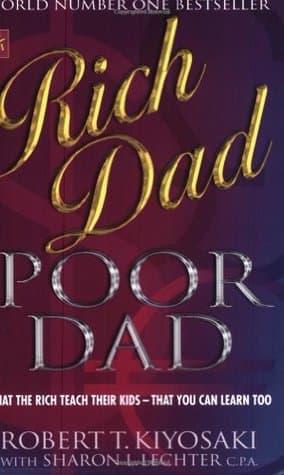
- Rich Dad, Poor Dad
Robert T. Kiyosaki
4.1 (369k) average on GoodreadsBusinessRobert Kiyosaki explains that financial literacy, owning assets instead of liabilities, and making money work for you are the real ways to build wealth, lessons he learned from his biological 'poor dad' and his best friend's entrepreneurial 'rich dad.'
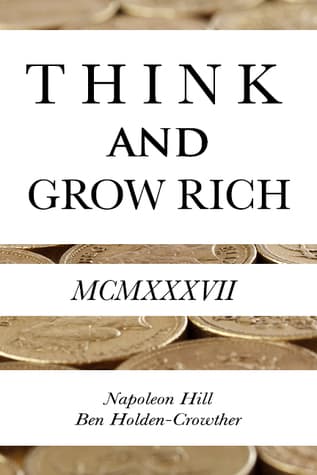
- Think and Grow Rich
Napoleon Hill
4.2 (218k) average on GoodreadsBusinessLearn the thirteen principles of success from early 20th-century business leaders to achieve financial independence and personal fulfillment.
- Zero to One: Notes on Startups, or How to Build the Future
Peter Thiel
4.2 (189k) average on GoodreadsBusinessTo build the future, Peter Thiel argues, you must embrace the idea that true innovation lies not in small improvements, but in creating something entirely new that avoids competition.
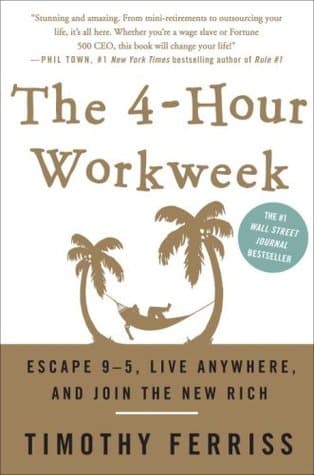
- The 4-Hour Workweek
Timothy Ferriss
3.9 (181k) average on GoodreadsBusinessLearn how to leave the traditional work-life by creating automated income, outsourcing tasks, and taking 'mini-retirements' to live a life of freedom and adventure, all while working only four hours a week.



Enjoyed the summary?
A summary gives you the shape of the book. The book itself has the detail, the examples and the voice.
Find Stack on AmazonAs an Amazon Associate, BookBrief earns from qualifying purchases. How we're funded