
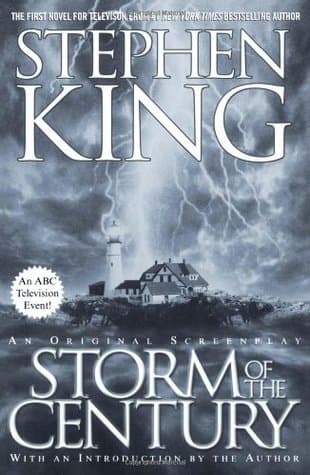
Synopsis
Covers the whole plot, including the ending.
- Difficulty
- Medium
- Pacing
- Moderate
- Mood
- Bleak, Suspenseful, Desperate, Morally Challenging, Dark
- Read it if
- You enjoy supernatural thrillers with a strong sense of impending doom, moral dilemmas, and the exploration of humanity's dark side under extreme pressure. Fans of Stephen King's small-town horror will find this compelling.
- Skip it if
- You prefer less bleak or disturbing narratives, or find stories involving child endangerment and difficult moral compromises too unsettling. The ending offers little solace.
Storm of the Century Plot Summary
Covers the whole plot, including the ending.
The Storm Arrives, and So Does Linoge
Little Tall Island, a remote community off the coast of Maine, prepares for a historic nor'easter, called the 'Storm of the Century.' As the blizzard gets worse, Martha Clarendon, an elderly island resident, is murdered in her home. Constable Mike Anderson, the island's law enforcement officer, finds a mysterious, older man named Andre Linoge calmly sitting in Martha's living room, holding a distinctive cane with a silver wolf's head. Linoge admits to the murder, saying he 'made her afraid.' Despite the extreme weather, Mike arrests Linoge and brings him to the town hall, where the islanders are gathering for shelter from the storm. Linoge's unsettling manner and strange statements immediately make the community uneasy.
Linoge's Captivity and Disturbing Revelations
Held in a temporary cell in the town hall's basement, Linoge starts to influence the islanders. He reveals private, often shameful, secrets about various residents, causing arguments and distrust in the crowded hall. He knows about Robbie Beals' secret affair, Cat Withers' shoplifting, and even Constable Mike Anderson's private thoughts. Linoge also shows supernatural abilities, moving objects with his mind, appearing outside his cell, and causing intense psychological distress. He repeatedly says the mysterious phrase, 'Give me what I want, and I'll go away,' without saying what he wants, which increases the islanders' fear and confusion. Mike tries to keep order and protect the community from this evil force.
The First Suicides and Escalating Fear
Linoge's psychological attack gets worse as he sends vivid, horrifying nightmares and waking visions into the minds of the islanders. Several residents, unable to cope with the torment and the revelation of their deepest shames, commit suicide. Ralph Emerick, a respected islander, hangs himself, and later, Henry Fogg, another islander, also takes his own life. These tragic events make the community more despairing and panicked. Mike Anderson, while trying to protect his wife Molly and their young son Ralphie, realizes the situation: Linoge is not just a madman but a supernatural being, systematically breaking down the islanders' will. The storm rages outside, trapping them with their tormentor.
Unmasking Linoge's True Nature
After the suicides and continued psychological torture, Linoge finally tells the terrified islanders who he is. He is an ancient, demonic being, not human, and he has come to Little Tall Island not for revenge or chaos, but for a specific purpose related to his own kind. He explains that he is old and dying, and needs an 'heir' – a successor to continue his evil. He demands that the islanders choose one of their children to be given to him. This revelation ends any hope of a simple solution and forces the community to face an unthinkable choice. Mike Anderson tries to reason with him, but Linoge is firm in his demand, emphasizing the terrible consequences if they refuse.
The Unthinkable Proposition
Linoge gathers the remaining adults of Little Tall Island and presents his terrifying offer: they must choose one child from the community to become his apprentice, to inherit his power and continue his work. If they refuse, he promises to unleash a storm so destructive it will wipe out the entire island and everyone on it. He makes it clear this is a demand, not a negotiation. The islanders are horrified and conflicted, struggling with an impossible moral problem. Mike Anderson strongly opposes the idea, trying to unite the community against Linoge, but the fear of complete destruction and the psychological toll of Linoge's torment weigh heavily on everyone.
The Town Meeting and Deliberation
After Linoge's ultimatum, the islanders hold a tense and emotional town meeting. Parents desperately beg for their children's lives, while others argue for the survival of the community. Arguments erupt, tears flow, and the bonds of their close-knit society begin to break under the immense pressure. Mike Anderson tries to lead them to defiance, but the sheer terror of Linoge's threats and the memory of the suicides make many hesitant. Robbie Beals, still affected by his revealed secret, is vocal about sacrificing a child to save the rest. The moral structure of Little Tall Island is severely tested as they debate the unspeakable.
The Fateful Decision
Despite Mike Anderson's pleas to resist Linoge and fight for all their children, the fear of complete destruction ultimately sways most people. The islanders, in a moment of collective desperation and terror, vote to agree to Linoge's demand. They decide to draw lots to determine which child will be sacrificed. The atmosphere is heavy with despair and self-loathing as the children's names are written down. Mike is devastated by their decision, feeling a deep sense of betrayal and horror. The lottery proceeds, a grim ritual that will always haunt the survivors of Little Tall Island.
Ralphie's Selection and Mike's Despair
The name drawn from the lottery is Ralphie Anderson, Mike and Molly's young son. This crushes Mike, who had fought so hard against the idea of sacrifice. Molly is hysterical, unable to understand the horror. Mike, full of rage and despair, refuses to hand over his son. Linoge, however, uses his power, making it clear that the choice has been made, and any defiance will result in the promised annihilation. The other islanders, though horrified for Mike and Molly, are too terrified to intervene, having already committed to their decision. Mike faces the ultimate test of his morality and parental love.
Linoge Departs with His Apprentice
With Ralphie Anderson chosen as his apprentice, Linoge takes the boy. The scene is agonizing for Mike and Molly, who must watch their son, seemingly in a trance, walk away with the demonic being. Linoge makes a final, chilling statement, confirming his nature and the success of his mission. He then leaves the island, vanishing into the lingering storm. The islanders are left with a deep sense of loss, guilt, and the horrifying knowledge of what they have done. The storm begins to calm, leaving behind not just physical damage, but an indelible mark on the soul of Little Tall Island.
The Aftermath and Mike's New Life
Afterward, Little Tall Island is forever changed. The community is broken, haunted by the memory of their collective decision and the children who were lost. Mike Anderson, unable to live with the guilt and the constant reminder of Ralphie's sacrifice, divorces Molly and leaves the island. He moves to the mainland and becomes a U.S. Marshal. Years later, while on assignment, he sees an older Ralphie – now a young man with a cane topped with a silver wolf's head, like Linoge's. Ralphie is with a young girl, clearly preparing to take her as his own apprentice, continuing the cycle of evil. Mike recognizes the horror but cannot intervene, forever marked by the 'storm of the century' and his son's monstrous inheritance.
Storm of the Century Characters
Mike Anderson
Protagonist
Constable of Little Tall Island, a man of integrity facing an impossible choice.
Mike Anderson is the dedicated constable of Little Tall Island, a respected and moral leader in his community. He is a loving husband to Molly and father to young Ralphie. Mike embodies integrity and courage, initially standing firm against Andre Linoge's malevolence and trying to protect his town. He is a rational man thrust into a supernatural nightmare, constantly struggling to maintain order and uphold justice. His refusal to accept Linoge's demands makes him a tragic figure, ultimately forced to witness the unimaginable and live with the profound consequences.
Relationships: Molly Anderson (wife, later divorced); Ralphie Anderson (son, chosen by Linoge); Andre Linoge (antagonist, Mike's nemesis)
Andre Linoge
Antagonist
An ancient, demonic entity demanding a child sacrifice from the islanders.
Andre Linoge is the primary antagonist, a mysterious and ancient being with supernatural powers. He appears as an older man with a distinctive silver wolf's head cane. Linoge is calm, articulate, and utterly devoid of human empathy, revealing deep, shameful secrets of the islanders and driving some to suicide. His ultimate goal is to find an 'apprentice' to carry on his evil legacy, as he is dying. He is a force of pure malevolence, representing temptation and the erosion of moral boundaries, forcing the islanders to confront their deepest fears and make an unthinkable choice.
Relationships: Mike Anderson (adversary); Ralphie Anderson (chosen apprentice)
Molly Anderson
Supporting
Mike's wife, a loving mother who endures immense suffering.
Molly Anderson is Mike's devoted wife and Ralphie's mother. She is a strong, caring woman who initially supports Mike in his efforts to protect the island. As Linoge's influence grows, she, like the others, succumbs to fear, though her primary concern remains her son's safety. Her despair and hysteria when Ralphie is chosen are profound and heartbreaking, highlighting the ultimate cost of the islanders' decision. Her later divorce from Mike underscores the permanent damage inflicted upon their family by the events of the storm.
Relationships: Mike Anderson (husband, later divorced); Ralphie Anderson (son)
Ralphie Anderson
Supporting/Victim
Mike and Molly's young son, tragically chosen as Linoge's heir.
Ralphie Anderson is Mike and Molly's innocent young son, a symbol of hope and the future for Little Tall Island. He becomes the ultimate victim of Linoge's scheme, chosen through the lottery to become the demonic entity's apprentice. His abduction represents the complete moral failure of the community and the devastating personal cost to Mike and Molly. In the epilogue, he is seen years later, grown into a young man, having fully embraced Linoge's evil, ensuring the continuation of the demonic cycle.
Relationships: Mike Anderson (father); Molly Anderson (mother); Andre Linoge (master/mentor)
Robbie Beals
Supporting
A pragmatic islander whose secrets are exposed, advocating for the sacrifice.
Robbie Beals is an islander whose secret affair is exposed by Linoge, causing him public humiliation. This exposure, coupled with his deep fear of Linoge's threats, makes him one of the most vocal proponents of sacrificing a child to save the rest of the community. He represents the pragmatic, survival-driven side of human nature when pushed to extremes, willing to make an unthinkable compromise for the greater good (or self-preservation). His character highlights the breakdown of moral principles under duress.
Relationships: Cat Withers (affair partner (revealed)); Andre Linoge (tormentor)
Cat Withers
Supporting
An islander whose petty crime is exposed by Linoge.
Cat Withers is another island resident whose minor transgression – shoplifting – is publicly revealed by Linoge. Her humiliation adds to the collective fear and distrust among the islanders. While her role is smaller than Robbie's, she represents how Linoge's power extends to even the most mundane, hidden shames, demonstrating his omniscient knowledge and ability to sow discord by exploiting personal vulnerabilities. She becomes another victim of Linoge's psychological warfare, contributing to the overall atmosphere of paranoia.
Relationships: Robbie Beals (affair partner (revealed)); Andre Linoge (tormentor)
Martha Clarendon
Mentioned/Victim
The first victim of Andre Linoge on Little Tall Island.
Martha Clarendon is an elderly resident of Little Tall Island and Linoge's first victim. Her brutal murder at the very beginning of the story establishes Linoge's malevolent presence and the supernatural horror that has descended upon the island. Her death is not random; Linoge states he 'made her afraid,' suggesting a deeper, more sadistic purpose behind his actions beyond simple murder. She serves as the catalyst for Mike Anderson's confrontation with Linoge and the unfolding nightmare.
Relationships: Andre Linoge (murderer)
Ralph Emerick
Supporting/Victim
A respected islander driven to suicide by Linoge's torment.
Ralph Emerick is a respected member of the Little Tall Island community, one of the first to succumb to Linoge's psychological torture. Driven to suicide by the entity's torment, his death serves as a chilling demonstration of Linoge's power and the grave danger the islanders face. His demise contributes significantly to the escalating fear and the community's eventual decision to consider Linoge's demands. He represents the fragility of the human mind when confronted with overwhelming, supernatural evil.
Relationships: Andre Linoge (tormentor)
Storm of the Century Themes
The Erosion of Morality Under Duress
The main theme explores how a close-knit community's moral values break down when faced with an impossible, terrifying choice. The islanders of Little Tall must choose between individual lives and collective survival, ultimately sacrificing an innocent child. This decision shows how fragile ethical principles are when faced with overwhelming fear and the basic instinct for self-preservation, demonstrating how easily people can justify terrible acts.
“Give me what I want, and I'll go away.”
The Nature of Evil and Temptation
Andre Linoge is a primal, ancient evil that seeks not conquest but to spread through temptation and corruption. He offers a seemingly 'easy' way out of annihilation, preying on the islanders' fears and weaknesses. His power is not just in his supernatural abilities, but in his ability to expose and exploit human flaws, turning community members against each other and forcing them to commit their own evil acts, making them complicit in their downfall.
“I am not a man. I am older than any man you have ever known, and I have come for one of your children.”
Loss of Innocence and Betrayal
Ralphie Anderson's sacrifice represents the ultimate loss of innocence, not just for the child, but for the entire community. Choosing a child for a demonic entity permanently stains the islanders, stripping them of their moral purity. Mike Anderson feels a deep betrayal by his community, and ultimately, the betrayal of his own son, as he cannot stop the horrific act. This theme explores the lasting scars left by such a deep moral failure.
“He's just a little boy... how could you?”
The Power of Secrets and Shame
Linoge's main weapon, besides his supernatural abilities, is his knowledge of the islanders' deepest, most shameful secrets. By exposing affairs, petty crimes, and hidden thoughts, he breaks down trust and unity in the community. This psychological warfare leaves the islanders vulnerable, isolated, and more likely to give in to his demands, showing how personal shame can be used to destroy collective resistance.
“I know all your secrets. I know what you do in the dark.”
Plot Devices & Literary Techniques
The Storm of the Century
A literal and metaphorical backdrop for chaos and isolation.
The unprecedented blizzard serves as both a literal plot device, trapping the islanders with Linoge, and a powerful metaphor. Physically, it cuts off Little Tall Island from the mainland, ensuring no outside help can arrive and forcing the community to confront Linoge alone. Metaphorically, the storm mirrors the internal turmoil and moral chaos engulfing the islanders, representing the 'storm' within their souls as they grapple with an unthinkable choice. Its intensity reflects the escalating horror of the situation.
Linoge's Cane with a Silver Wolf's Head
A symbolic object representing Linoge's power and the passing of his legacy.
Linoge's distinctive cane is a recurring symbol throughout the story. It is present at Martha Clarendon's murder, serves as a visual identifier for Linoge, and ultimately, its appearance in Ralphie Anderson's hand in the epilogue confirms his succession to Linoge's evil. The wolf, often associated with cunning, predation, and the wild, reinforces Linoge's predatory nature. The cane acts as a tangible representation of the demonic entity's power and the continuity of his malevolent lineage.
The Lottery
A chilling mechanism for community-sanctioned sacrifice.
The lottery, a seemingly democratic process, is employed by the islanders to choose which child will be sacrificed to Linoge. This device is particularly chilling as it transforms an unspeakable act into a formalized, collective decision, distributing the guilt among the community members. It highlights the desperation and moral bankruptcy that takes hold, making the sacrifice appear as a 'fair' or 'necessary' evil, rather than an individual act of murder. It mirrors the classic short story 'The Lottery' by Shirley Jackson in its depiction of communal horror.
Psychological Torture and Mind-Reading
Linoge's primary method of breaking the islanders' will.
Linoge's ability to read minds, expose secrets, and project terrifying visions and nightmares into the islanders' minds is a crucial plot device. This psychological warfare systematically breaks down the community's unity, trust, and individual sanity. It drives some to suicide and weakens the resolve of others, making them susceptible to his demands. It emphasizes that Linoge's power isn't just physical, but deeply insidious, targeting the very fabric of human consciousness and moral fortitude.
Storm of the Century Quotes
“Sometimes, the only way to survive is to become the monster.”
“The storm doesn't just bring snow; it brings the truth.”
“Fear is a storm in the mind, and it can bury you faster than any blizzard.”
“In the end, we all make our own bargains with the devil.”
“The island was a prison, and the storm was the warden.”
“Evil doesn't always roar; sometimes it whispers in the wind.”
“You can't outrun your past, especially when it's buried in the snow.”
“The cold has a way of freezing not just the body, but the soul.”
“When the world goes white, you see things you never wanted to.”
“Some sacrifices are too heavy to bear, but we bear them anyway.”
“The storm was a test, and we all failed in our own ways.”
“In the silence of the snow, you can hear the echoes of your own heart.”
“Monsters are real, but sometimes they look just like us.”
“The price of safety is often higher than we're willing to pay.”
Quiz
10 questions on the plot and the characters. Each answer comes with a short explanation.
Question 1
What is the name of the island where the story takes place?
- Martha's Vineyard
- Little Tall Island
- Stormhaven Island
- Maine Haven
Show answer
B. Little Tall Island The story is set on Little Tall Island, a fictional island off the coast of Maine where the residents face both a massive storm and the supernatural threat of Andre Linoge.
Question 2
Who is the first victim killed by Andre Linoge at the beginning of the story?
- Mike Anderson
- Martha Clarendon
- Alma Frechette
- Ricky Bissonette
Show answer
B. Martha Clarendon Martha Clarendon, one of the island's oldest residents, is brutally murdered by Andre Linoge, who then waits calmly in her home for the authorities to arrive.
Question 3
What distinctive object does Andre Linoge carry with him?
- A silver pocket watch
- A black umbrella
- A cane topped with a silver wolf's head
- A leather-bound book
Show answer
C. A cane topped with a silver wolf's head Linoge's cane with a silver wolf's head is a key symbol of his mysterious and menacing presence throughout the story, often mentioned in descriptions of him.
Question 4
What is the primary demand Andre Linoge makes to the people of Little Tall Island?
- To surrender all their money
- To worship him as a god
- To give him a child to take with him
- To leave the island forever
Show answer
C. To give him a child to take with him Linoge's proposition is for the islanders to voluntarily give him one of their children to raise as his own, which creates a moral dilemma central to the plot.
Question 5
Who is the constable of Little Tall Island that confronts Andre Linoge?
- John Smith
- Mike Anderson
- David Kingston
- Robert Linwood
Show answer
B. Mike Anderson Constable Mike Anderson is the law enforcement officer on the island who leads the investigation into Martha Clarendon's murder and deals directly with Linoge.
Question 6
What supernatural ability does Andre Linoge demonstrate to prove his power?
- He can control the weather
- He can read minds and reveal secrets
- He can shapeshift into animals
- He can become invisible
Show answer
B. He can read minds and reveal secrets Linoge uses telepathic abilities to expose the hidden sins and secrets of various islanders, convincing them of his supernatural nature and the seriousness of his threat.
Question 7
What theme is most prominently explored through the islanders' decision regarding Linoge's demand?
- The power of community solidarity
- The conflict between good and evil
- The importance of environmental conservation
- The benefits of technological advancement
Show answer
B. The conflict between good and evil The story delves into moral ambiguity and the nature of evil as the islanders grapple with whether to sacrifice one child to save the rest, blurring lines between good and evil.
Question 8
How does the storm itself function symbolically in the story?
- As a representation of divine punishment
- As a metaphor for internal emotional turmoil
- As an isolation mechanism that traps the characters with Linoge
- As a symbol of renewal and cleansing
Show answer
C. As an isolation mechanism that traps the characters with Linoge The massive snowstorm cuts off the island from the mainland, physically trapping the residents and forcing them to confront Linoge without outside help, heightening the tension.
Question 9
What historical revelation does Andre Linoge share about his past connections to the island?
- He was once the island's founder
- He had a child who died there centuries ago
- He was shipwrecked there as a sailor
- He was banished from the island for witchcraft
Show answer
B. He had a child who died there centuries ago Linoge reveals that he had a son who died on the island long ago, which partly motivates his demand for a new child, adding depth to his character and the story's historical context.
Question 10
What ultimately happens to the child that the islanders decide to give to Linoge?
- The child escapes and is rescued by Mike Anderson
- Linoge kills the child as part of a ritual
- The child is taken by Linoge and raised to become like him
- The child is returned after the storm passes
Show answer
C. The child is taken by Linoge and raised to become like him In the tragic resolution, the selected child is given to Linoge and grows up under his influence, eventually returning to the island as an adult with similar malevolent traits, continuing the cycle of evil.
Storm of the Century FAQ
What is 'Storm of the Century' about?
The story follows the isolated community of Little Tall Island, Maine, as they face both a catastrophic blizzard and a supernatural threat. A mysterious stranger named Andre Linoge arrives just before the storm, commits a brutal murder, and then presents the townspeople with an impossible moral choice in exchange for sparing them from further violence.
Why should I read 'Storm of the Century'?
This Stephen King work masterfully blends supernatural horror with profound moral dilemmas, exploring how ordinary people respond to extraordinary evil. The confined island setting during a historic storm creates intense psychological pressure, making it a compelling study of community dynamics under duress.
What is the background/setting of 'Storm of the Century'?
The story takes place on fictional Little Tall Island off the coast of Maine during an unprecedented winter storm. The isolated, tight-knit community becomes completely cut off from the mainland, forcing residents to confront Linoge's threat without outside help as the blizzard rages.
What are the most memorable quotes?
Linoge's chilling proposition 'If you give me what I want, I'll go away' becomes the central moral dilemma. Another powerful line is 'Give me what I want and I'll go away' repeated throughout, emphasizing the story's central conflict about sacrifice and community survival.
What writing style does Stephen King use?
King employs his signature blend of detailed character development and escalating tension, with the screenplay format allowing for tight dialogue-driven scenes. The narrative builds claustrophobic atmosphere through the storm's progression while maintaining psychological depth in character interactions.
What minor details add significant meaning?
Linoge's cane with the silver wolf's head symbolizes his predatory nature and ancient evil. The storm itself functions as both literal threat and metaphor for the moral tempest facing the community, with the worsening weather mirroring their deteriorating ethical position.
What are some subtle foreshadowing moments?
Early descriptions of the storm as 'different' and 'bringing something worse' than ordinary weather foreshadow Linoge's supernatural nature. Martha Clarendon's violent death immediately establishes that this isn't a normal criminal, but something far more dangerous and ancient.
What unexpected character connections exist?
Linoge seems to have preternatural knowledge of every islander's secrets and weaknesses, creating invisible connections he exploits. The community's shared history means many characters have hidden relationships and past conflicts that Linoge uses to divide them.
What are unspoken character motivations?
Mike Anderson's determination to protect his family drives many of his decisions, while other townspeople are motivated by hidden guilt, fear of exposure, or self-preservation. Linoge's true motivation remains deliberately ambiguous - whether he's collecting souls, testing humanity, or simply causing suffering for its own sake.
What psychological complexities do characters exhibit?
Mike Anderson struggles with his duty as constable versus his role as husband and father. The townspeople collectively experience groupthink, moral bargaining, and the gradual erosion of ethical boundaries as pressure mounts. Linoge displays chilling calm and patience, suggesting centuries of experience manipulating human psychology.
What are the major emotional turning points?
The town's initial horror at Martha's murder gives way to collective dread as they realize Linoge's supernatural abilities. The pivotal moment comes when they must vote on Linoge's demand, forcing each character to publicly reveal what they're willing to sacrifice. The final decision and its aftermath create profound emotional devastation.
How do relationship dynamics evolve?
Initial community solidarity fractures under Linoge's psychological manipulation, with neighbors turning suspicious of one another. Mike and his wife's relationship is tested by impossible choices about their child. Long-hidden resentments and secrets surface as people bargain for survival.
Which parts remain ambiguous or open-ended?
Linoge's exact nature and origins are never fully explained - whether he's demon, ancient evil, or supernatural entity. The story doesn't clarify if this was a unique event or part of a larger pattern of his visits to isolated communities throughout history.
What are controversial scenes or decisions?
The townspeople's ultimate decision to sacrifice a child to save themselves remains deeply controversial, raising questions about utilitarianism versus absolute morality. Some readers debate whether any alternative solution existed or if the community had other options they failed to consider.
'Storm of the Century' ending explained: how it ends & what it means
The townspeople ultimately give Linoge what he wants - a child to take with him - in exchange for the storm ending and their survival. The ending suggests that sometimes evil wins by forcing good people to make horrific choices, and that the moral cost of survival can be devastatingly high. The community survives physically but is spiritually broken.
What is Linoge's true nature and purpose?
Linoge appears to be an ancient supernatural entity who travels to isolated communities during extreme weather events to force moral tests. His wolf-headed cane and calm demeanor suggest he's not human but rather a force that feeds on human weakness and compromise, collecting souls or perhaps simply documenting human failure.
How does the storm function symbolically?
The blizzard represents both literal isolation and the moral blindness that descends on the community. As the storm worsens, so does their ethical clarity, with the physical impossibility of escape mirroring their trapped moral position. The clearing weather at the end symbolizes their survival but also the cold clarity of their terrible choice.
What makes this different from other Stephen King works?
As King's first work written specifically for television, it employs more dialogue-driven scenes and tighter pacing than his novels. The confined single-location setting and compressed timeline create unique intensity, while the explicit moral dilemma at the center makes it more philosophical than purely horror-focused.
About the author

Stephen Edwin King is an American author of horror, supernatural fiction, suspense, crime, science-fiction, and fantasy novels. Described as the "King of Horror", his books have sold more than 350 million copies as of 2006, and many have been adapted into films, television series, miniseries, and comic books. King has published over 65 novels/novellas, including seven under the pen name Richard Bachman, and five non-fiction books. He has also written approximately 200 short stories, most of which have been published in book collections.
Similar books
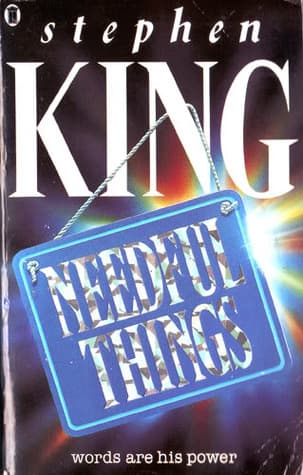
- Needful Things
Stephen King
3.9 (210k) average on GoodreadsThrillerExplores the corrupting influence of an outsider on a small town's hidden darkness.
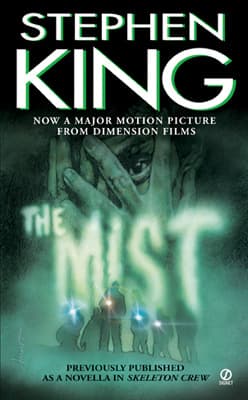
- The Mist
Stephen King
4.0 (113k) average on GoodreadsThrillerFeatures a small group trapped by a supernatural threat, leading to difficult choices and a grim outlook.
- The Lottery
Shirley Jackson
4.1 (58k) average on GoodreadsScience FictionA classic short story about a community's horrifying ritualistic sacrifice.
- Rosemary's Baby
Ira Levin
4.0 (112k) average on GoodreadsThrillerBoth feature an external, malevolent force targeting individuals/communities. Levin's work focuses on a subtle, psychological horror experienced by one woman, while King's Storm of the Century broadens this to an entire isolated community, forcing a public and agonizing moral choice with generational consequences, making its horror more overt and community-centric.
- Angels & Demons
Dan Brown
3.9 (2.7M) average on GoodreadsThrillerA Harvard symbologist races through Rome's ancient sites, deciphering cryptic clues to unmask the Illuminati and stop a vengeful plot to destroy the Vatican with a stolen antimatter weapon.
- Gone Girl
Gillian Flynn
4.1 (2.3M) average on GoodreadsThrillerA wife's sudden disappearance on her fifth anniversary reveals a web of lies and psychological warfare, exposing the secrets within a seemingly perfect marriage.



Enjoyed the summary?
A summary gives you the shape of the book. The book itself has the detail, the examples and the voice.
Find Storm of the Century on AmazonAs an Amazon Associate, BookBrief earns from qualifying purchases. How we're funded