
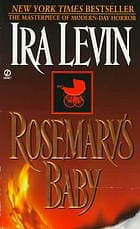
Synopsis
Covers the whole plot, including the ending.
- Difficulty
- Easy
- Pacing
- Moderate
- Mood
- Suspenseful, Paranoid, Claustrophobic, Disturbing
- Read it if
- You love psychological thrillers that build an unbearable sense of dread and paranoia, with a supernatural twist.
- Skip it if
- You are sensitive to themes of gaslighting, bodily autonomy violation, or cults, or prefer less ambiguous endings.
Rosemary's Baby Plot Summary
Covers the whole plot, including the ending.
A New Apartment and Peculiar Neighbors
Rosemary and Guy Woodhouse, a young, ambitious couple, move into a spacious apartment in the Bramford, a historic New York City building known for its gothic architecture and a past filled with strange deaths and rumored witchcraft. Despite the building's unsettling reputation, they are drawn to its charm and the prospect of a good deal. Soon after settling in, they meet their elderly neighbors, Minnie and Roman Castevet, who live directly across the hall. Minnie is pushy and overbearing, while Roman is more cultured and seemingly benevolent. The Castevets quickly insert themselves into the Woodhouses' lives, initially through small acts of neighborly hospitality that soon become a persistent, almost intrusive, presence.
The Mysterious Death of Terry Gionoffrio
Not long after the Woodhouses move in, a young woman named Terry Gionoffrio, whom the Castevets had taken in, commits suicide by jumping from their apartment window. Rosemary had briefly met Terry, who seemed withdrawn and fearful, wearing a distinctive locket. The Castevets quickly downplay the incident, explaining Terry was a drug addict, but Rosemary feels an unsettling premonition. Later, Rosemary finds Terry's locket in the laundry room, and Minnie insists she keep it, claiming it's a good luck charm. This event is the first significant crack in the veneer of normalcy surrounding the Castevets and the Bramford, planting a seed of unease in Rosemary's mind.
Guy's Sudden Success and Shifting Personality
Guy Woodhouse, an aspiring but struggling actor, begins to spend more time with the Castevets. Roman Castevet, a seemingly well-connected figure, takes a particular interest in Guy's career. Shortly after Guy starts socializing with them, a rival actor, Donald Baumgart, mysteriously goes blind, opening up a significant role that Guy then secures. This sudden stroke of luck catapults Guy's career forward, but Rosemary observes a subtle shift in his personality. He becomes more secretive, less affectionate, and increasingly dismissive of her concerns, often defending the Castevets and their eccentricities, even when they make Rosemary uncomfortable.
The Conception and the 'Dream'
One evening, after dinner with the Castevets, Rosemary feels inexplicably dizzy and falls asleep. She wakes up briefly to a nightmarish vision: she is surrounded by the Castevets and their peculiar friends, all naked, witnessing a ritualistic scene. She believes she is being sexually assaulted by a non-human entity with yellow eyes, while Guy, also naked, seems to be participating, encouraging her to 'be fruitful.' The next morning, Guy dismisses it as a drug-induced nightmare, admitting he gave her a chocolate mousse from Minnie containing a sedative. He then reveals they had intercourse while she was still groggy, implying he took advantage of her semiconscious state to conceive a child on the 'right' night. Rosemary feels violated but tries to rationalize it.
An Unusual Pregnancy
Rosemary discovers she is pregnant. Her pregnancy is far from normal. She experiences intense, constant pain in her abdomen, particularly when the baby moves, and develops bizarre cravings for raw liver and undercooked meat. Minnie Castevet insists that Rosemary abandon her own doctor, Dr. Hill, in favor of their friend, Dr. Abraham Sapirstein, a renowned obstetrician. Under Sapirstein's care, Rosemary is given strange herbal concoctions (which Minnie prepares) and is discouraged from taking any standard prenatal vitamins. The Castevets and their circle become more involved in her daily life, dictating her diet and activities, isolating her from her old friends.
Isolation and Growing Paranoia
As her pregnancy progresses, Rosemary finds herself more isolated. Her close friend, Hutch, attempts to warn her about the Castevets but falls into a coma and later dies under mysterious circumstances. Before his death, he leaves Rosemary a cryptic book on witchcraft, 'All of Them Witches,' and a note urging her to research Roman Castevet. Other friends find her difficult to reach or are subtly discouraged by Guy from visiting. With Guy increasingly aloof and absorbed in his career, and the Castevets' constant presence, Rosemary's paranoia escalates. She begins to suspect that the Castevets and their friends are part of a sinister conspiracy targeting her and her unborn child.
Hutch's Warning and the Book
After Hutch's death, Rosemary finally reads the book 'All of Them Witches' and deciphers his coded message. The book details the history of witchcraft and Satanism, and Rosemary discovers that Roman Castevet is actually Steven Marcato, a notorious Satanist and cult leader who disappeared years ago. She realizes the locket Terry Gionoffrio wore contained tannenroot, an herb used in witchcraft, which she had been unknowingly ingesting in her herbal drinks. The truth dawns on her: the Castevets and their group are a coven of witches, and Guy is complicit in their plan. They intend to use her baby for their dark rituals, having orchestrated her impregnation by Satan himself.
The Escape Attempt and Hospitalization
Terrified by her discoveries, Rosemary attempts to escape the Bramford and seek help from Dr. Hill, her original obstetrician. She manages to reach his office and frantically explains her ordeal, detailing the coven, the tannenroot, and her belief that her baby is Satan's. Dr. Hill, however, is skeptical. After a phone call from Guy and Dr. Sapirstein, he dismisses her claims as a symptom of prenatal psychosis. Guy and Dr. Sapirstein arrive and forcibly take Rosemary back to the Bramford, where she is heavily sedated and confined to her apartment. They convince her that she is mentally unstable and that her fears are delusions, further isolating her.
The Birth and the Missing Baby
Rosemary endures a painful labor, heavily sedated and surrounded by the coven, who chant and perform rituals. After the birth, she is told the baby was stillborn and that she must not see it, claiming it has severe deformities. Devastated and drugged, Rosemary is made to believe her child is dead. However, she hears a baby crying from the Castevets' apartment next door. Her maternal instincts override the sedatives, and she realizes they have lied to her. The crying confirms her worst fears: her baby is alive, but it is not with her.
Confrontation and Acceptance
Driven by the baby's cries, Rosemary breaks free from her apartment and, armed with a kitchen knife, confronts the coven in the Castevets' apartment. There, she finds the entire coven gathered around a black bassinet. Inside, she sees her baby, not deformed as she was told, but with yellow, slitted eyes – the eyes of Satan. The coven hails the baby as the Antichrist, the son of Satan. Guy is present, celebrating. Despite the horror, a primal maternal instinct takes over. When the baby starts crying again, Rosemary, against all reason, approaches the bassinet, moves a cross away, and begins to gently rock her son, accepting her terrifying destiny as the mother of the devil's child.
Rosemary's Baby Characters
Rosemary Woodhouse
Protagonist
A naive young woman who becomes the unwitting mother of the Antichrist.
Rosemary is initially portrayed as a sweet, somewhat naive, and conventional young wife eager to start a family. She is deeply in love with her husband, Guy, and is excited about their new life in the Bramford. Throughout her ordeal, she demonstrates growing resilience and a strong maternal instinct, evolving from a trusting, compliant woman into a fiercely protective mother, even when faced with unimaginable evil. Her journey is one of gradual realization and harrowing confrontation, ultimately leading to a horrifying acceptance.
Relationships: Guy Woodhouse (Husband, later betrayer); Minnie Castevet (Overbearing neighbor, coven member); Roman Castevet (Cultured neighbor, coven leader); Hutch (Close friend, warning figure); Dr. Sapirstein (Obstetrician, coven member)
Guy Woodhouse
Antagonist
Rosemary's ambitious actor husband, who betrays her for career success.
Guy is Rosemary's husband, an aspiring actor who is charming but ultimately self-serving and ruthlessly ambitious. His desire for fame and success outweighs his love and loyalty to Rosemary. He is easily swayed by the Castevets' promises and becomes a willing accomplice in their Satanic plot, sacrificing his wife and unborn child for his career. His character represents the corrupting influence of ambition and the ultimate betrayal of trust.
Relationships: Rosemary Woodhouse (Wife, victim of betrayal); Minnie Castevet (Coven member, accomplice); Roman Castevet (Coven leader, benefactor)
Minnie Castevet
Antagonist
Rosemary's nosy, overbearing neighbor and a key member of the Satanic coven.
Minnie Castevet is one of Rosemary's elderly neighbors, a seemingly kind but incredibly intrusive and bossy woman. She quickly inserts herself into Rosemary's life, offering unsolicited advice and gifts, which are often subtly sinister (e.g., the tannenroot drinks). Her outwardly grandmotherly demeanor masks a manipulative and ruthless nature, as she is a devoted member of the Satanic coven and plays a crucial role in isolating Rosemary and facilitating the demonic impregnation and birth.
Relationships: Rosemary Woodhouse (Neighbor, target of manipulation); Roman Castevet (Husband, coven leader); Guy Woodhouse (Neighbor, accomplice)
Roman Castevet
Antagonist
Minnie's sophisticated husband and the charismatic leader of the Satanic coven.
Roman Castevet is Minnie's husband and the true mastermind behind the Satanic plot. He presents himself as a cultured, worldly, and benevolent older gentleman, but he is, in fact, Steven Marcato, a notorious Satanist. Roman is charismatic and persuasive, effortlessly manipulating Guy and subtly controlling Rosemary's life. He orchestrates the entire scheme, from Guy's career advancement to Rosemary's impregnation, demonstrating a chilling intellect and a profound commitment to his dark beliefs.
Relationships: Rosemary Woodhouse (Neighbor, primary victim); Minnie Castevet (Wife, coven member); Guy Woodhouse (Neighbor, accomplice)
Hutch (Edward Hutchins)
Supporting
Rosemary's loyal friend who tries to warn her about the Castevets.
Hutch is a kind and scholarly older friend of Rosemary and Guy. He is perceptive and immediately distrusts the Castevets, attempting to research them and warn Rosemary. His efforts are tragically cut short when he falls into a mysterious coma and dies, but not before leaving Rosemary a cryptic clue in the form of a book on witchcraft. Hutch serves as Rosemary's only true ally and a catalyst for her eventual discovery of the truth.
Relationships: Rosemary Woodhouse (Close friend); Guy Woodhouse (Friend)
Dr. Abraham Sapirstein
Supporting
Rosemary's new obstetrician and a member of the Satanic coven.
Dr. Sapirstein is a highly regarded obstetrician recommended by Minnie Castevet. He quickly takes over Rosemary's prenatal care, prescribing unusual herbal remedies (prepared by Minnie) and dismissing her concerns about her pain and strange cravings. He is a key member of the coven, using his medical authority to control Rosemary's pregnancy and ensure the success of the demonic birth, all while maintaining a façade of professional care.
Relationships: Rosemary Woodhouse (Doctor-patient, manipulator); Minnie Castevet (Friend, coven member); Roman Castevet (Friend, coven member)
Terry Gionoffrio
Mentioned
A young woman living with the Castevets who dies by apparent suicide.
Terry Gionoffrio is a young woman whom the Castevets had taken in, described as a former drug addict. She commits suicide by jumping from their apartment window shortly after Rosemary and Guy move in. Terry's death, and the discovery of her tannenroot locket, are the first major clues to the Castevets' sinister activities, though Rosemary doesn't fully understand their significance until much later. Terry serves as a tragic harbinger of Rosemary's own fate.
Relationships: Minnie Castevet (Guardian figure); Roman Castevet (Guardian figure)
Donald Baumgart
Mentioned
An actor who mysteriously goes blind, opening a role for Guy.
Donald Baumgart is a more established actor than Guy Woodhouse. He mysteriously loses his eyesight, forcing him to drop out of a major play. This sudden event directly benefits Guy, who then secures the role, launching his career. Baumgart's unexplained blindness strongly suggests supernatural interference orchestrated by the Castevets, serving as evidence of their power and Guy's willingness to benefit from their dark dealings.
Relationships: Guy Woodhouse (Professional rival)
Rosemary's Baby Themes
Loss of Autonomy and Control
A central theme is Rosemary's gradual, then complete, loss of control over her body, mind, and life. From the moment she moves into the Bramford, the Castevets and eventually Guy begin to dictate her choices, from her doctor to her diet, and even the circumstances of her pregnancy. This culminates in the horrifying realization that her body was used without her consent for a demonic purpose, and her baby is not truly hers. The story explores the terror of having one's most intimate decisions and personal space violated by external, malevolent forces, culminating in her inability to protect her child.
“This is no dream! This is really happening!”
Betrayal of Trust
The novel explores the theme of betrayal, particularly the ultimate betrayal by a spouse. Guy Woodhouse's ambition leads him to betray Rosemary in the most profound way imaginable, sacrificing her physical and psychological well-being, and their child, for his career. This betrayal extends to the medical professionals and neighbors who feign care while actively participating in the conspiracy. Rosemary's trust in those closest to her is systematically shattered, leaving her isolated and vulnerable. The story highlights how easily trust can be exploited and turned into a weapon.
“He sold me to them. He made a bargain.”
The Mundanity of Evil
Ira Levin presents evil not as a grand, theatrical spectacle, but as something insidious and ordinary, woven into everyday life. The Satanic coven members are not cloaked figures in dark rituals, but Rosemary's seemingly charming, elderly neighbors and respected professionals. Their actions are couched in neighborly kindness and medical advice, making their true intentions difficult to discern until it's too late. This theme shows that the most terrifying evil can hide in plain sight, making it all the more chilling and harder to combat.
“They're not monsters, Rosemary. They're just people. Nice people.”
Maternal Instinct vs. Horror
Despite the horrific nature of her child's conception and parentage, Rosemary's maternal instinct ultimately triumphs over her terror. Even after discovering her baby has the eyes of Satan, she cannot abandon him. This theme explores the powerful, primal bond between a mother and her child, suggesting it can transcend even the most monstrous circumstances. Her final act of rocking the bassinet, despite the inherent horror, is a testament to the enduring, unconditional nature of maternal love, presenting a complex and unsettling resolution to her ordeal.
“It's all right, baby. Mama's here.”
Paranoia and Gaslighting
Rosemary's experiences are systematically dismissed and invalidated by those around her, particularly Guy and Dr. Sapirstein. Her valid concerns about her health and the Castevets' influence are labeled as 'nerves' or 'prenatal psychosis.' This constant gaslighting leads her to question her own sanity, making it difficult for her to trust her instincts and seek help. The novel portrays the psychological toll of being told your reality is false, amplifying Rosemary's isolation and making her more susceptible to the coven's manipulation.
“You're overwrought, Rosemary. It's the pregnancy.”
Plot Devices & Literary Techniques
The Bramford Apartment Building
A gothic, historic building with a sinister reputation, serving as the primary setting.
The Bramford is more than just a setting; it's a character in itself. Its dark history of suicides, murders, and rumored witchcraft creates an immediate atmosphere of unease and foreshadows the horrors to come. The building's labyrinthine corridors and shared spaces (laundry room, main hall) facilitate the Castevets' constant proximity and surveillance of Rosemary. The apartment itself becomes a cage for Rosemary, trapping her within the coven's reach and intensifying her sense of claustrophobia and isolation, making escape feel impossible.
The Tannenroot Locket and Drinks
A seemingly innocent locket and herbal concoctions used to poison and control Rosemary.
The tannenroot locket, initially found by Rosemary and given to her by Minnie, symbolizes the insidious nature of the coven's influence. It contains the herb tannenroot, which Rosemary later realizes she has been ingesting through Minnie's herbal 'vitamin' drinks. This device highlights the theme of hidden danger in plain sight and the manipulation of trust. The tannenroot's effects (pain, cravings, disorientation) serve to control Rosemary's physical and mental state, making her more compliant and less able to resist the coven's agenda, while also masking the true nature of her pregnancy.
'All of Them Witches' Book
A book on witchcraft left by Hutch, serving as the key to uncovering the coven's identity.
This book is a crucial plot device that acts as a delayed exposition. Hutch, knowing he's in danger, leaves it for Rosemary with a coded message. When Rosemary finally reads it, the book provides her with the historical context and specific information (like Steven Marcato's true identity as Roman Castevet) needed to understand the true nature of the conspiracy. It shifts Rosemary's understanding from vague paranoia to concrete, terrifying knowledge, empowering her to piece together the truth and take action, even if ultimately futile.
The Dream Sequence
A vivid, drug-induced 'dream' of demonic rape that is, in fact, the actual conception.
The dream sequence is a masterful use of unreliable narration and psychological horror. Rosemary experiences what she believes to be a nightmare after being drugged by Guy and Minnie. This 'dream,' however, is the actual event of her demonic impregnation. By presenting it as a blurred, surreal experience, the novel initially allows Rosemary (and the reader) to dismiss it as a hallucination, only for its horrifying reality to be confirmed later. This device blurs the line between the subjective and objective, enhancing the sense of dread and questioning Rosemary's sanity.
Rosemary's Baby Quotes
“Rosemary, I made you a nice chocolate mousse.”
“He has his father's eyes. He has his father's eyes.”
“What have you done to his eyes, you maniacs!”
“It's a gift from my old family, from my mother.”
“Every tenant, every year, has a beautiful baby.”
“It's not a dream. It's real.”
“You'll be a wonderful mother, Rosemary.”
“The year is One, for the first year of our Lord.”
“I'm going to have a baby!”
“It's a mistake to go against nature.”
“Don't worry, Rosemary. We're all here to help you.”
“He chose you, Rosemary. Out of all the women in the world.”
“The baby's healthy, Rosemary. A little devil, but healthy.”
“This is not a game, Rosemary. This is a very serious matter.”
Quiz
10 questions on the plot and the characters. Each answer comes with a short explanation.
Question 1
What is the name of the apartment building Rosemary and Guy move into?
- The Dakota
- The Bramford
- The Plaza
- The Ansonia
Show answer
B. The Bramford Rosemary and Guy move into the Bramford, a building with a dark history that becomes central to the plot.
Question 2
What gift do the Castevets give Rosemary shortly after she moves in?
- A vintage necklace
- An antique cradle
- A 'tannis root' charm
- A set of silver baby spoons
Show answer
C. A 'tannis root' charm The Castevets give Rosemary a peculiar 'tannis root' charm, which she is encouraged to wear, subtly introducing their strange practices.
Question 3
How does Guy Woodhouse's acting career suddenly improve?
- He attends a prestigious acting workshop.
- He lands a role after a rival actor mysteriously goes blind.
- He auditions for a new play and impresses the director.
- He receives a significant inheritance that funds his own production.
Show answer
B. He lands a role after a rival actor mysteriously goes blind. Guy's career takes off after the sudden, mysterious blindness of Donald Baumgart, the actor originally cast in the role, which Rosemary later suspects was orchestrated by the coven.
Question 4
What is the primary reason Rosemary becomes suspicious of Dr. Sapirstein?
- He prescribes her unusual herbal remedies.
- He demands she switch to a different hospital for delivery.
- He has a personal relationship with the Castevets.
- He discourages her from reading about pregnancy.
Show answer
A. He prescribes her unusual herbal remedies. Dr. Sapirstein, recommended by the Castevets, insists Rosemary take a daily herbal drink and discourages her from consulting outside medical advice, fueling her suspicions about his methods.
Question 5
What does Rosemary discover in the 'tannis root' charm that confirms her fears?
- A miniature pentagram
- A lock of human hair
- A handwritten note with Latin phrases
- Fingernail clippings and a piece of paper with a satanic symbol
Show answer
D. Fingernail clippings and a piece of paper with a satanic symbol When Rosemary opens the 'tannis root' charm, she finds fingernail clippings and a piece of paper with a drawing of a satanic symbol, confirming the dark nature of her neighbors' practices.
Question 6
What key detail does Rosemary learn from the book 'All of Them Witches'?
- That witches often target pregnant women.
- That Roman Castevet was a known leader of a Satanic coven.
- That the Bramford building has a history of occult activity.
- That tannis root is a powerful hallucinogen.
Show answer
B. That Roman Castevet was a known leader of a Satanic coven. Rosemary finds a passage in 'All of Them Witches' identifying Roman Castevet as a notorious Satanist, directly linking him to the occult and her growing suspicions.
Question 7
Who is the 'real' father of Rosemary's baby?
- Guy Woodhouse
- Dr. Sapirstein
- Satan
- Roman Castevet
Show answer
C. Satan The horrifying truth Rosemary uncovers is that she was impregnated by Satan, a ritual orchestrated by the coven, making her baby the Antichrist.
Question 8
What is the significance of the baby's eyes?
- They are unusually large and blue.
- They are yellow and have vertical pupils.
- They glow faintly in the dark.
- They are a different color from both Rosemary and Guy.
Show answer
B. They are yellow and have vertical pupils. The baby's eyes are described as yellow with vertical pupils, a clear indication of its non-human, demonic parentage, horrifying Rosemary when she finally sees them.
Question 9
What does Guy admit to Rosemary when she confronts him about the coven?
- He admits he was coerced into joining them.
- He confesses to having an affair with Minnie Castevet.
- He admits he made a pact with the coven for career success.
- He denies any involvement and calls her delusional.
Show answer
C. He admits he made a pact with the coven for career success. Guy confesses that he willingly made a deal with the coven, sacrificing Rosemary's well-being for his own acting career advancement, revealing his betrayal.
Question 10
Despite her horror, what is Rosemary's final action regarding her baby?
- She attempts to kill the baby.
- She tries to escape with the baby.
- She resigns herself to caring for the baby.
- She calls the police for help.
Show answer
C. She resigns herself to caring for the baby. In the book's chilling conclusion, despite her terror and disgust at the baby's true nature, Rosemary's maternal instincts ultimately compel her to rock the cradle and care for her child.
Rosemary's Baby FAQ
What is the central premise of Rosemary's Baby?
Rosemary Woodhouse, a young newlywed, moves with her aspiring actor husband, Guy, into the Bramford apartment building in New York City. They soon become entangled with their eccentric elderly neighbors, the Castevets, who take an unusual interest in them, particularly after Rosemary becomes pregnant under mysterious circumstances, leading her to suspect a sinister plot involving her baby.
Who are the primary antagonists in the story, and what are their motivations?
The primary antagonists are Roman and Minnie Castevet, an elderly couple who are leaders of a Satanic coven. Their motivation is to facilitate the birth of the Antichrist, believing Rosemary's baby is destined to be the son of Satan, and they manipulate Guy Woodhouse into participating in their ritual in exchange for career success.
How does Guy Woodhouse betray Rosemary, and what does he gain?
Guy Woodhouse betrays Rosemary by agreeing to allow her to be impregnated by Satan during a ritual, orchestrated by the Castevets. In return for his complicity, Guy's struggling acting career suddenly takes off, securing him a prominent role after the previous actor mysteriously goes blind.
What are some of the early warning signs Rosemary misses or dismisses?
Rosemary dismisses several early warning signs, such as the Castevets' intrusive nature, Minnie's strange 'tannis root' drink for her, and the sudden, inexplicable blindness of Guy's competitor. She also overlooks the odd behavior of her own doctor, Dr. Hill, who seems to be in league with the Castevets.
What role does the 'tannis root' play in the conspiracy?
The tannis root, initially presented as a good luck charm and later as a herbal drink for Rosemary, is a key tool in the conspiracy. It is used to drug Rosemary, making her susceptible to the ritualistic impregnation by Satan, and later to keep her docile and unaware of the true nature of her pregnancy and baby.
How do the Castevets isolate Rosemary from her support system?
The Castevets subtly isolate Rosemary by creating friction with her friends, like Hutch, and by ensuring her chosen doctor is replaced with their coven's physician, Dr. Sapirstein. Guy also actively participates in this isolation, dismissing her concerns and preventing her from seeking outside help, making her feel increasingly alone and paranoid.
What is the significance of the necklace given to Rosemary by Minnie?
The necklace given to Rosemary by Minnie contains tannis root, which is a powerful occult ingredient. It acts as a constant, subtle influence, likely contributing to Rosemary's weakened state and making her more susceptible to the coven's control, even before she starts consuming the drink.
Were there any other potential victims of the Castevets mentioned or implied?
The book implies other victims, most notably Terry Gionoffrio, who lived with the Castevets before Rosemary and jumped to her death, seemingly under their influence. Additionally, the actor who suddenly goes blind, clearing the way for Guy's success, is strongly implied to be another casualty of the coven's machinations.
How does Rosemary's psychological state evolve throughout her pregnancy?
Rosemary's psychological state deteriorates from initial excitement and slight apprehension to profound paranoia, anxiety, and eventual terror. She experiences increasing isolation, gaslighting from Guy and the Castevets, and a growing conviction that she is being manipulated, leading to a breakdown of her trust in everyone around her.
What psychological tactics do the Castevets and Guy employ to control Rosemary?
They employ gaslighting, constantly dismissing her valid concerns as 'imagination' or 'nerves,' and isolating her from external support. They also use subtle manipulation, such as prescribing her a specific diet and doctor, and creating an environment where she feels dependent on them, eroding her sense of reality and self-efficacy.
How does Rosemary's maternal instinct conflict with her growing horror?
Rosemary's strong maternal instinct, her desire to protect her child, initially drives her to fight against what she perceives as a threat to her baby's health. However, this instinct is severely tested and ultimately twisted when she discovers the baby's true parentage, leading to a horrifying internal conflict between love and revulsion.
In what ways does Rosemary exhibit resilience despite her vulnerable position?
Despite being drugged, isolated, and gaslighted, Rosemary exhibits resilience by actively investigating her suspicions, seeking information from Hutch's book, and attempting to flee to Dr. Hill. Her persistent attempts to understand and escape the conspiracy, even when everyone denies her reality, showcase her inner strength.
Is there any ambiguity regarding the supernatural elements, or are they presented as definitively real?
The supernatural elements, particularly the Satanic impregnation and the birth of the Antichrist, are presented as definitively real within the narrative. While Rosemary initially doubts her sanity, the climax confirms the existence of the coven and the demonic parentage of her child, removing any lingering ambiguity.
What is the significance of Rosemary's final decision to care for her baby, despite its demonic nature?
Rosemary's final decision to care for her baby, despite its demonic nature, signifies the overwhelming power of maternal love and instinct. It suggests that even in the face of ultimate horror, a mother's bond can transcend revulsion, hinting at a complex and perhaps tragic acceptance of her fate and the child's.
Does the novel offer any social commentary on women's autonomy or medical paternalism?
Yes, the novel strongly critiques women's autonomy and medical paternalism. Rosemary's body and choices are constantly controlled by men (Guy, Dr. Sapirstein) and the elderly couple, highlighting how her concerns are dismissed and her agency stripped away, particularly within the medical system and her own marriage.
How does the ending, with Rosemary accepting her baby, challenge traditional horror tropes?
The ending challenges traditional horror tropes by not concluding with the monster's defeat or the protagonist's escape. Instead, Rosemary, the victim, embraces her monstrous child, suggesting a horrifying triumph for the antagonists and a bleak, unsettling future where evil is not just tolerated but nurtured by maternal love.
Could Rosemary have escaped if she had acted differently at any point?
It's highly debatable. While earlier recognition of the signs or confiding in someone trustworthy might have helped, the coven's pervasive influence, Guy's betrayal, and their control over her medical care made escape incredibly difficult. They had multiple contingencies, making Rosemary's position almost inescapable from the beginning.
What is the symbolic meaning of the Bramford apartment building?
The Bramford apartment building symbolizes a gilded cage and a trap. Its elegant, old-world charm masks the sinister activities within, representing how evil can hide in plain sight among the elite. It becomes a microcosm where Rosemary is isolated and systematically stripped of her freedom and sanity, unable to escape its confines.
About the author

Ira Levin was an American author known for his contributions to the thriller and horror genres. His notable works include "Rosemary's Baby," which explores themes of paranoia and motherhood, "The Stepford Wives," a satirical take on gender roles, and "A Kiss Before Dying," a suspenseful tale of ambition and murder. Levin's writing often delves into the darker aspects of human nature and societal norms.
Similar books
- The Stepford Wives
Ira Levin
3.8 (29k) average on GoodreadsThrillerAnother classic by Levin exploring a woman's growing dread and conspiracy in a seemingly perfect community.
- Misery
Stephen King
4.2 (499k) average on GoodreadsThrillerFocuses on a protagonist's terrifying captivity and isolation, with an overwhelming sense of helplessness.
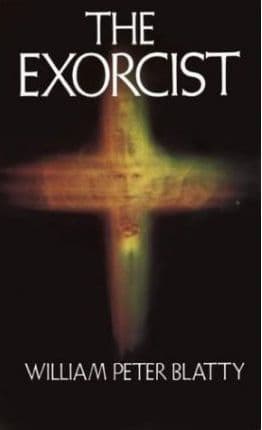
- The Exorcist
William Peter Blatty
4.2 (181k) average on GoodreadsThrillerThe Exorcist (1971) is another iconic horror novel dealing with supernatural malevolence and the violation of innocence, similar to Rosemary's Baby. Both books feature female protagonists (Rosemary and Chris MacNeil) fighting for the well-being of their children against unseen, powerful forces. However, The Exorcist is far more explicit in its depiction of demonic possession and religious horror, relying on visceral descriptions and a direct confrontation with evil. Rosemary's Baby, in contrast, builds its terror through psychological manipulation, gaslighting, and the insidious nature of conspiracy, keeping the supernatural element largely in the shadows until the very end. Blatty's work is overtly theological, while Levin's is more a critique of societal trust and female vulnerability.
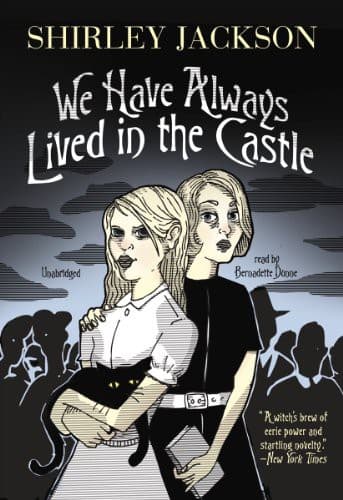
- We Have Always Lived in the Castle
Shirley Jackson
4.0 (118k) average on GoodreadsThrillerShirley Jackson's We Have Always Lived in the Castle (1962) shares with Rosemary's Baby a focus on female isolation and a creeping sense of dread within a domestic sphere. Both novels feature protagonists whose perceptions are central to the narrative, and who are increasingly alienated from those around them. However, Jackson's novel delves into psychological horror through a more ambiguous lens, where the source of the 'evil' is less external and more rooted in familial dysfunction, mental illness, and social ostracism, without the overt supernatural elements of Levin's work. While both explore the breakdown of trust, Jackson's narrative is a character study of eccentricity and trauma, whereas Levin's is a direct confrontation with an external, malevolent force. Scholar Ruth Franklin's analyses of Jackson often highlight her mastery of psychological unease, a trait shared with Levin.
- Angels & Demons
Dan Brown
3.9 (2.7M) average on GoodreadsThrillerA Harvard symbologist races through Rome's ancient sites, deciphering cryptic clues to unmask the Illuminati and stop a vengeful plot to destroy the Vatican with a stolen antimatter weapon.
- Gone Girl
Gillian Flynn
4.1 (2.3M) average on GoodreadsThrillerA wife's sudden disappearance on her fifth anniversary reveals a web of lies and psychological warfare, exposing the secrets within a seemingly perfect marriage.




Enjoyed the summary?
A summary gives you the shape of the book. The book itself has the detail, the examples and the voice.
Find Rosemary's Baby on AmazonAs an Amazon Associate, BookBrief earns from qualifying purchases. How we're funded