

Synopsis
Covers the whole plot, including the ending.
- Difficulty
- Medium
- Pacing
- Slow
- Mood
- Atmospheric, Reflective, Melancholy, Introspective
- Read it if
- You enjoy stream-of-consciousness prose, psychological introspection, and poetic descriptions of urban life.
- Skip it if
- You prefer strong plot-driven narratives, dialogue, or clear character development.
Street Haunting Plot Summary
Covers the whole plot, including the ending.
The Call of the Street
The unnamed female narrator, feeling a sudden urge to leave her room, decides she needs a new pencil. This small errand becomes her reason for going out into the busy London night. She sheds her personal identity, becoming a detached observer, a 'street haunter.' As she steps out, she feels the changing power of anonymity, becoming part of the city's shared awareness. Going out is not about the pencil itself, but about the experience of observing and the freedom it offers from her individual self.
Observing the Denizens of the Night
As the narrator walks, she meets various Londoners. She sees a young shopgirl, perhaps going home, with a thoughtful look. She observes a 'magnificent lady' leaving a taxi, her furs and jewels suggesting a life of luxury. Later, she sees a working-class couple, their interaction hinting at a shared past and quiet happiness. Each meeting is brief, a moment when lives cross, and the narrator projects her own ideas and stories onto these strangers, imagining their inner worlds without truly knowing them.
The Illusion of Connection
Despite her brief observations, the narrator feels a strong connection to the people she passes. She feels a shared pulse, a common humanity that links everyone in the city, from the grand lady to the humble shop assistant. This connection is not based on direct talk, but on a sympathetic understanding, a recognition of shared experiences that go beyond social differences. She imagines herself 'inside' their lives, experiencing their joys and sorrows, becoming a channel for their unspoken stories, even as she remains an outside observer.
The City's Shifting Moods
London is not just a background but an active part of the narrator's journey. Its streets, shops, and lights have a dynamic quality, reflecting and influencing her mood. The changing shadows and the glow of streetlights create an atmospheric setting for her observations. The city's energy, its constant movement and sound, add to her sense of freedom and anonymity. She sees London as a living thing, always changing, showing different sides of itself depending on the time of day and the people who fill its spaces.
The Shop of Curiosities
The narrator stops before a pawnbroker's shop window, a place that interests her. Inside, a mix of discarded items – a faded dress, a broken clock, a tarnished ring – each tells a silent story of its former owner. These objects, once valued, now await a new fate, holding echoes of past lives. The window acts as a small example of human experience, a place of lost dreams and forgotten memories, further fueling the narrator's imagined stories about strangers' lives.
The Hunchback and the Beauty
A particularly clear observation happens when the narrator sees a hunchbacked man, his physical difference making him seem an outsider. Soon after, she meets a strikingly beautiful woman, whose looks seem to embody grace. The strong contrast between these two figures highlights the random nature of human luck and physical form. The narrator thinks about the different experiences and views their appearances must bring, further showing her theme of diverse individual lives within the collective urban space.
The Pencil Shop and the Old Woman
Her journey ends at the stationery shop, the original reason for her outing. Inside, she finds an old woman behind the counter, her face showing age and experience. The narrator watches the woman's movements, her quiet manner, and imagines the many years she has spent in this small shop. The old woman represents a different kind of life, perhaps less dramatic but equally rich in its own way. Buying the pencil becomes secondary to her deep observation of the shopkeeper.
The Return to Self
With the pencil bought, the narrator starts her walk home. As she retraces her steps, the anonymity and shared awareness she felt earlier begin to fade. Her individual self, with its memories, worries, and personal thoughts, slowly returns. The 'street haunter' persona disappears, and she becomes the singular woman who left her room. This change marks the end of her freeing trip into the public world and the return to the private world of her own mind.
The Burden of Identity
Upon returning home, the narrator feels the familiar weight of her own identity return. The freedom she felt as a detached observer is replaced by the specifics of her own life – her past experiences, her future concerns, her individual joys and sorrows. The impersonal 'I' of the street haunter gives way to the personal 'I' with all its complexities. This change shows how temporary her escape was and the inescapable reality of individual existence.
The Pencil's Significance
The new pencil, the small object that started her night adventure, now holds symbolic meaning. It represents her return to her private world, to writing, and to looking inward. The experiences and observations from her 'street haunting' will now be processed and perhaps put into words, letting her explore themes of identity, anonymity, and the rich human life she met.
Street Haunting Characters
The Narrator (Unnamed)
Protagonist
A woman who seeks anonymity and observation through a nighttime walk.
The narrator is an introspective and highly observant woman who uses a simple errand as a pretext to explore the city and herself. She consciously sheds her personal identity, becoming a 'street haunter,' a detached observer of urban life. Her primary drive is a desire for freedom from the constraints of her individual self and an urge to connect with the broader human experience through anonymous observation. She is imaginative, projecting stories and emotions onto the strangers she encounters.
The Shopgirl
Mentioned
A young woman observed by the narrator, embodying youthful melancholy.
The shopgirl is a fleeting figure in the narrative, a young woman seen by the narrator, perhaps on her way home. The narrator projects a sense of wistfulness and a quiet, perhaps unfulfilled, life onto her. She represents the everyday working-class individual, whose inner life is a subject of imaginative speculation for the narrator. Her brief appearance highlights the narrator's ability to create narratives from minimal visual cues.
The Magnificent Lady
Mentioned
An elegant, wealthy woman observed by the narrator, representing luxury.
This lady, seen exiting a taxi adorned in furs and jewels, embodies a life of privilege and social engagement. She is a symbol of the upper echelons of society, observed by the narrator from a distance. Her brief appearance provides a stark contrast to other figures, allowing the narrator to reflect on the diverse social strata within London and the different types of lives lived within the same city.
The Hunchback
Mentioned
A physically deformed man whose appearance prompts reflection on human fortune.
The hunchback is a poignant figure observed by the narrator. His physical deformity makes him stand out, prompting the narrator to reflect on the arbitrary nature of human appearance and the differing experiences it brings. He represents those who might be marginalized or viewed differently due to physical characteristics, serving as a catalyst for the narrator's empathetic musings.
The Beautiful Woman
Mentioned
A woman of striking beauty, contrasted with the hunchback.
Observed shortly after the hunchback, this woman's beauty is noted by the narrator. She represents grace and physical perfection, serving as a powerful visual contrast to the hunchback. Her presence allows the narrator to consider the spectrum of human appearance and the varying social perceptions and experiences that might accompany them.
The Old Woman (Pencil Shopkeeper)
Supporting
The quiet, experienced proprietor of the stationery shop.
The old woman behind the counter of the stationery shop is the final significant individual the narrator observes during her walk. Her face, lined with age, tells a story of a life lived, perhaps quietly, within the confines of her small shop. She represents a different kind of urban existence, one of steady work and routine, providing a grounding end to the narrator's imaginative meanderings.
Street Haunting Themes
Anonymity and Identity
The main theme explores the conflict between individual identity and the freedom found in anonymity within a busy city. The narrator actively sheds her 'self' to become a 'street haunter,' finding freedom and a wider connection to humanity when free from personal history. This is clear as she steps out, feeling 'no longer myself but a part of something,' and again when her individual identity 'settles back' on her at the end of her journey, showing how temporary this escape is.
“One can shed the self, the daily grind, the personal history, and become for a time a disembodied eye, a wandering spirit.”
Observation and Imagination
The essay focuses on the narrator's sharp observations and her imagined stories about strangers' lives. She doesn't just see; she creates detailed narratives and emotional lives for the shopgirl, the grand lady, or the old woman in the pencil shop. This highlights how subjective perception is and how our minds fill in gaps, turning simple sightings into rich, imagined stories, as seen when she guesses at the 'secret life' of a window display.
“To look is to be possessed, to be possessed is to be transformed.”
The City as a Living Entity
London is shown not just as a setting but as a lively character that affects the narrator's experience. Its streets, lights, sounds, and changing moods add to her feeling of freedom and connection. The city helps her change from an individual to an observer, offering a constant flow of stimuli and a sense of shared energy. The city's atmosphere, from its 'dark, shining streets' to its 'many lights,' is key to the essay's mood.
“The city is a kaleidoscope, constantly shifting, constantly revealing new facets of itself.”
The Elusiveness of Truth
The story quietly explores how little we truly know about others, despite our observations and imaginative efforts. The narrator projects her own ideas onto strangers, admitting that these are her own creations. The brief, quick meetings with figures like the hunchback and the beautiful woman show how superficial what can be learned is, suggesting that the real 'truth' of another's life remains mostly hidden, a private space.
“Each life is a novel, full of unwritten pages, untold stories.”
Plot Devices & Literary Techniques
Stream of Consciousness
The narrator's thoughts and observations flow freely, often without strict logical progression.
Woolf employs a stream of consciousness technique, allowing the narrator's thoughts, feelings, and sensory perceptions to unfold in a fluid, associative manner. This mirrors the subjective experience of walking through a city, where one's attention drifts from one detail to another, and internal musings intertwine with external observations. This device immerses the reader directly into the narrator's mind and her unique way of perceiving the world.
Symbolism of the Pencil
The pencil represents the narrator's purpose, both mundane and artistic.
The pencil serves as a seemingly mundane object that instigates the entire journey, providing a practical pretext for the narrator's desire to wander. However, it quickly transcends its literal function to become symbolic of her artistic and introspective nature. It represents her return to the act of writing and the processing of her observations, linking her external adventure to her internal creative world.
The Flâneur/Flâneuse Archetype
The narrator embodies the figure of the aimless, observant urban wanderer.
The narrator functions as a 'flâneuse,' a female counterpart to the 19th-century 'flâneur.' This archetype describes an observer of urban life, someone who wanders the city streets with no particular destination, soaking in the sights and sounds, and reflecting on the human condition. Her deliberate shedding of identity and her focus on detached observation perfectly align with this literary figure, allowing for a comprehensive exploration of urban experience.
Contrast
The juxtaposition of differing elements to highlight themes.
Woolf frequently uses contrast to emphasize her themes. This is evident in the stark juxtaposition of the 'magnificent lady' with the 'shopgirl,' or the 'hunchback' with the 'beautiful woman.' These contrasts highlight the diverse social strata, physical forms, and implied life experiences within the city, prompting the narrator (and reader) to reflect on the arbitrary nature of fortune and the varied tapestry of human existence.
Street Haunting Quotes
“The mind is a lake, and every passer-by drops a stone in it.”
“And now, as if to prove the worth of these wanderings, a sudden light breaks over the faces of the people.”
“It is a fact, that in the street, the most important things are happening, and we are missing them.”
“What a light, what a vision, what a world, what a truth, what a lie!”
“To be a street haunter, then, is to be a ghost in the machine, a spirit in the dust.”
“The shop window, then, is a stage; the passers-by are the actors.”
“One goes out to buy a pencil, and one buys a world.”
“And the great city, with its immense crowds, its endless traffic, its perpetual murmur, is a vast phonograph repeating one word over and over again.”
“For what is the street, after all, but a river of human beings?”
“The true length of a street is not measured by its miles, but by the multitude of thoughts it awakens.”
“Each window is a picture; each face a novel.”
“The city is a book, and every street a page.”
“To be alone in a crowd is the greatest luxury.”
“The street is a sieve, and only the brightest colours, the sharpest sounds, the most striking gestures, remain.”
Quiz
10 questions on the plot and the characters. Each answer comes with a short explanation.
Question 1
In 'Street Haunting: A London Adventure,' what is the narrator's stated purpose for leaving her room and venturing into the city?
- To meet a friend for tea.
- To buy a pencil.
- To visit a museum.
- To observe the changing seasons.
Show answer
B. To buy a pencil. The narrator explicitly states at the beginning of 'Street Haunting' that she is going out to buy a pencil, though this mundane task quickly becomes a pretext for a broader exploration of the city and her own thoughts.
Question 2
In 'Street Haunting,' what type of shop does the narrator describe as a 'cave of darkness' where she sees an old woman with 'a face like a prune'?
- A flower shop.
- A bookshop.
- A pawnbroker's shop.
- A baker's shop.
Show answer
C. A pawnbroker's shop. The narrator describes the pawnbroker's shop as a dark, intriguing place where she observes the old woman, highlighting the contrasting lives and experiences found in the city.
Question 3
Which of the following best encapsulates a central theme explored in 'Street Haunting'?
- The importance of social hierarchy.
- The pursuit of romantic love in the city.
- The subjective experience of urban life and the fluidity of identity.
- The decline of traditional British values.
Show answer
C. The subjective experience of urban life and the fluidity of identity. 'Street Haunting' is a prime example of Woolf's exploration of subjective perception and how the urban environment shapes and reflects the individual's inner world, allowing the narrator to assume different identities as she observes others.
Question 4
In 'The Cinema,' what is the primary focus of the narrator's observations?
- The plot of the film being shown.
- The architecture of the cinema hall.
- The audience's reactions and the collective experience of watching a film.
- The technical aspects of filmmaking.
Show answer
C. The audience's reactions and the collective experience of watching a film. Woolf's 'The Cinema' is less about the film itself and more about the communal, almost hypnotic, experience of the audience, their shared gazes, and the way they are collectively moved by the moving images.
Question 5
In 'The Cinema,' the narrator notes that the faces of the audience members are 'all turned one way, like a field of sunflowers.' What literary device is used here?
- Metaphor.
- Simile.
- Personification.
- Hyperbole.
Show answer
B. Simile. The phrase 'like a field of sunflowers' directly compares the audience's faces to sunflowers using 'like,' which is the definition of a simile.
Question 6
In 'Ancestors,' what is the primary challenge the narrator faces when trying to connect with her familial past?
- A lack of historical records.
- The overwhelming number of ancestors.
- The inherent difficulty of truly knowing or understanding past lives from fragmented evidence.
- A personal disinterest in her family history.
Show answer
C. The inherent difficulty of truly knowing or understanding past lives from fragmented evidence. 'Ancestors' delves into the difficulty of reconstructing and truly comprehending the lives of those who came before us, emphasizing the gaps in knowledge and the imaginative leaps required to bridge them.
Question 7
Which of the following best describes Woolf's narrative style in these stories/essays?
- Strictly linear and objective.
- Character-driven with extensive dialogue.
- Stream-of-consciousness, impressionistic, and reflective.
- Factual and journalistic.
Show answer
C. Stream-of-consciousness, impressionistic, and reflective. Woolf is renowned for her stream-of-consciousness technique, which allows for a deeply subjective, impressionistic, and reflective narrative, mirroring the natural flow of thought and observation.
Question 8
In 'The Man Who Loved His Kind,' what is the main characteristic that defines the central figure, Mr. W.B.?
- His profound misanthropy and disdain for humanity.
- His excessive, almost performative, love for humanity and social causes.
- His quiet, unassuming philanthropy.
- His artistic genius.
Show answer
B. His excessive, almost performative, love for humanity and social causes. Mr. W.B. is characterized by his ostentatious and somewhat self-serving 'love for his kind,' which often manifests as grand, public gestures rather than genuine, quiet compassion.
Question 9
What common thread often links the seemingly disparate observations and thoughts of the narrator in 'Street Haunting' and other pieces?
- A search for a specific, tangible object.
- An underlying critique of political systems.
- An exploration of the inner lives and subjective realities of individuals, including the narrator.
- A desire to escape urban environments for nature.
Show answer
C. An exploration of the inner lives and subjective realities of individuals, including the narrator. A hallmark of Woolf's writing, especially in these pieces, is the deep dive into the psychological and emotional landscapes of individuals, often prompted by external observations but always returning to the subjective experience.
Question 10
In 'A Woman's Essays,' what is a common argument Woolf often implicitly or explicitly makes regarding women's roles and creative potential?
- Women are naturally more suited to domestic life than creative pursuits.
- Societal expectations and lack of independent means often hinder women's artistic and intellectual development.
- Women's writing is inherently superior to men's writing.
- Political activism is the only valid form of expression for women.
Show answer
B. Societal expectations and lack of independent means often hinder women's artistic and intellectual development. Woolf frequently addresses the constraints placed upon women by patriarchal society, arguing that factors like financial dependence and lack of private space significantly impede their ability to pursue creative and intellectual endeavors.
Street Haunting FAQ
What is the overarching theme or premise of 'Street Haunting' as a collection?
'Street Haunting', as a collection of six short pieces by Virginia Woolf, primarily explores the experience of urban observation and the internal lives of individuals navigating London's streets. The titular essay, for instance, delves into the narrator's deliberate act of shedding identity to become a pure observer, capturing fleeting impressions and the hidden narratives of strangers.
Can you summarize the main idea of the titular essay, 'Street Haunting: A London Adventure'?
'Street Haunting' describes a narrator's deliberate venture out into London at night, shedding her personal identity to become a 'disembodied spirit' or pure observer. She wanders through various districts, from Mayfair to the Strand, collecting vivid, fragmented impressions of shop windows, street vendors, and passersby, aiming to capture the essence of the city's diverse human experience.
What kind of 'adventure' does the narrator seek in 'Street Haunting'?
The narrator in 'Street Haunting' seeks an adventure of perception and imagination, rather than external events. She aims to transcend her individual self and merge with the collective consciousness of the city, finding adventure in the fleeting glances, imagined lives, and sensory details encountered during her nocturnal wanderings. It is an internal journey of empathetic observation.
How does 'The Fascination of the Pool' contribute to the collection's themes?
'The Fascination of the Pool' shifts focus from street-level observation to the enigmatic depths of a water body, likely a pond or lake, and its surrounding environment. It explores the reflective quality of water, both literally and metaphorically, prompting contemplation on stillness, hidden life, and the human desire to penetrate surfaces, echoing the search for deeper meaning found in the urban observations.
What is the significance of the 'jewel' the narrator searches for in 'Street Haunting'?
The 'jewel' in 'Street Haunting' is a metaphorical representation of a perfect, unique, and perhaps elusive truth or insight about the city and its inhabitants. The narrator's quest for this jewel signifies her desire to find a singular, profound detail that encapsulates the entire urban experience, even if it ultimately remains just beyond her grasp, highlighting the subjective and fragmented nature of perception.
Are there any subtle connections between the different stories or essays in this collection?
While not overtly linked by plot, the pieces in 'Street Haunting' are subtly connected by their exploration of observation, perception, and the inner lives of individuals. For example, the detailed sensory descriptions in 'Street Haunting' find echoes in the focused attention given to nature in 'The Fascination of the Pool,' both attempting to extract meaning from external stimuli and reflect on subjective experience.
How does Woolf use fragmentation as a literary device in these stories?
Woolf employs fragmentation extensively, particularly in 'Street Haunting,' by presenting scenes, thoughts, and sensory details in quick, disconnected bursts, mirroring the experience of urban life. This technique allows her to capture the fleeting, subjective nature of perception and the constant stream of consciousness, inviting the reader to piece together meaning from these diverse impressions, much like the narrator does.
What is the psychological impact of the narrator's 'disembodiment' in 'Street Haunting'?
The narrator's 'disembodiment' in 'Street Haunting' allows for a psychological liberation from personal burdens and biases, enabling a more objective and empathetic observation of others. By shedding her identity, she can delve into the imagined inner lives of strangers, fostering a sense of connection and understanding, yet also highlighting the inherent loneliness and anonymity within a bustling city.
How does Woolf explore the theme of identity in 'Street Haunting'?
Woolf explores identity in 'Street Haunting' by presenting a narrator who deliberately sheds her personal identity to become a 'street haunter,' a pure observer. This act questions the fixity of self, suggesting that identity can be fluid and permeable, allowing one to momentarily inhabit the perspectives of others or dissolve into the collective consciousness of the city, only to reform upon returning home.
What psychological state does the 'street haunter' achieve through her wanderings?
The 'street haunter' achieves a state of heightened awareness and profound empathy through her wanderings. She enters a semi-meditative state where her mind is open to absorbing myriad impressions, allowing her to project imagined inner lives onto strangers and feel a sense of unity with the diverse tapestry of urban existence. This state is both liberating and introspective.
How does the anonymity of the city affect the characters or narrators in these pieces?
The anonymity of the city paradoxically offers both freedom and isolation to the narrators. In 'Street Haunting,' anonymity liberates the narrator to observe without being seen, fostering a sense of detached yet empathetic connection. However, it also underscores the transient nature of human encounters and the fundamental aloneness that can exist amidst crowds, leading to contemplation on individual existence.
Is 'Street Haunting' a celebration of urban life or a critique?
'Street Haunting' is more of a nuanced exploration than a straightforward celebration or critique. While it revels in the sensory richness and human drama of London, it also subtly hints at the superficiality, anonymity, and potential melancholy inherent in urban existence. It celebrates the act of observation itself and the imaginative possibilities the city offers, rather than the city's intrinsic goodness.
How do these stories reflect Woolf's broader modernist literary concerns?
These stories strongly reflect Woolf's modernist concerns through their focus on interiority, stream of consciousness, and the subjective nature of reality. They prioritize psychological truth over external plot, employ fragmented narratives to capture the modern mind's experience, and experiment with narrative perspective, aligning with her efforts to 'record the atoms as they fall upon the mind in the order in which they fall.'
What is Woolf's perspective on the relationship between observer and observed in these works?
Woolf suggests a fluid and reciprocal relationship between observer and observed. In 'Street Haunting,' the observer actively projects narratives and emotions onto the observed, effectively creating their 'reality.' This blurs the lines, implying that perception is not passive but an active, imaginative process, where the observer's inner world shapes their understanding of the external, and vice versa.
How does the ending of 'Street Haunting' resolve the narrator's journey?
The ending of 'Street Haunting' brings the narrator back to her own room, where she reassumes her identity and reflects on her journey. She acknowledges the limitations of her 'disembodied' state, realizing that while she gathered many impressions, the 'jewel' of complete understanding remains elusive. Her return signifies a re-integration of self, enriched by the temporary escape and renewed appreciation for her own individual experience.
Could the 'jewel' in 'Street Haunting' be interpreted as a symbol for artistic inspiration?
Yes, the 'jewel' can certainly be interpreted as a symbol for artistic inspiration or the elusive moment of creative insight. The narrator's quest to find a singular, perfect detail that encapsulates the city mirrors an artist's desire to capture an essence or truth in their work. The fact that it's never fully found but rather hinted at suggests the ongoing, often incomplete, nature of artistic pursuit and expression.
What role does sensory detail play in establishing the atmosphere across the collection?
Sensory detail is paramount in establishing the atmosphere throughout the collection, particularly in 'Street Haunting.' Woolf meticulously records sights, sounds, smells, and even imagined textures of the city, from the 'blue-black' sheen of a woman's hair to the 'grating noise' of a bus. This rich tapestry of sensory information immerses the reader directly into the narrator's subjective experience, creating a vivid and immediate atmosphere.
How does Woolf's use of interior monologue contribute to the psychological depth of the pieces?
Woolf's extensive use of interior monologue, especially in 'Street Haunting,' allows direct access to the narrator's thoughts, feelings, and imaginative leaps. This technique reveals the intricate workings of the mind as it processes external stimuli, reflects on observations, and constructs narratives about strangers. It provides profound psychological depth by showing the subjective lens through which reality is perceived and interpreted, rather than merely presenting external events.
About the author

Adeline Virginia Woolf was an English writer. She is considered one of the most important modernist 20th-century authors and a pioneer in the use of stream of consciousness as a narrative device.
Similar books
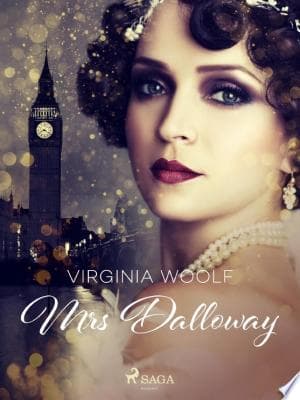
- Mrs Dalloway
Virginia Woolf
3.8 (361k) average on GoodreadsFictionExplores a single day in London through the inner lives of characters, with a similar reflective style.
- Dubliners
James Joyce
3.9 (123k) average on GoodreadsLiterary FictionA collection of stories offering vignettes of urban life and psychological insights, though more character-focused.
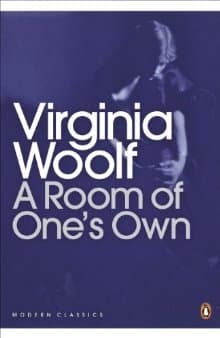
- A Room of One's Own
Virginia Woolf
4.2 (118k) average on GoodreadsCreativityShares a similar essayistic, reflective tone and a focus on the female perspective and societal observation.
- Nineteen Eighty-Four
George Orwell
4.2 (5.5M) average on GoodreadsFictionWinston Smith dreams of truth and rebellion in a world where Big Brother watches all, but he confronts the terrifying power of a regime that controls not just actions, but thoughts.
- The Frozen River
Ariel Lawhon
4.4 (600k) average on GoodreadsFictionIn 1789 Maine, a heroic midwife's diary helps her expose a murder and get justice in a town that wants to silence her.
- A Man Called Ove
Fredrik Backman
4.4 (569k) average on GoodreadsFictionA stubborn widower, who lives by strict rules, finds his quiet world changed by a lively new family next door, making him face his past and find happiness in human connection.




Enjoyed the summary?
A summary gives you the shape of the book. The book itself has the detail, the examples and the voice.
Find Street Haunting on AmazonAs an Amazon Associate, BookBrief earns from qualifying purchases. How we're funded