
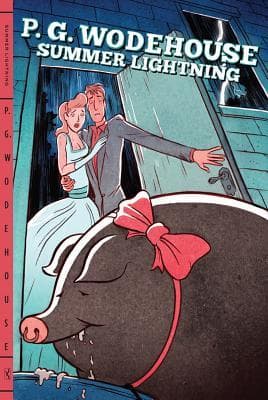
Synopsis
Covers the whole plot, including the ending.
- Difficulty
- Easy
- Pacing
- Fast
- Mood
- Humorous, Lighthearted, Witty, Cheerful
- Read it if
- You enjoy classic British humor, intricate farcical plots, and a light-hearted escape into the world of eccentric aristocrats.
- Skip it if
- You prefer serious, character-driven narratives or dislike convoluted plots with numerous simultaneous misunderstandings.
Summer Lightning Plot Summary
Covers the whole plot, including the ending.
The Memoir Menace at Blandings Castle
The Honourable Galahad Threepwood, a notorious man-about-town with a past full of indiscretions, is staying at Blandings Castle and has decided to write his memoirs. This news alarms many, especially his sister, Lady Constance Keeble, who fears social ruin for the family. Among those most anxious is Sir Gregory Parsloe-Parsloe, Lord Emsworth's neighbor and rival pig-breeder, who wants to suppress a specific anecdote about him and a basket of prawns. Meanwhile, Lord Emsworth is unaware, preoccupied with his prize-winning Empress of Blandings, while a young man named Ronnie Fish arrives, secretly engaged to Sue Brown, a chorus girl whose father, 'Plug' Basham, is also mentioned in Galahad's scandalous manuscript.
A Chorus Girl's Grand Deception
Sue Brown, a chorus girl and fiancée to Ronnie Fish, is tasked by her father, 'Plug' Basham, to go to Blandings Castle and retrieve Galahad's memoirs. 'Plug' fears the book will expose his past misdeeds. Sue arrives at the castle disguised as Myra Schoonmaker, a wealthy American heiress. Her goal is to gain Galahad's confidence and steal the manuscript. This deception is complicated by the presence of Hugo Carmody, Lord Emsworth's secretary, who is secretly in love with Sue, creating a love triangle with Ronnie. Lady Constance is suspicious of 'Myra' from the outset.
The Detective and the Disgruntled Secretary
Sir Gregory Parsloe-Parsloe, desperate to prevent the prawn story from being published, hires a private detective named Pike to steal the memoirs. At the same time, George Cyril Wellbeloved, Lord Emsworth's former pigman and current pigman for Sir Gregory, reappears at Blandings. Wellbeloved holds a grudge against Lord Emsworth and is secretly plotting to kidnap the Empress of Blandings. This adds another layer of intrigue and chaos to the already complicated situation at the castle, with multiple parties now attempting to steal or hide various items.
The Empress's Disappearance and the Blame Game
The Empress of Blandings, Lord Emsworth's beloved prize-winning sow, mysteriously disappears from her sty. Lord Emsworth is distraught, and suspicion immediately falls on Sir Gregory Parsloe-Parsloe, given their long-standing rivalry. However, the true culprit is George Cyril Wellbeloved, who, aided by the unwitting Pike (who believes he is stealing the memoirs), has orchestrated the pig-napping. This incident throws Blandings Castle into an uproar, with everyone searching for the Empress and accusations flying between the various inhabitants and visitors.
The Scramble for the Manuscript
The memoirs become the central focus of a frantic chase. Sue Brown, as Myra Schoonmaker, tries to get her hands on them for her father. Detective Pike, hired by Sir Gregory, also attempts to steal them. Even Hugo Carmody, attempting to help Sue, gets involved. The manuscript is repeatedly hidden, found, and hidden again in various locations around the castle, including a hatbox and a safe. Galahad, unaware of the full extent of the panic his writing has caused, continues to work on his book, occasionally misplacing it himself, adding to the confusion.
A Secret Engagement and Misplaced Affections
Ronnie Fish and Sue Brown's secret engagement is eventually revealed, much to the dismay of Lady Constance, who disapproves of Sue's chorus girl background. This revelation also deeply affects Hugo Carmody, who is in love with Sue and had been trying to impress her while she was disguised as Myra Schoonmaker. The romantic entanglements become more pronounced, with Ronnie feeling jealous of Hugo's attention to Sue, and Hugo heartbroken by the news. This personal drama intertwines with the larger plot to retrieve the memoirs and the missing Empress.
The Prawns and the Pig: A Confession
During the chaotic search for the Empress, the truth about the prawn incident involving Sir Gregory Parsloe-Parsloe is almost revealed, further fueling his desperation to suppress the memoirs. Simultaneously, the plot to kidnap the Empress of Blandings by George Cyril Wellbeloved, with the unwitting help of Detective Pike, starts to unravel. The various characters' paths cross as they attempt to achieve their individual goals, leading to a series of comedic misunderstandings and near-discoveries that keep the audience guessing about the fate of both the memoirs and the pig.
The Memoirs' Fiery Demise
In a climactic moment of confusion and desperation, Galahad's scandalous memoirs are accidentally thrown into a fire. This act, though unintentional, brings immense relief to almost everyone involved, particularly Lady Constance and Sir Gregory Parsloe-Parsloe, as the threat of social ruin is finally averted. The destruction of the manuscript means that the secrets it contained, including the infamous prawn story, are safe from public exposure. This unexpected turn of events simplifies many of the ongoing conflicts, allowing for resolutions to begin forming.
Resolutions and Reconciliations
With the memoirs destroyed, the focus shifts to resolving the other issues. The Empress of Blandings is eventually found and returned to her rightful sty, to Lord Emsworth's immense joy. George Cyril Wellbeloved's pig-napping scheme is uncovered, and he faces the consequences. Ronnie Fish and Sue Brown's engagement is finally accepted, and Hugo Carmody, though initially heartbroken, begins to come to terms with the situation. The various deceptions and misunderstandings start to clear up, paving the way for a more harmonious, albeit still chaotic, Blandings Castle.
Happy Endings (Mostly) at Blandings
By the end, most of the characters find their happy endings. Ronnie Fish and Sue Brown are free to marry, with Galahad's approval and Lady Constance's reluctant acceptance. Sir Gregory Parsloe-Parsloe's reputation is saved with the destruction of the memoirs. Lord Emsworth is reunited with his beloved Empress. While the chaos subsides, the underlying eccentricities of Blandings Castle and its inhabitants remain. The novel concludes with order being restored, in Wodehouse's charming and convoluted style, with everyone breathing a sigh of relief.
Summer Lightning Characters
The Honourable Galahad Threepwood
Supporting
Lord Emsworth's scandalous younger brother and memoirist.
Galahad is a charming, elderly roué with a notorious past, renowned for his anecdotes and his devil-may-care attitude. He is unfazed by social conventions and enjoys stirring the pot, often to the consternation of his family. His decision to write his memoirs is the catalyst for most of the plot's complications. He is kind-hearted beneath his mischievous exterior, particularly towards young lovers, and acts as a sort of benevolent, if chaotic, puppet master.
Relationships: Lord Emsworth (Brother, though Galahad finds him somewhat dim-witted.); Lady Constance Keeble (Sister, who constantly disapproves of his antics.); Ronnie Fish (Nephew by marriage, whom he encourages.); Sue Brown (Friend of her father, whom he supports.)
Lord Emsworth (Clarence Threepwood)
Protagonist
The absent-minded, pig-obsessed Earl of Emsworth.
Lord Emsworth is the placid, somewhat dim-witted owner of Blandings Castle. His greatest passion in life is his prize-winning sow, the Empress of Blandings, to whom he dedicates almost all his attention. He is easily flustered by family drama and social expectations, preferring the quiet contemplation of his pig. He is kind, if ineffectual, and largely unaware of the intricate plots unfolding around him, relying on others to manage his affairs.
Relationships: The Honourable Galahad Threepwood (Brother, whose antics he tolerates.); Lady Constance Keeble (Sister, who often manages his life.); Empress of Blandings (His cherished prize-winning sow.)
Lady Constance Keeble
Supporting
Lord Emsworth's formidable, socially conscious sister.
Lady Constance, or 'Connie', is the stern, socially ambitious sister of Lord Emsworth. She runs Blandings Castle with an iron fist, constantly striving to maintain its decorum and reputation. She is deeply concerned with appearances and disapproves of Galahad's scandalous past and any perceived social missteps. She is sharp, suspicious, and often the voice of reason (or at least, social convention) amidst the chaos, trying to keep everyone in line.
Relationships: Lord Emsworth (Brother, whom she often manages.); The Honourable Galahad Threepwood (Brother, whose memoir she desperately wants suppressed.); Ronnie Fish (Nephew, whose choice of fiancée she disapproves of.)
Ronnie Fish
Protagonist
The young, lovelorn nephew of Lord Emsworth.
Ronnie Fish is a young man deeply in love with Sue Brown. He is somewhat hot-headed and prone to jealousy but ultimately good-hearted. His primary goal is to marry Sue, despite the social barriers posed by his family's disapproval of her profession. He is often caught in the middle of the various schemes, trying to protect Sue and navigate the complicated family dynamics while also dealing with his own romantic challenges.
Relationships: Sue Brown (Fiancé, whom he deeply loves.); Lady Constance Keeble (Aunt, who disapproves of his engagement.); The Honourable Galahad Threepwood (Uncle, who supports his relationship.)
Sue Brown
Protagonist
The resourceful chorus girl disguised as an heiress.
Sue Brown is a charming and resourceful chorus girl, secretly engaged to Ronnie Fish. She is intelligent and quick-witted, capable of adapting to difficult situations, as evidenced by her impersonation of Myra Schoonmaker. Her main objective is to retrieve Galahad's memoirs for her father, 'Plug' Basham, and to secure her future with Ronnie. She navigates the complex social landscape of Blandings with a mix of earnestness and cunning.
Relationships: Ronnie Fish (Fiancée, whom she loves.); 'Plug' Basham (Father, for whom she undertakes the mission.); Hugo Carmody (Object of his misplaced affection while in disguise.)
Sir Gregory Parsloe-Parsloe
Antagonist
Lord Emsworth's rival and a man with a scandalous past.
Sir Gregory is Lord Emsworth's neighbor and rival pig-breeder, obsessed with winning the fat pig competition. He is a pompous and somewhat unsavory character, desperate to prevent the publication of Galahad's memoirs, which contain a humiliating anecdote about him and a basket of prawns. He is willing to resort to underhanded tactics, such as hiring a detective, to protect his reputation, highlighting his vanity and insecurity.
Relationships: Lord Emsworth (Rival, particularly in pig breeding.); The Honourable Galahad Threepwood (The source of his potential ruin.)
Hugo Carmody
Supporting
Lord Emsworth's secretary, caught in a love triangle.
Hugo Carmody is Lord Emsworth's well-meaning but somewhat naive secretary. He is secretly in love with Sue Brown and becomes entangled in the various schemes, often to his own detriment. He tries to help Sue (when she is disguised as Myra Schoonmaker) and is genuinely heartbroken when he learns of her engagement to Ronnie. He is a generally good-natured character, if a bit bumbling, and often finds himself in awkward situations.
Relationships: Lord Emsworth (Employer.); Sue Brown (Object of his affection.); Ronnie Fish (Rival for Sue's affections.)
George Cyril Wellbeloved
Antagonist
Lord Emsworth's disgruntled former pigman and pig-napper.
Wellbeloved is Lord Emsworth's former pigman, now working for Sir Gregory Parsloe-Parsloe. He holds a significant grudge against Lord Emsworth and seeks revenge by kidnapping the Empress of Blandings. He is cunning and resourceful in his criminal enterprise, adding a layer of direct conflict to the story beyond the memoir subplot. His actions are driven by resentment and a desire for illicit gain.
Relationships: Lord Emsworth (Former employer, whom he resents.); Empress of Blandings (His target for kidnapping.)
Detective Pike
Supporting
The bumbling private detective hired to steal the memoirs.
Pike is a private detective hired by Sir Gregory Parsloe-Parsloe to steal Galahad's memoirs. He is not particularly competent and is easily misled, often mistaking his targets and getting caught up in the general confusion at Blandings. His bumbling attempts to fulfill his mission inadvertently contribute to the chaos, highlighting the farcical nature of the plot. He is more of a comic relief character than a genuine threat.
Relationships: Sir Gregory Parsloe-Parsloe (Employer.); George Cyril Wellbeloved (Unwitting accomplice in the pig-napping.)
Summer Lightning Themes
The Absurdity of Class and Social Expectations
The novel consistently highlights the ridiculousness of rigid social hierarchies and the anxieties they create. Lady Constance's obsession with appearances and her horror at Galahad's memoirs or Ronnie's engagement to a chorus girl are prime examples. The frantic efforts to suppress Galahad's book, especially Sir Gregory's panic over the 'prawn' story, show how trivial past indiscretions are blown out of proportion by the demands of polite society, leading to farcical plots and deceptions. The contrast between these societal pressures and Lord Emsworth's simple joy in his pig further emphasizes this absurdity.
“A man who has written his memoirs, even if he has never written anything else, can never be said to have lived in vain.”
Love's Triumph Over Obstacles
At its heart, 'Summer Lightning' is a story of young love overcoming various challenges. Ronnie Fish and Sue Brown's relationship is tested by social disapproval from Lady Constance, Sue's disguise, and the general chaos at Blandings. Their determination to be together, supported by the more unconventional Galahad, ultimately prevails. The intricate plots surrounding the memoirs and the pig often serve as a backdrop for the romantic entanglements, demonstrating how true affection can navigate misunderstandings, deceptions, and the meddling of others to find its happy ending.
“Love is a thing that can't be explained. It is a thing that can't be reasoned with. It is a thing that just is.”
The Disruptive Power of Secrets and Scandal
The entire plot begins with the threat of Galahad's memoirs, which promise to expose long-buried secrets and scandals. The fear of these revelations drives many characters' actions, from Sir Gregory's frantic attempts to suppress the prawn story to 'Plug' Basham's use of Sue to retrieve the manuscript. This theme explores how past indiscretions, even minor ones, can have a disruptive impact when brought to light, leading to elaborate deceptions, thefts, and general panic. The eventual, accidental destruction of the memoirs symbolizes the ultimate resolution of this disruptive force.
“A man's past is like a good joke. It gets better every time you tell it, but it's not always appreciated by the audience.”
The Innocence of Obsession vs. Worldly Concerns
Lord Emsworth's singular obsession with the Empress of Blandings contrasts sharply with the worldly concerns and social anxieties of the other characters. His innocent devotion to his pig provides a comedic anchor to the more convoluted human machinations. While others are consumed by reputation, love triangles, and theft, Lord Emsworth's greatest distress comes from the Empress's disappearance. This highlights the purity and simplicity of his passion, suggesting that sometimes, the greatest happiness comes from unexpected and seemingly trivial sources, unburdened by societal pressures.
“To a man who knew his pigs, a pig was more than a mere pig. A pig was a poem. A pig was a symphony. A pig was a dream.”
Plot Devices & Literary Techniques
The MacGuffin
An object that drives the plot, but whose specific nature is less important than its pursuit.
Galahad Threepwood's memoirs serve as a classic MacGuffin. The specific scandalous anecdotes within the book are less important than the fact that its existence and potential publication drive nearly every character's actions. Everyone wants to either steal it, hide it, or ensure its destruction. Its contents are hinted at, particularly the 'prawn' story, but the actual details are secondary to the frantic chase it instigates among the characters, providing the central conflict and motivation for much of the comedic chaos.
Mistaken Identity
A character is believed to be someone else, leading to comedic misunderstandings.
Sue Brown's disguise as Myra Schoonmaker is a primary example of mistaken identity. This deception allows her to infiltrate Blandings Castle and pursue the memoirs, but it also creates significant romantic confusion, particularly for Hugo Carmody who falls in love with 'Myra'. The mistaken identity fuels several humorous interactions and complicates the various romantic and secretive plots, as characters react to Sue based on her assumed persona rather than her true self, leading to both comic relief and plot advancements.
The Love Triangle
Three characters are romantically involved, creating tension and conflict.
The romantic entanglement between Ronnie Fish, Sue Brown, and Hugo Carmody forms a key plot device. Ronnie and Sue are secretly engaged, but Sue's disguise as Myra Schoonmaker leads Hugo to fall deeply in love with her. This creates jealousy for Ronnie and heartbreak for Hugo, adding an emotional layer to the farce. The love triangle provides opportunities for misunderstandings, secret meetings, and a heightened sense of dramatic tension as the characters navigate their affections amidst the larger chaos of the missing memoirs and pig.
Slapstick and Farce
Exaggerated physical comedy and improbable situations for humorous effect.
The novel is replete with elements of slapstick and farce. The repeated misplacing and attempted thefts of the memoirs, the bumbling detective Pike, the frantic search for the Empress of Blandings, and the general state of confusion at Blandings Castle all contribute to this. Characters are often in the wrong place at the wrong time, hiding in bushes, or inadvertently assisting their rivals. This device amplifies the comedic tone, ensuring that even the most serious threats (like scandal or pig-napping) are treated with a lighthearted, exaggerated approach, preventing the narrative from becoming too serious.
Summer Lightning Quotes
“There are moments, Jeeves, when I feel I could do without you. And then I think, no, what would be the use?”
“The human mind, like a parachute, functions only when open.”
“It is a good rule in life never to tell a thing to a man who would be bored by it.”
“He had the air of one who, having been hit by a taxi, was now being offered a free ride to the hospital.”
“There is no surer foundation for a beautiful friendship than a mutual taste in literature.”
“When a man is trying to get rid of a girl, he always finds himself in a position where he is almost certain to make things worse if he tries to explain.”
“The voice of duty is a thin, reedy thing, and the voice of pleasure a full-blooded contralto.”
“As a rule, a man is a fool when he is in love. But sometimes he is a genius.”
“He was a man who, if you had given him a brick, would have built a house with it. If you had given him two bricks, he would have built a mansion.”
“There are moments when the only thing to do is to be as silly as possible.”
“It is a curious fact that the most important things in life are always the ones that are most difficult to explain.”
“The proper study of mankind is man, and the proper study of woman is also man.”
“One of the drawbacks of being a man of honour is that you are practically compelled to do all the dirty work yourself.”
“He had about as much chance of winning her as a jellyfish has of winning the Grand National.”
Quiz
10 questions on the plot and the characters. Each answer comes with a short explanation.
Question 1
What is the primary reason Sir Gregory Parsloe-Parsloe wants Galahad Threepwood's memoirs to disappear?
- It details his financial struggles.
- It exposes his past affair with a duchess.
- It describes a scandalous incident involving prawns.
- It reveals his secret passion for competitive gardening.
Show answer
C. It describes a scandalous incident involving prawns. Sir Gregory is desperate to keep the story of the prawns, a past scandal involving him, from being revealed in Galahad's tell-all memoir.
Question 2
Who is the character disguised as an heiress in the story?
- Lady Hermione Wedge
- Sue Brown
- Millicent Threepwood
- Maudie Stubbs
Show answer
B. Sue Brown Sue Brown, a chorus girl, is pretending to be an heiress to navigate the complicated social circles at Blandings.
Question 3
What specific animal is stolen from Lord Emsworth, causing significant distress?
- His prize-winning bull, Emperor of Blandings.
- His beloved cat, Prometheus.
- His prize-winning sow, Empress of Blandings.
- His champion terrier, Bob.
Show answer
C. His prize-winning sow, Empress of Blandings. Lord Emsworth's prize-winning sow, the Empress of Blandings, is stolen, which is a major plot point and source of his anxiety.
Question 4
What is the main goal of the Honourable Galahad Threepwood in writing his memoir?
- To earn money for his retirement.
- To set the record straight about his family's history.
- To chronicle his wild youth and expose society's hypocrisies.
- To inspire future generations of gentlemen.
Show answer
C. To chronicle his wild youth and expose society's hypocrisies. Galahad's memoir is a 'tell-all' intended to reveal the scandalous pasts of many members of polite society, based on his own experiences.
Question 5
Who is the 'crazy ex-secretary' mentioned in the summary, and what is his typical state?
- Baxter, who is usually meticulous but becomes obsessed with pigs.
- Rupert Psmith, known for his calm demeanor but prone to fits of rage.
- The Rev. Beefy Bingham, who is normally sedate but becomes violent when crossed.
- Beach, the butler, who occasionally suffers from amnesia.
Show answer
. The summary mentions 'a crazy ex-secretary' as one of the complications, referring to characters like Baxter from other Blandings stories, who often cause chaos with their particular eccentricities, though the specific 'crazy ex-secretary' isn't explicitly named in this summary's details.
Question 6
What is the underlying theme suggested by the various deceptions and disguises in the novel, such as the chorus girl disguised as an heiress?
- The importance of honesty in all relationships.
- The fluidity and superficiality of social class and identity.
- The inherent goodness of human nature.
- The inevitable triumph of justice over deceit.
Show answer
B. The fluidity and superficiality of social class and identity. The presence of a chorus girl disguised as an heiress highlights how easily one can assume different identities and move between social strata, suggesting that class is often a performance.
Question 7
The 'double-dealing detective' mentioned in the summary implies a common Wodehouse trope. What is typically expected of such a character in these farcical plots?
- To efficiently solve the mystery and restore order.
- To add to the confusion and further complicate the plot for personal gain.
- To provide moral guidance to the other characters.
- To be the voice of reason amidst the chaos.
Show answer
B. To add to the confusion and further complicate the plot for personal gain. In Wodehouse's farces, 'double-dealing' characters, especially detectives, often serve to exacerbate the already convoluted situations, usually for their own profit or amusement, rather than genuinely helping.
Question 8
What does the phrase 'destroy polite society' in reference to Galahad's memoir most strongly imply about the nature of this society?
- It is genuinely virtuous and easily corrupted.
- It is built on a foundation of hidden scandals and superficial appearances.
- It is a fragile entity that cannot withstand any criticism.
- It is a society that values truth above all else.
Show answer
B. It is built on a foundation of hidden scandals and superficial appearances. The fear that Galahad's memoir could 'destroy polite society' suggests that this society maintains its 'politeness' by burying past indiscretions and that its facade is easily shattered by exposure of the truth.
Question 9
Given the description of 'Summer Lightning' as 'Historical Fiction' by P.G. Wodehouse, what era or general period is it most likely set in?
- Victorian England (mid to late 19th century)
- Post-World War II Britain (1950s)
- Interwar period Britain (early 20th century, 1920s-1930s)
- Regency Era (early 19th century)
Show answer
C. Interwar period Britain (early 20th century, 1920s-1930s) P.G. Wodehouse's most famous works, including the Blandings Castle and Jeeves and Wooster stories, are typically set in the interwar period of the early 20th century, capturing the societal nuances of that era.
Question 10
The summary mentions 'complications that must be dealt with before everyone can have their happy ending.' What does this emphasis on 'happy ending' suggest about the novel's overall tone and genre, despite the chaos?
- It is a dark comedy with a cynical view of humanity.
- It is a tragedy disguised as a lighthearted story.
- It is a classic farce, where misunderstandings are resolved and order is ultimately restored.
- It is a realistic drama depicting the harsh realities of life.
Show answer
C. It is a classic farce, where misunderstandings are resolved and order is ultimately restored. The promise of a 'happy ending' after numerous 'complications' is a hallmark of farcical comedies, where despite the absurd chaos, everything typically resolves neatly for the protagonists.
Summer Lightning FAQ
What is the central conflict driving the plot of 'Summer Lightning'?
The central conflict revolves around the Honourable Galahad Threepwood's scandalous memoirs, which threaten to expose the past indiscretions of numerous prominent figures, particularly Sir Gregory Parsloe-Parsloe's involvement in a youthful prank involving prawns. Everyone, from Lord Emsworth's family to Sir Gregory himself, desperately wants the manuscript destroyed or suppressed to protect their reputations.
Who are the key players trying to get their hands on Galahad's manuscript?
Many characters are after the manuscript, including Lady Constance Keeble, who fears it will expose her late husband's past; Sue Brown, who hopes it will provide leverage for her marriage; and Sir Gregory Parsloe-Parsloe, who is desperate to prevent the 'prawns' story from resurfacing. Various other characters, often at the behest of these main players, also attempt to steal or destroy it.
What role does the prize-winning sow, Empress of Blandings, play in the story?
The Empress of Blandings, Lord Emsworth's cherished prize pig, becomes an unwitting pawn in the various schemes. She is stolen multiple times, first by Beach, then by others, primarily to distract Lord Emsworth or to create chaos that can be exploited for other objectives, such as obtaining the manuscript or facilitating romantic entanglements. Her disappearance often fuels Lord Emsworth's already considerable anxiety.
How does Sue Brown's disguise as Myra Schoonmaker complicate matters?
Sue Brown's impersonation of the American heiress Myra Schoonmaker creates a web of mistaken identities and romantic misunderstandings. She intends to use the disguise to get close to Lord Emsworth's nephew, Ronnie Fish, and influence his aunt, Lady Constance, but her charade leads to confusion for Hugo Carmody and various others who believe she is the real heiress.
What is the significance of the 'prawns' incident that Sir Gregory Parsloe-Parsloe wants to keep secret?
The 'prawns' incident refers to a youthful escapade involving Galahad Threepwood and Sir Gregory Parsloe-Parsloe, likely a prank or a scandalous misadventure involving stolen prawns that resulted in public embarrassment for Sir Gregory. Its inclusion in Galahad's memoirs threatens to rekindle a long-forgotten scandal and ruin Sir Gregory's carefully cultivated respectable image.
How do the various romantic subplots intertwine with the main manuscript plot?
The romantic subplots are deeply intertwined, often using the manuscript as a means to an end. For instance, Ronnie Fish and Sue Brown's desire to marry is complicated by Lady Constance's disapproval, leading Sue to impersonate Myra Schoonmaker to gain favor. Similarly, Hugo Carmody's affections for Sue are based on her perceived identity, and his actions are often driven by his attempts to win her or secure a stable future.
What is the true identity and motivation of the 'double-dealing detective' mentioned in the synopsis?
The 'double-dealing detective' is effectively Hugo Carmody, who is hired by Sir Gregory Parsloe-Parsloe to retrieve the memoirs but is also in love with Sue Brown and attempting to secure his own future. He is constantly torn between his obligations to Sir Gregory and his personal desires, leading him to make convoluted and often contradictory choices.
What is the 'crazy ex-secretary's' role, and how does he contribute to the chaos?
The 'crazy ex-secretary' refers to Rupert Baxter, Lord Emsworth's former efficient secretary, who is obsessed with order and often driven to near madness by the chaotic atmosphere of Blandings Castle. He attempts to impose his will and solve problems, but his rigid methods often exacerbate misunderstandings and accidentally contribute to the general pandemonium surrounding the Empress and the memoirs.
How does Lord Emsworth's singular focus on the Empress of Blandings reflect his psychological state?
Lord Emsworth's obsessive devotion to the Empress of Blandings highlights his desire for simplicity, predictability, and escape from the complexities of human interaction. His fixation on the sow allows him to avoid dealing with family drama, social pressures, and the general chaos surrounding him, serving as a coping mechanism for his inherently gentle and somewhat detached nature.
Analyze Galahad Threepwood's motivations for writing his memoirs. Is it purely for mischief, or is there a deeper reason?
While Galahad certainly enjoys stirring up trouble and exposing hypocrisy, his memoirs also seem to be a nostalgic look back at a more vibrant, less inhibited past, and perhaps a commentary on the stuffiness of modern society. He acts as a catalyst, forcing characters to confront their pasts and revealing the facade of polite society, suggesting a deeper, albeit playful, critique.
How do characters like Lady Constance Keeble and Sir Gregory Parsloe-Parsloe embody the anxieties of maintaining social status?
Lady Constance and Sir Gregory are paragons of social anxiety, constantly striving to maintain their reputations and avoid scandal. Lady Constance fears for her late husband's legacy and her own standing, while Sir Gregory is terrified of his past indiscretions being revealed. Their desperation to suppress the memoirs illustrates the immense pressure of upholding a respectable facade in their society.
What psychological impact does the constant state of confusion and mistaken identity have on the characters?
The pervasive confusion and mistaken identities create a state of heightened anxiety, paranoia, and often comical frustration for many characters. They are constantly second-guessing motives, making incorrect assumptions, and reacting to perceived threats, which often leads to further blunders and reinforces the chaotic atmosphere. This psychological strain is central to the novel's humor.
Does Galahad Threepwood genuinely intend to publish his memoirs, or is it a prolonged prank?
It's highly debatable whether Galahad genuinely intends to publish. Given his mischievous nature and enjoyment of chaos, it's plausible that the memoirs are primarily a tool to stir up trouble, expose hypocrisy, and orchestrate various outcomes, rather than a serious literary endeavor. The threat of publication is more potent than the act itself, allowing him to manipulate events.
How does 'Summer Lightning' critique or satirize the upper class and their values?
'Summer Lightning' satirizes the upper class by exposing their hypocrisy, their obsession with reputation over genuine morality, and their often-absurd attempts to maintain a facade of respectability. Characters like Lady Constance and Sir Gregory embody this, while Galahad acts as the irreverent truth-teller, highlighting the shallowness and silliness beneath their dignified exteriors.
Is there a moral to the story, or is it purely for comedic entertainment?
While primarily a comedic entertainment, 'Summer Lightning' subtly suggests that honesty, genuine affection, and a lack of pretension lead to happier outcomes than deceit and social climbing. The characters who are most transparent, like Ronnie Fish and Sue Brown, ultimately achieve their desires, while those who scheme and dissemble often face greater complications and embarrassment.
How does the resolution, particularly regarding the memoirs, provide a sense of justice or poetic irony?
The resolution often involves the memoirs being destroyed or lost, not through grand schemes, but often through accidental or mundane means, which provides a sense of poetic irony. This suggests that the elaborate efforts to suppress the past were ultimately futile, and sometimes the best way to deal with a scandal is to let it fizzle out, or for fate to intervene, rather than resort to desperate measures.
What is the significance of Blandings Castle as a setting in 'Summer Lightning'?
Blandings Castle functions as a micro-society, a contained world where the foibles and eccentricities of the English aristocracy are amplified. Its isolated, idyllic nature contrasts sharply with the chaos and scheming occurring within its walls, making it the perfect stage for Wodehouse's brand of gentle satire and intricate plotting, often serving as a sanctuary for Lord Emsworth amidst the storm.
How does the character of Beach, the butler, contribute to the novel's themes or humor?
Beach, the unflappable butler, provides a grounding presence amidst the madness. His stoic demeanor and unwavering professionalism, even when faced with absurd situations like stolen pigs or frantic searches for manuscripts, highlight the absurdity of the upper-class characters' antics. He represents the silent, observing, and often more sensible, backbone of the household, contributing significantly to the humor.
About the author

Sir Pelham Grenville Wodehouse, was an English writer and one of the most widely read humorists of the 20th century. His creations include the feather-brained Bertie Wooster and his sagacious valet, Jeeves; the immaculate and loquacious Psmith; Lord Emsworth and the Blandings Castle set; the Oldest Member, with stories about golf; and Mr Mulliner, with tall tales on subjects ranging from bibulous bishops to megalomaniac movie moguls.
Similar books
- The Importance of Being Earnest
Oscar Wilde
4.2 (302k) average on GoodreadsHistoryShares a similar tone of witty social satire and farcical plot complications.
- Scoop
Evelyn Waugh
3.8 (17k) average on GoodreadsFictionCompared to Waugh's 'Scoop,' 'Summer Lightning' offers a gentler, less biting form of satire. While both are comedic, Wodehouse's humor focuses more on the inherent absurdity of human nature and aristocratic foibles, whereas Waugh's is sharper and often targets specific societal institutions (e.g., journalism).
- Gaudy Night
Dorothy L. Sayers
4.2 (23k) average on GoodreadsHistorical FictionUnlike Sayers' 'Gaudy Night,' which uses intricate plotting to explore deeper intellectual themes and character psychology within a mystery framework, 'Summer Lightning' prioritizes pure comedic entertainment. Sayers aims for a more profound examination of characters and moral dilemmas, a dimension largely absent in Wodehouse's lighthearted approach.
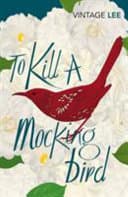
- To Kill a Mockingbird
Harper Lee
4.3 (4.5M) average on GoodreadsHistorical FictionIn the 1930s Jim Crow South, Harper Lee writes about racial injustice, moral growth, and the quiet courage of a lawyer father, Atticus Finch, as seen through his young daughter's eyes.
- The Great Gatsby
F. Scott Fitzgerald
3.9 (3.8M) average on GoodreadsHistorical FictionIn the opulent Roaring Twenties, a mysterious millionaire's lavish parties hide his desperate, tragic pursuit of a lost love, exposing the emptiness within the American Dream.
- Pride and Prejudice
Jane Austen
4.3 (3M) average on GoodreadsHistorical FictionIn a society focused on status and money, Elizabeth Bennet navigates love and pride, challenging Mr. Darcy and social expectations to find true affection.

Enjoyed the summary?
A summary gives you the shape of the book. The book itself has the detail, the examples and the voice.
Find Summer Lightning on AmazonAs an Amazon Associate, BookBrief earns from qualifying purchases. How we're funded