
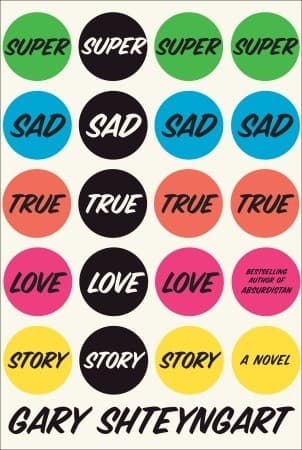
Synopsis
Covers the whole plot, including the ending.
- Difficulty
- Medium
- Pacing
- Moderate
- Mood
- Satirical, Melancholy, Humorous, Thought-provoking, Dystopian
- Read it if
- You enjoy satirical near-future dystopias with a strong romantic core, social commentary on technology's impact, and a blend of humor and melancholy.
- Skip it if
- You dislike books with heavy social satire, a focus on digital culture, or narratives that explore a society's decline.
Super Sad True Love Story Plot Summary
Covers the whole plot, including the ending.
Lenny Meets Eunice in Rome
Lenny Abramov, a middle-aged man working for Post-Human Services, stays in Rome and records his thoughts in a physical diary – a relic in his future world. He meets Eunice Park, a young Korean-American woman who recently graduated from Elderbird College. Despite their age difference, different interests (Lenny loves books, Eunice is obsessed with her 'appa' device and its constant data streams), and Eunice's initial dismissiveness, they begin a romantic relationship. Lenny is immediately smitten, captivated by her beauty and modern sensibilities. Eunice tolerates him, often criticizing his outdated habits and appearance.
Return to a Deteriorating America
Upon their return to the United States, Lenny and Eunice find the country in advanced decay. The American dollar is collapsing, replaced by Chinese yuan as the main currency. Social unrest is common, with frequent riots and the National Guard patrolling the streets of New York City. The government, now called the Bipartisan Consolidation, controls people through widespread surveillance and credit-based social ranking. Lenny's job at Post-Human Services, which offers immortality to the ultra-rich, highlights the extreme wealth gap. Eunice, meanwhile, navigates this world with her 'appa' constantly streaming her 'GlobalTeens' feed, her attention often divided and her empathy seemingly diminished by the pervasive digital culture.
Lenny's Struggle with Modernity
Lenny's old-world values and love for 'printed, bound media artifacts' clash constantly with the hyper-technological, image-obsessed society and Eunice's embrace of it. He feels irrelevant, his physical diary a source of amusement or disdain to others. Eunice, influenced by her friends and the pervasive 'apparat' culture, often critiques Lenny's appearance, his 'low credit' score, and his general lack of 'hotness' and 'sustainability.' Their intimacy is often interrupted by her need to check her 'appa' or broadcast their interactions. Lenny tries to connect with her on a deeper, emotional level, but the digital noise and societal pressures create a significant barrier.
The Abramov Family Dynamics
Lenny lives with his aging, perpetually angry Russian immigrant father, Vlad, and his critical mother. Both struggle with their place in disintegrating American society. Vlad, a former janitor, often expresses dissatisfaction with Lenny's life choices and America's decline, comparing it unfavorably to their past in the Soviet Union. Lenny also regularly visits his older brother, Noah, a successful but cynical businessman who has adapted better to the new economic realities. These family interactions provide a backdrop of historical disillusionment and a contrast to Lenny's attempts to maintain genuine human connection.
Eunice's Past and Family
Through Eunice's appa entries and fragmented conversations, her difficult family history is revealed. Her father, a traditional Korean immigrant, struggled to adapt to American life and suffered a mental breakdown. Her mother, a devout Christian, blames Eunice for her father's problems and holds her to impossibly high standards. Eunice's younger sister, Judy, is a devout Christian who embodies the obedience Eunice rejects. This background shows Eunice's emotional guardedness, her pursuit of superficial validation through the 'appa', and her deep anxieties about her identity and future, hinting at a vulnerability beneath her assertive exterior.
Escalating Social Unrest
The economic crisis worsens dramatically, leading to widespread food shortages, hyperinflation, and a complete collapse of public services. Riots become more frequent and violent, with the 'Asshats' – a group of anti-government rebels – gaining traction. New York City is under martial law, with military checkpoints and constant surveillance. The 'Bipartisan Consolidation' government tightens its grip, and the threat of a Chinese takeover becomes more apparent. Lenny observes these events with growing dread, documenting the disintegration of his world in his diary, while Eunice and her friends remain largely detached, consuming these events as digital spectacle.
The Retreat to the Countryside
With New York City descending into anarchy and the 'Bipartisan Consolidation' collapsing, the city becomes unlivable. Lenny and Eunice, along with Lenny's family and a few friends, decide to leave. They travel to a rural commune established by some of Lenny's acquaintances. This commune, a self-sustaining community trying to live off the grid and reject past technological excesses, offers a stark contrast to their former urban existence. Here, the emphasis is on manual labor, resourcefulness, and a return to basic human interaction, forcing both Lenny and Eunice to confront their dependencies and values in a new way.
Life in the Commune and Eunice's Transformation
Life in the commune is challenging, requiring physical labor and communal living. Initially, Eunice struggles, missing her 'appa' and the constant stream of information. Gradually, the forced disconnection from technology begins to affect her. She starts to engage more with her surroundings and with Lenny, showing glimpses of genuine emotion and vulnerability. She learns practical skills, participates in community life, and her reliance on external validation diminishes. This period marks a significant change in her character, as she begins to value intrinsic human connection over superficial digital interaction, drawing closer to Lenny.
The Threat of the Chinese and the Final Days
The fragile peace of the commune is threatened by encroaching Chinese influence, as they begin to consolidate power over the former United States. Chinese soldiers and officials are seen nearby, signaling the end of any independent American existence. The commune members live under constant threat, their resources dwindling. During this period, Lenny and Eunice's bond strengthens, their love deepening amidst the surrounding chaos. However, their newfound happiness is tragically short-lived as external forces finally close in, leading to a devastating confrontation that shatters their fragile world.
Lenny's Last Entry
The novel concludes with Lenny's final diary entry. It is a poignant reflection on the events that happened, the loss of Eunice, and the complete collapse of the world he knew. Despite the overwhelming despair, Lenny's entry holds hope. He clings to the memory of his love for Eunice, the genuine connection they forged in the face of societal disintegration, and the value of his physical diary. His final words emphasize the enduring human spirit and the importance of love and memory, even in a world where everything else has been stripped away, leaving a powerful, melancholic story of a 'super sad true love story.'
Super Sad True Love Story Characters
Lenny Abramov
Protagonist
A thirty-nine-year-old, anachronistic lover of books and keeper of the last physical diary.
Lenny is a deeply empathetic and introspective man who feels profoundly out of step with his hyper-technological, image-obsessed society. He treasures 'printed, bound media artifacts' (books) and meticulously records his thoughts and observations in a physical diary, making him a relic in a world where everyone communicates via 'appa' devices. He works for Post-Human Services, ironically trying to prolong the lives of the super-rich while feeling his own life is rapidly decaying. His love for Eunice Park is earnest and desperate, representing his yearning for genuine human connection in a superficial world. He is often insecure about his appearance and 'low credit' score, but his internal world is rich and complex.
Relationships: Eunice Park (Romantic interest, profound love, and source of both joy and frustration.); Vlad Abramov (His critical and perpetually dissatisfied father.); Noah Abramov (His more successful and cynical older brother.); Lorrie (A colleague and occasional confidante at Post-Human Services.)
Eunice Park
Love Interest / Deuteragonist
A beautiful, assertive, and initially superficial young woman addicted to her 'appa' device.
Eunice is a twenty-four-year-old Korean-American woman, fresh out of Elderbird College with a major in Images and a minor in Assertiveness. She is initially portrayed as self-absorbed, image-conscious, and heavily reliant on her 'appa' device for social validation and information. Her interactions are often mediated by technology, and she struggles with genuine emotional connection, frequently critiquing Lenny's 'ancient' ways and appearance. Beneath her assertive exterior, however, lies a vulnerable young woman grappling with a difficult family history, identity issues, and the pressures of a hyper-consumerist, surveillance-driven society. She embodies the future Lenny fears, yet also holds the potential for the human connection he craves.
Relationships: Lenny Abramov (Romantic interest, initially tolerated, later deeply loved and connected.); Judy Park (Her younger, devoutly Christian sister.); Her Mother (A critical and demanding figure, blaming Eunice for family problems.); Her Father (A traditional Korean immigrant who suffered a mental breakdown.)
Vlad Abramov
Supporting
Lenny's angry, critical Russian immigrant father, constantly bemoaning America's decline.
Vlad Abramov is Lenny's father, a Russian immigrant who worked as a janitor. He is a constant source of criticism for Lenny and expresses deep disillusionment with America, frequently comparing its decline to his memories of the Soviet Union. He is a symbol of a past generation, struggling to comprehend and adapt to the rapid societal and economic collapse around him. His anger and cynicism are often a defense mechanism against the helplessness he feels, but he also represents a certain resilience and a connection to a more tangible, less digital past. He embodies the immigrant experience of hope and subsequent disappointment.
Relationships: Lenny Abramov (His son, whom he frequently criticizes but also cares for.); Mrs. Abramov (His wife.)
Noah Abramov
Supporting
Lenny's cynical, financially savvy older brother who has adapted to the new economic reality.
Noah is Lenny's older brother, a successful businessman who has navigated the collapsing economy more adeptly than Lenny. He is cynical, pragmatic, and embodies a more ruthless, survivalist approach to the future. Unlike Lenny, Noah has embraced certain aspects of the new world, focusing on financial security and personal gain. He often offers Lenny unsolicited advice, which Lenny rarely takes. Noah represents the segment of society that, while not necessarily happy, has managed to adapt to the harsh realities of the future by prioritizing wealth and status, often at the expense of deeper human values.
Relationships: Lenny Abramov (His younger brother, whom he often advises and occasionally berates.); Vlad Abramov (His father.)
Vishnu
Supporting
Eunice's best friend and roommate, a fellow 'GlobalTeens' addict.
Vishnu is Eunice's best friend and roommate. She is a quintessential product of the future society, deeply immersed in the 'GlobalTeens' network and constantly streaming her life. She is obsessed with 'credit' scores, 'hotness' ratings, and superficial interactions. Vishnu often influences Eunice, reinforcing the societal pressures to conform to digital trends and judge others based on their online personas. She represents the pervasive shallowness and lack of genuine connection fostered by the 'appa' culture, acting as a foil to Lenny's old-world values and a barrier to Eunice's emotional development.
Relationships: Eunice Park (Best friend and roommate, sharing a similar digital-obsessed lifestyle.)
Lorrie
Supporting
Lenny's colleague at Post-Human Services, a grounded and insightful woman.
Lorrie is a colleague of Lenny's at Post-Human Services. She is one of the few characters who seems to possess a degree of groundedness and insight into the societal decay, offering a more nuanced perspective than many of the younger, digitally-addicted individuals. She is a source of occasional comfort and understanding for Lenny, sometimes sharing his anxieties about the future. Lorrie represents a quieter form of resistance or resignation, a person trying to make sense of the absurdity around her without fully succumbing to it. Her presence offers Lenny a fleeting sense of camaraderie in his isolating world.
Relationships: Lenny Abramov (Colleague and occasional confidante.)
Judy Park
Supporting
Eunice's younger sister, a devout Christian who embodies tradition and obedience.
Judy is Eunice's younger sister, a devout Christian who contrasts sharply with Eunice's modern, secular, and digitally-driven life. She embodies traditional values, obedience to her parents, and a strong sense of religious faith. Judy's presence highlights Eunice's rebellious streak and her struggles with her family's expectations. While Eunice seeks validation through her 'appa', Judy finds hers in her faith and adherence to traditional Korean-American family structures. She represents an alternative path, a rejection of the superficiality of the modern world through spiritual conviction, though her own life is not without its challenges.
Relationships: Eunice Park (Her older sister, with whom she has a strained and contrasting relationship.); Her Mother (Her mother, to whom she is obedient.)
Joshie
Mentioned
A minor character from Eunice's past, often referenced in her 'appa' stream.
Joshie is a figure from Eunice's past, frequently mentioned in her 'appa' stream as someone she had a brief connection with or who represents a certain social ideal. He serves to highlight Eunice's past romantic entanglements and her preoccupation with her digital image. Although not a major character, his recurring presence in Eunice's thoughts and social media feed underscores the superficial nature of relationships in their society and the constant comparison and competition for 'hotness' and 'sustainability.'
Relationships: Eunice Park (Past romantic interest or acquaintance, primarily through digital interaction.)
Super Sad True Love Story Themes
The Decline of Human Connection in a Digital Age
The novel shows a future where pervasive technology, especially the 'appa' device, has eroded genuine human connection. Characters like Eunice and Vishnu are constantly distracted by their devices, prioritizing 'credit' scores, 'hotness' ratings, and public broadcasting over authentic emotional engagement. Lenny, with his physical diary, contrasts sharply, longing for meaningful intimacy that the digital world seems to prevent. The frequent interruptions during conversations, the performative nature of relationships, and the inability to simply 'be' with another person without external validation all highlight this profound societal loss. The commune, later in the book, tries to reverse this trend by forcing a return to face-to-face interaction.
“A world where intimacy was not only impossible but probably illegal.”
Societal Collapse and American Decay
Shteyngart paints a bleak picture of America's future, marked by economic collapse, environmental degradation, and political instability. The dollar is worthless, replaced by Chinese yuan; riots are common; and the government, the 'Bipartisan Consolidation,' governs through constant surveillance and credit scores. This theme is explored through New York's crumbling infrastructure, food shortages, and eventual martial law. The external decay mirrors the internal decay of human values and intellectual life, as literacy declines and historical knowledge fades. The novel suggests a future where America has lost its identity and sovereignty, becoming a mere shadow of its former self, indebted to China.
“America was a nation of twenty-year-olds in debt up to their eyeballs, who couldn't read a newspaper but knew the complete works of Britney Spears.”
The Value of Authenticity and Memory
Against the backdrop of a superficial, forgetful society, the novel champions the importance of authenticity, personal narrative, and memory. Lenny's physical diary is the central symbol of this theme; it is a defiant act of preserving individual thought and history in a world that prioritizes fleeting digital updates. His love for books, or 'printed, bound media artifacts,' further emphasizes his commitment to enduring knowledge and deep reflection. Eunice's journey, from digital addiction to a more genuine connection with Lenny in the commune, shows a gradual embrace of authenticity. The ultimate tragedy highlights that even if the world collapses, the memory of love and true human experience holds value.
“I will go on writing in this diary, though it is nothing but a printed, bound media artifact, and I am nothing but a printed, bound media artifact.”
Love and Despair in a Dystopian Future
At its heart, the novel is a love story set in a dystopian future, exploring whether genuine love can survive, or even thrive, amidst despair. Lenny's 'super sad true love story' with Eunice is central to this. Their relationship faces challenges – their age difference, their contrasting values, and the constant interference of technology and societal pressures. Yet, as the external world crumbles, their bond strengthens, offering a glimmer of hope and human resilience. The 'super sad' aspect comes from the tragic context, where even profound love cannot ultimately save them from societal collapse, making their connection both beautiful and heartbreaking.
“In a time without standards or stability, in a world where single people can determine a dating prospect's 'hotness' and 'sustainability' with the click of a button... there is still value in being a real human being.”
Identity and Assimilation
The novel explores the complexities of identity, especially for immigrant communities, in a rapidly changing America. Lenny, as the son of Russian immigrants, grapples with his 'old world' sensibilities and his place in a country that is losing its own identity. His father, Vlad, often reflects on America's 'failure' compared to his Soviet past. Eunice, a Korean-American, navigates her traditional family's expectations against the pressures of a hyper-modern, individualistic, and often superficial American youth culture. Her struggle with her mother and sister, and her initial reliance on external validation, highlight the difficulty of forging an authentic identity when caught between cultural traditions and a decaying, image-obsessed society.
“My father always said America would be a great place to live if only it wasn't for the Americans.”
Plot Devices & Literary Techniques
Lenny's Diary
A physical, handwritten journal serving as a first-person narrative and a symbol of obsolescence.
Lenny's diary is a central plot device, providing the reader with his intimate, unfiltered perspective on the dystopian world. It serves as a stark contrast to the ubiquitous digital 'appa' devices, symbolizing a longing for authenticity, personal history, and deep reflection in an age of fleeting digital content. The diary entries are often interspersed with Eunice's 'appa' streams, highlighting the narrative and thematic clash between old and new. It allows the reader to experience Lenny's internal struggles, his love for Eunice, and his observations of societal decay, becoming a poignant testament to a lost way of life and the power of individual memory.
The 'Appa' Device
A ubiquitous, transparent, all-in-one personal media device that facilitates constant surveillance and social media interaction.
The 'appa' device is the primary technological plot device, shaping nearly every aspect of the characters' lives, particularly Eunice's. It functions as a transparent smartphone, social media aggregator ('GlobalTeens'), credit score tracker, and constant source of information and distraction. It enables pervasive surveillance by the 'Bipartisan Consolidation' and drives the superficiality of social interactions, with constant 'hotness' and 'sustainability' ratings. The 'appa' is crucial for showing the erosion of privacy, the addiction to digital validation, and the pervasive lack of genuine human connection, acting as a direct antagonist to Lenny's traditional values.
Credit Score and Sustainability Ratings
A social ranking system based on financial status, physical health, and perceived social value.
The credit score and 'sustainability' ratings are key societal plot devices that dictate social standing, economic opportunity, and even romantic prospects. Characters are constantly aware of their own and others' scores, which influence everything from access to services to perceived attractiveness. This system highlights the extreme social stratification and the commodification of human worth in the dystopian future. It creates constant anxiety, especially for Lenny with his 'low credit,' and drives many of Eunice's initial superficial judgments, underscoring the novel's critique of capitalism taken to its extreme and the dehumanizing effects of constant external evaluation.
The Collapse of the American Dollar
The economic plot device signifying America's loss of global power and sovereignty.
The collapse of the American dollar, replaced largely by the Chinese yuan, is a pivotal plot device representing America's economic and political downfall. This financial ruin directly leads to widespread poverty, social unrest, and the eventual Chinese influence over the former United States. It creates the backdrop for the dystopian setting and fuels much of the characters' anxieties and struggles, from their inability to afford basic necessities to the constant threat of a complete Chinese takeover. This device grounds the speculative fiction in a plausible, albeit extreme, economic reality, making the societal decay feel more immediate and impactful.
Super Sad True Love Story Quotes
“Lenny Abramov. Forty-something. Not bad. Not good. I’m an average guy. An average guy in a world that has no place for average guys.”
“I often think about how much I loved her. How I wanted to be with her for the rest of my life. How I pictured us growing old together, watching her get more beautiful with every passing year. And how I knew, even then, that it would never happen.”
“The future is just a bunch of people living in the present, but with slightly different gadgets.”
“Every day is a struggle to maintain my analog soul in a digital world.”
“I’m like a dinosaur, a relic from a bygone era, wandering through a landscape that no longer understands me.”
“The only thing that's real anymore is what you project.”
“Love is not a data point. It’s a messy, illogical, irrational thing that defies all algorithms.”
“We are all just trying to connect, even when the connections are meaningless.”
“Sometimes I think the whole world is just a giant advertising campaign for itself.”
“The past is a foreign country; they do things differently there. But the future is an alien planet, and they don't do anything at all.”
“Every conversation is a performance, every interaction a transaction.”
“Perhaps all love stories are super sad, because they all end.”
“I just want to be seen. Not through a screen, not through a profile, but really seen.”
“The only thing that never changes is change itself. And fear. Fear never changes.”
Quiz
10 questions on the plot and the characters. Each answer comes with a short explanation.
Question 1
What is the primary form of communication and personal record-keeping that Lenny Abramov still uses, which is considered an anachronism in his society?
- He uses a 'GlobalTeens' account to post his thoughts daily.
- He writes in a physical diary, referred to as 'printed, bound media artifacts'.
- He records audio logs on an old cassette player.
- He communicates solely through secure, encrypted digital messages.
Show answer
B. He writes in a physical diary, referred to as 'printed, bound media artifacts'. Lenny is explicitly described as the 'proud author of what may well be the world’s last diary,' and he loves 'books (or “printed, bound media artifacts,” as they’re now known)'.
Question 2
What is the name of the company Lenny Abramov works for, which aims to provide immortality?
- Everlasting Life Solutions
- Future Human Enterprises
- Post-Human Services
- Longevity Inc.
Show answer
C. Post-Human Services The synopsis states Lenny's job is 'at an outfit called Post-Human Services, which attempts to provide immortality for its super-rich clientele'.
Question 3
What is Eunice Park's academic major and minor from Elderbird College?
- Major in Literature, minor in Philosophy
- Major in Images, minor in Assertiveness
- Major in Digital Media, minor in Economics
- Major in Social Sciences, minor in Marketing
Show answer
B. Major in Images, minor in Assertiveness Eunice is described as having 'just graduated from Elderbird College with a major in Images and a minor in Assertiveness'.
Question 4
Which specific event is mentioned as a sign of America's societal collapse, occurring in New York City?
- A massive blackout affecting the entire East Coast.
- A major earthquake causing widespread destruction.
- Riots breaking out in Central Park.
- A foreign invasion by a neighboring country.
Show answer
C. Riots breaking out in Central Park. The synopsis details that 'riots break out in New York’s Central Park' as part of the country's decline.
Question 5
What physical characteristic of Lenny Abramov is mentioned as being shaped like a US state?
- A birthmark on his arm shaped like Florida.
- A bald spot shaped like the great state of Ohio.
- A scar on his leg shaped like Texas.
- A tattoo on his back shaped like California.
Show answer
B. A bald spot shaped like the great state of Ohio. Lenny is described as the 'less-proud owner of a bald spot shaped like the great state of Ohio'.
Question 6
What is the implied consequence of America's credit crisis and instability regarding its international creditors?
- America will receive a large bailout from European nations.
- Its patient Chinese creditors may be ready to foreclose on the whole mess.
- The US will declare bankruptcy and default on all debts.
- A new global currency will be introduced to stabilize the economy.
Show answer
B. Its patient Chinese creditors may be ready to foreclose on the whole mess. The text states, 'The country is crushed by a credit crisis... and our patient Chinese creditors may just be ready to foreclose on the whole mess.'
Question 7
How do single people in Lenny's future society typically determine a dating prospect's suitability?
- Through traditional courtship and family introductions.
- By consulting astrologers and matchmakers.
- With the click of a button to determine 'hotness' and 'sustainability'.
- Based on their educational background and career achievements.
Show answer
C. With the click of a button to determine 'hotness' and 'sustainability'. Lenny's society is one 'where single people can determine a dating prospect’s “hotness” and “sustainability” with the click of a button'.
Question 8
What is Lenny's primary motivation in his relationship with Eunice and his efforts to love his homeland?
- To gain social status and wealth in a collapsing society.
- To convince Eunice and others that there is still value in being a real human being amidst instability.
- To escape the country with Eunice before it completely collapses.
- To convert Eunice to his traditional Russian cultural values.
Show answer
B. To convince Eunice and others that there is still value in being a real human being amidst instability. Lenny 'vows to love both Eunice and his homeland. He’s going to convince his fickle new love that in a time without standards or stability... there is still value in being a real human being.'
Question 9
How does Eunice's 'Assertiveness' minor manifest in her interactions with Lenny early in their relationship?
- She encourages him to embrace his old-fashioned hobbies.
- She teaches him effective new ways to brush his teeth and makes him buy a cottony nonflammable wardrobe.
- She demands he quit his job at Post-Human Services.
- She insists they only communicate through digital streams, not in person.
Show answer
B. She teaches him effective new ways to brush his teeth and makes him buy a cottony nonflammable wardrobe. Eunice 'puts that Assertiveness minor to work, teaching our 'ancient dork' effective new ways to brush his teeth and making him buy a cottony nonflammable wardrobe.'
Question 10
What overarching societal problem is highlighted by the contrast between 'the privileged may live forever' and 'the unfortunate will die all too soon'?
- The problem of overpopulation.
- The theme of extreme social and economic inequality.
- The fear of technological advancement.
- The decline of traditional family values.
Show answer
B. The theme of extreme social and economic inequality. The text explicitly states this contrast, highlighting a key theme of severe social stratification where access to longevity is determined by wealth, pointing to extreme inequality.
Super Sad True Love Story FAQ
What is the central premise of 'Super Sad True Love Story'?
The novel is set in a near-future, crumbling America where technology has advanced to the point of constant data streams and 'globalteens,' but societal structures and literacy are in decline. It follows Lenny Abramov, a thirty-nine-year-old anachronism who still cherishes physical books and writes in a diary, as he navigates a romance with the much younger, digitally native Eunice Park amidst national collapse.
Who are the main characters, Lenny Abramov and Eunice Park, and what defines their relationship?
Lenny Abramov is a nostalgic, book-loving 'ancient dork' working for Post-Human Services, representing an older generation's values. Eunice Park is a twenty-four-year-old, image-conscious graduate who embodies the future's digital fluency and superficiality. Their relationship is a clash of cultures and generations, with Eunice initially finding Lenny endearing but also deeply flawed by contemporary standards, while Lenny idealizes Eunice as a connection to a future he struggles to comprehend.
How does the novel portray the future of technology and its impact on society?
The novel depicts a future where individuals are constantly connected via 'äppäräti' devices, which stream personal data, 'credit-scores,' and 'hotness' ratings publicly. This pervasive technology leads to a loss of privacy, critical thinking, and genuine human connection, contributing to a functionally illiterate populace obsessed with images and instant gratification.
What role does the deteriorating political and economic state of America play in the story?
America is portrayed as a nation in severe decline, facing a credit crisis, widespread riots, and potential foreclosure by its Chinese creditors. The government is authoritarian, with National Guard tanks patrolling cities and a constant state of surveillance. This societal instability serves as a backdrop to Lenny and Eunice's personal struggles, mirroring the breakdown of their own relationship.
What is 'Post-Human Services' and what does it reveal about the future's priorities?
Post-Human Services is the company where Lenny works, dedicated to providing immortality to its super-rich clientele through various technological means. This enterprise highlights the future's obsession with extending life for the privileged, contrasting sharply with the general societal decay and the impending mortality faced by the less fortunate, including Lenny himself.
What is the significance of Lenny's diary in a world where everyone uses 'äppäräti'?
Lenny's physical diary is a symbol of his anachronism and a resistance against the pervasive digital surveillance and fleeting nature of online communication. It represents a desire for permanence, introspection, and a private self in a world where all information is public. His diary entries offer a unique, unfiltered perspective on the events unfolding around him.
How does Eunice's 'Images' major and 'Assertiveness' minor from Elderbird College reflect the values of her generation?
Eunice's academic background perfectly encapsulates the future's priorities: 'Images' signifies the superficial, visual-centric culture where appearance and presentation are paramount, while 'Assertiveness' reflects the need to forcefully navigate and control one's digital persona and interactions in a highly competitive and judgmental society. It shows a focus on external projection over internal substance.
What is the symbolic meaning of Lenny's bald spot being 'shaped like the great state of Ohio'?
Lenny's Ohio-shaped bald spot is a subtle, humorous detail that further emphasizes his 'Americanness' and his connection to a traditional, perhaps fading, national identity. Ohio, often seen as a 'bellwether' state, could also subtly hint at Lenny's role as a kind of barometer for the nation's decline, or simply underscore his everyman, slightly pathetic status.
How does Shteyngart use humor to address such a dark and dystopian future?
Shteyngart employs satire and dark humor through absurd characterizations (like Lenny's dated sensibilities), exaggerated technological features (like the 'GlobalTeens' and constant 'credit-scores'), and the juxtaposition of personal romance against national collapse. This humor serves to make the bleak future more palatable and highlights the absurdities of human behavior even in dire circumstances.
How does Lenny's 'cholesterol-rich' diet and physical health reflect his psychological state or societal role?
Lenny's poor health, including his high cholesterol, symbolizes his physical and emotional vulnerability in a world that increasingly values optimized, 'post-human' bodies. It represents his inherent mortality and the decay of the 'old' way of life, contrasting with the promise of immortality offered to the elite by his employer. Psychologically, it reflects his passive acceptance of his fate.
What psychological impact does constant surveillance and public 'credit-scoring' have on the characters, especially Eunice?
Constant surveillance and public 'credit-scoring' create immense pressure for characters like Eunice to maintain a perfect public persona. This leads to anxiety, self-consciousness, and a focus on superficiality, as their worth and 'sustainability' are constantly judged by others. It stifles genuine self-expression and fosters a culture of performativity.
How does Lenny's love for books and his diary function as a coping mechanism in his dystopian world?
For Lenny, books and his diary are more than just hobbies; they are a refuge and a means of preserving his identity and sanity. They allow him to engage in critical thought, reflection, and emotional processing, providing a contrast to the shallow, image-driven world. They are a way to hold onto humanity and a sense of history in a world that is rapidly forgetting both.
What is the psychological significance of Eunice's initial cruelty and later tenderness towards Lenny?
Eunice's initial cruelty is likely a defense mechanism and a product of her generation's blunt, digitally-mediated communication style, where 'hotness' and 'sustainability' are openly judged. Her later tenderness suggests a psychological shift, possibly indicating that Lenny's genuine, if anachronistic, humanity and emotional depth begin to break through her superficial conditioning, revealing her own deeper needs for connection.
Is the novel ultimately optimistic or pessimistic about the future of human connection?
The novel presents a complex, arguably pessimistic view of humanity's future, given the widespread societal collapse and technological alienation. However, the 'true love story' between Lenny and Eunice, despite its tragic elements, offers a glimmer of hope that genuine human connection, empathy, and the desire for authenticity can still exist and even briefly flourish amidst the decay.
What is the 'super sad true love story' referring to: Lenny and Eunice, or America itself?
The title likely refers to both. The 'super sad true love story' is explicitly about Lenny and Eunice's unlikely and ultimately doomed romance, but it also metaphorically describes the tragic decline of America, a nation that was once loved and now faces an uncertain, sorrowful future. The personal and national narratives are deeply intertwined.
How does the novel critique consumerism and capitalism in its depiction of the future?
The novel critiques rampant consumerism by showing a society obsessed with brands, 'upgrades,' and superficial purchases, even as the economy crumbles. Capitalism is depicted as having led to extreme inequality, where the rich can buy immortality while the poor suffer, and where even personal relationships are commodified through 'credit-scores' and 'hotness' ratings. The Chinese creditors foreclosing on America further highlight the global economic imbalances.
What is the author's message about the importance of literacy and critical thinking in a digital age?
Shteyngart strongly emphasizes the importance of literacy and critical thinking by portraying a future where their absence leads to societal collapse. Lenny, the last literate individual, is presented as a relic, suggesting that the inability to engage with complex texts and ideas makes a population susceptible to manipulation and incapable of addressing its own decline. The novel implicitly argues for the preservation of these skills.
Could the ending be interpreted as a cautionary tale rather than a definitive prophecy?
Absolutely. While set in a plausible near-future, the novel functions primarily as a cautionary tale. Shteyngart exaggerates current trends in technology, consumerism, and political polarization to highlight potential dangers. The extreme outcomes serve as a warning about where society might be headed if certain technological and cultural trajectories continue unchecked, rather than predicting an exact future.
About the author

Gary Shteyngart is a Russian-American author known for his satirical fiction that often explores themes of identity and culture. His notable work, "Super Sad True Love Story," presents a dystopian vision of the future, blending humor and social commentary. Shteyngart's writing has garnered attention for its unique voice and perspective.
Similar books
- Brave New World
Aldous Huxley
4.0 (1.4M) average on GoodreadsFantasyExplores a technologically advanced but emotionally repressed dystopian society and critiques consumerism and control.
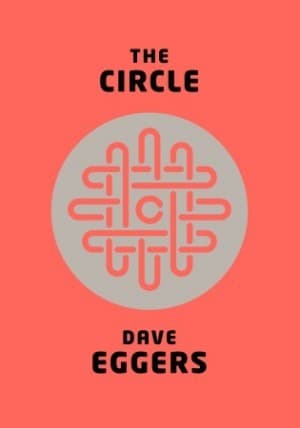
- The Circle
Dave Eggers
3.4 (183k) average on GoodreadsThrillerCritiques pervasive digital surveillance, the loss of privacy, and the influence of tech corporations.
- A Visit From the Goon Squad
Jennifer Egan
3.7 (175k) average on GoodreadsLiterary FictionFeatures a fragmented narrative style and explores themes of time, love, and the impact of technology and media on human lives.
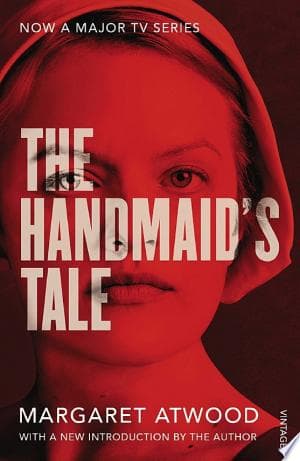
- The Handmaid's Tale
Margaret Atwood
4.1 (1.5M) average on GoodreadsFantasyWhile both are dystopian, Shteyngart's novel portrays a collapse driven by consumerism and digital addiction, rather than Atwood's overtly oppressive, fundamentalist regime. Shteyngart's approach is more comedic and focuses on psychological alienation, whereas Atwood examines explicit subjugation and reproductive control.
- Nineteen Eighty-Four
George Orwell
4.2 (5.5M) average on GoodreadsFictionOrwell depicts a totalitarian state maintained by overt surveillance and thought control. Shteyngart's dystopia, in contrast, shows individuals willingly surrendering privacy for convenience and status, a more insidious form of control driven by hyper-capitalism and technological addiction rather than Big Brother's overt oppression.
- The Hunger Games
Suzanne Collins
4.3 (6.4M) average on GoodreadsFantasyIn a future where children fight to the death on live television, Katniss Everdeen volunteers for the arena, turning a death sentence into a fight for survival and a spark of rebellion.




Enjoyed the summary?
A summary gives you the shape of the book. The book itself has the detail, the examples and the voice.
Find Super Sad True Love Story on AmazonAs an Amazon Associate, BookBrief earns from qualifying purchases. How we're funded