

Synopsis
Covers the whole plot, including the ending.
- Difficulty
- Medium
- Pacing
- Moderate
- Mood
- Philosophical, Poignant, Romantic, Melancholy, Hopeful
- Read it if
- You enjoy unique, poignant romances with a touch of the fantastical, exploring themes of mortality, memory, and finding meaning in an unconventional connection.
- Skip it if
- You prefer fast-paced plots with high stakes action, or are not a fan of introspective, character-driven narratives that delve into philosophical questions.
Thanks for the Trouble Plot Summary
Covers the whole plot, including the ending.
A Silent Routine and a Mysterious Encounter
Parker Santé, an 18-year-old who has not spoken in five years, spends his days sketching strangers in hotels. This habit stems from his grief and trauma after his parents' death. He attends school but remains largely distant. One day, while sketching in the lobby of the Hotel Nevada, he meets a mysterious silver-haired girl named Zelda Toth. She is immediately captivating and seems to recognize him, though he is sure they have never met. Zelda, with her unusual manner and directness, challenges his silent world from their first interaction, pulling his attention from his usual detached observations.
The Revelation of Immortality
Zelda Toth follows Parker, eventually confronting him and revealing an astonishing secret: she is immortal. She explains that she cannot die, has lived for centuries, and is always reborn into new bodies that look like a 16-year-old girl with silver hair. She proves her claim by jumping from a great height and emerging unharmed, which deeply shakes Parker's rational view of the world. This revelation is a turning point for Parker, who, despite his initial doubt, finds himself drawn to the sheer impossibility of her existence, which contrasts sharply with his own feelings of being stuck and lifeless.
A Shared Quest for Meaning
As Parker and Zelda spend more time together, they form an unusual friendship. Parker, through his silence, and Zelda, through her immortality, both feel deeply isolated from others. Zelda is interested in Parker's muteness, seeing it as a unique way of experiencing the world, while Parker is captivated by her stories of past lives and her struggle to find meaning in an endless existence. They begin to explore the city together, sharing their vulnerabilities and finding a strange comfort in each other's company, a connection neither has had before.
The Weight of the Past
Zelda shares detailed stories of her many past lives, spanning different eras and cultures. She talks about falling in love, building families, and experiencing countless historical events, only to have to leave everyone behind as they age and die while she remains eternally young. These stories show the immense emotional cost of her immortality, especially the pain of constant loss and the burden of endless memories. Parker listens closely, understanding her struggle with grief and isolation, which mirrors his own silent battle with the loss of his parents and the trauma that made him mute.
Searching for a Cure
Zelda confesses her ultimate wish: to find a way to die. She has tried various methods throughout her many lives, from intentionally putting herself in danger to seeking ancient remedies, but nothing has worked. She believes that the only way to truly live and experience life fully is to know it will end. Parker, initially shocked by her wish, begins to understand her longing for finality, especially as he himself has struggled with wanting to escape his own pain. He begins to subtly help her in her quest, researching possibilities, even as he grows more attached to her.
A Glimmer of Hope and Growing Affection
Parker and Zelda's search for a 'cure' for her immortality takes them to libraries, obscure bookstores, and online forums. During this time, their relationship grows from friendship to something deeper. Parker, who has been closed off from romantic connections since his trauma, finds himself falling for Zelda, drawn to her ancient wisdom, her vulnerability, and her unique view on life and death. Zelda, in turn, is moved by Parker's quiet strength, his artistic talent, and his steady acceptance of her extraordinary nature. Their shared quest becomes intertwined with their growing affection for each other.
The Revelation of the 'Problem'
After much searching and thought, Zelda reveals a key detail about her immortality: she believes her 'problem' is that she cannot die as long as she is remembered. She thinks that as long as someone alive holds her memory, she will continue to be reborn. This revelation adds a new layer to their quest, suggesting that for Zelda to find peace, she would need to be forgotten by everyone, a seemingly impossible task given her long existence and the impact she has had on countless lives. Parker struggles with this, realizing his own growing memory of her could be an obstacle.
A Life-Changing Decision
Driven by her desperate desire for an end to her endless existence, Zelda decides that the only way to truly test her theory is to isolate herself completely and cut all ties. She proposes a radical plan: she will leave Parker and disappear, hoping that by being forgotten, she can finally become mortal. This decision devastates Parker, who has finally found a reason to connect with the world through her. He struggles with the ethical problem of helping someone he loves disappear, knowing it means losing her forever, but also understanding her deep longing for peace.
The Farewell and the Aftermath
With a heavy heart, Parker agrees to help Zelda carry out her plan. They share a poignant farewell, a moment filled with unspoken emotions and the weight of their unique connection. After Zelda's disappearance, Parker experiences a deep sense of loss, but also a strange freedom. The act of letting her go, of putting her peace before his own desire to keep her, helps him heal. Afterward, Parker finds his voice, both literally and figuratively, finally beginning to speak again after five years of silence, a direct result of his journey with Zelda.
A New Beginning, Marked by Memory
The novel ends with Parker beginning to rebuild his life, now able to speak and engage with the world in a way he had not been able to for years. He continues to sketch, but his art has a new depth and understanding of life, death, and memory. While Zelda is gone, her impact on him is clear. He carries her memory, not as a burden, but as a reminder of their extraordinary bond and the lessons she taught him about living, loving, and letting go. He understands that even if Zelda's theory about being forgotten was true, his memory of her is a gift, not a curse.
Principal Figures
Parker Santé
Protagonist
A silent artist grappling with trauma and the meaning of life.
Parker is an 18-year-old high school senior who has been selectively mute for five years, ever since his parents died in a car crash. He is an introverted and observant character, preferring to express himself through his detailed sketches of strangers. His muteness is a manifestation of his unresolved grief and trauma, isolating him from his peers. He is intelligent and sensitive, often retreating into his own thoughts and observations. His initial detachment from the world is slowly eroded by his encounter with Zelda, who challenges his perceptions and forces him to confront his own pain.
Relationships: Zelda Toth (Love interest, catalyst for his emotional healing); Aunt Carol (Caretaker, supportive but concerned guardian); Uncle Ben (Caretaker, supportive but concerned guardian)
Zelda Toth
Love Interest / Catalyst
An ancient immortal trapped in a teenage body, seeking an end to her existence.
Zelda is a mysterious silver-haired girl who appears to be 16 but claims to be an immortal who has lived for centuries. She is wise beyond her years, carrying the weight of countless memories and experiences. Despite her ancient wisdom, she feels profoundly lonely and longs for the peace of death, believing that true life can only be found in its finitude. She is direct, philosophical, and possesses a unique charm that draws Parker out of his shell. Her quest to die is central to the plot, as it challenges Parker's understanding of life and mortality.
Relationships: Parker Santé (Love interest, her confidant and partner in her quest)
Aunt Carol
Supporting
Parker's loving and concerned aunt who acts as his guardian.
Aunt Carol is Parker's legal guardian and his mother's sister. She is a kind, patient, and deeply concerned figure who has tried everything to help Parker cope with his grief and muteness. She represents a stable, caring presence in Parker's life, constantly trying to connect with him and encourage him to engage with the world. While she doesn't fully understand Parker's internal struggles or his unusual relationship with Zelda, she provides a foundation of love and support.
Relationships: Parker Santé (Guardian, loving aunt); Uncle Ben (Husband)
Uncle Ben
Supporting
Parker's uncle, a practical and supportive figure.
Uncle Ben is Aunt Carol's husband and Parker's uncle. He is a more grounded and practical character compared to Aunt Carol, offering a different kind of support to Parker. While perhaps less overtly emotional, he is equally caring and wants to see Parker thrive. He often provides a sense of normalcy and routine in Parker's life, complementing Aunt Carol's more nurturing approach. He is a steadfast presence, even if his understanding of Parker's inner world is limited.
Relationships: Parker Santé (Guardian, supportive uncle); Aunt Carol (Wife)
Mr. Henderson
Mentioned
Parker's school guidance counselor.
Mr. Henderson is Parker's guidance counselor at school. He represents the institutional efforts to help Parker, though his methods are often ineffective due to Parker's muteness. He is well-meaning but struggles to penetrate Parker's silence, relying on conventional therapeutic approaches that don't resonate with Parker's unique situation. He highlights the gap between professional help and Parker's personal needs.
Relationships: Parker Santé (Student/counselor relationship)
Themes & Insights
The Nature of Mortality and Immortality
The main theme explores what life means when it is finite. Zelda, as an immortal, wants to die, believing that only with an end can life truly have meaning and value. Her endless existence is shown as a burden of constant loss and detachment. Parker, dealing with his own grief and a life that feels 'stuck,' slowly understands that accepting death is necessary for growth and connection. The story suggests that the value of moments and relationships is greater because they do not last forever, as seen when Parker finally finds his voice after accepting the potential loss of Zelda.
“The only way to truly live… is to know you’ll die.”
Grief, Trauma, and Healing
Parker's muteness comes directly from the deep grief and trauma of losing his parents. His silence represents his inability to process his pain and connect with the world. Zelda, through her own unique form of endless grief from losing everyone she loves, helps Parker face his trauma. Their shared experiences of isolation, though for different reasons, allow them to connect deeply. Parker's journey with Zelda ultimately helps him heal, leading to him speaking again as he learns to accept loss and move forward.
“I hadn’t spoken in five years. Not a word. I just couldn’t.”
Connection and Isolation
Both Parker and Zelda experience deep isolation: Parker because of his muteness and trauma, and Zelda because of her immortality. The novel shows how these different forms of being 'other' can lead to deep loneliness. Their unexpected connection becomes a lifeline for both, proving that even the most isolated people can find understanding and love. Zelda's stories of past lives highlight the pain of forming connections only to lose them, while Parker's journey shows how powerful it is to allow oneself to connect despite the risk of pain and loss. Their relationship shows the human need for genuine connection.
“We were both alone, in our own ways. And maybe that’s why we fit together.”
Memory and Identity
The theme of memory is important, especially in Zelda's idea that her immortality is linked to being remembered. For Zelda, memory is both a good and bad thing; it allows her to carry ancient wisdom but also burdens her with the pain of endless loss. For Parker, memory is initially a source of paralysis, keeping him stuck in his past trauma. As the story goes on, he learns to integrate his memories of Zelda, not as something holding him back, but as part of his changing identity, allowing him to grow while still valuing the past. The book suggests that how we hold memories shapes who we become.
“I can’t die, Parker. Not as long as someone remembers me.”
Plot Devices & Literary Techniques
Selective Mutism
Parker's inability to speak serves as a symbolic and literal barrier.
Parker's selective mutism is a central plot device. It symbolizes his emotional paralysis and inability to process his trauma, creating a literal barrier between him and the world. It forces him to communicate through other means (drawing, writing on his palm), highlighting his internal world. Zelda's presence and their unique connection gradually break down this barrier, making his eventual return to speech a powerful symbol of his healing and renewed engagement with life.
Zelda's Immortality
A fantastical element that drives the plot and explores philosophical questions.
Zelda's immortality is the primary fantastical element and the core plot device. It introduces the central philosophical questions about life, death, and meaning. Her endless existence provides a unique perspective on human experience, suffering, and the nature of time. It also creates the central conflict of the story: her desire to die, which Parker ultimately helps her pursue. This device allows for exploration of themes that would be impossible in a purely realistic narrative.
The Hotel as a Liminal Space
A recurring setting that symbolizes transition and observation.
The hotels where Parker spends his time sketching function as a significant plot device. They are liminal spaces, places of transit where people come and go, mirroring Parker's own detached observation of life and his feeling of being 'stuck' between worlds. It's in one of these transient spaces that he meets Zelda, who herself is constantly moving through different lives. The hotel setting reinforces themes of anonymity, observation, and the fleeting nature of human connections, until Parker and Zelda forge a lasting one within its walls.
Parker's Sketchbook
A non-verbal means of communication and expression.
Parker's sketchbook is a crucial device for characterization and plot. As he cannot speak, his drawings become his primary means of expression, observation, and even communication. It provides insight into his inner world, his artistic talent, and his focus on the details of human existence. The sketchbook is also the initial point of connection between Parker and Zelda, as she is drawn to his art, and it serves as a silent record of his journey and his memories.
Thanks for the Trouble Quotes
“The problem with forever is that it doesn't last.”
“Every single person on this planet is a myth. Every single one of us is a story.”
“Maybe the only true magic is just seeing people for what they really are, instead of what you want them to be.”
“Love isn’t a switch you can turn on and off. It’s a fuse that burns.”
“What if the greatest act of love is letting go?”
“There are some things you can't outrun, no matter how fast you are.”
“Sometimes the most beautiful things are the ones that are broken.”
“To be truly alive, you have to embrace the end.”
“We’re all just trying to make sense of the chaos, aren’t we?”
“History is just a story we tell ourselves about the past.”
“The world doesn't owe you anything, but it offers everything.”
“Maybe the point isn't to live forever, but to live well while you're here.”
“Sadness is just love with nowhere to go.”
“You can't save anyone who doesn't want to be saved.”
Quiz
10 questions on the plot and the characters. Each answer comes with a short explanation.
Question 1
What is the primary reason Parker Santé hasn't spoken in five years?
- He made a vow of silence for religious reasons.
- He suffered a traumatic event that rendered him mute.
- He believes silence is a form of protest against society.
- He was born mute and communicates through other means.
Show answer
B. He suffered a traumatic event that rendered him mute. Parker's muteness is a direct result of a traumatic event involving his brother's death, which is a central plot point.
Question 2
What unique characteristic does Zelda Toth claim to possess?
- She can read minds.
- She is immortal and much older than she appears.
- She can predict the future.
- She has the ability to fly.
Show answer
B. She is immortal and much older than she appears. Zelda explicitly states she is 'quite a bit older than she looks,' hinting at her immortality, which is a key fantasy element.
Question 3
What is Parker's unusual hobby before meeting Zelda?
- Writing poetry in a secret journal.
- Volunteering at a local animal shelter.
- Skipping school to observe guests in hotels.
- Practicing a musical instrument in solitude.
Show answer
C. Skipping school to observe guests in hotels. The synopsis clearly states Parker 'skips school to hang out in hotels, killing time by watching the guests.'
Question 4
How does Parker initially communicate with Zelda when she asks him questions?
- He uses a small whiteboard.
- He writes on his palm.
- He uses sign language.
- He points to pre-written cards.
Show answer
B. He writes on his palm. The excerpt shows Parker writing 'I can’t' on his palm when Zelda asks him questions, as she wouldn't return his journal.
Question 5
What significant event from Parker's past heavily influences his current state and actions?
- Winning a major academic award.
- The death of his brother.
- Moving to a new city.
- A severe illness that left him weakened.
Show answer
B. The death of his brother. The death of Parker's brother is the central trauma that led to his muteness and profound grief, shaping his character and the plot.
Question 6
What is Zelda's primary motivation for seeking out Parker?
- She is looking for a place to stay.
- She is drawn to his unique ability to communicate without words.
- She recognizes him from a past life.
- She believes he is the one destined to help her die.
Show answer
D. She believes he is the one destined to help her die. Zelda, being immortal, is actively seeking someone who can help her find a way to end her life, and she believes Parker is that person.
Question 7
What thematic concept is most strongly explored through Zelda's character and her backstory?
- The pursuit of fame and recognition.
- The burden and loneliness of immortality.
- The importance of material wealth.
- The thrill of constant adventure.
Show answer
B. The burden and loneliness of immortality. Zelda's character arc heavily focuses on the weariness and isolation that come with living for centuries, highlighting the theme of the 'burden of immortality.'
Question 8
What is the significance of the title 'Thanks for the Trouble' in the context of the story's ending?
- It's a sarcastic remark from a minor character.
- It refers to Parker's gratitude for Zelda disrupting his mundane life.
- It's Zelda's final message to Parker, acknowledging his efforts to help her.
- It's a phrase Parker often uses to express his frustration.
Show answer
C. It's Zelda's final message to Parker, acknowledging his efforts to help her. The title is revealed to be a direct quote from Zelda, her poignant last words to Parker, thanking him for his attempts to help her find peace, even if it leads to her eventual departure or 'trouble' for him.
Question 9
How does Parker's relationship with Zelda ultimately impact his ability to cope with his past trauma?
- It makes him retreat further into his silence and grief.
- It provides him with a new purpose and helps him begin to heal and find his voice.
- It complicates his trauma by introducing new anxieties.
- It has no significant effect on his ability to cope.
Show answer
B. It provides him with a new purpose and helps him begin to heal and find his voice. Zelda's presence and their unique bond provide Parker with a reason to engage with life again, confronting his grief and eventually leading to him regaining his voice, symbolizing his healing process.
Question 10
What literary device is most prominent in describing Zelda's initial physical appearance in the excerpt?
- Metaphor, comparing her to a mythical creature.
- Hyperbole, exaggerating her beauty beyond belief.
- Imagery, using descriptive language to paint a vivid picture.
- Allusion, referencing a famous work of art.
Show answer
C. Imagery, using descriptive language to paint a vivid picture. The excerpt uses strong imagery like 'silver-haired girl,' 'bloom to her pale cheeks,' and 'sharp shelves of her cheekbones' to create a clear mental picture of Zelda.
Thanks for the Trouble FAQ
What is the central premise of 'Thanks for the Trouble'?
The story follows Parker Santé, a mute teenager who spends his days observing hotel guests, until he encounters Zelda Toth. Zelda is an enigmatic, seemingly ageless girl who challenges his cynical worldview and introduces him to a life beyond his self-imposed isolation and silence.
Who are the main characters in the book?
The two main characters are Parker Santé, a seventeen-year-old boy who hasn't spoken in five years, and Zelda Toth, a mysterious girl who claims to be centuries old despite her youthful appearance. Their unconventional relationship forms the core of the narrative.
What is the significance of Parker's muteness?
Parker's muteness is a central plot device and a manifestation of his emotional trauma and withdrawal from the world following a family tragedy. It forces him to communicate through writing and observation, shaping his unique perspective and making his eventual connection with Zelda more profound.
What kind of abilities does Zelda Toth possess?
Zelda claims to be immortal, having lived for centuries, and possesses an incredible wealth of historical knowledge and wisdom. While she doesn't display overt magical powers, her agelessness and profound understanding of human nature are her defining supernatural traits.
Where does Parker spend most of his time before meeting Zelda?
Before meeting Zelda, Parker frequently skips school to spend his time in various hotels, particularly the Hotel Churchill. He finds solace and a sense of detachment in observing the lives of strangers, using his journal to document his thoughts and observations.
Is there a specific historical event or period that Zelda references frequently?
Zelda's vast lifespan means she references many historical periods, but she often shares anecdotes and insights from the early 20th century, particularly the Roaring Twenties and the jazz age, adding a nostalgic and romantic layer to her character and her stories.
What is the significance of the 'Trouble' mentioned in the title?
The 'Trouble' in the title refers to the emotional and existential challenges that Parker faces, as well as the bittersweet complexities that Zelda brings into his life. It encapsulates the difficult but ultimately rewarding journey of opening up to love and vulnerability.
Are there any subtle clues about Zelda's true nature or origins?
While Zelda's claims of immortality are taken at face value, subtle clues about her unique perspective and detachment from modern norms hint at her vast age. Her anachronistic mannerisms, profound wisdom, and lack of attachment to contemporary trends all reinforce her ancient origins.
How does Parker's past trauma influence his current behavior and worldview?
Parker's past trauma, specifically the death of his brother, is the root cause of his muteness and his profound sense of detachment and cynicism. It leads him to believe that emotional connection only brings pain, making him hesitant to engage with the world or form new relationships.
What psychological impact does Zelda have on Parker?
Zelda acts as a catalyst for Parker's psychological healing. Her acceptance of his silence, her profound wisdom, and her ability to make him feel truly seen help him to confront his grief and begin to dismantle the emotional walls he has built around himself, slowly bringing him back to life.
How does Zelda cope with her immortality and the loss of loved ones over centuries?
Zelda copes with her immortality through a detached yet appreciative observation of humanity. She embraces the fleeting nature of life and love, finding beauty in impermanence, though she admits to the profound loneliness and heartbreak that comes with outliving everyone she cares for.
What role does Parker's journal play in his psychological journey?
Parker's journal serves as his primary means of communication, his confidante, and a record of his internal world. It allows him to process his thoughts, feelings, and observations, making it an essential tool for his self-discovery and a bridge to connection with Zelda, who reads it.
Is Zelda's immortality a literal fantasy element or a metaphor for something else?
While presented as a literal fantasy element within the story's world, Zelda's immortality can also be interpreted metaphorically as representing timeless wisdom, the enduring nature of history, or the profound impact of certain individuals who transcend ordinary experience. The book leans into the literal, but invites deeper thought.
How does the ending of the book challenge traditional notions of romance?
The ending challenges traditional romance by focusing less on a conventional 'happily ever after' and more on the profound, transformative impact two people can have on each other, even if their paths diverge. It emphasizes growth, acceptance, and the beauty of fleeting connections over eternal unions.
What is the overarching message about life and death conveyed in the story?
The story conveys a message that life, despite its inevitable end, is precious and meant to be lived fully, embraced with all its joys and sorrows. It suggests that connection and love, even temporary, give meaning to existence and help us cope with the pain of loss.
What is the significance of the shared love for stories and observation between Parker and Zelda?
Their shared love for stories and observation forms the foundation of their bond. For Parker, it's a way to understand the world without speaking; for Zelda, it's how she connects with humanity across centuries. This common ground allows them to communicate deeply and understand each other's unique perspectives.
How does the book explore the theme of 'living in the present' versus 'living in the past'?
Parker is stuck in the past due to his grief, while Zelda, though ancient, embodies living fully in the present moment, appreciating each day. Their relationship helps Parker learn to let go of his past burdens and embrace the now, while Zelda finds renewed joy in experiencing the world through fresh eyes.
Does the book offer any definitive explanations for Zelda's existence?
The book deliberately leaves the precise origins or scientific explanation for Zelda's immortality ambiguous. Her existence is presented as a given, allowing the focus to remain on her character, her experiences, and her impact on Parker, rather than getting bogged down in fantasy mechanics.
About the author

Tommy Wallach is an author known for his work in young adult fiction. His notable books include "We All Looked Up," which explores themes of youth and existentialism, and "Thanks for the Trouble," a story about love and loss. Wallach's writing often delves into the complexities of adolescence and personal growth.
Similar books
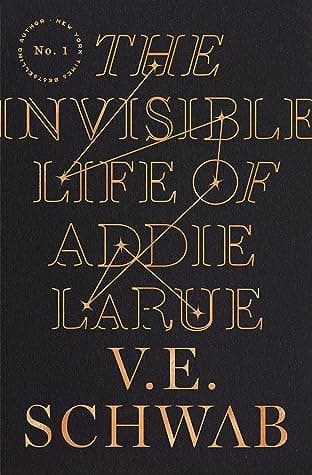
- The Invisible Life of Addie LaRue
V.E. Schwab
4.5 (17k) average on GoodreadsFantasyFeatures an immortal protagonist grappling with time, memory, and the search for connection.
- Eleanor & Park
Rainbow Rowell
4.0 (860k) average on GoodreadsYoung AdultA unique and deeply felt YA romance between two outsiders.
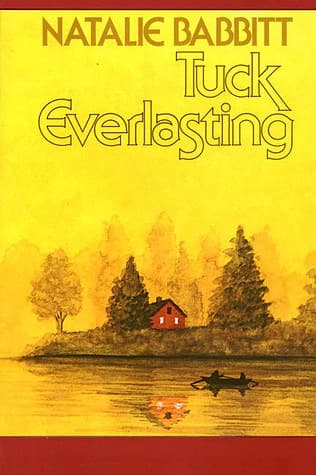
- Tuck Everlasting
Natalie Babbitt
3.9 (232k) average on GoodreadsFantasyExplores the concept of immortality and its implications through a younger perspective.
- The Fault in Our Stars
John Green
4.2 (3.6M) average on GoodreadsYoung AdultBoth novels explore profound emotional connections and existential themes under duress. While 'Thanks for the Trouble' employs fantasy, Green's novel achieves similar emotional depth through realistic portrayals of illness and mortality. Wallach's book shares the strength of character-driven emotional resonance but adds a supernatural layer.
- Harry Potter and the Sorcerer's Stone
J.K. Rowling
4.5 (7M) average on GoodreadsFantasyRescued from a miserable life under the stairs, an orphaned boy discovers he's a wizard destined for a magical school, where he uncovers a dangerous secret tied to the dark wizard who murdered his parents.
- The Hunger Games
Suzanne Collins
4.3 (6.4M) average on GoodreadsFantasyIn a future where children fight to the death on live television, Katniss Everdeen volunteers for the arena, turning a death sentence into a fight for survival and a spark of rebellion.




Enjoyed the summary?
A summary gives you the shape of the book. The book itself has the detail, the examples and the voice.
Find Thanks for the Trouble on AmazonAs an Amazon Associate, BookBrief earns from qualifying purchases. How we're funded