

Synopsis
Covers the whole plot, including the ending.
- Difficulty
- Easy
- Pacing
- Moderate
- Mood
- Intriguing, Analytical, Classic
- Read it if
- You enjoy classic Sherlock Holmes mysteries with a focus on meticulous deduction and a contained setting.
- Skip it if
- You prefer fast-paced thrillers or stories with complex, multi-layered plots.
The Adventure Of The Three Students Plot Summary
Covers the whole plot, including the ending.
A Professor's Plight and a Cryptic Clue
Professor Rushton, a lecturer, is getting ready for a Greek exam. The exam paper, with secret questions, is on his desk. After he leaves his study for a short time, he comes back to find the paper disturbed. A pencil is left, a small piece of black clay is on the desk, and a new cut is on the desk's surface. Upset that the exam's fairness is at risk, Professor Rushton calls Sherlock Holmes, who is staying nearby with Dr. Watson. Holmes finds the case interesting, seeing how urgent it is and the chance of a scandal at the university.
Holmes's Initial Investigation and Suspects
When they arrive at Professor Rushton's study, Sherlock Holmes carefully examines the scene. He notes the pencil, the clay, and the fresh cut on the desk. He figures out that the person copied the paper and was interrupted, causing a quick exit. Professor Rushton tells Holmes that only three students are taking this advanced Greek exam: Gilchrist, Daulat Ras, and Miles McLaren. All three live on the same floor as Professor Rushton and can use the common stairs, making them the main suspects. Holmes decides to talk to each student, starting with their rooms and general reputations.
Gilchrist: The Athlete with Financial Woes
Holmes and Watson first visit Mr. Gilchrist's rooms. Gilchrist is a tall, athletic young man, a long-jump champion, and a good student. He has money problems, having lost his inheritance, and needs a scholarship to keep studying. His room looks tidy, but Holmes notices a dark spot on the windowsill. During their talk, Gilchrist says he was out for a long walk when the incident happened. Holmes watches Gilchrist closely, noting his nervousness and how he avoids looking directly, which makes Holmes suspicious despite Gilchrist's good alibi and reputation.
Daulat Ras: The Industrious Indian Student
Next, Holmes and Watson visit Daulat Ras, a quiet and hardworking Indian student. His room is tidy and has many books, showing his dedication to studying. Daulat Ras seems calm during the interview, saying he is surprised by the incident and denies being involved. He states he was in his room studying when the paper was tampered with. Holmes finds no immediate evidence in Daulat Ras's room, nor any unusual behavior during their short talk. However, Holmes keeps watching for any small clues that might link him to the crime, but for now, Daulat Ras seems less likely than Gilchrist.
Miles McLaren: The Eccentric and Unpopular Genius
The last suspect is Miles McLaren, a student known for his intelligence but also for being unsociable and difficult. He has few friends and is temperamental and withdrawn. When Holmes and Watson try to talk to him, McLaren reacts with hostility, refusing them entry and slamming the door. This aggressive behavior, while not direct proof of guilt, certainly makes Holmes more suspicious. Refusing to cooperate suggests he has something to hide, or at least wants to avoid scrutiny. Holmes notes the difference between McLaren's academic skill and his social isolation, a common trait among some criminals.
Unraveling the Clues: Clay, Pencil, and Height
Holmes returns to Professor Rushton's study to look at the evidence again. He identifies the piece of black clay as modeling clay, the kind used in art classes. He then remembers the dark spot on Gilchrist's windowsill. Holmes also carefully measures the height of Professor Rushton's desk and the distance from the windowsill to the ground. He figures out that the person must have been tall enough to reach the paper from the window while standing on something. The specific type of pencil, a 'J. H. M.' lead pencil, becomes another important piece of the puzzle, suggesting a particular owner or source. Holmes starts to form a theory that connects one suspect's athletic ability with the physical act of tampering.
The Decisive Discovery: A Spiked Shoe and Clay Residue
Following his thoughts, Holmes and Watson go back to Gilchrist's room. Holmes asks to see Gilchrist's running shoes, especially those for long jumping. Gilchrist reluctantly gets a pair of spiked shoes. Holmes examines them closely and finds a small, dark piece of modeling clay stuck in one of the spikes, perfectly matching the clay on Professor Rushton's desk. This physical evidence is undeniable. Holmes confronts Gilchrist with the evidence, and the young man, seeing he is caught, breaks down. The clay directly links Gilchrist to the crime scene, confirming Holmes's earlier suspicions about his involvement.
Gilchrist's Confession and Motivation
Overwhelmed by the evidence, Gilchrist confesses to Holmes, Watson, and Professor Rushton. He explains he had been out practicing long jump and, on returning, saw Professor Rushton's window open and the exam paper clearly visible on the desk. Driven by desperate money problems and the great need for a scholarship, the temptation was too strong. He had a piece of modeling clay from an art class in his pocket, which he used to make an impression of the paper. He was interrupted by the professor's return, making him flee quickly, leaving the pencil and the clay. His confession confirms Holmes's reconstruction of the events.
The Resolution and Gilchrist's Future
After confessing, Gilchrist shows deep regret for what he did. Professor Rushton, though shocked at first, feels some pity for the young man's desperate situation. Instead of charging him or shaming him publicly, a kinder path is chosen. Gilchrist writes a full confession, withdrawing from the exam and the university. He decides to give up his academic plans and instead joins the Rhodesian police force, looking for a new start far from his old life's temptations and pressures. The scandal is avoided, the exam's fairness is kept, and justice is done without public shame, thanks to Holmes's quiet handling of the case.
Principal Figures
Sherlock Holmes
Protagonist
The brilliant consulting detective, investigating the exam paper theft.
Sherlock Holmes is the central protagonist, demonstrating his characteristic powers of observation, deduction, and logical reasoning. He meticulously examines the crime scene, noticing subtle clues like the modeling clay, the pencil, and the cut on the desk. He systematically interviews the suspects and, through a process of elimination and the integration of physical evidence, uncovers the truth. His calm demeanor and sharp intellect are key to solving the mystery without causing undue scandal. He is driven by a desire for truth and justice, often balancing strict adherence to the law with a pragmatic understanding of human frailty.
Relationships: Dr. Watson (Loyal companion and chronicler); Professor Rushton (Client and academic colleague)
Dr. Watson
Supporting
Holmes's loyal companion and the narrator of the story.
Dr. Watson serves as Holmes's faithful companion and the narrator, providing the reader's perspective. He accompanies Holmes on his investigations, observing the events and often providing a foil for Holmes's more esoteric deductions. While he sometimes misses the crucial details, his presence allows Holmes to explain his reasoning, making the complex deductions accessible to the audience. Watson's role is primarily to document the case and provide emotional support and a grounding presence for the brilliant, sometimes detached, Holmes.
Relationships: Sherlock Holmes (Close friend and professional associate)
Professor Rushton
Supporting
The professor whose exam paper is tampered with, initiating the investigation.
Professor Rushton is a respected academic and the victim of the crime. He is highly concerned with the integrity of his examination and the reputation of the university. His distress over the compromised paper leads him to seek Holmes's expertise. He is initially bewildered by the incident but trusts Holmes's judgment. He shows a degree of compassion and understanding towards the end, choosing a path of discretion rather than public humiliation for the culprit.
Relationships: Sherlock Holmes (Client); Mr. Gilchrist (Student)
Mr. Gilchrist
Antagonist (initially), Supporting
A gifted but financially desperate student who succumbs to temptation.
Mr. Gilchrist is one of the three students taking the Greek exam and the ultimate culprit. He is depicted as a talented athlete and scholar but is burdened by severe financial difficulties. This pressure, combined with the opportune sight of the exam paper, leads him to commit the desperate act of cheating. He is initially nervous and evasive during Holmes's interview but eventually breaks down and confesses, showing deep remorse for his actions. His character highlights the theme of temptation and the consequences of desperation.
Relationships: Professor Rushton (Student); Sherlock Holmes (Investigated by)
Daulat Ras
Supporting
An industrious and quiet Indian student, one of the suspects.
Daulat Ras is one of the three students taking the Greek exam, initially a suspect. He is characterized by his diligence, neatness, and quiet studiousness. He appears calm and composed during his interview with Holmes and has no obvious connection to the crime. His presence serves as a red herring, allowing Holmes to systematically eliminate suspects and focus on the more likely candidates.
Relationships: Professor Rushton (Student)
Miles McLaren
Supporting
A brilliant but unsociable and temperamental student, also a suspect.
Miles McLaren is the third student taking the Greek exam and another initial suspect. He is known for his exceptional academic abilities but also for his reclusive and ill-tempered nature. His hostile reaction to Holmes and Watson's attempt to interview him immediately raises suspicion, though it ultimately proves to be merely a characteristic display of his difficult personality rather than an indication of guilt related to the exam paper. He serves as a character who is suspicious due to temperament, not evidence.
Relationships: Professor Rushton (Student)
Themes & Insights
Temptation and Desperation
This theme is central to Gilchrist's story. His severe money problems and the need for a scholarship create a desperate situation. When he sees the exam paper through Professor Rushton's open window, the urge to cheat becomes too strong. The story shows how even a good person can be pushed to do wrong things under extreme pressure, showing the human side of the crime. Gilchrist's regret after his confession shows the inner struggle he felt.
“A man in my position, with all my hopes and ambitions, could not resist such a chance.”
Integrity and Academic Honesty
The whole idea of the story involves breaking academic rules. Professor Rushton's immediate worry comes from his exam paper being copied, which threatens the fairness of the academic system. Holmes's investigation is not just about solving a crime, but about bringing back the institution's honesty. The solution, where Gilchrist withdraws instead of being publicly exposed, is a way to uphold academic honesty without ruining a young man's future, balancing justice with careful handling.
“The honour of the University, Professor, is at stake.”
Observation and Deduction
This is a classic Sherlock Holmes theme. The story carefully describes Holmes's way of observing, from the type of pencil and the modeling clay to the cut on the desk and the window's height. Each small detail is an important part of the puzzle that Holmes figures out and connects. His ability to piece together events just from physical evidence and subtle behavior is what drives the story, showing the power of logical thought.
“You see, my dear Watson... one observes. One then deduces.”
Justice and Discretion
The story looks at different sides of justice. While Gilchrist clearly did wrong, the outcome is handled with care rather than harsh public punishment. Professor Rushton and Holmes agree that Gilchrist's confession and withdrawal from the university, along with his decision to go to Rhodesia, is enough of a consequence. This approach prevents a scandal that could hurt the university and gives Gilchrist a chance to make amends, showing that justice does not always need open retribution, but can also include mercy and a way to a new beginning.
“Let him go, Professor... He has learned his lesson.”
Plot Devices & Literary Techniques
The Red Herring
Misleading clues or suspects designed to divert the reader's attention.
The characters of Daulat Ras and Miles McLaren serve as red herrings. Daulat Ras's quiet demeanor and McLaren's hostile one both create initial suspicion, but neither is ultimately connected to the crime. McLaren's rudeness, in particular, is a strong misdirection, making him seem like a likely culprit due to his anti-social behavior. Holmes systematically investigates and dismisses them, keeping the reader guessing about the true identity of the perpetrator until the final reveal.
The 'Locked Room' (or 'Closed Circle') Mystery
A crime committed in a seemingly impossible or highly restricted environment.
While not a literal locked room, the crime occurs within the highly restricted and academic environment of a university, with only three known students having the motive and opportunity. The limited number of suspects living on the same floor as Professor Rushton creates a 'closed circle' of potential culprits. This device focuses the investigation and allows Holmes to meticulously examine each possibility within a confined setting, making the solution more impactful when the unexpected culprit is revealed from within the small group.
The Incriminating Object (Modeling Clay)
A seemingly innocuous object that proves to be the key piece of evidence.
The small lump of black modeling clay found on Professor Rushton's desk is the most significant incriminating object. Its unique nature allows Holmes to connect it directly to Gilchrist, who had been in an art class and carried the clay. The subsequent discovery of the matching clay in Gilchrist's spiked shoe provides irrefutable physical evidence. This seemingly minor detail becomes the linchpin of Holmes's case, demonstrating his ability to extract profound meaning from the smallest clues.
The Interrupted Crime
The perpetrator's actions are cut short, leaving behind crucial evidence.
The fact that Gilchrist was interrupted during his attempt to copy the exam paper is a critical plot device. His hasty departure led him to leave behind the pencil, the lump of clay, and the fresh cut on the desk. Had he completed his task undisturbed, the evidence would have been much scarcer. The interruption provides Holmes with the very clues he needs to reconstruct the event and identify the culprit, making the crime's incompletion an advantage for the detective.
The Adventure Of The Three Students Quotes
“I was returning from a case in the university town of Cambridge, and my train was delayed there for several hours.”
“He was a man of forty, and a scholar of some distinction.”
“I have been the victim of a most audacious and impudent fraud.”
“Someone has broken into my study and copied, or attempted to copy, the examination papers for the Fortescue Scholarship.”
“The papers are to be set in three days' time.”
“The only possible culprits are the three students who live on the same stair as myself.”
“It is a most intricate problem, Watson, and one which promises to tax our powers to the uttermost.”
“Observe the little heap of sawdust on the carpet.”
“This is a case, Watson, in which the minuter details are of the highest importance.”
“The game is afoot, Watson, and we must not lose a moment.”
“It is a dangerous thing to play with fire, Mr. Gilchrist.”
“He had hoped to gain the scholarship by unfair means.”
“It was the height of the man, Watson, which gave me the clue.”
“A man's character may be read in his handwriting, as his life's history may be read in his face.”
Quiz
10 questions on the plot and the characters. Each answer comes with a short explanation.
Question 1
What was the subject of the examination for which the stolen proofs were intended?
- Classical Greek
- Ancient Persian
- Biblical Hebrew
- Medieval Latin
Show answer
B. Ancient Persian The examination was for the Fortescue Scholarship, and the stolen proofs were for an examination in Ancient Persian, as stated by Mr. Hilton Soames.
Question 2
What object did Holmes find on the floor that provided the first significant clue about the culprit?
- A broken pencil lead
- A small piece of clay
- A shaving of wood
- A torn piece of paper
Show answer
C. A shaving of wood Holmes found a small, dark shaving of wood on the floor, which he later identified as coming from a pencil that had been sharpened.
Question 3
Which of the three students was described as being a 'first-class sprinter'?
- Gilchrist
- Daulat Ras
- Miles McLaren
- Hilton Soames
Show answer
A. Gilchrist Gilchrist was known for his athletic prowess, specifically being a first-class sprinter and jumper, which was a key detail in determining how he managed to peek into Mr. Soames's window.
Question 4
What was the peculiar detail about the window that allowed the culprit to see the proofs?
- It was slightly ajar and unlocked.
- It was very low to the ground, making it easy to look in.
- It was unusually high, requiring someone to stand on something.
- It had a broken pane of glass.
Show answer
C. It was unusually high, requiring someone to stand on something. The window was unusually high from the ground, requiring the culprit to stand on something, which Holmes deduced was Gilchrist's spiked running shoes after he had jumped to look in.
Question 5
What item did Holmes find in Gilchrist's room that confirmed his guilt?
- A copy of the Persian proofs
- A pair of spiked running shoes
- A freshly sharpened pencil
- A note confessing to the crime
Show answer
B. A pair of spiked running shoes Holmes found Gilchrist's running shoes, which had a peculiar clay-like substance on them, matching the impression left on the window-sill, and the shavings from the pencil he had sharpened.
Question 6
Why did Gilchrist ultimately confess to the crime?
- He was confronted by the police with irrefutable evidence.
- He was convinced by his own conscience and a letter from his father.
- He believed he had been discovered by Professor Soames.
- Holmes tricked him into admitting it during an interrogation.
Show answer
B. He was convinced by his own conscience and a letter from his father. Gilchrist confessed after seeing a letter from his father, which encouraged him to act honorably. This, combined with Holmes's quiet investigation and the weight of his own guilt, led to his confession.
Question 7
What was the ultimate resolution for Gilchrist after his confession?
- He was expelled and prosecuted for theft.
- He was allowed to withdraw from the examination and take up a position in Rhodesia.
- He was given a second chance to take the examination.
- He was publicly disgraced and forced to leave the university.
Show answer
B. He was allowed to withdraw from the examination and take up a position in Rhodesia. Upon confessing, Gilchrist was offered a chance to withdraw from the examination and accept a position as secretary to a gentleman in Rhodesia, a path that offered him a fresh start away from his academic disgrace.
Question 8
How did Holmes initially narrow down the suspects to the three students?
- He interviewed all staff and students in the vicinity.
- He observed the proximity of their rooms to Mr. Soames's study.
- He found a personal item belonging to one of them at the crime scene.
- Mr. Soames already suspected one of them.
Show answer
B. He observed the proximity of their rooms to Mr. Soames's study. Holmes noted that the three students (Gilchrist, Daulat Ras, and Miles McLaren) had rooms in the same building, making them the most likely candidates to have been in the vicinity when the crime occurred.
Question 9
What was the significance of the small, dark clay found on the window-sill and Gilchrist's shoes?
- It was a rare type of soil only found near Gilchrist's hometown.
- It indicated that the culprit had been gardening recently.
- It was a distinctive type of earth from the university's running track.
- It was residue from a specific chemical used in the laboratory.
Show answer
C. It was a distinctive type of earth from the university's running track. The clay was identified as a peculiar type of earth from the university's athletic track, where Gilchrist, being a runner, would frequently train. This linked him directly to the scene of the crime.
Question 10
What was the underlying motive for Gilchrist's actions?
- He sought to ruin the reputation of his academic rivals.
- He was desperate for financial security and saw the scholarship as his only way out of poverty.
- He was blackmailed into stealing the proofs by an unknown party.
- He was simply curious and couldn't resist the temptation to peek.
Show answer
B. He was desperate for financial security and saw the scholarship as his only way out of poverty. Gilchrist's father had lost most of his money, and Gilchrist was desperate to win the scholarship to secure his future. This desperation led him to cheat, hoping to gain an advantage.
The Adventure Of The Three Students FAQ
What is 'The Adventure Of The Three Students' about?
'The Adventure of the Three Students' is a Sherlock Holmes mystery where Holmes and Dr. Watson investigate a case of academic cheating at a prestigious university. Mr. Hilton Soames, a tutor at St. Luke's College, discovers that someone has illicitly accessed and copied parts of an examination paper he prepared, jeopardizing his career and the integrity of the university.
Why should I read 'The Adventure Of The Three Students'?
You should read it for a classic Sherlock Holmes puzzle that showcases his deductive reasoning in a contained academic setting. It's a quick, engaging read that highlights Holmes's methodical approach to seemingly minor crimes and the psychological pressure on those involved in high-stakes academic environments.
What is the background/setting of 'The Adventure Of The Three Students'?
The story is set at St. Luke's College, one of England's ancient universities, specifically within the tutor Mr. Hilton Soames's rooms. The atmosphere is one of academic rigor and quiet contemplation, abruptly disturbed by the scandal of the leaked Greek examination paper, creating a tense, confined environment for Holmes's investigation.
What are the most memorable quotes?
One memorable quote is Holmes's observation, 'It is an old maxim of mine that when you have excluded the impossible, whatever remains, however improbable, must be the truth.' This encapsulates his investigative philosophy. Another is 'The more bizarre a crime is, the more easy it is to solve,' reflecting his preference for unique cases.
What writing style does the author use?
Arthur Conan Doyle employs his characteristic clear, concise, and formal prose, narrated through the perspective of Dr. Watson. The style emphasizes logical progression, detailed observation, and a gradual revelation of clues, building suspense through Holmes's intellectual process rather than overt action.
What minor details add significant meaning?
The specific details of the examination paper's content, Greek text, and the nature of the ink and paper are crucial. Also, the presence of a small, triangular piece of black clay, a pencil shaving, and a fresh cut on a desk are all seemingly insignificant items that Holmes meticulously connects to the culprit, Daulat Ras.
What are some subtle foreshadowing moments?
The initial description of the three students and their rooms, particularly Daulat Ras's quiet demeanor and scholarly focus, subtly sets him up as a potential suspect. Also, the emphasis on the difficulty and importance of the Greek examination foreshadows the desperate measures someone might take to gain an advantage.
What unexpected character connections exist?
While not a deep 'connection,' the most unexpected link is between the seemingly upright Mr. Soames and his cleaner, Bannister. Bannister, out of a sense of loyalty and past kindness from Daulat Ras, protects the student, becoming an unexpected obstacle to Holmes's initial investigation and adding a layer of moral complexity.
What are unspoken character motivations?
Bannister's unspoken motivation is a deep sense of gratitude and loyalty to Daulat Ras, who had previously helped him during an illness. This leads him to actively, yet subtly, obstruct Holmes's investigation by giving Daulat Ras time to confess and escape, prioritizing human connection over legal justice.
What psychological complexities do characters exhibit?
Daulat Ras exhibits the psychological complexity of desperate ambition leading to a moral lapse, followed by deep regret and panic. Bannister displays a complex loyalty that pits his sense of duty to his employer against his personal bond with Daulat Ras, leading to a morally ambiguous decision to protect the culprit.
What are the major emotional turning points?
A major emotional turning point is when Mr. Soames discovers the tampered examination paper, leading to his frantic call to Holmes and his despair over his ruined reputation. Another is when Bannister reveals his partial complicity, highlighting the conflict between his personal feelings and the demands of justice, and Daulat Ras's subsequent confession.
How do relationship dynamics evolve?
The relationship between Mr. Soames and Bannister is initially one of employer-employee, but it's revealed to have a deeper history of kindness, influencing Bannister's actions. The dynamic between Holmes and Bannister evolves from investigator and uncooperative witness to one of reluctant understanding, as Holmes deduces Bannister's motivations.
Which parts remain ambiguous or open-ended?
The story leaves Daulat Ras's ultimate fate somewhat ambiguous. While he confesses and absconds, his future career and where he goes after fleeing are not detailed. The full extent of the scandal's impact on St. Luke's College beyond Soames's immediate relief is also left to the reader's imagination.
What are controversial scenes or decisions?
Bannister's decision to lock Daulat Ras in the room and give him time to confess and escape before revealing the truth to Holmes could be seen as controversial. It's a clear obstruction of justice, driven by personal loyalty, which challenges the straightforward pursuit of the law.
'The Adventure Of The Three Students' ending explained: how it ends & what it means
The story ends with Holmes successfully deducing that Daulat Ras was the culprit who copied the exam, aided by Bannister's loyalty. Daulat Ras confesses and flees the country, avoiding formal prosecution, while Bannister's actions are understood, if not fully condoned. The ending signifies that justice, while served in identifying the culprit, doesn't always follow the strictest legal path, allowing for human elements like mercy and loyalty to influence the outcome.
About the author
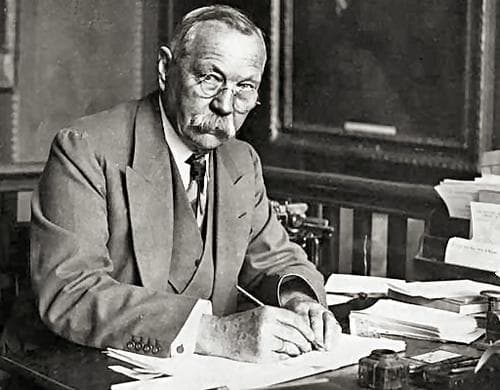
Sir Arthur Ignatius Conan Doyle was a British writer and physician. He created the character Sherlock Holmes in 1887 for A Study in Scarlet, the first of four novels and fifty-six short stories about Holmes and Dr. Watson. The Sherlock Holmes stories are milestones in the field of crime fiction.
Similar books
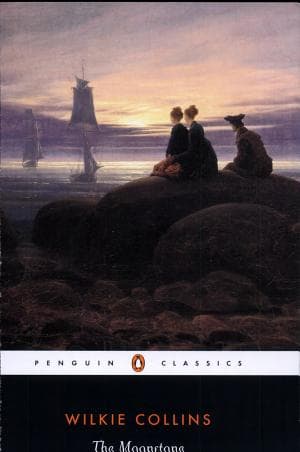
- The Moonstone
Wilkie Collins
3.9 (79k) average on GoodreadsHistorical FictionCollins' novel is a sprawling, multi-narrator epic with a leisurely pace and deep psychological exploration. Doyle's story is far more concise, focused on a single intellectual puzzle and swift resolution, prioritizing deduction over character depth or societal critique.
- Angels & Demons
Dan Brown
3.9 (2.7M) average on GoodreadsThrillerA Harvard symbologist races through Rome's ancient sites, deciphering cryptic clues to unmask the Illuminati and stop a vengeful plot to destroy the Vatican with a stolen antimatter weapon.
- Gone Girl
Gillian Flynn
4.1 (2.3M) average on GoodreadsThrillerA wife's sudden disappearance on her fifth anniversary reveals a web of lies and psychological warfare, exposing the secrets within a seemingly perfect marriage.
- The Girl on the Train
Paula Hawkins
3.9 (2.1M) average on GoodreadsThrillerA woman’s fascination with a seemingly perfect couple she watches from her daily train commute leads her into a dark investigation when she witnesses something that shatters their idyllic image.
- The Lovely Bones
Alice Sebold
3.8 (2M) average on GoodreadsFantasyA murdered teenage girl watches from the afterlife as her family struggles with grief and her killer remains free, wanting to bridge the gap between worlds to bring him to justice.
- The Da Vinci Code
Dan Brown
3.9 (1.9M) average on GoodreadsThrillerA symbologist and a cryptologist race through European landmarks, deciphering ancient codes and uncovering a conspiracy that could rewrite the foundations of Christianity.





Enjoyed the summary?
A summary gives you the shape of the book. The book itself has the detail, the examples and the voice.
Find The Adventure Of The Three Students on AmazonAs an Amazon Associate, BookBrief earns from qualifying purchases. How we're funded