
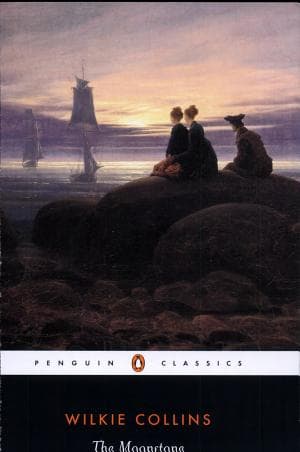
Synopsis
Covers the whole plot, including the ending.
- Difficulty
- Medium
- Pacing
- Moderate
- Mood
- Intriguing, Suspenseful, Atmospheric, Analytical
- Read it if
- You enjoy classic Victorian mysteries with multiple narrators, intricate plots, and a focus on character psychology and social commentary.
- Skip it if
- You prefer fast-paced thrillers or find lengthy descriptions and digressions tedious.
The Moonstone Plot Summary
Covers the whole plot, including the ending.
The Moonstone's Arrival
The story begins with Gabriel Betteredge, Lady Verinder's steward, telling about the Moonstone. He explains how Colonel Herncastle, a disgraced officer who looted the diamond from an Indian temple during the Siege of Seringapatam, leaves it to his niece, Rachel Verinder, on her eighteenth birthday. This is a final, cruel act, as the Colonel knows the diamond is believed to be cursed and guarded by three Hindu Brahmins. The diamond's history is full of violence and disrespect, creating a dark mood for its arrival at Lady Verinder's country estate. This immediately causes worry and superstition among the staff, especially Betteredge, who has heard the Colonel's disturbing stories.
The Birthday Party and the Theft
Rachel Verinder's eighteenth birthday party is a large event, with guests including Franklin Blake, Rachel's cousin and a close friend, and Godfrey Ablewhite, a charitable but somewhat self-serving relative. The Moonstone, a large yellow diamond, is clearly displayed in Rachel's sitting-room cabinet, despite warnings from the Indian jugglers who appear on the estate and are thought to be agents of the Brahmins. That night, after the party, the Moonstone mysteriously disappears from Rachel's cabinet. The house is searched thoroughly, but no trace of the diamond or forced entry is found, causing confusion and suspicion. Rachel herself appears very upset and secretive about the theft.
Sergeant Cuff's Investigation
Sergeant Cuff, a famous London detective known for his rose-growing hobby and sharp mind, is called to investigate the theft. He carefully examines the scene, questioning everyone in the house. His first theory points to Rachel herself, or someone she is protecting, because of her strange behavior and refusal to fully cooperate. Cuff finds a smudge of paint on Rachel's dressing-gown and a smeared doorframe, suggesting a deliberate attempt to hide something. Despite his observations, Cuff cannot recover the diamond or clearly identify the thief. He leaves Lady Verinder's estate, advising her to fire the housemaid Rosanna Spearman, whom he suspects knows more than she admits, but Lady Verinder refuses.
Rosanna Spearman's Secret and Demise
Rosanna Spearman, a former convict trying to reform, falls deeply in love with Franklin Blake. She acts erratically after the theft, showing great anxiety and secrecy. She is seen making a suspicious package and later disappears. Gabriel Betteredge discovers that Rosanna has drowned herself in the Shivering Sands, a dangerous quicksand area near the house. Before her death, she leaves a letter for Franklin Blake, revealing her knowledge of the theft and her wish to protect him, but her true involvement or what she knows remains unclear. Her tragic end adds more mystery and sadness to the events, further complicating the investigation into the Moonstone's disappearance.
Franklin Blake's Return and Renewed Investigation
Years after the theft, Lady Verinder dies, and Rachel, now living in London, remains distant from Franklin Blake because of his implied suspicion. Franklin, still bothered by the unsolved mystery and his strained relationship with Rachel, returns to England from abroad, determined to find the truth. He believes that by finding the Moonstone and identifying the real thief, he can clear his own name and make up with Rachel. He begins to interview the various narrators, collecting their accounts of the events, starting with Gabriel Betteredge, then Miss Clack, and later Ezra Jennings. This multi-perspective narrative lets the reader put together the fragmented clues alongside Franklin.
Ezra Jennings's Theory
Franklin Blake consults Ezra Jennings, a strange and sickly doctor with a dark past, who had been treating Lady Verinder. Jennings, having watched Franklin's behavior on the night of the theft and knowing about his insomnia and a dose of opium he took, develops a new theory. He suggests that Franklin, without knowing it, stole the Moonstone while sleepwalking under the influence of a strong dose of laudanum (opium), which had been given by Mr. Candy, the local doctor, to help his insomnia. Jennings explains that the opium could have made him act out a subconscious desire or suggestion, making him the unwitting thief.
The Experiment
To prove his theory, Ezra Jennings plans an experiment. With help from Betteredge and Sergeant Cuff (who has been called back), Franklin Blake is given another dose of opium, exactly like the one he took on the night of the theft. The household staff and the investigating team watch him as he reenacts the theft in a trance-like state. Franklin, while sleepwalking, takes a substitute diamond (a mock Moonstone) from the cabinet and places it in Godfrey Ablewhite's room. This dramatic reenactment confirms Jennings's theory: Franklin Blake was indeed the unconscious perpetrator of the theft, his actions driven by the drug and a subconscious wish to protect Rachel's property, as he had been asked to secure it earlier that evening.
Godfrey Ablewhite's Exposure
The experiment shows that Franklin Blake, in his opium-induced state, had indeed taken the Moonstone from Rachel's cabinet. However, he had not kept it. Instead, he had given it to Godfrey Ablewhite for safekeeping, believing he was protecting it. Ablewhite, a man of seemingly perfect reputation, had then kept the diamond for himself, planning to sell it. Sergeant Cuff, now fully involved, pursues Ablewhite to London. The three Indian Brahmins, who have been tracking the Moonstone, confront Ablewhite in a boarding house. In a violent struggle, they recover the diamond, and Ablewhite is killed, fulfilling the prophecy of the Moonstone's curse.
The Brahmins' Escape and the Moonstone's Return
After recovering the Moonstone from Godfrey Ablewhite, the three Indian Brahmins skillfully avoid capture by the authorities. They begin a dangerous journey back to India, carefully planning their escape and the return of the sacred gem. Their strong dedication to their religious duty drives them, as they believe the Moonstone's rightful place is in the forehead of the idol in the temple from which it was stolen. The final part of the story, told by Mr. Murthwaite, an Indian traveler, describes the Moonstone being successfully put back in its original setting in the temple, ending the curse and the trouble it caused among the English characters. The Brahmins' mission is complete, and the diamond is finally at peace.
Resolution and Aftermath
With the mystery solved and Franklin Blake's innocence proven, he and Rachel Verinder reconcile and eventually marry, finding happiness after years of misunderstanding and pain. The various narrators—Gabriel Betteredge, Miss Clack, Mr. Bruff, Ezra Jennings, and Mr. Murthwaite—finish their accounts, each offering their unique view of the events and their personal thoughts. The novel ends with a sense of closure, though the lasting effects of the Moonstone's curse and the moral complexities of its theft and recovery are not entirely forgotten. The story highlights the cultural clash and the consequences of colonial appropriation, leaving a lasting impression on everyone involved.
Principal Figures
Franklin Blake
Protagonist
Rachel's cousin and primary investigator of the Moonstone's theft.
Franklin Blake is an intelligent, well-traveled, and generally good-natured young man. He is initially perceived as a bit of a dilettante but possesses a strong sense of justice and a deep affection for Rachel Verinder. He is plagued by the mystery of the Moonstone, particularly after he is indirectly implicated in its theft. His determination to clear his name and reconcile with Rachel drives his exhaustive investigation. He is open-minded enough to consider Ezra Jennings's unconventional theories.
Relationships: Rachel Verinder (Love interest and cousin); Gabriel Betteredge (Confidante and initial narrator); Ezra Jennings (Crucial collaborator in solving the mystery); Godfrey Ablewhite (Rival for Rachel's affection; unwitting accomplice in the theft)
Rachel Verinder
Protagonist
The heiress to whom the Moonstone is bequeathed, whose strange behavior complicates the investigation.
Rachel Verinder is a strong-willed, independent, and proud young woman. She is the recipient of the cursed Moonstone on her eighteenth birthday, which plunges her into a world of suspicion and heartbreak. Her refusal to reveal what she knows about the theft, driven by a desire to protect Franklin Blake (whom she mistakenly believes is the thief), makes her appear cold and uncooperative. She is deeply affected by the events, leading to a period of estrangement from Franklin and a profound sense of isolation.
Relationships: Franklin Blake (Love interest and cousin); Lady Verinder (Mother); Godfrey Ablewhite (Suitor she rejects); Rosanna Spearman (Mistress of the house to her servant)
Sergeant Cuff
Supporting
The renowned London detective brought in to solve the Moonstone theft.
Sergeant Cuff is a shrewd and methodical detective with an unusual passion for cultivating roses. He is highly observant and possesses a keen understanding of human nature, though his initial conclusions about Rachel's involvement prove incorrect. He is persistent in his investigations, even when dismissed, and his professional integrity drives him to pursue the truth. His calm demeanor and sharp intellect make him a formidable investigator, despite his initial failure to solve the case.
Relationships: Franklin Blake (Collaborator in the later investigation); Gabriel Betteredge (Fellow investigator and source of information); Lady Verinder (Employer)
Gabriel Betteredge
Supporting
Lady Verinder's loyal steward and the first narrator of the story.
Gabriel Betteredge is a faithful, opinionated, and somewhat superstitious old steward. He serves as the primary narrator for the initial part of the story, offering a charmingly rambling and often humorous perspective on the events at Verinder House. He is devoted to his mistress, Lady Verinder, and deeply fond of Rachel. His reliance on 'Robinson Crusoe' for guidance and his old-fashioned sensibilities provide a grounding, if sometimes biased, viewpoint. He is fiercely loyal but also prone to misjudgment.
Relationships: Lady Verinder (Employer and object of his loyalty); Rachel Verinder (Young mistress, whom he adores); Franklin Blake (Confidante and friend); Sergeant Cuff (Initial skeptic, later collaborator)
Rosanna Spearman
Supporting
A housemaid with a criminal past, secretly in love with Franklin Blake.
Rosanna Spearman is a reformed convict working as a housemaid, deeply sensitive and insecure due to her past. She becomes intensely devoted to Franklin Blake, a devotion that borders on obsession. After the Moonstone's theft, her behavior becomes increasingly erratic and secretive. Her guilt, despair, and unrequited love for Franklin lead to her tragic suicide. She possesses crucial, though partial, knowledge about the theft, which she tries to convey to Franklin in her final moments.
Relationships: Franklin Blake (Object of unrequited love); Rachel Verinder (Mistress); Sergeant Cuff (Suspect in his initial investigation)
Ezra Jennings
Supporting
A sickly, unconventional doctor who devises the key to solving the mystery.
Ezra Jennings is a brilliant but eccentric doctor with a distinctive appearance (piebald hair) and a mysterious, melancholic past. He is an outcast in society due to his appearance and rumored past but possesses an acute medical mind and a deep understanding of psychology. His knowledge of drugs, particularly opium, and his meticulous observations allow him to formulate the groundbreaking theory about Franklin Blake's sleepwalking. He is driven by a desire for intellectual truth and a quiet compassion.
Relationships: Franklin Blake (Collaborator and patient); Mr. Candy (Fellow doctor, whose actions he investigates)
Godfrey Ablewhite
Antagonist
A philanthropic but hypocritical suitor to Rachel, who is revealed as the true human thief.
Godfrey Ablewhite is presented as a charming, benevolent, and deeply religious man, actively involved in various charities. He is a seemingly perfect suitor for Rachel, admired by many, including Miss Clack. However, beneath this pious facade lies a greedy and hypocritical individual with a secret life of debt and dissipation. He is the true human villain of the story, exploiting Franklin's opium-induced state to steal the Moonstone for his own financial gain. His outward respectability masks a corrupt interior.
Relationships: Rachel Verinder (Suitor); Franklin Blake (Rival and unwitting accomplice); Miss Clack (Admirer and relative)
Miss Clack
Supporting
A self-righteous, evangelical cousin of Rachel, who provides a biased narrative.
Miss Clack is a relentlessly evangelical and self-righteous woman, obsessed with converting everyone to her religious views. She is a distant cousin of Rachel and uses every opportunity to preach and distribute religious tracts. Her narrative is heavily colored by her moralizing judgments and her admiration for Godfrey Ablewhite. She is a comedic, albeit irritating, character, whose narrow-minded perspective ironically provides some key, if distorted, insights into the household's dynamics. She embodies Victorian hypocrisy and moral superiority.
Relationships: Rachel Verinder (Cousin, whom she wishes to 'save'); Godfrey Ablewhite (Object of her intense admiration and support)
Lady Verinder
Supporting
Rachel's mother, a proud and resolute woman.
Lady Verinder is Rachel's mother, a dignified and resolute woman of high social standing. She is fiercely protective of her daughter and her household, but also somewhat rigid in her beliefs and class distinctions. Her pride and refusal to believe ill of her loved ones initially hinder the investigation, particularly when Sergeant Cuff suggests Rosanna's involvement. She is deeply affected by the scandal and the estrangement between Rachel and Franklin, eventually dying from the stress. She represents the traditional, aristocratic Victorian society.
Relationships: Rachel Verinder (Daughter); Franklin Blake (Nephew); Gabriel Betteredge (Loyal steward)
The Three Indian Brahmins
Antagonist
The relentless guardians of the Moonstone, seeking to return it to its temple.
The three Indian Brahmins are mysterious, silent figures who represent the spiritual and cultural forces that oppose the theft and desecration of the Moonstone. They are dedicated, almost fanatically, to their sacred duty of recovering the diamond and returning it to the forehead of the idol in the temple of the Moon-god. They follow the diamond relentlessly, appearing at key moments in the story as a constant, looming threat. They are driven by religious conviction and a sense of historical justice, ultimately fulfilling their mission.
Relationships: Colonel Herncastle (Original thief of the Moonstone); Godfrey Ablewhite (The final holder of the Moonstone, whom they kill)
Themes & Insights
Colonialism and Cultural Appropriation
The Moonstone itself is a direct result of British colonialism, stolen from an Indian temple by Colonel Herncastle. The story repeatedly shows how wrong this act was and the lasting curse that follows the diamond. The relentless pursuit by the three Indian Brahmins highlights rightful ownership and the spiritual effects of stealing cultural artifacts. This theme is clear from the first chapter, where Betteredge tells of Herncastle's violent acquisition, and ends with the Moonstone's return to India, suggesting a moral reckoning for colonial wrongs.
“'The Moonstone was a sacred gem, and to steal it was to incur the wrath of the gods.”
Guilt and Secrecy
Guilt and secrecy fill the novel, driving much of the characters' actions and the plot's complexity. Rachel's refusal to talk about the theft, because she mistakenly believes Franklin is the thief, creates a wall of secrecy that prolongs the mystery and causes great personal suffering. Rosanna Spearman's past as a convict and her later actions, driven by guilt and desperate love, further show this theme. Even Godfrey Ablewhite's outwardly philanthropic life hides a secret world of debt and hypocrisy. The novel explores how hidden truths and unconfessed burdens can warp perceptions and lead to tragedy.
“'There is no such thing as a secret in this world. The very stones of the street would speak, if there were a secret to be told.”
The Fallibility of Perception and Evidence
A main theme is how unreliable human perception is and how ambiguous evidence can be. Sergeant Cuff's initial investigation, despite his intelligence, is flawed because he lacks key information and misinterprets Rachel's behavior. Franklin Blake is wrongly suspected by Rachel, and vice versa, due to incomplete knowledge. Ezra Jennings's theory of opium-induced sleepwalking completely changes what counts as 'proof' and challenges common ideas of guilt and intent. The multi-narrator structure itself emphasizes how different viewpoints can lead to very different conclusions about the same facts, showing how subjective truth is.
“'What is the use of the Moonstone being gone, if we are not all to be made miserable?”
Hypocrisy and Social Facades
The novel criticizes Victorian society's focus on outward respectability and the hypocrisy often hidden beneath it. Godfrey Ablewhite is a perfect example, presenting himself as a pious philanthropist while secretly living a life of debt and immorality. Miss Clack, with her constant evangelism and judgmental nature, embodies religious hypocrisy. The novel suggests that appearances can be very misleading, and that social standing or claimed virtue do not always mean moral integrity. This theme exposes the superficiality and moral compromises common among the era's upper classes.
“'It is a melancholy truth that even the best of us are not proof against the seductions of money.”
Justice and Redemption
Justice, both earthly and spiritual, drives the story. The Brahmins' relentless pursuit of the Moonstone represents a quest for ancient justice, returning a sacred artifact to its proper place. Franklin Blake's investigation is a personal quest for justice, seeking to clear his name and reconcile with Rachel. Rosanna Spearman, despite her past, tries to find redemption through her actions, however misguided. The novel ultimately delivers a complex form of justice, where the true human thief is punished, the innocent are cleared, and the Moonstone is returned, suggesting that balance is eventually restored.
“'The ways of Providence are indeed wonderful.”
Plot Devices & Literary Techniques
Multiple Narrators
The story is told through a series of first-person accounts from different characters.
This device creates a fragmented, multi-faceted perspective on the events, allowing Collins to build suspense and mislead the reader. Each narrator (Betteredge, Miss Clack, Mr. Bruff, Franklin Blake, Ezra Jennings, Mr. Murthwaite) brings their own biases, personality, and limited knowledge to the story, reflecting the fallibility of human perception. This technique allows for the gradual revelation of information, keeping the reader engaged in piecing together the truth, much like a detective. It also provides social commentary through the diverse viewpoints of different classes and temperaments.
The MacGuffin (The Moonstone)
A priceless, cursed diamond that drives the entire plot.
The Moonstone serves as the central object of desire and conflict. Its value, historical significance, and purported curse initiate the entire chain of events, from its theft from the Indian temple to its final return. While the mystery is ostensibly about who stole it, the Moonstone itself is the catalyst for exploring themes of colonialism, guilt, and human nature. It motivates the actions of nearly every character, from the Brahmins to Godfrey Ablewhite, and its presence or absence dictates the emotional and physical trajectory of the plot.
The Opium Experiment
A scientific reenactment of the theft under the influence of a drug.
This ingenious plot device, conceived by Ezra Jennings, is the key to unlocking the mystery. It allows Franklin Blake to unknowingly reenact the theft, proving that he was the unconscious perpetrator while under the influence of laudanum. This device introduces a scientific, almost proto-forensic, element to the detective story, moving beyond simple deduction to a controlled experiment. It not only solves the 'who' but also the 'how' of the theft, highlighting the complexities of human consciousness and the unexpected ways in which truth can be revealed.
The Unreliable Narrator
Narrators whose accounts are colored by personal bias, limited knowledge, or hidden agendas.
Almost every narrator in 'The Moonstone' is, to some extent, unreliable. Gabriel Betteredge is superstitious and prone to rambling; Miss Clack is intensely prejudiced by her religious fervor and admiration for Godfrey Ablewhite; even Franklin Blake's initial account is limited by his own ignorance of his opium-induced actions. This device enhances the mystery, forcing the reader to constantly question the information presented and to synthesize conflicting accounts. It underscores the novel's theme of the fallibility of perception and makes the eventual revelation of the truth all the more impactful.
The Moonstone Quotes
“A man who has an honest reason for secreting himself, is much more to be dreaded than a man who has a bad reason for secreting himself.”
“The one thing that is certain in this world is that we are all of us in the dark.”
“It is not the business of the law to make you moral. It is the business of the law to make you obey.”
“There is no such thing as being too particular in a case of this kind.”
“I may be an old fool, but I know what I know.”
“Human ingenuity can always find a way where there is money to be made.”
“The true secret of being a happy fool is to be a fool without knowing it.”
“We are all of us more or less mad. We only differ in the way we are mad.”
“The one thing that is more remarkable than the wisdom of the wise is the folly of the foolish.”
“It is the small things that betray us.”
“There is no perfect crime, just imperfect detection.”
“The best way to keep a secret is to pretend there isn't one.”
“Experience is a good school, but the fees are high.”
“It is not every man who has the courage to be an honest man.”
Quiz
10 questions on the plot and the characters. Each answer comes with a short explanation.
Question 1
On what occasion is the Moonstone first brought to Rachel Verinder's house in Yorkshire?
- Her 18th birthday celebration
- The annual village fair
- A Christmas gathering
- Her engagement party
Show answer
A. Her 18th birthday celebration The Moonstone arrives at Rachel's house on her 18th birthday, as per her uncle Herncastle's will, setting the stage for its disappearance.
Question 2
Which character is the first narrator of the story, providing an account of the events from his perspective?
- Franklin Blake
- Sergeant Cuff
- Gabriel Betteredge
- Mr. Bruff
Show answer
C. Gabriel Betteredge Gabriel Betteredge, the faithful house-steward, is the first to narrate the events, beginning with his humorous and superstitious account.
Question 3
What is the primary motivation of the three Indian Brahmins who are searching for the Moonstone?
- To sell it for a large profit
- To return it to its rightful place in a temple
- To use its power for political gain
- To avenge the death of their leader
Show answer
B. To return it to its rightful place in a temple The Brahmins are devoted to reclaiming the Moonstone, not for personal gain, but to restore it to the forehead of their idol in the temple from which it was stolen.
Question 4
What unusual habit does Sergeant Cuff, the detective from London, have regarding roses?
- He collects rare rose species.
- He believes roses bring bad luck.
- He is an expert in growing roses and often discusses them.
- He despises the smell of roses.
Show answer
C. He is an expert in growing roses and often discusses them. Sergeant Cuff, despite his sharp detective skills, has a peculiar passion for rose-growing and frequently brings up the topic, much to the exasperation of others.
Question 5
Why does Rachel Verinder refuse to reveal who she saw take the Moonstone, causing suspicion to fall on her?
- She is trying to protect herself from legal repercussions.
- She believes it will cause a scandal that will ruin her family.
- She saw the man she loves, Franklin Blake, take it, and wants to protect him.
- She wants to handle the recovery of the diamond herself without police involvement.
Show answer
C. She saw the man she loves, Franklin Blake, take it, and wants to protect him. Rachel saw Franklin Blake take the diamond, and out of love and a desire to protect him, she refuses to disclose this, leading to her being misjudged and isolated.
Question 6
What is Ezra Jennings's physical appearance and condition, and how does it affect others' perception of him?
- He is robust and energetic, inspiring confidence.
- He is frail, pale, and has a distinctive white streak in his hair, causing him to be viewed with suspicion and unease.
- He is exceptionally handsome, leading to jealousy.
- He is blind, but possesses keen hearing.
Show answer
B. He is frail, pale, and has a distinctive white streak in his hair, causing him to be viewed with suspicion and unease. Ezra Jennings is described as having a sickly appearance, a 'death-pale' face, and a striking white streak in his black hair, which makes people wary of him, despite his sharp intellect.
Question 7
What is the crucial experiment proposed by Ezra Jennings to uncover the truth about the Moonstone's disappearance?
- To reconstruct the crime scene using hypnosis.
- To administer a specific dose of opium to Franklin Blake to recreate the night's events.
- To interview all suspects under oath with a truth serum.
- To use advanced forensic techniques to analyze the diamond.
Show answer
B. To administer a specific dose of opium to Franklin Blake to recreate the night's events. Jennings hypothesizes that Franklin Blake took the diamond while under the influence of opium and proposes giving him another dose to make him re-enact his actions, proving his innocence.
Question 8
What is the true identity of the man who ultimately possesses the Moonstone and attempts to sell it?
- Godfrey Ablewhite
- Mr. Candy
- Dr. Benjulia
- John Herncastle
Show answer
A. Godfrey Ablewhite It is revealed that Godfrey Ablewhite, Rachel's seemingly pious cousin and suitor, was the actual thief, having stolen the diamond while Franklin was under the influence of opium, and later tried to sell it.
Question 9
How does Collins use the multiple narrators in 'The Moonstone' to enhance the mystery and explore different perspectives?
- Each narrator is unreliable, deliberately misleading the reader.
- The different narrators provide varied insights, biases, and pieces of information, gradually building a fuller, albeit often contradictory, picture of events.
- The narrators primarily serve to introduce new characters at different stages of the plot.
- The narrative structure is meant to confuse the reader, making the solution impossible to guess.
Show answer
B. The different narrators provide varied insights, biases, and pieces of information, gradually building a fuller, albeit often contradictory, picture of events. Collins masterfully employs multiple first-person narrators, each with their own voice, prejudices, and limited knowledge, forcing the reader to piece together the truth from conflicting accounts, a hallmark of the epistolary novel.
Question 10
What is the ultimate fate of the Moonstone at the very end of the novel?
- It is returned to Rachel Verinder as a family heirloom.
- It is sold at auction to cover the Verinder family's debts.
- It is successfully returned to the forehead of the idol in the Indian temple by the Brahmins.
- It is lost at sea during a storm.
Show answer
C. It is successfully returned to the forehead of the idol in the Indian temple by the Brahmins. After its recovery, the Moonstone is finally returned to India by the persistent Brahmins, where it is restored to its rightful place in the temple, fulfilling its ancient destiny.
The Moonstone FAQ
What is the central mystery driving the plot of 'The Moonstone'?
The core mystery revolves around the disappearance of the Moonstone, a large yellow diamond, from Rachel Verinder's bedroom on the night of her eighteenth birthday party. The initial investigation points toward theft, but the circumstances are baffling, leading to suspicion falling on several characters and a prolonged search for the truth.
Who are the primary narrators, and how does their narrative style contribute to the story?
The story is primarily told through multiple first-person narratives, including Gabriel Betteredge, Miss Clack, Franklin Blake, and Ezra Jennings. Each narrator offers a distinct perspective, biases, and level of detail, creating an unreliable narrative that forces the reader to piece together the truth from conflicting accounts and subjective interpretations.
What is the significance of the three Indian Brahmins who appear throughout the story?
The three Indian Brahmins are the original guardians of the Moonstone, dedicated to recovering it from those who have stolen it from their temple. They represent the curse associated with the diamond and serve as a constant, ominous presence, reminding the characters and the reader of the stone's sacred origins and the karmic consequences of its theft.
How does Sergeant Cuff contribute to the investigation, and what are his defining characteristics?
Sergeant Cuff is a renowned London detective brought in to investigate the Moonstone's disappearance. He is highly intelligent, observant, and methodical, known for his eccentric passion for roses. Despite his skill, he initially misinterprets some crucial evidence, highlighting the complexities of the case and the limits of even the most astute reasoning.
What role does Godfrey Ablewhite play in the initial events and Rachel's life?
Godfrey Ablewhite is Rachel Verinder's cousin and a seemingly respectable philanthropist who proposes marriage to her. He presents himself as a pious and charitable figure, but his true character is far more duplicitous. His involvement in the events surrounding the Moonstone's disappearance is crucial and ultimately reveals a darker side to his public persona.
What is the 'secret' Rachel Verinder holds, and how does it complicate the investigation?
Rachel Verinder secretly witnessed Franklin Blake taking the Moonstone from her cabinet on the night of her birthday, though she couldn't explain why he did it. This deeply personal and confusing observation leads her to believe he is the thief, causing her to refuse to cooperate with the investigation and creating a significant misunderstanding that alienates her from Franklin and her family.
How does Dr. Candy's illness indirectly lead to the discovery of the truth about the Moonstone?
Dr. Candy, suffering from a fever and delirium, inadvertently reveals a crucial piece of information about a dose of opium he administered to Franklin Blake. This fragmented memory, later pieced together by Ezra Jennings, provides the key to understanding Franklin's actions on the night of the theft and ultimately exonerates him.
What is the significance of the 'experiment' conducted by Ezra Jennings?
Ezra Jennings, a doctor with a keen interest in the effects of opium, devises an experiment to replicate the conditions of the night the Moonstone disappeared. By administering the same dose of opium to Franklin Blake, he proves that Franklin was under the influence of the drug and unknowingly took the diamond while sleepwalking, thus solving the mystery.
What is the true identity of the man who ultimately possesses the Moonstone after the initial theft?
It is revealed that Godfrey Ablewhite, driven by overwhelming debt, was the true thief of the Moonstone. He disguised himself as a common sailor to pawn the diamond, but was ultimately killed by the three Indian Brahmins who reclaimed the stone, fulfilling their sacred duty.
How does Rachel Verinder's stubbornness and pride influence her actions and relationships?
Rachel's stubbornness and pride prevent her from confiding in anyone about what she witnessed, leading to her isolation and the breakdown of her relationship with Franklin Blake. Her refusal to explain herself, even to her mother, stems from a deep sense of betrayal and a desire to protect her own dignity, despite the emotional cost.
Analyze Franklin Blake's journey of self-discovery throughout the novel.
Franklin Blake begins as a somewhat aimless and indecisive young man, but the mystery of the Moonstone forces him to confront his own unconscious actions and take responsibility. His persistent pursuit of the truth, even when it points to himself, demonstrates a growing maturity and a commitment to justice, ultimately leading to his redemption and a clearer sense of purpose.
How does the novel explore the psychological impact of guilt and suspicion on its characters?
The novel vividly portrays the corrosive effects of guilt and suspicion on multiple characters. Rachel suffers immensely from her secret and her belief in Franklin's guilt, while Franklin is tormented by the public's and Rachel's suspicion. Even minor characters like Rosanna Spearman are driven to despair by their perceived unworthiness and hidden pasts, highlighting the psychological toll of such burdens.
Discuss the psychological motivations behind Godfrey Ablewhite's villainy.
Godfrey Ablewhite's villainy is rooted in deep-seated hypocrisy and a desperate need to maintain his public image as a virtuous philanthropist while secretly being heavily in debt. His desire for wealth and social standing overrides any moral compass, leading him to commit theft and deception to preserve his facade, revealing a profound psychological disconnect between his public and private selves.
Is 'The Moonstone' primarily a critique of Victorian society's class distinctions, or is it merely a backdrop for the mystery?
'The Moonstone' offers a significant critique of Victorian class distinctions. The interactions between servants and masters, the prejudice against Rosanna Spearman due to her past, and the hidden vices of seemingly respectable upper-class figures like Godfrey Ablewhite all highlight the hypocrisy and rigid social structures of the era, making it more than just a backdrop.
How does the novel challenge conventional notions of justice and truth?
The novel challenges conventional notions of justice by showing how legal systems can fail when faced with complex, seemingly irrational events. The truth is not easily ascertainable through simple facts but requires an understanding of human psychology, unconscious actions, and the interplay of different perspectives, suggesting that justice demands a deeper, more nuanced investigation than mere evidence often provides.
What is the symbolic significance of the Moonstone itself?
The Moonstone symbolizes both temptation and retribution. Its beauty and value corrupt those who covet it, leading to theft and deceit. However, it also represents a sacred object whose rightful place is with its guardians, and its journey back to India signifies the restoration of balance and the inescapable consequences for those who violate its sanctity.
To what extent can 'The Moonstone' be considered the first English detective novel?
Many literary scholars consider 'The Moonstone' to be the first full-length English detective novel due to its pioneering use of a professional detective (Sergeant Cuff), a locked-room mystery, multiple narrators, red herrings, and a methodical investigation leading to a rational solution. It established many conventions that would define the genre for decades to come.
How does the ending of the novel, with the Moonstone returning to India, contribute to its overall message?
The ending, with the Moonstone finally returning to its rightful place in the Indian temple, emphasizes themes of justice, fate, and cultural respect. It suggests that stolen artifacts carry a spiritual weight and that their true home is not with their colonial possessors. It offers a sense of cosmic balance, fulfilling the Brahmins' mission and concluding the cycle of the diamond's curse.
About the author
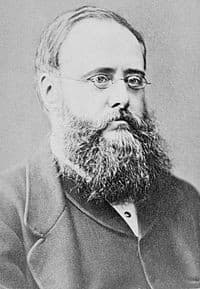
William Wilkie Collins was an English novelist and playwright known especially for The Woman in White (1859), a mystery novel and early "sensation novel", and for The Moonstone (1868), which established many of the ground rules of the modern detective novel and is also perhaps the earliest clear example of the police procedural genre.
Similar books
- The Woman in White
Wilkie Collins
4.0 (132k) average on GoodreadsHistorical FictionAnother classic Victorian sensation novel by Collins, featuring intricate plots and psychological suspense.
- A Study in Scarlet
Arthur Conan Doyle
4.2 (324k) average on GoodreadsHistorical FictionAn early Sherlock Holmes mystery showcasing deductive reasoning and a complex backstory.
- Bleak House
Charles Dickens
4.0 (97k) average on GoodreadsHistorical FictionA sprawling Victorian novel with a mystery at its heart, social commentary, and multiple narrative threads.
- The Murders in the Rue Morgue
Edgar Allan Poe
3.9 (26k) average on GoodreadsMysteryPoe's story is often credited as the first modern detective story, establishing many genre conventions. However, 'The Moonstone' significantly expands upon Poe's model by offering a full-length novel with deeper character development, a more intricate plot, and greater social commentary, moving beyond the purely intellectual puzzle of Poe's 'tales of ratiocination' to integrate the mystery within a broader narrative and psychological landscape.
- To Kill a Mockingbird
Harper Lee
4.3 (4.5M) average on GoodreadsHistorical FictionIn the 1930s Jim Crow South, Harper Lee writes about racial injustice, moral growth, and the quiet courage of a lawyer father, Atticus Finch, as seen through his young daughter's eyes.
- The Great Gatsby
F. Scott Fitzgerald
3.9 (3.8M) average on GoodreadsHistorical FictionIn the opulent Roaring Twenties, a mysterious millionaire's lavish parties hide his desperate, tragic pursuit of a lost love, exposing the emptiness within the American Dream.





Enjoyed the summary?
A summary gives you the shape of the book. The book itself has the detail, the examples and the voice.
Find The Moonstone on AmazonAs an Amazon Associate, BookBrief earns from qualifying purchases. How we're funded