

Synopsis
Covers the whole plot, including the ending.
- Difficulty
- Medium
- Pacing
- Moderate
- Mood
- Atmospheric, Suspenseful, Dark, Intellectually Stimulating, Historically Rich
- Read it if
- You love historical thrillers with deep psychological insight, intricate mysteries, and a vivid recreation of Gilded Age New York, especially if you enjoyed 'The Alienist'.
- Skip it if
- You prefer fast-paced, action-driven plots over detailed historical immersion and psychological exploration, or are sensitive to themes of child abduction and infanticide.
The Angel of Darkness Plot Summary
Covers the whole plot, including the ending.
The Kidnapping of Josefina
The story begins in June 1897, a year after the Beecham case. Stevie Taggert, now working for Dr. Kreizler, tells the story. Sara Howard, who runs her own detective agency, gets a visit from Doña Emilia Merida, wife of the Spanish military attaché. Doña Emilia's infant daughter, Josefina, was taken from their home. Fearing political trouble due to rising tensions between Spain and the U.S., and not trusting the police, Doña Emilia asks Sara to find her child. Sara sees the seriousness and danger, so she brings the old team back together: Dr. Kreizler, John Schuyler Moore, and the Isaacson brothers, to look into the kidnapping quietly.
The Investigation Begins
Dr. Kreizler, John Moore, and the Isaacson brothers agree to help Sara. Their first look at the Merida home reveals few clues, but Dr. Kreizler quickly realizes the kidnapping was personal, not political, because of how carefully it was done and the lack of a ransom note. The team focuses on the house staff and the Merida family's private life. Stevie, using his street smarts, finds a young boy, Joey, who says he saw a woman with a baby like Josefina. This leads them to a possible suspect: a mysterious, heavily veiled woman who was often in the Merida's neighborhood.
Unmasking the Abductor
Through careful detective work, including tracking clothing descriptions and talking to contacts, the team identifies the abductor as Elodie Anderson. She was a former nursemaid who briefly worked for the Meridas. Elodie has a troubled past, marked by the loss of her own child and a habit of believing other children are hers. Dr. Kreizler explains that Elodie suffers from a maternal delusion. The team learns Elodie moved often and used different names, making her hard to track. They realize they are dealing with a disturbed person, not a common criminal.
The Saratoga Connection
The investigation leads the team to Saratoga Springs, a popular summer resort known for horse racing and gambling. They find that Elodie Anderson, using a new name, has been seen in Saratoga, often at grand hotels. John Moore's connections in high society and the Isaacsons' careful detective work help them track Elodie's movements. They learn she tries to appear as a respectable mother, despite her increasingly odd behavior. Stevie's observations of children in Saratoga also give important details about Elodie's interactions and how she keeps up her deception.
Confrontation and Capture
The team finally corners Elodie Anderson in Saratoga. The confrontation is tense, as Elodie is deep in her delusion, believing Josefina is her lost child. Dr. Kreizler tries to reason with her, using his psychological knowledge, while Sara, Marcus, and Lucius keep a careful watch. Stevie and Cyrus are key in keeping the baby safe. After a careful and risky negotiation, they get Josefina away from Elodie. Elodie is caught, but her mental state is clearly fragile, setting up a complex legal fight instead of a simple criminal case.
The Trial of Elodie Anderson
Elodie Anderson is on trial for kidnapping, but the case quickly focuses on her mental state. The defense, led by Clarence Darrow, argues for her insanity, presenting her delusion as a tragic illness. Dr. Kreizler testifies as an expert, explaining the complexities of maternal delusion and its origins in trauma. The prosecution, however, tries to show Elodie as a calculating criminal. The trial becomes a public show, with the press reporting every detail and the idea of motherhood itself seemingly on trial. Stevie, deeply affected by Elodie's situation and that of neglected children, watches closely.
Kreizler's Testimony and Darrow's Defense
During the trial, Dr. Kreizler's testimony is vital. He carefully outlines Elodie's psychological profile, explaining how her past trauma—the loss of her child and later abuse—led to her deep delusion. He argues that while her actions were wrong, they came from a disturbed mind, not a bad one. Clarence Darrow skillfully uses Kreizler's insights to build his defense, painting Elodie as a victim of circumstance and mental illness, not a villain. The courtroom becomes a place for a clash of ideas about justice, mental health, and societal duty, with the jury facing new psychological concepts.
The Verdict and Its Aftermath
The jury finds Elodie Anderson not guilty by reason of insanity. She is sent to an asylum for treatment, not prison. The verdict causes widespread public debate, with many struggling to understand mental illness and criminal acts. For the team, the outcome is mixed. Josefina is safe, but the case leaves a lasting mark, especially on Dr. Kreizler and Stevie. Stevie, seeing Elodie's sad journey, starts to think about the societal failures that lead to such suffering and delusion, deepening his understanding of human nature and justice.
Stevie's Personal Journey
Throughout the investigation and trial, Stevie Taggert is not just an observer but an active participant whose unique view adds depth to the story. His own past as a neglected street boy allows him to feel for the vulnerable, including Elodie and the street children he meets. He sees the societal failures that lead children to crime and despair, and he actively tries to protect others like himself, strengthening his bond with the Kreizler team and his mentor.
A New Understanding of Evil
Unlike the previous case with a cruel killer, Josefina's kidnapping forces Dr. Kreizler and his team to face a different, perhaps more complex, kind of 'wrong': one born from deep psychological trauma and delusion rather than pure malice. The case challenges their understanding of criminal intent and shows how early forensic psychiatry struggled to define and treat mental illness within the legal system. The experience deepens their collective understanding of the human mind and the various ways darkness can appear, leaving them with a more nuanced view of the world.
The Angel of Darkness Characters
Stevie Taggert
Narrator, Supporting
A former street urchin turned assistant to Dr. Kreizler, providing a unique perspective.
Stevie Taggert is the street-smart, observant narrator of the story. Rescued from a life of crime by Dr. Kreizler, he is fiercely loyal and deeply empathetic. His rough upbringing gives him an unparalleled understanding of the city's underbelly and the struggles of neglected children. He is intelligent, resourceful, and possesses a sharp moral compass, often grappling with the complexities of justice and human suffering. His perspective provides a grounded, often poignant, counterpoint to the more academic insights of Dr. Kreizler.
Relationships: Dr. Laszlo Kreizler (Mentor and father figure); Sara Howard (Colleague and trusted friend); Cyrus Montrose (Guardian and protector)
Dr. Laszlo Kreizler
Protagonist, Alienist
A pioneering forensic psychiatrist applying revolutionary methods to understand the criminal mind.
Dr. Laszlo Kreizler is a brilliant, often intense, 'alienist' (early psychologist) whose controversial methods seek to understand the psychological roots of criminal behavior. He is driven by a profound desire to alleviate suffering and bring justice, even when it means challenging established norms. Though socially awkward and emotionally reserved, he possesses deep empathy and an incisive intellect. He is the intellectual leader of the team, guiding their investigations with his psychological insights and theories on human motivation.
Relationships: Stevie Taggert (Mentee and surrogate son); Sara Howard (Close colleague and intellectual equal); John Schuyler Moore (Childhood friend and colleague)
Sara Howard
Protagonist, Private Detective
The independent and determined head of her own detective agency.
Sara Howard is a strong-willed, intelligent, and fiercely independent woman who has forged her own path in a male-dominated world. She is pragmatic, courageous, and deeply committed to justice, especially for the vulnerable. Having left her role at the police department, she now runs her own private detective agency, demonstrating her ambition and capability. She is often the driving force behind the team's investigations, combining her sharp observational skills with a compassionate approach.
Relationships: Dr. Laszlo Kreizler (Close colleague and trusted friend); John Schuyler Moore (Complicated romantic tension and colleague); Doña Emilia Merida (Client and advocate)
John Schuyler Moore
Supporting, Reporter
A sophisticated crime reporter and chronicler of the team's adventures.
John Schuyler Moore is a well-connected, often cynical, but ultimately good-hearted crime reporter for the New York Times. He comes from a wealthy background but is drawn to the darker side of human nature, which he documents with a keen eye and literary flair. He provides the team with access to information and his social connections, and his narrative accounts often shape public perception. He is loyal to his friends and possesses a dry wit, often serving as a foil to Kreizler's intensity.
Relationships: Dr. Laszlo Kreizler (Childhood friend and colleague); Sara Howard (Complicated romantic tension and colleague)
Marcus Isaacson
Supporting, Detective
The meticulous and observant older Isaacson brother, specializing in forensics.
Marcus Isaacson is the older of the two detective brothers, known for his methodical approach to crime scene investigation and his sharp observational skills. He is the more reserved and analytical of the pair, excelling in forensic analysis, fingerprints, and logical deduction. He is deeply committed to scientific principles in policing and often provides the empirical evidence that supports Kreizler's theories. His dedication to detail is invaluable to the team's success.
Relationships: Lucius Isaacson (Brother and investigative partner); Dr. Laszlo Kreizler (Colleague)
Lucius Isaacson
Supporting, Detective
The energetic and intuitive younger Isaacson brother, specializing in interviewing.
Lucius Isaacson is the younger, more outgoing, and intuitive of the Isaacson brothers. He excels at interviewing witnesses and suspects, possessing a natural ability to read people and extract information. While Marcus focuses on the physical evidence, Lucius navigates the human element of the investigation. He is quick-witted and pragmatic, often providing the street-level intelligence that complements his brother's scientific approach. Together, the Isaacson brothers form a formidable investigative duo.
Relationships: Marcus Isaacson (Brother and investigative partner); Dr. Laszlo Kreizler (Colleague)
Cyrus Montrose
Supporting, Kreizler's Assistant
Dr. Kreizler's powerful and loyal assistant, providing protection and support.
Cyrus Montrose is Dr. Kreizler's formidable and fiercely loyal assistant, a man of immense physical strength and quiet dignity. He serves as Kreizler's bodyguard, driver, and confidant, often providing a calming presence amidst the team's intensity. Cyrus has a deep understanding of human nature, particularly the struggles of the marginalized, and offers a grounded, moral perspective. He is a protector, especially of Stevie, and his unwavering loyalty is a cornerstone of the team's dynamic.
Relationships: Dr. Laszlo Kreizler (Employer and close companion); Stevie Taggert (Guardian and mentor)
Elodie Anderson
Antagonist
The deeply disturbed woman who kidnaps Josefina Merida, driven by maternal delusion.
Elodie Anderson is the primary antagonist, though her villainy stems from profound mental illness rather than malice. She is a woman haunted by the loss of her own child and a history of abuse, leading to a severe maternal delusion where she believes other children are hers. She is cunning in her methods of abduction and evasion, but her actions are ultimately driven by a desperate, pathological need for a child. Her case challenges the team's understanding of criminal psychology and the nature of evil.
Relationships: Josefina Merida (Victim of her delusion (believes Josefina is her own child))
Clarence Darrow
Mentioned, Historical Figure
The renowned defense attorney who represents Elodie Anderson.
Clarence Darrow is a real-life historical figure, a brilliant and charismatic defense attorney known for his impassioned arguments and progressive views. In the novel, he takes on Elodie Anderson's case, arguing for her insanity and challenging the prevailing legal and societal understanding of mental illness. His presence elevates the trial to a significant public event, forcing a deeper examination of justice and compassion.
Doña Emilia Merida
Supporting
The distraught mother of the kidnapped infant, Josefina.
Doña Emilia Merida is the wife of the Spanish military attaché, Don César Merida, and the mother of the kidnapped infant, Josefina. She is a desperate and distraught woman, fearing for her child's life and the political implications of the abduction. Her initial plea to Sara Howard sets the entire investigation in motion. She represents the innocent victim of Elodie's delusion and the emotional heart of the kidnapping case.
Relationships: Sara Howard (Client); Josefina Merida (Mother)
The Angel of Darkness Themes
The Nature of Evil and Mental Illness
Unlike the clear evil of the previous killer, this novel looks at a more complex kind of 'wrong' that comes from deep psychological trauma and delusion. Elodie Anderson's actions, though criminal, come from a tragic mental illness, not bad intentions. Dr. Kreizler's work shows the difference between planned cruelty and the destructive power of a disturbed mind, making the characters and reader think about blame and empathy. Elodie Anderson's trial, with Clarence Darrow's defense, highlights this theme, asking how society should judge those whose crimes come from madness.
“Evil, in its truest form, is not merely the absence of good, but often the profound distortion of it, born from suffering too immense for the mind to bear.”
Societal Neglect and Its Consequences
The novel clearly shows how societal neglect, especially of children and those with mental vulnerabilities, can lead to terrible outcomes. Stevie Taggert's perspective, from his own past as a street boy, highlights the struggles of forgotten children in New York. Elodie Anderson's sad history of abuse and losing her child, along with a lack of mental health support, directly cause her delusion and actions. The story suggests that society's failure to care for its most vulnerable members creates suffering and, sometimes, crime.
“There were thousands of children like Joey and like I had once been, cast off by a world that had no use for them, left to carve out their own justice.”
The Evolution of Justice and Forensic Psychiatry
Elodie Anderson's case pushes early forensic psychiatry further into the legal system, challenging old ideas of justice. Dr. Kreizler's detailed psychological analysis is key to understanding Elodie's reasons, but the legal system struggles to use these new ideas. The trial becomes a public stage for the conflict between legal tradition and psychological understanding, arguing for a more humane, if controversial, approach to criminal responsibility when mental illness is involved. It shows the difficult, often misunderstood, work of pioneers like Kreizler in shaping modern justice.
“Justice, gentlemen, is not merely retribution. It is understanding, and in understanding, perhaps, lies the true path to healing.”
The Role of Women in a Changing World
Sara Howard's character shows the struggles and successes of women seeking independence and professional recognition in the late 19th century. Running her own detective agency, she goes against social expectations and proves herself a valuable, intelligent, and brave leader. The story highlights the challenges she faces, but also her strength and skill. Also, the theme of motherhood, both idealized and tragically warped through Elodie's delusion, is central, looking at social pressures and expectations placed on women.
“I had built my own agency, not by the grace of men, but by sheer will and competence. And no man, no matter how powerful, would ever take that from me.”
The Power of Empathy and Connection
Despite the dark subject matter, the novel emphasizes the importance of empathy and the connections between the core team members. Stevie's ability to connect with street children, Kreizler's deep, if sometimes distant, empathy for the mentally ill, and the team's loyalty to each other are key to their success. The story argues that understanding and compassion, even for those who commit crimes due to illness, are essential for true justice and human progress. The team's collective strength comes from their different viewpoints and their shared commitment to helping others.
“It was not enough to merely observe; one had to strive to understand, to feel, even the most fractured corners of the human heart.”
Plot Devices & Literary Techniques
First-Person Narration (Stevie Taggert)
The story is told through the eyes of a former street urchin, offering a unique, grounded perspective.
Stevie Taggert's first-person narration provides a distinct voice and perspective compared to the previous book's third-person. His background as a street urchin allows for intimate insights into the lives of the poor and neglected children, grounding the often-academic discussions of Dr. Kreizler. His observations are sharp, often poignant, and his emotional reactions add a layer of humanity to the complex psychological and legal proceedings, making the themes of societal neglect and the plight of the vulnerable particularly impactful. This narrative choice also allows for a more personal reflection on the events.
Historical Realism and Figures
Incorporation of real historical figures and meticulous period detail.
The novel is steeped in historically accurate details of late 19th-century New York City, from its social strata and technological advancements to its cultural nuances. The inclusion of real historical figures like Clarence Darrow and Elizabeth Cady Stanton lends authenticity and gravitas to the narrative. This device grounds the fictional mystery in a tangible historical context, making the societal issues and the pioneering work of the characters feel more immediate and relevant, while also enriching the reader's understanding of the era.
The 'Alienist's' Psychological Profiling
Dr. Kreizler's use of early forensic psychiatry to understand criminal motives.
Dr. Kreizler's role as an 'alienist' is central to the plot. His method of psychological profiling, based on understanding the childhood traumas and mental states of criminals, is the primary tool for solving the mystery. This device allows the narrative to delve deeply into the motivations behind Elodie Anderson's actions, moving beyond simple criminal intent to explore the complexities of mental illness. It positions the novel as a pioneer in the genre of psychological thrillers, showcasing the nascent stages of forensic psychology as a scientific discipline within the legal system.
The Political Backdrop of Spanish-American Tensions
The looming war between Spain and the U.S. creates initial misdirection and heightened stakes.
The political tension between Spain and the United States, on the brink of war, serves as a crucial plot device. It initially creates a powerful red herring, suggesting the kidnapping is a political act, and raises the stakes, as any misstep could ignite international conflict. This backdrop not only adds historical depth but also complicates the team's investigation, forcing them to operate with extreme discretion and navigate delicate diplomatic waters before the true, personal nature of the crime is revealed. It highlights the volatile atmosphere of the era.
The Angel of Darkness Quotes
“The past is a foreign country; they do things differently there.”
“There are some things that cannot be unseen, some knowledge that, once gained, burns its way into the soul.”
“The human mind, like a deep and dark ocean, holds many secrets, many monsters.”
“Justice, true justice, is not always about punishment, but about understanding.”
“To truly see the darkness, one must first confront the darkness within oneself.”
“The greatest evil often masquerades as the greatest good.”
“Fear is a powerful motivator, capable of twisting even the most righteous intentions.”
“History does not repeat itself, but it often rhymes.”
“The truth, like a stubborn weed, will always find a way to break through, no matter how deeply buried.”
“In the labyrinth of the human heart, reason often loses its way.”
“Sometimes the most dangerous monsters are not those with fangs and claws, but those with smiles and persuasive words.”
“The past is never truly dead; it merely waits for an opportunity to rise again.”
“We are all products of our time, shaped by the forces we often fail to comprehend.”
“To understand a monster, one must first acknowledge the humanity within it, however distorted.”
Quiz
10 questions on the plot and the characters. Each answer comes with a short explanation.
Question 1
Who is the primary narrator of 'The Angel of Darkness'?
- Dr. Laszlo Kreizler
- Sara Howard
- Stevie Taggert
- John Schuyler Moore
Show answer
C. Stevie Taggert The book description explicitly states that the story is 'told by the former street urchin Stevie Taggert,' offering a new perspective on New York City and Dr. Kreizler.
Question 2
What is the initial crime that reunites Dr. Kreizler's team in 'The Angel of Darkness'?
- The murder of a prominent politician
- The kidnapping of a Spanish diplomat's infant daughter
- A series of arsons in the Lower East Side
- The disappearance of a famous artist
Show answer
B. The kidnapping of a Spanish diplomat's infant daughter The synopsis states, 'But when the distraught wife of a Spanish diplomat begs Sara's aid, the team reunites to help find her kidnapped infant daughter.'
Question 3
Which real-life historical figure is mentioned as appearing in the novel and thundering for the defense in a courtroom drama?
- Elizabeth Cady Stanton
- Albert Pinkham Ryder
- Clarence Darrow
- Teddy Roosevelt
Show answer
C. Clarence Darrow The description mentions, 'Peppered throughout are characters taken from real life... including Clarence Darrow, who thunders for the defense in a tense courtroom drama.'
Question 4
What political tension is highlighted as a backdrop to the kidnapping case in 'The Angel of Darkness'?
- Growing unrest between American labor unions and industrialists
- The impending war between Spain and the United States
- Internal conflicts within the New York City police department
- Tensions between immigrant communities and nativist groups
Show answer
B. The impending war between Spain and the United States The summary notes that the case is 'fraught with danger, since Spain and the United States are on the verge of war,' adding a significant political dimension.
Question 5
How long has passed between the events of 'The Alienist' (the Beecham case) and the beginning of 'The Angel of Darkness'?
- A few months
- One year
- Two years
- Five years
Show answer
B. One year The text states, 'It is June 1897. A year has passed since Dr. Laszlo Kreizler... tracked down the brutal serial killer John Beecham.'
Question 6
Which of the following locations is mentioned as providing 'precious keys to the murderer's past' during a summer trip?
- The opium dens of Chinatown
- The elegant gambling parlors of Saratoga
- The laboratories of Columbia University
- The grand estates of Newport, Rhode Island
Show answer
B. The elegant gambling parlors of Saratoga The summary explicitly states, 'a summer trip to the elegant gambling parlors of Saratoga provides precious keys to the murderer's past.'
Question 7
What is the specific discipline Dr. Laszlo Kreizler is a pioneer in?
- Forensic ballistics
- Forensic toxicology
- Forensic psychiatry
- Criminal anthropology
Show answer
C. Forensic psychiatry The text identifies Dr. Kreizler as 'a pioneer in forensic psychiatry,' which is central to his methods in both books.
Question 8
What societal issue, relevant to Stevie's background, does the novel explore through 'revealing journeys into Stevie's New York'?
- The rise of organized crime syndicates
- The challenges faced by newly arrived immigrants
- Poor and neglected children turning to crime and drugs
- The impact of industrialization on working-class families
Show answer
C. Poor and neglected children turning to crime and drugs The description highlights 'revealing journeys into Stevie's New York, a place where poor and neglected children--then as now--turn to crime and drugs at shockingly early ages.'
Question 9
What significant concept is said to be 'put on trial' during the tense courtroom drama involving Clarence Darrow?
- The right to free speech
- The sanctity of American motherhood itself
- The efficacy of forensic psychiatry
- The principle of innocent until proven guilty
Show answer
B. The sanctity of American motherhood itself The text states that during the courtroom drama, 'the sanctity of American motherhood itself is put on trial,' indicating a profound thematic conflict.
Question 10
Which member of Kreizler's team is specifically described as 'indomitable' and 'derringer-toting'?
- Cyrus Montrose
- Marcus Isaacson
- Sara Howard
- John Schuyler Moore
Show answer
C. Sara Howard Sara Howard is described in the provided text as 'indomitable, derringer-toting Sara Howard,' emphasizing her strong character and readiness for action.
The Angel of Darkness FAQ
What is the central mystery that reunites Dr. Kreizler's team in "The Angel of Darkness"?
The team reunites to investigate the kidnapping of the infant daughter of a Spanish diplomat, Sofia, whose distressed wife, Elena, seeks Sara Howard's help. This case is particularly sensitive due to the escalating tensions between Spain and the United States, placing the team in a politically charged environment.
How does the narrative perspective differ in "The Angel of Darkness" compared to "The Alienist"?
Unlike "The Alienist," which was narrated by John Schuyler Moore, "The Angel of Darkness" is told from the perspective of Stevie Taggert. This shift provides a unique viewpoint, offering insights into the grittier aspects of New York City and a fresh, often more cynical, take on Dr. Kreizler and the upper-class world.
Who are some of the historical figures integrated into the plot of "The Angel of Darkness"?
Caleb Carr weaves in several real-life historical figures, including the prominent suffragist Elizabeth Cady Stanton, the enigmatic painter Albert Pinkham Ryder, and the renowned lawyer Clarence Darrow, who plays a significant role in a courtroom drama later in the novel.
What is the significance of Saratoga in the investigation?
Saratoga, specifically its elegant gambling parlors, serves as a crucial location where the team uncovers vital clues related to the murderer's past. The high-society environment there contrasts sharply with the earlier urban investigations, revealing different facets of the perpetrator's history and connections.
What is the primary theme explored through the character of Stevie Taggert?
Stevie Taggert's narrative delves into the harsh realities of poverty and neglect among children in New York City, highlighting how these conditions lead many, like Stevie himself once, to crime and drug use at alarmingly young ages. His perspective underscores the societal failures that contribute to such cycles.
How does the political climate between Spain and the U.S. impact the team's investigation?
The looming Spanish-American War makes the kidnapping case incredibly delicate, as any misstep could exacerbate international tensions. The team must navigate diplomatic complexities and potential accusations of espionage, adding an extra layer of danger and urgency to their search for Sofia.
What role does the concept of 'American motherhood' play in the courtroom drama involving Clarence Darrow?
During the intense trial where Clarence Darrow defends a character, the very sanctity and idealized image of American motherhood become central to the arguments. The defense likely challenges conventional notions of maternal perfection, forcing a re-evaluation of societal expectations and judgment.
How does Dr. Kreizler's methodology evolve or face new challenges in this particular case?
While the synopsis doesn't detail specific evolutions, the case, involving a child kidnapping and international politics, likely pushes Kreizler to apply his forensic psychiatry principles in new, perhaps more ethically fraught, ways. The personal stakes for the team, especially Sara, might also challenge his usual detached analysis.
What is the significance of Delmonico's continued presence in the story despite the unfolding horror?
Delmonico's, serving 'wondrous meals,' acts as a recurring symbol of the enduring high life and the stark contrast between the city's opulent facade and its dark underbelly. It represents a constant amidst the chaos, a place where the team can momentarily escape or reflect, highlighting the duality of New York.
How does Stevie Taggert's past influence his perspective and contributions to the investigation?
Stevie's past as a street urchin gives him an intimate understanding of the city's lower echelons, its informal networks, and the psychology of its marginalized inhabitants. This street wisdom and his personal experiences with neglect allow him to perceive details and make connections that might elude the more privileged members of the team.
What psychological pressures does Sara Howard face, given her personal involvement with the distraught mother, Elena?
Sara, known for her indomitable nature, likely experiences significant psychological pressure due to Elena's direct appeal for help, potentially blurring her professional detachment with personal empathy. This emotional connection could both fuel her determination and make the stakes feel even higher for her.
How does the 'modern evil' of the antagonist in this book compare psychologically to John Beecham from 'The Alienist'?
While Beecham represented a primal, sexually driven brutality, the 'modern evil' in "The Angel of Darkness" might embody a more calculated, perhaps ideologically or politically motivated, form of depravity, possibly linked to the societal anxieties of the turn of the century, such as xenophobia or social injustice.
What psychological impact might the experience of tracking another brutal killer have on Dr. Kreizler and his team, after the Beecham case?
Having already faced the horrors of the Beecham case, the team, and especially Dr. Kreizler, might exhibit signs of professional weariness or a deeper understanding of human depravity. This new case could test their resilience, force them to confront lingering traumas, or solidify their commitment to their unique brand of justice.
To what extent does the novel critique or uphold the societal norms and expectations of turn-of-the-century New York?
The novel subtly critiques societal norms by juxtaposing the opulence of high society with the squalor of the poor, and by examining issues like the 'sanctity of American motherhood' through a critical lens in the courtroom. However, it also revels in the historical details, presenting the era with both its grandeur and its flaws without outright condemnation.
How does Stevie Taggert's narration influence the reader's perception of Dr. Kreizler?
Stevie's narration offers a more grounded, less reverent view of Dr. Kreizler than Moore's. As someone Kreizler saved, Stevie likely possesses a unique blend of loyalty and a pragmatic understanding of the alienist's eccentricities, possibly revealing more of Kreizler's human vulnerabilities or his profound impact on the less fortunate.
Is the novel primarily a historical thriller, or does it offer deeper social commentary on its era?
While undeniably a fast-paced historical thriller with a compelling mystery, "The Angel of Darkness" also functions as significant social commentary. It uses the kidnapping case and Stevie's perspective to shed light on issues of child welfare, class disparity, international relations, and the evolving roles of women in late 19th-century America.
What is the potential symbolism behind the 'angel of darkness' title?
The title 'The Angel of Darkness' likely refers to the perpetrator, suggesting a figure who appears benevolent or innocent but harbors profound evil, perhaps preying on the vulnerable. It could also symbolize the hidden, corrupting forces within society itself, masked by a veneer of civility or progress.
About the author
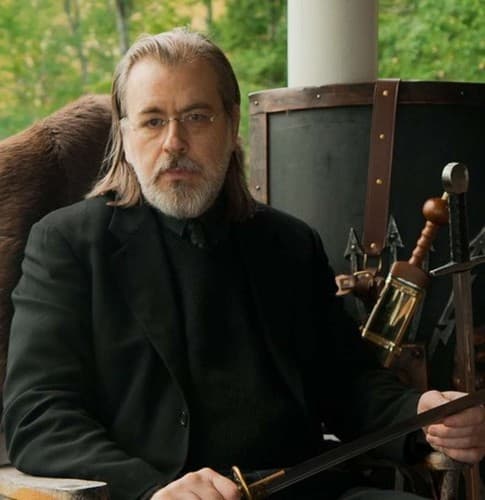
Caleb Carr is an American military historian and author. Carr is the second of three sons born to Lucien Carr and Francesca Von Hartz.
Similar books
- The Alienist
Caleb Carr
4.1 (182k) average on GoodreadsFictionDirect prequel, featuring the same characters and setting.
- The Silent Patient
Alex Michaelides
4.1 (507k) average on GoodreadsThrillerModern psychological thriller with a focus on trauma and its impact on criminal behavior.
- The Name of the Rose
Umberto Eco
4.1 (301k) average on GoodreadsHistorical FictionWhile set in a vastly different historical period (medieval monastery), Umberto Eco's 'The Name of the Rose' shares with 'The Angel of Darkness' a commitment to intricate historical detail and an intellectual mystery driven by a brilliant, unconventional protagonist (William of Baskerville, akin to Kreizler). Both novels immerse the reader in their respective eras, using the historical setting not just as a backdrop but as a crucial element shaping the characters' worldviews and the nature of the crimes. However, Eco's novel is arguably more overtly philosophical and semiotic, whereas Carr's maintains a stronger focus on the psychological thriller aspect.
- The Silence of the Lambs
Thomas Harris
4.2 (464k) average on GoodreadsThrillerThough a modern thriller, 'The Silence of the Lambs' offers a compelling comparison in its exploration of criminal psychology and the profiling of a serial killer. Both novels feature intelligent protagonists (Clarice Starling and Dr. Kreizler) who delve into the darkest corners of the human psyche to understand and apprehend dangerous individuals. While Harris's work is contemporary and more visceral in its horror, Carr's provides a historical context for the origins of such psychological profiling. Both authors excel at creating deeply disturbing antagonists whose motivations are central to the narrative, though Carr grounds his in 19th-century scientific nascent theories.
- Angels & Demons
Dan Brown
3.9 (2.7M) average on GoodreadsThrillerA Harvard symbologist races through Rome's ancient sites, deciphering cryptic clues to unmask the Illuminati and stop a vengeful plot to destroy the Vatican with a stolen antimatter weapon.
- Gone Girl
Gillian Flynn
4.1 (2.3M) average on GoodreadsThrillerA wife's sudden disappearance on her fifth anniversary reveals a web of lies and psychological warfare, exposing the secrets within a seemingly perfect marriage.






Enjoyed the summary?
A summary gives you the shape of the book. The book itself has the detail, the examples and the voice.
Find The Angel of Darkness on AmazonAs an Amazon Associate, BookBrief earns from qualifying purchases. How we're funded